

If the basic plank feels easy now, this is your next step. 💪
This guide skips the basics and shows four harder progressions, each with a real photo of that exact move.
New to planks? Start with our companion guide, 6 Plank Variations for a Stronger Core, which covers the forearm, high, side and reverse planks first.
One honest note up front: planks build a stronger core, but they do not by themselves give you a visible six-pack. Visible abs depend mostly on overall body fat, not on any single exercise.
What a good plank looks like
Think of one straight line from your head to your heels. Your neck stays in line with your spine, not drooping or craning up.
Brace your stomach gently, squeeze your glutes, and keep breathing. Holding your breath does not make a plank better.
Your hips should neither sag towards the floor nor pike up towards the ceiling. Both are signs the set is over.
Short, clean holds beat long, sloppy ones every time. End the set when your form starts to fall apart, not after it already has.
A useful technique note: the “hardstyle” or RKC plank is not a different shape — it is a forearm plank done with maximum tension, squeezing your abs, glutes and legs hard for a short hold. Because that tension cannot be seen in a photo, it is a technique to apply to your holds, not a separate pictured entry here.
Do planks burn belly fat or build a six-pack?
Short answer: not on their own, and not from one spot. Planks strengthen the muscles under your midsection, but they do not melt the fat sitting on top of them.
In a 2011 study, people did abdominal exercises five days a week for six weeks. Their abdominal endurance improved, but there was no significant change in abdominal fat compared with a control group (Vispute et al., 2011).
A 2013 study that trained only one leg for 12 weeks found the same pattern: fat loss did not favour the trained limb (Ramírez-Campillo et al., 2013).
Fat loss, when it happens, tends to be whole-body. It depends far more on overall activity, sleep, food and time than on any single core move.
One small 2023 trial in 16 overweight men did report extra trunk-fat loss from abdominal endurance training, but it used long sessions that also included treadmill running. That is an interesting hint, not a reason to promise belly-fat loss from planks.
So use planks for what they do well: a stronger, steadier core. For wider fat-loss help, see exercises to reduce belly fat alongside a realistic, whole-body plan.
Stay safe while you plank
Stop if you feel sharp pain, pinching, numbness, or pain shooting down a leg. Muscle effort is normal; sharp pain is a stop sign. 🛑
If you have back pain, shoulder or wrist problems, are pregnant, or have a health condition, check with a clinician or physiotherapist before starting. This guide is general information only, not medical advice.
Keep your wrists comfortable in straight-arm moves. If they ache, switch to forearms, use a raised surface, or stop and get advice.
Never chase a time goal through pain. A short plank with a straight spine teaches your body far more than a long sag.
4 harder plank progressions, each pictured
Work through these only once the basic planks feel steady. Rest between sets, and repeat only while your form stays clean.
1. Star Plank ⭐
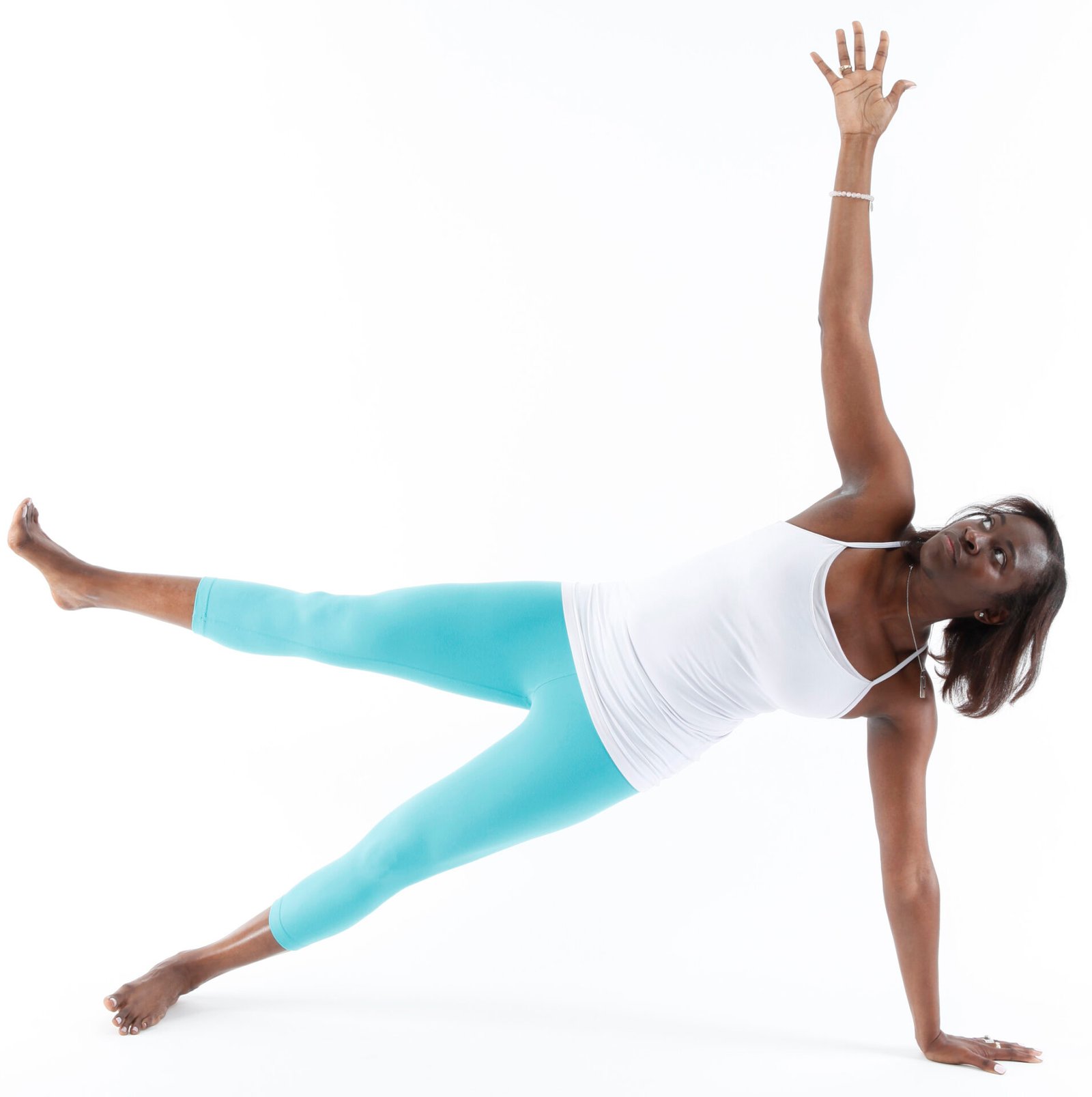
The star plank is a side plank with both the top arm and the top leg raised. Your body opens out like a star, which makes balance much harder.
Start in a straight-arm side plank, then raise your top arm straight up and lift your top leg. Keep your hips lifted and your body in one long line.
Do both sides, even if one side feels much stronger. If the leg lift is too much, keep the top leg down — that is the basic side plank in the companion guide.
2. T-Plank
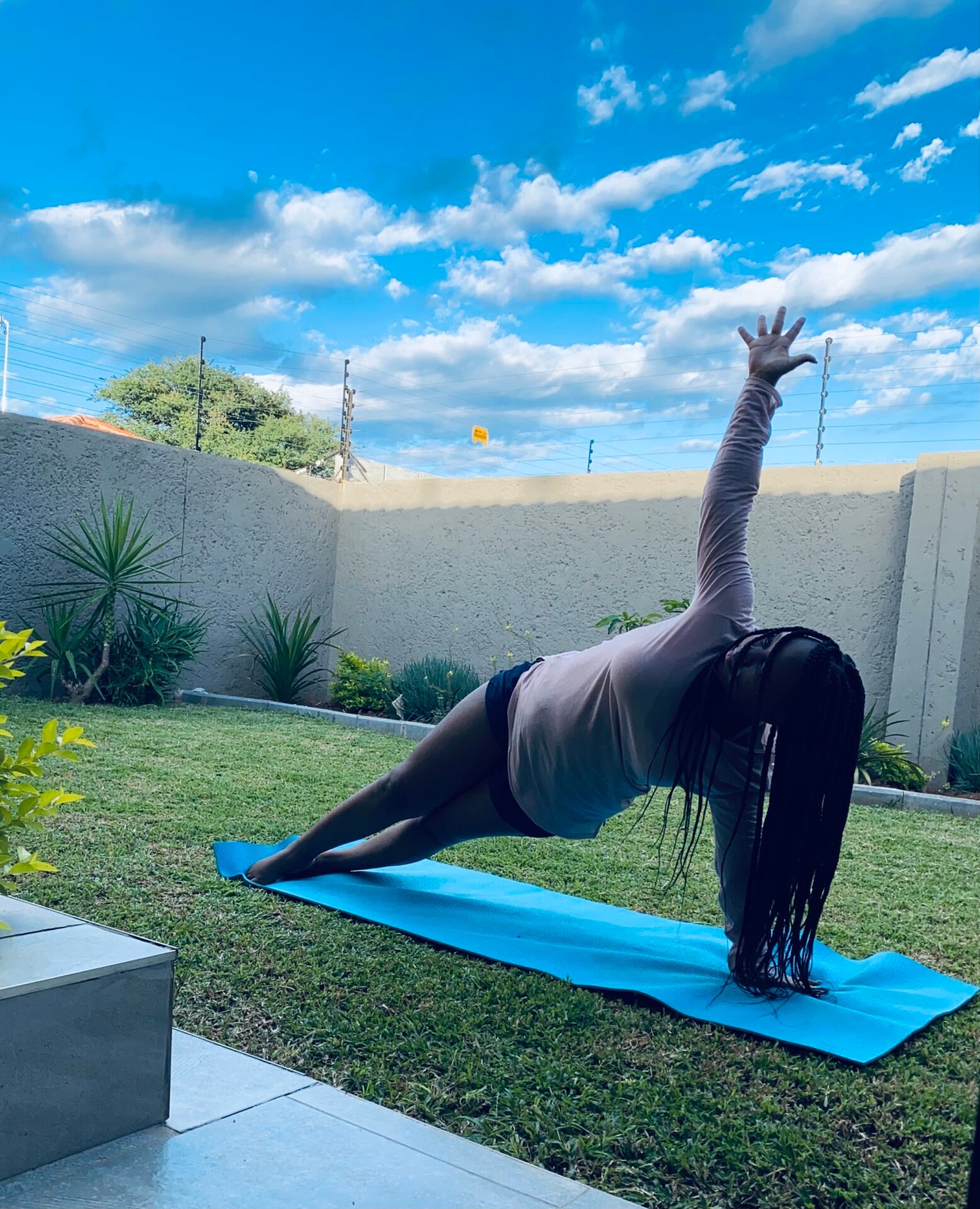
The T-plank adds rotation to a plank. You start in a high plank, roll onto one side, and raise your top arm — the photo shows this T finish position.
From a high plank, rotate your body to one side and lift your top arm straight up. Pause in the T shape, then roll back to the high plank and switch sides.
Keep your hips lifted throughout the roll. If your hips drop the moment you rotate, go back to holding a steady side plank first.
Because this move loads the shoulders, it also challenges the obliques — see best exercises for obliques for more side-core work.
3. Stability-Ball Plank
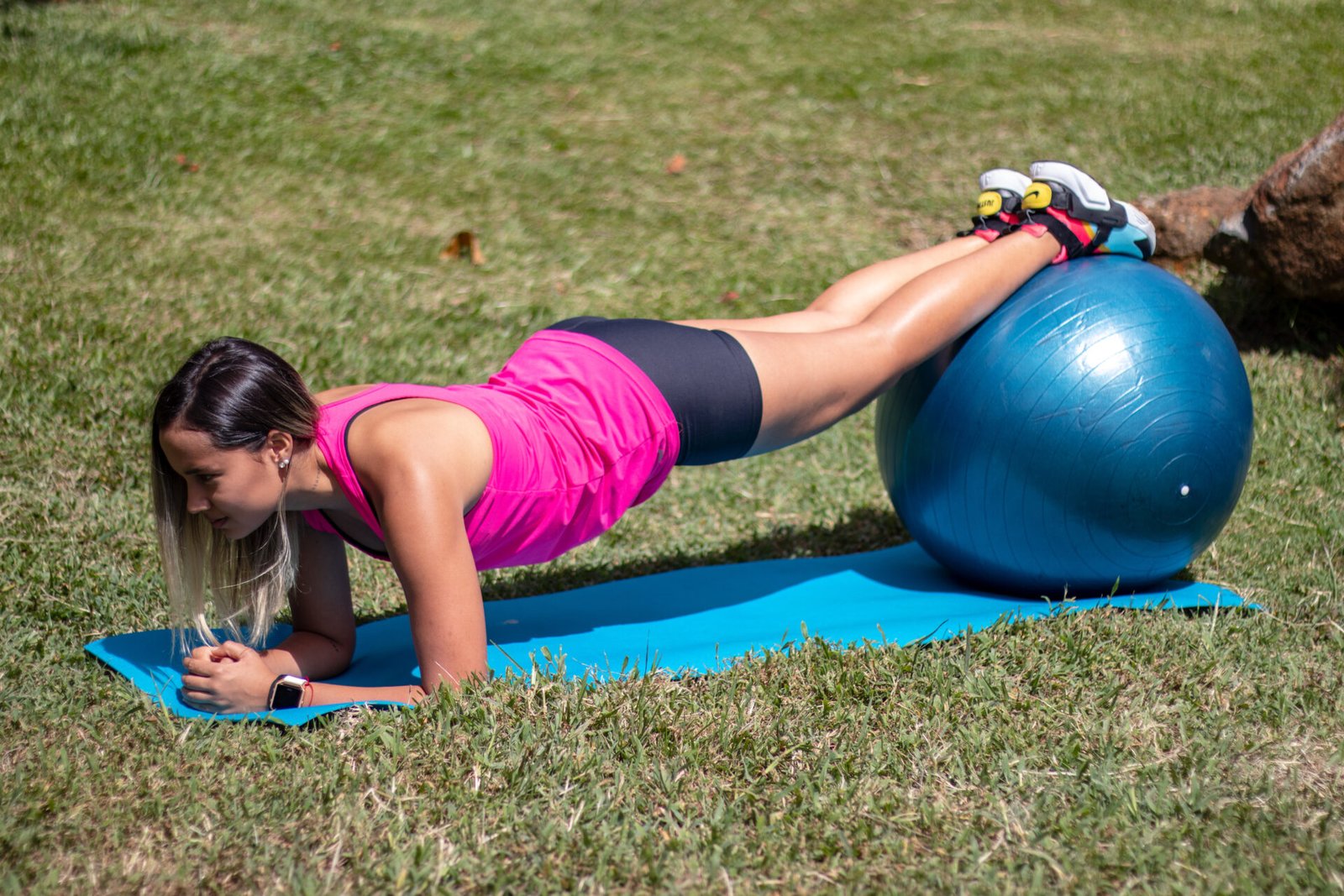
Rest your forearms on the floor and your feet on a stability ball, then hold a straight line. The wobble is the point — your core must work harder to stay still.
Place your shins or feet on the ball carefully, step back into a plank, and brace. Keep your hips level and do not let the ball roll you sideways.
Start with your feet on the floor if the ball feels wild. This is a step up from the basic forearm plank, not a beginner shortcut.
4. Suspension Side Plank
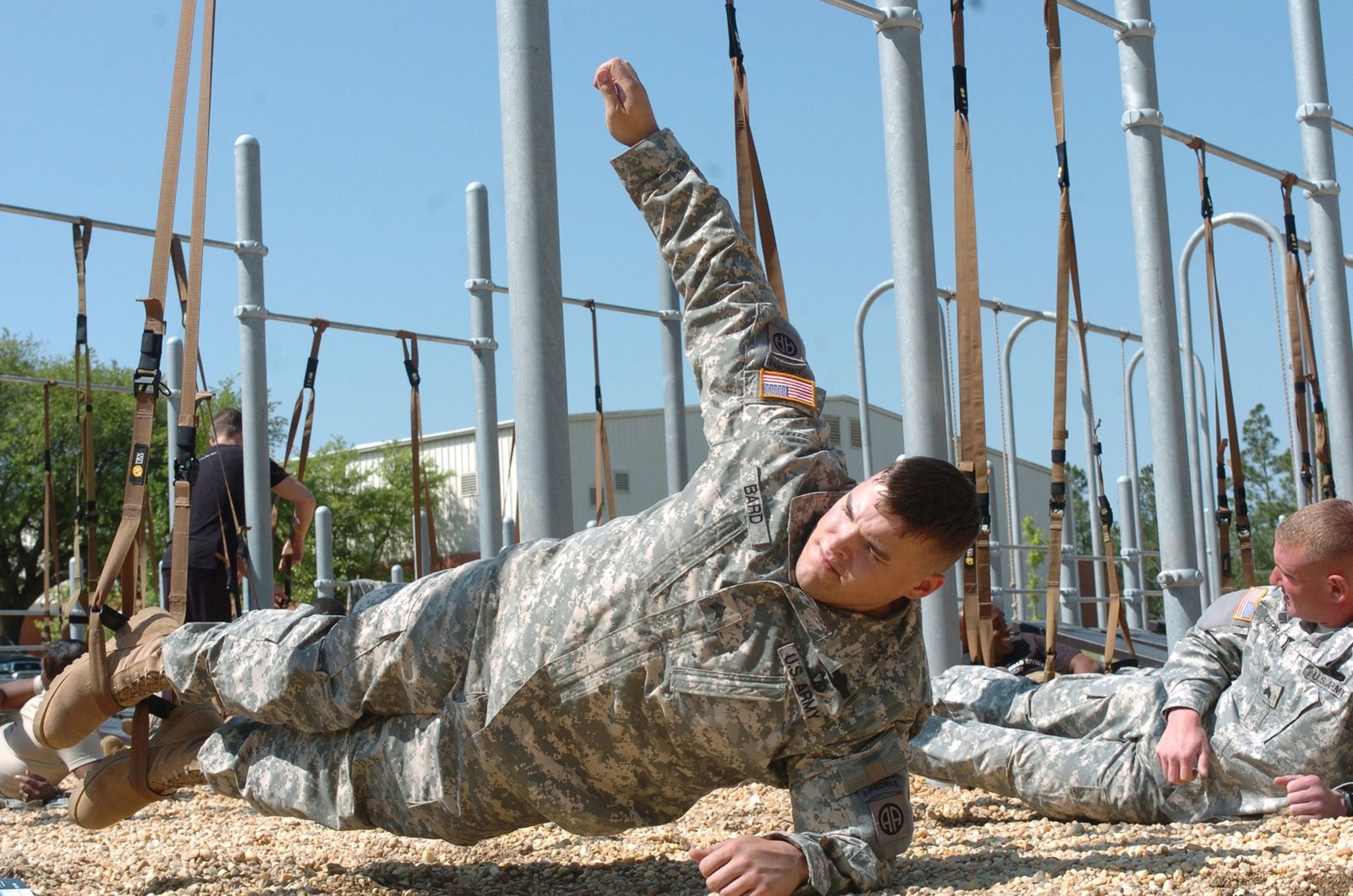
This is a side plank with your feet suspended in straps. With nothing solid under your feet, your core and hips must fight to keep you level.
Set your feet in the straps, roll into a forearm side plank, and raise your top arm if that feels steady. Keep one straight line from head to feet.
Use only straps fixed securely, and only if you are already steady in a floor side plank. If you sway wildly, drop back to feet on the floor.
A simple way to use these
Pick one or two progressions per core session, after your basic planks. Quality matters far more than how many you cram in.
Pair them with the rest of your training rather than treating planks as a whole workout. For more core ideas, see belly pooch exercises.
Rest days count too. Sore, tired muscles do not need to be planked again the next morning — come back when you can hold good form.
FAQs
Do planks give you a six-pack?
Not on their own. Planks strengthen your core muscles, but whether abs are visible depends mostly on overall body fat.
For a fuller picture of core training and nutrition, see how to build six pack abs — and treat any “abs in days” promise with suspicion.
How long should I hold a plank?
As long as your form stays clean — and no longer. A short, straight hold beats a long, sagging one every time.
When your hips start to droop or your back starts to ache, the set is done, whatever the clock says.
Should I plank every day?
There is no need to, and no rule that says you must. Many people train their core a few times a week as part of a wider routine.
Rest, sleep and varied movement matter just as much as any single hold.
Can planks fix back pain?
Planks can help build the core strength that supports your back, but they are not a treatment for back pain.
If you have ongoing or sharp back pain, get advice from a clinician or physiotherapist before starting.
What if I cannot do these progressions yet?
That is normal — they are meant to be hard. Go back to the companion guide’s basic planks and build up from there.
The straight line matters more than the version. A clean basic plank beats a wobbly star plank every time.