

Push-ups and pull-ups are often put head to head, as if one of them must win. 🤔
That is the wrong contest. They are opposite halves of upper-body training, and the honest answer is that neither one replaces the other.
This guide compares them plainly: what each one trains, what each one needs, why one usually feels harder at first, and how they fit together.
Push-Ups: The Push
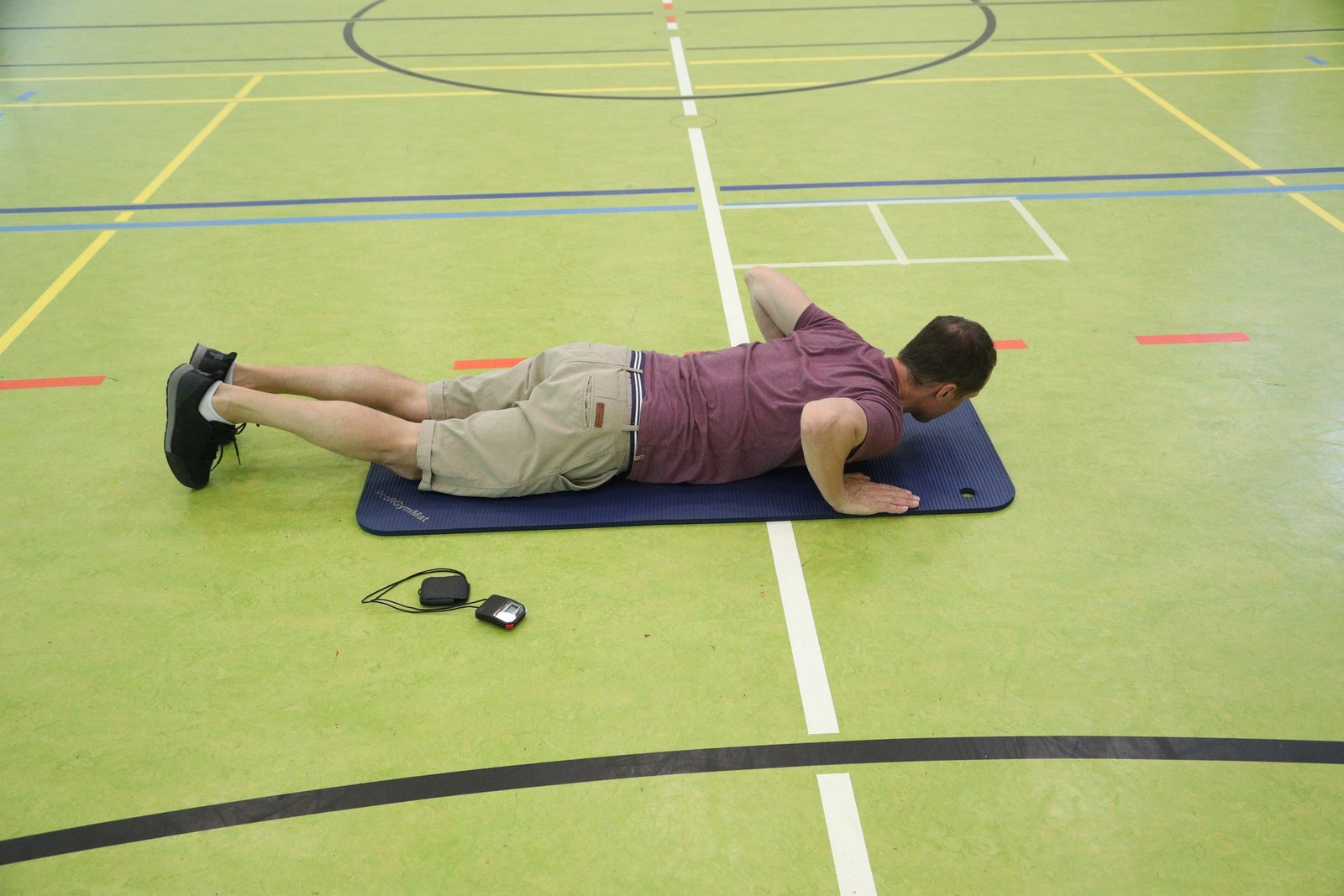
A push-up is a pushing move done face-down on the floor. 💪
From a straight plank position, you lower your chest toward the floor and press yourself back up, keeping your body in one line from head to heels.
The main drivers are your chest, the fronts of your shoulders, and your triceps, the muscles at the backs of your upper arms that straighten your elbows.
Your core works as a stabiliser throughout, holding that straight line so your hips neither sag nor pike up.
That is the push-up in full. For what push-ups can do for you in general, see the benefits of doing push-ups — this comparison does not repeat that guide.
Pull-Ups: The Pull

A pull-up is the opposite pattern: a pulling move done hanging from a bar. 🏋️
From a full hang with straight arms, you pull yourself up until your chin clears the bar, then lower yourself back down under control.
The main drivers are your back — above all the large lat muscles down the sides of your back — with your upper and mid-back, your biceps, and your forearm and grip muscles helping.
Your core stays switched on here too, but its job is different: keeping your body steady and quiet rather than swinging, while your back does the pulling.
For full pull-up form and the path to a first full rep, see the pull-up guide — this comparison does not repeat it.
The Grip Check: Pull-Up, Chin-Up, and Neutral
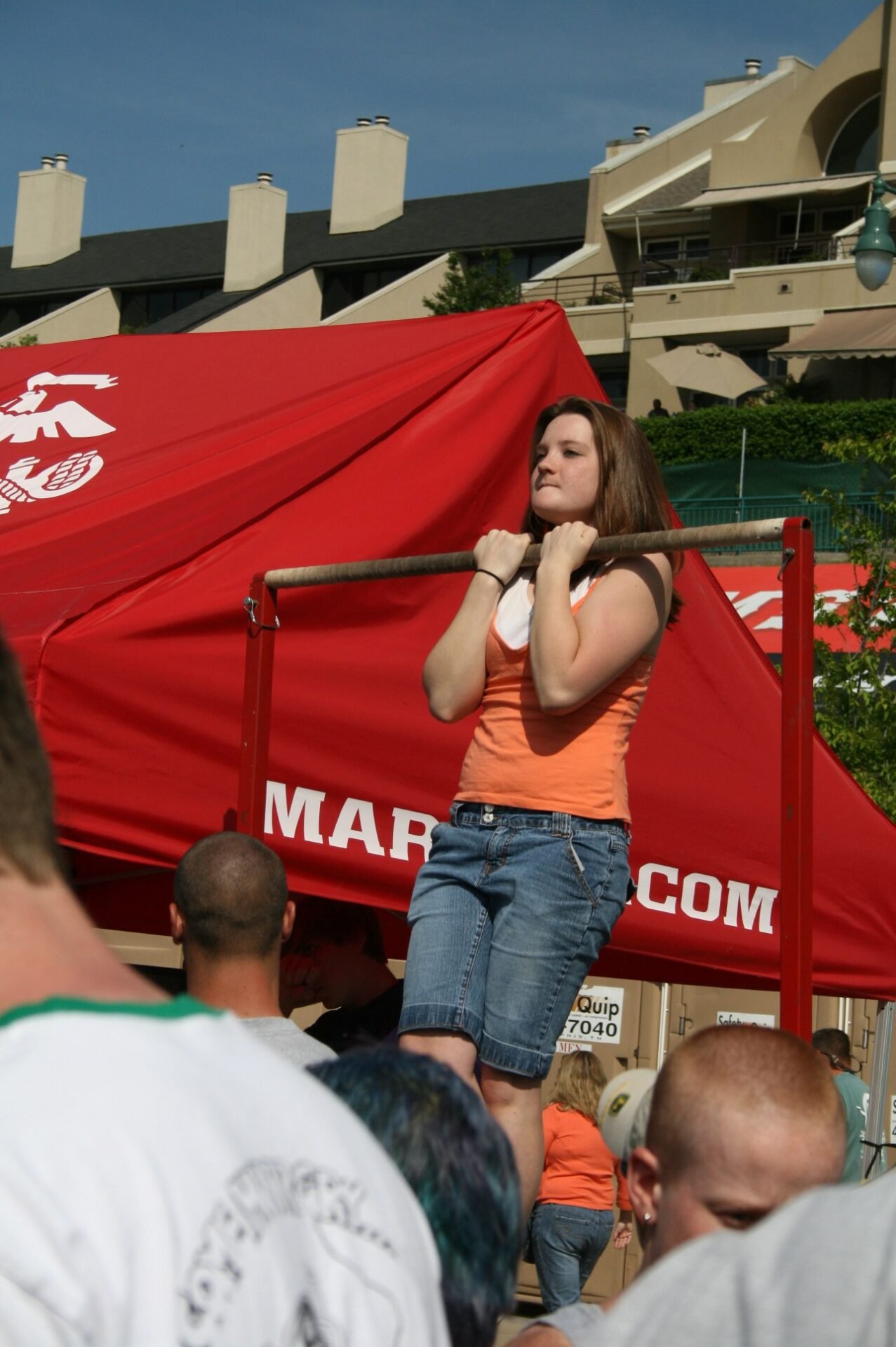
Grips are where pull-up talk most often goes wrong, so here it is simply. ✋
A pull-up uses a palms-away grip: your palms face away from you, as pictured in the pull-up section above.
A chin-up, pictured here, flips the hands around, so your palms face toward you. That underhand position lets your biceps help more, which is why many people find chin-ups a little friendlier at first.
A neutral grip is a third option, not a version of either one: your palms face each other on parallel handles.
Transparency note: this package has no neutral-grip photo, so none is shown or claimed here. The neutral grip is described in words only, and the two photos above show the pull-up and chin-up grips, nothing else.
Do not mix them up: palms away is a pull-up, palms toward you is a chin-up, and palms facing each other is neutral. Calling a chin-up a pull-up, or a neutral-grip pull a chin-up, muddles exactly the comparison this article is making.
How They Compare
Push versus pull is the first difference, and it is the one that matters most. 🔄
Push-ups press weight away from you and load the front of the upper body; pull-ups draw your body toward a bar and load the back.
Train only one side for a long time and your training is lopsided by definition, whatever your goal. Training both keeps the front and the back of your upper body in balance.
Equipment is the second difference, and it is practical rather than philosophical.
A push-up needs a floor, nothing more. A pull-up needs a sturdy overhead bar made for the job — a doorway bar, a park bar, or a gym bar — checked before you hang from it.
Difficulty is the third difference, and it explains why the two moves feel so unequal at first.
A standard push-up moves roughly two-thirds of your body weight, because your feet stay on the floor and share the load. A pull-up lifts your full body weight, with your grip as the link.
That gap is why most beginners can do a push-up long before they can do a pull-up, and why the pull-up path usually starts with easier, assisted versions.
The progression paths run in the same direction but start from different places.
Push-ups get easier by raising your hands and harder by raising your feet or choosing a harder variant — the push-up variations guide covers those in detail, so they are not listed here.
Pull-ups get easier with assistance that takes some of your weight, and harder once full reps feel clean and controlled — again, the detail sits in the pull-up guide, not here.
Neither path comes with a deadline in this article. Bodies, body weight, and training history differ too much for a promise about when any step will arrive.
What about the heart-health claim you may have seen attached to push-ups? It deserves care, not hype. ❤️
One study, Yang and colleagues in JAMA Network Open in 2019, followed 1,104 male firefighters for 10 years, during which 37 cardiovascular events were recorded.
In that one cohort, men who could do more than 40 push-ups at baseline were associated with a lower incidence of those events than men who could do fewer than 10.
That is an association in one group of active middle-aged men, not proof that doing push-ups prevents heart disease, and no second independent cohort is offered here to turn it into a general claim. Do not read it as a prescription.
Finally, a word on what push-ups alone cannot do, since the comparison invites it.
Push-ups on their own do not train your back the way pull-ups do, and no single body-weight move builds a complete physique by itself. For the honest limits of the ripped-with-push-ups idea, see how to get ripped with push-ups.
Putting Them Together
So how do they fit in a week? Simply: as partners, not rivals. 🤝
Use push-ups for your pushing work and pull-ups for your pulling work, and you have covered the two big upper-body directions with two moves and almost no kit.
Which one you find harder tells you something useful about where your current training is thin, not which move is “better” in any absolute sense.
If pull-ups are the weak side, that is normal, and it is a reason to give them steady, patient attention — not a reason to drop push-ups.
If push-ups feel easy and pull-ups feel impossible, the answer is still both, with the harder move scaled down until it is doable with good form.
There is no single winner here, and any article that crowns one is selling a verdict the two moves themselves do not support.
Staying Safe, on Both Moves
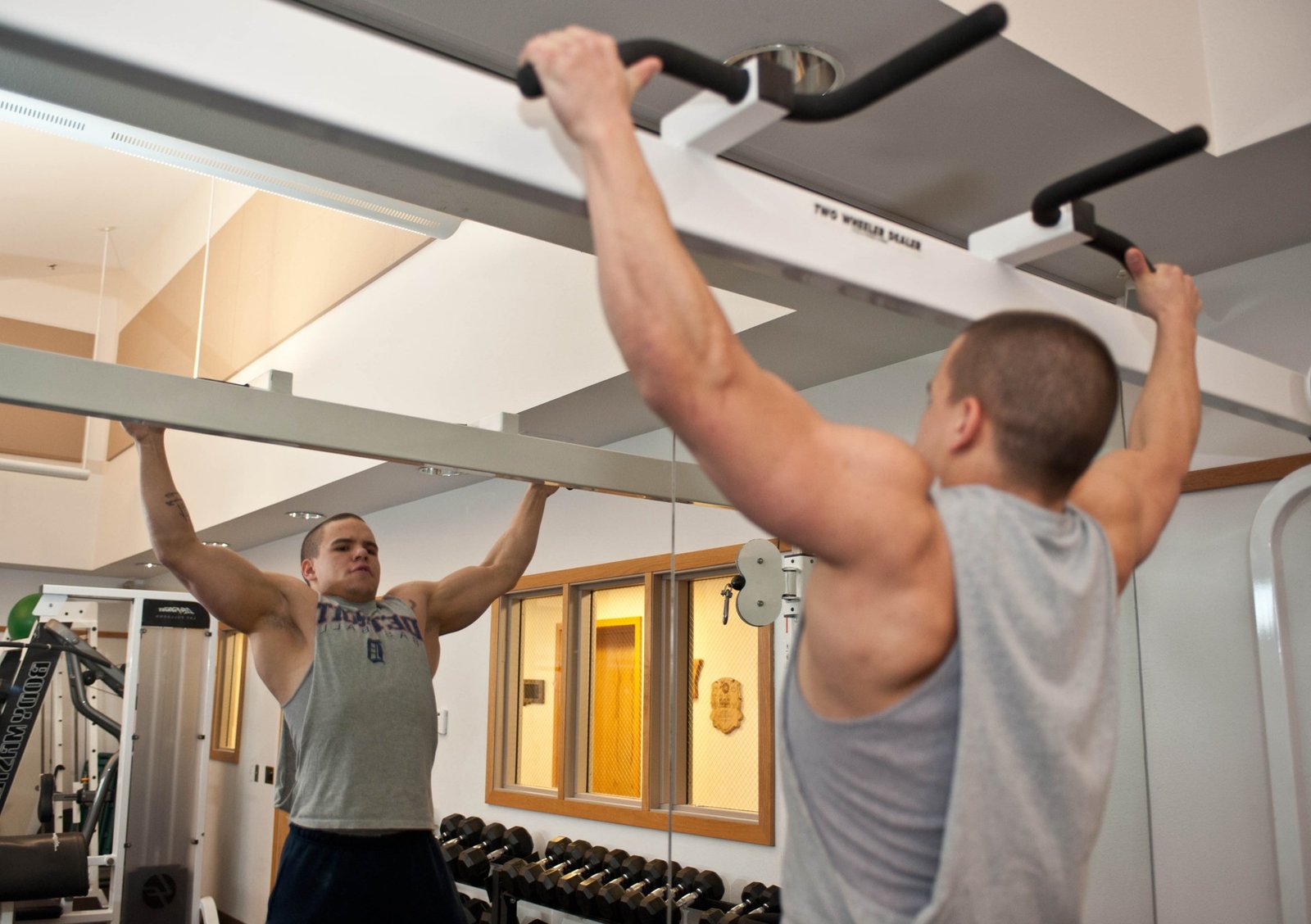
Good form is the same rule on both moves: a straight, controlled body beats a sloppy, swung rep every time. ⚠️
On push-ups, watch for sagging hips, a head dropped toward the floor, and elbows flared far out to the sides. When the straight line goes, the set should stop or get easier.
On pull-ups, watch for a big swing, shoulders creeping up toward your ears, and half reps that never get your chin over the bar. The photo above shows the honest start position: a full hang, arms straight.
Check your bar before every pull-up session, and never hang from something that was not made to hold your weight or that you have not checked.
Stop the set when your form breaks down, and stop the session if you feel sharp pain, a catching feeling in a shoulder or elbow, numbness, or anything that feels wrong rather than just hard.
If you have an injury, a health condition, or any doubt about whether these moves suit you, check with a clinician or a qualified coach first. This guide is general fitness information, not personal advice.
Questions Readers Ask
Can I just do one of them? You can, but you will train one direction and neglect the other. The pair is the point of this comparison.
Do pull-ups work your chest? Not as a main driver. Your chest may help a little, especially on a chin-up, but pull-ups are a back move and push-ups are the chest move here.
Do push-ups work your back? Only as a stabiliser. They do not replace a pulling move for back strength.
Why are pull-ups so much harder? Largely the load: a pull-up lifts your full body weight through your grip, while a standard push-up moves roughly two-thirds of it.
Which should a beginner start with? Start with the move you can do with good form, and scale the harder one down — raised hands for push-ups, assistance for pull-ups — rather than forcing full reps of either.