

Chest and triceps go well together in one session, and the reason is simple. 💪
Most chest pressing moves also ask your triceps to straighten your elbows, so your triceps are already involved before you train them directly.
This refreshed 2026 guide keeps that idea, but rebuilds the exercise list from scratch. Every move below has its own photo, so you can see what the words are describing.
This is general information only, not personal training or medical advice. If an exercise causes sharp pain, stop and speak to a clinician, physiotherapist, or qualified trainer in person before trying it again.
How to use this guide in 2026
The American College of Sports Medicine published new resistance-training guidance in 2026, its first major update since 2009. Its headline message is refreshingly plain: regular training matters far more than a perfect plan.
The guidance also stresses training all major muscle groups at least twice a week, tailoring load and volume to your own goals, and remembering that bands and bodyweight work count. You do not need to train to failure on every move to benefit.
Use that as your compass here. Pick a small number of moves you can do with good form, practise them regularly, and progress slowly. A trainer in person can help you choose a load that suits you.
Do your chest pressing work before direct triceps work in the same session. That way tired triceps do not limit the bigger pressing moves that come first.
For barbell bench pressing, use a spotter or safety bars. Never get trapped under a bar you cannot lift back up. 🛡️
Chest exercises
1. Push-Up
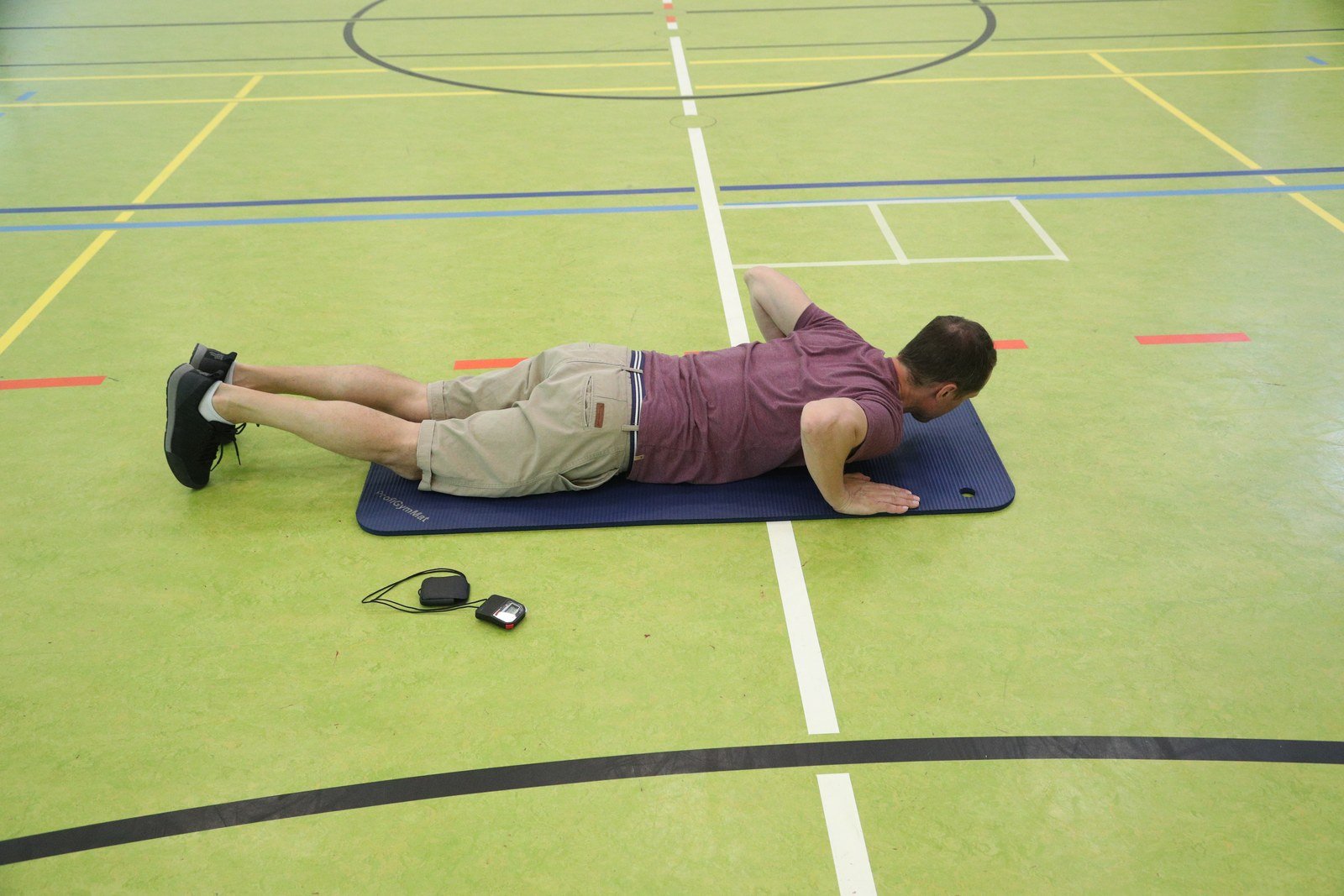
Start in a straight line from head to heels, with your hands under or just outside your shoulders. Think of it as a moving plank: hips neither sagging nor piking up.
Lower your chest toward the floor with control, then press through your palms until your arms are straight again. Keep your neck in line with your spine rather than craning it forward.
If full push-ups are too hard for now, raise your hands onto a sturdy bench or step. The same straight-body shape applies, and the move becomes much more manageable. ✅
2. Barbell Bench Press
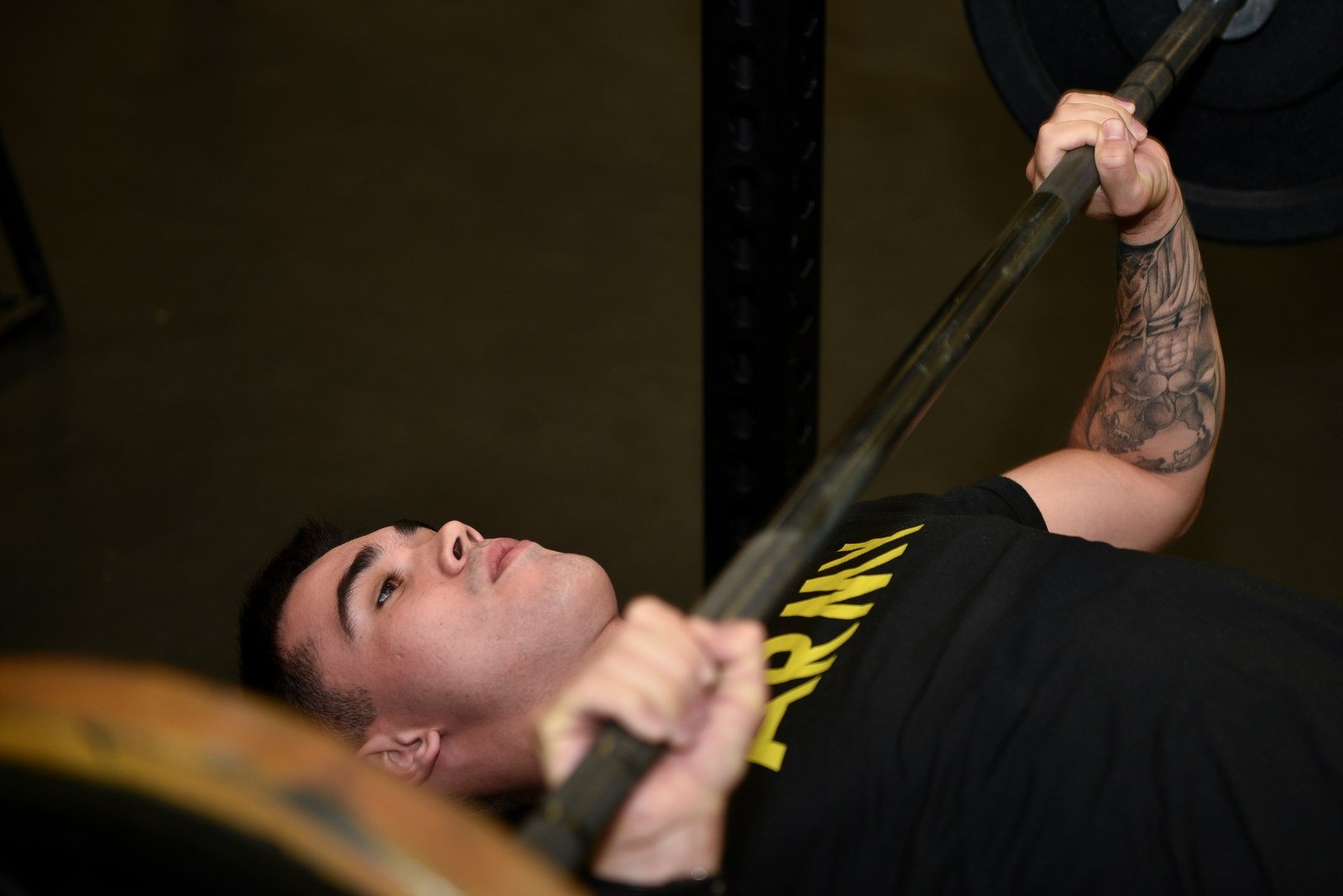
Lie on the bench with your feet flat on the floor and your shoulder blades gently set back. Grip the bar so your wrists stay stacked over your elbows as you lower it.
Lower the bar with control toward the middle of your chest, pause briefly without bouncing it, then press it back up to straight arms. Keep your hips on the bench throughout.
This is the heaviest pressing move in this guide, so treat it with respect. A spotter or safety bars are not optional extras here, especially as the weight gets challenging. 🏋️
3. Incline Dumbbell Press
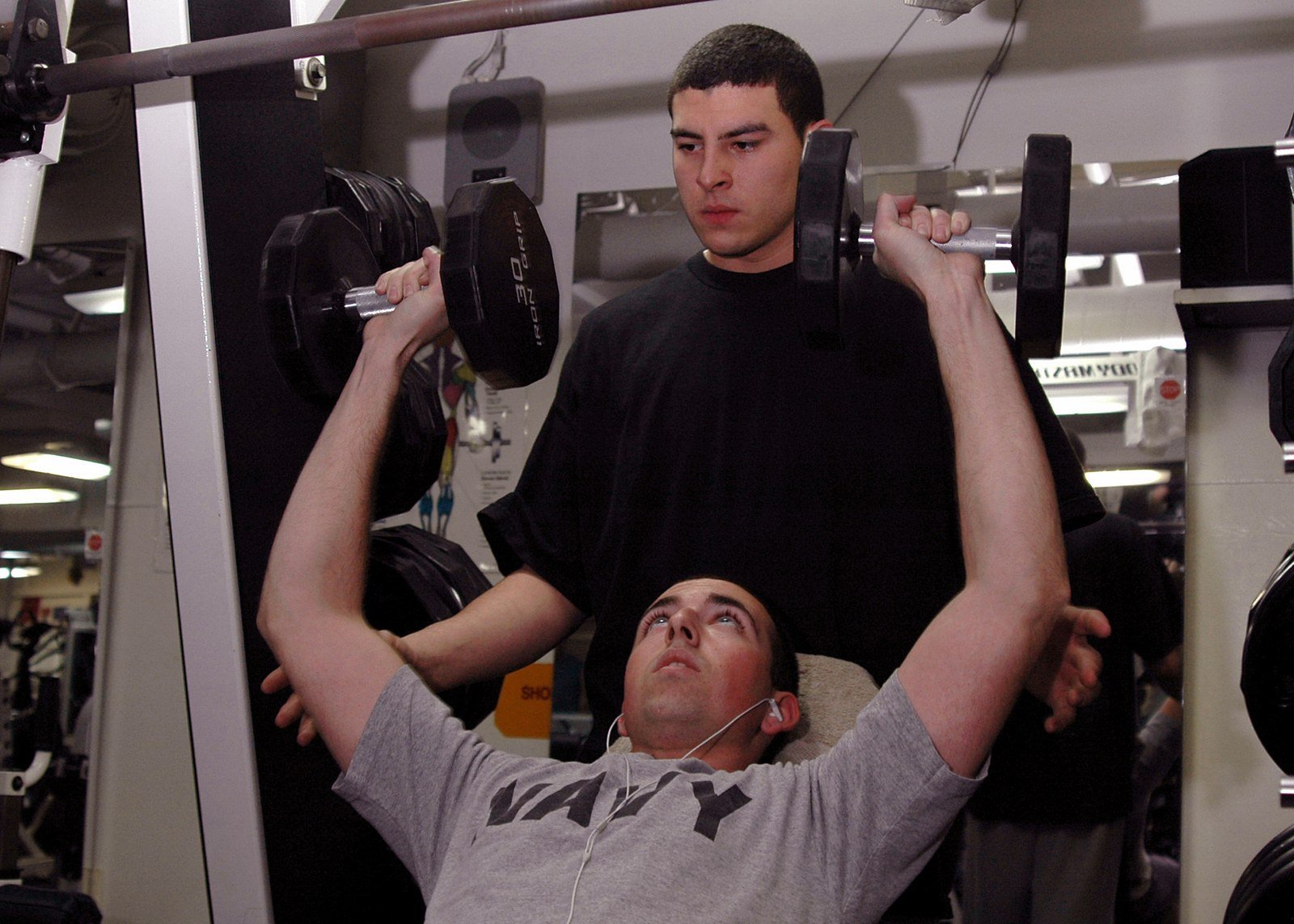
Set the bench to a moderate incline, roughly 30 to 45 degrees, with your feet flat on the floor. Hold a dumbbell in each hand just outside your shoulders.
Press both dumbbells up until your arms are straight but your elbows are not locked hard, then lower them slowly to the same starting point. Keep the movement smooth rather than rushed.
The incline shifts more emphasis toward the upper chest, near the collarbone. It does not isolate the upper chest on its own, and going much steeper turns the move into more of a shoulder press. A dumbbell guide can help if you are choosing dumbbells for home training.
4. Cable Crossover
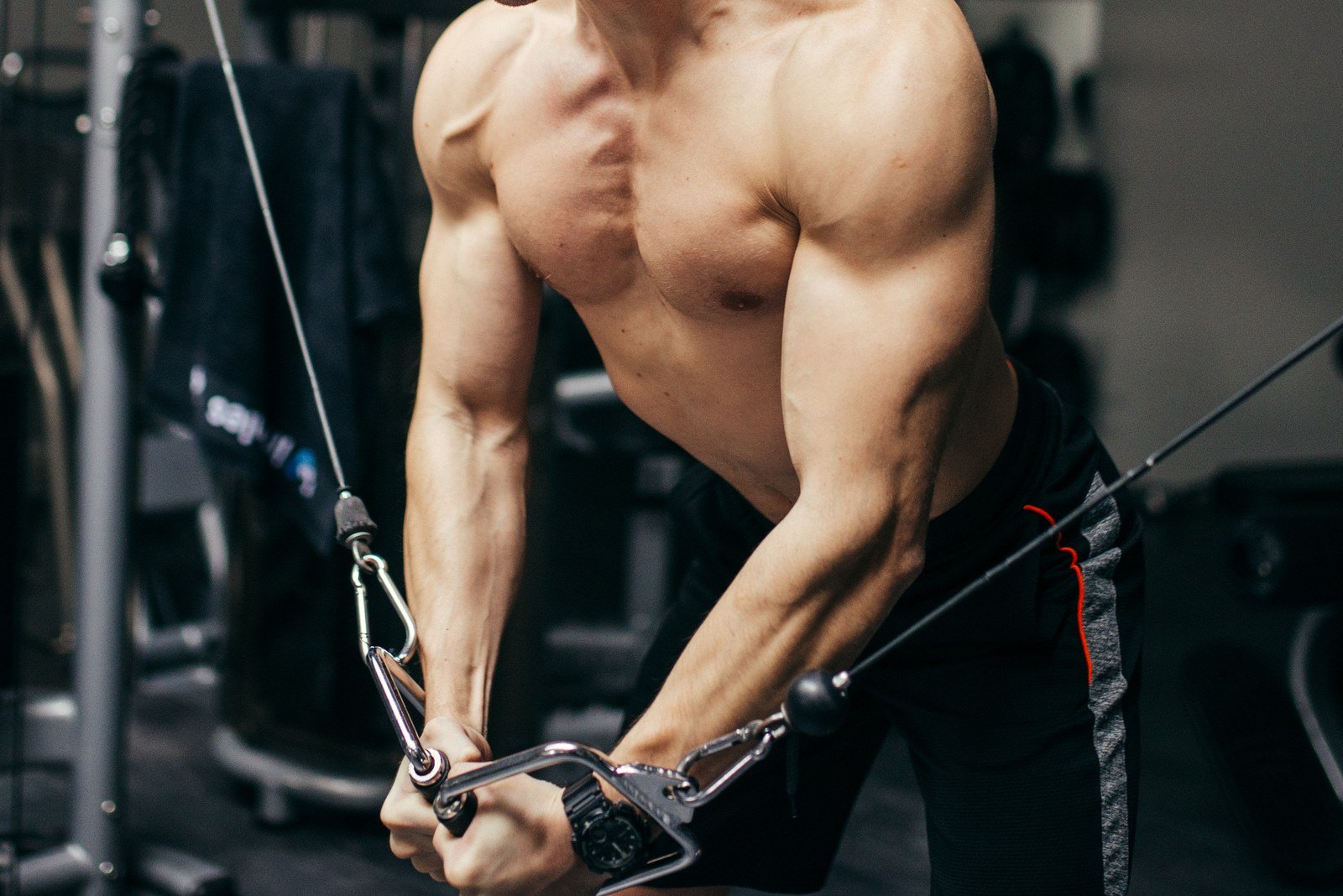
Stand between the pulleys with the handles set high, take a small step forward, and keep a slight bend in your elbows. Your chest should feel open, not pinched.
Bring your hands together in a wide arc in front of your chest, then return slowly to the stretched starting position. The return matters as much as the squeeze.
Keep the weight light enough that your shoulders stay down and your back stays still. If you are swinging or shrugging, the load is too heavy for good form. 🎯
Triceps exercises
Your triceps straighten your elbows, and that is exactly what both moves below train. They look similar at a glance, but they are different exercises.
The parallel-bar dip is the gym progression, while the bench dip is the simpler version you can do with a bench, step, or sturdy ledge. Start with the version you can control.
5. Parallel-Bar Dip
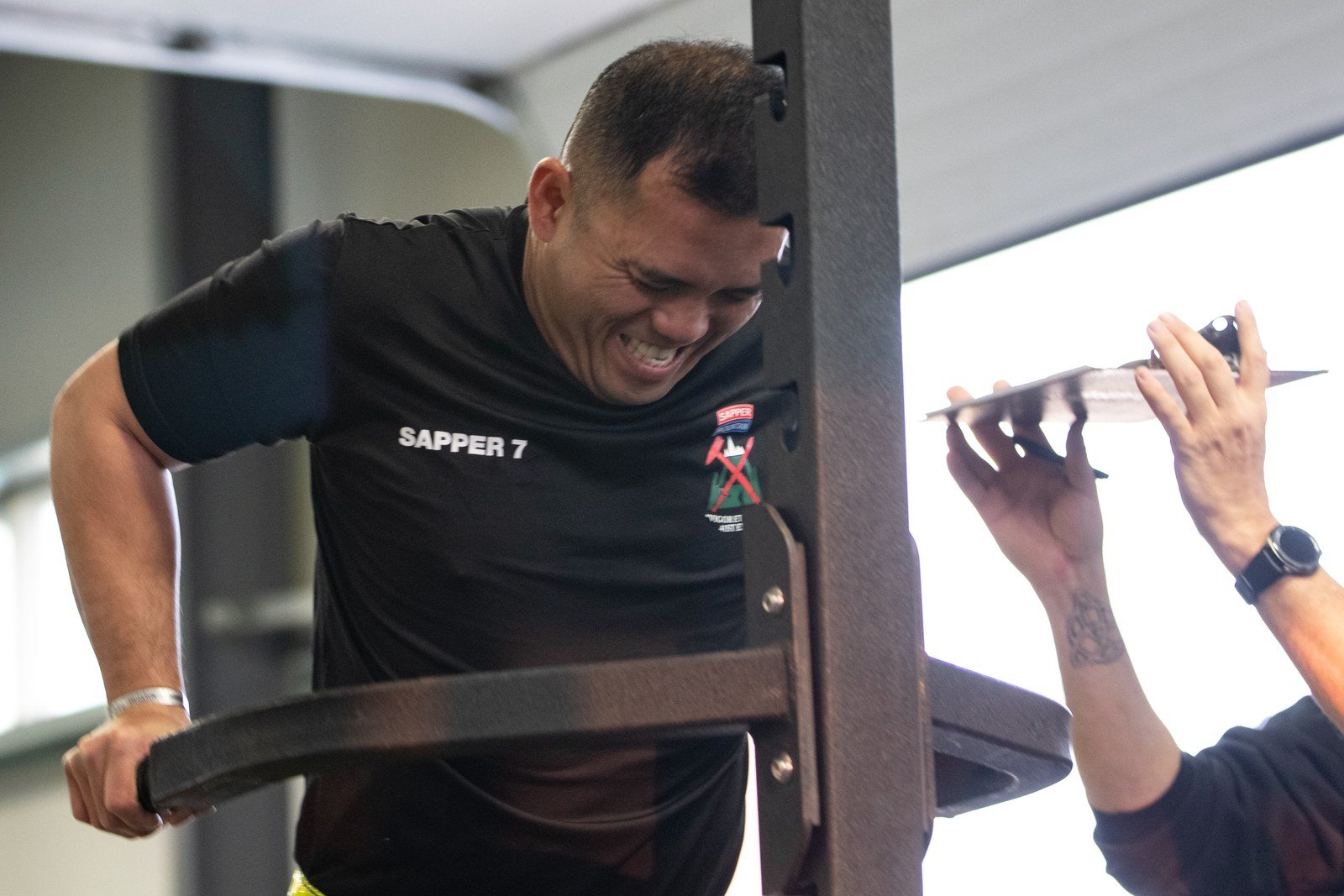
Hold the bars with straight arms and your body steady, then lower yourself only as far as feels comfortable. Press back up through your hands until your arms are straight again.
Staying fairly upright tends to put more of the work on the triceps, while leaning well forward shifts more work toward the chest. Either way, keep the movement controlled and unhurried.
If dips bother your shoulders, do not force extra depth. A shorter comfortable range, or a different triceps move learned in person, is the wiser choice. ⚠️
6. Bench Dip
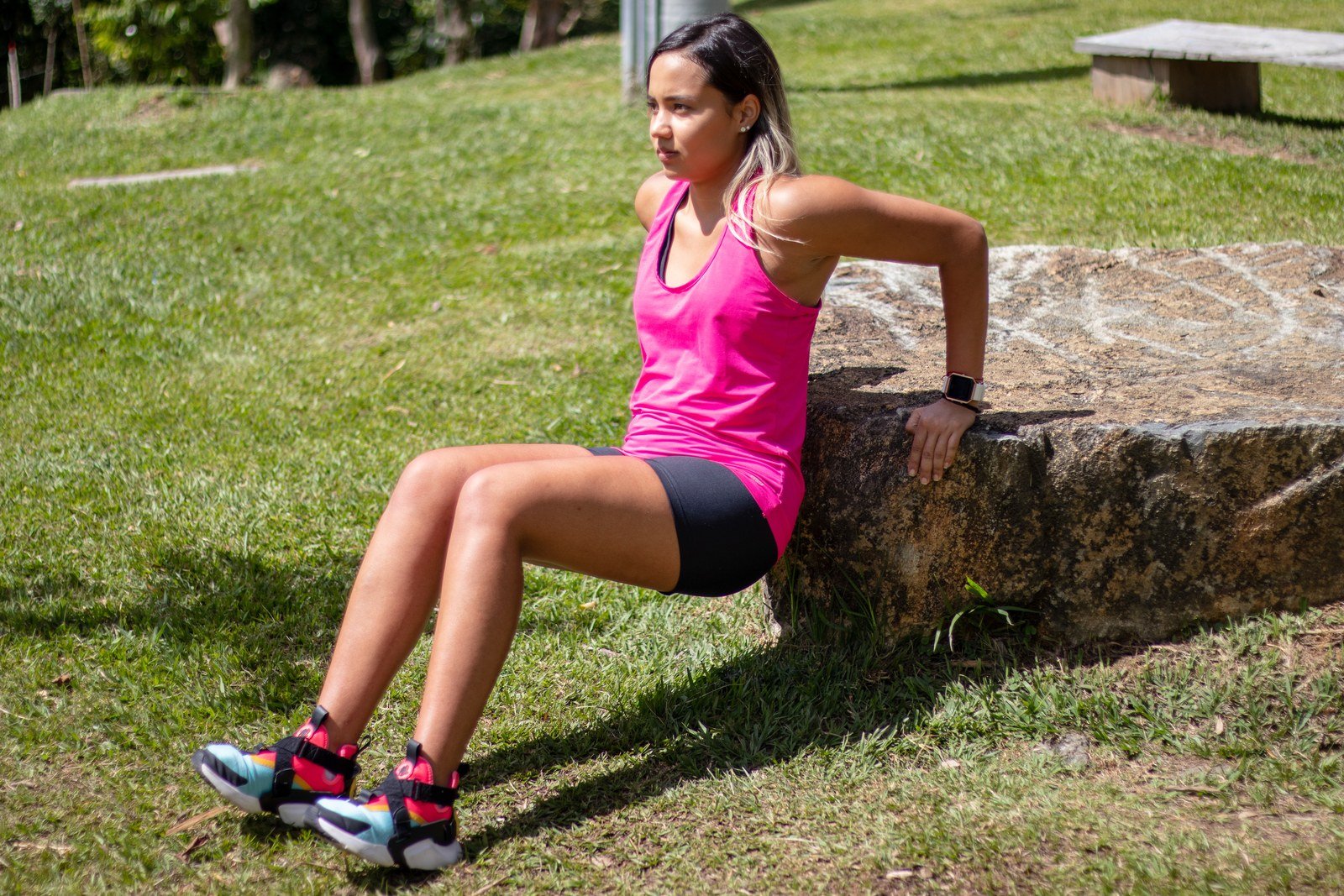
Place your hands behind you on a bench or sturdy ledge, with your legs extended in front of you. The photo shows the bodyweight version, with no added weight.
Bend your elbows to lower your hips toward the ground, then press back up to straight arms. Keep your shoulders down and away from your ears as you move.
Bend your knees to make the move easier, and only go as low as your shoulders tolerate comfortably. Pain is a signal to stop, not a target to push through. 🧘
One honest gap in this guide: it does not picture a cable pushdown, overhead extension, or lying triceps extension. Those are common triceps moves, but no verified high-definition photo of one was found for this refresh, so none is counted or pictured here. If dips do not suit you, ask a trainer in person to show you one of those moves rather than copying it from a mismatched photo.
Putting a session together
You do not need all six moves in one day. A simple session might use one or two chest moves and one triceps move, done with good form and enough rest between sessions for the same muscles to recover.
Pair this kind of upper-body work with training for the rest of your body across the week, and with core work on other days if you enjoy it. A related abs workout guide covers that side separately.
Progress means small, steady steps: a little more control, a slightly heavier dumbbell when form stays clean, or a deeper comfortable range on dips. There is no shortcut step that replaces that slow work, and this guide promises no fast results. 🌱
FAQs
Should I train triceps with chest?
Yes, it is a common and sensible pairing, because your triceps already help out during chest presses. Doing the bigger chest presses first, then direct triceps work, keeps the order logical.
Can I train chest and triceps every day?
Training the same muscles hard every day leaves little time for recovery, so most people do better training them on separate days across the week. The 2026 guidance points to training major muscle groups at least twice a week, not every day.
Will chest and triceps training burn fat from my chest or arms specifically?
No, not in any targeted way you can rely on. Training a muscle builds the muscle underneath, but the fat over it is generally lost from across the body as part of overall fat loss, not just from the area you trained.
That picture comes from controlled trials: six weeks of abdominal exercise did not reduce abdominal fat compared with a control group (Vispute and colleagues, 2011), and twelve weeks of training one leg did not reduce fat preferentially in that leg (Ramírez-Campillo and colleagues, 2013).
One small 2023 trial in 16 men with overweight did report a modest extra trunk-fat loss when abdominal work was added to matched running, but the sample was small and men-only, so it is best treated as an interesting exception, not proof that targeted fat loss works. Related reading on the same theme: exercises for love handles.
Do women need different chest and triceps exercises?
No. The same moves suit all adults, and what changes is the load, the range, and the progression, not the exercise itself. The old version of this article kept a separate section for women, but that split had no training basis, so it has been removed.
What should I do if dips hurt my shoulders?
Stop the move and do not try to work through shoulder pain. Shorten the range, switch to a version you can control, or speak to a clinician, physiotherapist, or qualified trainer in person for advice suited to you.
Bottom line
A good chest and triceps session does not need a long list of exotic moves. A push-up you can control, a press you can spot safely, a cable flye done slowly, and a dip that respects your shoulders will take you a long way. 💚
Train regularly, rest between sessions for the same muscles, eat and sleep in ways that support your training, and let progress build over weeks and months. That steady approach is the whole programme, and it is enough.