

Love handles are the soft fat that sits at the sides of the waist, just above the hips. 💛
Despite the friendly name, most people who have them would rather not. The honest news comes first, though.
No single exercise can melt fat from that one spot. This guide is about what exercise can actually do: build a stronger core, improve balance and posture, and support overall fat loss over time.
Can Exercise Target Love Handles?
The short answer is no, not reliably. Fat loss works across the whole body, not one patch at a time.
In a 2011 study, adults did abdominal exercises five days a week for six weeks. Their core endurance improved, but their belly fat did not shrink more than the comparison group’s. (Vispute et al., 2011)
A 2013 study that trained one leg found the same pattern. Fat changed across the body, not mainly in the trained leg. (Ramírez-Campillo et al., 2013)
A later review that pooled 13 one-limb training studies found no overall difference between the trained and untrained side. That is a strong sign against spot reduction.
One small exception is worth a careful mention. A 2023 trial with 16 men with overweight matched two groups for calories burned. The group that swapped some running for abdominal endurance work lost about 697 grams more trunk fat.
That result is small, men-only, and unrepeated at scale. It does not rescue the old promise that crunches erase love handles. Treat it as an interesting hint, not a plan.
Where your body stores fat, and where it leaves from first, depends a lot on genetics and hormones. That is why two people can follow the same routine and see different waistlines. 🧬
1. Stability-Ball Crunch
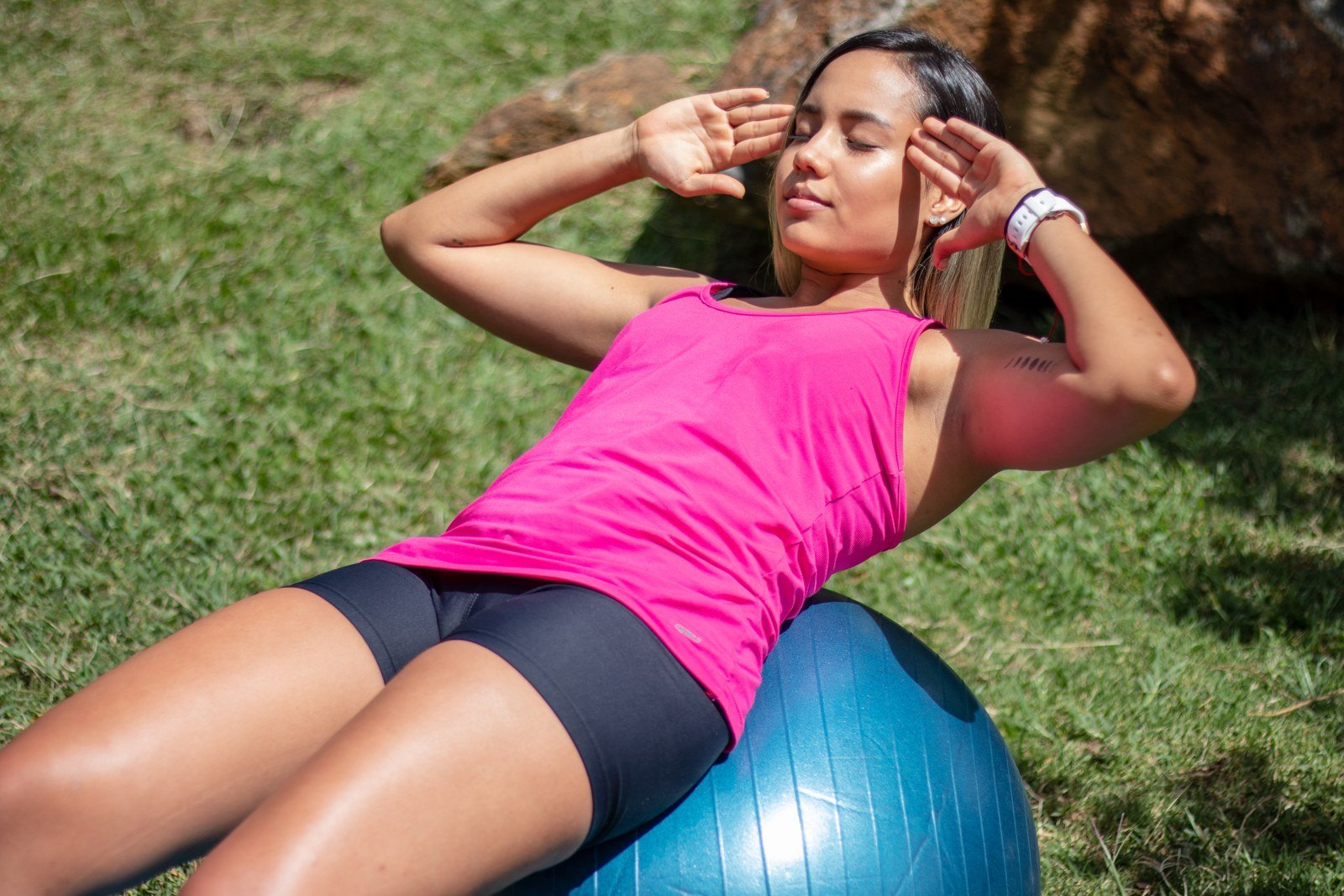
This is a gentle way to wake up the front of the core. The ball supports your lower back while you curl up.
Lie back over the ball with your feet flat on the floor. Rest your fingertips lightly behind your head.
Curl your shoulders up a few inches and breathe out. Lower slowly back down. Keep your neck relaxed throughout. 😌
Try 2–3 sets of 10–12 slow reps. Stop if your lower back complains — a smaller range is fine.
2. Side Plank
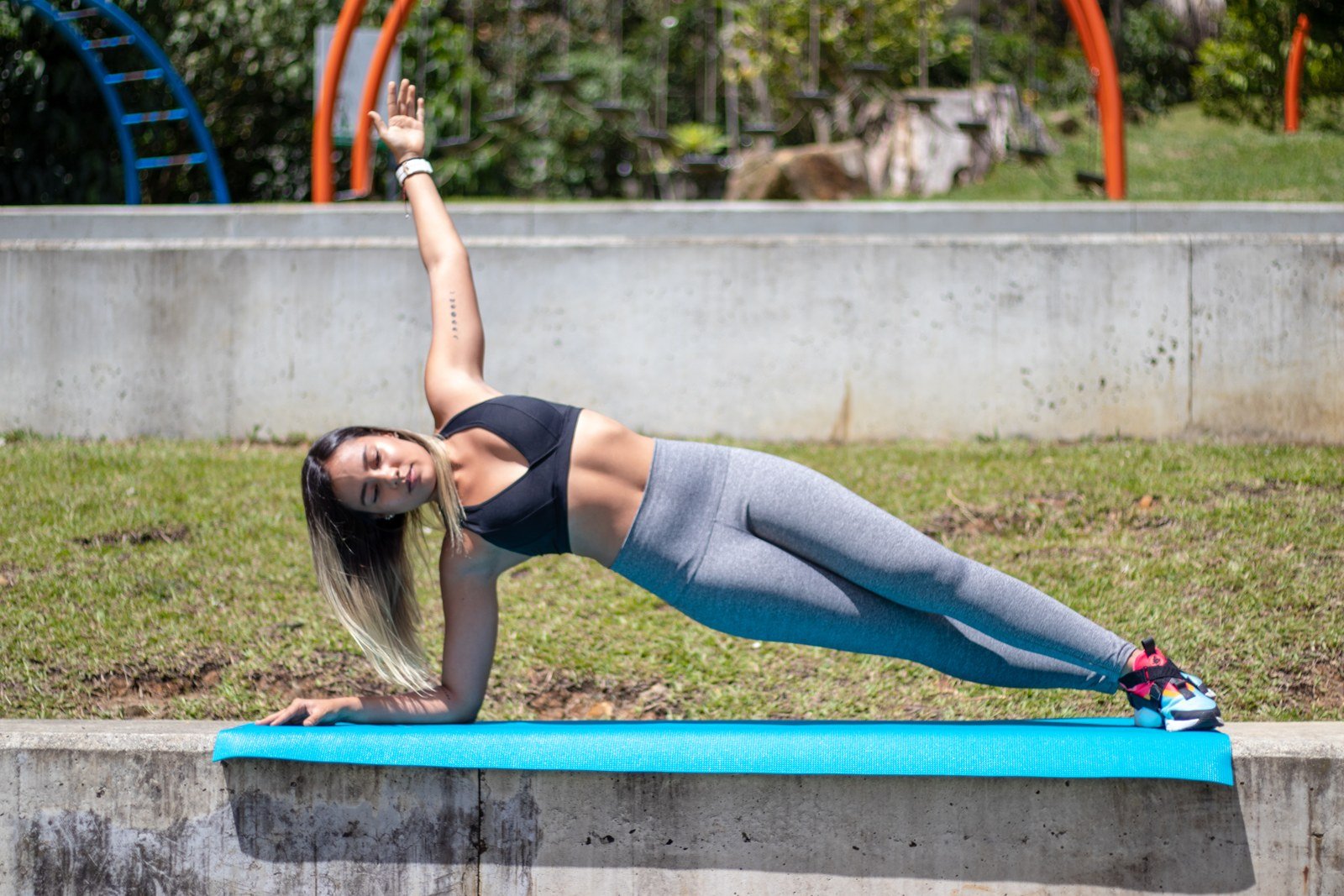
The side plank works the obliques, the muscles along the sides of your waist. It also trains balance. ⚖️
Lie on your side and prop up on your forearm, elbow under your shoulder. Stack your feet or stagger them for balance.
Lift your hips until your body makes a straight line. Hold for 15–30 seconds, breathing normally, then switch sides.
If the full version is too much, bend your knees and rest on your lower knee instead. The straight line matters more than the time.
3. Forearm Plank
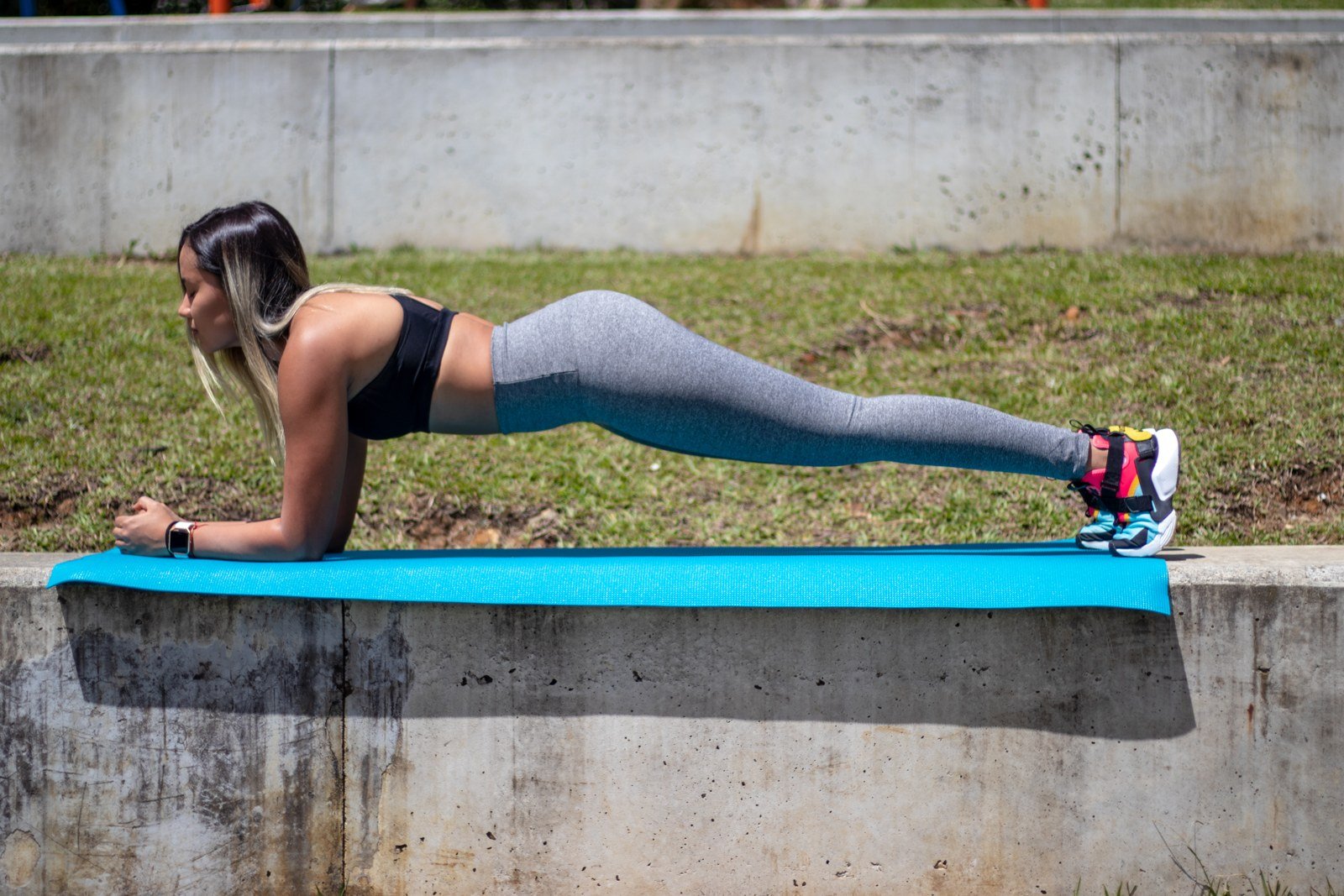
The classic plank trains the whole core at once, front, sides, and deep stabilisers. It pairs well with the side plank above.
Rest on your forearms and toes with elbows under your shoulders. Keep your hips level — not sagging, not piked up.
Hold for 20–40 seconds and breathe steadily. Two or three holds beat one long, wobbly one. 💪
For more plank ideas, see our plank variations guide.
4. Standing Side Bend
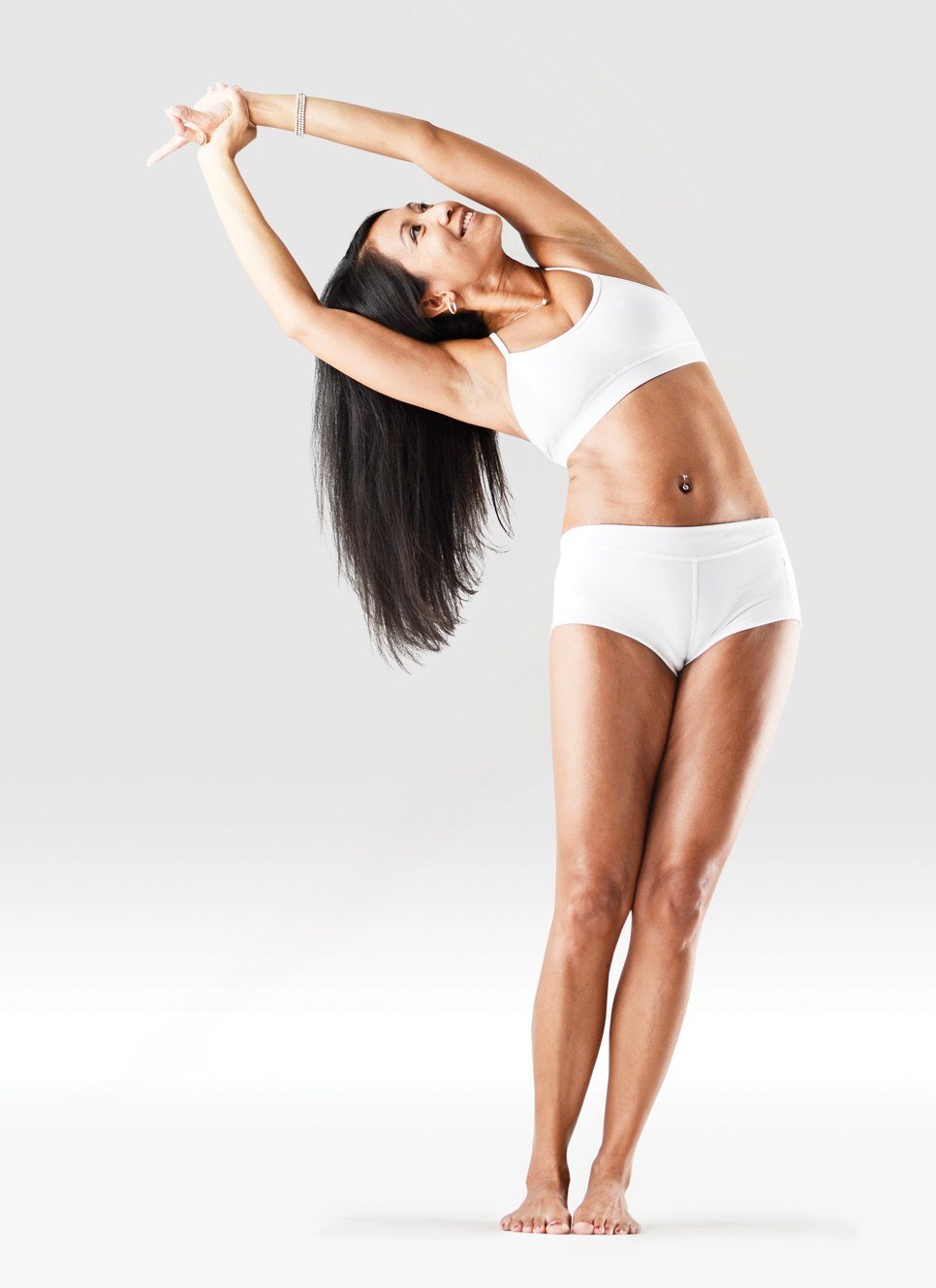
This one is a stretch, not a strength move — and that is the point. A supple waist moves better in every other exercise here. 🌿
Stand tall with feet hip-width apart. Reach both arms overhead and hold one wrist with the other hand.
Bend gently to one side until you feel a stretch along your waist. Hold for 15–20 seconds, return to centre, and switch sides.
Keep both feet planted and bend sideways only, not forward. A small, comfortable stretch is enough.
5. Balance-Dome Crunch
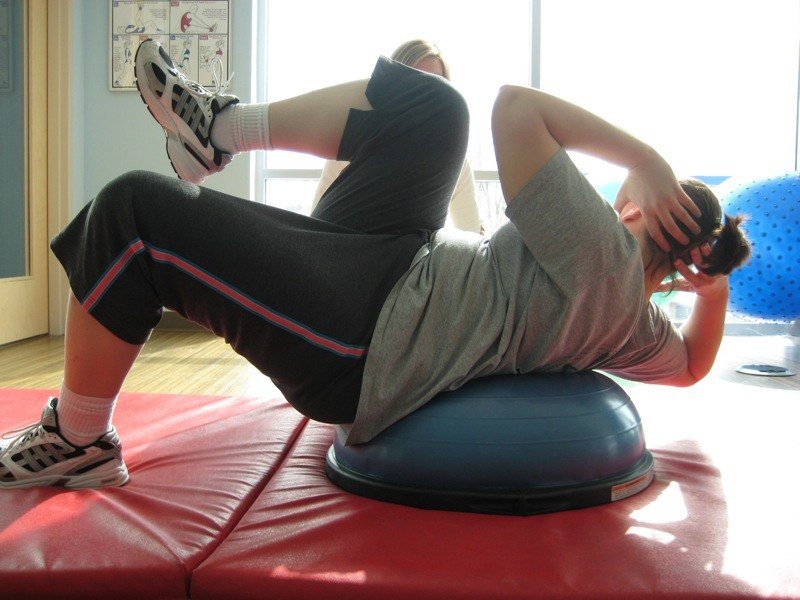
Lying on a soft dome adds a balance challenge to a basic crunch. Your core has to steady you as well as lift you.
Sit on the dome, walk your feet forward, and lie back so the dome supports your lower back. Hands stay light behind your head.
Curl up slowly, pause, and lower with control. The dome will wobble — that is normal, so keep the range short at first. 🏋️
Try 2 sets of 8–10 reps. Skip this one if you have balance problems or a sore back, and use the stability-ball crunch instead.
6. Brisk Walking or Jogging
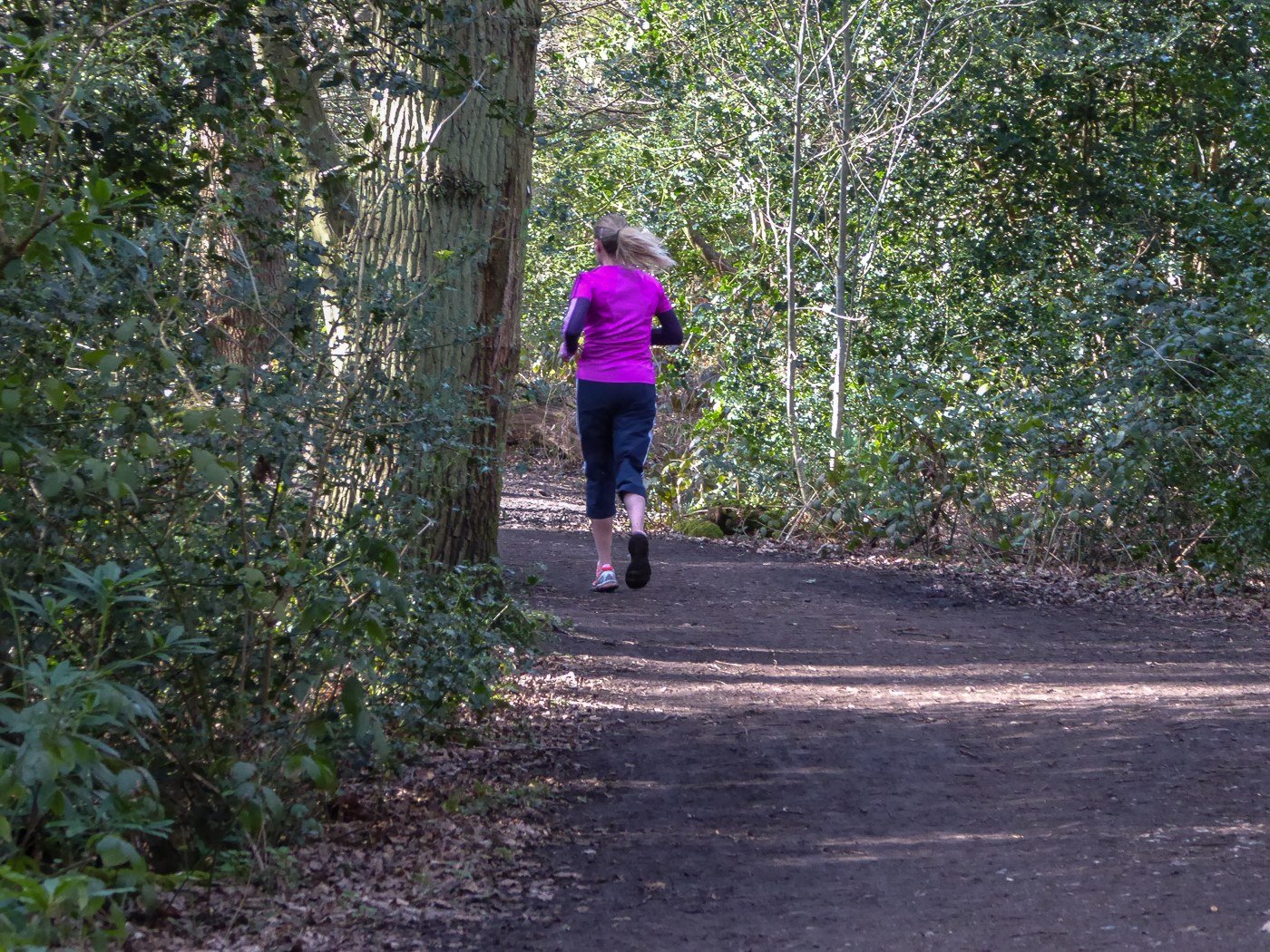
Cardio does not target the waist either. What it does is burn calories and support heart health, which helps overall fat loss. 🏃
Pick a pace you can hold while still talking in short sentences. Brisk walking counts — you do not need to run.
Aim to build toward regular sessions, such as 30 minutes most days, at a pace that feels like a 6 or 7 out of 10 effort.
Walking with a friend, a podcast, or a dog makes the habit far easier to keep than willpower alone. 🐕
The Overall Fat-Loss Picture
Core moves build muscle. Fat loss itself comes from the bigger picture: eating a little less energy than you use, moving often, and sleeping well.
In general terms, a balanced plate helps: plenty of vegetables, protein-rich foods, whole grains, and water through the day. Sugary drinks, alcohol, and heavily processed snacks are best kept occasional rather than everyday.
No food or supplement “burns” waist fat on its own. If a product promises that, be sceptical. ⚠️
A realistic pace, per NHS and CDC guidance, is around 0.5–1 kg (1–2 lb) per week for most adults. Some weeks will be slower, and that is normal.
Sleep matters more than people expect. Short, broken nights make healthy eating harder the next day, so a regular bedtime is part of the plan, not an extra. 😴
For a fuller look at the same honest approach, see how to lose belly fat steadily and our belly pooch exercises.
A Simple Weekly Shape
Two or three short core sessions a week is plenty to start. Pick three moves from above, do 2 sets each, and leave a rest day between sessions.
Add walking or jogging on most days, even in 10-minute chunks. Small, regular movement beats one heroic weekend workout.
Progress slowly: a few more seconds on a plank, one more rep, or five more minutes walking. Your waistline will not change in a week, and nobody honest will tell you otherwise.
When to Get Advice First
Speak to a clinician or physiotherapist before starting if you have back pain, an injury, a health condition, or you are pregnant. 🩺
The same applies if you notice pain during any move here, unexplained weight change, or you are unsure what is safe for you.
This article is general information only, not medical advice. A professional who knows your history can tailor it to you.
FAQs
Can love handles go away with exercise alone?
Exercise helps, but on its own it rarely changes one area. Core work strengthens the muscles underneath, while overall fat loss — from eating, movement, and sleep together — decides how much softness sits on top.
What causes love handles?
They are stored body fat at the waist, shaped by how much energy you take in versus use, plus age, hormones, genetics, activity, and sleep. No single food or missed workout creates them.
Is running the best way to lose them?
Running burns calories and supports overall fat loss, which can include the waist over time. Walking works too. The best cardio is the one you will actually do most weeks.
Do I need special machines or supplements?
No. The moves above need a mat, and optionally a stability ball or dome. Save your money unless a coach or clinician recommends a specific tool for you.
Related reading: exercises to reduce belly fat, stretching exercises, and V-shape exercises.