

A V-taper is a simple shape to picture: a wider back and shoulders, tapering down to a narrower-looking waist. 🏋️
That look comes from two things working together. The first is building the muscles that widen the top of the shape — mainly the lats and the shoulders.
The second is overall body composition. No single exercise burns fat from one chosen spot, so a V-taper cannot be “targeted” into the waist alone.
Think of the four exercises below as the widening half of the job. They build back width and shoulder width, while your overall training and eating habits decide how visible that shape becomes over time.
This is general fitness information, not medical advice. If you have shoulder or back pain, or any medical condition, check with a clinician or a qualified coach before trying a new exercise.
1. Wide-Grip Lat Pulldown
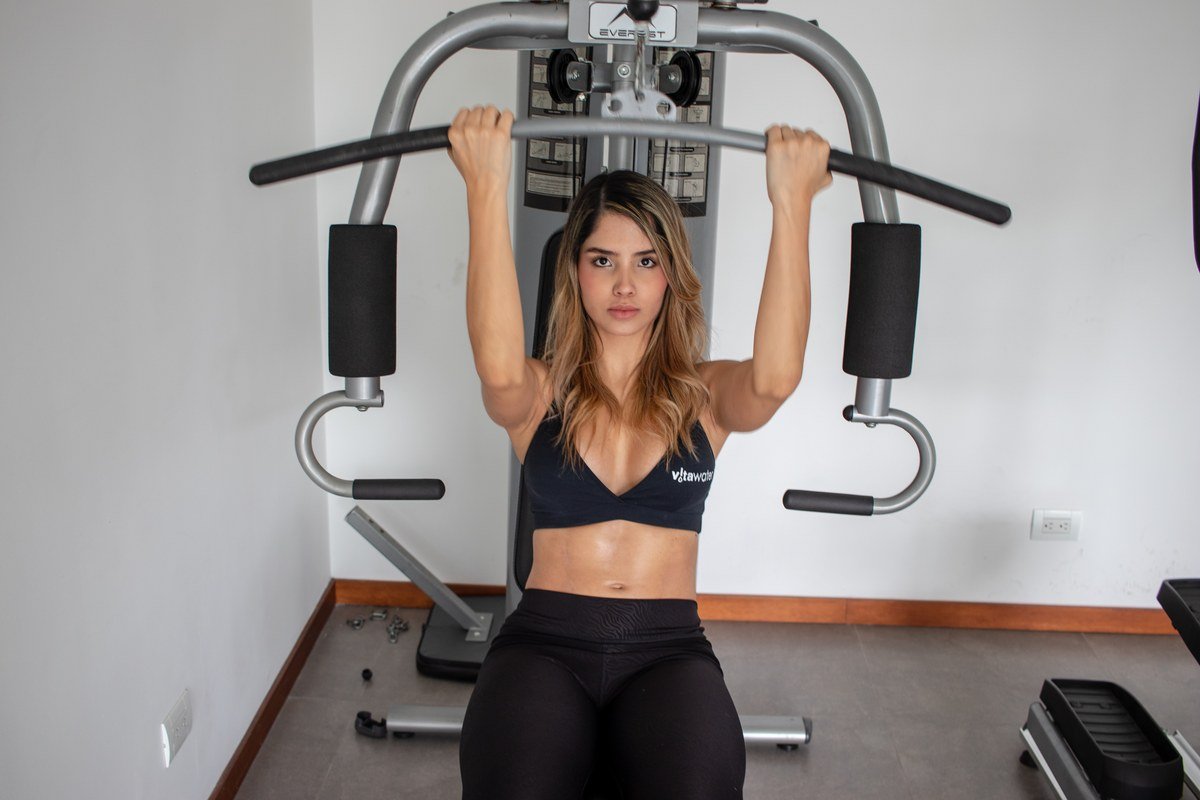
Photo: Tyler Read / Wikimedia Commons
The lat pulldown is the most adjustable way to train back width. You sit at a cable machine, pull a wide bar down to your upper chest, and let your lats do the pulling.
Your latissimus dorsi — the large muscles on the sides of your back — are the main movers here, with your biceps and the muscles between your shoulder blades assisting.
Set the knee pad so you stay seated, take a grip wider than your shoulders, and lean back only slightly. Drive your elbows down and toward your sides, rather than pulling with your hands.
Pause briefly with the bar near your upper chest, then control it back up. Avoid leaning far back or bouncing the weight, as both turn a back exercise into a momentum exercise.
A close, neutral grip is a useful variation of the same move. It usually feels easier on the arms and brings the biceps in more, but it is not a separate V-taper exercise — treat it as a second grip option on pulldown day.
2. Pull-Up
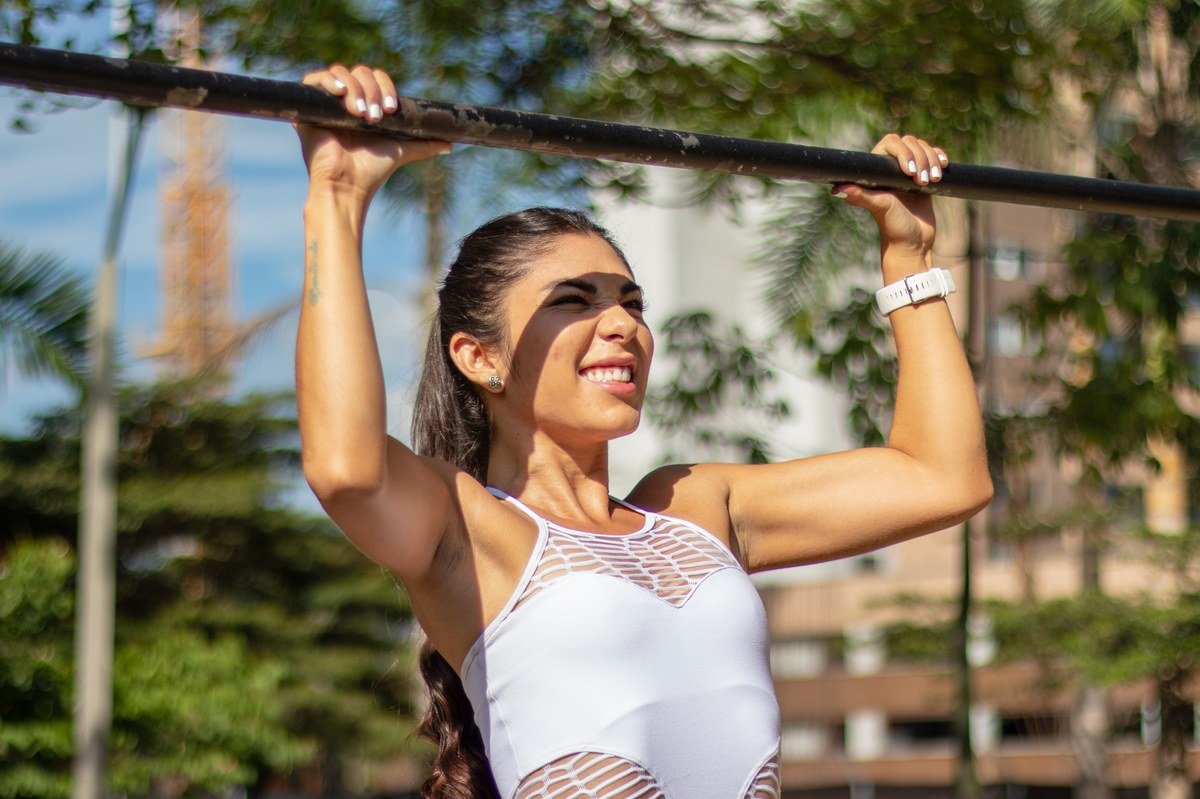
Photo: PTPioneer / Wikimedia Commons
The pull-up is the bodyweight version of the same vertical pull. You hang from a bar and pull your chest toward it, which trains the lats through a full range of motion. 💪
It is also an honest strength check. If full pull-ups are not possible yet, assisted pull-ups or slow lowering reps keep the same movement pattern while you build strength.
Start from a dead hang with your arms straight, then pull by driving your elbows down. Keep your chest up and avoid kicking or swinging for extra height.
Lower yourself under control rather than dropping. That lowering phase still trains the back, and it is often where beginners make their fastest progress.
Use a grip that feels comfortable on your shoulders. A very wide grip does not automatically mean more lat work, and an uncomfortable grip is a reason to adjust, not to push through pain.
3. Standing Dumbbell Overhead Press
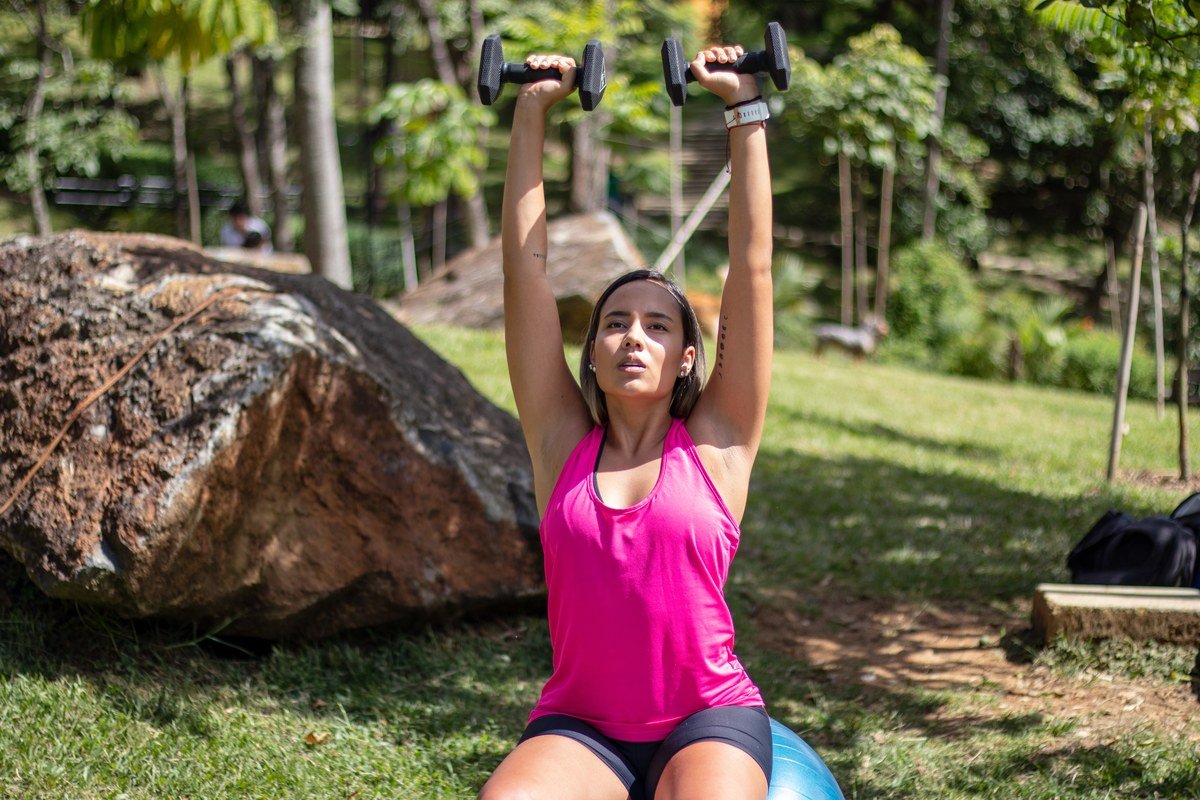
Photo: PTPioneer / Wikimedia Commons
Wide shoulders complete the top of the V, and the overhead press is the main compound lift for them. You press dumbbells from shoulder height to overhead, with your core keeping you steady.
The front and side deltoids do most of the work, with the triceps assisting. That side-deltoid work matters for width, since it builds the outer edge of the shoulder.
Stand tall, hold a dumbbell at each shoulder, and press straight up without leaning back sharply. Keep your ribs down and your head still, so your lower back does not take over.
Lower the dumbbells slowly to shoulder height and repeat with the same control. If your lower back arches heavily, the weight is too heavy for good form.
Dumbbell lateral raises are a useful smaller companion for the side deltoids, but they are a finishing move, not a replacement for the press. Add them only after the main press, with light, controlled reps.
4. Seated Cable Row
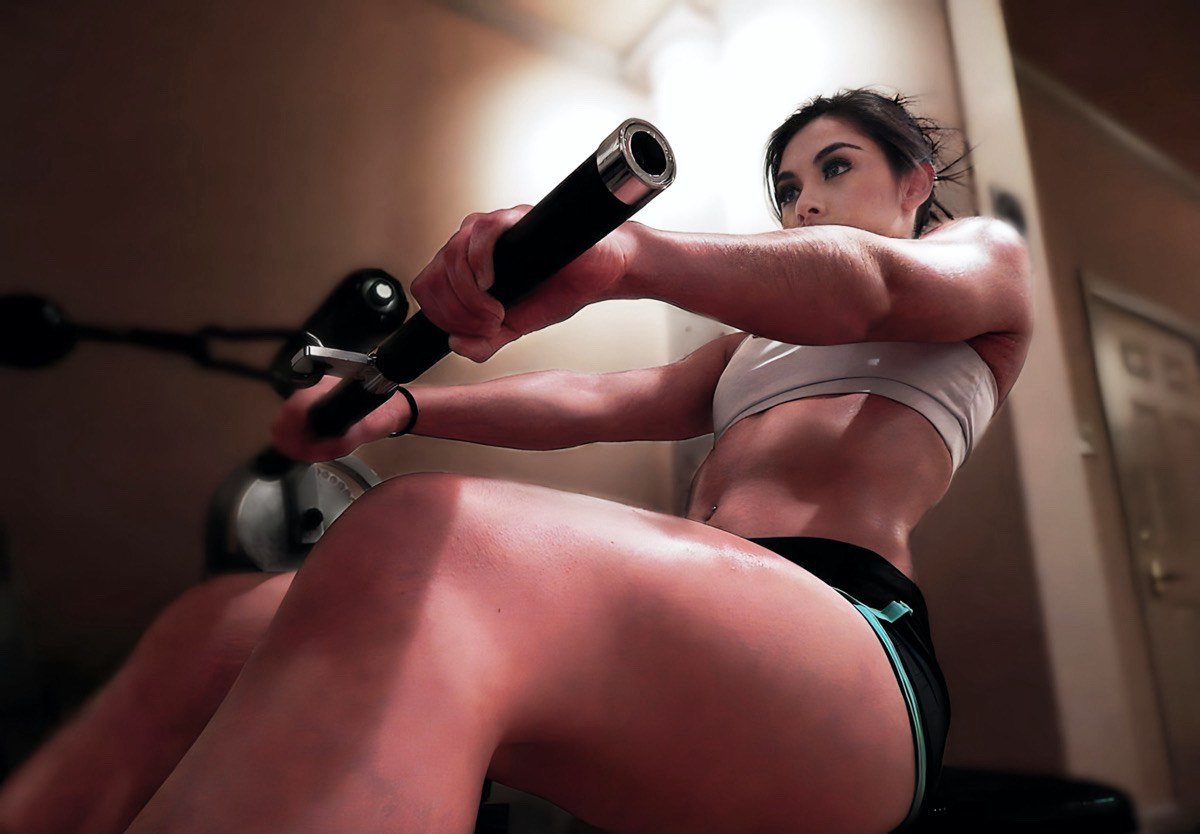
Photo: Miguel Angel Omaña Rojas / Wikimedia Commons
Pulldowns and pull-ups build width, but a row adds the back thickness that stops the V from looking flat from the side. The seated cable row pulls horizontally, toward your torso.
Sit tall with your feet braced, take the handle, and pull it toward your lower chest or upper stomach. Squeeze your shoulder blades together briefly at the end of each rep.
Keep your torso still rather than rocking back and forth. A small, steady posture lets your mid-back and lats work, instead of your hips doing the pulling.
Return the handle slowly, letting your shoulder blades slide forward under control. That stretch at the start of each rep is part of the exercise, not wasted movement.
Pair this row with a vertical pull in the same week. Width plus thickness is what makes a back look complete, rather than wide in one direction only.
What About the Waist?
Abdominal exercises strengthen the muscles under the waist, but they do not selectively burn the fat sitting over them. That point is worth stating plainly, because the old version of this article implied otherwise.
In a six-week trial, abdominal training improved endurance but produced no significant change in abdominal fat compared with a control group (Vispute et al., 2011).
In a twelve-week trial that trained only one leg, fat loss did not favour the trained leg — it appeared elsewhere, including the trunk and upper body (Ramírez-Campillo et al., 2013).
One small 2023 trial in 16 men with overweight did report about 697 g more trunk-fat loss in an abdominal-endurance group than in a running-only group, with similar total fat loss in both groups.
That result is hedged, not a reversal: it was small, men-only, and energy-matched, so it is not a basis for a “crunches for a flat stomach” plan. The practical reading stays the same — overall training and body composition shape the waist.
For the abdominal side of the picture, see our separate guide to how to get an Adonis belt, which covers that angle on its own rather than repeating it here.
Core work still has a place in a balanced programme. Our guides to exercises for the obliques and plank exercises cover it without promising spot reduction.
How to Use These Four Exercises
Put one vertical pull, the row, and the press into your weekly training, rather than doing all four on one day. That spread keeps each lift fresh and your shoulders happier. 🔁
Choose loads you can move with strict, controlled form for every rep. When form breaks down, the set is over, whatever the weight on the bar or stack.
Progress slowly — a little more weight, an extra clean rep, or a stricter tempo — and give the same programme several weeks before judging it. A V-taper is built over months of consistent training, not a single workout.
For the wider muscle-building picture, see our muscle-building guide. And if anything hurts in a sharp or joint-specific way, stop and get it checked rather than training through it.
FAQs
Can exercise change my body shape?
Yes, within limits. Training can widen your back and shoulders and change your overall body composition, but your bone structure and where you store fat are largely set by genetics.
Do I need crunches for a V-taper?
No — not for the taper itself. Crunches strengthen the abdominals, but they do not selectively slim the waist. Back and shoulder work, plus overall body composition, create the V shape.
Is a wide grip always better for lat pulldowns?
Not automatically. A wide grip is a good default for width, but grip mainly changes how the move feels. Pick the grip that lets your lats work without shoulder discomfort.
How long does a V-taper take to build?
There is no honest timeline to promise. Visible change depends on your starting point, consistency, and overall body composition, and it is measured in months, not weeks.