

What a wide grip actually changes 🤲
A wide-grip push-up is a standard push-up with the hands set clearly wider than shoulder-width. Nothing else about the plank changes: head, hips, and heels stay in one straight line.
The wider base shifts the feel of the press. The chest does more of the talking, the triceps do a little less, and the shoulders have to work harder to stay controlled.
That shift is about emphasis, not magic. A wider grip does not automatically make the exercise better, and it is not the best chest builder for everyone.
Photo note: the photos in this article show push-ups in general. They are not presented as measured wide-grip hand positions, and no photo year is claimed for any of them.
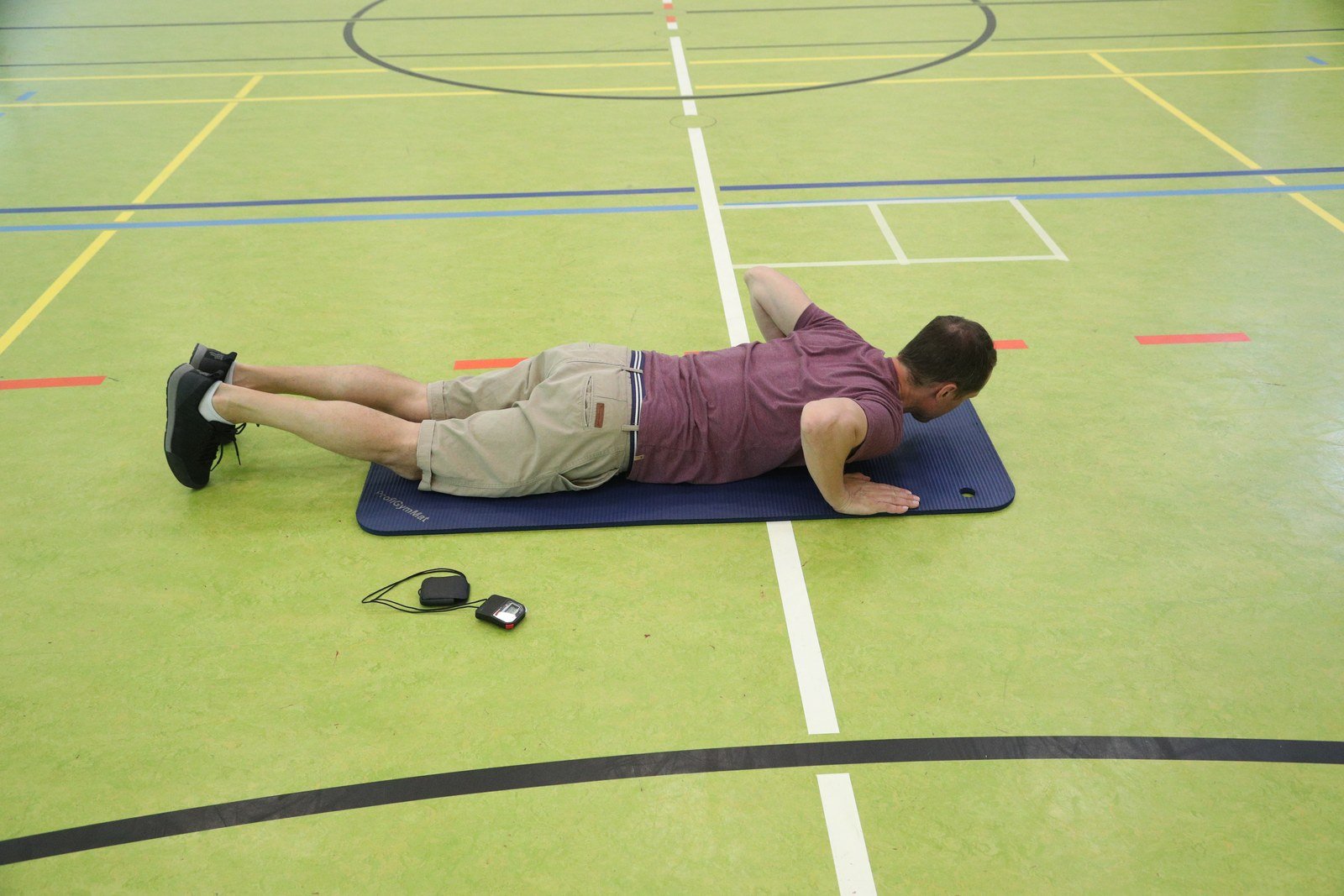
Photo: Uzltt123 / Wikimedia Commons
Setting up your hand placement ✋
Start in a high plank with your hands flat on the floor. Walk them out until they sit comfortably wider than your shoulders, fingers pointing forward or slightly outward.
How wide is “wide”? A useful starting point is roughly one-and-a-half times shoulder-width. Going much wider than that is where most people lose control.
Your hands should sit roughly under your chest line, not pushed far in front of your shoulders. Hands too far forward load the shoulders and make the bottom position harder to control.
Press through the whole hand, not just the heel of the palm. Think about pushing the floor away from you as you press up, and let your shoulder blades move naturally rather than pinning them still.
The press, step by step 🏋️
Brace your core and squeeze your glutes before you move. Lower yourself slowly, keeping your body in that same straight plank line from head to heels.
Let your elbows track out at a diagonal, roughly 45 degrees from your torso. This is the detail the old article got wrong when it said to keep the elbows tucked close to your sides — fully tucked elbows belong to a close-grip press, not a wide one.
Lower until your chest is close to the floor or your upper arms are roughly parallel with it, whichever comes first with good control. Pause briefly, then press back up without bouncing.
Keep your neck neutral and your eyes on the floor. If your hips sag, your head drops, or your shoulders shrug toward your ears, the set is telling you something — stop there and reset.
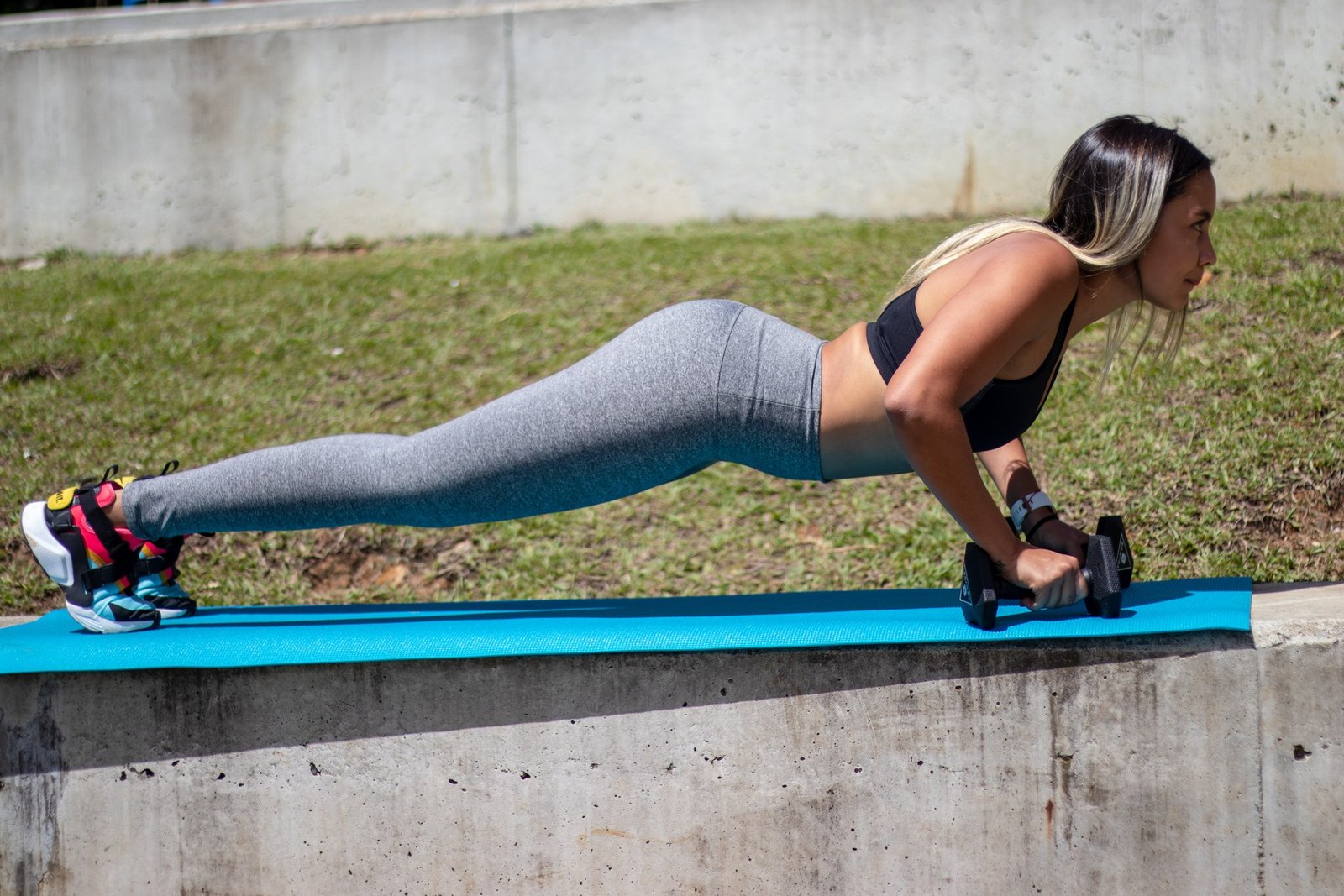
Photo: PTPioneer / Wikimedia Commons
Chest emphasis — what the evidence can and cannot say 🔍
Many lifters feel a wide grip more in the chest, and some muscle-activity (EMG) studies record differences between hand positions. That feeling is real, but it is not the whole story.
EMG measures electrical activity during a single session. It does not prove that one grip builds more muscle than another over weeks or months of training.
Some EMG findings even run against the popular claim: very wide positions have not consistently shown more chest activity than shoulder-width or narrower positions. So treat “wide grip builds a bigger chest” as unproven, not as fact.
The honest way to use this variation is as a different emphasis within a balanced push-up routine — not as a replacement for every other press. For the wider catalogue of variations, see 5 Push-Up Variations (2026), and for building a home chest routine around push-ups, see Build a Strong Chest at Home with Push-Ups (2026).
Range of motion: the correction that matters 📏
The old version of this article claimed a wide grip increases your range of motion. That is backwards, and this refresh corrects it.
When your hands move wider, your chest meets the floor sooner, so the press travels a shorter distance. A wider grip generally shortens the range of motion, even though the chest may feel a deeper stretch at the bottom.
That trade-off is worth knowing. A shorter range is not automatically bad, but it is a reason not to chase extreme width: the wider you go, the less room the movement has left.
If your chest cannot reach a comfortable depth, or your shoulders pinch before you get there, narrow the grip a little. Comfort and control outrank width every time.
Shoulder comfort and safety ⚠️
A very wide grip puts a high demand on the shoulders. For people with sensitive shoulders, it can aggravate discomfort — physiotherapy guidance notes that switching to a narrower hand placement can help offload sensitised shoulder structures.
Watch for these warning signs: pinching at the front of the shoulder, shoulders shrugging toward the ears, or elbows flaring out to a full T-shape. Any of those is a cue to narrow the grip, shorten the range, or stop the set.
Do not push through sharp or persistent shoulder pain to finish a set. If pain keeps returning, or you have a known shoulder condition, get direction from a qualified coach or clinician before continuing with this variation.
Wrist comfort matters too. If flat hands bother your wrists, try push-up handles or dumbbells with stable flat sides, and keep your hands from drifting too far forward.
Easier ways in 🌱
If the full floor version is too much right now, build up with an easier angle first. These are regressions, not failures — they let you practise the same wide hand placement with less load.
- Wall or incline push-ups: hands on a wall, bench, or sturdy table, feet on the floor, same straight plank line. Raise the surface to make it easier.
- Knee push-ups: knees on the floor, hips in line, hands wide. Keep the same controlled lowering and pressing.
- Shorter range first: lower only as far as you can with a straight body and no shoulder pinching, then build depth gradually over time.
- Standard grip first: master a comfortable shoulder-width push-up before widening the grip, since a wide grip is harder to control, not easier.
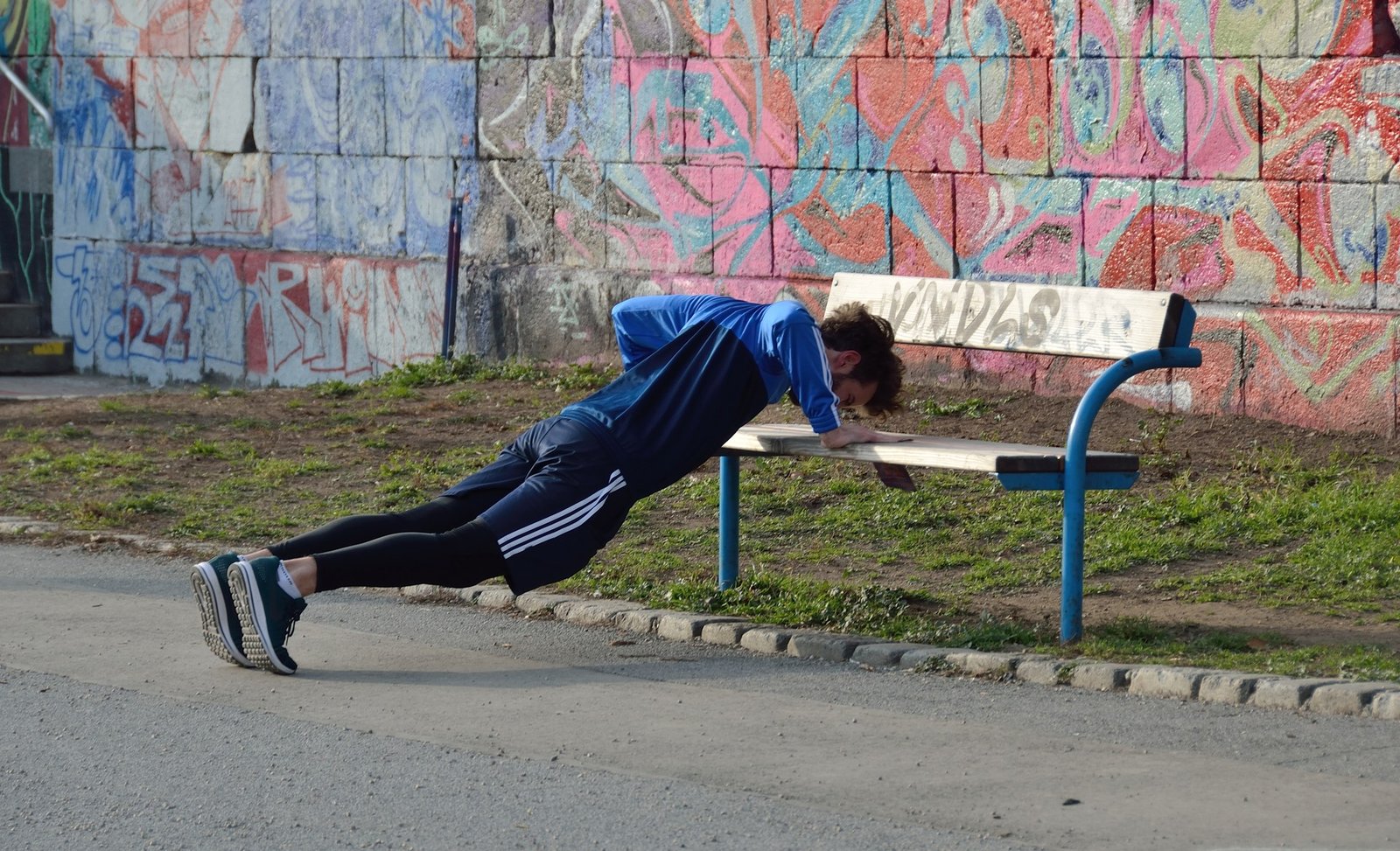
Photo: Herzi Pinki / Wikimedia Commons
Common mistakes to avoid 🚫
- Going too wide, too soon — the classic error. Width that you cannot control is not a harder workout; it is a sloppier one.
- Elbows flared to 90 degrees, which loads the front of the shoulder. Aim for a diagonal, roughly 45-degree track.
- Hips sagging or piking up, which breaks the plank and shifts load away from the chest.
- Bouncing off the bottom or rushing the lowering phase. Slow down; the lowering half is where control is built.
- Holding your breath through the whole set. Breathe steadily and brace without locking your breath in.
How to fit it into your week 📅
No fixed programme is prescribed here — your training history, recovery, and goals decide the details. As a labelled example only, some people use wide-grip push-ups in 2–3 weekly upper-body sessions, for a few controlled sets of as many clean reps as they can manage without form breaking down.
Start with fewer sets and a narrower “wide” than you think you need. Add width or volume gradually, one small step at a time, and keep at least one easier session in the week if you are new to the variation.
If wide-grip reps feel worse than your standard push-ups after a few weeks — less control, more shoulder niggle, no comfortable depth — that is useful information. Narrow the grip or swap the variation; the standard press is not a step backwards.
Wide vs close: which one is yours? ⚖️
This article is the wide-grip deep dive: hand placement, range of motion, and shoulder comfort for this one variation. It does not re-teach the full catalogue of push-up types.
If you want the head-to-head choice, our comparison post covers it directly: Close Grip Pushups vs Wide Grip Pushups. In short, close grips load the triceps more, wide grips shift emphasis toward the chest — and the best choice is the one you can perform with control and without pain.
FAQs ❓
Are wide-grip push-ups easier or harder than regular push-ups?
Usually harder to control, because the shoulders work more and the leverage changes. Some people find them easier on the triceps, but that does not make the whole movement easy.
Can I do wide-grip push-ups on my knees?
Yes. Knee push-ups with a wide hand placement are a sensible regression. Keep the plank line from knees to head, and build toward the full version gradually.
Should my elbows be tucked to my sides?
No — not for a wide grip. Elbows track diagonally, roughly 45 degrees from the torso. Fully tucked elbows suit a close-grip press instead.
What if wide-grip push-ups hurt my shoulders?
Narrow the grip, shorten the range, or switch to an incline version. If pain persists, stop and get advice from a qualified coach or clinician rather than pushing through it.
The takeaway ✅
Wide-grip push-ups are a useful variation with a clear trade-off: a different chest emphasis and a shorter range of motion, at the cost of higher shoulder demand. Used with a sensible width, a diagonal elbow track, and honest attention to pain signals, they earn their place in a push-up routine.
Used at extreme width, with flared elbows and sagging hips, they mostly teach bad habits. Start moderate, stay controlled, and let comfort — not width — set the limit. 💪
General fitness information only. This article is not medical advice. If you have a shoulder, wrist, or other health condition, check with a qualified professional before adding a new exercise variation.