

Move your hands a little closer together, and the humble push-up changes its job. 💪
That is the whole idea behind the close-grip push-up: the same plank, the same press, but with the hands set narrower than shoulder-width so the backs of your arms do more of the work.
It is not a magic move, and it is not a different exercise family from the standard push-up. Think of it as a setting on the same dial — one that suits people who already do controlled standard push-ups and want more triceps emphasis from a floor exercise.
What Is a Close-Grip Push-Up? 🤔
A close-grip push-up is a push-up with your hands placed slightly narrower than shoulder-width apart, fingers pointing forward, elbows tracking back close to your ribs as you lower and press.
The key detail is what it is not. Your hands do not need to touch, and your thumbs and index fingers do not need to form a diamond shape. That touching-hands version is a separate, harder move with its own guide — see our Diamond Push-Ups (2026) article rather than forcing this one to become it.
Close-grip means closer than shoulder-width, with a small gap still between your hands. If narrowing your hands makes your shoulders roll forward or your wrists ache, you have gone too narrow — widen slightly until the press feels controlled again.
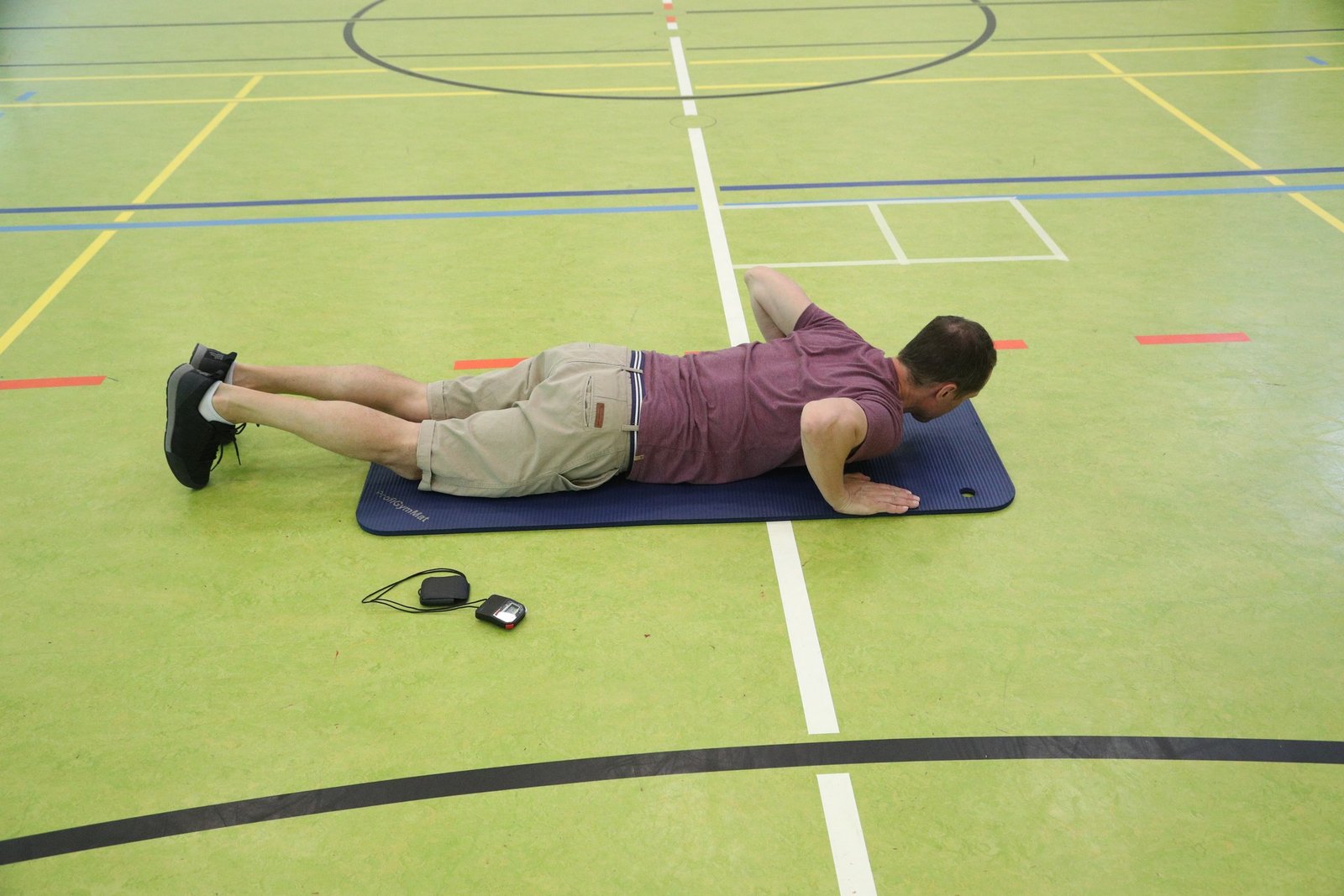
A push-up at its low point, on a mat. Photo: Uzltt123 / Wikimedia Commons
A note on the photos in this article: no verified free photo of the exact close-grip hand position was found while preparing this refresh, so no photo here is presented as one. The pictures show general push-up form — the low point, a straight plank line, and a wrist-friendly handle option — while the hand position itself is described in words. Do not read any of these images as proof of a hand width.
How to Do a Close-Grip Push-Up ✅
Start in a high plank with your hands just inside shoulder-width, fingers forward, and your body in one straight line from head to heels. Brace your stomach and glutes lightly — if your hips sag or pike up, the rep has stopped being a good push-up.
Lower your chest toward the floor with control, keeping your elbows fairly close to your ribs rather than flared wide. Around 45 degrees from your torso is a common cue, but comfort matters more than hitting an exact angle.
Lower until your chest is close to the floor, then press back up by straightening your elbows, keeping the same straight line all the way up. Breathe steadily and do not hold your breath through the set.

A plank held with a straight body line. Photo: Nenad Stojkovic / Wikimedia Commons
If you cannot yet do a full set with that straight line, drop to an easier version below rather than grinding out sagging reps. A clean easier rep trains your arms far better than a sloppy full one.
What Muscles Do Close-Grip Push-Ups Work? 🏋️
The main workers are the triceps at the backs of your arms, the chest, and the front of the shoulders. The triceps straighten your elbows, so the narrower grip — which asks your elbows to bend and straighten through a bigger share of the work — leans on them more than a standard grip does.
Your core, glutes, and thighs work as stabilisers, holding your body straight while you press. They are not the main lifters here — they keep the plank honest so the upper body can do its job.
Research on muscle activity tends to find higher triceps activity with a narrow hand position than with a standard or wide one, though the picture for the chest is mixed across studies. That is a measurement of electrical activity during the exercise, not a promise of faster muscle growth — and it is not a reason to call this the single best triceps exercise, because no one move holds that title.
For the wider case for push-ups in general, see our benefits of doing push-ups guide rather than repeating it here.
Easier and Harder Ways to Scale It 🌱
Knee close-grip push-ups. Keep the same narrow hand position and straight line from head to knees, with your knees on the floor. This is the friendliest way to learn the tucked-elbow pattern before taking it to your toes.
Incline close-grip push-ups. Put your hands on a sturdy bench, step, or low wall, walk your feet back, and keep the straight line from head to heels. Raising your hands lightens the load, so this is an easier step — the higher the surface, the easier the rep. Lower the surface gradually as you get stronger.
Decline close-grip push-ups. Put your feet on a stable raised surface and your hands on the floor. This is harder, not easier, and it shifts a little more emphasis toward the upper chest and shoulders — but it is still a close-grip press, not a separate chest-isolation move.
Slower lowers and pauses. Lowering over a few seconds, or pausing briefly near the bottom without collapsing, makes the same variation harder without adding any new move. Keep the straight line; if form breaks, the set is over.
None of these variations has its own photo in this article, deliberately: no verified free photo of each variation was found, and illustrating one with a photo of a different exercise would mislead. The form cues above, plus the general push-up photos, are the honest illustration available.
For the wider push-up picture — standard, wide, incline, and more in one place — see our 5 push-up variations catalogue. For the head-to-head choice against the wide grip, see our Close Grip Pushups vs Wide Grip Pushups comparison. For a chest-first home session built around push-ups, see Build a Strong Chest at Home with Push-Ups (2026), which also describes close-grip progressions in words.
Wrist and Form Pitfalls ⚠️
The narrow position loads the wrists more than a standard grip, so wrist comfort is the first thing to check — not an afterthought. Spread your fingers, press through the whole palm rather than only the heel of the hand, and keep your wrists stacked under your shoulders as far as your build allows.
If your wrists complain, first try widening your hands slightly and keeping the elbows tucked — the close position is what matters, not an extreme width. If that does not help, try push-up handles or a pair of dumbbells on the floor as a base, which keep the wrists straighter, or use the incline version to reduce the load.
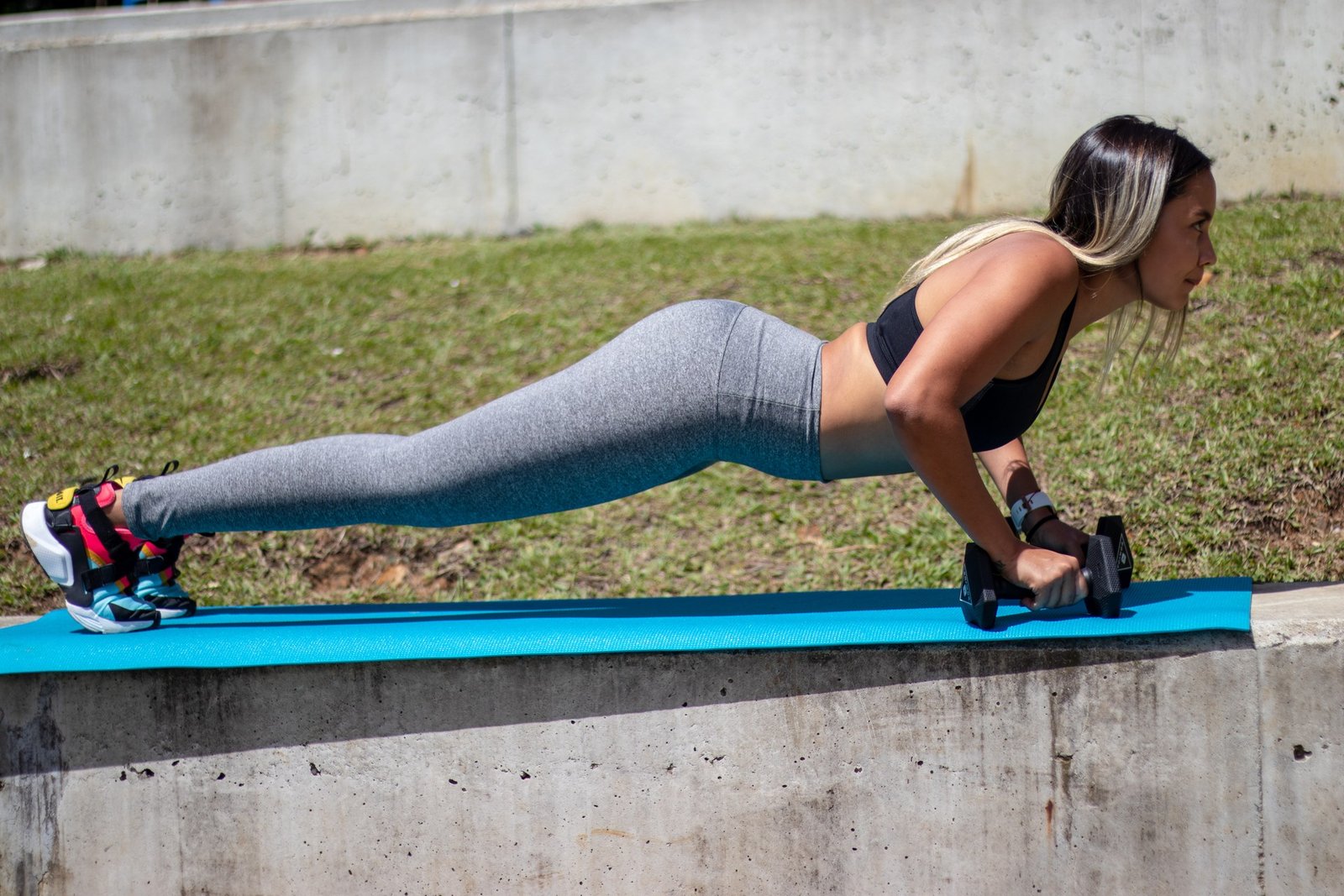
A push-up using dumbbells as handles, seen from the side — a wrist-friendly option, not a close-grip floor position. Photo: PTPioneer / Wikimedia Commons
Other common faults are easy to spot: elbows flared wide like a T, hips sagging, head dropping toward the floor, or only doing half-reps at speed. Fix the line first, then worry about reps — and stop if you feel sharp wrist, shoulder, or elbow pain, and ask a coach or clinician for advice.
This is general fitness information, not medical advice. If you have a wrist, shoulder, or back problem, talk to a clinician or qualified coach before adding a narrow-grip press to your training.
How to Progress Without a Prescription 📈
Progression here is simple: make the same good rep slightly harder over time, rather than chasing a fixed number. A labelled example range many people use for a set is around 8–15 controlled reps — but that is an example, not a programme, and your right range depends on your current strength and recovery.
A sensible path is incline close-grip, then knee close-grip, then full close-grip, then a slower lower or a decline version — moving up only when the easier step feels controlled from start to finish. Add difficulty one notch at a time, and keep at least one easier variation in your back pocket for tired days.
Push-ups alone do not build everything, and no single variation burns fat from one spot — fat loss comes from overall training and nutrition, not from choosing a grip. Treat the close-grip push-up as one useful press in a balanced routine, not as a shortcut to a particular body shape.
Frequently Asked Questions ❓
Are close-grip push-ups harder than standard push-ups? Usually, yes — the narrower base gives you less stability and asks more of your triceps, so the same number of reps feels harder. That does not make them better for everyone; it makes them a next step once standard push-ups feel controlled.
Do close-grip push-ups work the “inner chest”? Not in any isolated way. The chest works as a whole during a press, and no hand position carves out an “inner” section on its own. The honest emphasis shift here is toward the triceps, with the chest still involved.
Do close-grip push-ups work the biceps? Not meaningfully. The biceps help stabilise the arm during the movement, but they are not a main worker in a press — if arm size is the goal, the triceps and a balanced programme matter far more than chasing biceps from push-ups.
Is the diamond push-up the same thing? No. Diamond push-ups place the thumbs and index fingers together in a diamond shape, which is narrower and harder on the wrists than the small-gap close grip described here. See our Diamond Push-Ups (2026) guide for that move specifically.