

What Is a Diamond Push-Up? 💎
A diamond push-up is a push-up with your hands close together under your chest.
Your thumbs and index fingers touch, or nearly touch, forming a rough diamond shape.
That narrow position is the whole point of the move — it shifts more of the work to the back of your arms.
It is a harder step up from a standard push-up, not a beginner’s first push-up.
If you can already do solid standard push-ups, the diamond version is a natural next challenge. 💪
How to Do a Diamond Push-Up
Start on all fours, then place your hands together beneath the centre of your chest.
Let your thumbs and index fingers meet to form the diamond shape, with your fingers pointing roughly forward.
Step your feet back into a plank, with your body in one straight line from head to heels.
Brace your midsection and squeeze your glutes so your hips neither sag nor pike up.
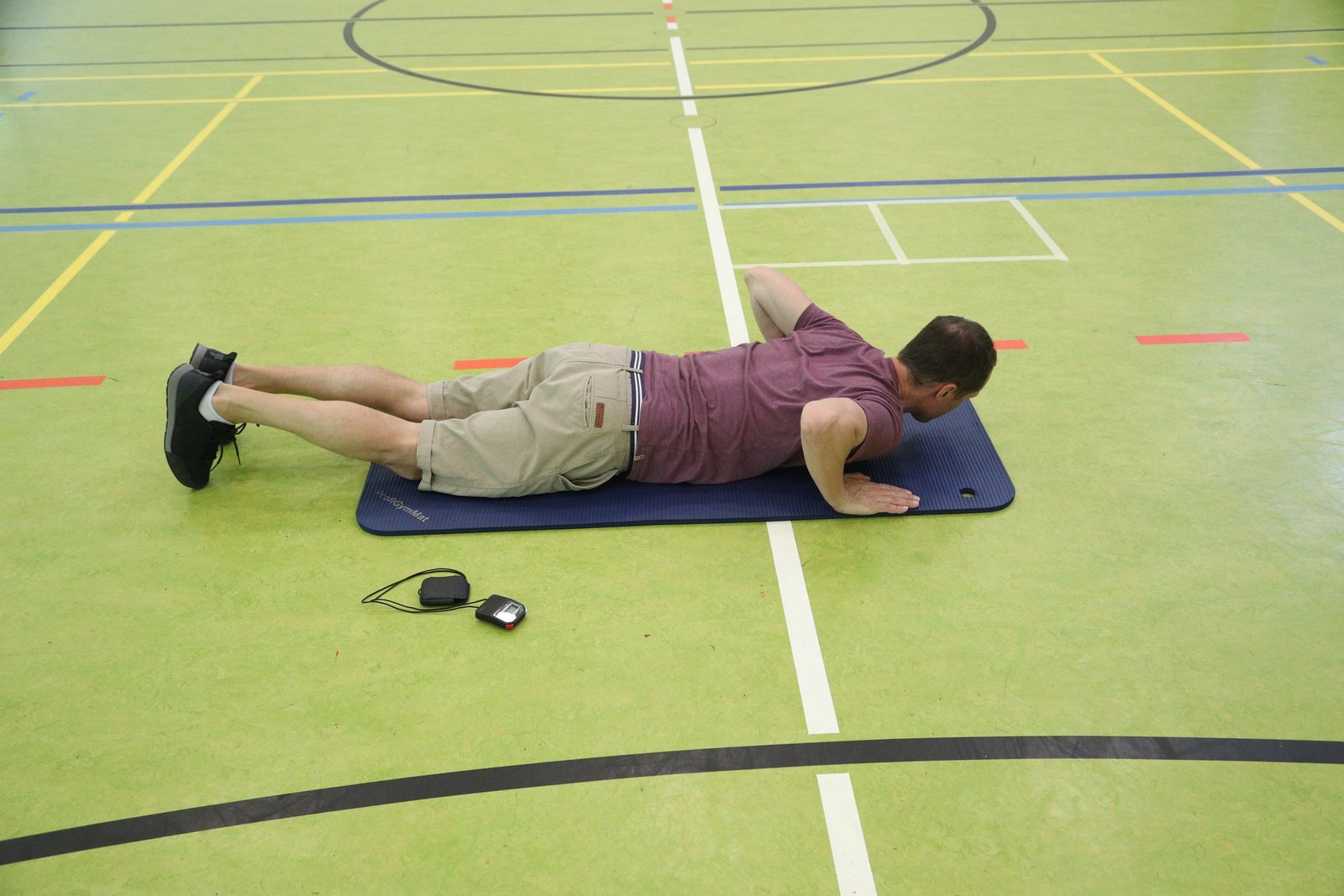
A push-up held in a straight plank line. Photo: Uzltt123 / Wikimedia Commons
Lower yourself slowly, keeping your elbows fairly close to your ribs rather than flaring them wide.
Around 45 degrees from your torso is a common cue, but comfort matters more than hitting an exact angle.
Lower until your chest is close to your hands, then press back up by straightening your elbows.
Keep the same straight line all the way up — no sagging hips at the top or the bottom. ✅
If your wrists complain, widen your hands slightly and keep the elbows tucked.
The close position is what matters; a literal diamond shape is not compulsory if it hurts. Stop if you feel sharp pain, and ask a coach or clinician for advice.
What Muscles Do Diamond Push-Ups Work? 🏋️
The main workers are the triceps, the chest, and the front of the shoulders.
The triceps straighten your elbows, so the narrow grip asks a lot of them.
Your core, glutes and thighs work as stabilisers, holding your body straight while you press.
They are not the main lifters here — they keep the plank honest so the upper body can do its job.
Research on muscle activity tends to find higher triceps activity with a narrow or diamond hand position than with a standard or wide one.
That is a measurement of electrical activity during the exercise, not a promise of faster muscle growth.
Some studies have found different results for the chest, so treat the chest picture as mixed, not settled.
For the wider push-up picture, see our guide to the benefits of doing push-ups.
Why Diamond Push-Ups Feel So Hard
The narrow base gives you less stability, so your body has to work harder to stay straight.
Your triceps also take a bigger share of the load than in a standard push-up.
That is why most people manage far fewer diamond reps than standard reps — and that is normal.
Expecting the same rep count as a standard push-up is the fastest way to lose form. 😅
For a sensible sense of how progress usually unfolds, see how long it takes to see results from push-ups.
Easier Ways In (No Separate Photos — Read the Note Below)
A note on the photos in this article: no verified free photo showing the exact diamond hand shape was found, so the photos here show push-up form rather than the diamond hand placement itself.
The easier versions below are therefore described in words only, with no heading or photo of their own, rather than pictured with a photo that does not show them.
Start with standard push-ups until you can do them with a straight body and controlled lowering.
Next, try knee diamond push-ups: knees on the floor, hands in the diamond position, same straight line from knees to head.
Wall diamond push-ups are easier still: hands in the diamond shape on a wall, feet back, body straight.
An incline diamond push-up, with hands on a raised surface such as a bench, sits between the wall version and the floor version.
As a general guide, an incline version tends to emphasise the lower chest, while a decline version — feet raised — tends to emphasise the upper chest.
Those are tendencies, not guarantees, and the diamond version keeps its triceps emphasis either way.
Move to a harder version only when the easier one feels controlled, not when you can just survive it.
If you are new to push-ups altogether, our beginner’s guide to daily push-ups is the better starting point.

A push-up plank held with a straight body line. Photo: Nenad Stojkovic / Wikimedia Commons
Common Mistakes to Avoid ⚠️
Elbows flared wide to the sides is the most common error, and it takes work away from the triceps.
Keep them reasonably tucked, and widen your hands a little if your shoulders or wrists feel pinched.
A sagging lower back is the second classic mistake, and it usually means your core and glutes have switched off.
Reset your plank, brace, and only then start the next rep — a shorter set with good form beats a longer sloppy one.
Hands placed too far forward, up near your chin, is another easy slip to check before you start.
Your diamond should sit under your chest, not under your face.
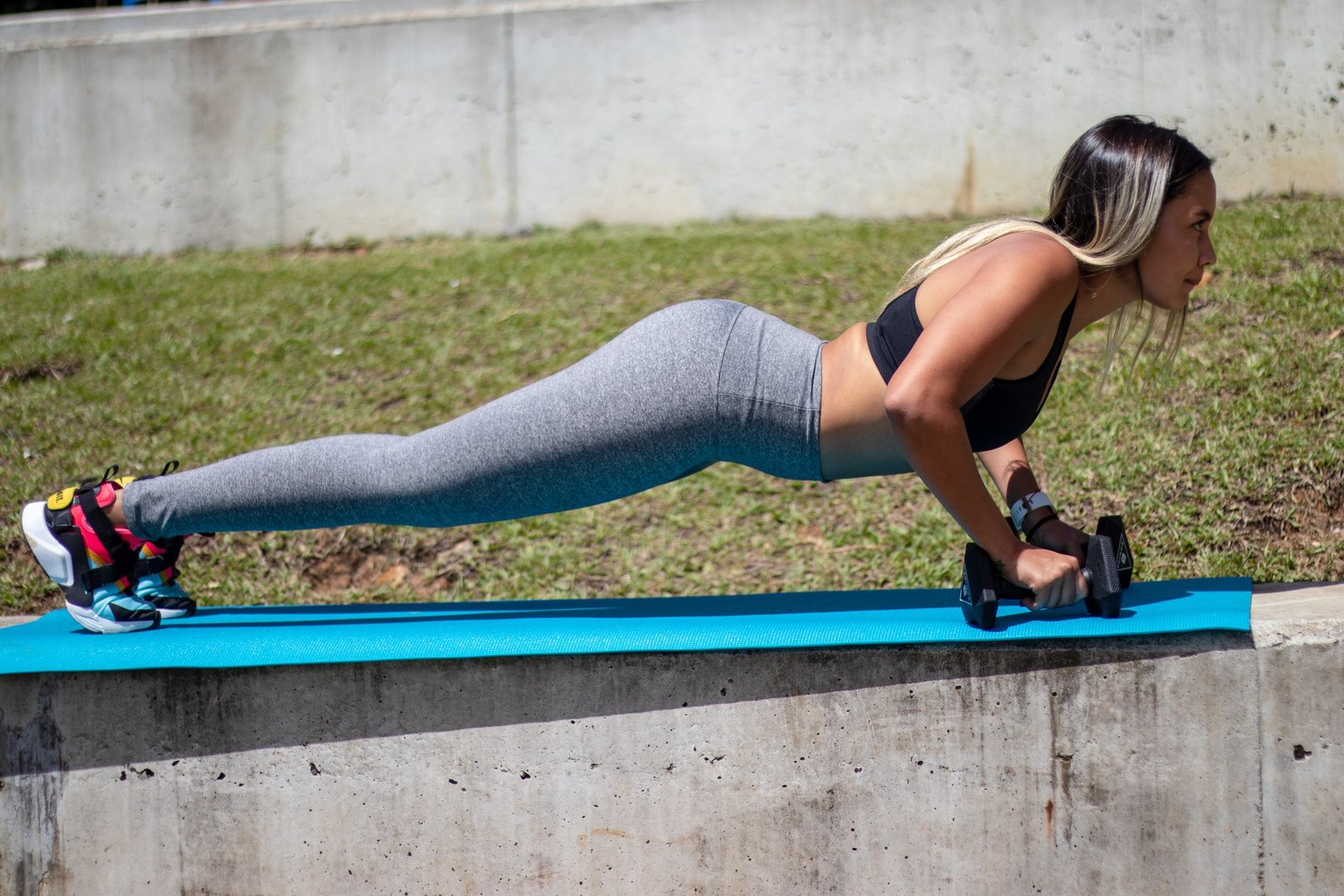
A push-up seen from the side, showing the straight body line. Photo: PTPioneer / Wikimedia Commons
Diamond Push-Ups vs Regular Push-Ups
The hand position is the main difference between the two moves.
Hands closer together tends to mean more triceps work; hands wider apart spreads the work more evenly.
Neither is “better” in general — they are different tools for different emphases.
Most people do best with both in a routine: standard push-ups for overall pressing, diamond push-ups for triceps emphasis.
For other ways to vary the move, see 5 push-up variations, from standard to clap push-ups.
The Bottom Line
Diamond push-ups are a simple, equipment-free way to make push-ups harder and more triceps-focused. 💎
They reward patience: a few clean reps beat a pile of sagging ones, every time.
Start easier than you think you need to, keep the body line straight, and progress when the form stays solid.
General fitness information only — this article is not medical advice, and pain is a reason to stop and seek professional advice.
FAQs
Why are diamond push-ups so hard?
Because the narrow hand position gives you a smaller base and asks your triceps to carry more of the load.
Most people do far fewer diamond reps than standard reps, and that gap is expected.
What does a diamond push-up work?
Mainly the triceps, chest and front shoulders, with the core, glutes and thighs stabilising the plank.
It is not a lower-body exercise — the legs only hold position.
Do my thumbs and fingers have to touch?
No. A close hand position is the point; the diamond is just a handy description.
If the exact shape hurts your wrists, widen slightly and keep your elbows tucked.
Are diamond push-ups bad for the wrists?
They demand more wrist extension than a standard push-up, so some people feel it in their wrists.
Trying a slightly wider hand position, a raised surface, or fists can ease the angle — and persistent pain is worth professional advice.
Can beginners do diamond push-ups?
Beginners are usually better starting with standard, knee or wall push-ups first.
Build a solid standard push-up, then try the knee or incline diamond version before the full floor version.
What is the difference between incline and decline diamond push-ups?
An incline diamond push-up, with hands raised, is easier and tends to emphasise the lower chest.
A decline diamond push-up, with feet raised, is harder and tends to emphasise the upper chest.