

Two dumbbells are enough to train your whole body. 💪
No machines, no waiting for equipment, no complicated setup — just you, a pair of dumbbells, and enough floor space to move safely.
This guide walks you through seven dumbbell exercises that cover your chest, shoulders, back, legs, arms and core. Each one comes with form cues, so you can lift with confidence whether you train at home or in the gym.
Why Train With Dumbbells?
Dumbbells force each side of your body to do its own work. Your stronger side cannot carry your weaker side through a rep, the way it sometimes can with a barbell.
They also ask more of your balance and control. Because each dumbbell moves freely, the smaller stabilising muscles around your shoulders, hips and core have to work to keep the weight steady.
That does not mean machines are useless — far from it. A 2023 study of 38 trained men found free-weight and machine training produced similar strength and muscle gains over eight weeks when effort was matched.
So think of dumbbells as a flexible, joint-friendly tool, not a magic one. The results come from consistent, well-executed training, whichever tool you pick.
Choosing the Right Weight
Start lighter than you think you need. The right weight is one you can control through the full movement, with good form, without your body twisting or jerking to move it.
If the last few reps of a set feel challenging but your form stays clean, you are in the right area. If your form breaks down, the weight is too heavy for that exercise.
Different exercises need different weights. You will almost certainly press less overhead than you row, and curl less than you step up — that is normal, not a weakness.
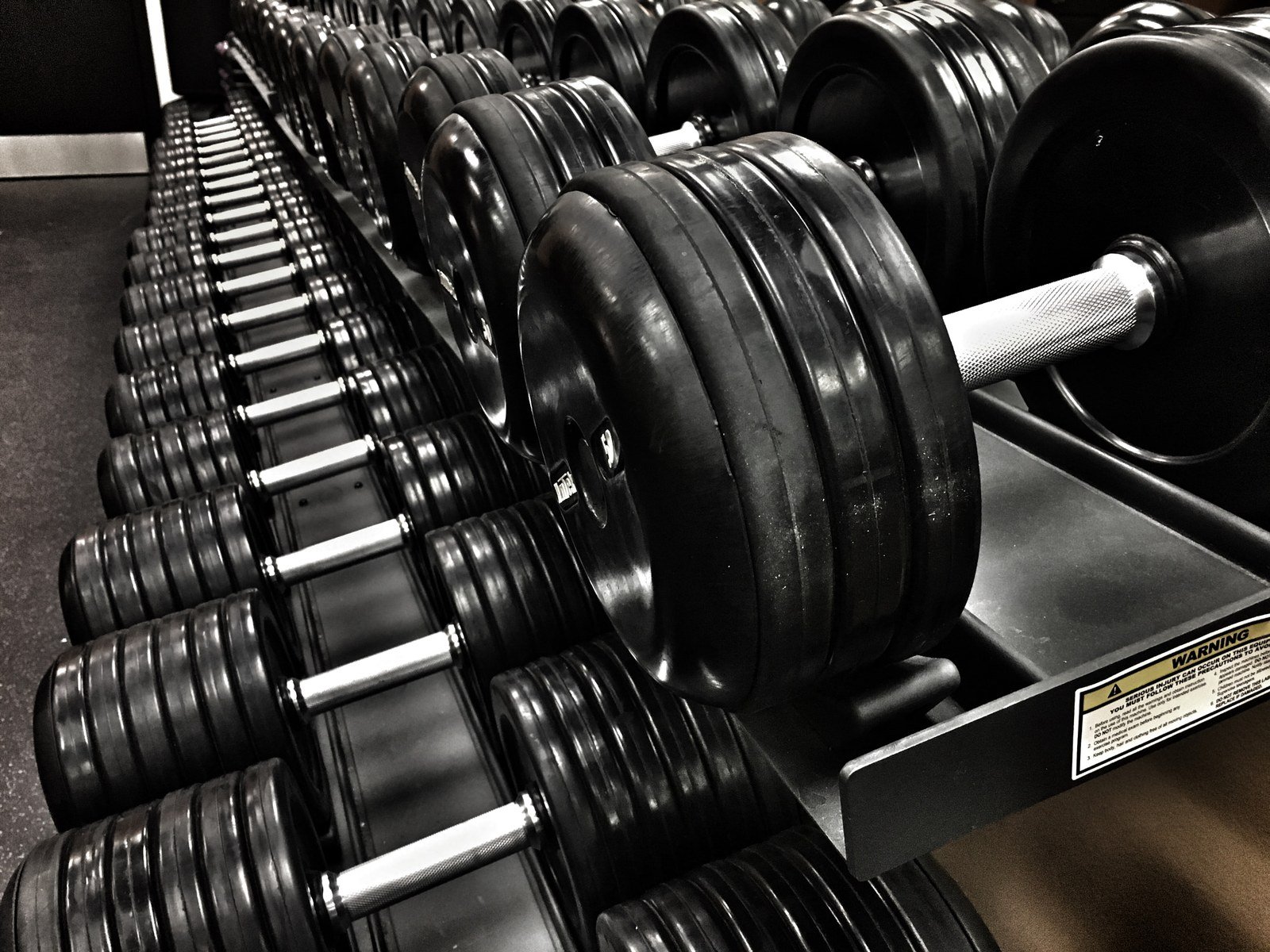
If you train at home and still need to buy a set, see our dumbbells buying guide before you spend anything — this article sticks to the workout itself.
1. Dumbbell Chest Press
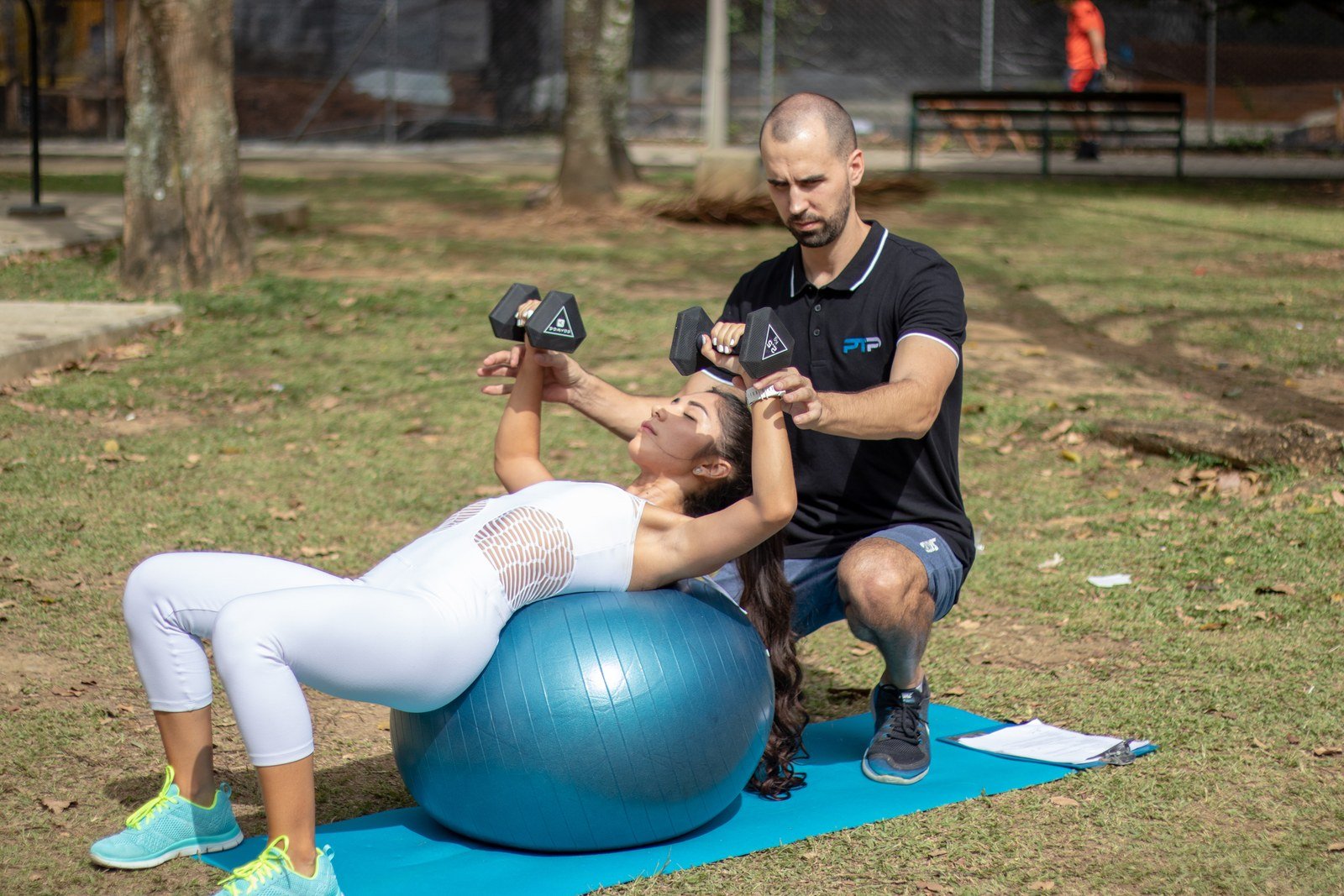
Lie back on a bench (or a stability ball, as pictured) holding a dumbbell in each hand at chest level, palms facing forward.
Press both dumbbells up until your arms are extended, without locking your elbows hard at the top. Lower them slowly back to the start, keeping control all the way down.
Keep your feet flat, your ribs down, and your lower back in its natural curve — do not arch hard to lift more weight. If you train alone with heavy dumbbells, ask someone to spot you.
2. Seated Dumbbell Shoulder Press
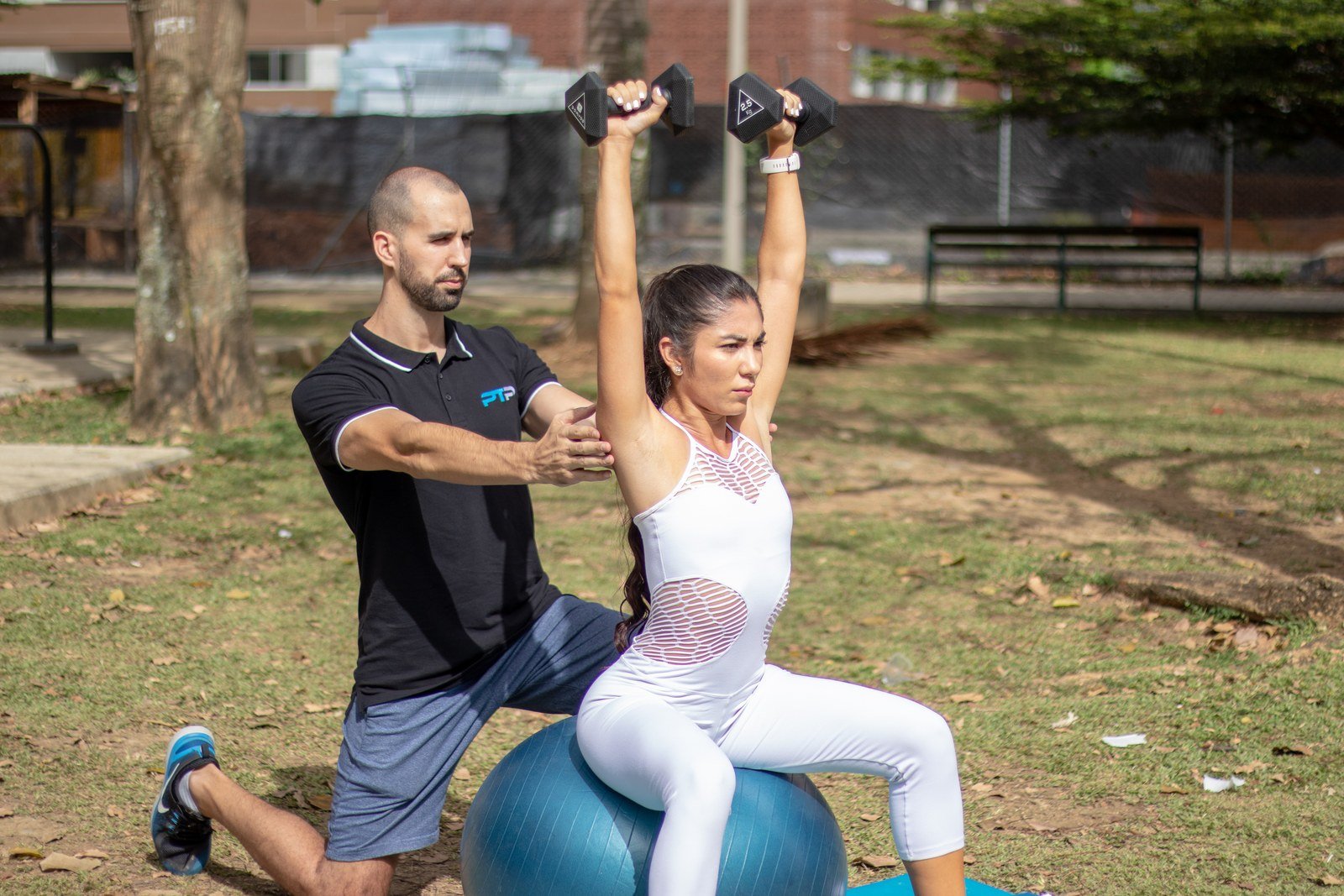
Sit tall with a dumbbell in each hand at shoulder height, elbows bent and palms facing forward. Press both dumbbells overhead until your arms are extended.
Lower them back to shoulder height under control. Keep your core braced and avoid leaning back as the weights go up — your back should not do the pressing for your shoulders.
This is a demanding lift, so start light. A weight that feels easy for a chest press may feel very different overhead, and that is completely normal.
3. Bent-Over Dumbbell Row
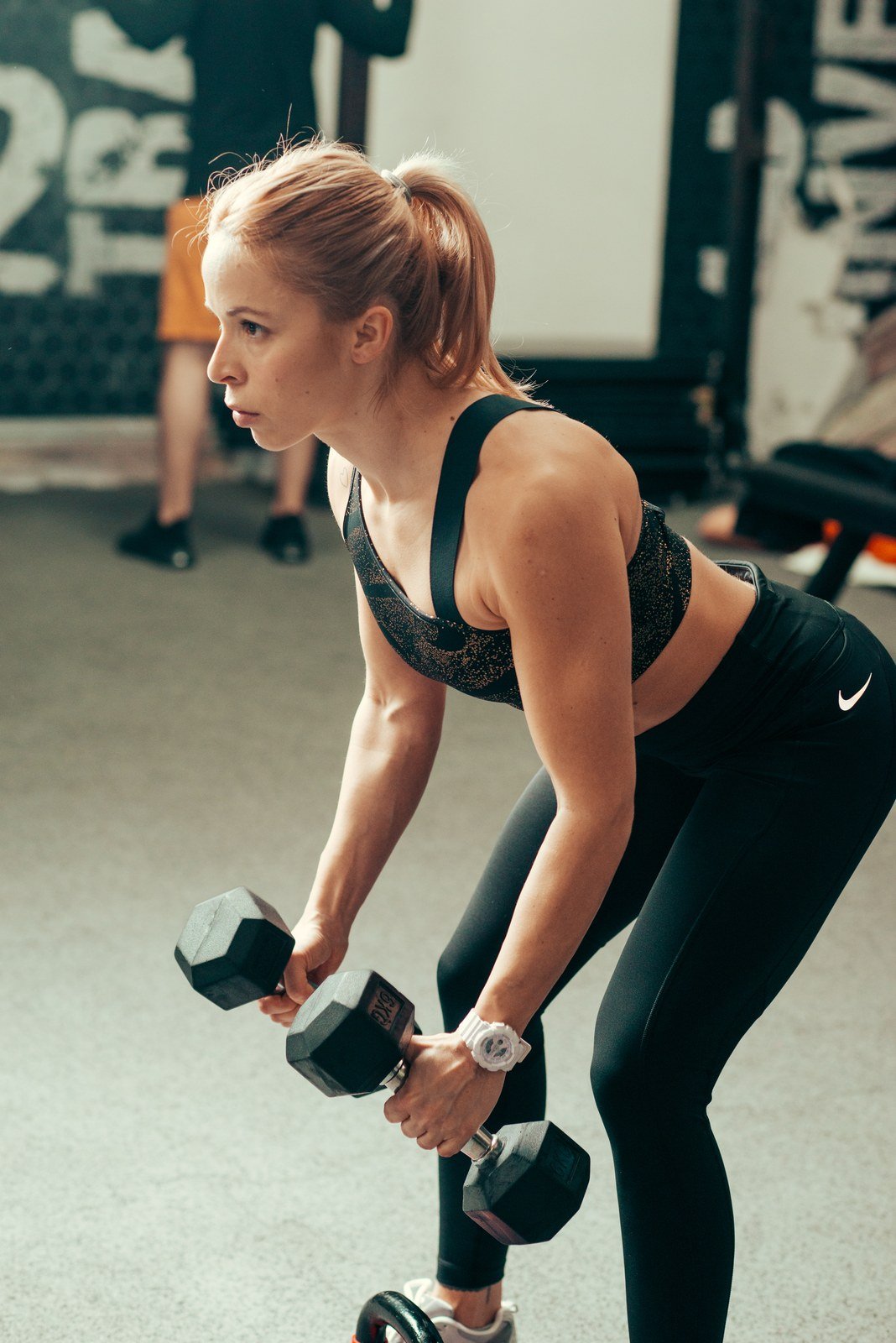
Stand holding a dumbbell in each hand, hinge forward from your hips with a flat back, and let the weights hang below your shoulders.
Pull both dumbbells toward your hips, squeezing your shoulder blades together at the top. Lower them slowly until your arms are straight again.
Your back should stay flat throughout — if it starts to round, the weight is too heavy or you are too tired to hold position. Rows are one of the best dumbbell moves for a strong, balanced back. 🏋️
4. Dumbbell Step-Up
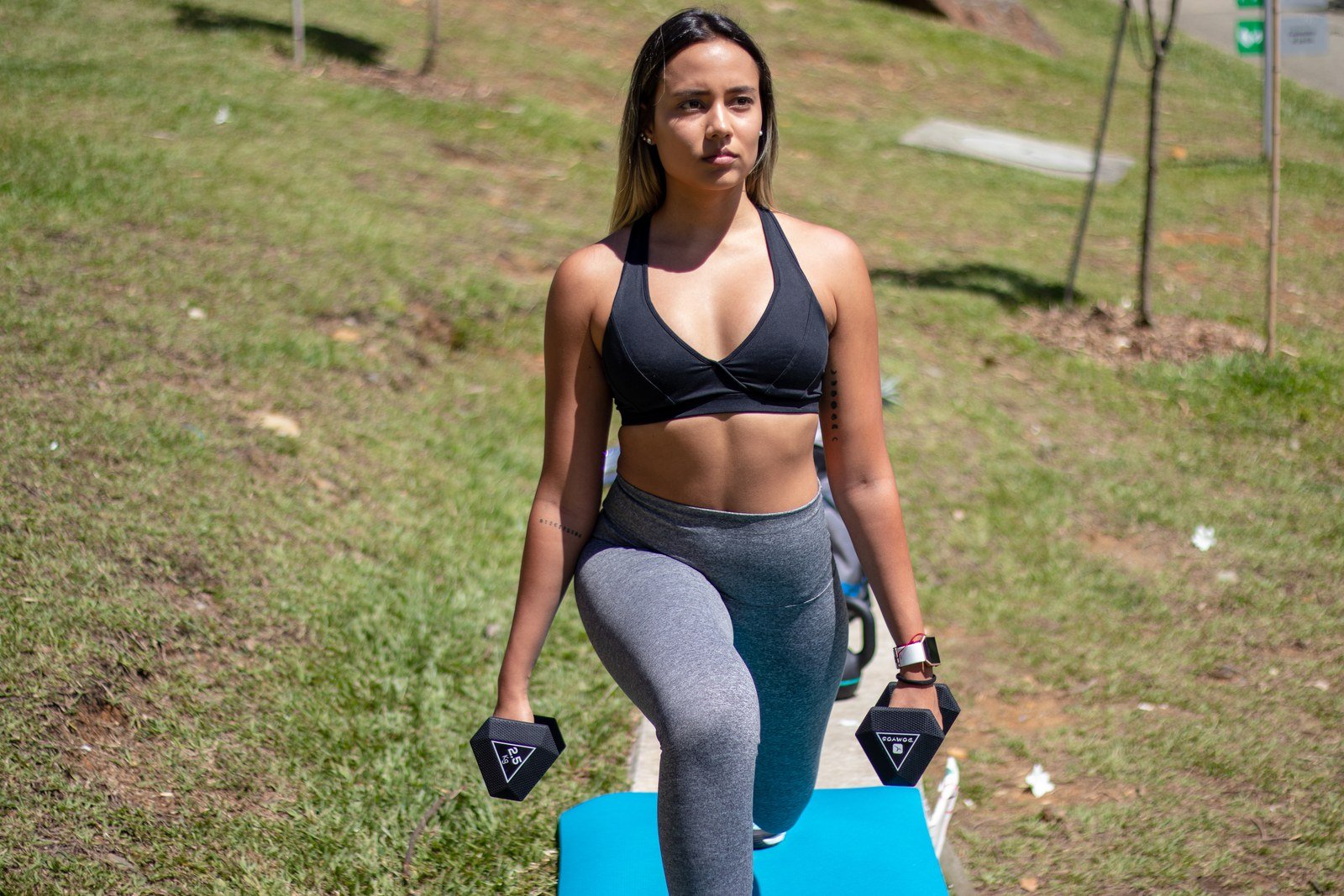
Hold a dumbbell in each hand at your sides and stand facing a sturdy step or bench. Step up with one foot, drive through that heel, and bring your other foot up beside it.
Step back down with control, one foot at a time. Alternate your leading leg, and keep your chest tall and your knee tracking over your toes.
Step-ups build single-leg strength that carries over to walking, running and climbing stairs — and they need far less space than a full squat rack setup.
5. Dumbbell Thruster
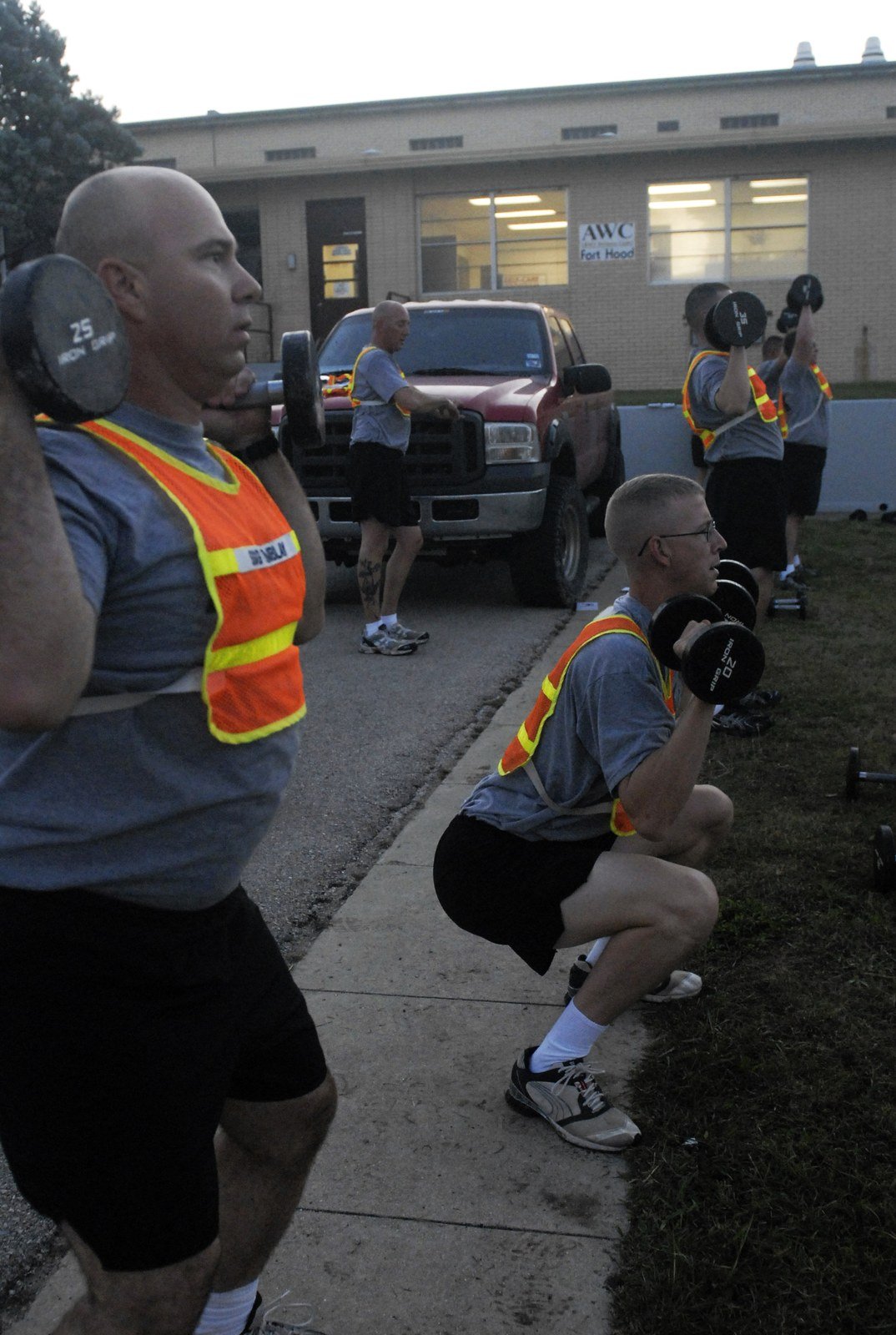
Hold a dumbbell at each shoulder and squat down, keeping your chest up and your heels on the floor. As you stand, press both dumbbells overhead in one smooth motion.
Lower the weights back to your shoulders and repeat. The power should come from your legs — the press is the finish, not the whole move.
Thrusters are hard work because they combine legs and shoulders in every rep. Use lighter weights here than you would for a press alone, and stop if your form falls apart.
6. Push-Up on Dumbbells
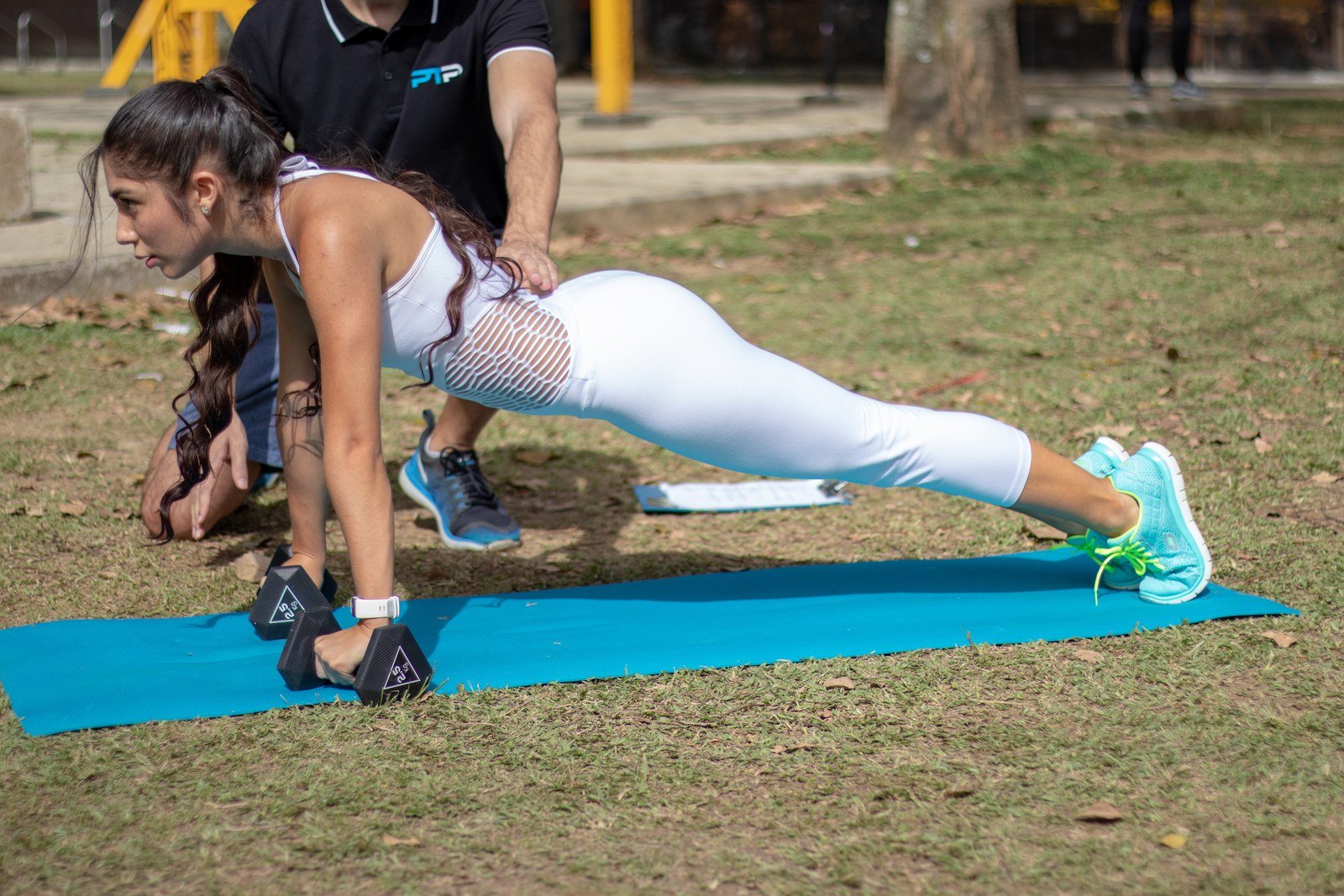
Place two dumbbells on the floor, shoulder-width apart, and grip them in a plank position with your body in a straight line from head to heels.
Lower your chest toward the floor between the dumbbells, then press back up. The dumbbell handles let your wrists stay in a more neutral position than flat palms do.
Keep your hips level — no sagging, no piking up. If a full push-up is too much, the same position works from your knees while you build strength.
7. Dumbbell Bicep Curl
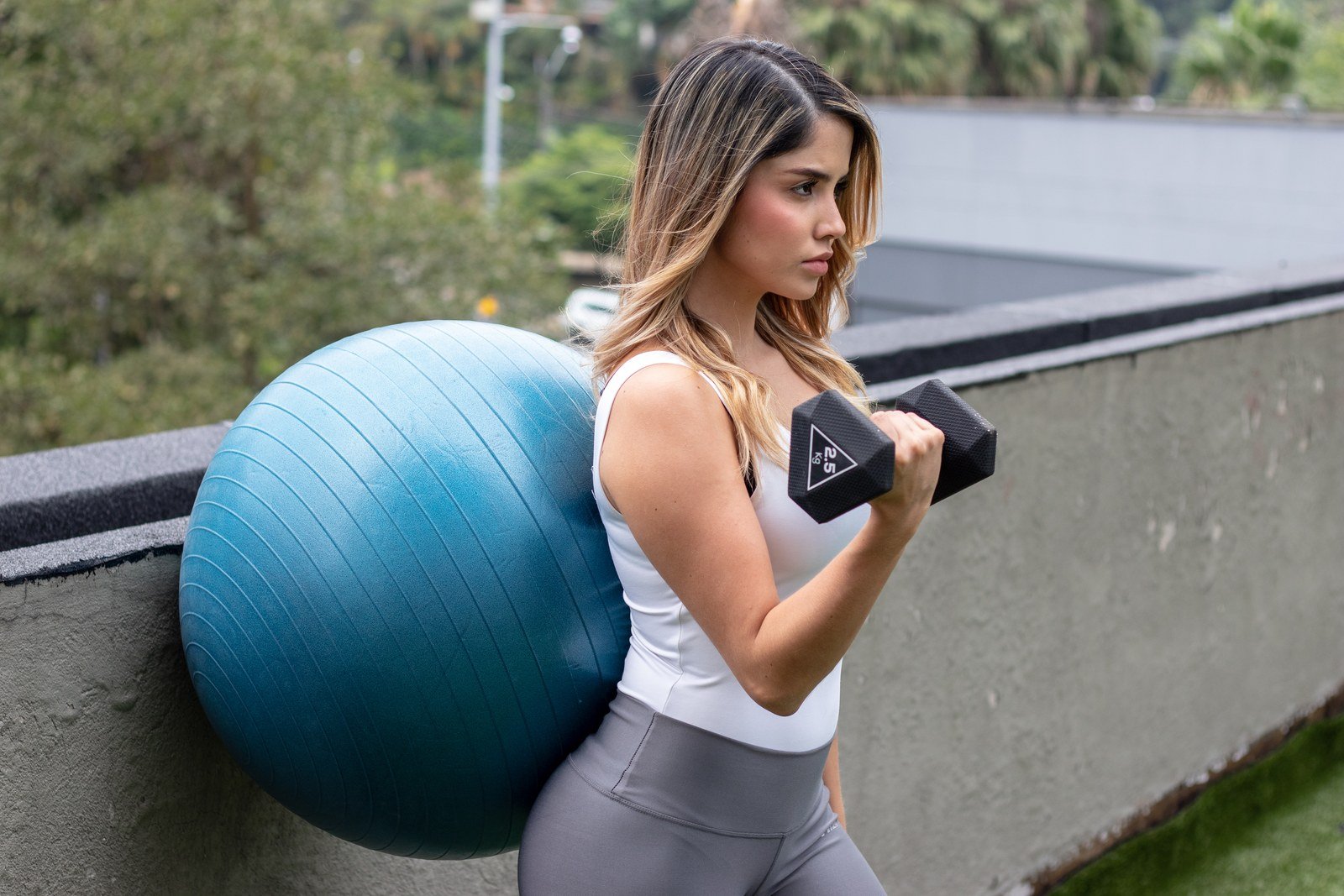
Stand tall holding a dumbbell in each hand at your sides, palms facing forward. Curl one or both weights up toward your shoulders, keeping your elbows close to your body.
Lower slowly back to the start. Resist the urge to swing your hips or lean back — if you have to heave the weight up, it is too heavy for a clean curl.
Curls are a simple finishing move, not the main event. Put them after your bigger lifts, when your arms are already warm, and they will do their job nicely. 💪
Putting a Session Together
A balanced dumbbell session touches a push, a pull, and a leg movement. The seven exercises above already give you that balance: presses and push-ups push, rows pull, and step-ups and thrusters cover your legs.
Warm up first with a few minutes of easy movement, then start with the hardest exercise while you are freshest. Finish with the smaller isolation moves, like curls, at the end.
Progress slowly. When an exercise starts to feel comfortable with clean form, a small increase in weight — or a few extra controlled reps — is the sensible next step. There is no deadline, and slow progress still counts.
The Honest Truth About Spot Reduction
You cannot melt fat from one body part by exercising that part. Training your arms builds the muscle underneath, but it does not preferentially burn the fat sitting on top of it.
A 2011 study had people do abdominal exercises five days a week for six weeks. Their abdominal endurance improved, but their abdominal fat did not fall any more than a control group’s (Vispute et al., 2011).
A 2013 study trained only one leg for 12 weeks and found fat loss happened across the body, not preferentially in the trained leg (Ramírez-Campillo et al., 2013).
One small exception deserves an honest mention. A 2023 trial of just 16 overweight men found about 697 grams more trunk-fat loss in a group doing aerobic abdominal work alongside running, versus running alone (Brobakken et al., 2023).
That result is small, men-only, and came from an aerobic endurance protocol — not from dumbbell strength work. It does not rescue the “crunches for a flat stomach” promise, and fat loss still comes down to overall energy balance over time.
If body composition is your goal, pair this workout with everyday activity and sensible eating, and judge progress over months, not days. For core-specific work, see our best exercises for obliques.
Dumbbells vs Machines: What the Old Article Got Wrong
The old version of this article was really a free-weights-versus-machines essay, and some of its claims did not hold up. A few squat reps do not equal half an hour of machine work, and machines are not automatically safer or more dangerous.
The fair summary is this: dumbbells demand more balance and stabilisation, machines guide the path and make it easier to isolate a muscle. Both build muscle when effort is matched.
Machines can be the better choice when you want to isolate one muscle, when you are learning a movement, or when an injury limits what you can do safely. Dumbbells win on versatility, space, and training each side independently.
If you are coming back from an injury, are pregnant, or have a health condition, talk to a clinician or a qualified coach before starting a new programme — general articles like this one cannot replace personal advice.
Frequently Asked Questions
Can I build muscle with just dumbbells?
Yes — dumbbells can train every major muscle group, and the exercises above are a complete starting point. What matters most is training consistently, with good form, and gradually increasing the challenge over time.
Do I need a bench?
A bench helps for the chest press, but it is not essential. The chest press and shoulder press in this guide are pictured on a stability ball, and the other five exercises need nothing but floor space and a step.
How often should I do this workout?
There is no single right answer, and this article deliberately avoids prescribing a fixed weekly schedule. Train on days you can recover from, leave sore muscles time to settle, and build the habit before chasing volume.
Will dumbbell exercises burn belly fat?
Not from the belly specifically. As the spot-reduction section explains, fat loss happens across the whole body. Dumbbell training builds muscle and burns calories, which supports fat loss overall — but it cannot target one area.
Training and nutrition go hand in hand, so if you want the full picture, read our protein guide for strength athletes alongside this workout.