

In bodybuilding, size has always stopped the show. 🏋️
Every era has produced a man so big that the rest of the lineup suddenly looked ordinary.
This is the 2026 update of our all-time mass list, rebuilt with one strict rule: every weight is labelled.
Contest weight and off-season weight are two very different things, and the old version of this article mixed them up.
Here, a contest weight means what a man actually carried on stage. An off-season weight is labelled as exactly that, and never dressed up as a stage weight.
The order below is not a strict scale ranking. Eras, conditioning and titles count too — but each entry states its sourced contest weight, so you can judge for yourself. 💪
1. Dorian Yates: The Man Who Started the Mass Era
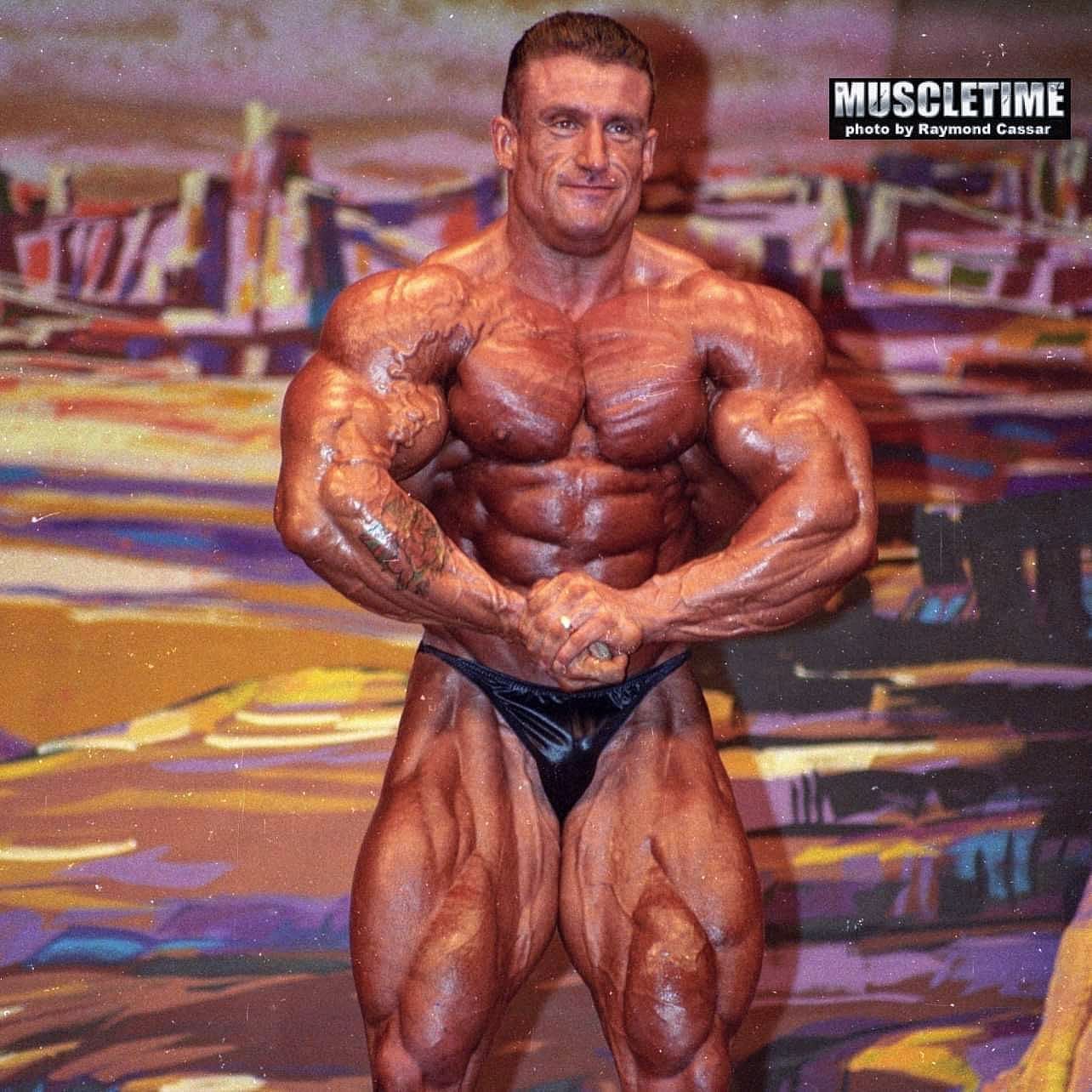
Dorian Yates won six Mr. Olympia titles in a row, from 1992 to 1997.
At the 1993 Olympia he stepped on stage at 257 lb — a number that shocked the sport at the time.
Before Yates, no Mr. Olympia had combined that much size with that kind of conditioning.
His back became the standard every mass monster after him was measured against. Read how he built it in our Dorian Yates blueprint for maximum muscle growth.
2. Ronnie Coleman: The King of Mass
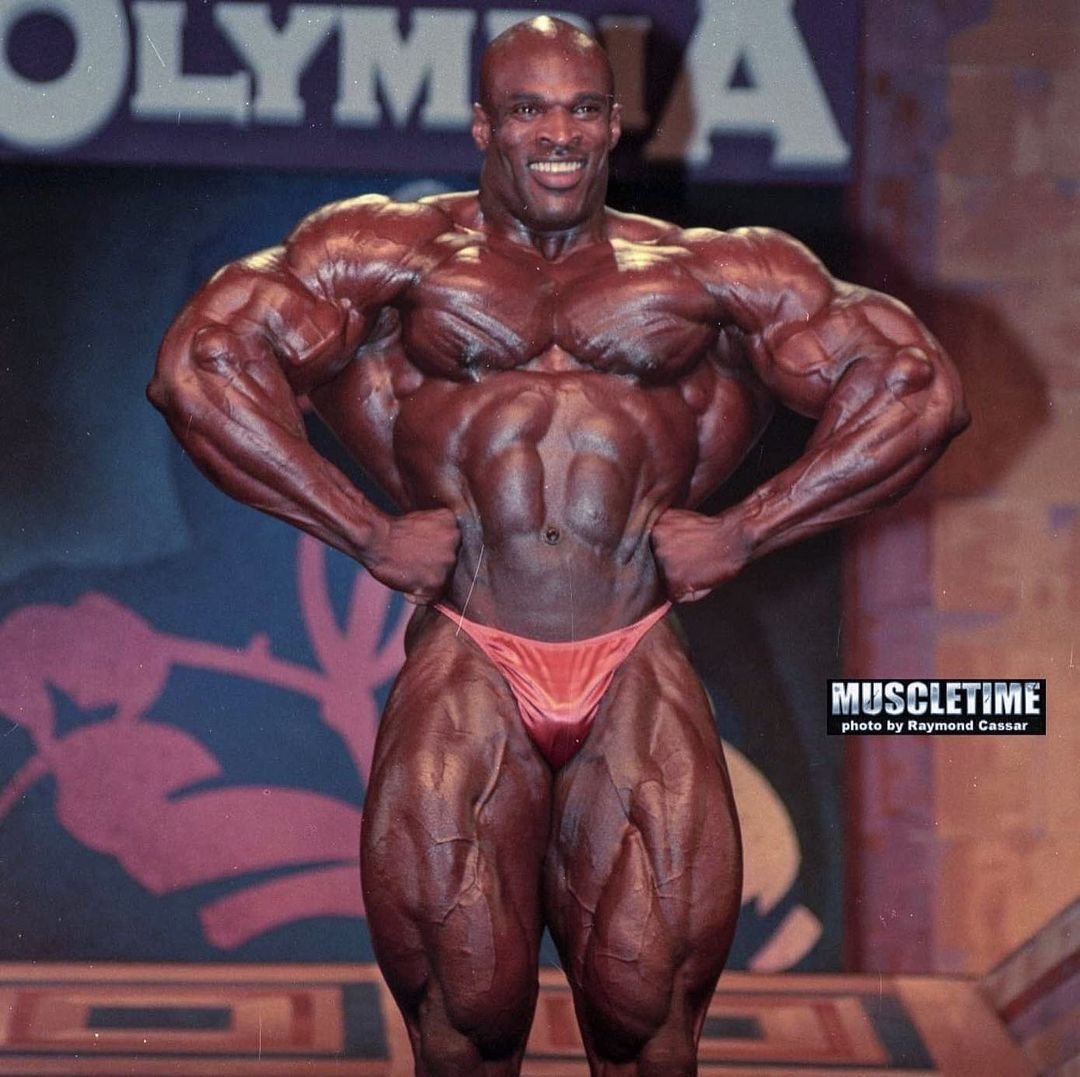
Ronnie Coleman won eight Mr. Olympia titles in a row, from 1998 to 2005.
That ties Lee Haney’s all-time record — a fact the old version of this article got wrong.
At the 2003 Olympia, Coleman carried 286 lb on stage and destroyed the field.
A year later he was even bigger, around 295 lb on stage, while his off-season weight climbed to 315–330 lb.
Size, shape and freakish strength in one package — that is why fans still call him the King. 👑
See how the two greats compare in Dorian Yates vs Ronnie Coleman, and read his full story in the Ronnie Coleman biography.
3. Greg Kovacs: The Largest Pro Ever on Stage
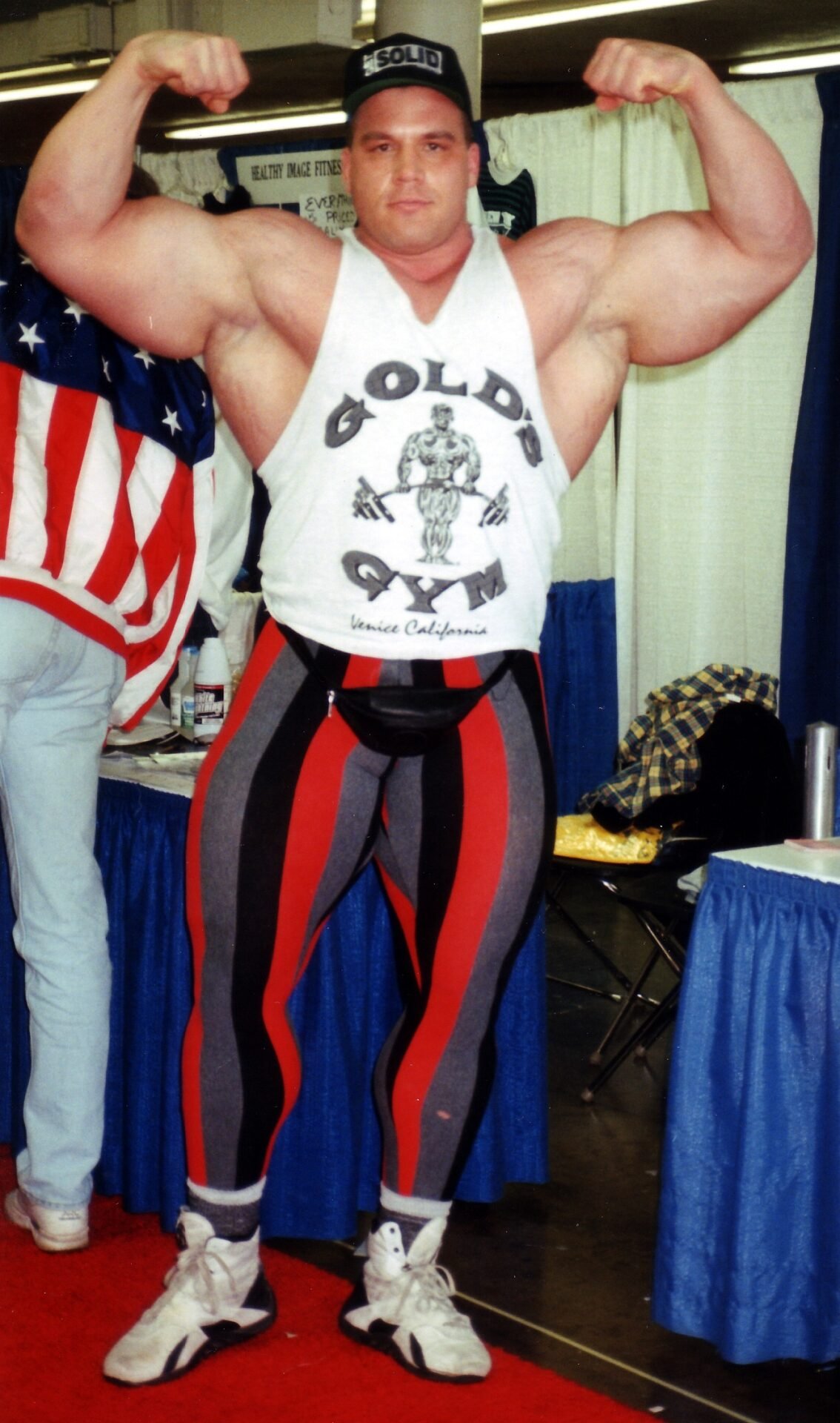
Greg Kovacs is the name the old list missed — and he may be the biggest bodybuilder ever to compete.
The Canadian won his pro card at the 1996 Canadian Nationals, then carried around 330 lb in contest shape.
His off-season weight reached 420 lb, on a 6 ft 4 in frame with a 70-inch chest.
He never cracked the Olympia’s top ranks — his best pro placing was 13th at the 2004 Arnold Classic.
But for sheer size on a pro stage, nobody in history has matched him. Read his full story in the Greg Kovacs biography.
4. Mamdouh “Big Ramy” Elssbiay: The Egyptian Colossus
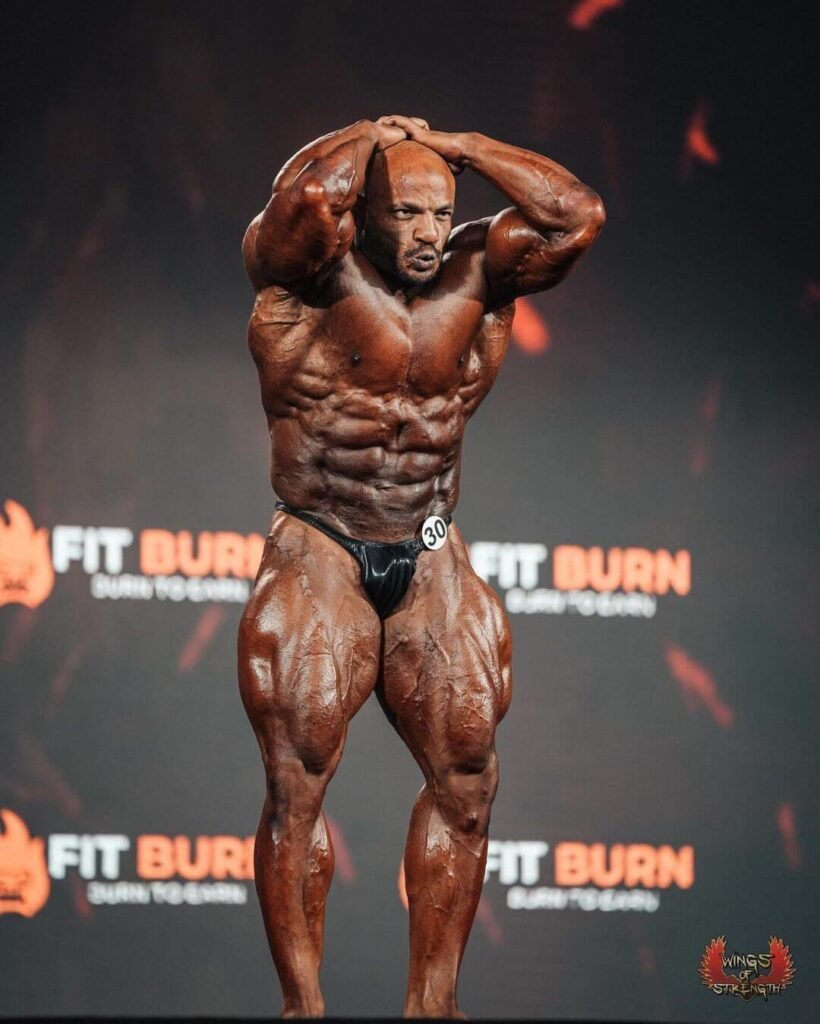
Mamdouh Elssbiay, “Big Ramy”, turned pro by winning the 2013 New York Pro.
He won the Mr. Olympia in 2020 at 290 lb, then defended the title in 2021.
At the 2021 press-conference weigh-in he tipped the scale at 303 lb — but that was clothed, holding a microphone, and he said himself he was close to 290 lb.
Either way, Ramy is one of very few men to win the Olympia at around 300 lb. 🏆
See him measured against other giants in Big Ramy vs Chris Bumstead and Big Ramy vs Rubiel Mosquera.
5. Nasser El Sonbaty: The Uncrowned Mass Monster
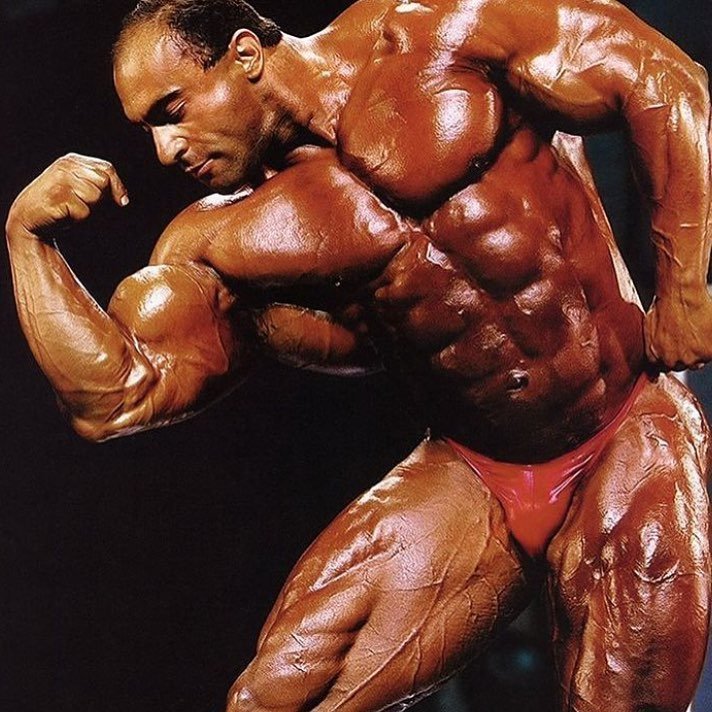
Nasser El Sonbaty never won the Mr. Olympia — yet fans still argue he should have.
At the 1997 Olympia he weighed 270 lb and finished second behind Dorian Yates, in one of the contest’s most debated results.
His contest weight ranged from 265 to 290 lb across his career, at 5 ft 11 in.
He got his biggest win at the 1999 Arnold Classic, beating Kevin Levrone.
Known as “The Professor”, Sonbaty combined enormous size with a classical posing style. Read more in the Nasser El Sonbaty biography and our account of the controversial 1997 showdown.
6. Kai Greene: The Artistic Powerhouse
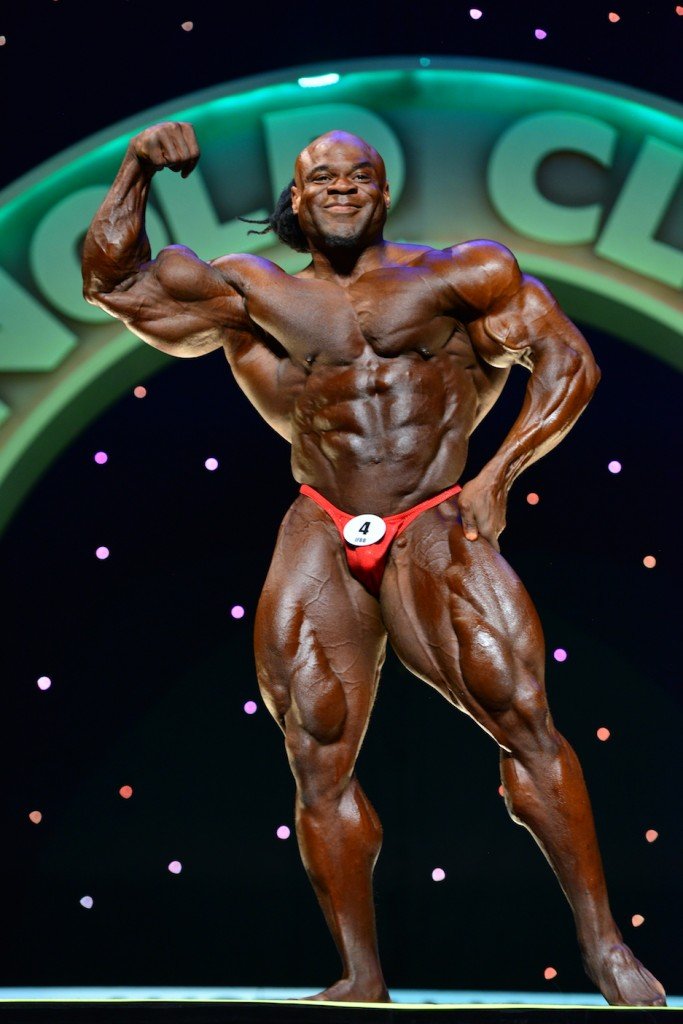
Kai Greene never won the Mr. Olympia, but he came closer than almost anyone.
He finished runner-up three years in a row, from 2012 to 2014, behind Phil Heath.
His contest weight was around 260 lb — while his off-season weight reached the low 320s early in his career.
Greene won the Arnold Classic three times, in 2009, 2010 and 2016, and his posing routines became legendary.
Size plus artistry: that combination is why he remains a fan favourite. 🎨 Read his story in the Kai Greene biography.
7. Lou Ferrigno: The Original Giant
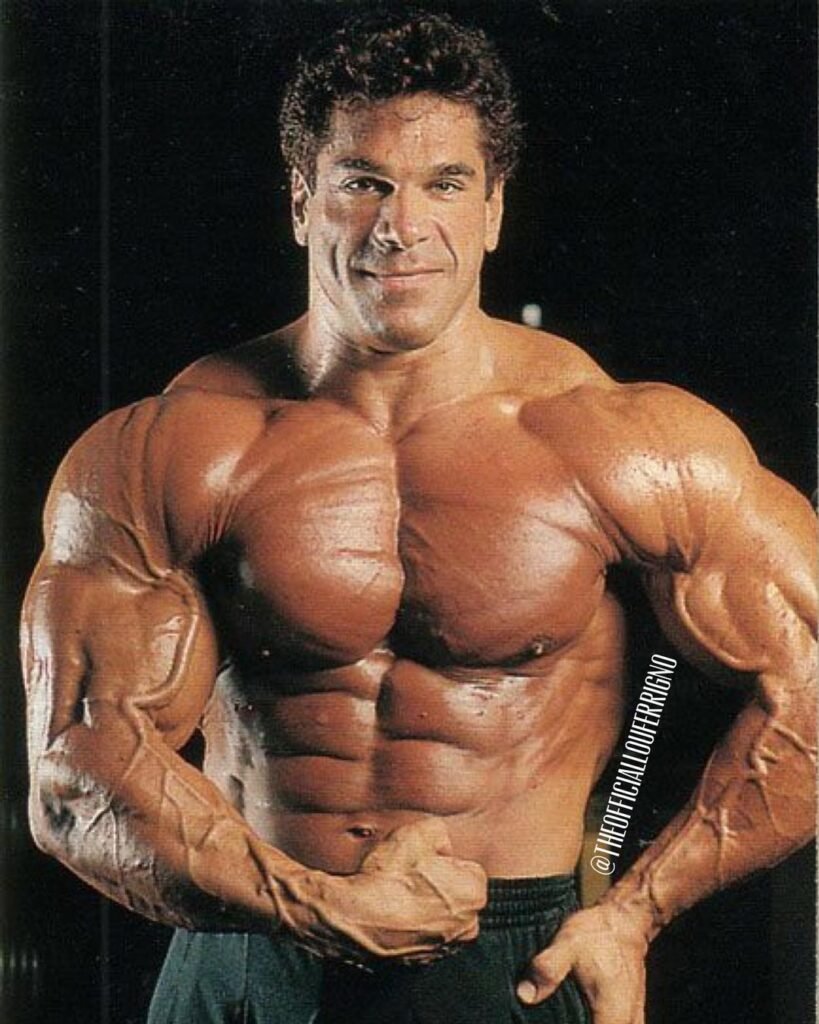
Long before the mass-monster era, Lou Ferrigno was the biggest man in the sport.
At 6 ft 5 in, he weighed 268 lb at the 1975 Mr. Olympia, finishing third in the over-200 lb class.
His rivalry with Arnold Schwarzenegger became the story of Pumping Iron (1977).
Ferrigno then became a pop-culture icon as television’s Incredible Hulk. 💚
He even came back: around 290 lb for the 1992 Olympia, and around 300 lb in 1993. Read about that comeback in Lou Ferrigno’s return at the 1992 Mr. Olympia.
8. Paul Dillett: The Freak-Einstein
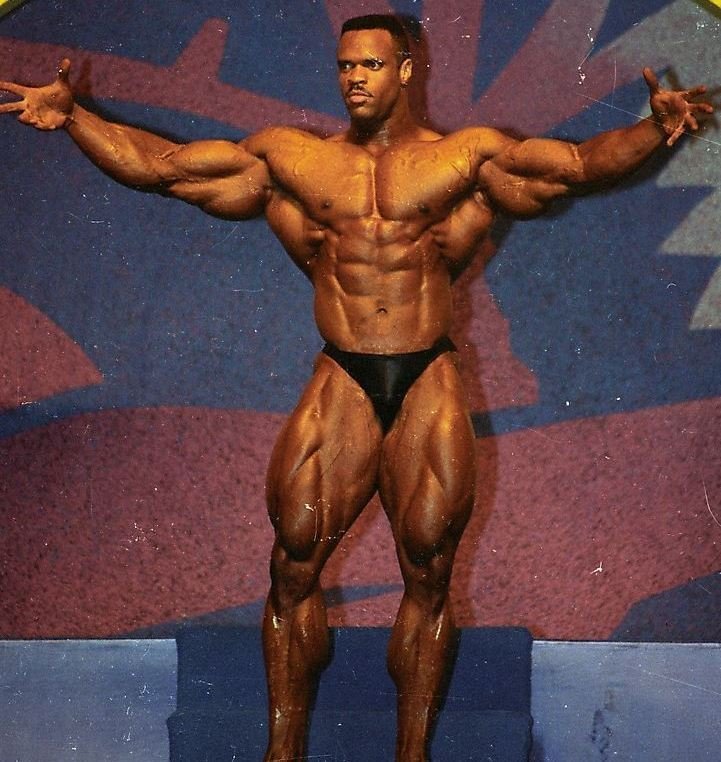
Paul Dillett came to bodybuilding from the Canadian Football League — and he looked like it.
At 6 ft 2 in, his contest weight was 285–290 lb, with an off-season weight of 320–330 lb.
His best Olympia finish was fourth place in 1994, and he won the 1999 Night of Champions.
Dillett’s career also had a famous scare: at the 1994 Arnold Classic he cramped from dehydration and had to be carried off stage.
Width, quads and sheer presence earned him the nickname “Freak-Einstein”. Read his story in the Paul Dillett biography.
9. Jay Cutler: The Persistent Giant
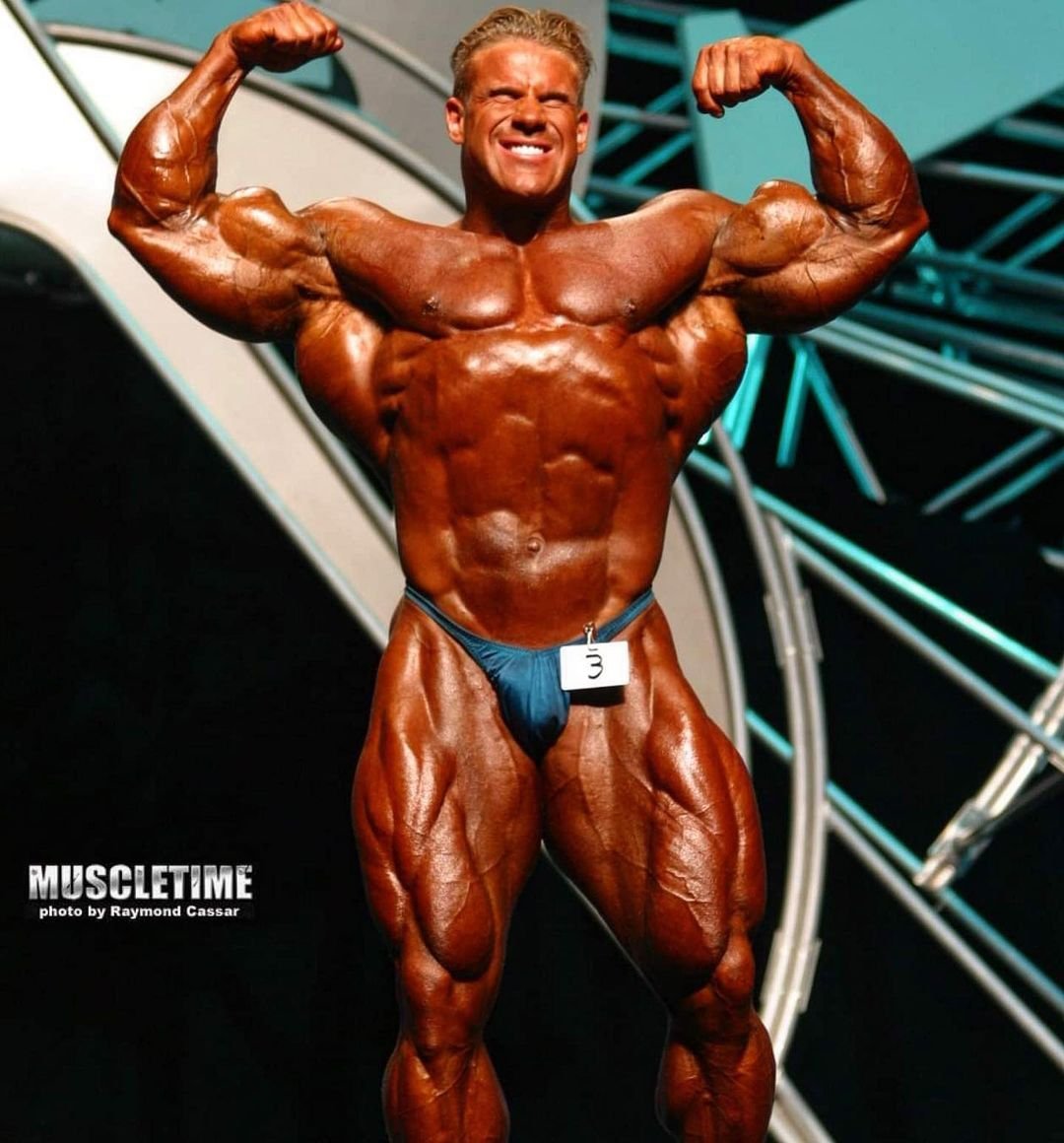
Jay Cutler lost to Ronnie Coleman four times before he finally beat him.
Then, after losing the title in 2008, he won it back in 2009 — the first man in history to regain the Mr. Olympia crown.
His contest weight was 270–275 lb on a 5 ft 9 in frame.
The 290 lb figure fans often quote was a preparation weight, not a stage weight — he weighed 295 lb fourteen weeks out from the 2007 Olympia.
Four Olympia titles, and the most famous quads in the sport. 🦵 See his training approach in the Jay Cutler blueprint for the perfect pump.
10. Markus Rühl: The Underrated Giant
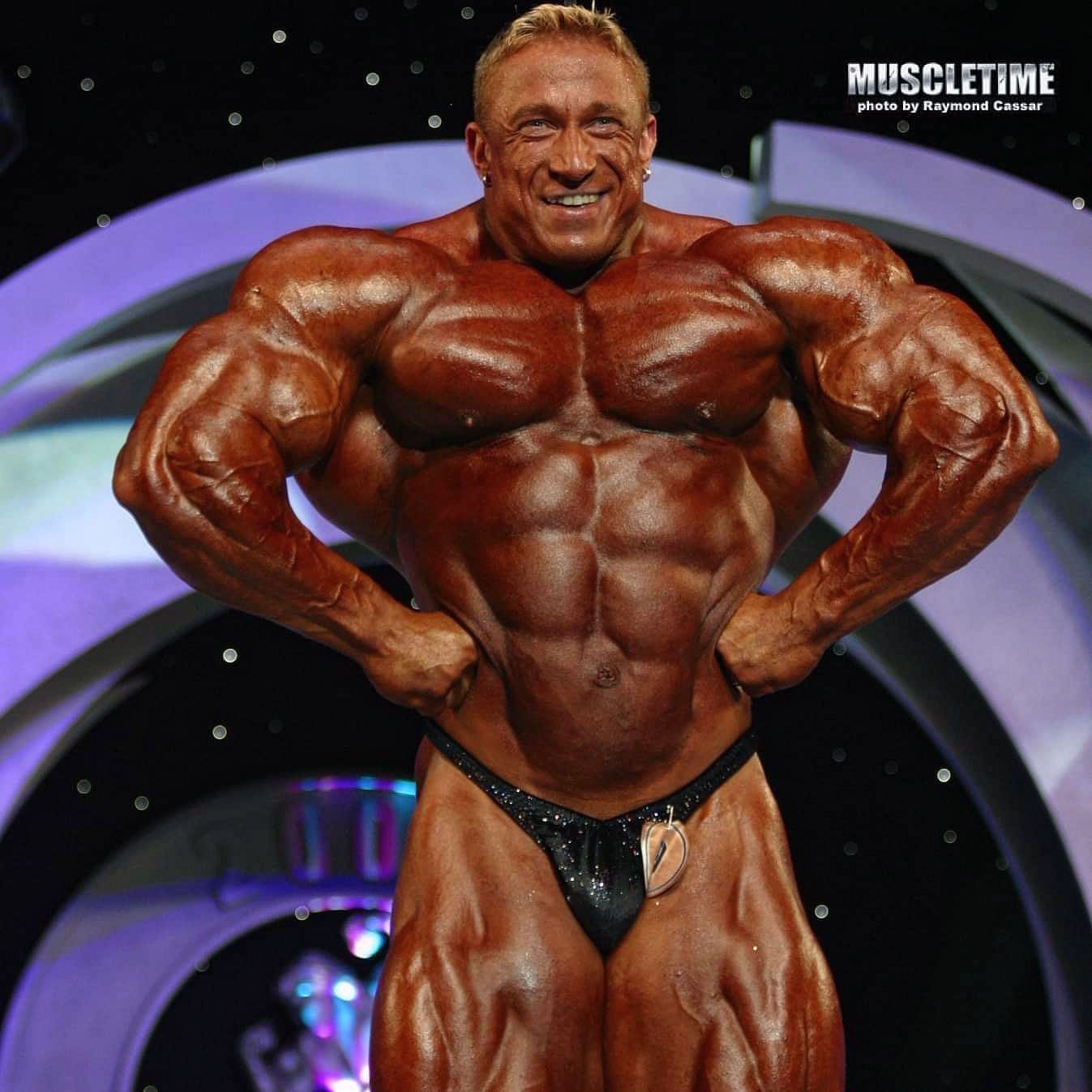
Markus Rühl never won the Mr. Olympia — but ask fans, and many will tell you he was the scariest man on stage.
The German weighed 285 lb on stage when he won the 2002 Night of Champions.
He had already won the 2000 Toronto Pro, and his best Olympia finish was fifth place in 2004.
His shoulders became the stuff of legend, and his most-muscular pose drew the loudest crowd reactions of his era.
Read more in the Markus Rühl biography and Markus Rühl vs Rubiel Mosquera.
A Note on the 2026 Update
Two famous names from the old list are gone, and the change is deliberate.
Olivier Richters, the 7 ft 2 in Guinness record holder, has never actually competed in a bodybuilding contest.
Rich Piana was famous for his size, but he was never an Olympia-level contender.
They are replaced by Greg Kovacs, the largest pro ever on stage, and Nasser El Sonbaty, the 1997 Olympia runner-up.
Modern giants like Samson Dauda are not added yet: their contest weights were not sourced to the same standard for this update, and no verified free photo was available.
Conclusion: Legends of Mass
From Yates, who changed what a champion had to weigh, to Coleman, who took mass further than anyone with eight titles — these ten men redefined size itself.
Some won everything. Some never won the big one. All of them made the sport bigger, literally and figuratively. 🏆
Who would you add to this list? The debate is half the fun of bodybuilding history.
Frequently Asked Questions
Who is the biggest bodybuilder on this list?
By sourced contest weight, Greg Kovacs — around 330 lb on stage, with an off-season weight of 420 lb.
Who won the most Mr. Olympia titles here?
Ronnie Coleman, with eight straight titles from 1998 to 2005, tying Lee Haney’s record.
Why is contest weight different from off-season weight?
Contest weight is what an athlete carries on stage, lean and depleted. Off-season weight includes extra body fat and water, so it is always higher — and the two should never be compared as if they were the same thing.
Did any of these bodybuilders compete at over 300 lb on stage?
Yes — Kovacs at around 330 lb, and Big Ramy at around 290–300 lb in his Olympia-winning years. Ferrigno also reached around 300 lb for his 1993 comeback, though not at his conditioned best.