

Dorian Yates did not win six Mr. Olympia titles by spending all day in the gym. 💪
He won them by doing less, but doing it harder than almost anyone else dared.
His method, known as Blood and Guts, is one of the most talked-about training ideas in bodybuilding history.
This is a description of that historical method, not personalised advice for any reader.
The Shadow from Birmingham
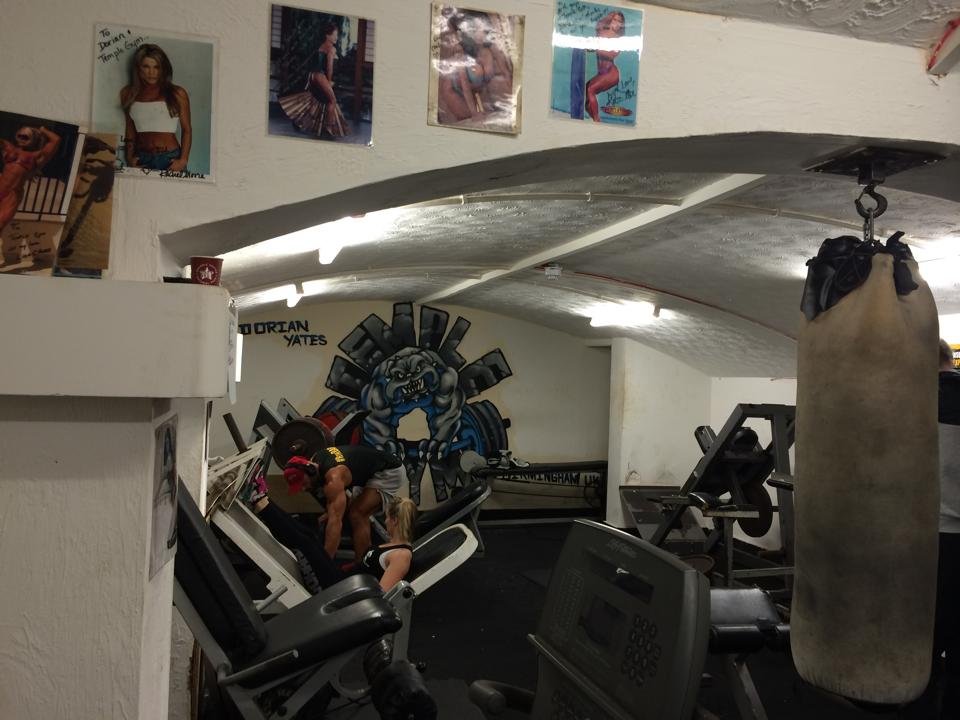
Photo: Haribhagirath, via Wikimedia Commons
Dorian Andrew Mientjez Yates was born on 19 April 1962 in Solihull, England, and grew up on a farm near Hurley.
His father died when he was 13, and the family moved to the Birmingham area, where his life would change direction.
He began training properly in 1983 at Martin’s Gym in Birmingham’s Temple Row area, and progress came quickly.
He won Mr. Birmingham in 1984, then the British heavyweight title in 1986, and again in 1988 with the overall title.
In 1987 he bought Temple Gym on Temple Street in Birmingham, a small basement gym that became his base. 🏋️
While other stars chased the spotlight, Yates mostly disappeared between contests, trained in private, and then appeared to win.
Journalist Peter McGough gave him the nickname that stuck: “The Shadow”.
After finishing second at the 1991 Mr. Olympia behind Lee Haney, Yates won the title in 1992 — and kept it for six straight years.
What Blood and Guts Actually Meant
Photo: Alvinategyeka, via Wikimedia Commons
Blood and Guts was Yates’s own version of high-intensity training, the idea shaped by Arthur Jones and Mike Mentzer.
The core belief was simple: a muscle grows when it is pushed hard enough, not when it is worked endlessly.
So Yates cut the volume down and pushed the effort up, session after session, year after year.
Each exercise began with one or two lighter warm-up sets, used to practise the movement and prepare for the heavy set.
Then came the working set — usually one, sometimes a second — taken to failure, the point where no further good rep was possible.
On some sets he went further still, with forced reps, negatives, drop sets or partial reps to squeeze out more effort.
His sessions were brief, roughly 45 minutes, and built around basic, heavy movements rather than endless variety.
His back became his signature: wide, thick and sharply conditioned, the body part rivals feared most. 🔥
The Weekly Shape: Brief Sessions and a Training Log
Photo: Santeri Viinamäki, via Wikimedia Commons
The split most often reported for Yates’s pro years worked four training days into the week, with rest days between them.
Day one paired shoulders with triceps, day two paired back with rear delts, and chest with biceps followed a rest day.
Legs and calves came after another rest day, and each muscle group was trained about once a week.
Rest was not an afterthought in this system; it was part of the plan, giving the body time to recover from such hard sets.
The other quiet discipline was the training log, where Yates recorded weights, reps and sets from every session. 📓
That log told him what to beat next time, so progress was planned rather than guessed at.
He also trained with a businesslike focus, in and out of the gym without fuss, treating each session as a job to finish.
For readers who like stories of champions who pushed to the edge, the lifelong battles of bodybuilders who pushed the limits show how far that mindset can go.
The 1997 Ending
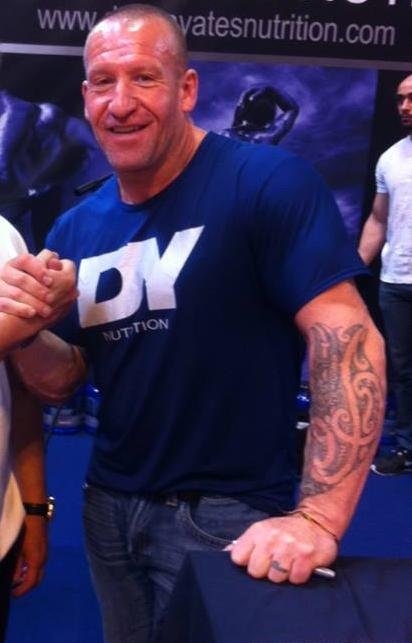
Photo: Beaverino, via Wikimedia Commons
Yates’s reign ended the way it had been built: with stubbornness under pressure.
About three weeks before the 1997 Mr. Olympia, he tore a triceps, yet he still stepped on stage.
He won his sixth consecutive title, then retired from competition in 1997, still the reigning champion.
He was later inducted into the IFBB Hall of Fame in 2003, a formal seal on a dominant decade.
His successor as Mr. Olympia was Ronnie Coleman, who would go on to win eight titles of his own.
Yates’s later life took a quieter turn, far from the basement gym where the legend was forged.
The portrait above shows him in 2016, long after retirement — the same man, a different chapter. 🙂
Why the Method Still Gets Talked About
Photo: Ser Amantio di Nicolao, via Wikimedia Commons
Three decades on, Blood and Guts still divides opinion, and that is part of its staying power.
Its fans point to the logic: if one all-out set is truly all-out, a second set cannot be equally intense.
Its critics point to the toll: training at that edge, all year, is a demanding way to live and train.
What nobody disputes is the record it produced — six Olympia wins in a row, from 1992 to 1997.
Yates changed what a winning physique looked like, bringing a new level of size and dense conditioning to the stage.
He also changed where champions trained, proving a small Birmingham basement could beat the big American gyms.
That is the blueprint in one line: less time, more intent, every rep counted, everything written down.
For another story of talent that never quite took the crown, read about Victor Martinez, the uncrowned legend, and for a champion’s rise cut short, Dallas McCarver’s ascent.
How many Mr. Olympia titles did Dorian Yates win?
Six, consecutively, from 1992 to 1997. The old article’s “eight-time” claim was wrong and has been corrected.
What was Blood and Guts?
Yates’s version of high-intensity training: brief sessions, warm-ups, then usually one working set per exercise taken to failure.
Why was he called The Shadow?
Because he stayed out of the public eye between contests and then appeared to win, a nickname given by Peter McGough.
When did Yates retire?
In 1997, after winning his sixth Mr. Olympia despite tearing a triceps about three weeks before the contest.