

Every bodybuilding era has a back that defines it. 🏆
In the 1990s, that back belonged to Dorian Yates. In the 2000s, it belonged to Ronnie Coleman.
Fans still argue over which one was better. The honest answer starts with a correction: their peaks never actually met.
The Duel That Never Was at Its Peak 🏆
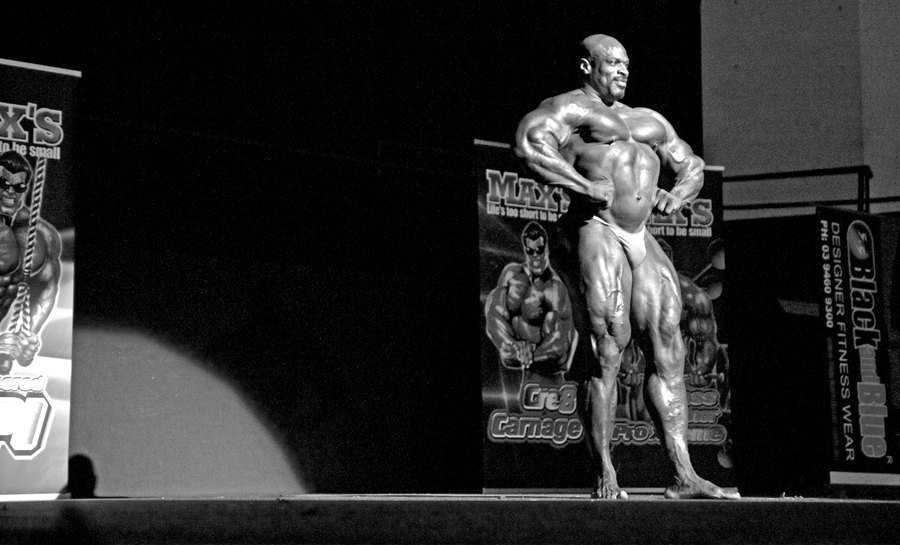
Yates and Coleman did share stages — eight contests between 1992 and 1997, and Yates won all eight.
But Coleman never came closer than fifth in those years. His first Olympia win came in 1998, the year after Yates retired.
Their best versions were a decade apart: Yates at his sharpest in 1993, Coleman at his biggest in 2003.
They were never even in the same callout at their peaks. That is what makes this a debate, not a result.
The clearest snapshot of the handover is 1997. Yates won his sixth Olympia that year, despite tearing a triceps three weeks earlier.
Coleman finished ninth in that same contest. Twelve months later, he was Mr. Olympia.
Dorian Yates: The Shadow’s Back 👤

Yates, born in England in 1962, won six straight Mr. Olympia titles from 1992 to 1997.
His nickname was “The Shadow” — he trained in Birmingham, stayed out of sight, then arrived and won.
His back was built on density and detail. Fans remember the thickness through the lats and the grainy conditioning.
When Dennis James and Chris Cormier debated the two backs on The Menace Podcast, Cormier backed Yates overall.
“I had Dorian’s back,” he said. James agreed on one pose, but not the whole verdict — more on that below.
Yates paid a heavy price for his reign. He tore a biceps in 1994 and still won, then tore a triceps before his final win in 1997.
He retired as reigning champion, one of only a few men ever to walk away with the title still his.
Ronnie Coleman: The King’s Back 👑
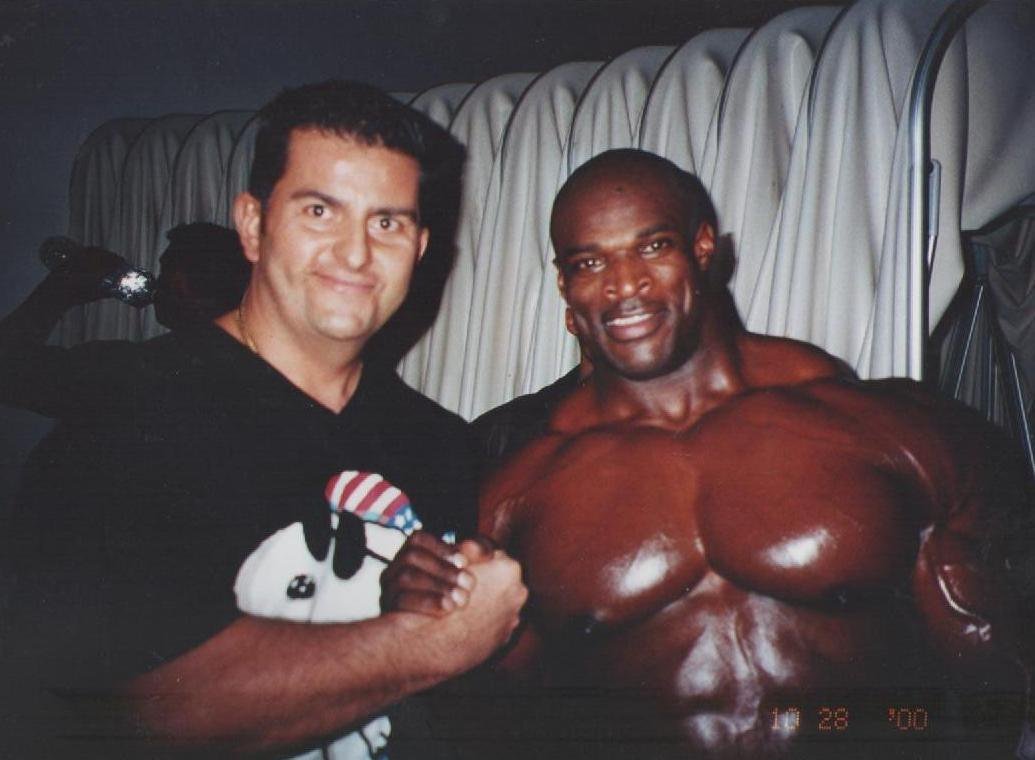
Coleman, born in Louisiana in 1964, won eight straight Mr. Olympia titles from 1998 to 2005.
That tied Lee Haney’s all-time record. Across his career he collected 26 professional wins.
His rise was the opposite of Yates’s smooth reign. He placed 16th at his first Olympia in 1992 and ninth in 1997.
Then came the leap nobody saw coming: from ninth in 1997 to first in 1998, beating the favourites in New York.
His back double biceps became the pose fans point to. James called Coleman’s prime version of it unbeatable.
Cormier, watching the same footage, praised something else: the sheer thickness Coleman carried across his back.
Coleman’s 2003 Olympia form is the one fans most often call his peak — enormous, yet still sharply conditioned.
In 2001 he also became the first man to win the Arnold Classic and the Mr. Olympia in the same calendar year.
Two Ways to Build a Legendary Back 🏋️

The two champions trained almost like opposites — and that is the most useful part of the comparison.
Yates followed high-intensity training. He warmed up, then took one all-out working set to failure on each exercise.
He trained around four times a week and stopped when the set was done. Intensity, not volume, did the work.
His signature back move was the heavy barbell row. Reports put him rowing around 405 pounds before his 1994 biceps tear.
Coleman trained the other way: heavy weights plus high volume, with back trained twice a week.
One session leaned toward width, the other toward thickness, built on deadlifts, barbell rows and T-bar rows.
His famous training numbers include an 800-pound deadlift and an 800-pound squat, each for two reps.
Do not copy either man’s loads blindly. Both careers ended in serious injury — Yates with torn biceps and triceps.
Coleman later underwent multiple back and hip surgeries after years of extreme lifting. The lesson is the method, not the weight.
The Verdict Fans Still Argue About ⚖️
So who had the better back? There is no official answer, and this article invents none.
The podcast split tells the story honestly. Cormier picked Yates’s back overall, praising the lat spread.
James split the poses: Yates for the rear lat spread, Coleman for the back double biceps.
Put simply, Yates’s case is width, detail and conditioning. Coleman’s case is thickness, mass and presence.
Which one wins depends on which pose you value most — and that is exactly why the debate never ends.
Did Yates and Coleman ever compete against each other? Yes — in eight contests from 1992 to 1997, all won by Yates — but never at their peaks.
Who won more Olympias? Coleman, with eight (1998–2005), against Yates’s six (1992–1997).
Why is there no head-to-head winner here? Because their peak years never overlapped, so any “winner” would be guesswork, not record.
Both men changed what a back could look like on the Olympia stage. Yates made density the standard.
Coleman then raised the ceiling on size itself. Every great back since is measured against one of them.
For more stories of champions who pushed past their limits, read Victor Martinez, the uncrowned legend, the lifelong battle of bodybuilders who pushed the limits, and the ascent of Dallas McCarver.
For the full individual stories, see the site’s Dorian Yates profile and Ronnie Coleman biography. 💪