

How a Stage Act Became a Sport 🏛️
People have lifted heavy objects for strength for thousands of years, but that long background is not the same thing as modern bodybuilding.
Modern bodybuilding began when a trained physique was judged on stage, for its shape and presentation, rather than only for how much weight it could lift.
This is that story, from Eugen Sandow in 1901 to the champions of 2026.
1901: Sandow and the Great Competition
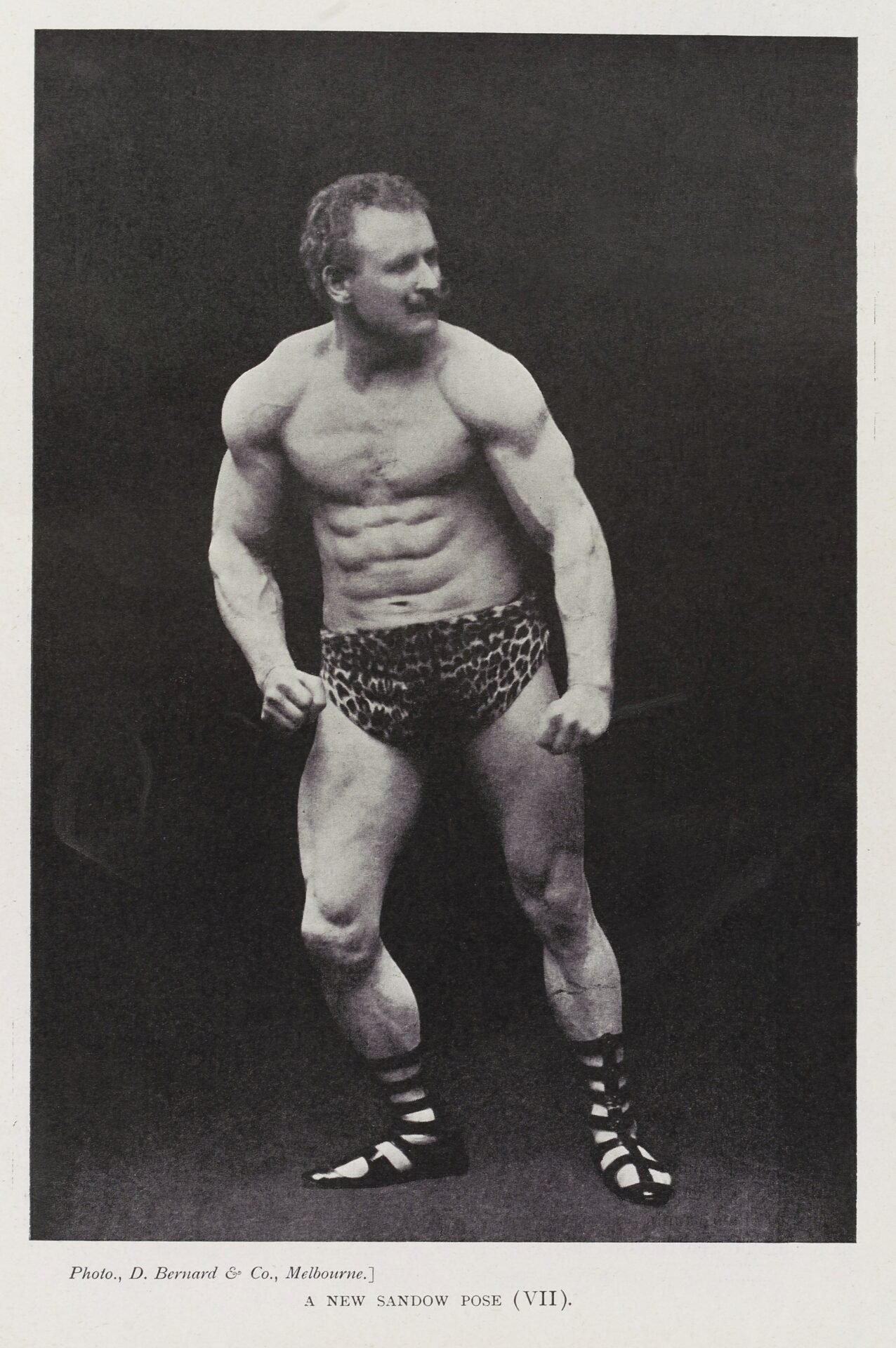
Eugen Sandow was born Friedrich Wilhelm Müller in Königsberg, Prussia, in 1867.
He built his fame as a strongman performer, then turned that fame toward something new: showing the body itself as the attraction.
On 14 September 1901, Sandow staged the Great Competition at the Royal Albert Hall in London.
It is recognised as the first major bodybuilding contest, and it was judged by Sandow alongside author Sir Arthur Conan Doyle and sculptor Sir Charles Lawes.
The winner was William Murray of Nottingham, who received a gold statuette of Sandow.
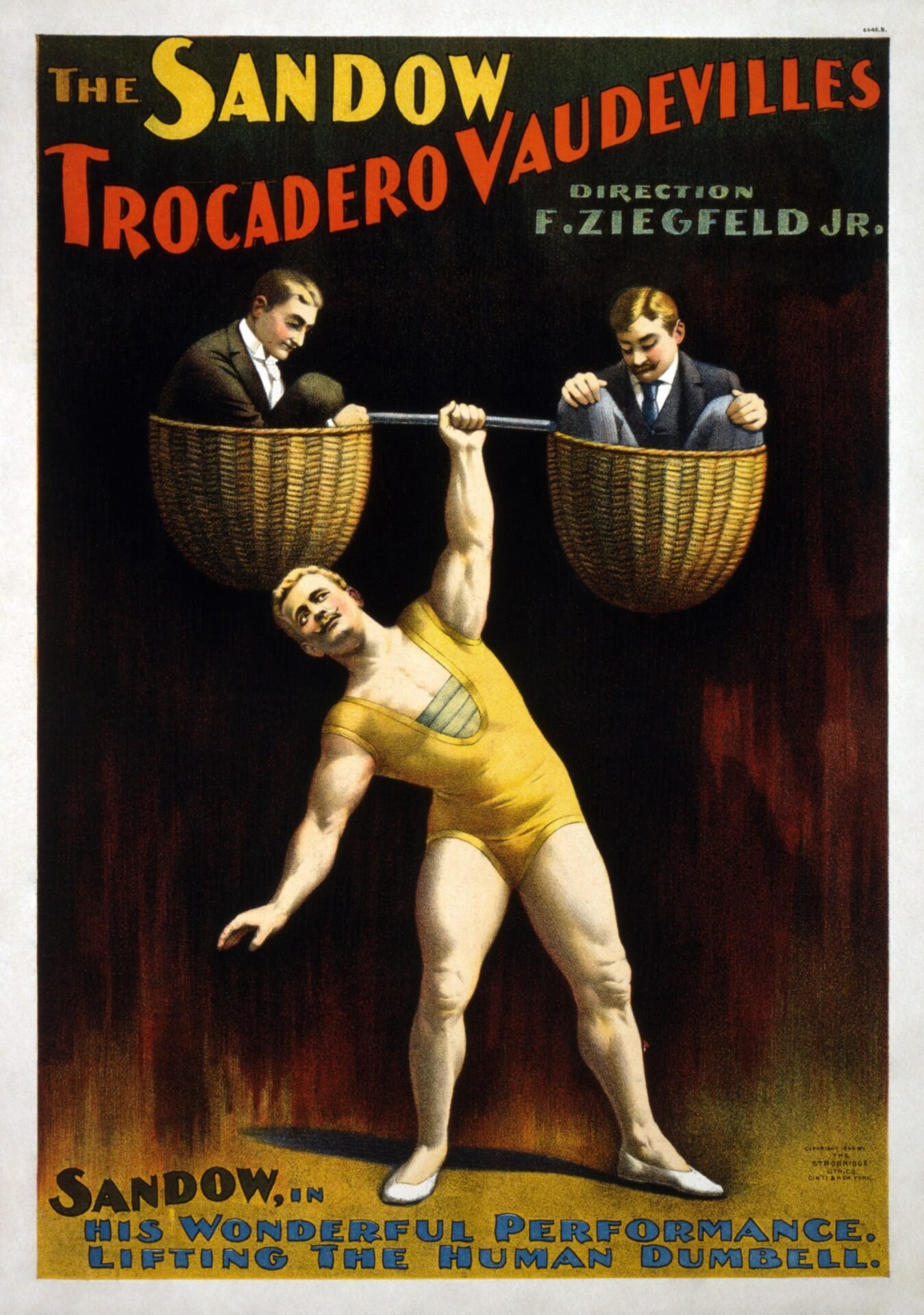
Sandow also spread his ideas through magazines and stage tours, and he is widely known as the father of modern bodybuilding.
His influence is still visible today: the Mr. Olympia winner receives the Sandow Trophy, named after him.
The Early Pioneers: Strength Meets Symmetry 💪
In the decades after Sandow, physique contests spread, and magazines and gyms helped the idea travel far beyond London.
One of the defining figures of the 1940s was John Grimek, an American who had first competed in weightlifting at the 1936 Olympic Games.
Grimek won the Mr. America title in 1940 and again in 1941, then won the Mr. Universe title in 1948 and the Mr. USA title in 1949.
He retired from competition undefeated, and his balanced, powerful look became a reference point for the next generation.
This period also set a lasting tension in the sport: should the winning physique be the biggest, the most balanced, or the most complete package of both?
1946 and 1965: The IFBB and the First Mr. Olympia
In 1946, brothers Ben and Joe Weider founded the International Federation of Bodybuilders in Montreal, Canada.
The new federation gave the sport an international structure, and it grew steadily in the years after the Second World War.
Its most important creation came in 1965, when Joe Weider launched the Mr. Olympia contest.
The idea was simple: champions who had already won major titles needed a top-level contest of their own.
The first Mr. Olympia was held on 18 September 1965 at the Brooklyn Academy of Music in New York City.
Larry Scott won it, then defended the title in 1966 before retiring, leaving him as the only Mr. Olympia champion never to lose the contest.
Sergio Oliva followed as champion, and his reign set up the arrival of the sport’s most famous name.
The Golden Era: Arnold and the Mainstream Moment 🌟
Arnold Schwarzenegger won his first Mr. Olympia in 1970 and went on to win seven titles in total, in 1970–1975 and again in 1980.
His size, posing and personality carried bodybuilding far beyond gym magazines and into films and popular culture.
Other champions of the era, such as Frank Zane and Franco Columbu, showed that there was more than one way to build a winning physique. Read more in Arnold Schwarzenegger’s biography.
For a fuller look at how this period compares with the modern sport, see Golden Era vs Modern Era Bodybuilding.
The Golden Era is often remembered for shape and presentation, but it was also a time when training, nutrition and contest preparation became far more organised.
The Haney Years: A Bridge Between Eras
Lee Haney won his first Mr. Olympia in 1984 and then won eight in a row, through 1991.
His reign joined the Golden Era to what came next, because he combined size with balance and conditioning.
Read more about his career in Lee Haney: The Quintessential Mr. Olympia.
When Haney retired at the top, he left a record that would stand as the benchmark for every champion after him.
The Mass Era: Yates, Coleman and the Size Debate
Dorian Yates won six Mr. Olympia titles in a row, from 1992 to 1997, with a dense, heavily conditioned physique.
Ronnie Coleman then won eight in a row, from 1998 to 2005, equalling Haney’s record for the most Mr. Olympia wins.
More on both champions: Dorian Yates and Ronnie Coleman’s transformation journey.
Phil Heath later won seven in a row, from 2011 to 2017, keeping the Open division at the centre of the sport.
These years also brought a lasting debate about health and balance, as fans and judges weighed sheer size against shape, symmetry and conditioning.
That debate is a big part of why a new division was created in the 2010s.
2016: Classic Physique Brings Back the Classic Look ✨
Classic Physique debuted at the Olympia in 2016, with rules designed to reward a balanced, aesthetic physique rather than maximum size alone.
Danny Hester won the first Classic Physique Olympia title in 2016.
Breon Ansley followed with titles in 2017 and 2018, and Breon Ansley’s biography traces his rise through the division.
Chris Bumstead then won six Classic Physique Olympia titles in a row, from 2019 to 2024, before retiring from competition.
See Chris Bumstead’s biography for his early career and rise.
With Bumstead gone, the title changed hands: Ramon Rocha Queiroz, known as Ramon Dino, won in 2025.
A year later, Niall Darwen won the 2026 Classic Physique Olympia, ahead of Mike Sommerfeld in second and Queiroz in third.
Classic Physique did not replace the Open division. It sits alongside it, giving fans two different ideals to follow.
Bodybuilding in 2026: Where the Sport Stands Now 🏆
The most recent Mr. Olympia weekend, held in Las Vegas in September 2026, showed how open both headline divisions now are.
In the Men’s Open, Nick Walker won his first Mr. Olympia title on 26 September 2026.
Samson Dauda, the 2024 champion, finished second, and Derek Lunsford, the 2023 and 2025 champion, finished third.
In Classic Physique, as noted above, Niall Darwen took his first Olympia title in the same weekend.
Together, those results tell a simple story: no single champion dominates the sport in 2026.
The Open division still rewards the biggest complete package, while Classic Physique rewards proportion and presentation.
For a wider cast of the sport’s great names, see Top 10 Legendary Bodybuilders Who Defied Time.
Frequently Asked Questions
When was the first major bodybuilding contest?
Sandow’s Great Competition was held at the Royal Albert Hall in London on 14 September 1901.
Who won the first Mr. Olympia?
Larry Scott won the first Mr. Olympia in 1965, then defended the title in 1966.
What is Classic Physique?
It is an Olympia division, launched in 2016, that rewards a balanced, aesthetic physique rather than maximum size alone.
Who are the reigning champions in 2026?
As of the September 2026 Olympia, Nick Walker holds the Men’s Open title and Niall Darwen holds the Classic Physique title.
Conclusion: One Sport, Many Ideals
From Sandow’s stage in 1901 to the Olympia stage in 2026, bodybuilding has changed its champions, its rules and its look many times.
What has not changed is the core idea: a trained physique, presented with care, judged in front of an audience.
Whether fans prefer the size of the Open division or the lines of Classic Physique, both trace back to the same starting point.
That is why the history still matters — it explains not just who won, but why the sport looks the way it does today. 💪