

🏋️ In February 2024, a small regional bodybuilding show in Brazil did something nobody saw coming. It put a brand-new division on stage — Men’s Wellness — and within days the whole bodybuilding internet was arguing about it.
The show was the Roraima Classic, held on February 10, 2024. Its headline act was athlete San Moraes, who described himself on Instagram as the first-ever Men’s Wellness competitor.
Two years later, the argument has an answer of sorts. Men’s Wellness never became a fixture of the sport’s biggest stages — but the story of why it flared up, and why it stopped there, still says a lot about how bodybuilding changes. 💭
What Actually Happened at the Roraima Classic
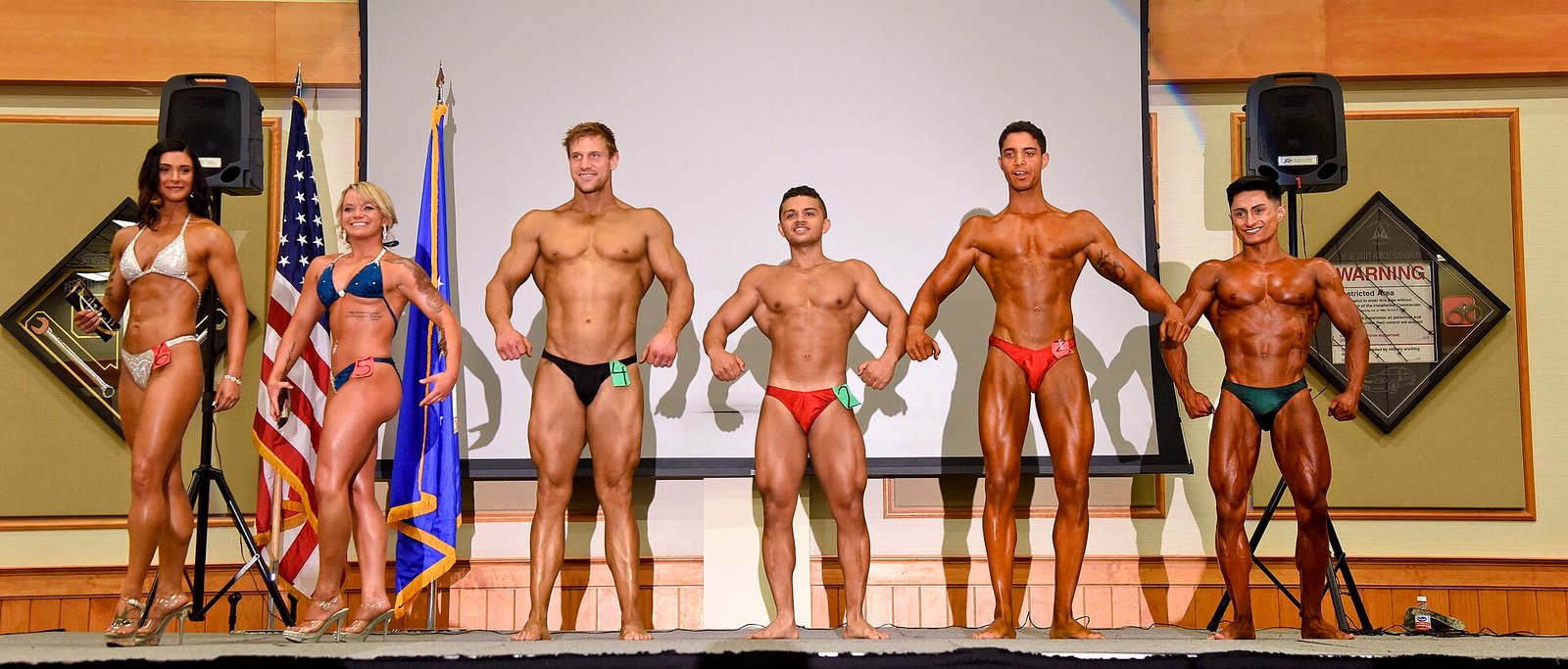
First, an important correction to how this story was first told. The Roraima Classic was a regional, independent event — it was not sanctioned by the NPC or the IFBB Pro League.
That matters because it changes what the event meant. This was not the sport’s governing body testing a new division. It was one local show creating its own category, and the internet doing the rest.
According to the show’s own announcement, reported at the time, the category was a chance for men to show strength, beauty and physical ability — and for people who often have no space in the sport to have one.
The organisers also made a point of saying the new category was made for men and would not take anything away from the women’s divisions. They promised it would return at their next event.
What the organisers did not publish, as far as any credible report shows, was a formal judging criteria sheet for Men’s Wellness. So this article does not invent one — anyone claiming to know exactly how it was scored is guessing.
Why the Name “Wellness” Lit the Fuse
Wellness was already a well-known name in the sport — but as a women’s division. It rewards athletes with more mass in the hips, glutes and thighs, with the upper body developed but not to the same degree.
The women’s division was announced in May 2019 for the 2020 competition season across the NPC, NPC Worldwide and the IFBB Pro League. It reached the Olympia stage for the first time in 2021.
By 2026 it was firmly established: Eduarda Bezerra won the Wellness Olympia in both 2025 and 2026. So when a men’s version appeared under the same name, fans immediately read it as borrowing — or intruding on — a women’s category.
That is where the fiercest reactions came from. Some fans and professionals online called the idea a “slap in the face to women’s competitors”, in comments reported by Fitness Volt.
Others saw it very differently. Wellness star Angela Borges publicly backed the new category, saying, in her own words, “This category does not compete with US WOMEN, so it has my support.”
The Reaction: From Applause to Outright Rejection 👏😬
The debate first blew up after the Brasilbodybuildingnews Instagram account shared news of the division. The account’s own view was cautious — its poster wrote that the category should not be added to national high-level shows.
Classic Physique pro Mike Sommerfeld then drew wider attention to the story, and the comments flooded in from there. The split was sharp, and it broke down roughly like this:
Former champion Rich Gaspari was unimpressed, posting that he was “old school” and “definitely not a fan”. Former Mr. Olympia Samir Bannout was also openly disappointed.
On the other side, Kai Greene appeared to welcome the idea, while seven-time Mr. Olympia Phil Heath joked that if new divisions were being invented, why not Men’s Fitness — a nod to the old fitness routines of the 1990s.
None of this was a formal vote, of course. It was social media doing what social media does: loud, fast, and divided. But it was loud enough that the sport’s leadership felt it had to respond.
The Answer That Ended the Speculation
That response came fast. On February 12, 2024 — just two days after the Roraima Classic — IFBB Pro League vice president Tyler Manion addressed the speculation directly on Instagram.
His message, as reported by Fitness Volt, was unambiguous: “The NPC, NPC WW, and the IFBB Pro League are not adding any divisions, and we are very pleased with what we currently offer.”
That single statement closed the door that the online debate had tried to open. There would be no Men’s Wellness on the IFBB Pro League calendar, no Olympia pathway, and no national rollout.
Readers who want the full follow-up can find it in our companion piece on Tyler Manion’s firm stance on the IFBB Pro League’s divisions.
How Divisions Usually Earn Their Place
Bodybuilding has added divisions before — but always slowly, and always from the top down. The pattern is worth knowing, because Men’s Wellness broke it in every way.
Men’s Physique arrived in 2012, giving lighter, more athletic physiques a stage without the mass demands of open bodybuilding. Classic Physique followed in 2016, sitting between Men’s Physique and open bodybuilding with height-and-weight limits.
Women’s Wellness, as noted above, was announced in 2019 and joined the Olympia in 2021. Each of these divisions came with published criteria, federation backing, and a qualification route.
Men’s Wellness had none of those things. It had one show, one athlete in the spotlight, and a viral weekend. That is the honest difference — and it explains why one idea became a division and the other became a talking point.
For readers thinking about competing in any division, the unglamorous basics still matter most — including avoiding common bodybuilding injuries and building a base with proven movements like the Romanian deadlift.
What Happened Next — the 2026 Verdict 🔍
So, did Men’s Wellness quietly grow after the cameras moved on? On the available evidence: no — not at any level that counts as adoption.
Searches for Men’s Wellness in 2025 and 2026 return only the original 2024 story and the women’s division. No major federation lists it, no national show advertises it, and no follow-up report of a second Roraima Classic Men’s Wellness contest could be verified for this update.
The decisive check is the 2026 Olympia itself. The 2026 Olympia Weekend, held September 24–27 in Las Vegas, featured 12 professional divisions — and Men’s Wellness was not one of them.
The men’s divisions were Open, 212, Classic Physique, Men’s Physique and Wheelchair. The women’s divisions were Bodybuilding, Fitness, Figure, Bikini, Women’s Physique, Wellness and Fit Model.
That means this statement is verified, not assumed: no major federation had adopted Men’s Wellness as a standing division by the 2026 Olympia.
There is one twist worth noting honestly. Manion’s 2024 “no new divisions” line did not last forever in general — the IFBB Pro League did add Fit Model, a women’s division for less muscle than Bikini, which crowned its first Olympia champion in 2026.
But that door opened for a different division, not for Men’s Wellness. The men’s side of the sport stayed exactly where it was.
Was It a Good Idea, Then?
That depends on what you think a division is for. If it is a home for athletes who do not fit anywhere else, then the Roraima Classic organisers had a point — more doors into the sport is a good thing.
If a division is a standard — a published set of criteria, a judging panel trained to apply it, and a ladder from local shows to the Olympia — then Men’s Wellness never got past the first step.
Both views were in the comments in February 2024, and both are still reasonable now. What is no longer reasonable is pretending the outcome is undecided.
The experiment happened, the biggest federation said no, and the idea stayed regional. Bodybuilding’s history is full of categories that began as arguments — Men’s Physique and Classic Physique both had doubters once.
The difference is that those divisions survived their arguments. Men’s Wellness, so far, has not had the chance — or the backing — to try. 🏋️
Frequently Asked Questions
What was the Men’s Wellness division?
A men’s category created by Brazil’s regional Roraima Classic show in February 2024, presented as an inclusive stage for men to display strength, beauty and physical ability. It was not an IFBB Pro League or NPC division.
Who was the first Men’s Wellness competitor?
San Moraes, who competed in the division at the 2024 Roraima Classic and described himself on Instagram as the first-ever Men’s Wellness bodybuilding competitor.
Did the IFBB Pro League adopt Men’s Wellness?
No. Vice president Tyler Manion said on February 12, 2024, that the NPC, NPC Worldwide and the IFBB Pro League were not adding any divisions. The 2026 Olympia’s 12 divisions included no Men’s Wellness category.
Is Men’s Wellness still contested anywhere in 2026?
No verified report of a Men’s Wellness contest at a major or national show in 2025 or 2026 could be found for this update. The last verified status remains the Roraima Classic organisers’ February 2024 statement that the category would return at their next event.
How is Women’s Wellness different?
Women’s Wellness is an established IFBB Pro League division, announced in 2019, contested from the 2020 season, and on the Olympia stage since 2021. It rewards lower-body mass — hips, glutes and thighs — with a less developed upper body. No equivalent men’s criteria were ever published.