

Two men walked onto the same stages in the 1990s, and they could hardly have looked more different. 🏆
One was a towering mass monster on his way to eight Mr. Olympia titles. The other was a 5 ft 4 in Australian whose arms looked too big for his frame.
Ronnie Coleman and Lee Priest never needed to be rivals to make a great story. Their careers crossed, overlapped and diverged — and together they show just how many shapes greatness can take.
👑 The King: Ronnie Coleman
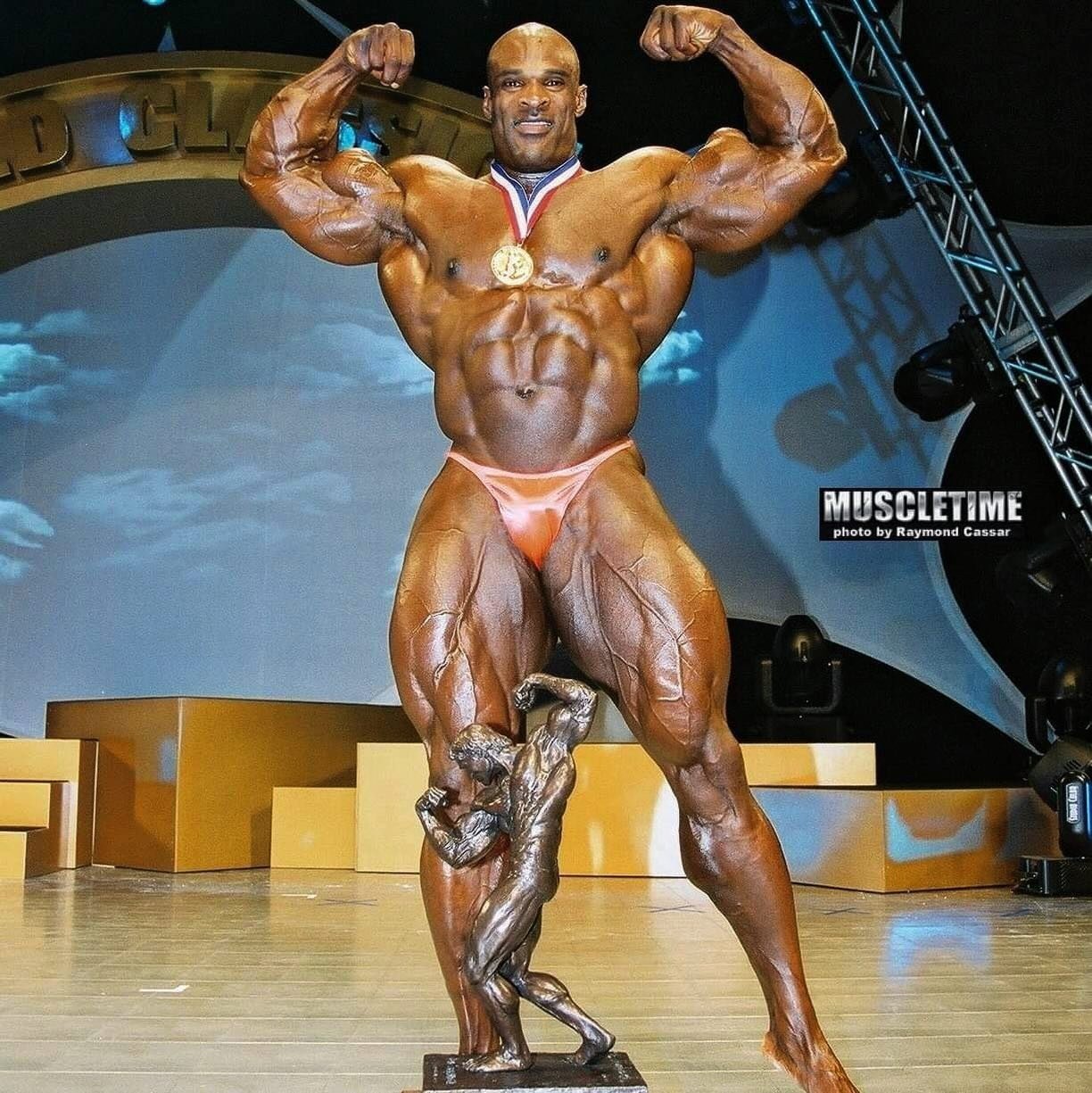
Ronnie Coleman was born in Louisiana on 13 May 1964 and raised around Bastrop. Before bodybuilding, he played football at Grambling State University and later worked as a police officer in Arlington, Texas.
His route into the sport is now part of its folklore. Gym owner Brian Dobson offered him a free membership if he would let Dobson coach him for the 1990 Mr. Texas — and Coleman won it.
Progress was slow at first. His first Mr. Olympia, in 1992, ended without a placing, and he was still only ninth in 1997. Then came 1998, and everything changed.
Coleman won eight Mr. Olympia titles in a row, from 1998 to 2005, tying Lee Haney’s all-time record. He finished his career with 26 professional wins, and his final Olympia appearance came in 2007, when he placed fourth.
For the full arc of that rise, see Ronnie Coleman’s transformation journey.
💪 The Blond Myth: Lee Priest
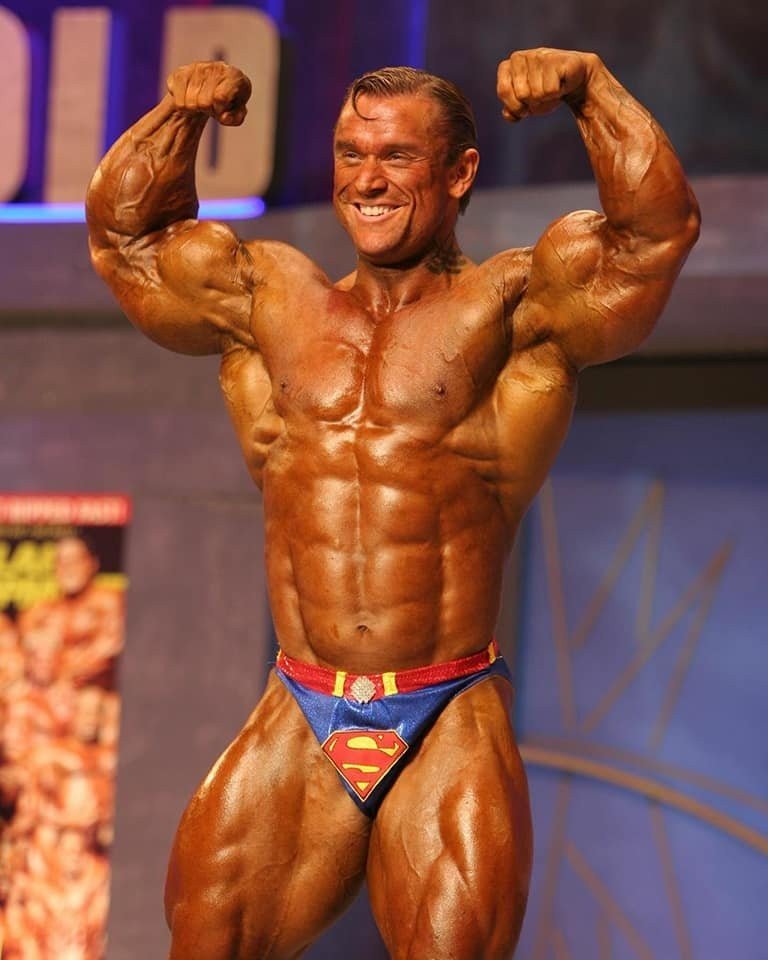
Lee Priest was born on 6 July 1972 in Newcastle, Australia. He started young, won Mr. Australia titles as a teenager, and turned professional at just 20 — one of the youngest ever to do so.
His nickname, “The Blond Myth”, said it all. The blond hair and the famously huge arms on a short frame made him instantly recognisable, even in a line-up of giants.
Priest never won a Mr. Olympia, but he was no nearly-man. He competed at the Olympia six times, in 1997, 1998, 1999, 2000, 2002 and 2003, with his best placing of sixth in 1997, 2000 and 2002.
His biggest professional wins came later than many expected: the San Francisco Pro in 2002, the Grand Prix Australia in 2005, and the Ironman Pro in 2006 — the show he had chased for a decade.
For his full story, see Lee Priest’s biography.
🤝 1997 — and Two Different Ways to Train
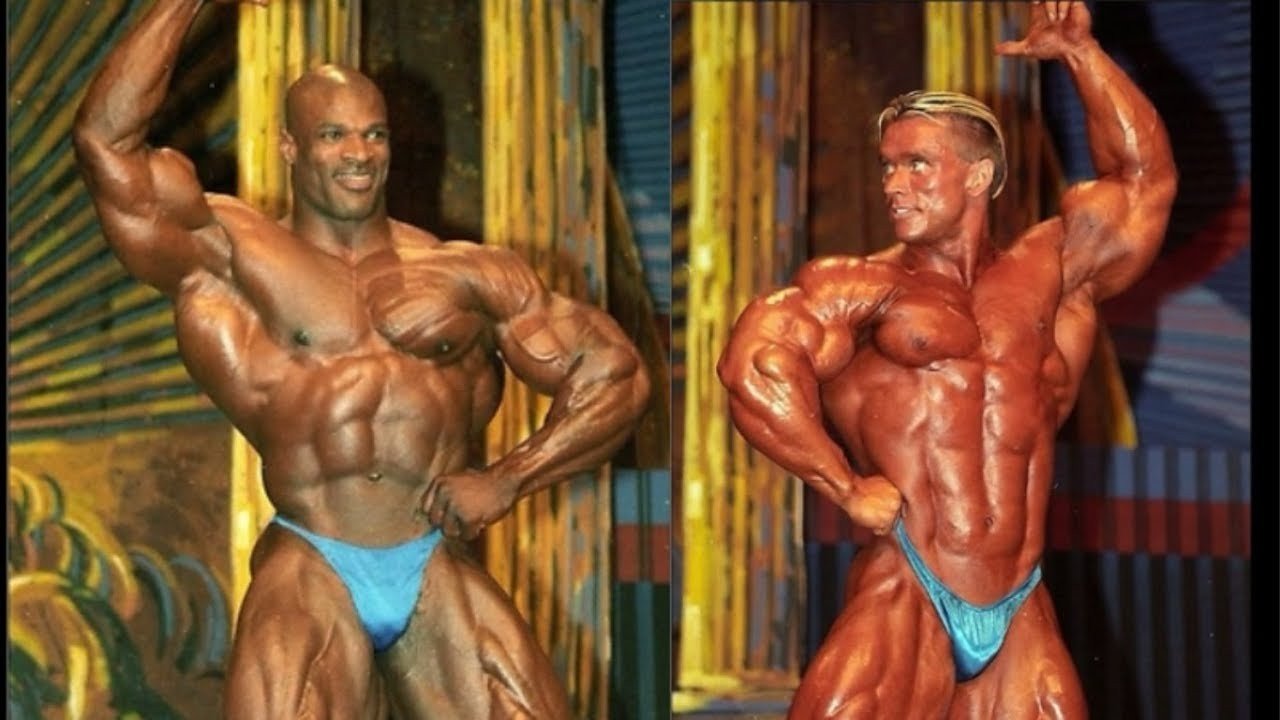
The year 1997 is where their stories truly meet. At that year’s Mr. Olympia, Priest finished sixth — ahead of Coleman, who finished ninth.
Coleman has recalled the shock of seeing the smaller man placed ahead of him, and the competitive fire it lit. A year later, Coleman was Mr. Olympia. Priest, meanwhile, kept proving that size alone did not decide a contest.
Their training told the same contrasting story. Coleman became famous for brutally heavy lifting, moving weights that seemed to belong in a powerlifting meet rather than a bodybuilding gym.
Priest’s gift was proportion and completeness. He did not try to out-mass the mass monsters; he beat them on shape, balance and arms that stole the eye.
Neither approach was “right” in any simple sense. Both men reached the very top of the sport’s biggest stages by doubling down on what made them different.
🌅 Beyond the Stage: What Their Story Leaves Behind
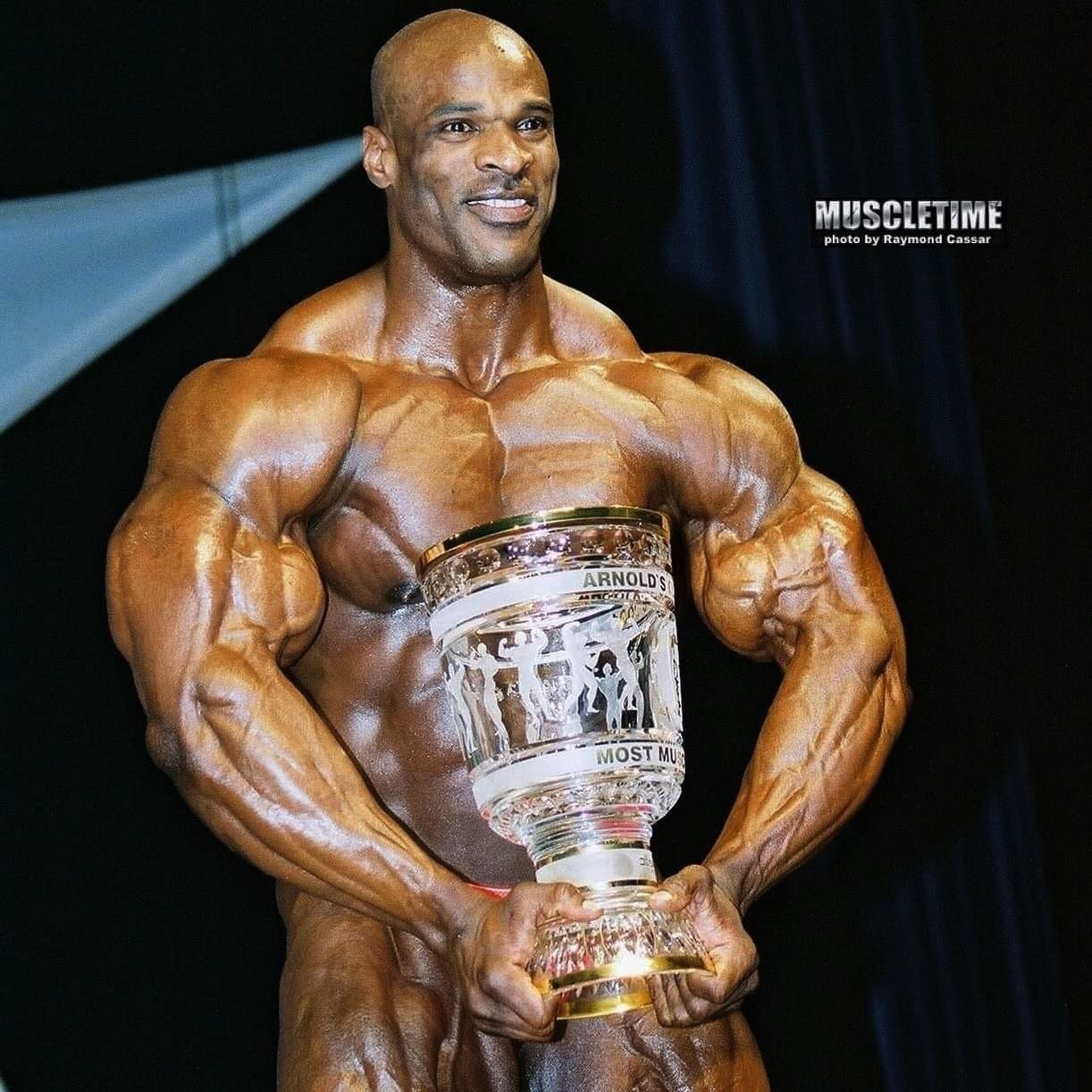
After 2007, Coleman’s life changed sharply. He has spoken openly about undergoing 13 operations since 2017, and about using a wheelchair for longer distances and walking aids for shorter ones.
He has also kept showing up — training, meeting fans and fronting his supplement brand. For where he stands today, see Ronnie Coleman now.
Priest’s later path was just as winding. After a suspension in 2006 for competing in a rival federation’s shows, he was reinstated by the IFBB in 2008 but never competed there again.
Instead, after seven years away from competition, he returned in 2013 to win the NABBA Mr. Universe overall title as an amateur, and guest-posed at NABBA/WFF events — a final chapter nobody had predicted.
So this is not a story with a winner. Coleman proved what maximum size and relentless work could build. Priest proved that a shorter man with perfect proportions could stand beside giants and be remembered just as clearly.
That is why the tale still works. Two titans, two opposite routes — and one sport big enough to hold them both. 🏆
❓ Quick answers
How many Mr. Olympia titles did Ronnie Coleman win? Eight in a row, from 1998 to 2005, tying Lee Haney’s record.
What was Lee Priest’s best Mr. Olympia placing? Sixth, in 1997, 2000 and 2002. He competed at the Olympia six times.
Did Priest ever finish ahead of Coleman? Yes — at the 1997 Mr. Olympia, Priest was sixth and Coleman ninth, a year before Coleman’s reign began.
When did each man last compete? Coleman’s final Olympia was 2007; Priest’s final contest win was the 2013 NABBA Mr. Universe overall title.