

Every sport has a first champion, and bodybuilding’s first Mr. Olympia was Larry Scott. 🏆
Known as “The Legend” and “The Golden Boy,” Scott won the very first Mr. Olympia in 1965 and defended it in 1966. He then walked away at the top, unbeaten on bodybuilding’s biggest stage.
This is a historical retrospective. Scott died in 2014, so there is no new competition news here — instead, this is the story of why a champion from sixty years ago still shapes how lifters train in 2026. 💪
From a Skinny Kid in Idaho to Mr. America
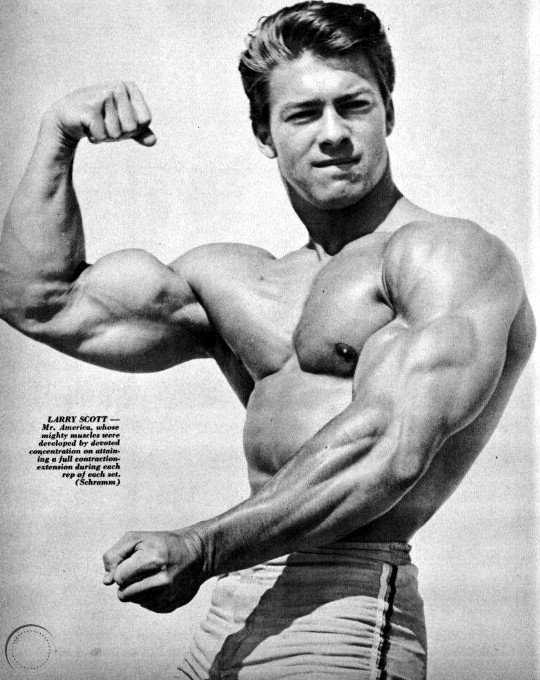
Larry Dee Scott was born on October 12, 1938, in Blackfoot, Idaho. As a teenager he was thin, with narrow shoulders that many told him would hold him back.
He started weight training at 16, inspired by the physiques he saw in bodybuilding magazines. Step by step, he turned a supposed weakness into his greatest strength.
The wins came quickly once he moved to California. He won Mr. Idaho in 1959, Mr. California in 1960, and Mr. Pacific Coast in 1961.
Then came the national breakthrough: Mr. America in 1962, followed by Mr. Universe honours in 1963 and the overall Mr. Universe title in 1964. By then, nobody doubted him anymore. 🌟
Standing around 5 feet 7 inches and competing at about 205 pounds, Scott was not the biggest man on stage. His appeal was balance, shape, and charisma — the classic Golden Era look.
The First Mr. Olympia — 1965 and 1966
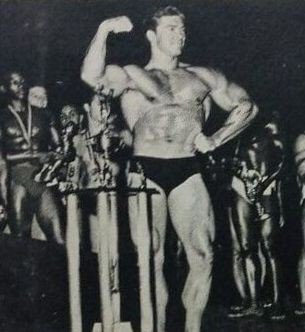
In 1965, Joe Weider created a new contest for the best champions in the sport: the Mr. Olympia. Scott won the inaugural event, becoming the first man to hold the Mr. America, Mr. Universe, and Mr. Olympia titles.
He returned in 1966 and won again, defending his crown before retiring from top-level competition at just 28. He remains the only Mr. Olympia winner never to lose the contest. 👑
His successor was Sergio Oliva, and the Olympia grew into the sport’s biggest event. But the standard was set by Scott: a champion who won with symmetry, presentation, and crowd connection, not size alone.
Scott also had a small role in the 1964 film Muscle Beach Party, and he was inducted into the IFBB Hall of Fame in 1999. He made a brief comeback in 1979, placing ninth at the Canada Diamond Pro Cup, before retiring from competition for good in 1980.
That contrast still fascinates fans today. Where later eras chased ever-greater mass, Scott’s era prized proportion — a debate that runs through modern stories too, from Victor Martinez, the uncrowned legend who never won an Olympia, to Andrew Jacked, the modern mass star whose rise shows how much the sport has changed.
The Arms That Changed Training: The Scott Curl
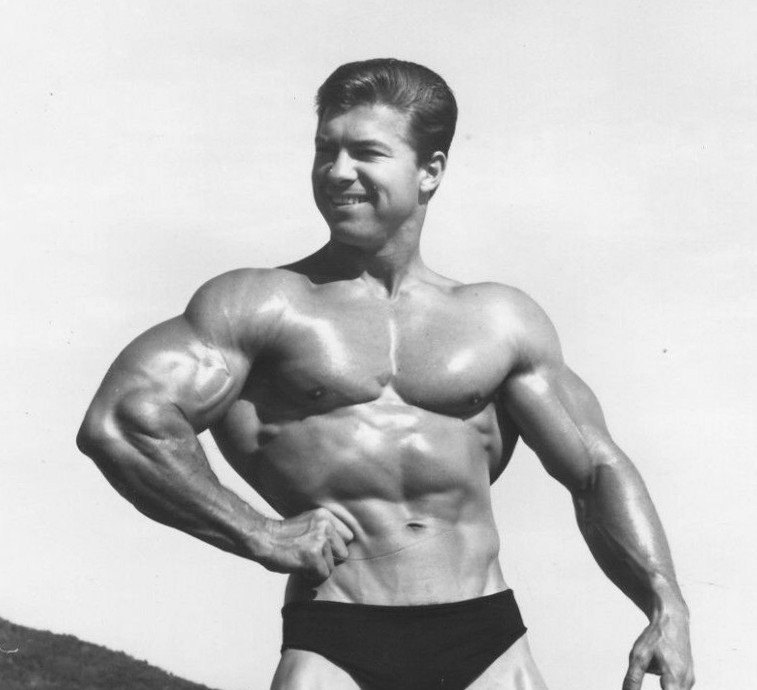
If one body part made Larry Scott immortal, it was his arms. His biceps measured around 20 inches — remarkable for a man of his height and era, and still quoted by coaches today.
Scott trained under Vince Gironda, who taught him the preacher curl. Scott made the move famous, and gyms around the world still call it the “Scott Curl.” 🏋️
The idea is simple and still useful in 2026: lock the upper arms in place, control every rep, and feel the biceps work from stretch to contraction. No swinging, no ego lifting.
Try it the Scott way: pick a weight you can control, keep your upper arms fixed on the pad, and use slow, strict reps. That discipline — not a secret exercise — is the real lesson of his training.
Scott’s wider legacy is the same lesson. He proved that a lifter told he was “too narrow” could build a championship physique through consistency, smart training, and patience. That message echoes in the lifelong battles of bodybuilders who pushed the limits — the sport rewards those who keep showing up.
After competition, Scott settled in Salt Lake City, Utah, ran his own fitness and nutrition company, and stayed connected to the sport he helped build. He was a devout member of The Church of Jesus Christ of Latter-day Saints, married to Rachel, and father to five children.
Larry Scott died on March 8, 2014, in Salt Lake City, aged 75, from complications of Alzheimer’s disease. His titles are history now, but every time a lifter sits at a preacher bench and does a Scott Curl, a small part of the Golden Boy lives on. 🙏
Frequently Asked Questions
Who was the first Mr. Olympia?
Larry Scott. He won the inaugural Mr. Olympia in 1965 and defended the title in 1966.
How many Mr. Olympia titles did Larry Scott win?
Two — in 1965 and 1966. He retired from top-level competition after his second win and never lost an Olympia contest.
What is the Scott Curl?
The preacher curl, popularised by Scott under his coach Vince Gironda. The upper arms rest on a pad so the biceps do strict, controlled work.
How tall was Larry Scott, and how much did he weigh on stage?
Around 5 feet 7 inches, with a contest weight of about 205 pounds (93 kg). His biceps measured around 20 inches.
When did Larry Scott die?
On March 8, 2014, in Salt Lake City, Utah, aged 75, from complications of Alzheimer’s disease. He is a historical figure — this article makes no claim of any post-2014 activity.
Why is Larry Scott called “The Golden Boy”?
For his Golden Era looks, charisma, and clean sweep of the era’s three major titles: Mr. America, Mr. Universe, and Mr. Olympia.