

Every golden-era fan knows the famous gym photos: Arnold Schwarzenegger, deep into a workout in California, being pushed by a bearded giant in a World Gym vest. That giant was Jusup Wilkosz — the “German Hercules”. 🇩🇪
Wilkosz was the greatest German bodybuilder of his generation: a world champion, the first German ever to step on a Mr. Olympia stage, and the man who stood third on the 1984 Olympia podium.
His story is also one of the saddest in the sport. Injuries, personal tragedy and two decades of isolation followed the glory — before a late-life rediscovery, and a final illness that took him in November 2019.
This is the complete, corrected story of Jusup Wilkosz, updated for 2026 — a tribute to a champion Germany nearly forgot. 🕊️
Jusup Wilkosz Quick Facts
| Full Name | Jusup Wilkosz |
| Born | November 8, 1948 — Heilbronn, Germany |
| Died | November 19, 2019 — Leonberg, Germany (aged 71) |
| Height | 6’0″ (183–185 cm) |
| Competition Weight | 245–255 lb (111–115 kg) |
| Nicknames | “The German Hercules”, “German Zeus”, “Sepp” |
| Best Result | 3rd place, 1984 Mr. Olympia |
| Major Titles | 1979 German Championships, 1979 World Amateur Championships & Mr. Universe, 1980 IFBB Pro Mr. Universe |
Early Life in Germany 🇩🇪
Jusup Wilkosz was born on November 8, 1948, in Heilbronn, in the south-western German state of Baden-Württemberg. He was one of eight children; his parents had come from Lemberg, the city now known as Lviv.
He was not groomed for sport. Wilkosz trained as a telecommunications secretary with the Bundespost, the German federal postal service — but during his apprenticeship he discovered strength training, and promptly won a youth title in weightlifting. 🏋️
By his late teens the weights had won. The young postal worker built one of the most powerful physiques in Germany, at a time when his country had never produced a bodybuilder of true world class.
Fame at home came quickly. Wilkosz appeared on German television shows such as Das aktuelle Sportstudio, performed on stage at the Schauspielhaus Stuttgart theatre, and in 1982 played “Hatto the German” in a TV series. In 1981 he even traded public insults with the famous artist Joseph Beuys — a feud covered by Der Spiegel.
Competitive Career: Germany’s First World-Class Bodybuilder 🏆
Wilkosz’s international breakthrough built through the late 1970s. In 1978 he finished runner-up in the heavyweight class at the IFBB World Championships, behind American star Mike Mentzer.
Then came the golden year. In 1979 Wilkosz won the German Bodybuilding Championships, then travelled to Columbus, Ohio, and won the heavyweight class at the World Amateur Championships — becoming the first German heavyweight world champion in the sport’s history. He also won the Mr. Universe title that year.
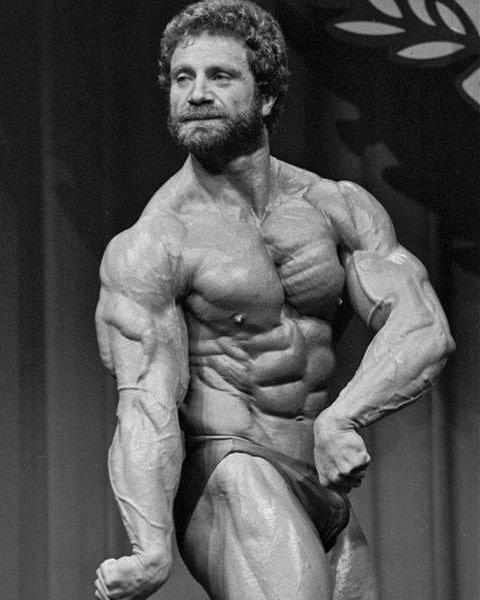
In 1980 he turned professional and won the IFBB Pro Mr. Universe — a pro debut victory that announced him to the world.
A year later he made history again, becoming the first German ever to compete at the Mr. Olympia, placing 6th in Columbus in 1981. He returned to take 10th in 1982, then 6th again in 1983, adding podium finishes on that year’s Grand Prix circuit — 3rd in Sweden, 3rd at the Grand Prix World and 4th in Switzerland.
By now a new, harder-edged generation was arriving in the pro ranks, led by men like Rich Gaspari. Wilkosz, the old-school mass monster with the poet’s beard, was about to produce the performance of his life.
The 1984 Olympia Podium 🥉
On November 3, 1984, at the Felt Forum in New York, Wilkosz reached his peak. In front of the biggest crowd and for the largest prize fund the Olympia had ever seen, he placed 3rd at the Mr. Olympia.
Ahead of him stood only the winner, Lee Haney, claiming the first of his eight titles, and Egypt’s Mohamed Makkawy in second. Behind Wilkosz came Albert Beckles, Roy Callender — and the defending champion Samir Bannout, down in 6th.
It remains one of the finest results ever achieved by a German bodybuilder. In the four decades since, only Dennis Wolf has matched a 3rd-place Olympia finish for Germany.
Wilkosz competed once more at the Olympia, placing 12th in 1986 — but injuries were already closing in, and it proved to be the final contest of his career.
Friendship With Arnold Schwarzenegger 🤝
Wilkosz met Arnold Schwarzenegger in the late 1970s, and the two German speakers became genuine friends. They trained together in California as Wilkosz prepared for his professional breakthrough, and Arnold stood in his corner through those crucial years.
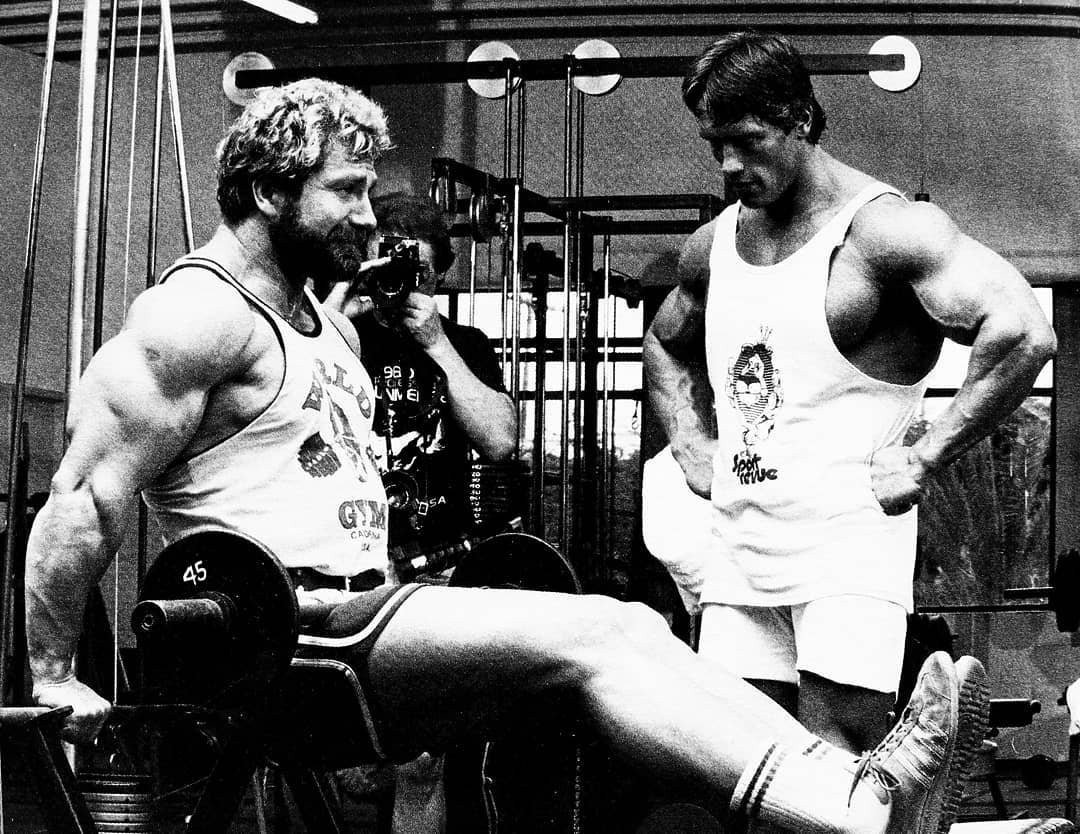
The photographs from those sessions — two huge men in World Gym and Gold’s Gym gear, working through brutal workouts — have become some of the most shared golden-era images of all.

At home, the German press gave Wilkosz his own version of the compliment, calling him “the Swabian Schwarzenegger” — the champion from Arnold’s German-speaking world who had followed him to the top of the sport.
Life After Competing: The Gym, and the Hard Years 🏠
In 1985 Wilkosz gave up his secure civil-service post and, with partner Peter Gottlob, opened a 1,000-square-metre fitness studio in Fellbach, near Stuttgart. From 1987 he ran it alone.
Then life turned cruel. In December 1989 his wife Ruth died of cancer. Wilkosz collapsed into a severe psychological crisis, withdrew from the world, and spent time in psychiatric care. Legal troubles from those lost years were later dropped by the courts, which recognised his diminished state.
The comeback he planned for the 1994 Masters Mr. Olympia was stopped by injury — the same story that had haunted his prime. For around twenty years, one of the most famous athletes in Germany lived quietly and almost forgotten in a small flat in Leonberg.
His rescue came from an unlikely place: a book. In 2007 author Heiger Ostertag published Was bleibt. Die Reise des Jusup W. (“What Remains: The Journey of Jusup W.”), a novel-like biography, and the two men toured Germany’s gyms together. In the summer of 2018, fans even held a benefit event in his honour in Oberkirch. ❤️
Death and Legacy 🕊️
In the autumn of 2019 Wilkosz fell ill, suffering repeated nosebleeds and sudden physical complaints. Doctors found the cause: a malignant bone tumour. The diagnosis came only weeks before the end.
Jusup Wilkosz died on November 19, 2019, in Leonberg — eleven days after his 71st birthday. His sister Barbara and close friends announced the news on his own social media pages, remembering “his empathetic nature, loving nature and big heart”.
He leaves a singular legacy: the trailblazer who proved a German could stand on bodybuilding’s highest podium, in a line of European greats that runs from Serge Nubret to the modern era.
“I want to be buried with my muscles,” he used to say. Germany’s Hercules kept them — and his dignity — to the end. 💪
Frequently Asked Questions ❓
When did Jusup Wilkosz die, and what was the cause?
He died on November 19, 2019, in Leonberg, Germany, aged 71. Doctors had diagnosed a malignant bone tumour only a few weeks earlier, in the autumn of 2019.
What was Jusup Wilkosz’s best Mr. Olympia result?
Third place at the 1984 Mr. Olympia in New York — behind winner Lee Haney and runner-up Mohamed Makkawy. He competed at five Olympias in total (1981, 1982, 1983, 1984, 1986).
Did Jusup Wilkosz really train with Arnold Schwarzenegger?
Yes. The two met in the late 1970s, trained together in California, and became close friends. Wilkosz was the first German to compete at the Mr. Olympia, following the path Arnold had opened.
How tall was Jusup Wilkosz, and how much did he weigh?
He stood 6’0″ (around 183–185 cm) and competed at roughly 245–255 lb (about 115 kg), with arms reported at 22 inches.
Why did Jusup Wilkosz’s career end so early?
A series of injuries kept interrupting his progress, and after his wife Ruth died in 1989 he withdrew from the sport entirely. A planned comeback at the 1994 Masters Olympia was stopped by injury too.
What was Jusup Wilkosz’s nickname?
English-language magazines called him “The German Hercules” and “German Zeus”, while the German press dubbed him “the Swabian Schwarzenegger”. Friends knew him simply as “Sepp”.
The Bottom Line ✅
Jusup Wilkosz never won the Mr. Olympia — but for one night in New York in 1984, only two men on Earth stood between him and the title.
World champion, Arnold’s training partner, a television star at home, and a man who endured more after bodybuilding than most face in a lifetime: the German Hercules deserves to be remembered. Rest in peace, Jusup. 🕊️