

How we chose these products: This is a research-based guide, not a hands-on test. We compared manufacturer specifications, checked every product is in stock on Amazon US in October 2026, and filtered everything through a beginner’s eyes: low cost of entry, tiny footprint, a forgiving learning curve, and nothing that needs an app account or a second person to use safely. Prices are approximate bands checked in October 2026 — confirm the live price before you buy.
Start Smaller Than You Think
Here is the mistake almost every beginner makes: they price up a full gym — treadmill, rack, bench, a wall of weights — get scared by the total, and buy nothing. Or worse, they buy the lot, use it for nine days, and park laundry on it for five years.
The truth is less dramatic. A starter gym that costs about $200, fits in a corner and takes ten minutes to learn will do more for your first six months than a $2,000 setup you are afraid to touch. Every pick below is cheap to try and hard to use wrong.
Already training and shopping for serious machines instead? Our best exercise machines for home guide covers that upgrade path. This page is the step before it: day one, from zero.
The 7 Best Beginner Picks at a Glance
| Product | What it trains | Best for | Approx. price |
|---|---|---|---|
| TRIBE Resistance Bands Set (11-piece) | Full-body strength | The very first buy — a whole gym in a carry bag | $30–$40 |
| Ativafit Adjustable Dumbbell (27.5 lb) | Strength, upper and lower body | One dumbbell, five weights, zero rack | $100–$130 (single) |
| BalanceFrom GoYoga+ Mat | Floor work, stretching, core | Protecting knees, elbows and floors | $25–$40 |
| TRX GO Suspension Trainer | Bodyweight strength | Rows and assisted moves with no weights at all | $130–$150 |
| Yes4All Vinyl-Coated Kettlebell (15 lb) | Strength + light cardio | Learning swings, squats and carries | $20–$30 |
| UREVO Strol 2E 2-in-1 Treadmill | Walking and easy jogging | Daily steps that slide under a bed | $190–$290 |
| DEGOL Speed Jump Rope | Cardio and coordination | The cheapest cardio tool that works | $10–$15 |
1. TRIBE Resistance Bands Set — Best First Buy
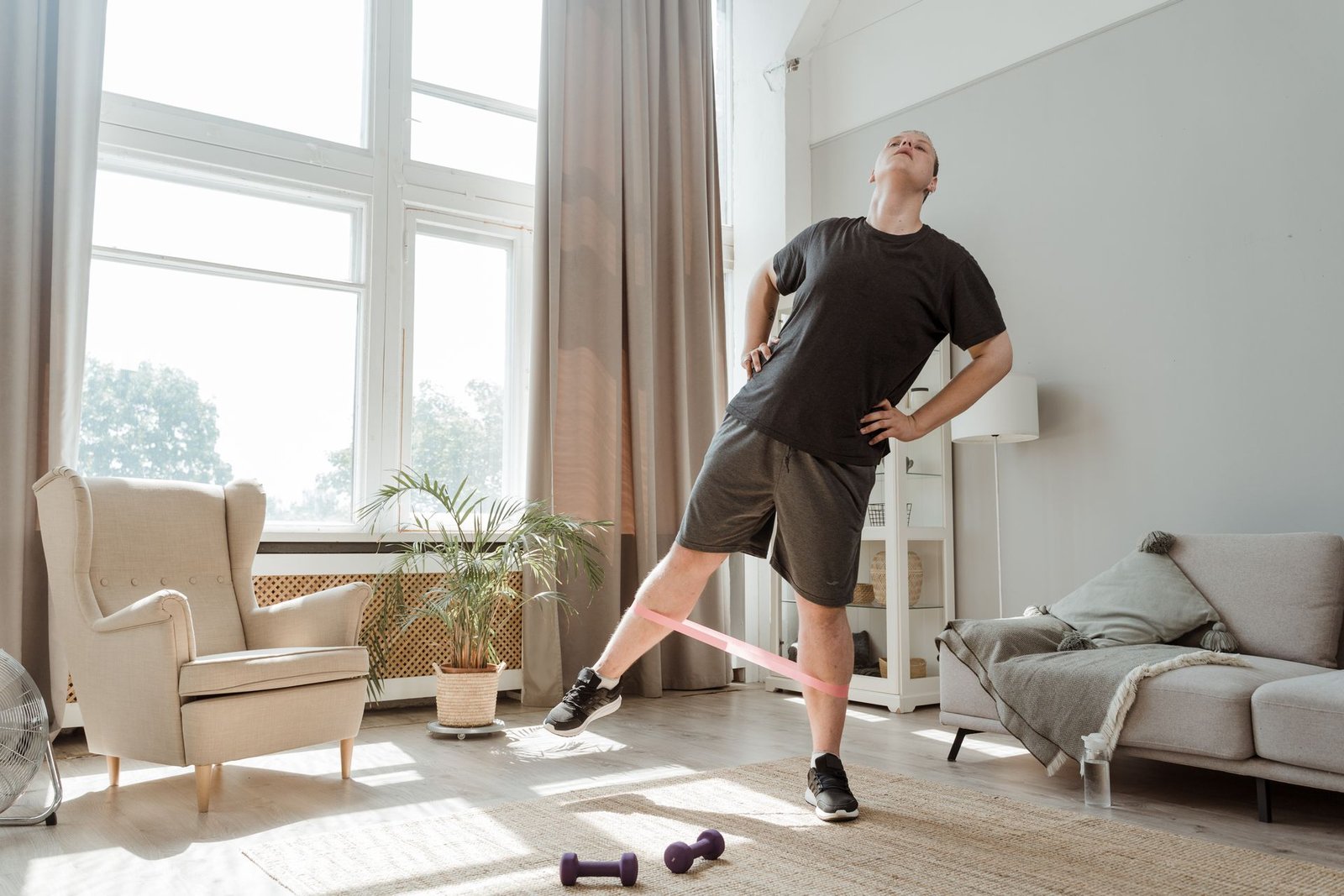
If you buy one thing on this page, buy this. The TRIBE set is five stackable tube bands with handles, ankle straps and a door anchor — in plain terms, a cable machine that folds into a drawstring bag. Clip one band on for gentle work, or stack several for up to roughly 105 lb of combined resistance as you get stronger.
Who it’s for: Complete beginners who want full-body training with nothing to drop, no noise for the neighbours, and no furniture to rearrange.
Key specs: 5 latex tubes, roughly 10–35 lb each, stackable • 2 cushioned handles • 2 ankle straps • door anchor • carry bag and exercise eBook included • assembled in the USA with a limited lifetime warranty
Pros:
- Trains every major muscle group for the price of one dumbbell
- Smooth resistance that is kind to untrained joints
- The door anchor unlocks rows, presses and pull-downs anywhere
Cons:
- The carabiner clips are small and a little fiddly to swap mid-workout
- Latex bands age — inspect for nicks before use and expect to replace them in time
Price: Around $30–$40 for the full 11-piece set.
👉 Check the TRIBE bands price on Amazon
2. Ativafit Adjustable Dumbbell (27.5 lb) — Best First Dumbbell
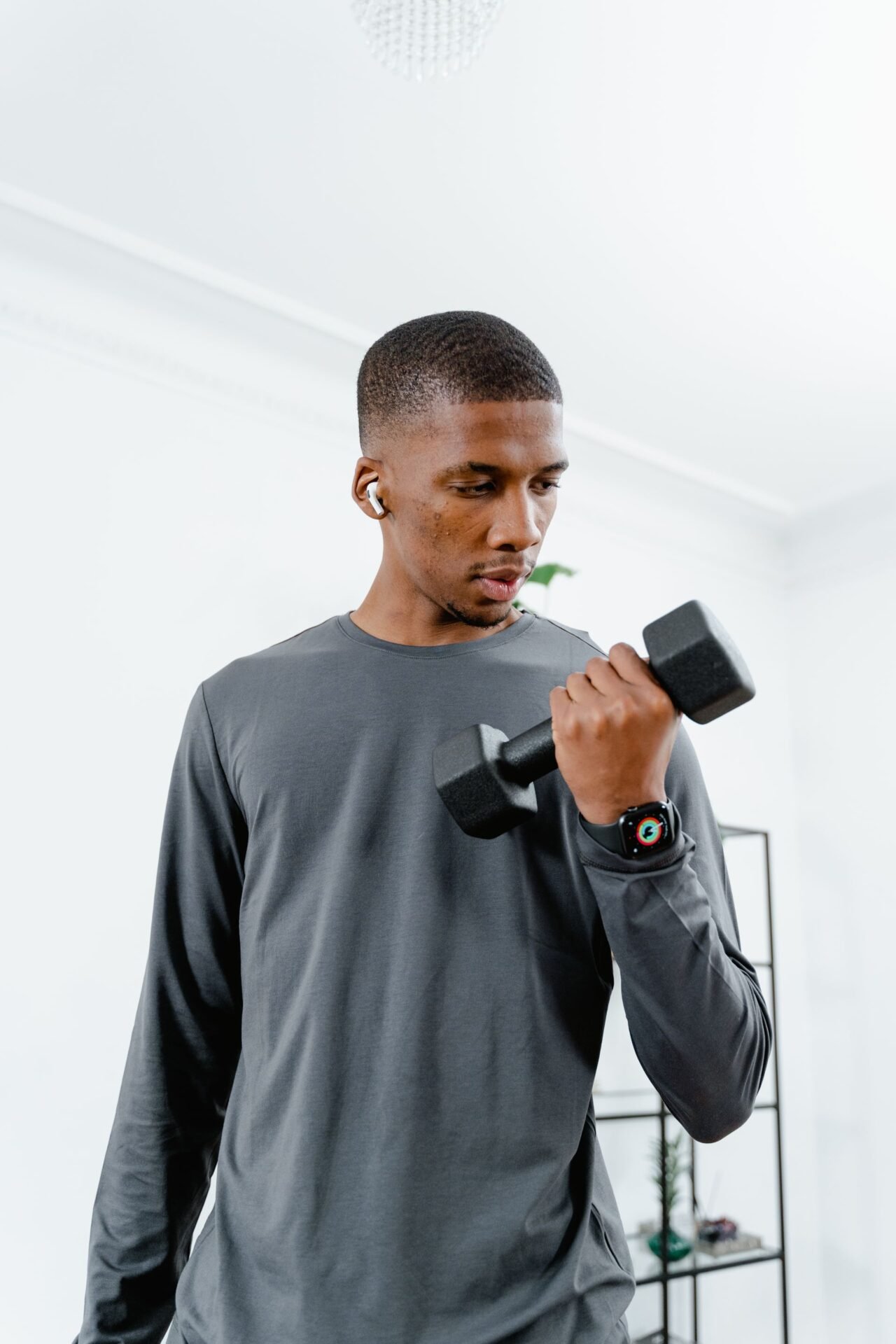
A single adjustable dumbbell is the smartest first weight you can own. The Ativafit clicks through five settings — 5.5, 11, 16.5, 22 and 27.5 lb — so the same dumbbell handles a gentle shoulder press in week one and a respectable goblet squat months later. It lives in its own tray, under a bed.
Who it’s for: Beginners who know they want “real weights” but have neither the space nor the budget for a rack of fixed dumbbells.
Key specs: 5.5–27.5 lb in 5 settings • push-and-slide weight selector • storage tray included • about 18 inches long • sold singly
Pros:
- Five dumbbells in the footprint of one shoebox
- Small 5.5 lb jumps — kinder progression than fixed 5 lb plates
- Cheaper per weight covered than buying separate pairs
Cons:
- Sold as a single — budget for two if you want matched pairs
- Like all adjustable dumbbells, it should not be dropped
- Strong beginners will outgrow 27.5 lb for leg work within a year or so
Price: Around $100–$130 for one.
👉 Check the Ativafit price on Amazon
When you do outgrow it, our best dumbbells for home guide covers heavier adjustable sets and fixed hex pairs in detail.
3. BalanceFrom GoYoga+ Mat — Best Foundation Buy
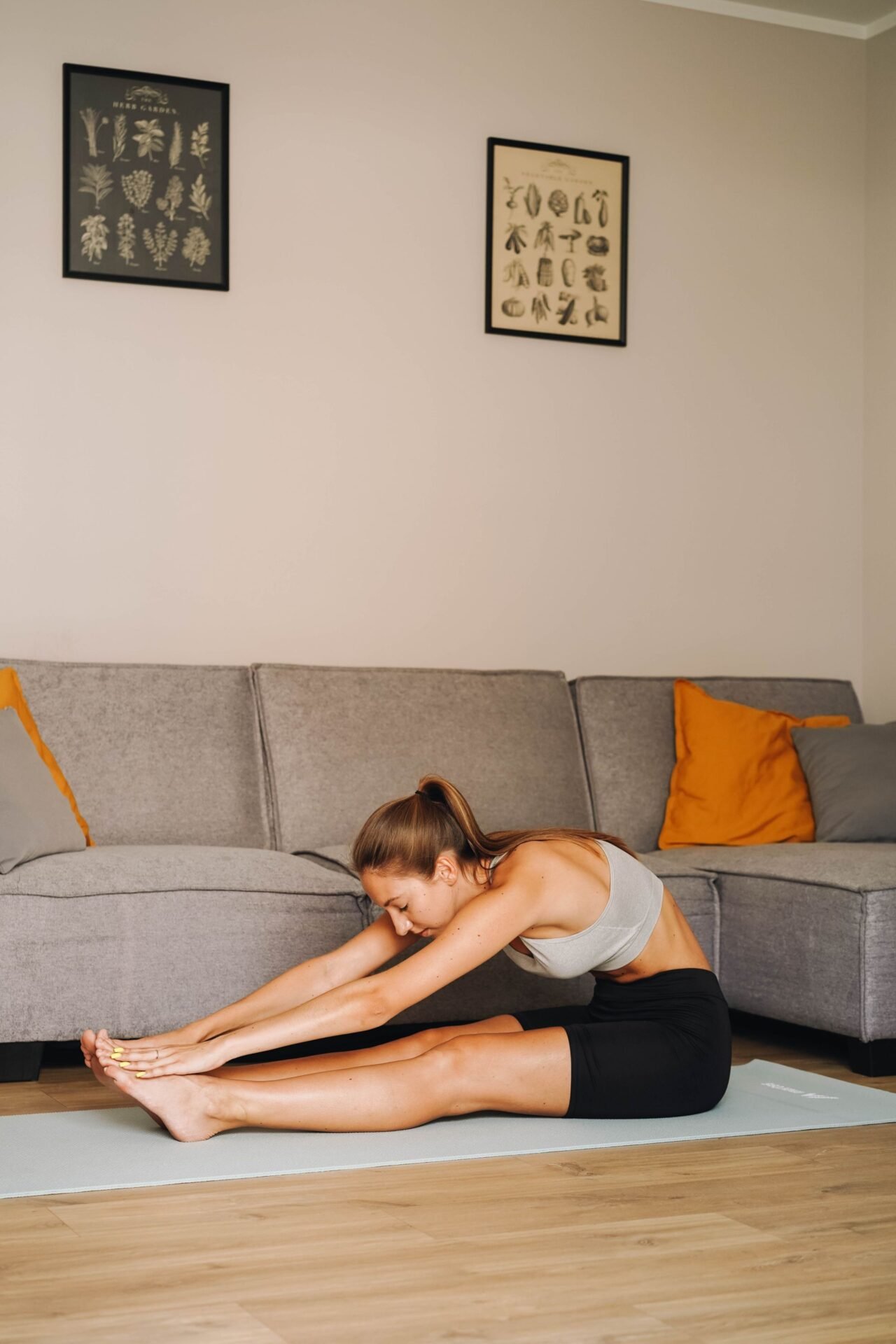
A mat sounds like the boring pick. It is actually the one that decides whether floor work happens at all. The GoYoga+ is a half-inch of high-density foam — double the padding of a standard studio mat — with a separate knee pad in the box for planks and stretches. At 71 by 24 inches it fits taller beginners.
Who it’s for: Anyone whose knees, elbows or hardwood floors have opinions about push-ups, planks and stretching.
Key specs: 71″ × 24″ × ½″ high-density foam • bonus knee pad and carrying strap included • non-slip texture both sides • moisture-resistant, wipes clean
Pros:
- Thick enough that floor exercises stop hurting in the wrong places
- The included knee pad is a small thing you will use constantly
- Doubles as the base layer under everything else in this guide
Cons:
- Too cushioned for advanced balance poses — a thinner mat grips better for yoga purists
Price: Around $25–$40 depending on colour and offers.
👉 Check the GoYoga+ price on Amazon
4. TRX GO Suspension Trainer — Best Bodyweight Strength
Suspension training sounds advanced. It is actually the most beginner-friendly strength tool here, because difficulty is set by your feet: stand upright and a row is easy; walk your feet forward and the same row gets serious. The TRX GO is the light, travel-ready version of the original — straps, foam handles, indoor and outdoor anchors and a mesh bag, about 1.5 lb all in.
Who it’s for: Beginners who want rows, assisted squats and push-up progressions with no weights at all — especially in small or rented spaces.
Key specs: mesh nylon straps, single anchor point • foam handles with foot cradles • rated to 350 lb • door anchor included • TRX app workouts (free trial, then a subscription)
Pros:
- Every exercise scales from very easy to genuinely hard
- Packs into a bag — hotel rooms and parks become gyms
- Assisted squats and rows build confidence before free weights
Cons:
- You pay for the TRX name — no-name strap sets cost a third as much
- Needs a solid door or beam you trust; the app is a subscription after the trial
Price: Around $130–$150.
👉 Check the TRX GO price on Amazon
5. Yes4All Vinyl-Coated Kettlebell (15 lb) — Best Single Kettlebell
One kettlebell teaches the two most useful patterns in training: the hip hinge and the squat. Start with deadlifts and goblet squats at 15 lb, learn the two-hand swing when those feel easy, and add carries — walking around holding it — for grip and posture. The vinyl coating matters at home: quieter on floors, kinder to tiles than bare iron.
Who it’s for: Beginners who want one simple, indestructible weight for full-body sessions. (Most women start at 15 lb; many men at 20–25 lb — the listing runs from 5 to 100 lb.)
Key specs: solid cast iron core with vinyl coating • flat bottom so it stands without wobbling • wide handle window fits two hands for swings • sizes 5–100 lb on one listing
Pros:
- About the cheapest way to own real cast iron
- Vinyl coat protects floors and dulls the clang
- Nothing to adjust, charge or assemble — ever
Cons:
- A fixed weight: too light for legs within months, so expect a second, heavier bell later
- The handle is thick, which smaller hands notice on high-rep swings
Price: Around $20–$30 for the 15 lb size.
👉 Check the Yes4All kettlebell price on Amazon
6. UREVO Strol 2E — Best Beginner Cardio Machine
This is the only true machine on the list, and it earned its place by not behaving like one. The Strol 2E is a walking pad with a folding handlebar: handle down, it walks at 0.6–4 mph under a desk; handle up, it reaches 6.2 mph for an easy jog. There is effectively no assembly — unbox, raise the bar, plug in, walk. Folded, it rolls under a bed.
Who it’s for: Beginners whose honest first goal is walking more — during calls, TV, or a dedicated 20 minutes — without a treadmill dominating the room.
Key specs: 2.25 HP motor • 0.6–4 mph walking / 0.6–6.2 mph with handle up • 40.2″ × 15″ belt • 265 lb capacity • about 47 lb with transport wheels • remote and LED display • no subscription (free UREVO app optional)
Pros:
- The handlebar gives new walkers something to hold — most walking pads have none
- Stores flat under a bed or sofa; quiet enough for flats
- Works out of the box — no tools, no account, no monthly fee
Cons:
- No incline, and 6.2 mph is a gentle jog — runners should look at our machines guide instead
- The 15-inch belt is narrow; bigger walkers should check the fit
- Belts on walking pads need occasional centring and a drop of lubricant
Price: Around $190–$290 (it was $189.99 on Amazon at our last October check).
👉 Check the UREVO Strol 2E price on Amazon
7. DEGOL Speed Jump Rope — Best Budget Cardio
Ten dollars, zero floor space, and the most efficient cardio tool per pound in fitness. The DEGOL pairs a steel cable with ball-bearing handles, so it spins smoothly instead of tangling, and the 6-inch foam handles stay comfortable. The cable adjusts to your height — set it once: stand on the middle, handles at your armpits.
Who it’s for: Beginners who want short, sharp cardio finishers — five one-minute rounds will humble anyone — or a warm-up that actually warms.
Key specs: PVC-coated steel cable, adjustable length • smooth ball-bearing rotation • 6″ memory-foam handles • tangle-resistant design
Pros:
- Cheapest legitimate cardio tool on this page
- Ball bearings make it far easier to learn on than a toy rope
- Travels anywhere; doubles as a coordination drill
Cons:
- There is a learning curve — expect a few weeks of tripping before it clicks
- Use it on smooth floors or a mat; concrete chews through cables
- High-impact: anyone with knee or ankle issues should choose the walking pad instead
Price: Around $10–$15.
👉 Check the DEGOL jump rope price on Amazon
The Starter Gym in Three Budgets
Do not buy all seven picks at once. Buy one tier, use it for a month, then upgrade as a reward for showing up.
The ~$50 start: the TRIBE bands and the DEGOL rope (about $40–$55 together). That is full-body strength plus cardio, stored in one drawer. If you can only afford one tier this year, this is the one — most early results come from exactly these two tools.
The ~$200 build: add the BalanceFrom mat, the Yes4All kettlebell and one Ativafit dumbbell (roughly $150–$200 more). Now you have a floor-work base, a hinge-and-squat weight, and a proper adjustable dumbbell — a complete starter gym for about the cost of two months of gym membership you might not use.
The ~$500 full corner: add the TRX GO and the UREVO Strol 2E (about $320–$440 more). Daily walking on tap, bodyweight strength on the door, and everything above, in one corner plus the space under a bed. Everything after this tier is upgrading, not starting.
Your First Two Weeks
Here is a deliberately easy plan for the kit above — three short sessions a week, about 25 minutes each.
Days 1, 3 and 5 — strength circuit (3 rounds): 10 band or TRX rows, 8 goblet squats holding the kettlebell or dumbbell, 8 floor presses, 10 kettlebell deadlifts, then a 30-second plank on the mat. Rest a minute between rounds. Every weight should feel “easy plus a little” in week one — you are learning movements, not testing limits.
Every day — walk: 15–30 minutes on the walking pad at a pace where you can hold a conversation, or a walk outside. Walking is the habit that carries everything else.
Optional finishers (twice a week): five rounds of 1 minute jump rope, 1 minute rest. Everyone trips at first — it counts as rest.
Week two: repeat the same plan, adding 2 reps per exercise or one click up on the dumbbell where week one felt smooth. That is progression — small, weekly, and boring in the best way. After two consistent weeks the routine is a habit; after two months, start eyeing the upgrades in our machines and dumbbells guides.
Frequently Asked Questions
What is the single best piece of home exercise equipment for a beginner?
A resistance band set — the cheapest way to train every major muscle group. It cannot be dropped on a toe, it stores in a drawer, and stackable bands grow with you for months. Add a dumbbell when the heaviest stack feels easy.
How much should a beginner spend on a first home gym?
About $50 gets you genuinely started (bands plus a jump rope). Around $200 builds a complete starter setup with a mat, kettlebell and adjustable dumbbell. Spending more than $500 before you have a three-month habit is usually buying motivation you cannot keep.
Adjustable or fixed dumbbells for a beginner?
Adjustable, almost always. A beginner’s strength changes fast, and one adjustable dumbbell covers five weights in a shoebox of space. Fixed dumbbells make sense later, when you know your working weights — our dumbbells guide covers that step.
Is a walking pad worth it, or should I just walk outside?
Outside is free and wonderful — and weather, darkness and unsafe routes still stop people. A walking pad removes every excuse, which is why owners use them daily. If you reliably walk outside already, spend the money on strength gear instead.
When should I upgrade to bigger equipment?
When the kit starts limiting you: the dumbbell’s top weight feels easy for squats, you are running rather than walking, or three consistent months in, you want variety. That is the moment our home exercise machines guide — rowers, treadmills, bikes — becomes the right next read.
The Bottom Line
Beginners do not quit because their equipment is too cheap. They quit because the first step felt too big. So make it small: bands and a rope this week, a mat and a kettlebell next month, a walking pad when the habit sticks.
Start with the tier you can afford today, follow the two-week plan, and let consistency — not spending — do the heavy lifting. The $200 gym you use beats the $2,000 gym you admire, every time.
Disclosure: This guide contains affiliate links. If you buy through a link on this page, Tikkay Khan may earn a small commission from Amazon at no extra cost to you. That is how guides like this stay free.