

Push-ups are one of the simplest exercises you can do anywhere. 💪
You need no gym, no weights and no special kit — just a floor and a little space.
That simplicity is part of the appeal, but it is not the whole story.
Done with good form, a push-up works your chest, shoulders and triceps, while your core holds your body in a straight line.
It is a compound move, which means several muscle groups work together in one action.
That is why it fits so well into a busy routine, and why it keeps showing up in training plans year after year.
A standard push-up presses roughly two-thirds of your body weight, so even without weights it can be a real strength challenge.
The sections below show the move at different levels, with the benefits folded into each one.
Start at the level you can control well, and build from there — good form beats struggling through sloppy reps.
1. The Standard Push-Up: Upper-Body Strength in One Move 🏋️
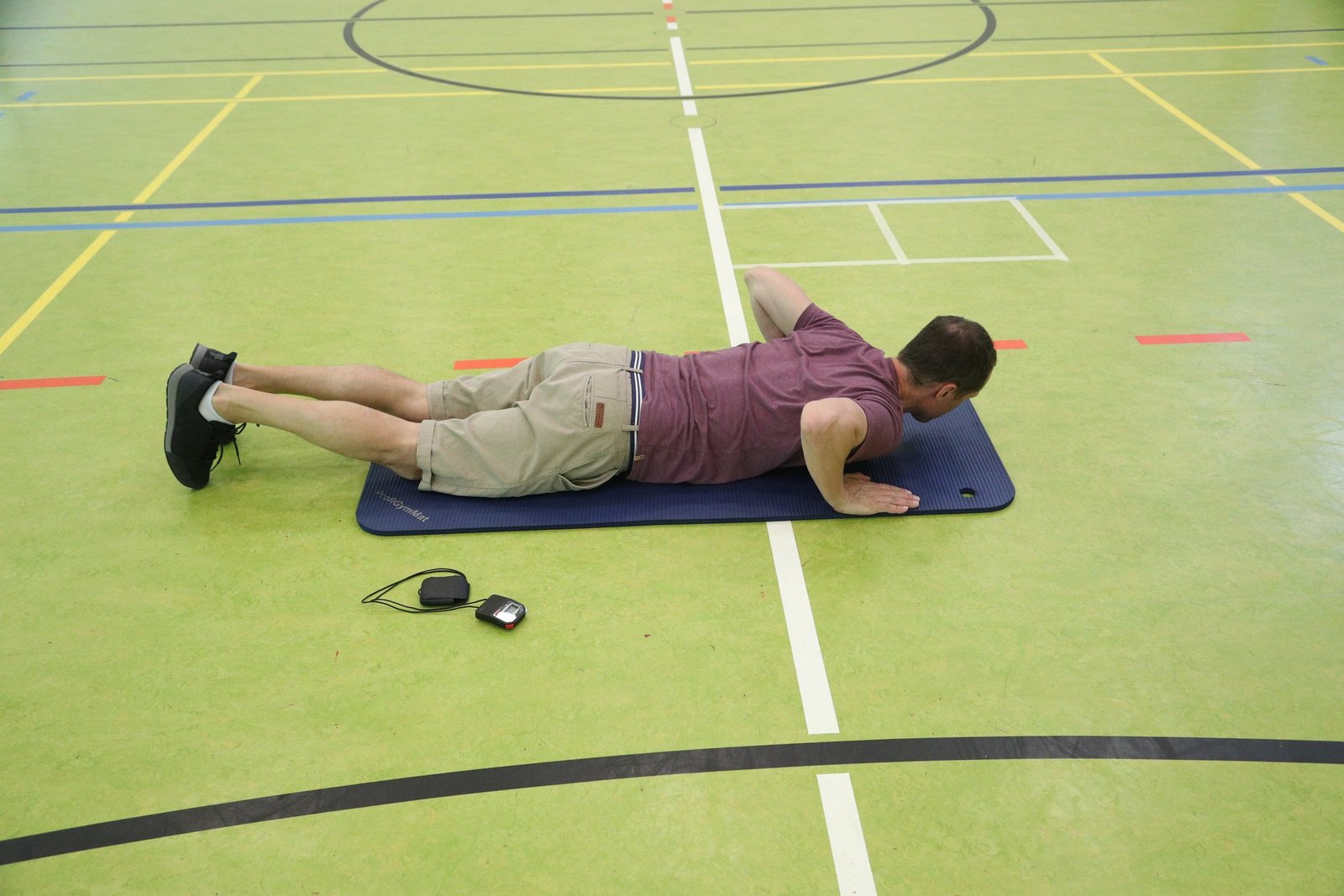
A standard push-up on a mat. Photo: Uzltt123 / Wikimedia Commons
Start in a plank, hands under your shoulders and feet together behind you.
Lower your chest toward the floor with control, then press back up without letting your hips sag or pike up.
Your chest does much of the pushing, your triceps straighten your elbows, and your shoulders help drive the move.
Your core, glutes and legs work quietly in the background to keep your body straight.
That full-body bracing is one reason push-ups feel harder than they look.
Over time, steady practice can build upper-body strength and endurance, especially for beginners.
It will not train your legs or your pulling muscles much, so pair push-ups with squats and a pulling exercise for balance.
For a chest-and-arms session built around this kind of work, see the chest and triceps workout.
2. The Incline Push-Up: The Friendlier Starting Point 🌿
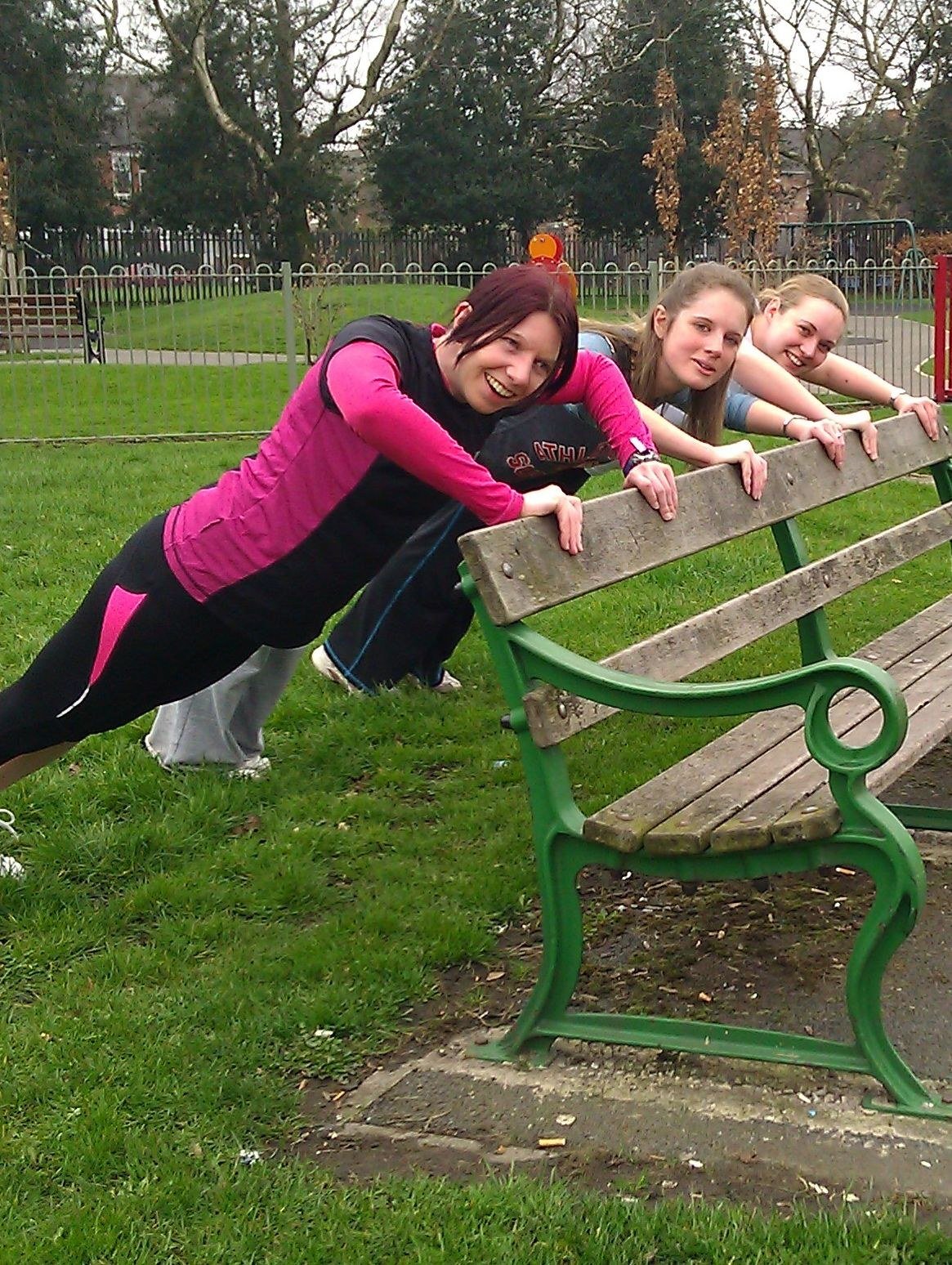
Incline push-ups on a park bench. Photo: Pam loves pie / Wikimedia Commons
Put your hands on a raised surface, such as a bench, step or sturdy table.
Walk your feet back until your body forms a straight line, then lower and press as with a standard push-up.
The higher the surface, the lighter the load — so this is a kind way to learn the movement.
It is also useful on days when full push-ups feel too much, or when you are rebuilding confidence after a break.
Good posture habits start here too: a braced core and a straight line from head to heels.
That control carries over to the floor version, and it helps you notice when your shoulders start to round forward.
As the bench version gets easy, lower the surface gradually rather than jumping straight to the floor.
3. Push-Ups Anywhere: No Gym, No Kit, No Excuses Needed 🏠
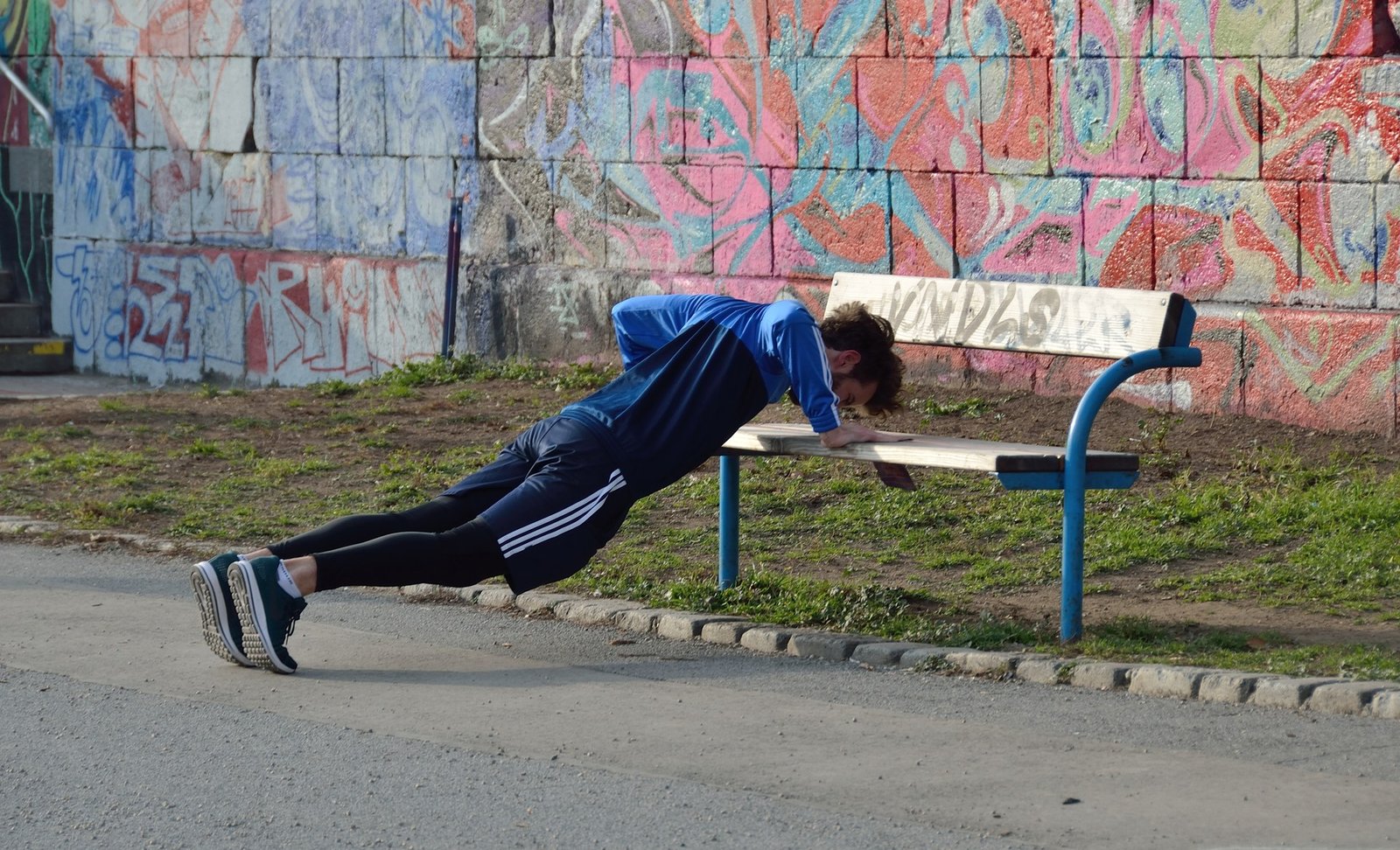
A push-up needs no gym kit. Photo: Herzi Pinki / Wikimedia Commons
Push-ups cost nothing and need no membership, which removes two common barriers to training.
You can do them at home, in a park or in a hotel room, in just a few minutes.
That convenience makes it easier to train consistently — and consistency is what turns a single workout into a habit.
Short, regular sessions also suit people who struggle to find a long block of time in the day.
You do not need to train every day to benefit, and rest days matter just as much as training days.
If you want to add weights later, a dumbbell workout pairs well with this bodyweight base.
The point is simple: the best exercise is often the one you will actually do.
4. Push-Ups Together: Strength, Confidence and a Better Mood 😊

Push-ups done together outdoors. Photo: U.S. Marine Corps / Wikimedia Commons
Training with others can make hard work feel lighter and more enjoyable.
Push-ups are easy to share: no equipment to wait for, and everyone can work at their own level side by side.
Progress is also easy to see — a cleaner rep, a lower surface, or one more controlled rep than last week.
That visible progress can build confidence, especially for people who felt unsure when they started.
Many people also say exercise lifts their mood, and a short, shared session can be a good reset in a busy day.
That is a general wellbeing benefit of regular activity, not a treatment for any mental-health condition.
If low mood or anxiety is affecting your daily life, support from a clinician matters far more than any workout.
5. The Handstand Push-Up: An Advanced Challenge, Not a Starting Point ⚠️

A handstand push-up against a wall. Photo: Stephanie Rubi / U.S. Air Force
This is the advanced end of the push-up family, and it is not for beginners.
With your body inverted against a wall, your shoulders and triceps take a far bigger share of the load.
It demands strong shoulders, a stable core and solid balance, built over a long time.
Do not attempt it until standard push-ups, and shoulder work in general, feel strong and pain-free.
For most readers, the standard, incline and knee versions give plenty of progress without this step.
One honest note on heart health: in a 2019 study of 1,104 active male firefighters, men who could do more than 40 push-ups had a lower rate of later heart events than men who could do fewer than 10.
That was an association in one specific group, not proof that push-ups alone prevent heart disease — and it does not apply neatly to everyone.
Regular activity, including resistance training, is associated with better heart and blood-pressure outcomes in general, but anyone with high blood pressure or heart concerns should talk to a clinician about a safe plan.
Similarly, push-ups can support shoulder strength when done well, but they do not guarantee protection from injury.
Stop if you feel sharp wrist or shoulder pain, and get coach or clinician direction before training through any injury.
A strong core from push-ups and planks helps posture and stability — the plank exercises guide is a useful next step for core work.
Keep it simple, keep your form honest, and let the small wins add up. 🌟
This article is general information only and is not medical advice. If you have wrist or shoulder pain, an injury, high blood pressure or a heart condition, get professional direction before starting or changing a training routine.