

🥭 Papaya is one of the easiest tropical fruits to enjoy. Ripe, it is soft, sweet and spoon-ready — and it brings a useful mix of vitamin C, vitamin A, potassium and fibre for very few calories.
This guide sticks to papaya itself: what it contains, how ripe and green papaya differ, and how to pick, cut and store it. It does not repeat our companion guides, which cover the wider organic picture.
For that wider picture, see our top 5 benefits of organic foods, our organic labels, shopping and cost explainer, our organic foods for everyday immune-supporting eating, and our organic foods often linked with skin health.
What Is Inside a Ripe Papaya? 🍈
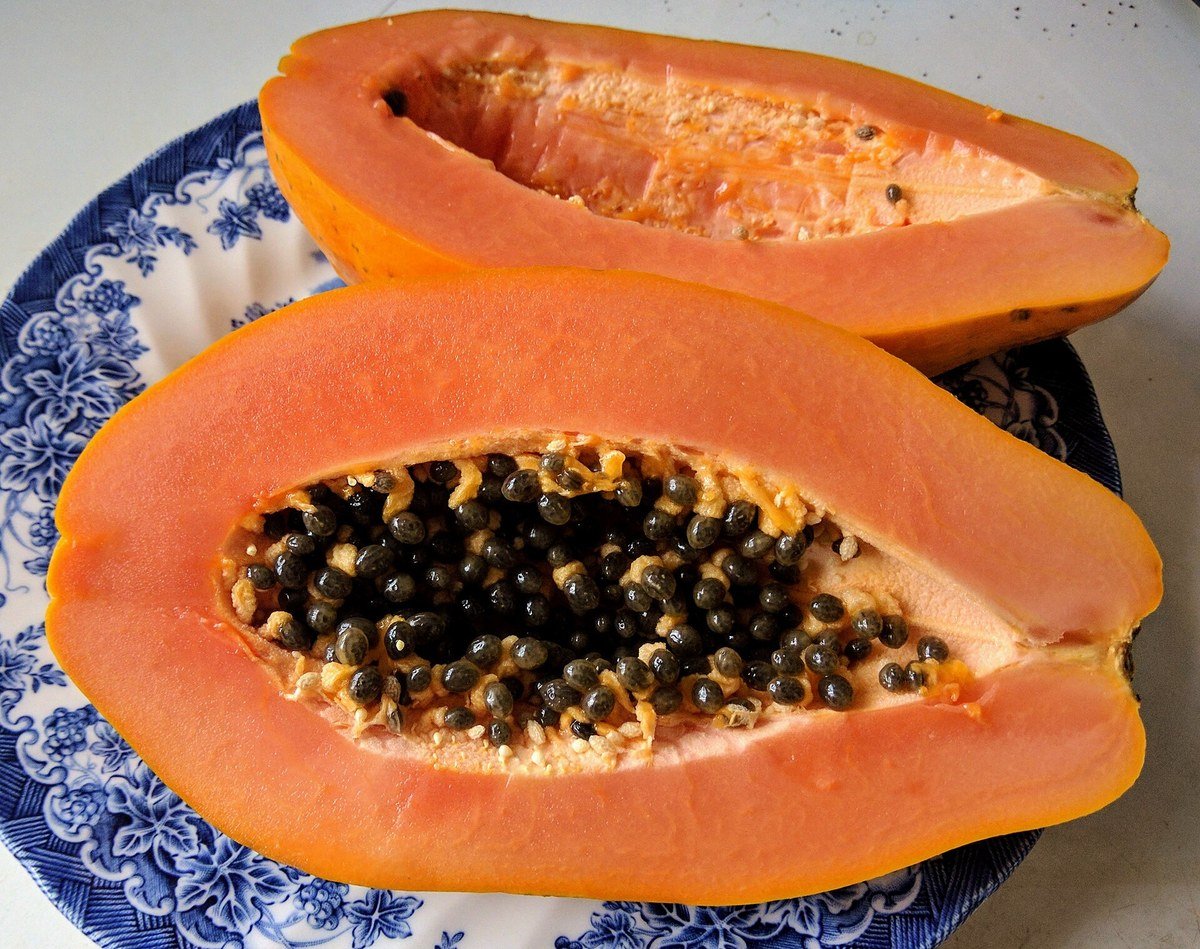
Photo: Maksym Kozlenko / Wikimedia Commons
Per 100 g, raw papaya has roughly 43 calories, about 1.7 g of fibre, around 61 mg of vitamin C, about 182 mg of potassium and around 47 micrograms of vitamin A (RAE).
A typical cup (about 145 g) therefore lands near 62 calories, with about 88 mg of vitamin C and 2.5 g of fibre. That vitamin C amount is close to a full day’s reference intake for most adults.
Papaya also contains folate and the orange pigments lycopene and beta-cryptoxanthin, which give ripe flesh its colour. It is naturally cholesterol-free and low in fat and sodium.
Papaya contains papain, an enzyme that helps break down protein. That is one reason it is often used to tenderise meat — but it is not a reason to treat the fruit as medicine.
Ripe vs Green: Two Very Different Fruits 🟢🟡
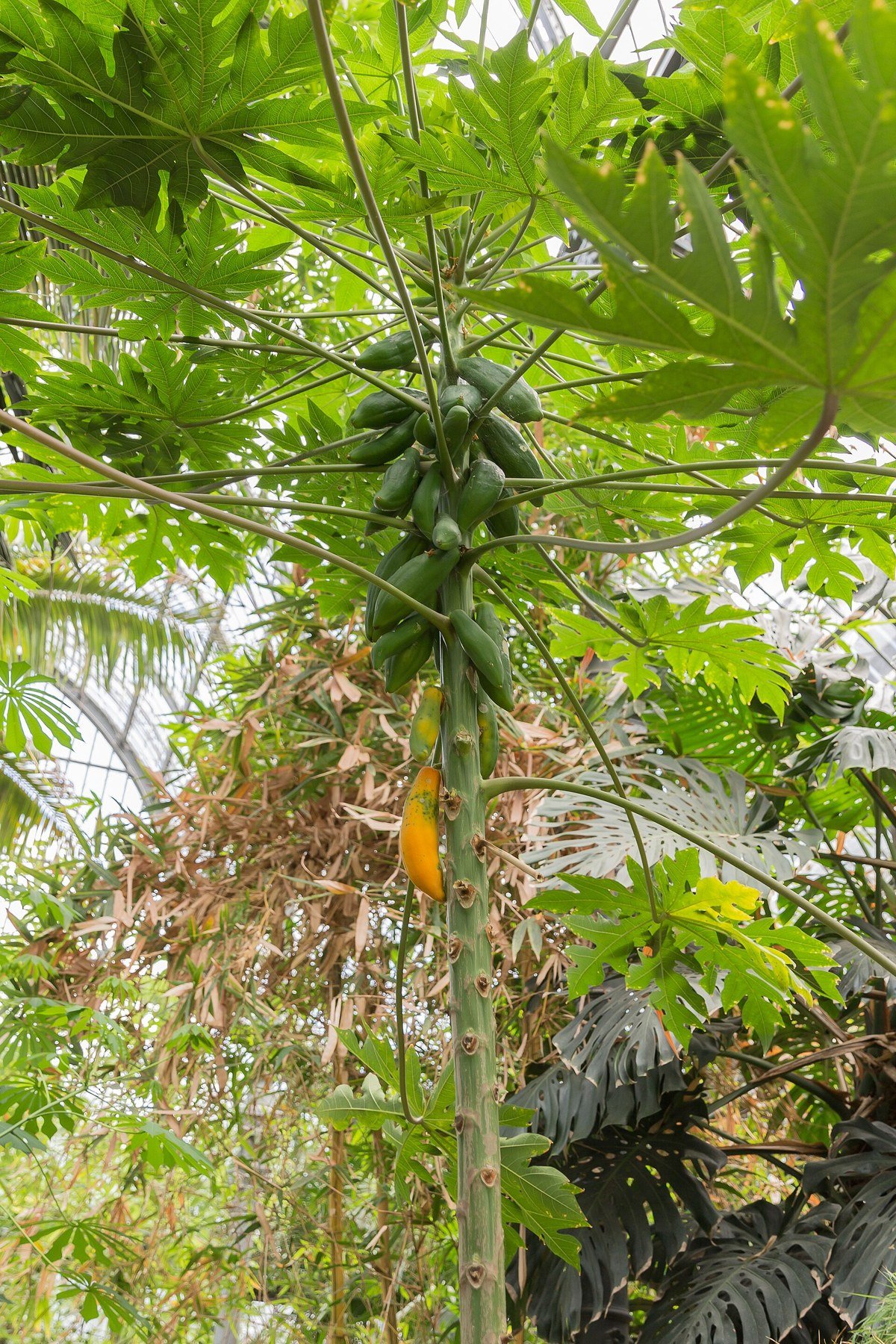
Photo: William Crochot / Wikimedia Commons
Ripe papaya is soft, sweet and orange-fleshed, and it is eaten fresh — scooped with a spoon, cubed into a bowl, or blended into a smoothie.
Green papaya is simply the same fruit before it ripens. It is firm, pale and crisp, with a mild, savoury taste, and it is usually shredded into salads or cooked.
The two are not interchangeable in recipes. A green papaya will not taste sweet eaten raw, and a very soft ripe papaya will not hold its crunch in a salad.
One caution belongs here: unripe papaya contains more milky latex and papain. That matters most in pregnancy (see below), so ripe and green papaya should never be treated as the same thing.
How to Pick, Cut and Store Papaya 🔪
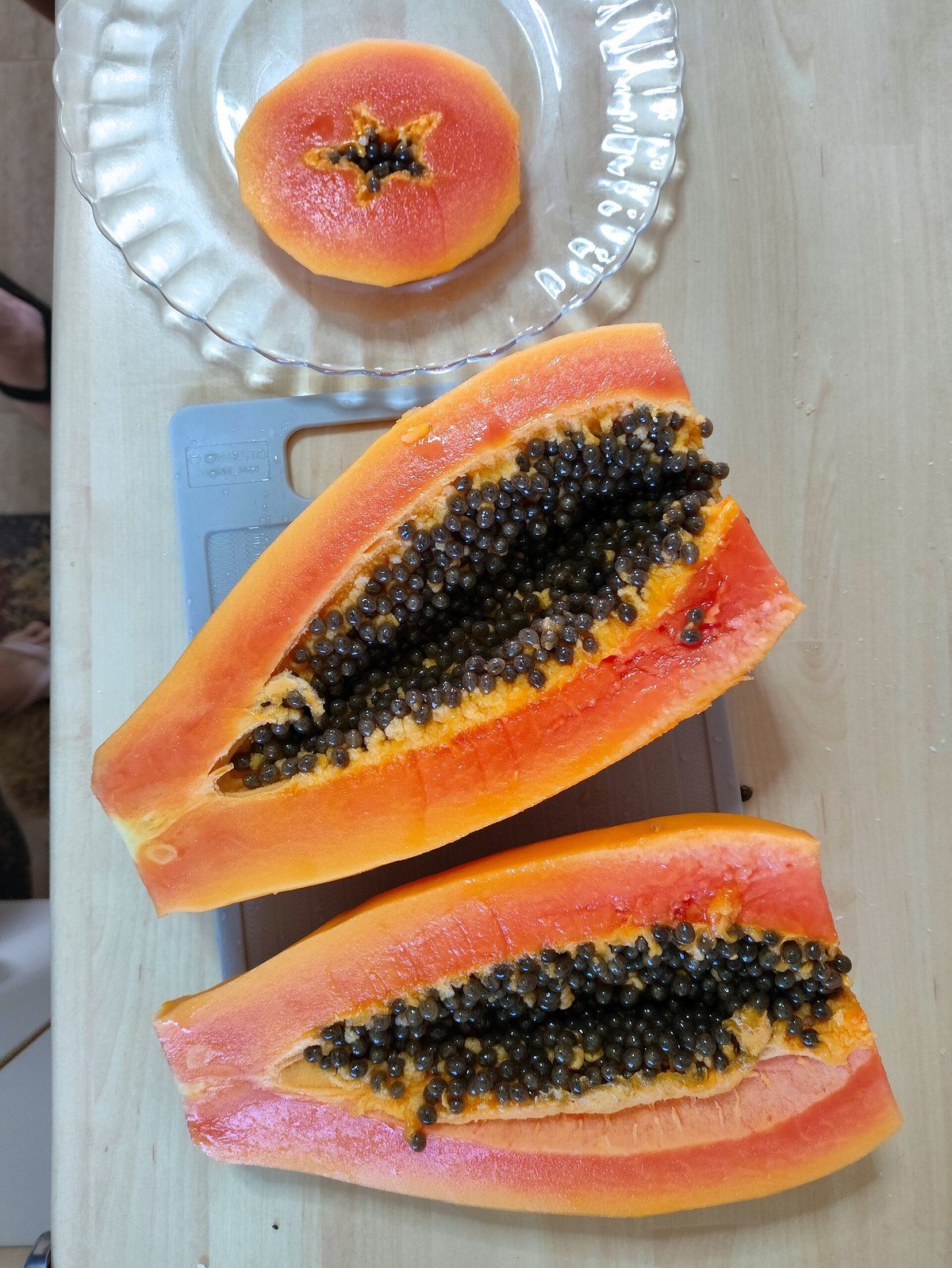
Photo: Marek Ślusarczyk / Wikimedia Commons
Look for skin that is mostly yellow, with a little green still fine. Press gently near the stem — it should give slightly, like a ripe avocado, without collapsing.
A light, sweet scent at the stem end is another good sign. Skip fruit with dark sunken spots, cuts or mould, and buy green-yellow fruit if you plan to eat it in a few days.
To prepare it, wash the skin, slice off both ends, and cut the fruit lengthwise. Scoop out the black seeds with a spoon, then peel and cube the flesh — or eat it straight from the skin.
Keep whole unripe papaya at room temperature until it softens and turns yellow. Once cut, refrigerate it in an airtight container and use it within a couple of days.
When to Be Careful ⚠️
Unripe or semi-ripe papaya is best avoided during pregnancy, because its latex may stimulate uterine contractions. If you are pregnant, ask your clinician rather than guessing.
People with a latex allergy should also be cautious, as papaya proteins can cross-react with latex in some people. Stop and seek medical advice if you notice itching, swelling or breathing difficulty.
Eating very large amounts can upset the stomach, and papaya may interact with some medicines, including blood thinners. If you take regular medication or manage diabetes, check with your clinician first.
None of this makes papaya “dangerous” for most people — ripe papaya in ordinary food amounts is widely eaten. It simply means the cautions above are worth knowing.
A Quick Word on “Organic” Papaya 🌱
“Organic” describes how a food is grown and certified — in the US system, without routine synthetic fertilisers and pesticides and without genetically modified seed.
An organic label does not by itself prove a fruit is more nutritious or safer than a conventional one. What it does tell you is how it was produced, which matters to many shoppers.
So buy organic papaya if that farming standard matters to you — but judge the fruit itself on ripeness, freshness and taste, whatever label it carries.
Frequently Asked Questions ❓
Can I eat papaya every day?
As part of a varied diet, a regular serving of ripe papaya is a reasonable everyday choice. Variety still matters — no single fruit covers everything your diet needs.
Can I eat the seeds?
The seeds are usually scooped out and discarded. They taste peppery and are not part of the fruit most people eat, so there is no need to seek them out.
Is green papaya safe to cook with?
Yes, for most people green papaya is a normal cooking ingredient when shredded or cooked in savoury dishes. The pregnancy caution for unripe papaya above still applies.
Does papaya help digestion?
Papaya provides fibre and the enzyme papain, and fibre generally supports normal digestion. That is general nutrition information, not a treatment claim for any condition.
The Takeaway 🥗
Papaya earns its place as a simple, sweet and light fruit — rich in vitamin C, low in calories, and easy to use ripe or green, once you know which one you are holding.
Pick it yellow and gently soft, store cut fruit in the fridge, and keep the cautions in mind if you are pregnant, latex-sensitive, or on regular medication.