

In bodybuilding, size often steals the spotlight. 🏋️
Yet again and again, a shorter, lighter athlete walks on stage, out-poses the giants, and walks off with the win.
That is the giant-killer mentality. It is not about pretending size does not matter.
It is about refusing to let size decide the result before the judging starts. 💪
A giant killer is not simply a short bodybuilder. Plenty of short athletes never beat anyone bigger.
The label fits only when the smaller athlete regularly outplaces bigger, heavier rivals on a big stage.
That takes three things at once: dense, complete muscle, razor-sharp conditioning, and posing that hides weaknesses.
Judges reward shape, balance and condition, not height alone. That is the opening every athlete below walked through.
This refreshed guide looks at three proven giant killers, folds in the modern carrier of the nickname, corrects two errors from the old version, and ends with lessons any lifter can use.
Franco Columbu: The Original Giant Killer 🏆
Franco Columbu stood just 5 ft 5 in, with a contest weight around 185 lb.
He came to bodybuilding from boxing and powerlifting, and he was one of the strongest men of his era.
Columbu won the Mr. Olympia title in 1976 and again in 1981. Both wins are well documented.
That second win came after a serious leg injury at the 1977 World’s Strongest Man contest, where he finished fifth.
Doctors and doubters wrote him off. He rebuilt, returned, and won the sport’s biggest title again.
Columbu proved a compact physique, packed with dense muscle, could beat taller, heavier line-ups. ✨
Lee Priest: The Little Man Who Beat Ronnie Coleman 🇦🇺
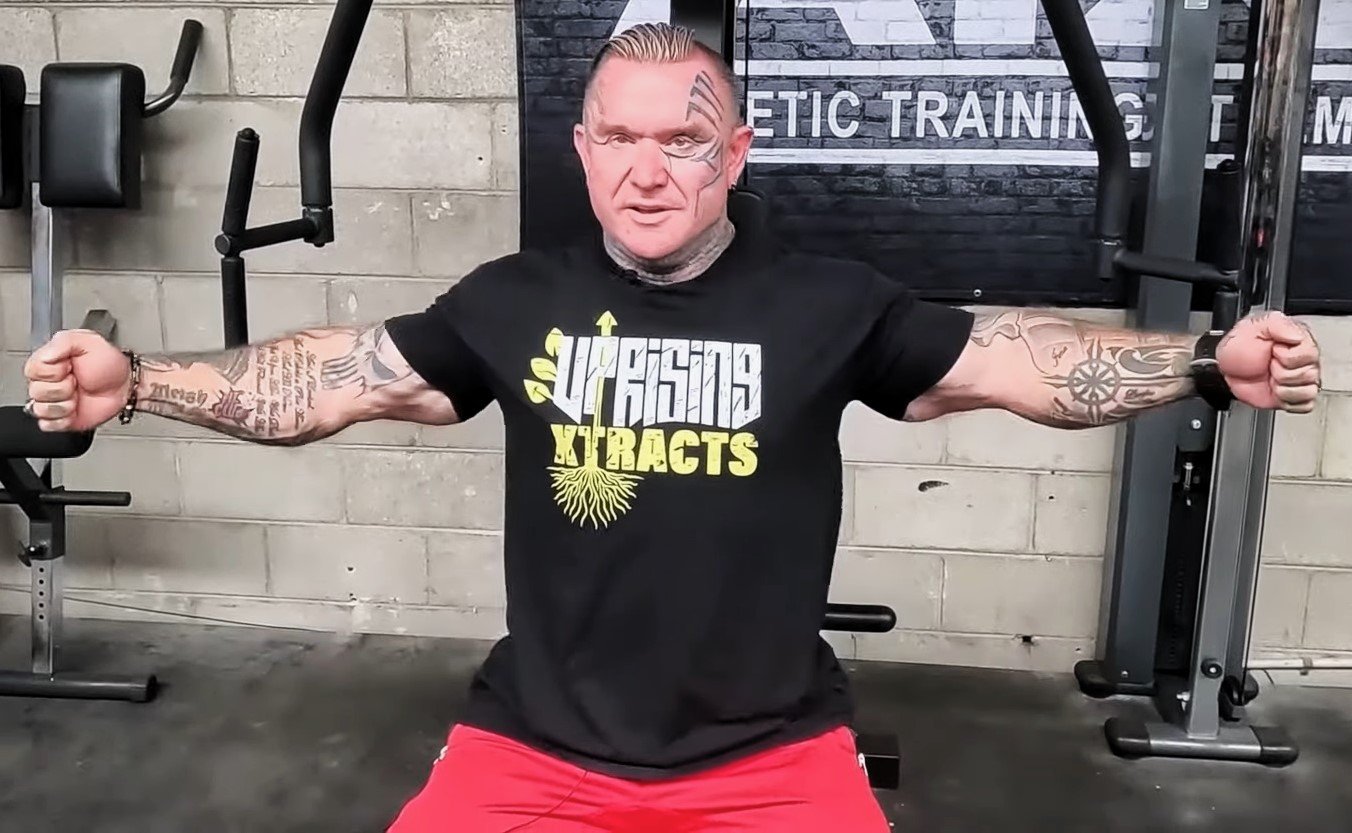
Lee Priest, from Australia, stood 5 ft 4 in. His arms became legendary for their size on such a compact frame.
His giant-killer moment came early in 1997 at the Ironman Pro Invitational. Flex Wheeler won the show.
Priest finished second. Ronnie Coleman, the future eight-time Mr. Olympia, finished third.
Later that same year, at the 1997 Mr. Olympia, Priest placed sixth while Coleman placed ninth.
Coleman later described that 1997 Ironman loss as his lowest moment, precisely because a smaller man had beaten him.
Priest did not stop there. He went on to win the Ironman Pro in 2006, after earlier pro wins in San Francisco in 2002 and at the Grand Prix Australia in 2005.
His career is the clearest proof in this article: beating one giant once can be luck, but beating them repeatedly is a skill. 🔥
David Henry: Small Frame, Big 212 Career 💎

David Henry stood 5 ft 5 in, with a contest weight listed around 203 lb.
He built his career in the lighter divisions, where conditioning and symmetry matter more than raw bulk.
His biggest win came at the 2008 Mr. Olympia in the 202 division, the forerunner of today’s 212 division.
He also finished second in the Arnold Classic 212 division in both 2014 and 2017, against deep fields.
His longevity tells the rest of the story. As late as 2023, Henry finished second at the Masters Mr. Olympia 212.
Correction to the old article: the old version claimed Henry won the 2021 Arnold Classic. He did not.
His 2021 win was at the Legion Sports Fest 212 Masters division. The Arnold Classic record above is the verified one.
Henry’s lesson is patience. He stayed in his best division, kept his condition elite, and kept placing for nearly two decades. ⏳
The Giant-Killer Mindset: 5 Lessons 🧠
1. Win on condition, not on size. When you cannot out-weigh rivals, you must out-condition them.
2. Pose to your strengths. Every athlete here posed in a way that made their physique look complete, not small.
3. Pick the right division. Henry and Clarida thrived in 202/212, where their frames were an advantage, not a limit.
4. Stay in the fight longer. Columbu came back from injury. Henry competed at a high level for decades. Longevity compounds.
5. Ignore the tale of the tape. Judges score what they see on stage, not what the stats sheet says beforehand.
Shaun Clarida: the modern carrier of the nickname 🗡️
Shaun Clarida carries the nickname “The Giant Killer” into the modern era, and he has earned it.
At 5 ft 2 in, he is one of the shortest IFBB pros of all time, competing at around 180 lb.
Clarida won the 212 Mr. Olympia title in 2020, then won it again in 2022.
Then he did something even rarer for a 212 athlete. At the 2021 Legion Sports Fest, weighing just 174 lb, he won the Men’s Open division against full-sized heavyweights.
That Open win is why the nickname stuck. It was not a 212-only story anymore.
The story is still running in 2026. At the 2026 212 Olympia, Clarida finished third, behind champion Keone Pearson and runner-up Lucas Garcia.
That podium finish qualified him for the 2027 Olympia. At 44, the smallest man in the line-up is still a threat to everyone in it. 🏆
That mindset travels beyond bodybuilding. It is the same approach behind every underdog story on this site, from Victor Martinez, the uncrowned legend who kept challenging for the biggest titles, to Andrew Jacked, whose rapid rise showed what a complete package can do.
And as the bodybuilders who pushed the limits show, the athletes who last are rarely the ones who chased size at any cost.
Bodybuilding will always celebrate size. It has to, because muscle is the sport.
But the giant killers remind us of the other half of the sport: the mind that refuses to accept the expected result.
Columbu, Priest, Henry and Clarida did not win despite being small. They won because they built complete physiques and believed, on stage, that they belonged there.
That belief, backed by years of work, is the real giant-killer mentality. 🦁