

Squats are one of the simplest ways to build lower-body strength. 🏋️
They mainly work your thighs, hips and glutes, and they ask your core to help you stay steady.
This guide keeps things realistic. It will not promise a new body in 29 days, and it will not claim that squats melt fat from one spot.
What squats can do, done regularly and with good form, is help you get stronger over time. That is a solid goal on its own.
First, the honest bit about fat loss
You cannot choose where your body loses fat by training one area hard. Fat loss happens across the body as a whole, driven mainly by your overall energy balance.
Two well-known trials make the point plainly. In 2011, Vispute and colleagues had adults do abdominal exercise five days a week for six weeks, and belly fat did not fall compared with a control group, even though core endurance improved.
In 2013, Ramírez-Campillo and colleagues trained one leg on a leg press for 12 weeks. Fat fell in the trunk and arms, not preferentially in the trained leg.
One small 2023 trial in 16 men with overweight did report a modest trunk-fat edge for an abdominal-exercise group, but the sample was tiny and total fat loss was similar in both groups.
So treat that 2023 result as a hedged exception, not a rule. Squats build leg and glute strength; they do not selectively remove fat from your buttocks or belly.
Safe form: the basics that matter most
Stand with your feet about shoulder-width apart, toes turned slightly out. Keep your chest lifted and your core gently braced.
Sit your hips back and down, as if you are sitting into a chair. Let your knees track in the same direction as your toes, and keep your heels on the floor.
Go only as deep as you can while your back stays neutral and your knees stay steady. For many people, thighs roughly parallel to the floor is plenty.
Push through your whole foot to stand back up. If your knees cave inward, shorten the range and try again more slowly.
Stop if it hurts. Sharp pain, knee pain that lingers, or back pain is a signal to stop and get advice from a clinician or physiotherapist, not a cue to push through.
If you have knee or back pain, are pregnant, or have a health condition, get clinician or physio direction before starting. A chair or wall for support is a sensible start for many beginners.
Your flexible four-week plan (not a 29-day promise)
Instead of a fixed daily calendar, use this simple rhythm. Train squats two or three times a week, with at least one rest day between sessions.
Week 1: learn the basic squat only. Try 2 sets of 8–12 comfortable reps, and practise the sumo stance on one of those days.
Week 2: add the goblet squat if the basic squat feels steady. Keep the same easy rep range, and stop each set before your form breaks down.
Week 3: add the split squat or the side lunge, one at a time. Shorter sets are fine here — balance work is harder than it looks.
Week 4: repeat your favourite three variations across the week. Only add reps, sets or a light weight when every rep stays pain-free and well-controlled.
Missed a day? Just pick up at the next session. Progress in strength is built over weeks and months, not by never missing a date on a calendar. 🗓️
1. Basic squat (bodyweight)
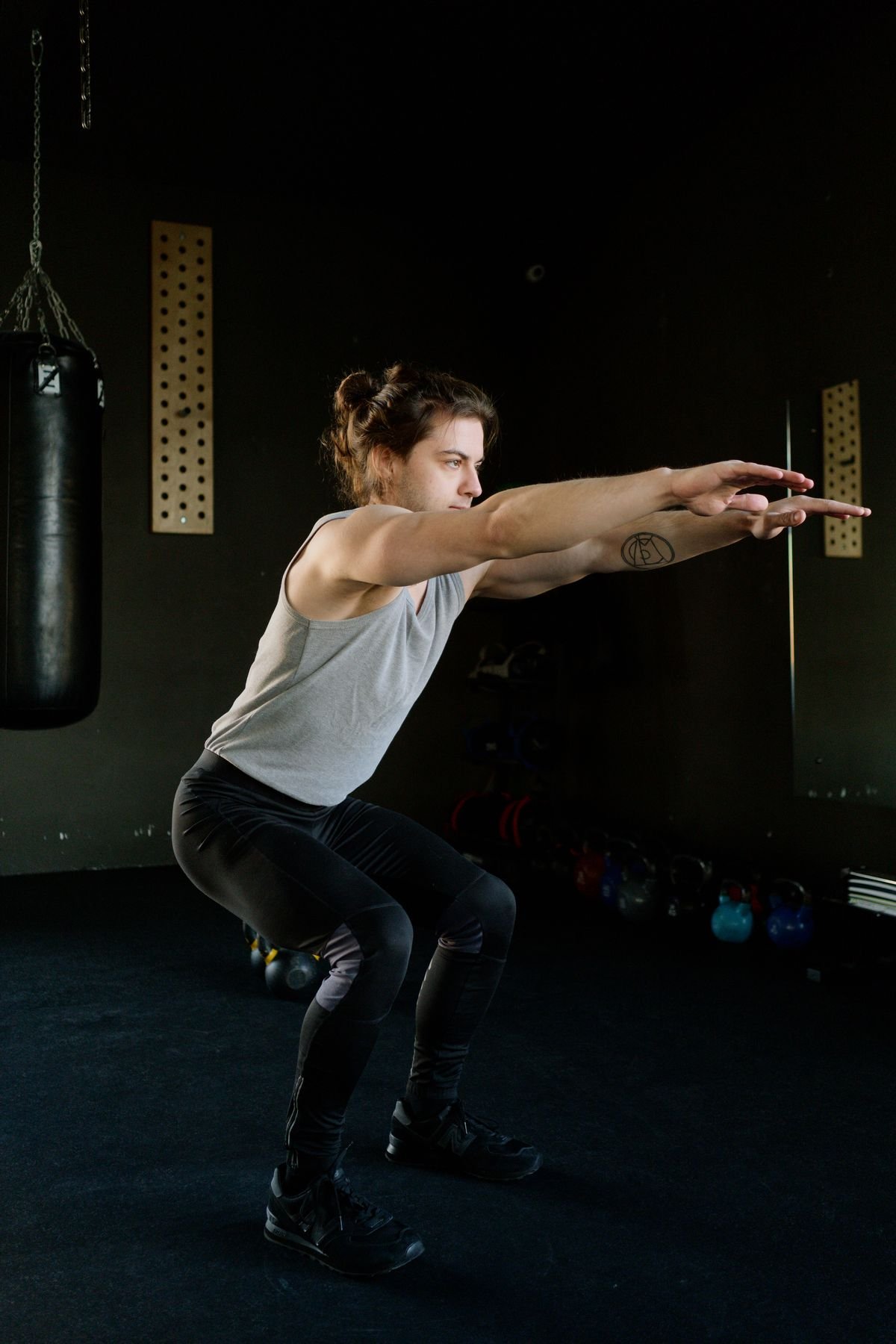
Photo: Pexels
This is the foundation move, and the one to master first. Stand tall, sit back, and stand up tall again.
A narrower foot position is simply a small change to this same move — try it only once the standard version feels steady, and keep the same knee and heel cues.
Start with 2 sets of 8–12 reps, resting a minute or so between sets. Add a set before you add speed or weight.
2. Sumo squat
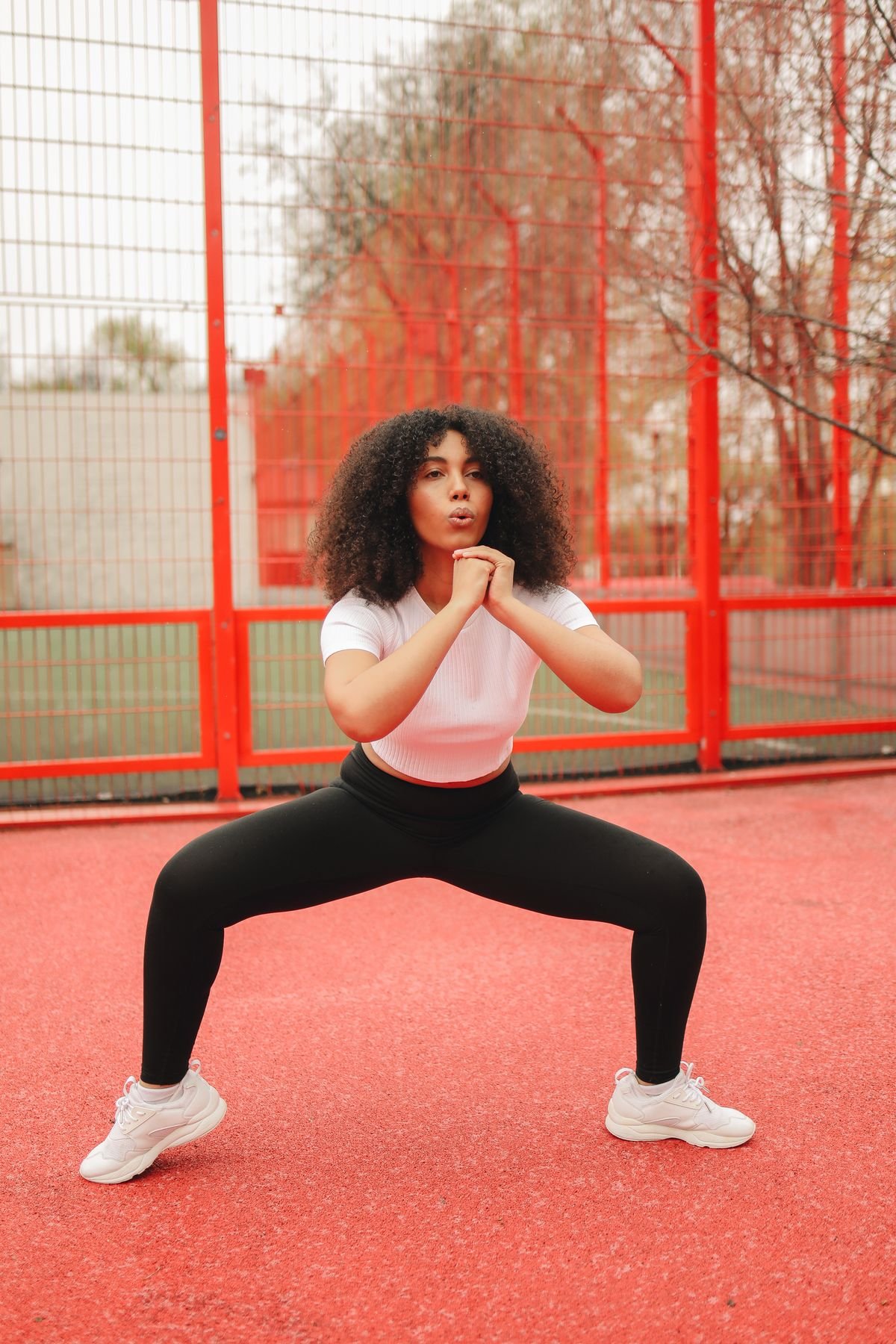
Photo: Pexels
Take a wider stance with your toes turned out, and sit straight down between your heels. Keep your chest up and your knees tracking out over your toes.
This wider position asks more of your inner thighs and glutes, and many people find the upright torso comfortable.
Start with 2 sets of 8–12 reps. Go only as wide as lets you keep your heels down and your back neutral.
3. Goblet squat
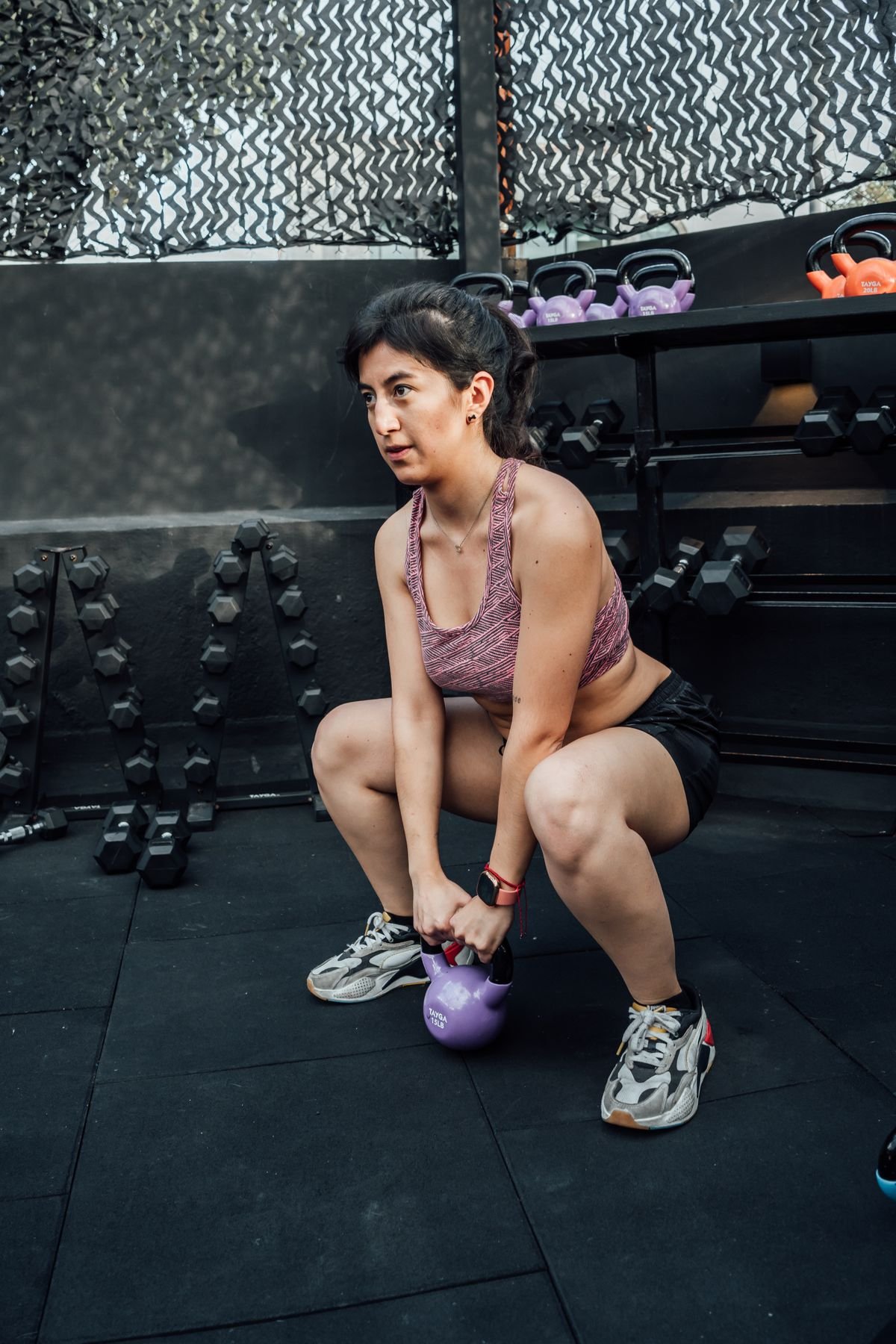
Photo: Pexels
Hold a kettlebell or dumbbell close to your chest with both hands, elbows pointing down. Then squat exactly as you would without weight.
Holding the weight in front helps many people stay upright and sit into the squat with control. Use a light weight first — good depth beats a heavy load.
Start with 2 sets of 8–10 reps. If the weight pulls you forward, it is too heavy for now.
4. Split squat
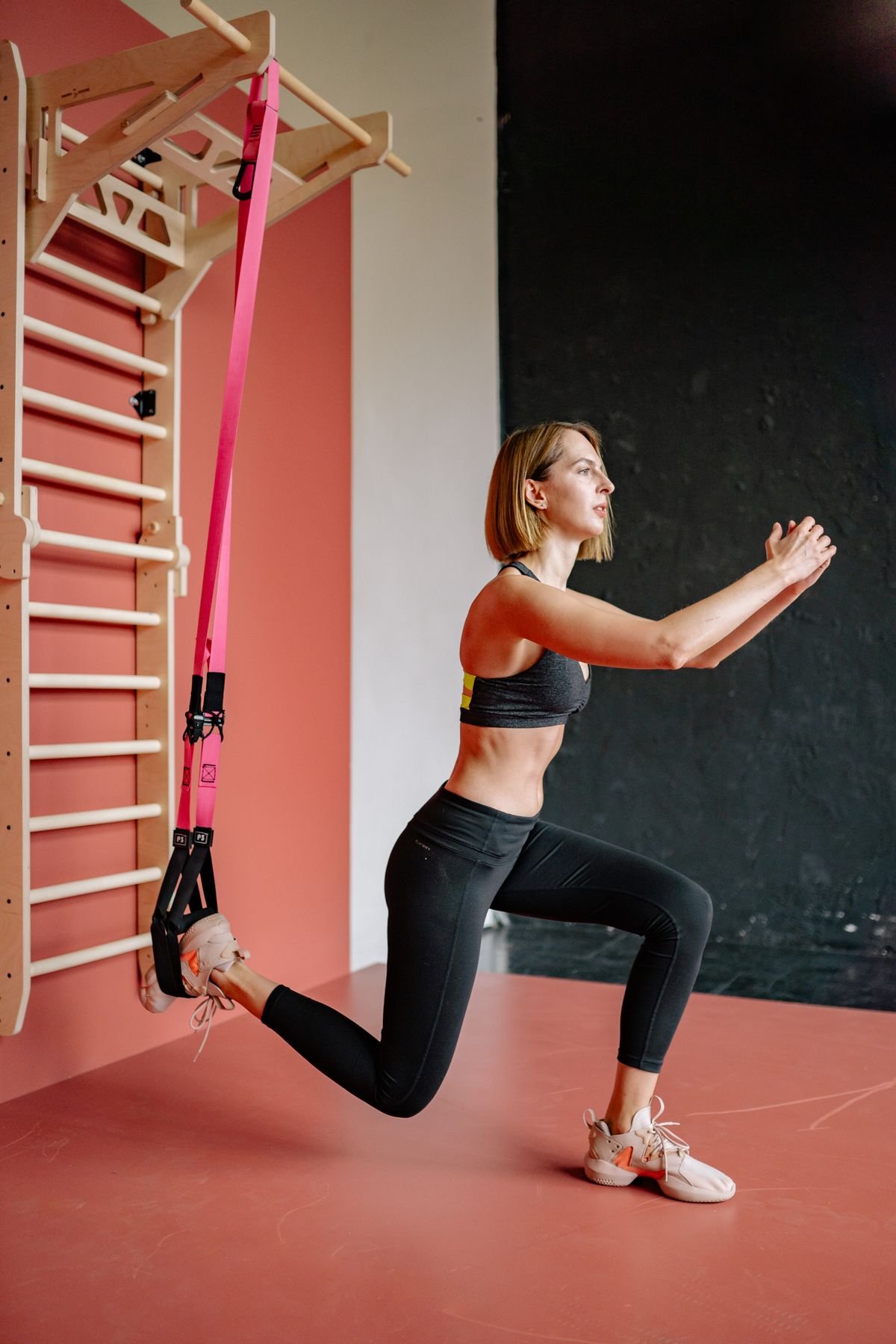
Photo: Pexels
Take a staggered stance, one foot in front and one behind. Lower straight down until your front thigh is roughly parallel to the floor, then push up through your front foot.
The photo shows a supported version, with the rear foot held in a strap. A chair or wall for balance is just as good, and often safer when you are learning.
A diagonal step-back (the old curtsy squat) is a harder cousin of this move. Leave it out until the straight split squat feels steady on both sides.
Start with 2 sets of 6–8 reps per side. Keep the steps short enough that you stay balanced throughout.
5. Side lunge
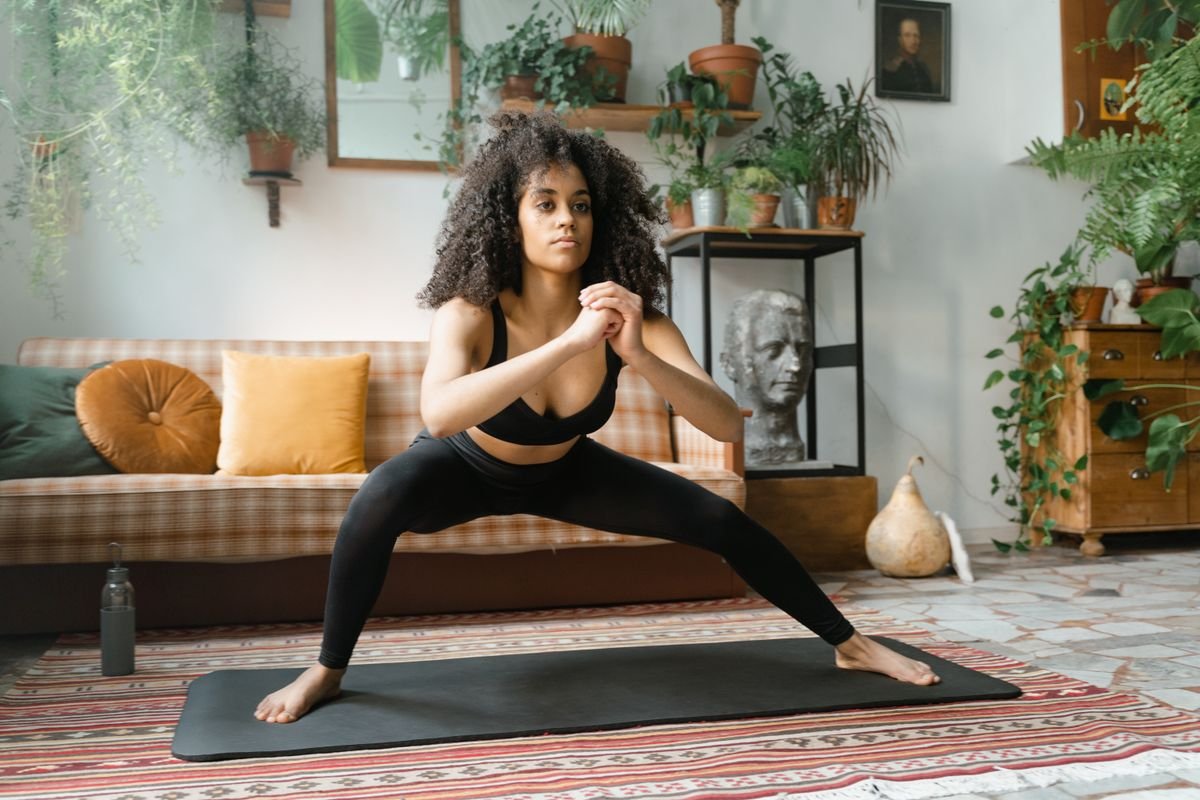
Photo: Pexels
Step wide to one side, bend that knee, and keep the other leg straight. Sit your hips back, keep your chest up, then push back to standing.
This move works your legs in a sideways direction that regular squats do not cover, which is useful for everyday balance and movement.
Start with 2 sets of 6–8 reps per side. Step only as wide as lets you keep your bent knee tracking over your toes.
Moves left out of this guide — on purpose
Jump squats, pop squats and single-leg pistol squats were in the old calendar, but they are high-impact or high-balance moves. They do not belong in a general beginner guide at high rep counts.
If you already train regularly and want to explore them, do so with a coach’s guidance, on a suitable surface, and only after the five moves above feel easy.
That is not a loss. Five well-done variations, repeated steadily, will do far more for your strength than twelve rushed ones.
How to keep going after week four
Keep two or three squat sessions a week, and change only one thing at a time: a few more reps, one more set, or a slightly heavier goblet weight.
Pair squats with other movement you enjoy, such as walking or core work. For a stronger core to support your squats, see our plank variations guide.
For more lower-body ideas, see our buttocks workout guide, and for honest core and belly-fat context, see belly pooch exercises.
Our fat-burning workouts roundup is also useful background — remember that no single workout targets fat in one area.
FAQs
Can squats help you lose belly fat?
Not directly, and not from the belly alone. Squats build leg, hip and glute strength and burn energy as part of overall activity, but fat comes off across the body, not just where you train.
Can squats give you a flat stomach?
No. Squats do not flatten the stomach on their own. A stronger core and lower overall body fat over time change how the midsection looks — squats are only one part of that picture.
Do squats help you lose weight?
They can help as part of an active routine, because they build muscle and use energy. But no exercise alone guarantees weight loss, which depends mainly on overall energy balance, sleep and eating patterns.
How many squats should a beginner do a day?
There is no magic daily number. Two or three sessions a week, with 2 sets of 8–12 comfortable reps of a basic squat, is a sensible, sustainable start — with rest days in between.
Should I squat every day?
Not necessarily. Muscles and joints benefit from rest between hard sessions, especially when you are learning form. Two to three sessions a week is plenty to start.
This article is general health information only and is not medical advice. If you have pain, an injury, a health condition, or are pregnant, talk to a clinician or physiotherapist before starting a new exercise routine.