

Lee Priest’s 1990s: What He Actually Said 🏆
Lee Priest is one of the loudest voices from 1990s bodybuilding, and he has never hidden which era he prefers.
In a 2024 interview discussion, reported by Fitness Volt on 1 May 2024, the Australian former IFBB pro looked back on the 1990s and said the shows of that decade were, in his view, better than today’s.
That is his opinion, not a settled fact about the sport. Plenty of fans and judges would argue the other way, and this article keeps Priest’s views clearly marked as his.
For the full story of his career, see Lee Priest’s biography — this feature sticks to what he thinks about the eras, the judging, and the modern game.
First, a Wording Note: “Golden Era” Here Means the 1990s 🕰️
When fans say “Golden Era,” they often mean the classic 1960s and 1970s physiques.
Priest’s comments in this feature are about something narrower: the 1990s scene he competed in, against names like Shawn Ray, Flex Wheeler, and Ronnie Coleman.
Keeping that distinction matters, because Priest is judging an era he lived in — not the whole history of the sport.
Readers comparing eras more broadly may also like Golden Era vs. Modern Era Bodybuilding.
Why Priest Says the 1990s Felt Better 💪
Priest’s main point, in his own terms, is about activity and atmosphere.
He argues there were more shows, more competitors doing more shows, and a level of excitement he feels today’s scene does not match.
He summed up the shows argument in short form, saying the 90s were “probably better as far as shows go and more guys doing more shows.”
He also gives social media a mixed review in his account: he accepts it has helped new athletes get noticed, while arguing it changed how the sport feels.
In Priest’s telling, before social media and video income, a competitor’s name was made on stage — not online.
That is a claim about culture, and fans will reasonably disagree about whether today’s wider reach is a gain or a loss.
His Calf Argument: Judge the Whole Physique 🦵
Priest’s sharpest judging complaint is about calves.
He argues calves are a real muscle group, just like biceps or triceps, and should count the same way when a physique is scored.
In his view, it makes no sense for a competitor with weak calves to take top honours while a complete physique finishes behind them.
He has put it bluntly in interviews, asking why calves get overlooked when no judge would overlook a missing biceps or triceps.
That is a fairness argument, not a rule change: judging criteria are set by federations, and Priest is pressing them to weigh every muscle group evenly.
It also connects to an older debate he raises about consistency — he points to women competitors in past eras who, he says, were told implants would improve their placing, and asks why men with weak calves do not face the same plain expectation to fix the weak point.
Readers should take that comparison as Priest’s own framing of the issue, and it is reported here in paraphrase for that reason.
Glutes: Hard, Not Necessarily Striated 🏋️
Priest also pushes back on one modern judging habit: putting too much weight on striated glutes.
He accepts that hard, square-looking glutes show a competitor is in shape.
But in his view, demanding visible striations goes too far, and risks turning a conditioning check into the deciding factor of a whole contest.
His point is about balance again: glutes matter, but a contest is won across the whole physique, not on one body part from the back.
Coaches: Priest Wants Athletes in Charge 🧠
Priest’s third criticism is about who makes the decisions.
He argues too many modern athletes hand their contest choices to coaches, instead of deciding for themselves when and where to compete.
In his account, the athlete should set the plan and the coach should support it — not the other way round.
He also questions how much credit some well-known coaches deserve, arguing they often take on athletes who are already established rather than building a newcomer into a champion.
Again, that is Priest’s opinion of the coaching world, and successful coaches would dispute it. It is included because it is central to how he explains the difference between his era and today’s.
Priest has raised a related point before about the number of contests on the calendar — see Lee Priest’s call to streamline bodybuilding contests.
What About the Other Side? Steve Weinberger’s View ⚖️
One correction matters here, because the old version of this article overstated it.
The old text said IFBB head judge Steve Weinberger “concurred” that bodybuilding was regressing to its 1990s peak.
The source report says something different and more upbeat: Weinberger believes the sport has evolved back toward where it was in the 1990s, helped by a deep field of top-tier Open talent.
That is not agreement with a decline story — it is a counterpoint to it, and this refresh reports it that way.
A similar era debate from another 1990s competitor is covered in Dennis Wolf reflects on the Golden Era vs modern times.
Priest in Brief: Why His Opinion Carries Weight (and Its Limits) 📋
Priest, born in 1972 in Australia, competed as an IFBB pro through the 1990s and 2000s.
His best Mr. Olympia placings were 6th, in 1997, 2000, and 2002. He placed 7th in 1998, and he never won the Olympia.
That record is exactly why his 1990s view is interesting — he was on those stages — and exactly why it is partial: he is judging his own era.
His later career, including his 2013 NABBA Mr. Universe win, is covered in his biography, not repeated here.
Has Priest Said Anything New on This Since 2024? 🔍
No verified new statement on this golden-era theme was found for this refresh.
Priest has stayed active as a commentator in 2025 and 2026, including Olympia and Arnold Classic recaps, but those appearances were about current contests — not a fresh restatement of his 1990s-versus-today case.
This refresh is therefore a correction and 2026 framing pass on his verified 2024 views, not a report of a new interview.
If he revisits the theme in a new interview, that belongs as a dated update at the top of this article, with the new source named.
Frequently Asked Questions ❓
Did Lee Priest say 1990s bodybuilding was better?
Yes, in his own terms — he said the 1990s shows were probably better, with more competitors doing more shows. That is his opinion, reported here as his view.
What is Priest’s main complaint about judging?
That calves are overlooked. He argues every muscle group should count evenly, so a weak point cannot simply be ignored in a winning physique.
Does Priest think striated glutes should decide contests?
No. He accepts hard glutes show conditioning, but argues too much emphasis is placed on striations at the expense of the whole physique.
Did Lee Priest win the Mr. Olympia?
No. His best Olympia placings were 6th in 1997, 2000, and 2002.
Is this article Priest’s biography?
No. It is a feature on his views about the eras. His full biography is a separate article, linked at the top of this page.
A Note on the Photos in This Article 📸
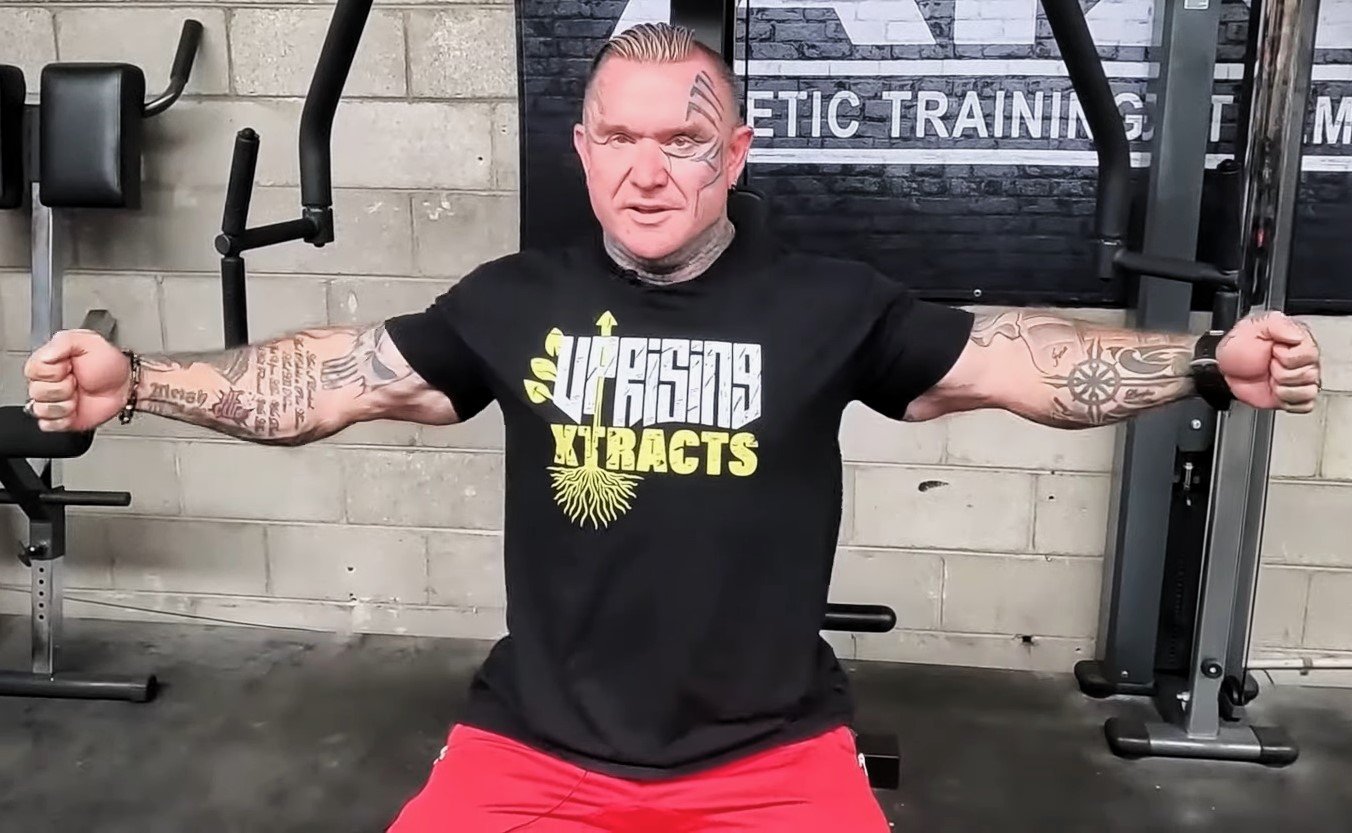
Only one photo in this article is verified as Lee Priest himself: the 2024 training photo at the top, from a Sam’s Fitness video, shared on Wikimedia Commons.
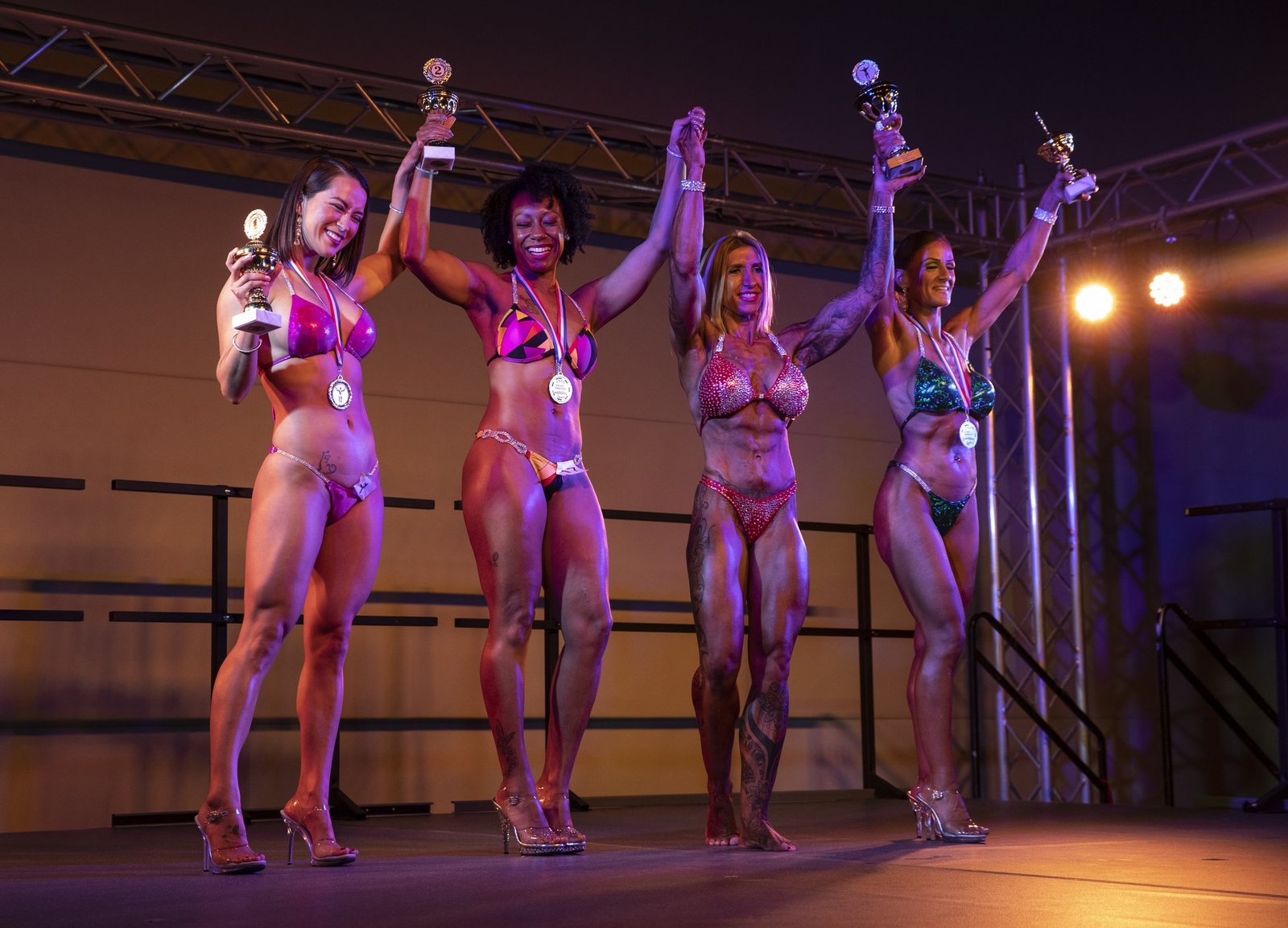
The other photos are generic gym and stage images, captioned honestly as such. They illustrate the themes — training, judging, and the stage — not Priest himself.
The old article’s Instagram photos were not reused, because their rights for this refresh could not be verified.