

What the Cable Crossover Is 💪
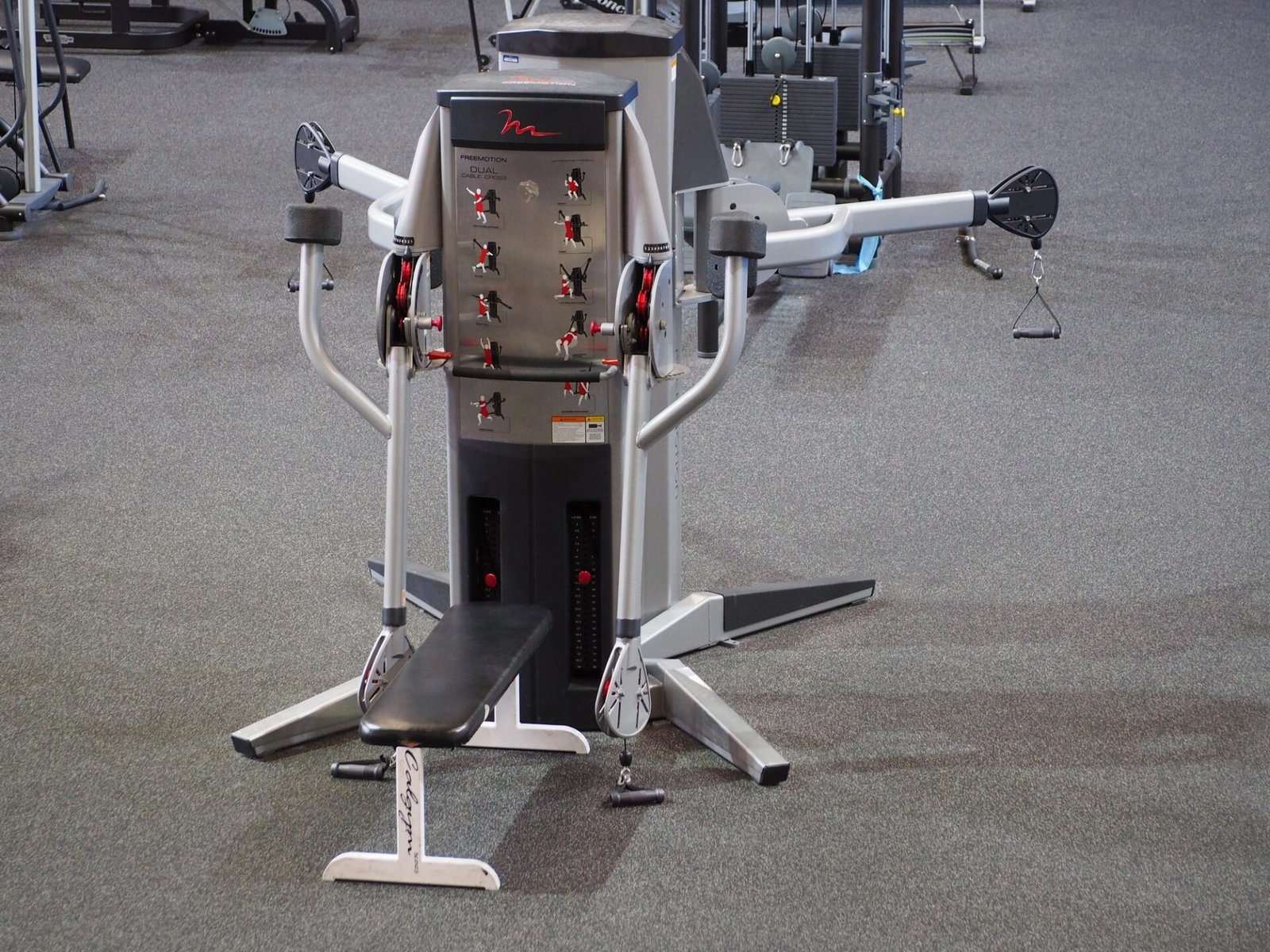
The cable crossover is a standing chest fly done on a dual-pulley cable machine.
You stand between two cable stacks, hold one handle in each hand, and bring your arms together in a wide arc in front of your chest.
It is an isolation move, which means the chest does most of the work while the shoulders and core help keep you steady.
Unlike a press, your elbows stay in roughly the same soft bend throughout, so the movement happens mainly at the shoulders.
Which Muscles Do the Work
The main muscle is the pectoralis major, the large chest muscle, which brings the arms across the body.
It has two parts worth knowing: the upper (clavicular) part near the collarbone, and the larger sternal part across the middle and lower chest.
The front of the shoulders helps, and your core works quietly to stop you swaying as the cables pull you back.
That is also why the move feels different from a bench press: the chest stays under tension through the whole arc, not just at the hardest point.
How to Do the Standard Crossover, Step by Step
Set both pulleys to about shoulder height for the standard mid-level version, and attach a single handle to each side.
Stand in the middle, take one handle in each hand, and step forward into a staggered stance, one foot in front of the other.
Lean very slightly forward, keep your chest up, and let your arms open out to the sides with a soft bend in the elbows.
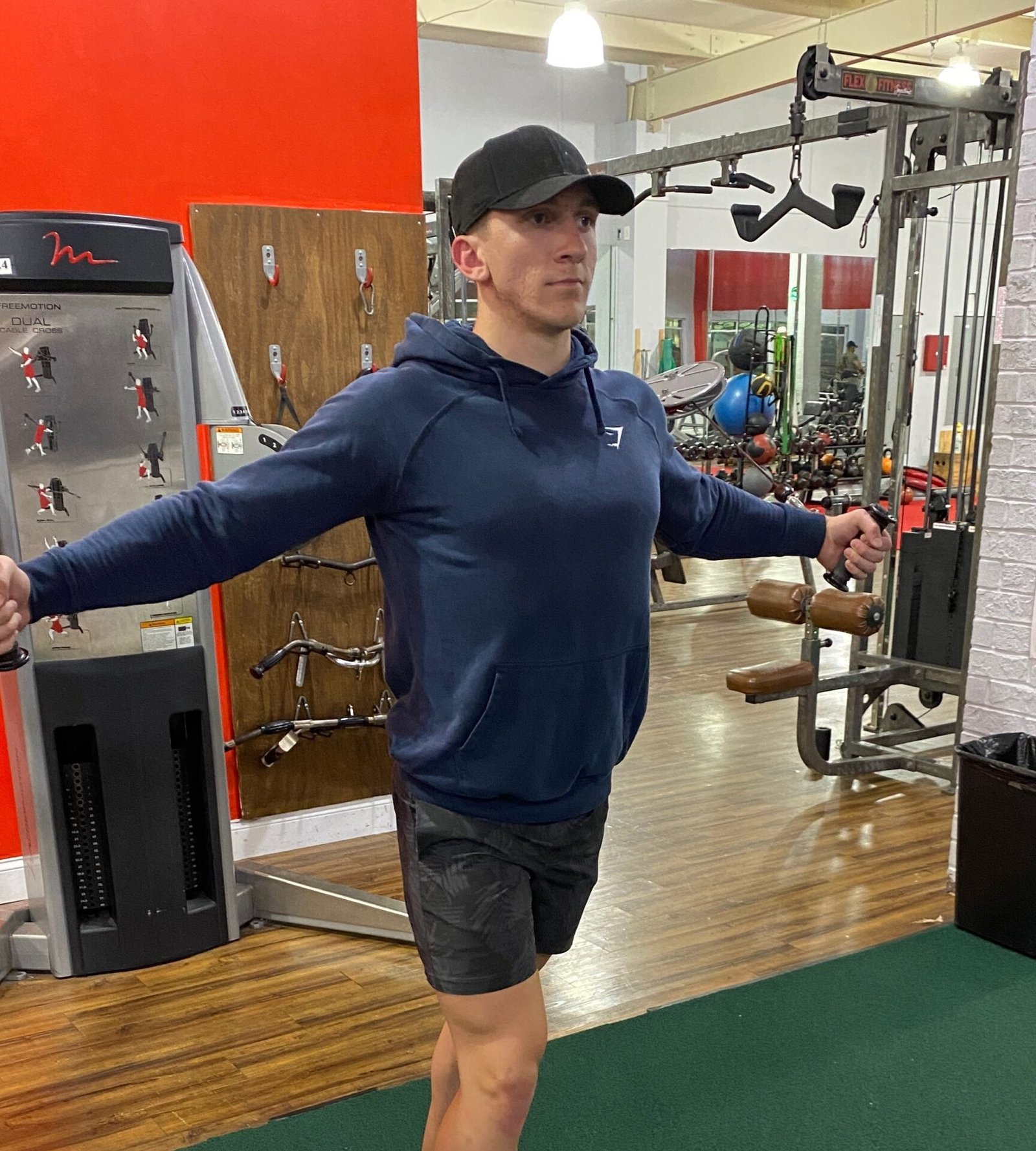
Now sweep both hands together in a wide arc, as if you were giving a big hug, until they meet in front of your chest.
Squeeze your chest briefly at the meeting point, without shrugging your shoulders up toward your ears.
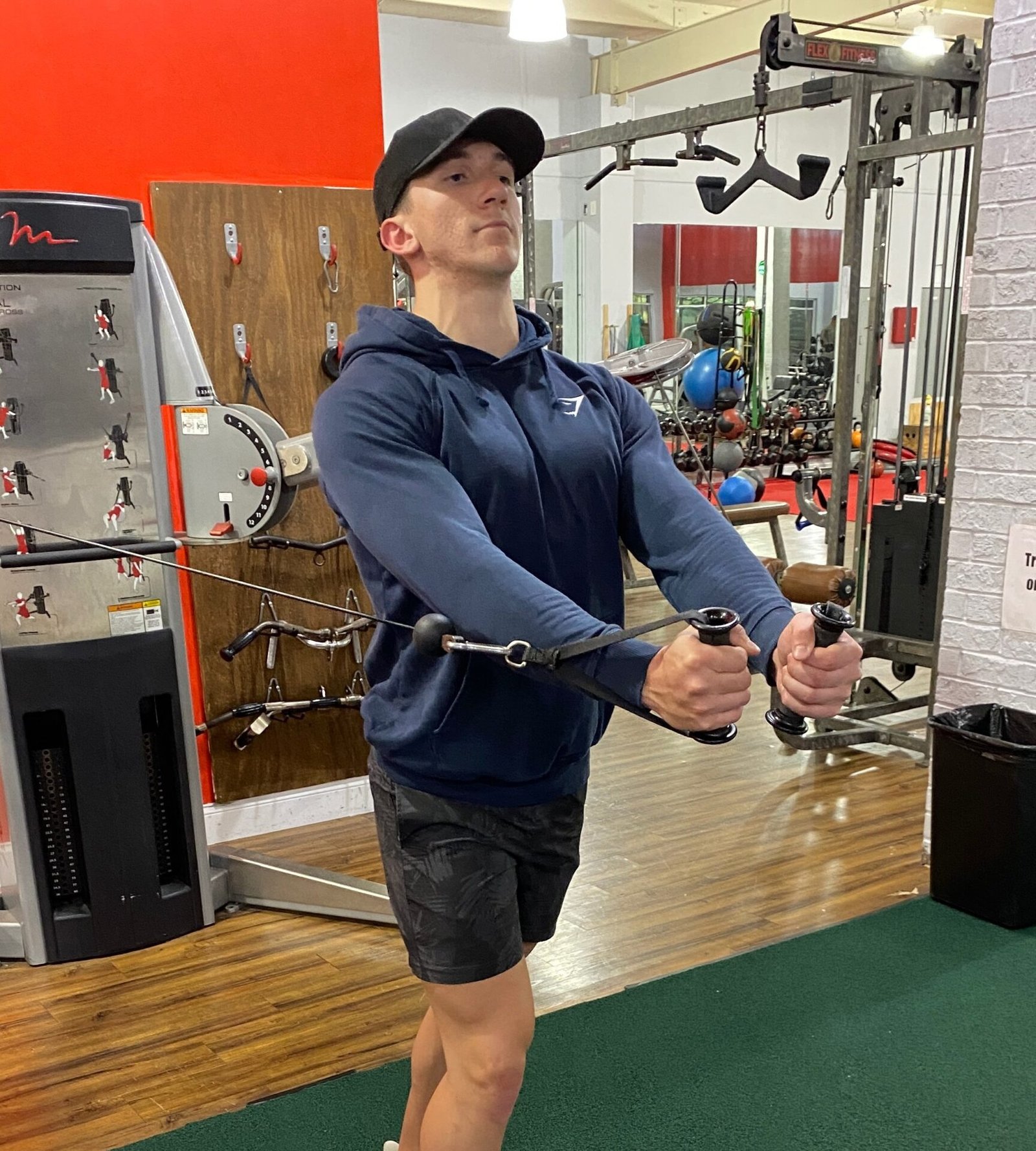
Return slowly along the same arc until you feel a comfortable stretch across your chest, then repeat.
Keep the same elbow bend from start to finish, and let the cables pull you back under control rather than yanking your arms wide.
Changing the Angle: High, Mid and Low Pulleys
The pulley height changes which part of the chest gets the most emphasis, because it changes the direction your hands travel.
With the pulleys high and your hands finishing low, near waist level, the emphasis shifts toward the lower chest fibres.
With the pulleys at shoulder height and your hands meeting straight in front of you, the emphasis is more even across the middle chest.
With the pulleys low and your hands finishing high, up toward the upper chest, the emphasis shifts toward the upper chest fibres.
You do not need all three angles every session. Pick the angle that matches the part of your chest session you want to round out, and keep the same controlled arc.
Common Mistakes to Avoid ⚠️
Using too much weight is the most common problem, because it shortens the arc and turns the move into a press or a heave.
Bending the elbows more and more as you pull is another one: if the arms fold deeply, the biceps take over and the chest does less.
Letting the shoulders roll forward at the finish also takes tension off the chest, so keep your chest open and your shoulders down.
Rushing the return wastes the best part of the move. The slow, controlled way back is where you stay in charge of the weight.
Shoulder Safety: Who Should Pause and Ask First 🩺
Fly-type moves can put the shoulders in a stretched position, so a comfortable range matters more than a deep one.
Warm up your shoulders and upper back first, start light while you learn the arc, and stop if you feel sharp pain, clicking with pain, or a pinching feeling.
If you have a shoulder injury, a history of shoulder problems, or pain that does not settle, do not push through it.
Ask a qualified coach or clinician first, and get their direction before adding this move to your training.
Fitting It Into a Chest Session
The crossover works best as a supporting chest move, after your main pressing work, when you want a controlled chest squeeze.
It pairs naturally with a broader session, such as this chest and triceps workout, rather than replacing presses altogether.
If you train with dumbbells on other days, this dumbbells workout gives you a different way to load the same muscles.
For overall upper-body shape, see also these best V-shape exercises, and pack smart with this gym accessories guide before you head out.
FAQs
Are cable crossovers good for the chest?
Yes, as a chest isolation move. They train the pectoralis major through a wide, controlled arc with steady cable tension.
They work best alongside pressing moves, not instead of them, because presses let you load the chest more heavily.
Do cable crossovers work the lower chest?
Yes, especially from high pulleys with the hands finishing low. That downward arc puts more emphasis on the lower chest fibres.
For a more even middle-chest emphasis, use shoulder-height pulleys and meet your hands straight in front of you.
What part of the chest do low cable crossovers work?
Low pulleys, where the hands travel upward, emphasise the upper chest, the clavicular part of the pectoralis major.
This is the opposite of what the old article’s FAQ implied, and it is corrected here: low pulleys, high finish, upper chest.
Should beginners use the cable crossover?
Beginners can use it with light weight and a short, comfortable range, once they can hold a steady stance and a soft elbow bend.
If the shoulders feel strained or the form falls apart, drop the weight, shorten the range, or ask a coach to check your setup.