

Strong abs are built the same way as any other muscle group: with consistent training, good form, and enough recovery. 💪
This guide keeps things simple. It covers six widely used core exercises, explains how to do each one well, and gives you a starting point for sets and reps.
One honest point first: ab exercises strengthen the muscles under the surface, but they do not burn fat from the belly on their own. Visible abs mostly come down to overall body fat, which changes through your whole diet and training routine — not through one exercise.
That is not a reason to skip core work. A stronger midsection helps you lift with better control, hold better posture, and move with more stability in everyday life.
How to use this list
Pick two or three exercises per session, two or three times a week, alongside your main lifting. Quality beats quantity here — slow, controlled reps do more than rushed ones.
Start with the ranges given under each exercise. They are starting points for a healthy adult, not a prescription. If you have back pain, an injury, a hernia, or any health condition, check with a clinician or physiotherapist before starting a new core routine.
You do not need to do all six in one workout. A short core session at the end of training works well for most lifters.
1. Hanging Leg Raise
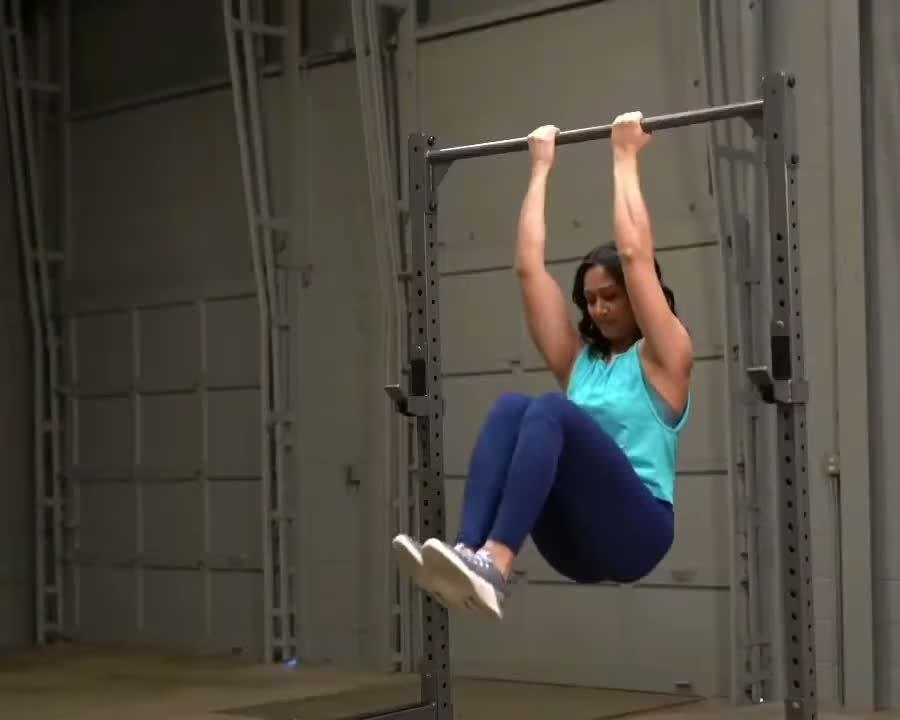
The hanging leg raise trains your abs and hip flexors while your whole body hangs from a bar. It is a challenging move, so the bent-knee version is the right place to start.
Hang from a sturdy overhead bar with your arms straight and your body still. Lift your knees toward your chest without swinging, pause briefly, then lower slowly.
Think about tilting your pelvis slightly as your knees rise — that small movement is what brings your abs into the exercise rather than just your hip flexors.
Keep the swing out of it. If your body starts rocking, shorten the range until you can stay in control on every rep.
Try: 3 sets of 8–12 reps, resting about 60–90 seconds between sets. Move to straight legs only when the bent-knee version feels easy and strict.
2. Cable Crunch
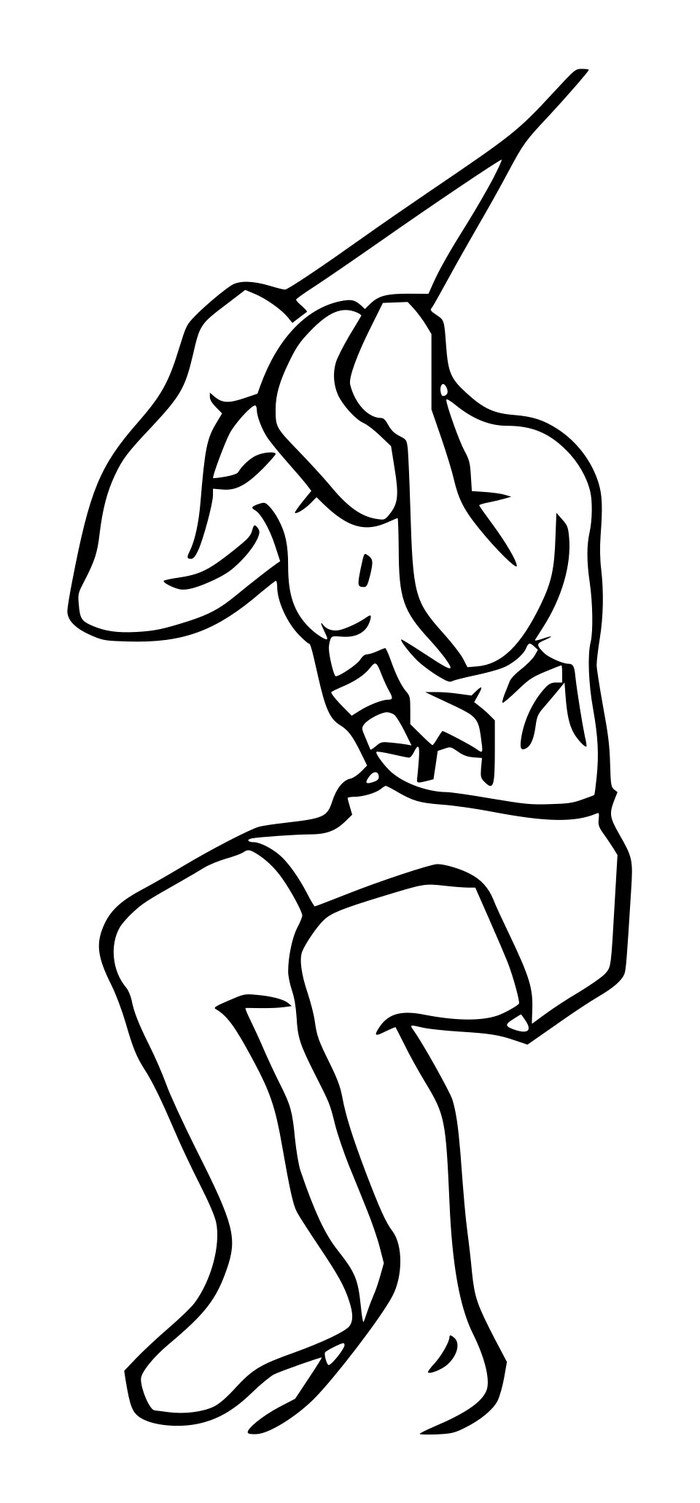
The cable crunch lets you add resistance to the crunch pattern in small steps, which is handy once bodyweight crunches feel easy. You can do it kneeling facing away from the stack, or seated as shown in the diagram.
Hold the rope behind your head, keep your hips still, and curl your upper body down by rounding through your midsection. Let the weight pull you back up slowly — that controlled return is half the exercise.
Avoid yanking with your arms or rocking your whole body. Your abs should be doing the work, not your shoulders or hips.
The same cable station covers two useful companions. The Pallof press — pressing the handle straight out from your chest while resisting the pull sideways — trains your core to resist rotation. The Russian twist, rotating a medicine ball or plate side to side from a seated position, trains rotation itself.
Try: 3–4 sets of 10–15 reps. Pick a weight that lets you finish each set with good form, not one that forces you to cheat.
3. Decline Bench Crunch
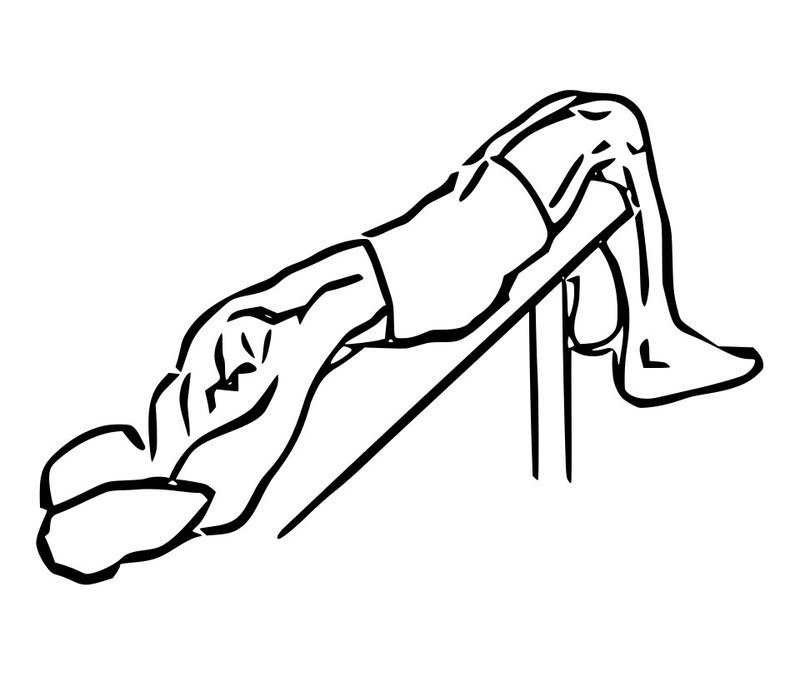
Changing the bench angle changes the difficulty. A gentle decline makes the crunch harder without needing any extra equipment.
Lie back on the bench with your feet secured, hands across your chest or lightly behind your head. Curl your upper body up, pause, and lower back down under control.
Keep the movement in your midsection. If you feel yourself pulling with your thighs or bouncing up, the angle is too steep — flatten it and rebuild.
Once 15 clean reps feel comfortable, you can hold a light plate or medicine ball against your chest for extra resistance. Add load slowly, and only if your form stays clean.
Try: 3–4 sets of 8–15 reps. Start on a shallow angle and steepen it gradually over weeks, not in one session.
4. Floor Crunch
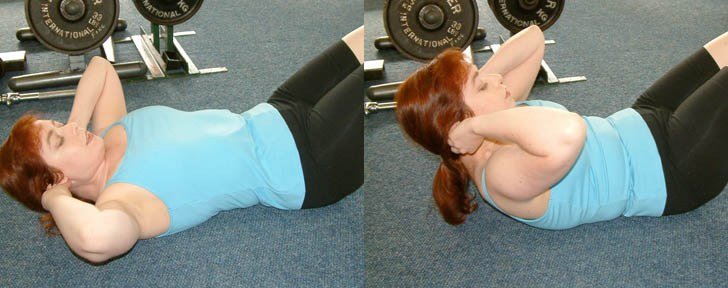
The floor crunch is the simplest ab exercise on this list, and that is its strength. No equipment, no setup — just a mat and good form.
Lie on your back with your knees bent and feet flat. Curl your shoulders a short way off the floor, breathe out as you lift, and lower back down slowly.
You only need to lift far enough to feel your abs working. Cranking your whole torso up with your hands behind your neck adds neck strain, not ab work.
If your gym has a crunch machine, it trains the same pattern with added load — a useful option once floor crunches feel too easy, but not a different exercise in disguise.
Try: 3 sets of 12–20 reps. Slow the lowering phase to two or three seconds to make each set harder without adding weight.
5. Plank
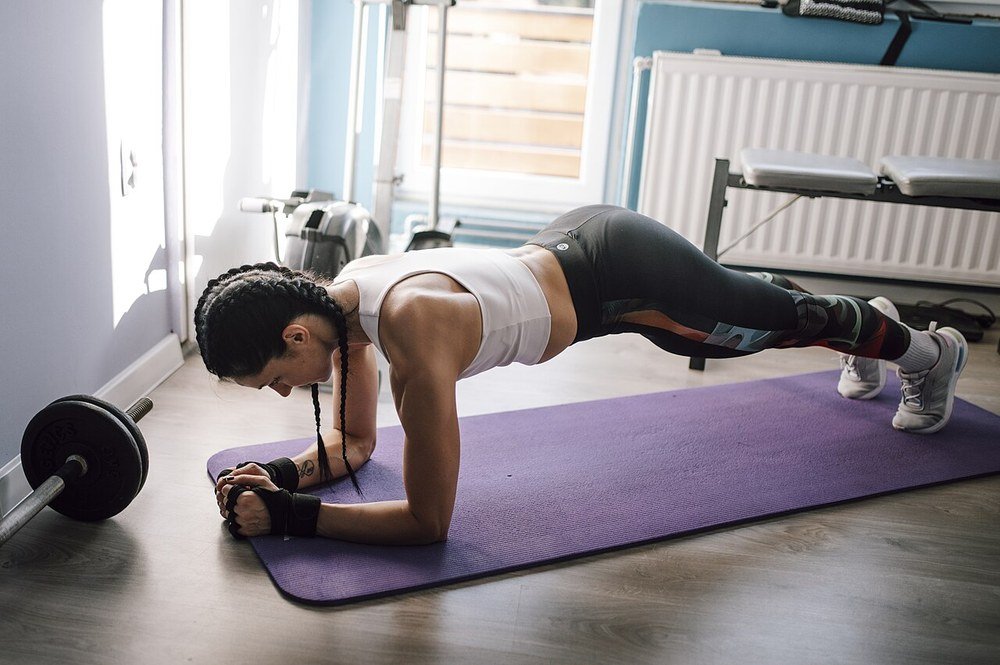
The plank trains your core differently from the other moves here: instead of moving, you hold still against gravity. That anti-movement strength carries over to heavy lifts and daily tasks.
Set up on your forearms and toes with your elbows under your shoulders. Keep a straight line from head to heels, squeeze your glutes gently, and breathe normally.
Watch for the two usual mistakes: hips sagging toward the floor, or hips piked high in the air. Either one takes the work off your core, so reset when your shape breaks.
Longer is not always better. A clean 30-second hold beats a shaky two-minute hold, and you can build up from there.
Try: 3 holds of 20–60 seconds, resting about a minute between holds. Start on your knees if the full version breaks your form.
6. Ab Wheel Rollout
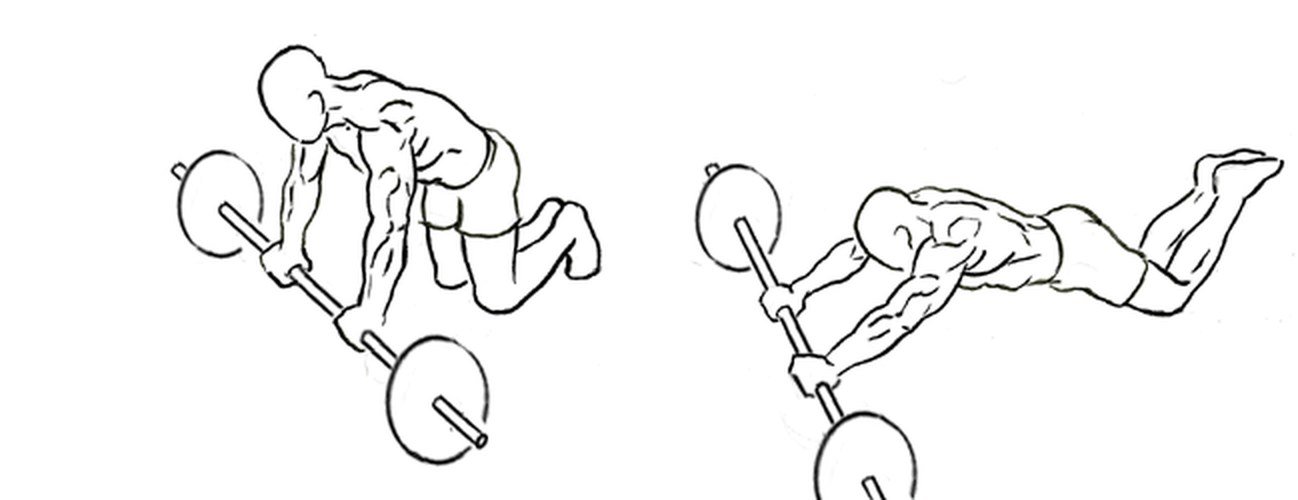
The ab wheel rollout is the hardest move on this list, and it should be treated with respect. It trains your core to resist your lower back arching as your body extends.
Start kneeling with the wheel under your shoulders. Roll forward slowly, only as far as you can go while keeping your ribs down and your back flat, then pull yourself back with your abs.
Range is everything here. Rolling too far, too soon, is the classic mistake — it dumps the load into your lower back and shoulders.
A wall makes a good training partner: place it so the wheel stops at a distance you can control, then move it further away over time.
Try: 3 sets of 5–8 controlled reps from the knees, once or twice a week. Leave the standing version alone until the kneeling version is strict and easy.
A simple weekly core routine
Here is one way to put the list together. Do this two or three times a week after your main workout, and leave at least a day between sessions.
Day one: hanging leg raise, cable crunch, plank. Day two: decline bench crunch, floor crunch, ab wheel rollout. Rotate the two days and you cover the whole list each week.
Warm up first with a few minutes of light movement, and finish with gentle stretching. Core work should leave your muscles tired, not your back sore.
Track your numbers like any other lift. When you hit the top of a rep range with clean form for two sessions running, make the move slightly harder — a little more range, a little more load, or a stricter variation.
Frequently asked questions
How often should I train abs?
Two or three short sessions a week is plenty for most lifters. Your abs recover like other muscles, so daily all-out core sessions usually just add fatigue.
Will these exercises give me a six-pack?
They will strengthen your abdominal muscles, but whether the muscles show depends mostly on overall body fat. Training, nutrition, sleep, and time all play a part — no single exercise reveals abs on its own.
Which exercise should a beginner start with?
The floor crunch and the plank are the friendliest starting points, since they need no equipment and are easy to control. Add the cable crunch when bodyweight work feels easy.
Do I need supplements or special equipment for abs?
No. This list needs a bar, a cable station, a bench, a mat, and an ab wheel at most. Consistent training and a sensible overall diet matter far more than any product.
Is it normal for my hip flexors to feel tired during leg raises?
Yes — hip flexors do a lot of the lifting in leg raises. The pelvic tilt cue in the hanging leg raise section helps shift more of the work to your abs.
What if an exercise hurts my back?
Stop that exercise and do not push through back pain. Try an easier variation, and if pain keeps coming back, speak to a clinician or physiotherapist for advice fitted to you.
Related reading
If you are building a wider core and fat-loss plan, these guides pair well with this list: Build Six Pack Abs Fast, Exercises to Reduce Belly Fat, and for upper-body balance, Triceps Workout.
Strong abs are a long game. Train them like any other muscle, be patient with the process, and enjoy getting stronger week by week. 🏋️