

⚠️ Important first: this article is general information only — it is not medical advice, and it is not a physiotherapy programme for any knee condition.
Knee pain has many possible causes, and the right approach depends on what is causing it. Before starting any new movement routine, talk to your GP or a physiotherapist — they can look at your knee and advise what suits you.
If any movement makes your knee pain clearly worse, stop straight away. 🛑 Do not push through sharp or worsening pain, and get advice if you are unsure.
🚨 When to Get Medical Advice Promptly
Some knee symptoms need prompt medical attention rather than home exercises. Get advice from 111 now, or see a clinician urgently, if you notice any of these:
- Your knee is very painful, or you cannot move it or put any weight on it.
- Your knee is badly swollen or has changed shape.
- Your knee locks, gives way, or clicks painfully. (Painless clicking on its own is usually normal.)
- You have a very high temperature, or feel hot, cold or shivery, with redness or heat around your knee — this can be a sign of infection.
- Your knee pain followed an injury or trauma, especially a twist, fall or direct blow.
Also see your GP if knee pain does not improve within a few weeks, keeps coming back, or stops you doing everyday things. Do not try to diagnose yourself — a clinician can check what is actually going on. 🩺
🦵 Why Gentle Movement Matters
When a knee is sore, it is tempting to stop moving altogether. But staying still for long periods can leave the muscles around the knee weaker and the joint stiffer.
Gentle movement, at a level a clinician has agreed for you, helps keep the muscles that support the knee active and the joint moving. The goal is steady, comfortable movement — not forcing the knee into painful positions.
Think of it as keeping the knee mobile and the surrounding muscles working, little by little, rather than chasing a quick fix. There is no single exercise that suits every knee, and no exercise here is presented as safe for all knee conditions.
💪 Strengthening the Muscles Around the Knee
Physiotherapists often talk about the muscles at the front of the thigh, the back of the thigh, the hips and the calves, because these muscles help support and control the knee.
One widely discussed gentle movement is tightening the thigh muscles while sitting or lying down, pressing the knee gently down, then relaxing. It is a quiet, controlled movement with no impact on the joint.
Another is a slow straight-leg lift while lying down, raising the leg a small amount with the knee straight and lowering it again with control. Keep the movement smooth, and only go as far as feels comfortable.
A sit-to-stand from a sturdy chair — standing
up slowly and sitting back down with support nearby if you need it — is a familiar everyday movement that also works the leg muscles. A physiotherapist can advise whether it suits you and how to adapt it.
Some people also discuss gentle step-ups on a low, stable step, holding a rail or support for balance. The step should feel easy and secure, never a stretch or a strain.
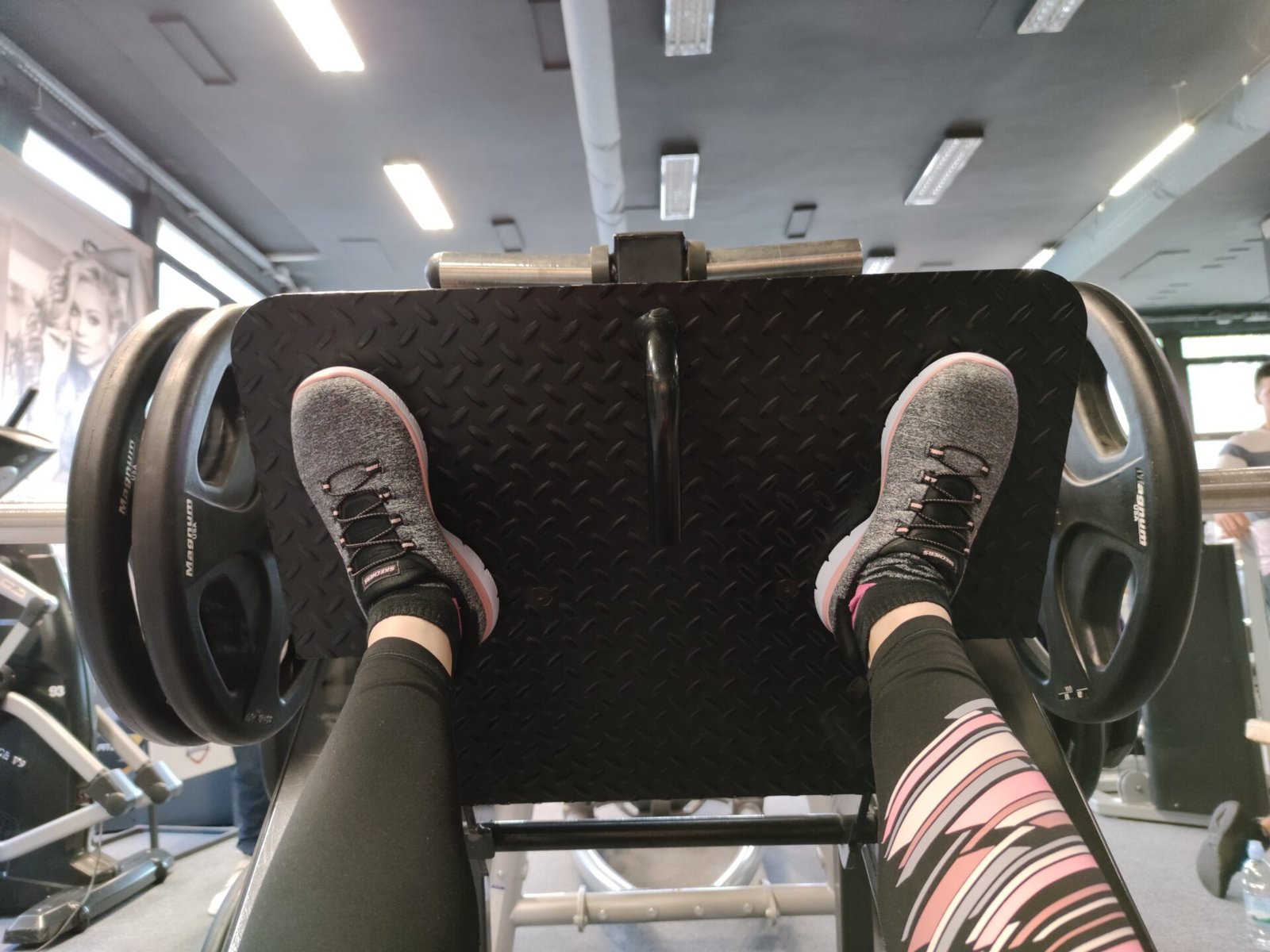
Gym machines that work the legs are sometimes part of a clinician-guided plan, but they are not a starting point to pick up on your own. If you use a gym, ask a qualified instructor or physiotherapist to show you the right setup first. 🏋️
How much to do, and how often, is individual — it depends on your knee, your fitness and your clinician’s advice. Start gently, build up slowly, and back off if pain increases.
🧘 Mobility and Gentle Stretching
Mobility work is about keeping the knee bending and straightening comfortably, and keeping the surrounding muscles from tightening up.
A gentle heel slide — slowly bending the knee by sliding the heel towards you while lying down, then straightening again — is one commonly described way to practise knee bending in a controlled way.
Slow calf raises, holding a chair or rail for balance and rising gently onto the toes before lowering again, work the calf muscles that support the lower leg.
For stretching, people often mention a gentle hamstring stretch, feeling a mild stretch at the back of the thigh, and a gentle calf stretch against a wall. Stretching should feel like a mild pull, never sharp pain — ease off if it hurts.
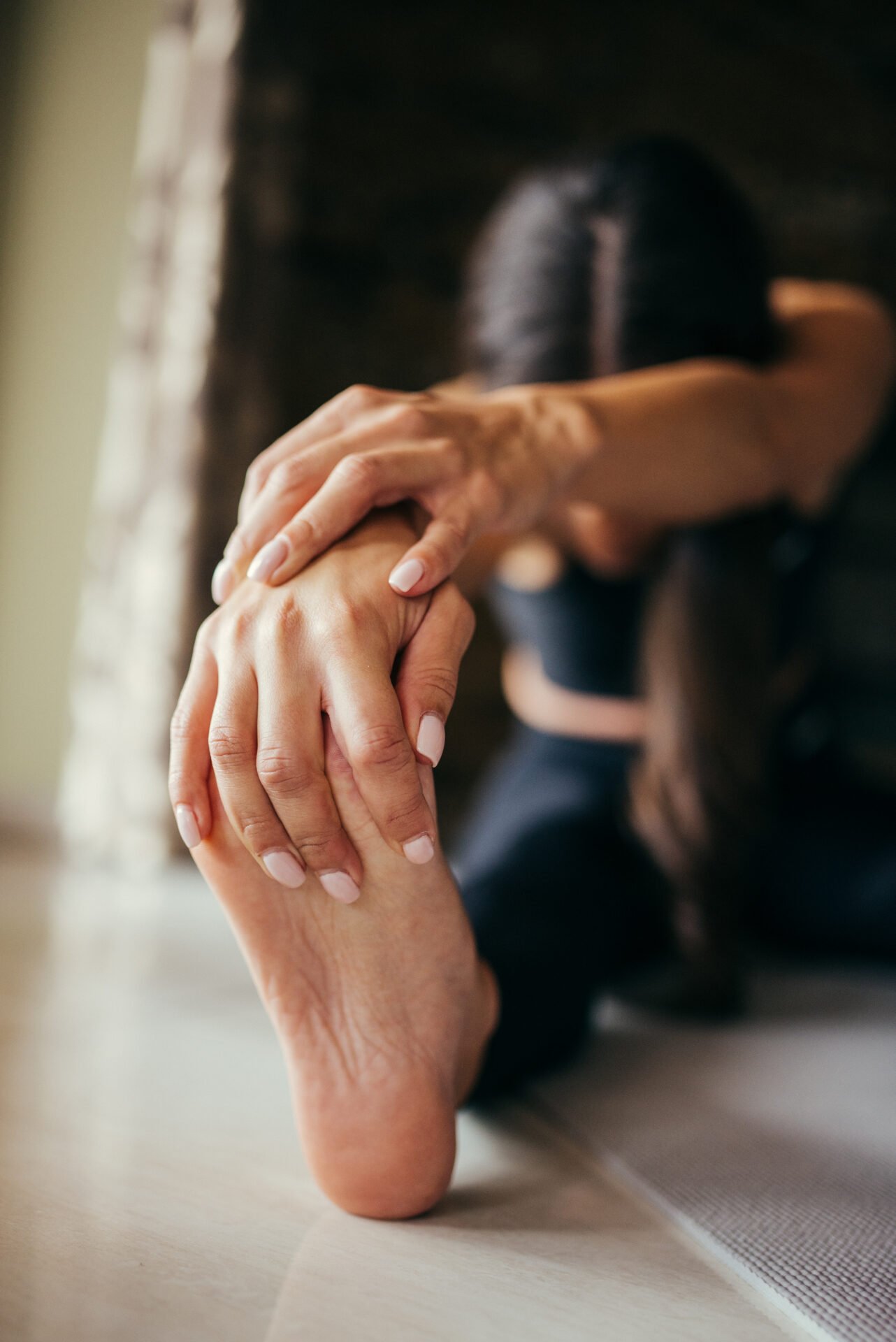
Yoga-style poses that bend the knee deeply or twist it are not included here on purpose. Deep bends and twists can load a sore knee, so discuss any yoga or class-based exercise with your physiotherapist before joining in.
🚶 Everyday Habits That Support Sore Knees
Short, gentle walks on flat, even ground are a simple way to keep moving, as long as walking does not worsen your pain. Choose a comfortable pace and a route where you can stop and rest.
Try not to sit in one position for very long. Getting up for a short, gentle move every so often helps the knee avoid stiffening up.
Footwear with a stable, supportive fit can make walking feel steadier, and using a handrail on stairs is simply sensible when a knee is sore. Small supports like these are about comfort and safety, not treatment.
If your knee is swollen or sore after activity, rest it and get advice if the swelling is major, the pain is severe, or it does not settle. Do not rely on home measures alone when a red-flag symptom is present.
🗓️ Building a Routine — With Guidance
A good routine is one you can keep up without flare-ups. That usually means starting with a small number of gentle movements, on days you feel able, and adding more only when your clinician agrees.
Keep a simple note of what you did and how your knee felt afterwards. If a movement repeatedly leaves your knee more painful or swollen, drop it and ask your physiotherapist for an alternative.
Progress is rarely a straight line — some days will feel better than others. The aim is steadier movement and stronger supporting muscles over time, not a fast result.
❓ Frequently Asked Questions
Can exercise cure knee pain?
No — exercise is not a cure, and this article does not promise one. Gentle movement can help many people stay mobile and keep supporting muscles active, but the cause of the pain still needs a clinician’s assessment.
Should I exercise if my knee hurts?
Mild muscle effort during gentle movement is one thing; sharp or worsening knee pain is another. Stop straight away if pain gets worse, and get advice if you are unsure whether a movement suits you.
Do I need a physiotherapist?
It is strongly recommended. A physiotherapist can examine your knee, rule out problems that need medical care, and shape a plan for your situation. In many areas you can also self-refer to NHS musculoskeletal services — ask your GP surgery what is available locally.
Are these exercises safe for arthritis or a sports injury?
Not automatically. Different knee problems need different approaches, and some movements suit one condition but not another. Never follow a general article as a programme for a named condition — get individual advice first.
🔗 Related Reading
If you found this guide useful, you may also like our general exercise guides: Back Pain Exercises and Sciatica Exercises. You can also browse more in the Exercise category.
Remember: this article is general information only. For knee pain that is severe, sudden, swollen, deformed, locking, giving way, or hot with a fever, get medical advice promptly — and for anything that worries you, see your GP or physiotherapist. 💛