

Why Under-Desk Ellipticals Belong in a Home Gym
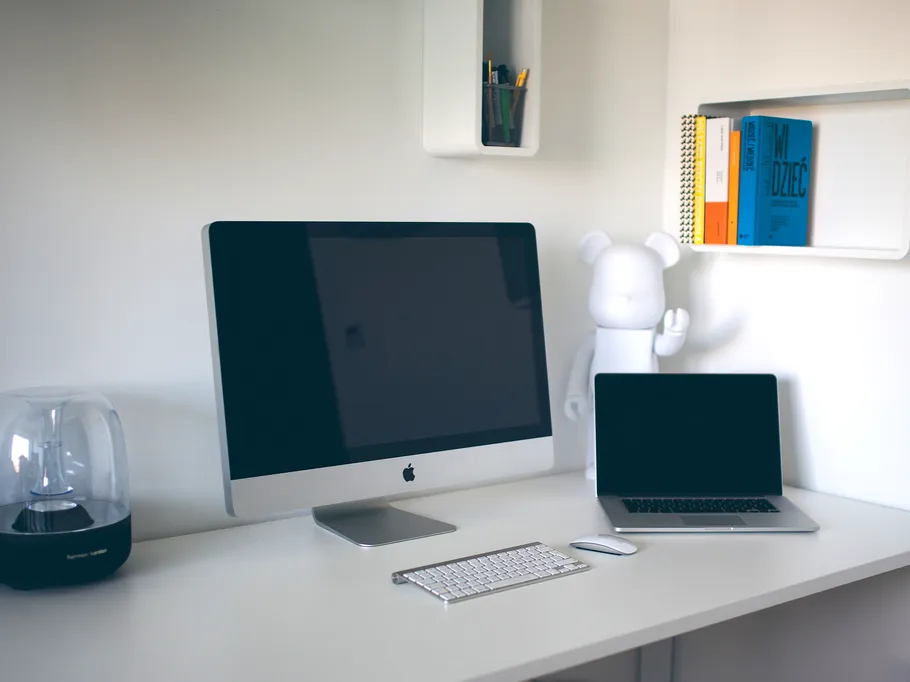
A workday spent sitting still is the home gym’s quiet problem. The workout happens for an hour and then the chair takes over for eight more, and no evening session fully undoes a day without movement. An under-desk elliptical answers that specific problem: it puts a gentle oval stride under your desk, so the hours you already spend working become hours you also spend moving. 🪑
The previous guide in this series, our deadlift jacks guide, covers the heavy end of the home gym — a steel tool for loading a bar. Under-desk ellipticals are the opposite end: a small striding machine for the lightest hours of the day, built for a chair rather than a platform.
One honest scope note first. This guide covers elliptical-motion units only — machines that move your feet in an oval stride path, not a circle. Our under-desk bikes guide is the companion for crank-cycle pedal bikes, which pedal in circles and are a different category. If you want pedals, read that guide; if you want the oval stride, you are in the right place.
A second scope note matters just as much. Every pick here is self-powered: you drive the stride with your own legs. Motorized units that move your legs for you are a different category — a passive machine, not an exercise tool — and none of them is in this guide.
How We Picked
We compared six currently sold self-powered under-desk ellipticals: three Cubii models, one pedal-variety unit, one value unit and one foot-controlled unit, so the guide answers which desk job each unit does best instead of crowning one winner for everyone. Every spec below comes from maker pages, listings, manuals or review records, and every disagreement found is stated in the pick sections rather than averaged away.
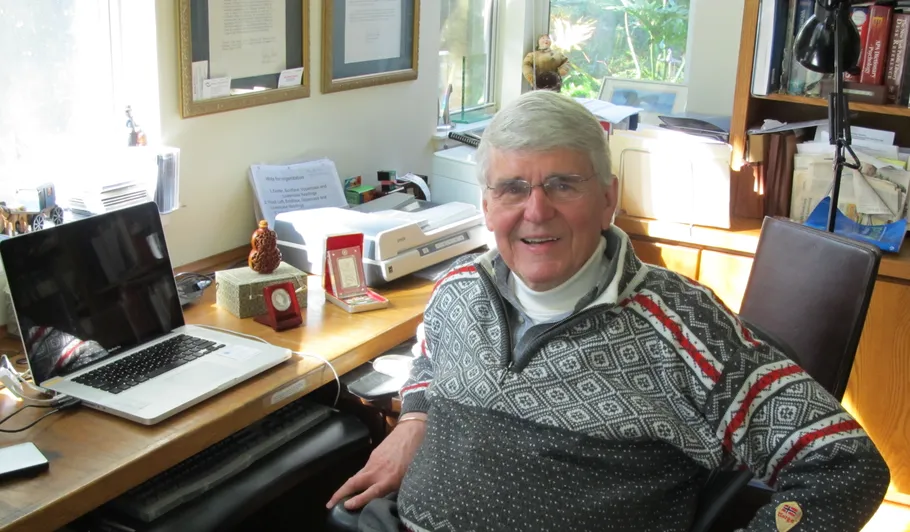
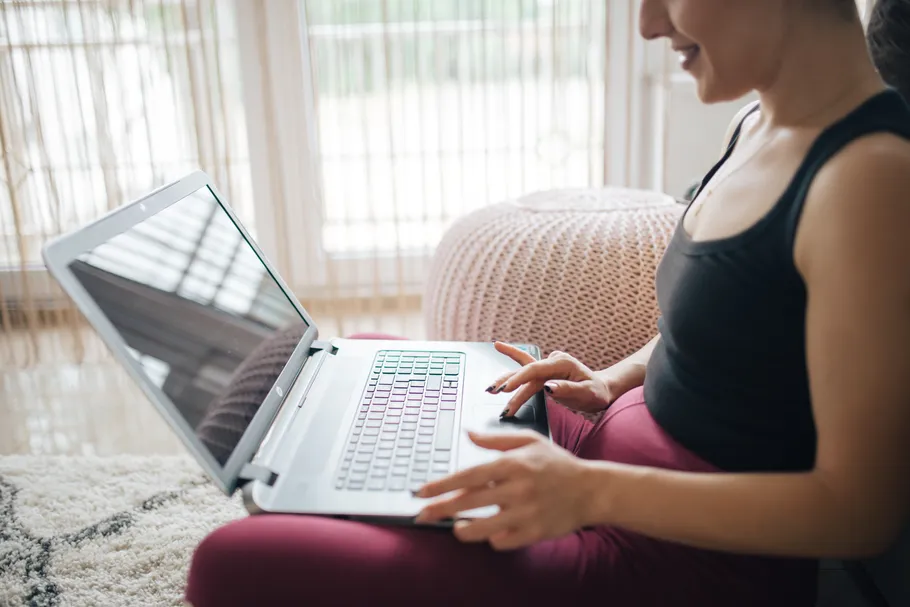
One limit applies to every photo in this guide: no free-license photo of any of the six named under-desk ellipticals exists, so every figure is an honest generic scene — desk workers, sofas, laptops and one full-size gym elliptical — captioned as what it actually shows, never presented as a photo of the named unit. No figure here is called high-definition where it is not.
- Scored on: stride path and length, resistance type and levels, unit weight, footprint, desk clearance, and storage.
Also considered: Cubii JR2+ is the Bluetooth sibling of the JR2, with app sync and a rechargeable battery, left out because the base JR2 already covers the lightweight job and the JR2+ is a connectivity upgrade, not a different machine. Cubii Move is a 6-level Cubii at about 17.6 lb, the lightest Cubii on record, left out because its record is thinner than the three Cubii picks and adds no new job. Cubii Total Body is the Go with resistance bands added, left out because the Go already covers the portable job and the bands are an accessory, not a new stride. Niceday 3611 is a 16-level unit at 400 lb, left out as a higher-capacity sibling of the 3606 that duplicates its foot-lever idea. Niceday 3613L is a 2-in-1 seated and standing unit with felt resistance and bands included, left out because standing striders are a different category from seated under-desk units. Sunny SF-E3872SMART is the Bluetooth variant of the Sunny pick with SunnyFit app support, left out because the manual magnetic model already covers the value job. MERACH MR-E32, ANCHEER motorized models, Putnen and GUGTTR motorized units are all excluded as motorized machines, not self-powered striders. DeskCycle 2 is a crank-cycle pedal bike and a pick in our under-desk bikes guide, left out here because pedalling in circles is not elliptical motion.
Scoped superlatives: the longest stride here is 18 inches at maximum, shared by the Cubii JR1 and the DeskCycle Ellipse. The shortest settled stride is the Cubii Go’s 6 inches, with the Sunny’s 7 inches just above it. The JR2 is kept out of the stride ranking because no fixed stride is published for it — one review estimates about 5 to 6 inches, and this guide claims no figure. The lightest unit with a settled weight is the JR2 at about 19 lb; the Go’s records span 19.4 to 23.9 lb, so it makes no settled lightest claim. The heaviest unit by its manual figure is the DeskCycle Ellipse at 30.1 lb, though review records give 23 to 24 lb. The only foot-controlled unit is the Niceday 3606, the only pedal-variety unit is the DeskCycle Ellipse, and the only unit with a retractable handle and built-in wheels is the Cubii Go. The only unit with adjustable foot straps among Cubii models is the JR2.
Comparison
| Pick | Job | Resistance | Stride | Unit weight |
|---|---|---|---|---|
| Cubii JR1 | Classic all-rounder | 8 levels, manual | 18 in max | 25.4 lb (27.65 lb disputed) |
| Cubii JR2 | Lightweight | 8 levels | Not stated | About 19 lb |
| DeskCycle Ellipse | Pedal variety | 8 levels, magnetic | 18 in max | 30.1 lb (23–24 lb disputed) |
| Sunny Health & Fitness SF-E3872 | Value | 8 levels, magnetic | 7 in | About 24–25 lb |
| Cubii Go | Portable | 10 levels (8 in manual — disputed) | 6 in | 23.9 lb (19.4–21.8 lb disputed) |
| Niceday 3606 | Foot-controlled | 8 levels, magnetic | 8 in | 27.6 lb |
The Stride column mixes three different kinds of figure, and none of them should be read as a promise. The JR1’s and the Ellipse’s 18 inches are maximum-stride figures, not a fixed stride length — your actual stride depends on where your feet sit and how you move. The JR2’s cell reads Not stated because no fixed stride is published for it; one review estimates about 5 to 6 inches, and this guide claims no figure rather than printing the estimate as a fact. The Go’s 6 inches is the shortest settled stride here, with the Sunny’s 7 inches just above it. Confirm the stride feel on the listing before ordering, every time.
The Unit weight column mixes settled figures and disputed ones because the sources do. The Go’s records span 19.4 to 23.9 lb across the manual, the listing and a retailer record, plus a “less than 20 lb” marketing line — the table leads with the manual figure and states the rest. The Ellipse’s manual figure of 30.1 lb is disputed by review records of 23 to 24 lb, and the JR1’s 25.4 lb is disputed by a 27.65 lb record. Unit weight matters twice for a desk strider: once when you carry it to the desk, and again when you move it for cleaning.
Capacity is deliberately not a column here. The records for the JR1, the Sunny and the Niceday disagree too widely to compress into one cell — the JR1’s capacity runs from 150 to 300 lb across three records, the Sunny’s from 250 lb to no specified capacity, and the Niceday’s from 200 lb to no restriction at all. Each pick section states its own figures in full, and the working rule throughout is to plan to the lowest figure you can verify.
Cubii JR1

The Cubii JR1 is the classic pick of this guide, and its argument is the stride: 18 inches at maximum, the longest stride here, shared only with the DeskCycle Ellipse. Built at 23.2 by 17.56 by 10 inches and 25.4 lb per the settled records, it offers 8 manual resistance levels and an LCD that tracks time, strides, distance and calories — the plain, no-app dashboard that made Cubii the default name in desk striding. 🏆
The mechanism matters for expectations. The owner’s manual describes a manual mechanism, not a magnetic one — resistance comes from a manual system you turn up by hand. That distinction is worth stating because one review record calls the JR1’s resistance magnetic; the table follows the manual, and a buyer who expects silent magnetic resistance should know the manual says otherwise.
Three flags stay open. First, the capacity is a three-way conflict: the owner’s manual gives 300 lb, Amazon technical details give 150 lb, and another record gives 250 lb — three figures for the same machine, differing by double from lowest to highest. Until a listing settles it, work to the lowest figure, 150 lb. Second, the unit weight reads 25.4 lb in the settled records against 27.65 lb in another record. Third, the JR1 has no Bluetooth and no app sync — its LCD is the whole tracking system, and that is either a virtue or a limit depending on how you track your movement.
✅ Pros
- Longest stride here at 18 in max, shared with the Ellipse
- Classic Cubii with the most established record of the three Cubii picks
- LCD tracks time, strides, distance and calories with no app needed
⚠️ Cons
- Capacity three-way conflict — 300 lb, 250 lb and 150 lb all circulate
- Unit weight records conflict — 25.4 lb against 27.65 lb
- No Bluetooth or app sync — the LCD is the whole tracking system
Listing check: no confident listing code was verified for this unit, so the link above is a tagged search — confirm the classic JR1 model, the 8 manual levels and the capacity figure on the listing itself before ordering, and do not confuse it with the JR2 or the Bluetooth JR2+ below.
Best for: desk workers who want the longest stride and the classic Cubii.
May not fit: buyers who need one settled capacity figure, or anyone who must carry the unit between rooms every day.
Cubii JR2
The Cubii JR2 is the lightweight pick: about 19 lb at 22.24 by 11.8 by 11.6 inches, with 8 resistance levels and an LCD. Its case is portability with manners — a carry handle, a wheel stopper that keeps a rolling chair in place, a non-slip mat, and adjustable foot straps that are unique to the JR2 among Cubii models, keeping feet on the pedals through a long session. 🪶
The foot straps deserve a plain sentence because they are the JR2’s real difference from the JR1. A strider’s pedals are easy to slip off when your attention is on the screen, not your feet; straps turn that fidget into a non-issue, and no other Cubii model in this guide offers them.
Three flags stay open. First, the base JR2 has NO Bluetooth — app use is manual entry only, typing your strides into the app yourself. One review record wrongly credits the JR2 with Bluetooth; that feature belongs to the JR2+, a different model with a rechargeable battery, and this guide does not confuse the two. Second, no fixed stride length is published for the JR2, so the table cell reads Not stated — one review estimates about 5 to 6 inches, and that estimate is not printed as a fact. Third, the weight reads about 18.9 to 19.3 lb across records, a narrow range rather than a single figure, so this guide says about 19 lb.
✅ Pros
- Lightest unit here at about 19 lb, with a carry handle
- Adjustable foot straps, unique among Cubii models here
- Wheel stopper and non-slip mat included for rolling chairs
⚠️ Cons
- Stride length not stated — one review estimates about 5 to 6 inches
- No Bluetooth on the base model — app tracking is manual entry only
- Stride estimate is shorter than the JR1’s 18 in maximum
Listing check: no confident listing code was verified for this unit, so the link above is a tagged search — confirm the base JR2 model, the adjustable foot straps and the absence of Bluetooth on the listing itself before ordering, and do not confuse it with the Bluetooth JR2+.
Best for: anyone who moves the unit between rooms or wants the lightest carry here.
May not fit: buyers who want app sync out of the box, or a long published stride figure.
DeskCycle Ellipse

The DeskCycle Ellipse is the pedal-variety pick, and it is the only unit here that changes its motion with your feet. Its oversized pedals are the whole idea: feet on the top or middle of the pedal give an up-and-down elliptical motion, while feet on the bottom or heel give a flatter, more horizontal stride. One machine, two feels, switched by moving your feet rather than touching a dial. 🔄
On the settled figures, the Ellipse offers 8 magnetic resistance levels, an 18-inch maximum stride shared with the JR1, a 2.2-inch LCD, manual dimensions of 23 by 18 by 10 inches, and a fit for desks as low as 24 inches of clearance — the lowest desk-clearance figure stated in this guide.
Two flags stay open, and both are about size. First, the unit weight reads 30.1 lb in the manual (13.68 kg) against 23 to 24 lb in review records — the table leads with the manual figure and states the dispute, because a 6 to 7 lb gap changes how this unit carries. Second, the dimensions conflict too: one review gives 24 by 20 by 10 inches and another gives a 21.81 by 11.34 by 11.02-inch footprint, against the manual’s 23 by 18 by 10 inches. The manual figures are primary here; confirm both on the listing before ordering, especially if your desk space is tight.
✅ Pros
- Only pedal-variety unit here — foot placement changes the motion
- Longest stride here at 18 in max, shared with the JR1
- Fits desks as low as 24 in clearance, the lowest figure here
⚠️ Cons
- Heaviest by its manual figure at 30.1 lb, disputed to 23 to 24 lb
- Dimension records conflict — three different footprints circulate
- Oversized pedals need more floor space than compact units
Listing check: no confident listing code was verified for this unit, so the link above is a tagged search — confirm the Ellipse model, the 8 magnetic levels and the 24-inch desk clearance on the listing itself before ordering, and do not confuse it with the DeskCycle 2 crank-cycle bike.
Best for: desk workers who want one unit that can feel like two different motions.
May not fit: anyone who must carry the unit often, or desks tighter than 24 inches of clearance.
Sunny Health & Fitness SF-E3872

The Sunny Health & Fitness SF-E3872 is the value pick: 8 magnetic levels on a belt drive, a 7-inch stride, about 24.2 to 25 lb, a digital monitor tracking time, speed, calories, distance and scan, and a floor mat plus a carry handle in the box. It is the only pick here that states a warranty in two parts — a 1-year structural frame warranty plus 180 days on parts — and the mat in the box is a real saving, since every other unit here leaves the floor to you. 💰
The belt drive deserves a plain sentence because it is the Sunny’s quiet argument. Belt drives run smoother and quieter than the manual mechanism in the JR1, and for a unit that runs through work calls, that difference is audible in the room, not just on the spec sheet.
Three flags stay open. First, the dimensions conflict: 24 by 19 by 11 inches in one record against 25 by 20 by 12 inches in another. Second, the capacity records disagree: one Amazon record gives 250 lb, while a review states no specified capacity for seated use — this guide states both and claims neither as settled. Third, similar names hide different machines: the SMART variant (SF-E3872SMART) adds Bluetooth and SunnyFit app support, and a motorized variant exists under a similar name too — the listing check below is not boilerplate for this unit, it is the whole purchase.
✅ Pros
- Floor mat and carry handle included in the box
- Belt drive for a smoother, quieter stride than a manual mechanism
- Stated warranty — 1-year frame plus 180 days on parts
⚠️ Cons
- Shortest settled stride here after the Go, at 7 inches
- Capacity records disagree — 250 lb against no specified capacity
- Similar names hide Bluetooth and motorized variants
Listing check: no confident listing code was verified for this unit, so the link above is a tagged search — confirm the manual magnetic SF-E3872 model, the 8 levels and the belt drive on the listing itself before ordering, and do not accept the SMART or motorized variants unless that is what you meant to buy.
Best for: buyers who want the lowest-cost honest strider with a mat in the box.
May not fit: anyone who wants a long stride, or a buyer who will not check the exact model code before ordering.
Cubii Go
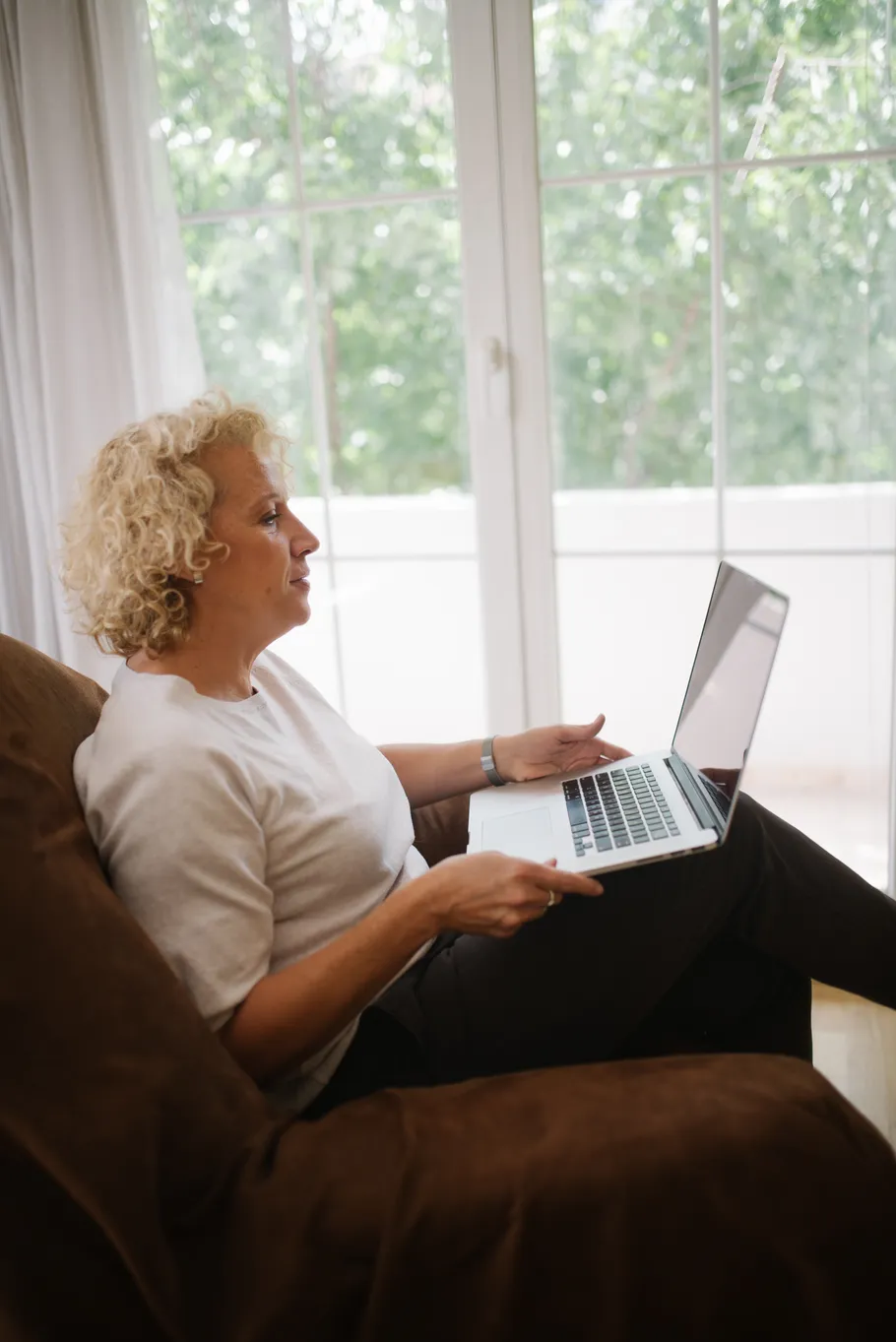
The Cubii Go is the portable pick, and it is the only unit here built around moving: a retractable, telescoping handle and built-in wheels, so it rolls like a small suitcase instead of being carried. Add an illuminated LCD, a chair wheel holder that keeps a rolling chair in place, and a Zero-Gravity flywheel, and the Go is the unit for anyone whose strider must disappear after every session. 🧳
Portability has a price, and here it is the stride: 6 inches, the shortest here. A short stride is not a failed stride — it is a gentle, compact motion that suits an armchair and a small room — but a buyer who wants the JR1’s long, reaching stride will feel the difference in the first minute.
Three flags stay open. First, the resistance levels conflict: the Amazon listing gives 10 levels while the owner’s manual gives 8 — the table states both and settles neither. Second, the weight records span four figures: 23.9 lb in the manual, 21.8 lb on Amazon, 19.4 lb in a retailer record, and “less than 20 lb” in marketing — the table leads with the manual figure. Third, the dimensions conflict too: 24.5 by 17.2 by 9 inches in the manual against 23.5 by 17.5 by 10 inches on Amazon. Capacity reads 300 lb in the manual and on Amazon against 250 lb in a Q&A record. And do not confuse the Go with the Cubii Total Body, which is the Go with resistance bands added.
✅ Pros
- Only retractable-handle and built-in-wheels unit here
- Illuminated LCD and chair wheel holder included
- Zero-Gravity flywheel for a smooth, quiet stride
⚠️ Cons
- Shortest stride here at 6 inches
- Resistance levels disputed — 10 on the listing against 8 in the manual
- Weight records span 19.4 to 23.9 lb across four sources
Listing check: no confident listing code was verified for this unit, so the link above is a tagged search — confirm the Go model, the retractable handle and built-in wheels, and the level count on the listing itself before ordering, and do not confuse it with the Cubii Total Body with bands.
Best for: anyone who stores the unit after every session or moves it between rooms.
May not fit: buyers who want a long stride, or a single settled weight and level figure.
Niceday 3606

The Niceday 3606 is the foot-controlled pick, and its lever is the whole argument: a foot-operated resistance lever that lets you change levels with your foot, without bending down to reach a dial. For anyone with a stiff back, stiff knees, or a desk too low to reach under comfortably, that lever turns a two-hand interruption into a non-event. It offers 8 magnetic levels, a 22.83 by 15.75 by 10.82-inch footprint, a 27.6 lb unit weight, an 8-inch stride, and a listing that describes Bluetooth. 🦶
The stride sits in the useful middle of this guide: at 8 inches it beats the Sunny’s 7 and the Go’s 6, while staying well short of the JR1’s and the Ellipse’s 18-inch maximums. It is a compact, honest stride for a desk — not a gym stride, and not pretending to be one.
Three flags stay open. First, the capacity is a three-way conflict: Amazon gives 300 lb, one review gives 200 lb, and another review argues there is no weight restriction at all for seated use — three positions, and this guide settles none of them, so work to the lowest figure, 200 lb. Second, at 27.6 lb this is the second-heaviest settled weight here, behind only the Ellipse’s disputed manual figure — the foot lever saves bending, not carrying. Third, similar model numbers hide different machines: the Niceday 3611 runs 16 levels at 400 lb, and the Niceday 3613L is a 2-in-1 seated and standing unit with felt resistance and bands included — neither is the 3606.
✅ Pros
- Only foot-controlled resistance here — no bending to change levels
- 8 magnetic levels with an 8-inch stride, above the Sunny and Go
- Foot lever keeps both hands on the work while adjusting
⚠️ Cons
- Capacity three-way dispute — 300 lb, 200 lb and no restriction all circulate
- Second-heaviest settled weight here at 27.6 lb
- Similar model numbers hide different machines — 3611 and 3613L
Listing check: no confident listing code was verified for this unit, so the link above is a tagged search — confirm the 3606 model, the foot-operated lever and the 8 magnetic levels on the listing itself before ordering, and do not confuse it with the 3611 or the 3613L.
Best for: anyone with a bad back or stiff knees who hates bending to reach a dial.
May not fit: buyers who need one settled capacity figure, or anyone who must carry 27.6 lb often.
How to Choose

Four decisions cover almost every under-desk elliptical purchase: type, fit, resistance and storage. Answer them in that order and the right unit usually picks itself. 🔧
Striding is the workout; recovery is the other half. After a long striding session, our foam rollers guide covers the rollers that loosen legs that have been moving all day.
Choose Your Type
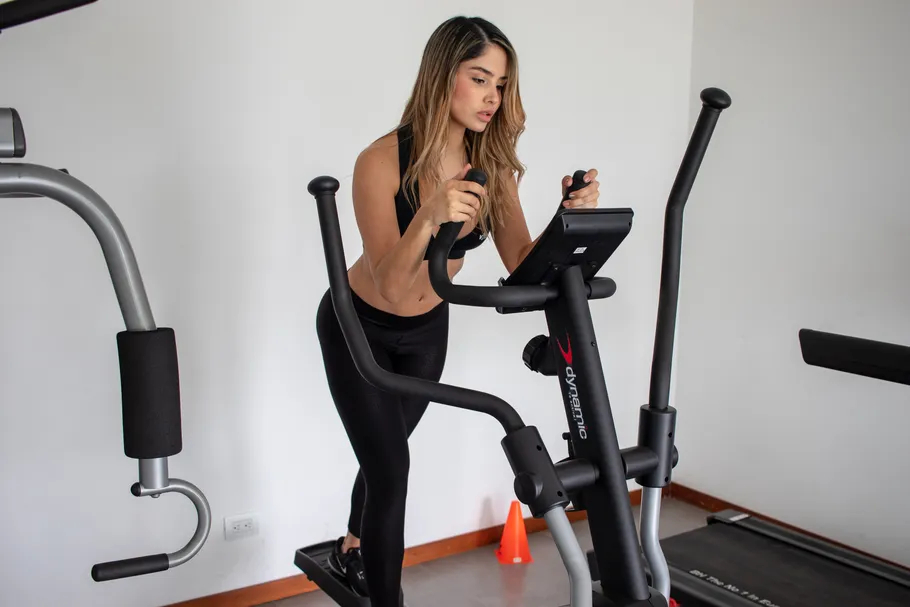
Type is decided by motion, and motion here means the shape your feet trace. Elliptical-motion units move your feet in an oval: forward and back with a small rise and fall, the same shape as the gym machine in the figure above, shrunk to fit under a desk. Crank-cycle pedal bikes move feet in circles instead, and walking pads move them in a walking gait — our walking pads guide covers pads that walk while you work, which is a different motion from striding.
The second type decision is power. Every pick here is self-powered: your legs drive the stride, and stopping is as simple as stopping. Motorized units that move your legs for you are a different category — a passive machine, not an exercise tool — and they are not in this guide, whatever their listings claim about “exercise”.
Choose Your Fit
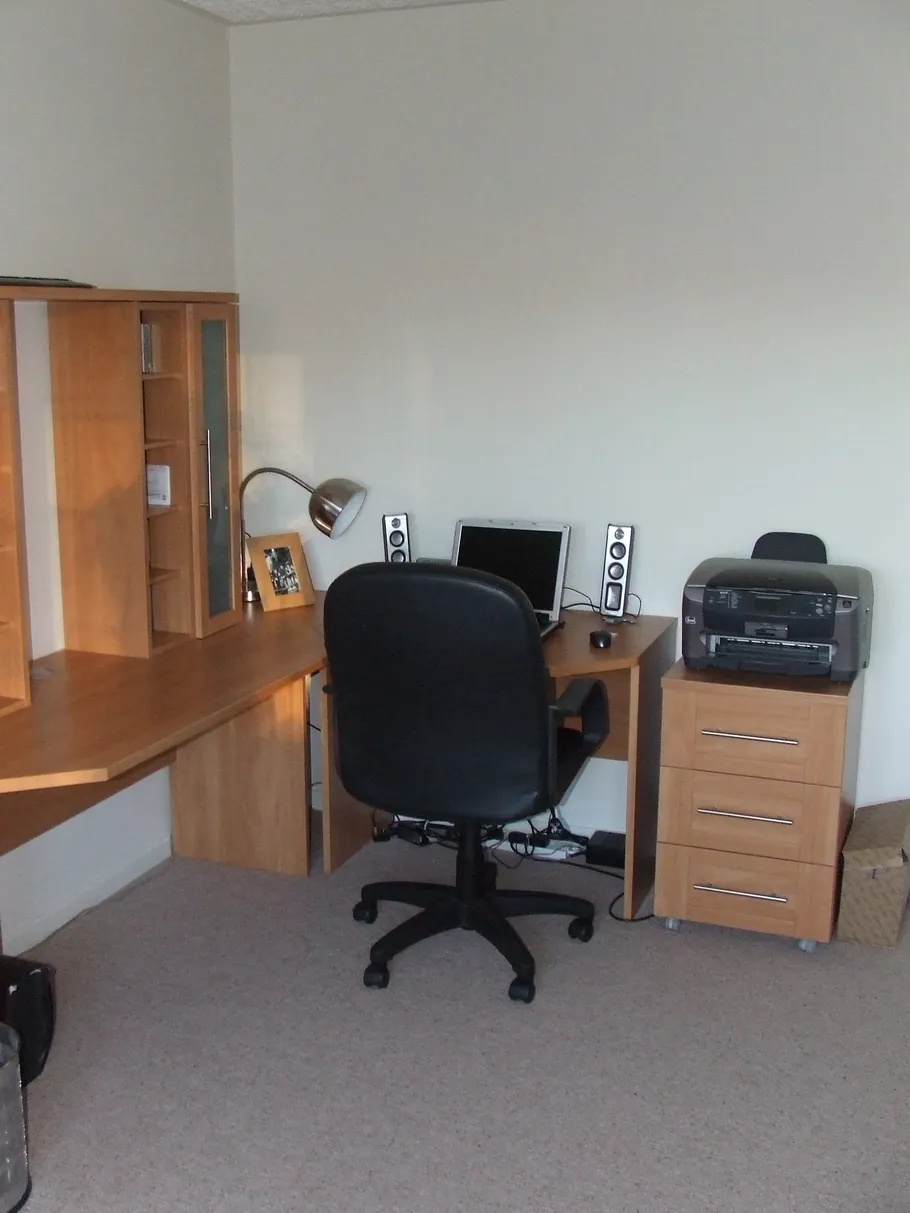
Fit is decided by three measurements, taken before ordering. First, the footprint: the unit’s length and width against the floor space under your desk — the Ellipse’s footprint records alone span three different figures, so measure against the largest one. Second, your chair’s travel: a chair on wheels rolls, and a striding motion pushes it — the JR2’s wheel stopper and the Go’s chair wheel holder exist for exactly this reason, and a chair that does not roll avoids the question entirely. Third, desk clearance above your knees: the Ellipse fits desks as low as 24 inches, but your knees rise through the stride arc, so clearance above the knee matters more than the unit’s own height — and the JR1’s 18-inch maximum stride needs more knee room than the Go’s 6-inch stride.
Chair height is part of fit too. A low sofa or armchair changes the ankle angle and the reach to the pedals; the Go’s armchair figure in its section shows the posture, and the JR2’s foot straps help when the chair is too low to keep feet planted. If your chair is very low, try the motion in a shop or borrow a unit first — no spec sheet captures a chair that does not suit your legs.
Choose Your Resistance

Resistance is decided by how you change it, not by the number on the dial. Most units here hide a dial low on the body: the JR1’s manual dial, the Ellipse’s and the Sunny’s magnetic dials. The Niceday breaks the pattern with a foot lever, so levels change without bending and without stopping work. The Go’s level count is disputed — 10 on the listing against 8 in the manual — and its resistance type is not settled in the records checked, so this guide claims neither figure for it beyond the dispute itself.
More levels is not more workout. Eight levels is the standard here — five of the six picks carry 8 — and the difference between level 4 and level 5 matters less than the habit of striding daily. Start at the lowest level for the first week, add a level when the current one feels easy, and treat any listing that promises a “workout” at a numbered level as marketing, not measurement.
Choose Your Storage
Storage splits this guide into three kinds of tool. The heaviest units — the Ellipse at its 30.1 lb manual figure and the Niceday at 27.6 lb — live under the desk permanently, because moving them daily is a chore. The Go rolls into a closet on its wheels and handle. The lightest units — the JR2 at about 19 lb and the JR1 at 25.4 lb — lean against a wall or tuck beside a desk. Measure the parking spot before ordering, because a unit that does not fit its storage spot lives in the middle of the floor instead.
Weight matters for storage twice over. Carrying a unit to the desk is one lift; moving it for cleaning, or to reclaim the room for guests, is a lift you repeat. If the unit must disappear after every session, the Go’s wheels beat a lighter unit with no handle — and if it never moves, the heaviest unit’s weight is irrelevant and its stride is everything.
Safety
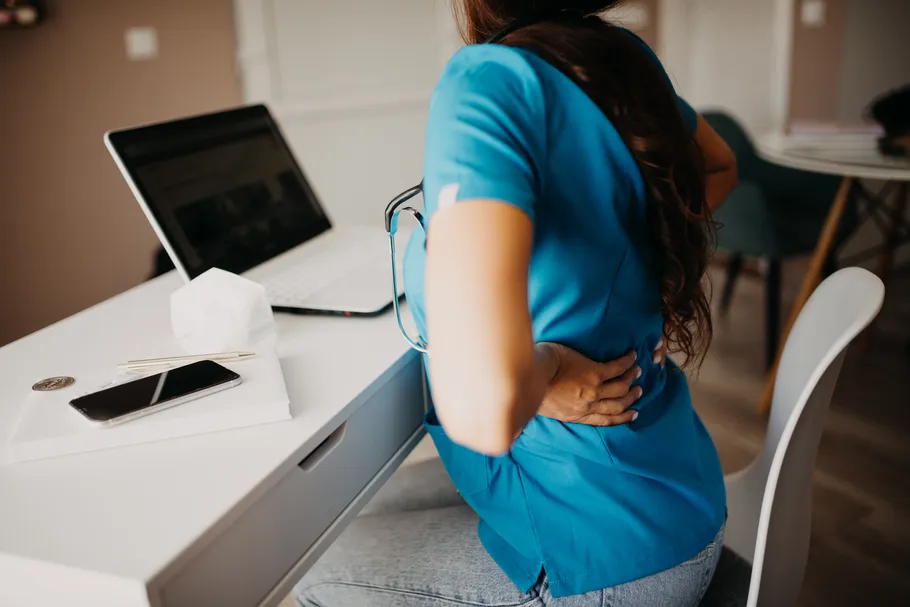
Under-desk ellipticals are gentle machines, but the legs they move are attached to a person sitting for hours, and a seated stride deserves the same clear-floor respect as any gym tool. A home gym’s safety basics start with the big equipment — our power racks guide covers racks that catch a failed lift — and the same clear-floor rule applies around a striding unit.
1. Set the unit on a flat, hard floor before every use, on its mat where one is included — a strider on a rug that bunches, or on an uneven floor, can slide under load.
2. Start at the lowest resistance for the first week — a new stride pattern on cold legs is how strains happen, and enthusiasm on day one is the usual cause.
3. Keep the chair still — use the wheel stopper or wheel holder where one is included, or a chair that does not roll, so the chair cannot shoot back mid-stride.
4. Keep cords, pets and small children clear of the moving pedals — a pedal that catches a cord or a paw stops suddenly, and the foot on it does not.
5. Stop if a knee, hip or back hurts — seated striding is low impact, not no impact, and pain is a stop signal, not a level to push through.
6. Check the unit after heavy use — look for loose pedals, worn foot straps on the JR2, a wobbling flywheel, or a foot lever that no longer clicks cleanly through its levels.
7. Never stand on an under-desk unit — these are seated striders, and standing on one is not its job; the 2-in-1 standing models in Also considered are different machines with different frames.
Safety note: this guide is general information, not medical advice. If you have a knee, hip or back problem, or any injury affecting movement, speak to a clinician or physiotherapist before starting a seated exercise routine.
Frequently Asked Questions
Do under-desk ellipticals actually do anything?
They add low-impact movement to hours that would otherwise be still. Striding through a workday beats sitting through it on every measure that matters — stiff legs, restless afternoons, the ache of eight seated hours — but it does not replace a workout. Treat the LCD’s stride and calorie figures as estimates, not measurements, and judge the unit on whether you still use it in month three.
Elliptical or pedal bike under the desk?
Elliptical motion moves your feet in an oval, with a small rise and fall; pedal bikes move them in circles. The oval suits people who want a walking-like stride without leaving the chair, while circles suit people who prefer a cycling feel. Knees usually decide: try both motions if you can, because no spec sheet captures which shape your knees prefer.
Will it fit under my desk?
Measure three things: the unit’s footprint against the floor space, your chair’s travel, and the clearance above your knees through the stride arc. The Ellipse fits desks as low as 24 inches of clearance, but knee clearance matters more than the unit’s own height — and the JR1’s 18-inch maximum stride needs more knee room than the Go’s 6-inch stride. Measure against the largest footprint record where the records conflict.
Are they noisy?
Magnetic and belt-drive units are the quietest designs here — the Ellipse, the Sunny and the Niceday on magnetic resistance, the Sunny on a belt drive. Manual mechanisms can click, and no maker decibel figure is settled for these six units, so treat “whisper-quiet” listing claims as marketing. A mat underneath damps what noise there is, and the unit’s own mechanism matters more than any claimed decibel number.
Can I use one from the sofa?
Yes — the Sunny’s sofa figure and the Go’s armchair figure in their sections show the posture, and sofa striding is a genuine second use for these units. Chair height and foot reach matter: a low sofa changes the ankle angle, and the JR2’s foot straps help keep feet on the pedals when the chair is too low to plant them firmly.
Where do I store it?
Park the heaviest units under the desk permanently, roll the Go into a closet on its wheels and handle, and lean the lightest units against a wall or beside the desk — measure the parking spot first, because a unit that does not fit its storage spot lives in the middle of the floor. A mat underneath protects the floor and damps noise, and our gym flooring guide covers mats and platforms for home gyms.
Our Pick: Start Here

Start with the Cubii JR1 if the longest stride matters most, the Cubii JR2 if the lightest carry matters most, the DeskCycle Ellipse if pedal variety matters most, the Sunny Health & Fitness SF-E3872 if the lowest cost matters most and you will check the exact model code, the Cubii Go if portability matters most and you accept the shortest stride, and the Niceday 3606 if foot-controlled resistance matters most and you will work to the lowest capacity figure.
As an Amazon Associate, this site earns from qualifying purchases made through links in this guide, at no extra cost to you. The Amazon links above are tagged search links, not direct product listings, because no confident listing code was verified for these units — always confirm the exact version, capacity and dimensions on the listing before ordering.
Specifications in this guide come from maker pages, listings, manuals and review records that frequently disagree, and every disagreement found is stated in the pick sections rather than averaged away. Capacity, dimensions, weight, stride and resistance-level figures in particular mix maker claims, review measurements and older records, so treat this guide as a comparison of published records, not as a substitute for the listing on the day of purchase.