

Strong abs are worth training for — just not for the reason most headlines claim. 💪
Ab exercises build the muscles of your midsection and help your core do its real job: keeping you stable, upright and strong in everyday movement.
What they do not reliably do on their own is reveal a six-pack. Visible abs mostly come down to overall body fat, which drops across the whole body, not just where you train.
That is not a reason to skip core work. It is a reason to train it honestly, for strength and stability, and to judge progress by how you move and feel — not by a mirror deadline. 🙂
What the research actually says
One well-known study put volunteers through six weeks of abdominal exercise. Their ab endurance improved, but their abdominal fat did not fall significantly compared with a control group.
Another study trained only one leg for 12 weeks. Fat loss showed up across the body, not preferentially in the trained leg.
The honest reading is modest: targeted training strengthens the muscle underneath, but it does not reliably melt the fat sitting on top of it. Overall eating, activity and sleep patterns matter far more for visible definition.
If you have back pain, a recent injury, or a medical condition, check with a clinician or qualified coach before starting crunch-style or twisting moves. Stop any exercise that causes sharp pain.
About this list — what changed and why
The 2024 version of this article listed eight exercises. This 2026 refresh keeps five of them, pictured below, and drops three.
Decline Crunch, Advanced Kettlebell Windmill and Ab Crunch Machine are no longer given their own sections. No verified free photo of a person actually performing each of those exact exercises could be found, and this refresh never illustrates an entry with a photo of a different exercise.
Oblique Crunch and Plate Twist are also folded away as standalone headings. Their rotation work is already covered here by the Bicycle Crunch and the Side Plank, which are pictured below.
Two pictured additions replace the dropped entries: the Forearm Plank and the Side Plank. Both train the core without spinal flexion, which makes them useful alternatives if crunches bother your back.
1. Crunch
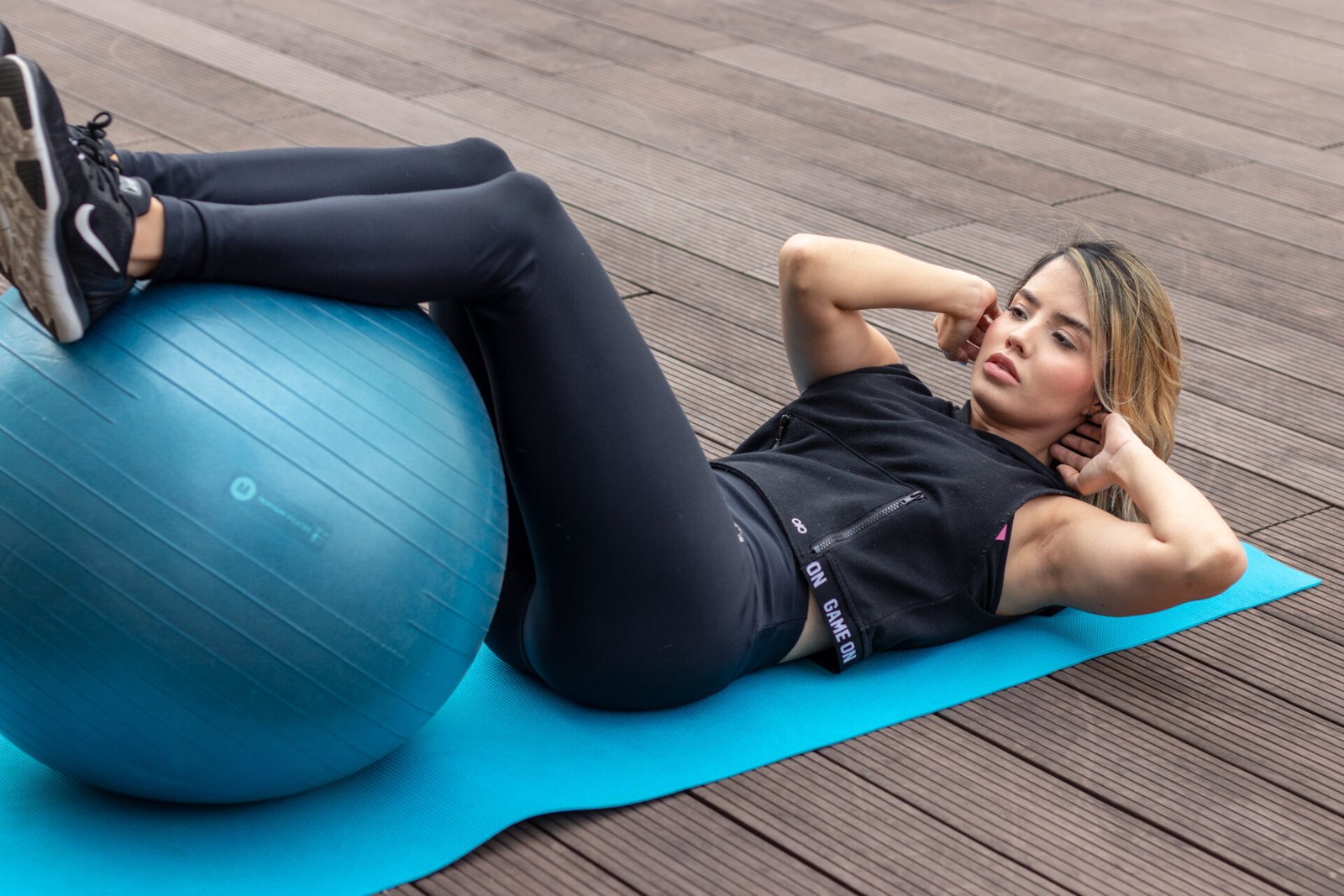
The crunch is the simplest place to start. It works the front abdominal wall through a small, controlled curl of the upper body.
Lie on your back with your knees bent. In the photo above, the feet rest on a stability ball — on the floor with feet flat works just as well.
Curl your head and shoulders a short way off the floor, thinking of bringing your ribs toward your hips. Keep your hands light behind your head and never yank on your neck.
Lower back down slowly. The benefit comes from control, not from rushing or from how high you sit up. 🎯
2. Bicycle Crunch
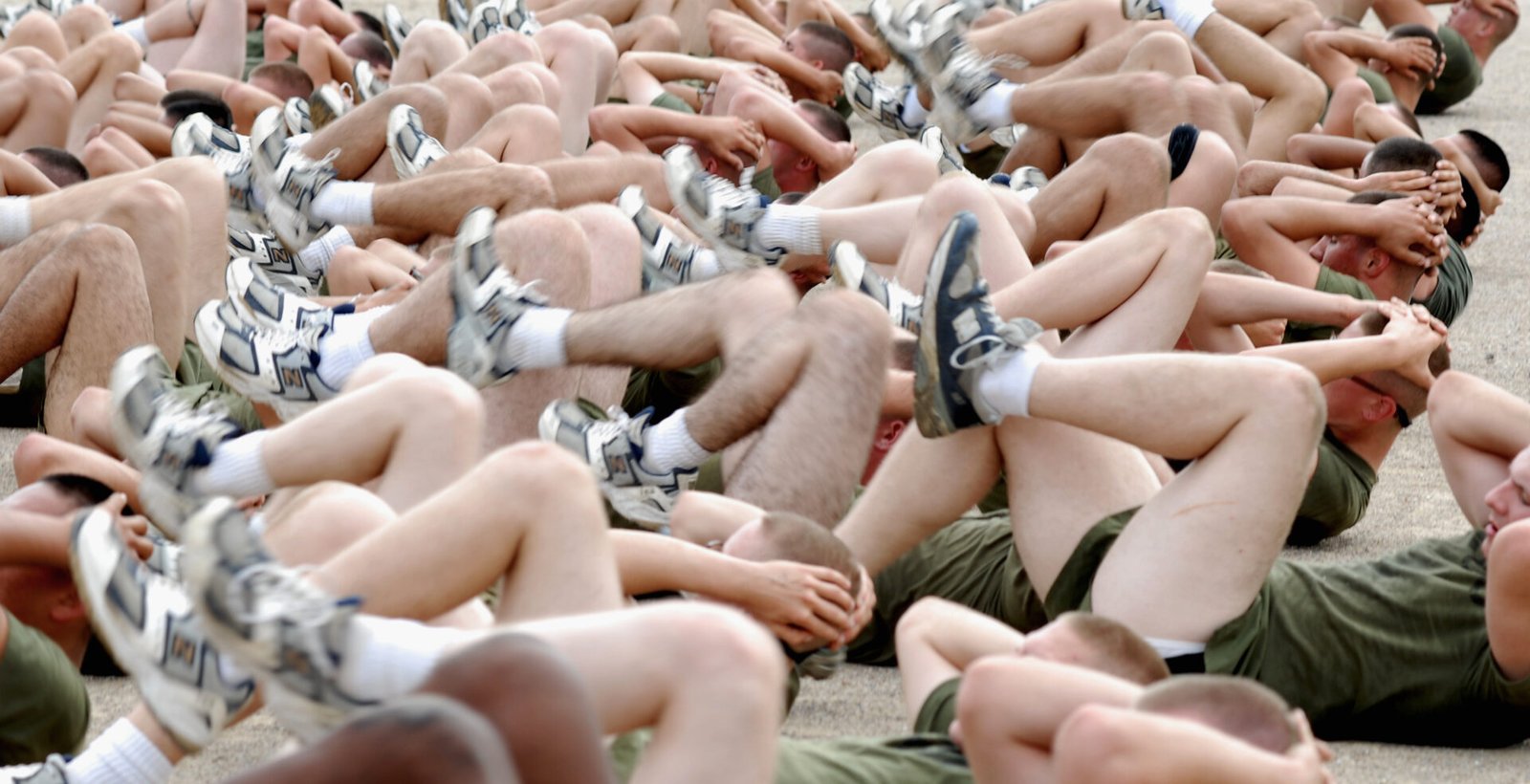
The bicycle crunch adds rotation to the basic crunch, so it works the obliques at the sides of your waist as well as the front abs.
Lie on your back with your hands lightly behind your head and your legs raised. Bring one elbow toward the opposite knee while the other leg extends, then switch sides in a smooth pedalling rhythm.
Keep your elbows wide and let the twist come from your torso, not from pulling your head forward. Slow and steady beats fast and sloppy here. 🚲
If the full pedalling version feels too much, keep one foot on the floor between sides and build up gradually.
3. Sit-Up
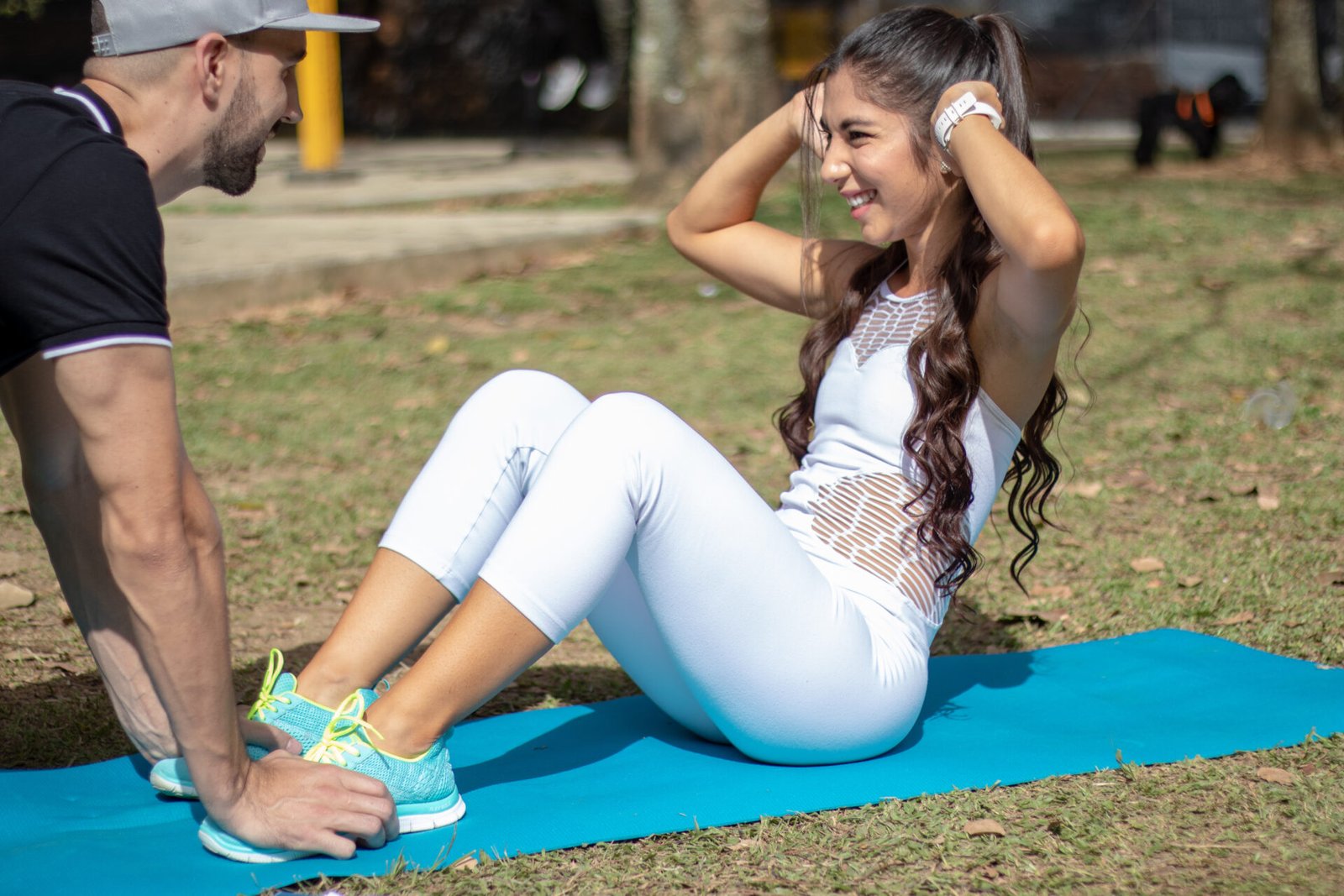
The sit-up takes the crunch further, lifting the whole torso upright. That longer range of motion brings the hip flexors in alongside the abs.
Lie on your back with your knees bent and feet anchored or flat on the floor. Sit all the way up in one smooth motion, then lower yourself back down under control.
Keep the movement slow on the way down — that is where a lot of the useful work happens. Avoid jerking up with momentum or rounding your lower back aggressively at the bottom.
Sit-ups are not for everyone. If they aggravate your back, the plank sections below are a kinder way to train the same area. ⚠️
4. Forearm Plank
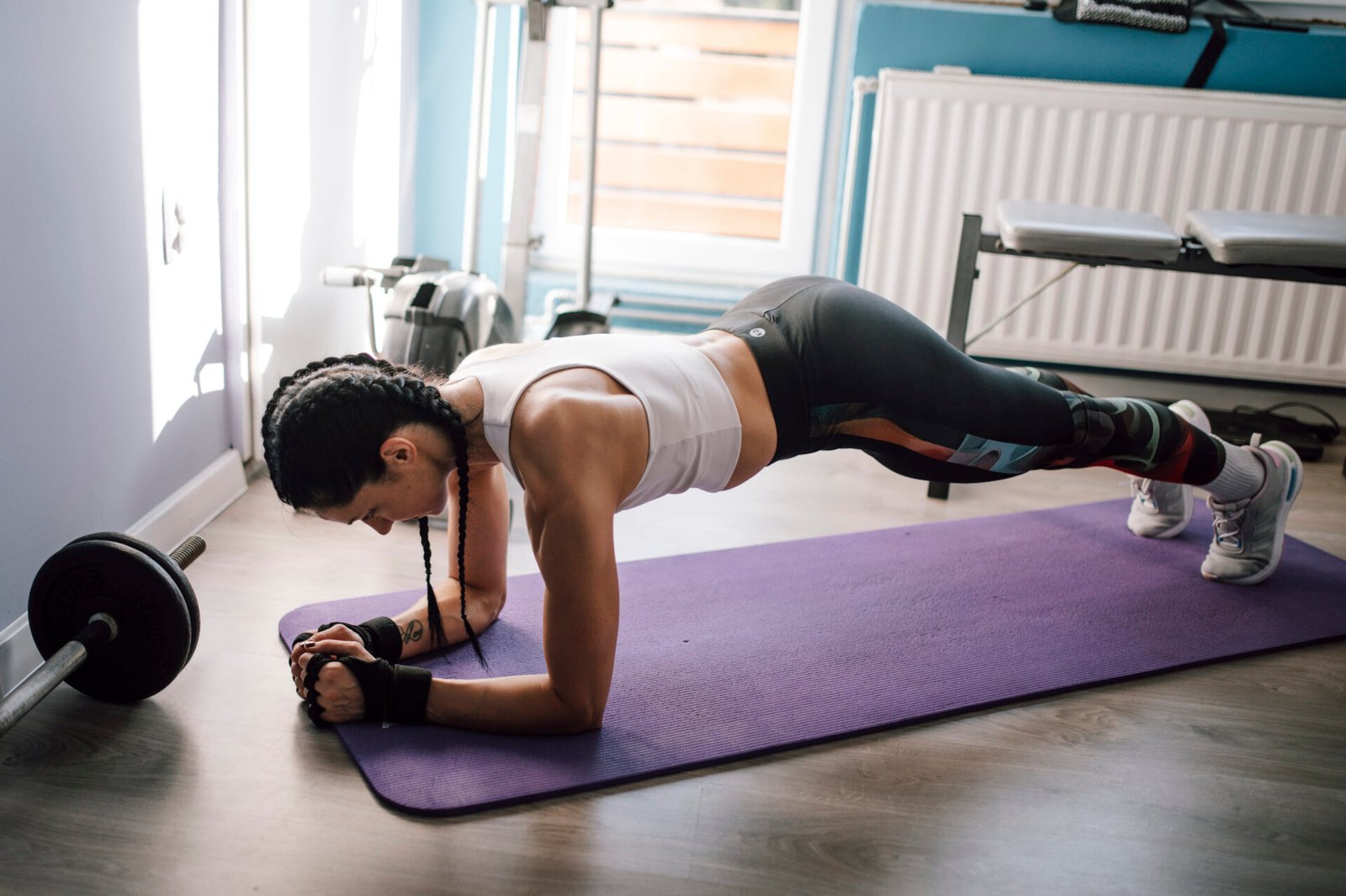
The plank trains your core the opposite way to a crunch: by holding still against gravity instead of curling forward.
Rest on your forearms and toes with your body in one straight line from head to heels. Squeeze your glutes gently, keep your ribs down, and breathe normally.
Watch for the two common faults: hips sagging toward the floor, or hips piked up high. Either one means the hold has gone past useful — reset, rest, and go again.
Short, clean holds with good form are worth far more than one long, sagging hold. For harder plank variations, see our plank progression guide. 🧱
5. Side Plank
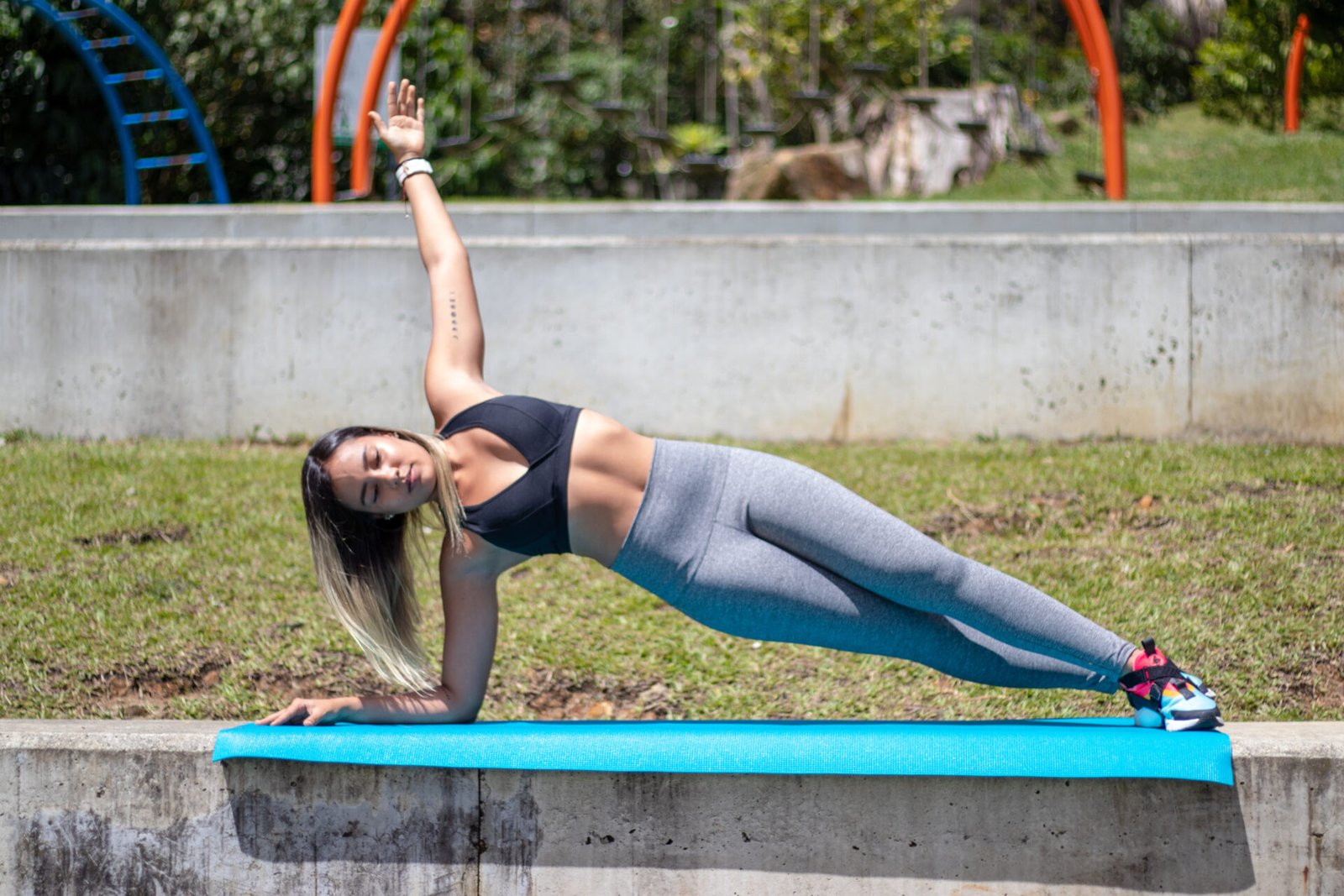
The side plank targets the obliques and the deep stabilisers along the side of your trunk — the muscles that keep you steady when you carry, reach or change direction.
Lie on your side, propped on one forearm with your elbow under your shoulder. Lift your hips so your body forms a straight line, and reach your top arm toward the sky if balance allows.
Do both sides, and keep the hold only as long as your hips stay level. Dropping a knee to the floor is a perfectly good easier version.
For more on the muscles worked here, see our oblique exercise guide. ↔️
How to use these five moves
Pick two or three of these exercises per session and practise them a few times a week alongside your normal strength training and walking or other cardio.
Judge a session by clean form and steady control, not by chasing a burn or a rep target. Progress slowly — a harder variation, a slightly longer clean hold, or a smoother sit-up all count.
Remember the honest headline of this whole article: these moves build a stronger core, and a stronger core is genuinely useful. Visible abs, if they come, come from overall body-fat reduction over time — not from any single exercise here.
For the wider picture on belly fat and training, see exercises that actually help with belly fat, ways to reduce belly fat without crash diets, and a fuller abs workout guide.
Frequently asked questions
Can I get visible abs just by doing crunches?
Almost certainly not on crunches alone. Crunches strengthen the abs, but visible definition depends mainly on overall body fat. Our full answer is here: can you get six-pack abs just doing crunches?
Why can I feel my abs getting stronger but not see them?
Because the muscle is developing underneath a layer of fat that only shrinks as your total body fat falls. Strength gains usually show up well before visible changes do.
Are crunches and sit-ups bad for your back?
They are not bad for everyone, but repeated spinal flexion can bother sensitive backs. If crunch-style moves hurt, switch to planks and side planks, and get advice from a clinician or qualified coach.
Do I need equipment for these exercises?
No. Every move above can be done with just a mat or a soft floor. The stability ball in two of the photos is optional, not required.
This article gives general fitness information only and is not medical advice. If you have a health condition, injury or concern, speak to a qualified professional before changing your training.