

Jay Cutler’s back was one of the calling cards of his career. 🏋️
Long after he left the stage, the four-time Mr. Olympia kept sharing how he trained it — and in July 2024 he walked fans through one full back session on his JayCutlerTV channel.
This article looks back at that session and its seven exercises, in the order Cutler performed them. It describes what he did and said — it is not a programme to copy, and it promises no particular result.
For context: Cutler won the Mr. Olympia in 2006, 2007, 2009 and 2010. He lost the title to Dexter Jackson in 2008, then won it back in 2009 — the first man to regain the title after losing it onstage.
A note on the pictures in this article: the featured image is Jay Cutler himself, photographed at the Arnold Classic in Columbus, Ohio, in 2016. The body photos show other gym-goers performing the pictured exercises — they are not Cutler, and their captions say so. Three of the seven exercises have their own pictured sections below. The other four are described inside those sections rather than given their own headings, because no verified free photo matched those exact exercises; a photo of a different exercise was not substituted for them.
Pulldowns: the wide-grip pulldown — and the reverse-grip opener
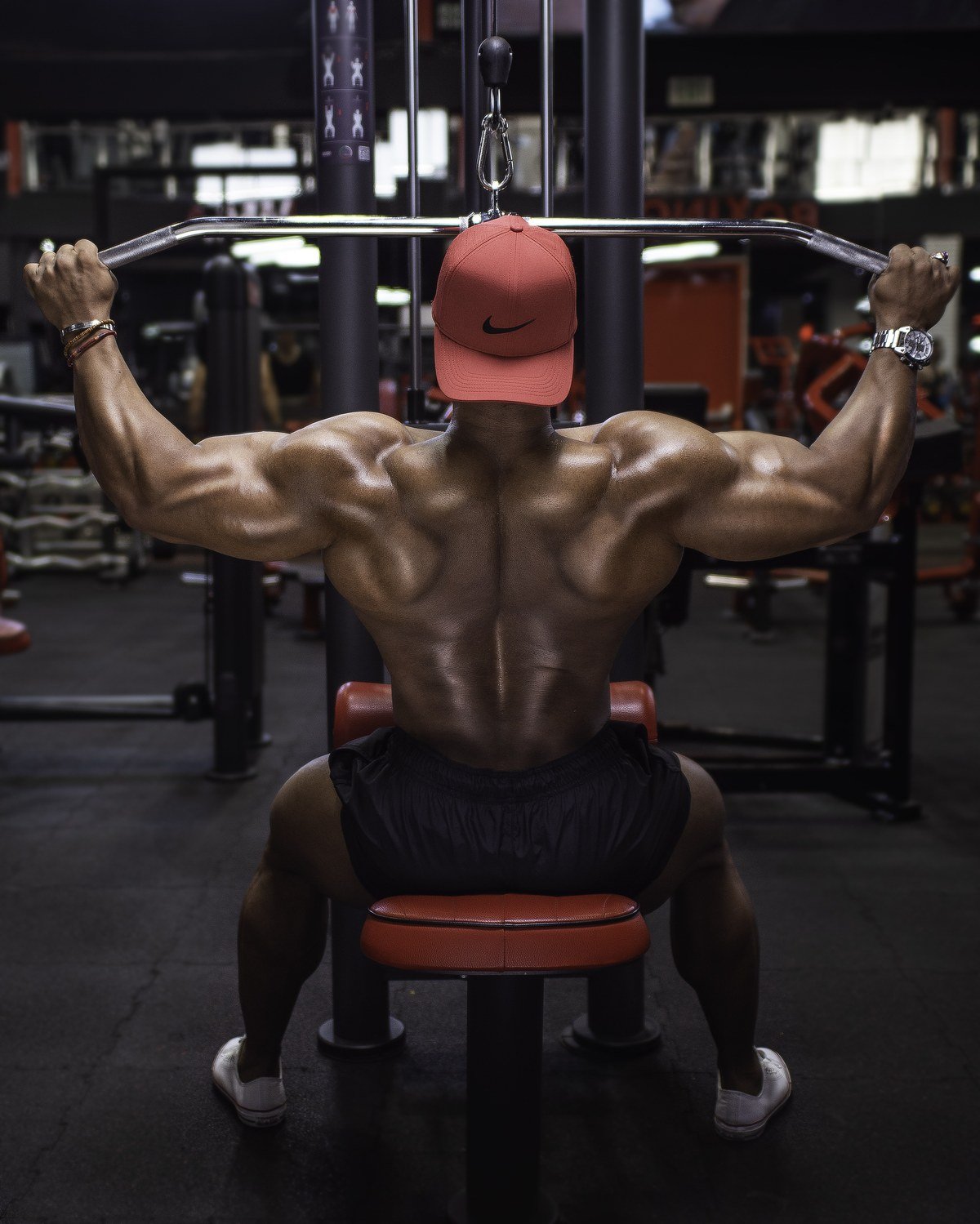
A wide-grip lat pulldown on a cable station — the same pulling pattern Cutler used on the Hammer Strength machine. Photo shows a gym-goer, not Jay Cutler. Photo: Abooyeah / Wikimedia Commons
The reverse-grip Hammer Strength pulldown — how the session opened. Cutler began with reverse-grip pulldowns, using lifting straps and hooking the handles so he could pull with his lats. 💪
He talked about the move in terms of posing: he pictured the front double biceps pose and wanted the lats to flare out for it. The pull, as he described it, worked the mid-back, the rhomboids and the lower lats depending on how it was pulled.
The Hammer Strength wide-grip pulldown — pictured above. Next came the wide-grip version, with Cutler gripping the handles at mid-range rather than at the very top.
He kept the seat high enough to get what he called “a full contraction on this” — his own short way of saying he wanted every rep finished properly, not cut short. In the filmed session he worked in the eight-to-ten range on this one.
The cable rope standing lat pulldown — the pullover-style finisher for the lats. Later in the session, Cutler stood at a high pulley with a rope attachment and pulled down toward his hips, in a motion he compared to a pullover.
His focus here was the lower lats, and he talked about feeling both the stretch and the contraction on every rep. In the session he worked around twelve reps on this move.
Rows: the machine row, the seated cable row — and the two free-weight rows
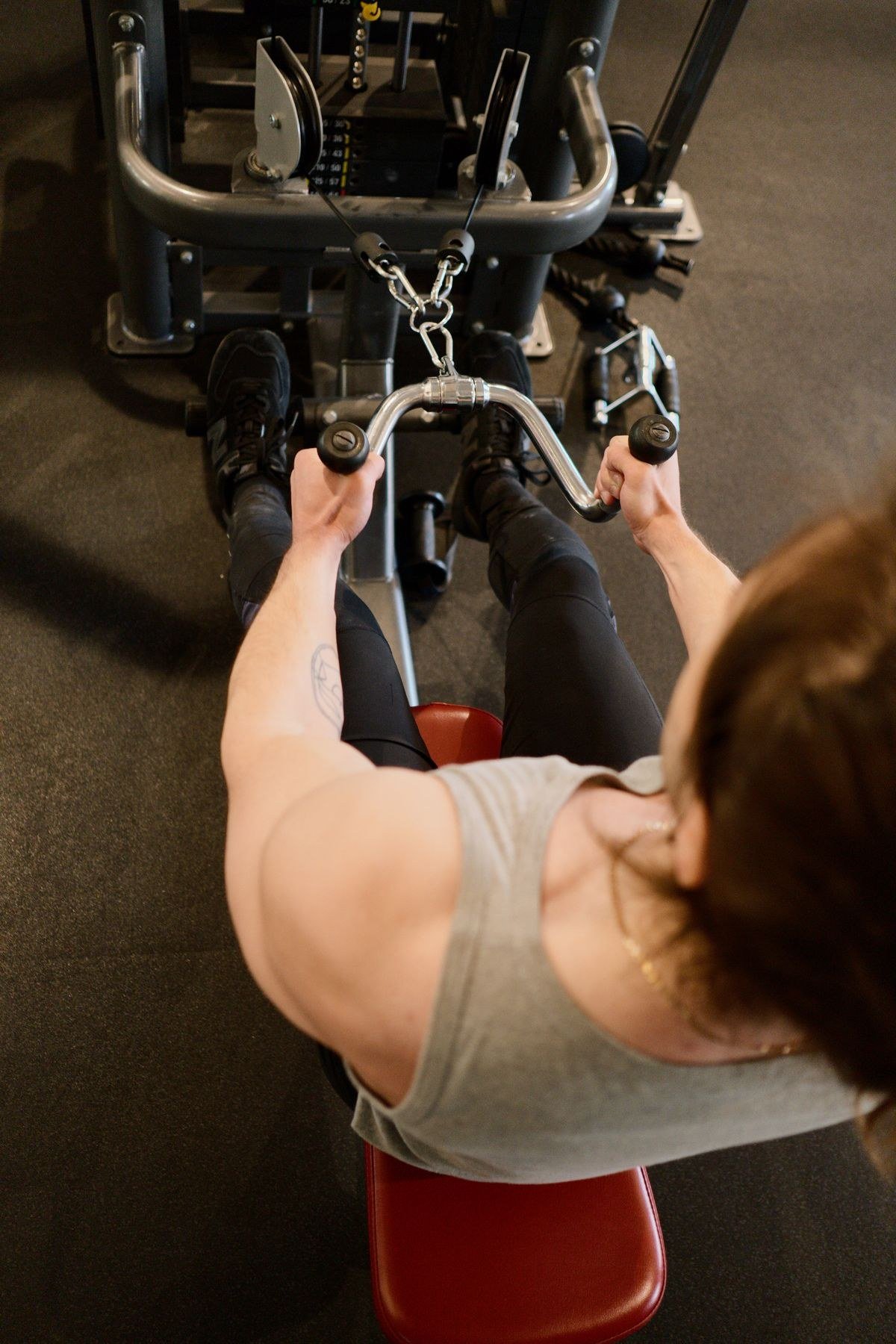
A seated row machine in use. Cutler performed his version one arm at a time on the Hammer Strength machine; this photo shows a cable seated-row station and a gym-goer, not Jay Cutler. Photo: Ivan S / Pexels
The Hammer Strength seated row machine — pictured above. Cutler worked this one arm at a time, holding the other handle steady while he rowed with one side. 🏋️
Again, the grip detail mattered to him: he grabbed the handle at mid-range, not too high, so the pull landed where he wanted it. In the filmed session he worked around ten to twelve reps per arm.
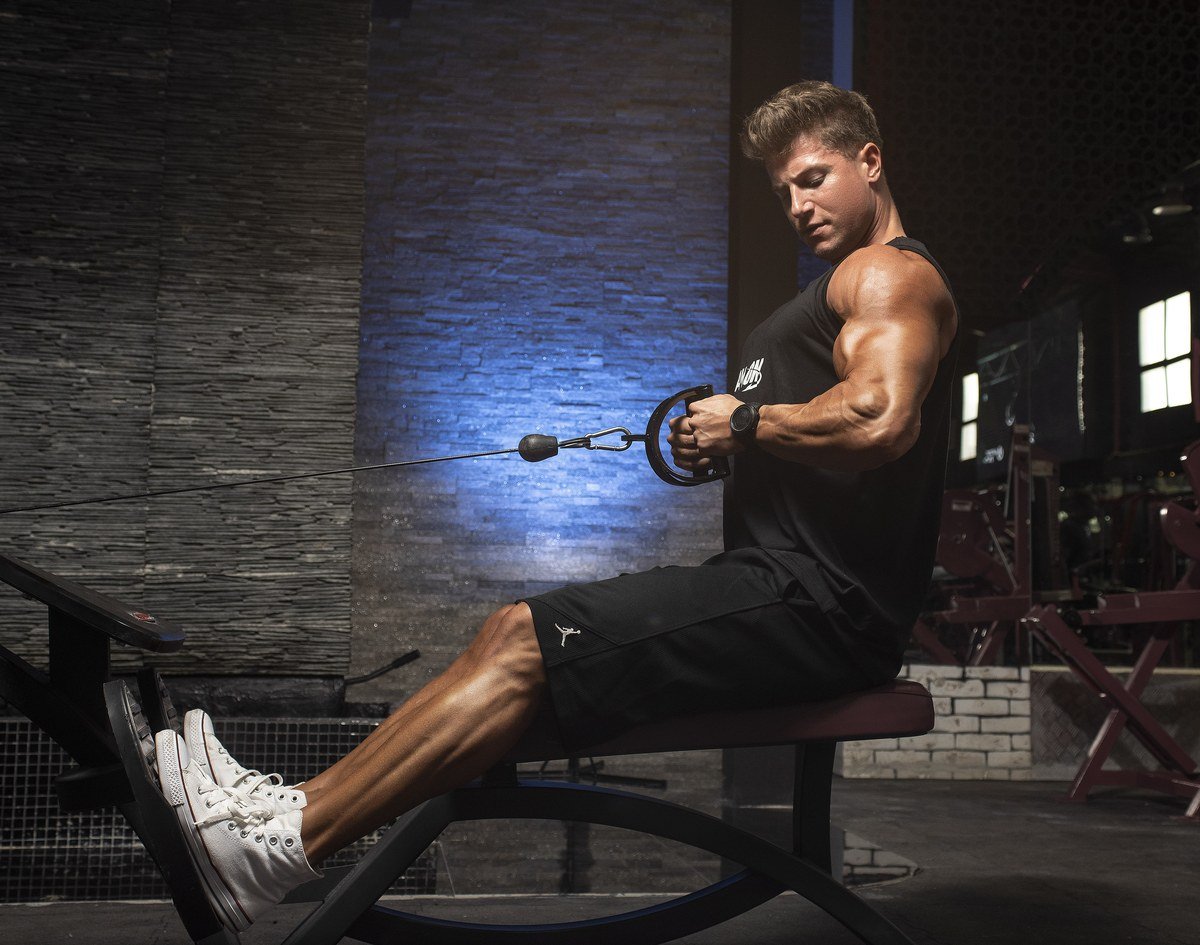
A seated cable row. Photo shows a gym-goer, not Jay Cutler. Photo: Abooyeah / Wikimedia Commons
The seated cable row — pictured above. Cutler called this a depth exercise, one that built front-to-back thickness, and said it was a staple he returned to again and again.
He had tried plenty of handles over the years, he said, but kept coming back to the closer handle for this one. His emphasis, as ever, was a controlled pace and a full contraction rather than rushing the weight.
The reverse-grip barbell row — the free-weight centrepiece. Midway through the session, Cutler switched to reverse-grip barbell rows with a shoulder-width grip.
He hooked his fingers over the bar and pulled it toward his lower stomach, keeping a solid foot base. In the filmed session he worked around ten reps here, with the lower lats and mid-back as the focus.
The reverse incline J dumbbell pull/row — the unusual finisher. The session’s most distinctive move came last: chest supported over an incline bench, Cutler rowed J-bells — a specialist dumbbell shape — with a reverse, palms-up finish. 🤔
He liked it because the bench took the rest of the body out of the movement and let the upper back do the work, with the palms turning upward at the end of each rep. It was, by his own description, something a little different from the rest of the session.
Cutler closed the session with twenty minutes on the treadmill — a cool-down note, not an eighth back exercise.
Why this session still gets talked about
What stands out is how consistent Cutler’s approach was across all seven moves. 🔑
Every exercise had the same hallmarks: a deliberate grip choice, a full contraction, and a clear picture in his mind of which part of the back was supposed to be working. That mind-muscle link was the thread running through the whole session.
It is also a useful reminder that Cutler’s back was built over decades, not one workout. The value of this session is in seeing how a champion thought about his training — not in treating seven exercises as a shortcut.
Frequently asked questions
When did Cutler demonstrate these seven exercises? In a back session published on his JayCutlerTV channel on July 30, 2024, when he was 51 and long retired from competition.
Are these the same exercises as Cutler’s other back guides on this site? No — this is one specific filmed session. His top three lat exercises are covered separately in our Jay Cutler lat guide, his training across every body part in our per-body-part guide, and his incline-row advice in our incline-row tips.
Who is Jay Cutler? The four-time Mr. Olympia (2006, 2007, 2009, 2010) — read his full story in our Jay Cutler biography.