

Jay Cutler did not build his back on one magic movement. 🏋️
But when he talked about back training in his social-media training content, one exercise kept coming up: the incline row, done face down on a bench, with the chest supported.
This refresh looks at what Cutler actually said about that movement — the stretch, the tight form, and the lighter-is-smarter point he kept returning to.
It describes his tips. It does not hand you his routine, and it promises no particular physique. General fitness information only — check form with a qualified coach before trying a new movement.
The champion behind the tip 🏆
Cutler won the Mr. Olympia title four times, in 2006, 2007, 2009 and 2010. He dethroned eight-time champion Ronnie Coleman in 2006, lost the title to Dexter Jackson in 2008, and won it back in 2009.
He was the first man to regain the title after losing it. He is no longer the only one: Derek Lunsford became the second when he reclaimed the title in 2025.
Before the Olympia run, Cutler won three straight Arnold Classic titles in Columbus, Ohio, in 2002, 2003 and 2004. His final Olympia appearance came in 2013.
That record matters here for one reason. When Cutler talked about back training after retirement, he was speaking as a former champion describing what had worked for him — not as a coach prescribing a plan for you.
The incline dumbbell row: Cutler’s tip, in brief 🎯
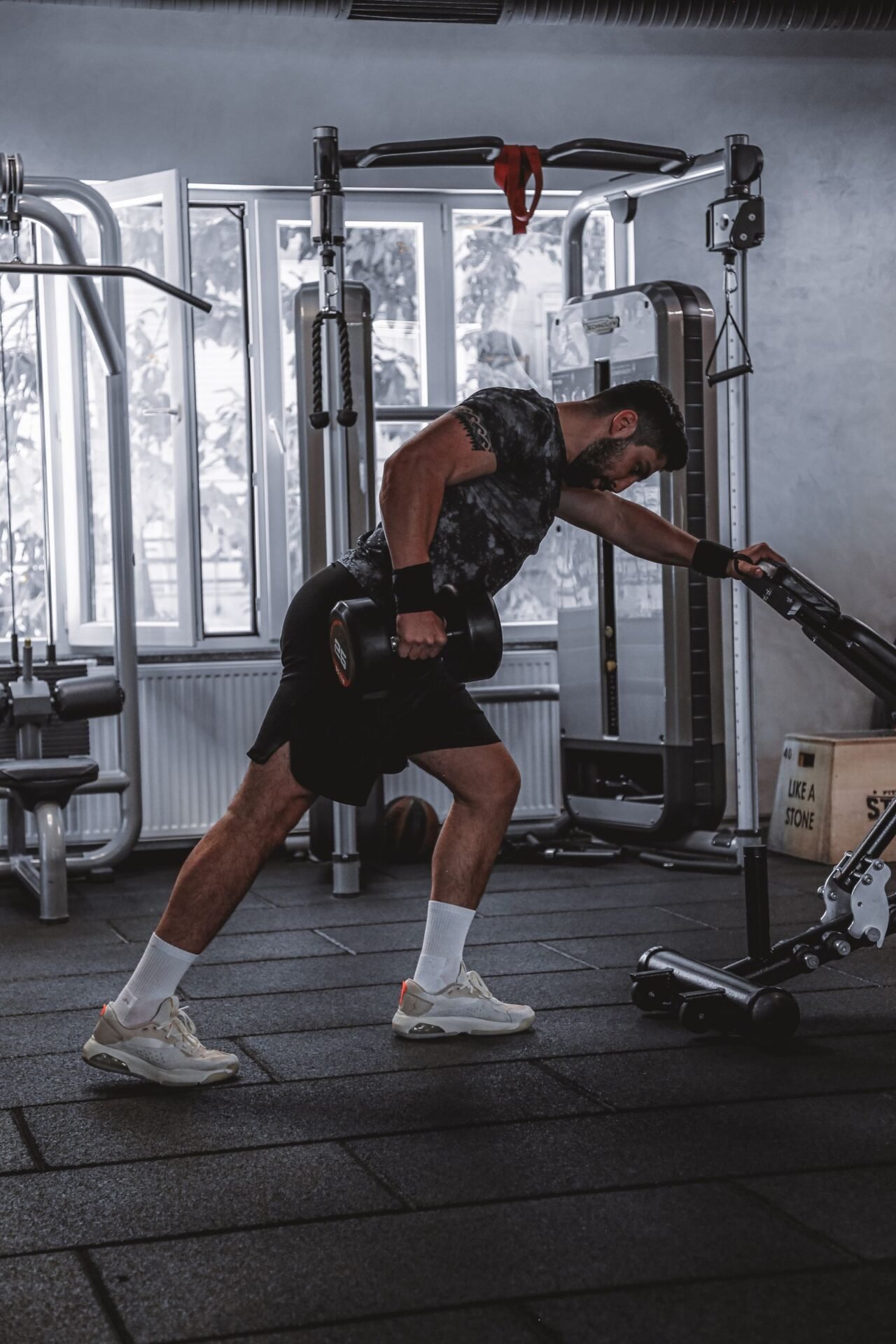
A note on the picture above, in plain terms: no verified freely licensed photo of the exact face-down incline row was found for this article, so the photo shows its closest supported cousin, a dumbbell row with one hand braced on a bench.
It is here to show the rowing shape, not to pretend it is Cutler on an incline bench. The movement Cutler described is set out in words below.
The incline row, as Cutler demonstrated it in a July 2024 reel, starts face down on an incline bench, chest supported, arms hanging straight down with a weight in each hand.
From there, the weights are rowed up toward the torso while the shoulder blades draw together, then lowered back under control. The bench takes the balancing work, so the back does the pulling.
Cutler’s own summary of why he liked it was simple: “I love working incline rows into my back routine as it allows me to focus on the lats while getting a great stretch, keeping the form tight, and allowing me to get a great pump without having to use a ton of weight.”
Three ideas sit inside that one sentence, and they are the whole tip. First, the target is the lats, the broad muscles down the sides of the back.
Second, the stretch at the bottom and the squeeze at the top matter more to him than the load on the bar. Third, tight form is the point of the exercise, not a bonus.
The chest-supported position is what makes that possible. With the torso held still by the bench, there is far less room to swing the weights up with momentum.
That is also why the old article’s claim that the position is “safer for those with lower back issues” has been softened here. A supported torso changes where the effort goes, but no exercise is automatically safe for a bad back — anyone with back trouble should get a clinician’s or coach’s view first.
The J-bell difference 🔔
Cutler’s preferred tool for the movement, where a gym had them, was the J-bell: a dumbbell-style weight with its handle in the middle rather than at one end.
His point was practical, not mystical. With a standard dumbbell, the plates can catch on the bench on the way up or down. With the handle in the middle, the hands travel in a straight line, which he described as piston-like.
He was clear, though, that the tool was optional. Standard dumbbells do the same movement, and he said so himself — the J-bell was a recommendation, not a requirement.
No photo of a J-bell is included here, because no verified freely licensed one was found. The description above stands on Cutler’s own explanation, not on a picture.
The seated cable row: the partner movement 🤝
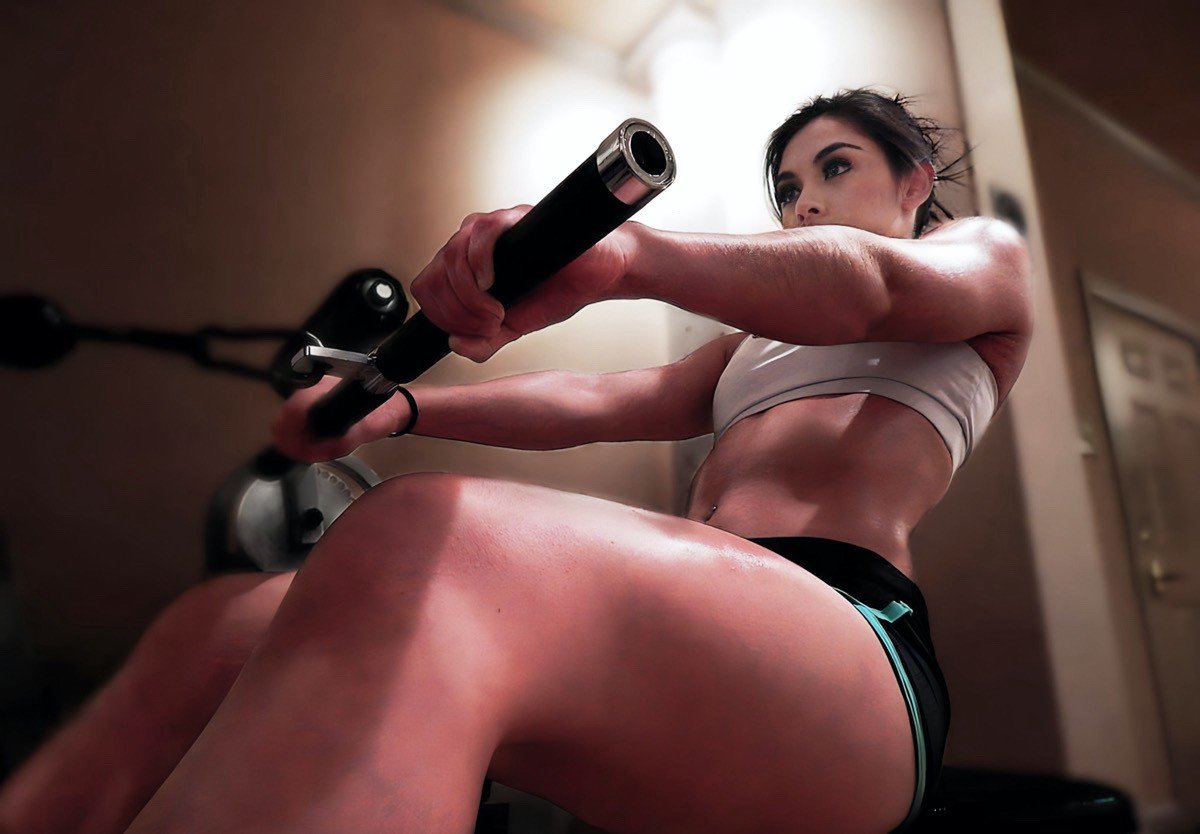
In a February 2024 back session filmed for his channel, Cutler paired the incline row with the seated cable row — the other half of the same idea.
Seated at the cable station, he pulled the handle toward his belly button, driving through his elbows and aiming the effort at the lower lats.
The pairing makes sense as a description of his approach. The incline row gives a supported, stretch-first row; the cable row gives a steady, seated pull with constant tension from the stack.
Neither movement is presented here as a prescription. They are the two rows Cutler himself put together in that session, described so readers can recognise them in a gym.
What the tips do not promise ⚠️
Cutler also talked, in general terms, about consistency and about training the whole back rather than one angle of it. That is sound advice as a habit, and it is all this article claims for it.
A wide back is not delivered by one exercise, and no article can promise one. Genetics, years of training, nutrition and recovery all sit outside anything a single tip can cover.
For Cutler’s other back picks in detail — including the pull-up and one-arm row work — see his top 3 lat exercises, refreshed in wave 55.
His one-exercise-per-body-part picks, where back is covered by pull-ups, are in the per-body-part guide, also refreshed in wave 55.
Frequently asked questions ❓
Who is Jay Cutler?
A four-time Mr. Olympia (2006, 2007, 2009, 2010) and three-time Arnold Classic winner (2002–2004, Columbus, Ohio), who stayed visible as a trainer and educator after his final Olympia in 2013.
What exactly is an incline row?
A row done lying face down on an incline bench, chest supported, pulling weights from arms-hanging straight up toward the torso. It is also called a chest-supported row.
Was Cutler really the first to regain the Olympia title?
Yes — the first, in 2009, after losing it in 2008. Derek Lunsford became only the second man to do it, in 2025. Cutler is never described in this article as the only man to regain it.
Do I need J-bells to do this?
No. Cutler recommended them where available, but said standard dumbbells work for the same movement. The bench and the controlled pull matter more than the brand of weight.
Is this article a workout plan?
No. It describes what Cutler said and demonstrated, in general terms, with no sets, reps or programme to follow. For a personal plan, speak to a qualified coach.
More from Cutler’s training 🏋️
For the full story behind the tips, see the Jay Cutler biography. For his dumbbell work beyond the back, see Jay Cutler’s top 3 dumbbell exercises.
General fitness information only. This article describes a public figure’s training comments; it is not medical advice and not a personal training programme. If you have a back condition, pain, or any health concern, speak to a clinician or qualified coach before trying a new exercise.