

Two champions. Two eras. Two completely different ideas about what hard training even means. 🏋️
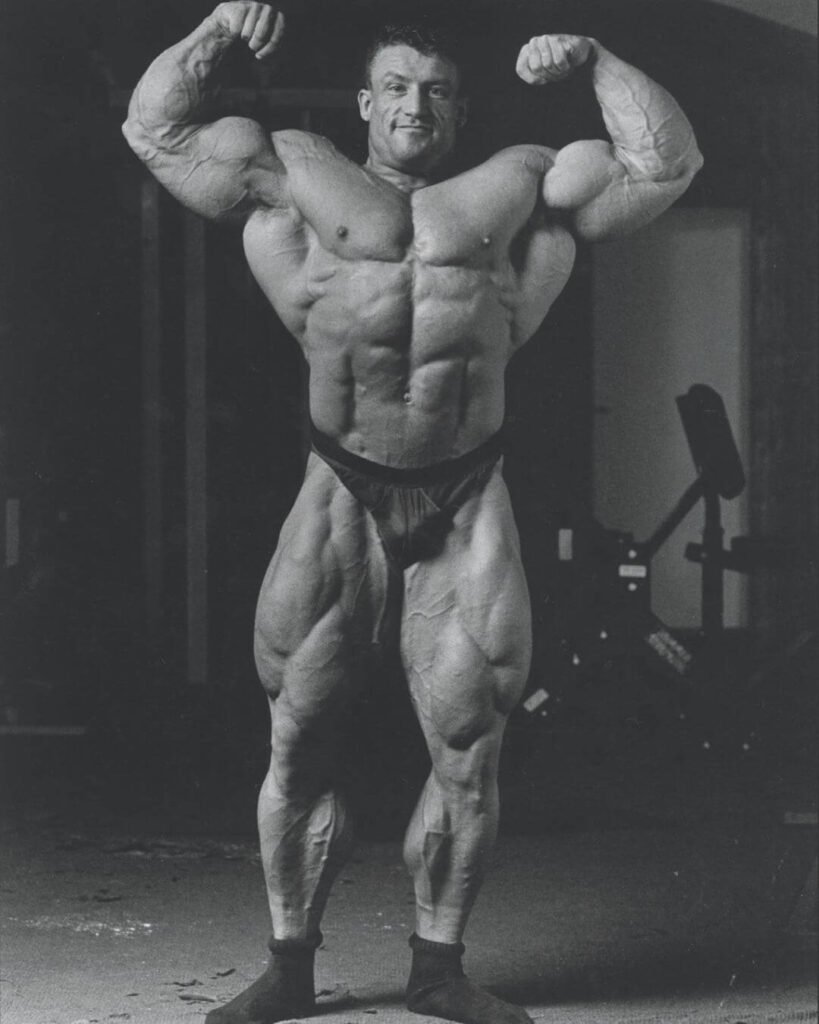
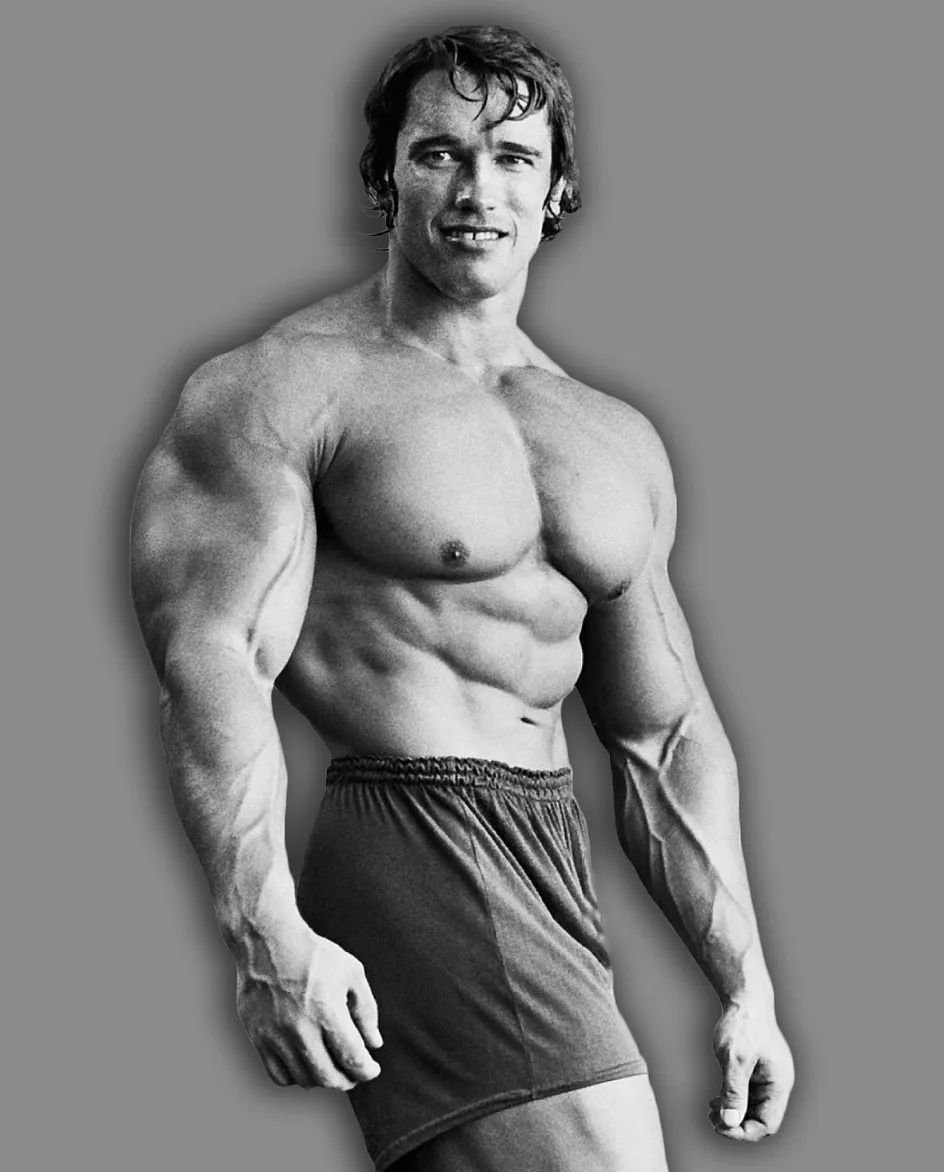
Arnold Schwarzenegger ruled the 1970s with volume, joy and showmanship. Dorian Yates ruled the 1990s with silence, density and almost frightening intensity.
They never stood on the same Olympia stage at their peaks. So this is not a contest with a winner. It is a look at how bodybuilding itself changed between their two reigns — and what each man believed training was for.
This is history, not a workout plan to copy. What follows describes how they trained in their own eras, in their own words and methods, without prescribing anything for the reader.
🏆 The Golden Era Way: Arnold’s High-Volume World
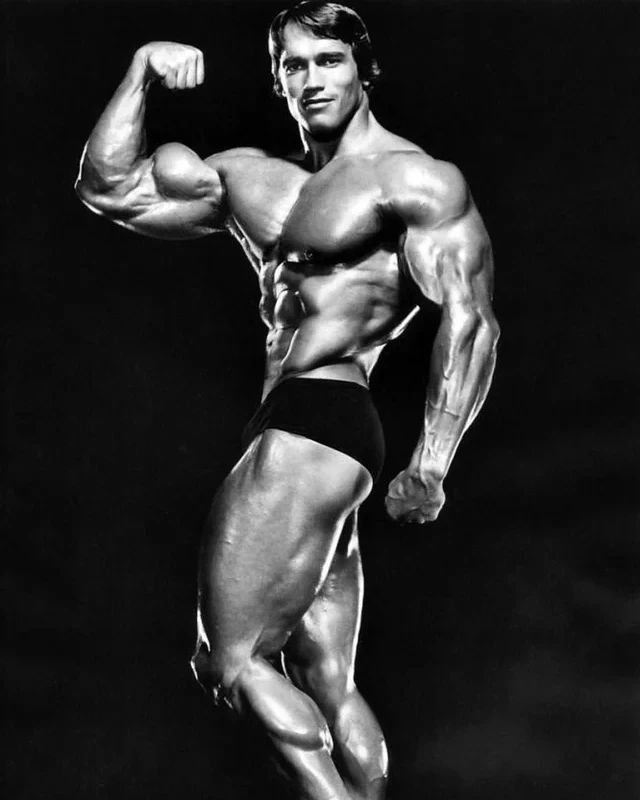
Arnold won seven Mr. Olympia titles: six in a row from 1970 to 1975, then a comeback win in 1980 after five years away from the stage.
His first Olympia attempt, in 1969, ended in defeat to Sergio Oliva. He never lost at the Olympia again — but that 1980 comeback remains one of the most debated results in the sport’s history, and this article presents it as contested, never as a clean win.
His training world was the sunlit gym culture of 1970s California. Sessions were long, frequent and full of variety, with each muscle worked from many angles and with many different exercises.
At his peak he famously trained twice a day, six days a week. The gym was not a chore to get through — it was the main event of his day, and he attacked it with visible enthusiasm.
The famous exercises linked to his era tell the story: bench presses for the chest, squats for the legs, barbell curls for the biceps, and wide-grip pull-ups for the wide back that gave him his celebrated V-taper.
Just as important was what happened in his head. Arnold spoke often about visualisation — picturing the finished physique and the win long before either existed — and about loving the work itself.
For a fuller account of his whole career, see Arnold Schwarzenegger’s biography and Arnold Schwarzenegger, the Austrian Oak who became Mr. Olympia.
🌑 The Shadow’s Way: Yates and Blood and Guts
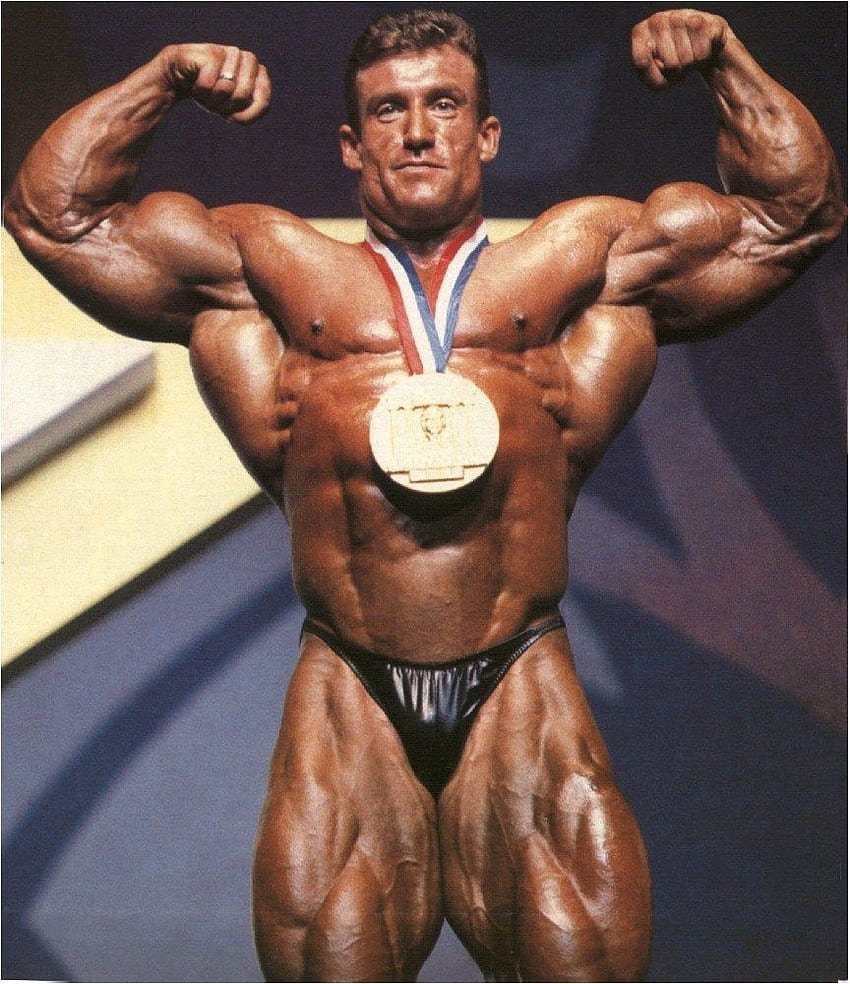
Dorian Yates, known as “The Shadow” for his low profile between contests, won six Mr. Olympia titles in a row, from 1992 to 1997. He never won eight — that record belongs to Lee Haney and Ronnie Coleman.
His road to the top ran straight through Haney. Yates finished runner-up to Haney at the 1991 Mr. Olympia, then took the crown the following year after Haney retired.
His method, “Blood and Guts”, was the opposite of Arnold’s in almost every way. Where Arnold piled on work, Yates stripped it away — short sessions built around a small number of brutally hard working sets, each pushed to the point where no further clean repetition was possible.
Forced repetitions, with a training partner helping past the sticking point, and long recovery between sessions were central to the idea. The belief was simple: intensity, not sheer amount of work, was the trigger — and recovery was where the body actually rebuilt.
The approach grew out of the high-intensity training ideas of Arthur Jones and Mike Mentzer, which Yates adapted through years of his own training into something distinctly his own.
Yates summed up the logic himself: “If you feel you can attempt a second set, then you couldn’t have been pulling out all the stops during the first set.”
His signature muscle group was his back, built with movements such as bent-over rows and deadlifts, while his chest and leg work leaned on heavy pressing movements. The result was a new kind of champion: denser, harder and more massive than anything the Olympia stage had seen before.
For Yates’s method in full detail, see Dorian Yates’ blueprint for maximum muscle growth.
⚖️ Side by Side: What Actually Differed
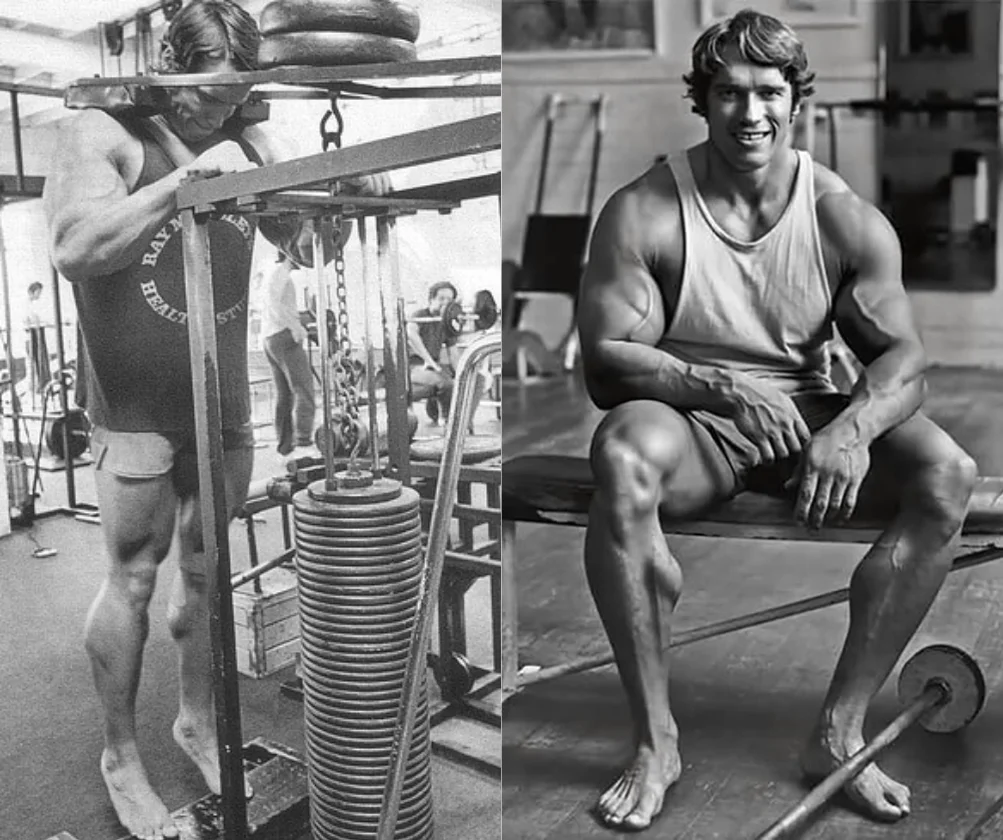
The clearest difference is time in the gym. Arnold’s era treated long, frequent sessions as the price of greatness. Yates treated long sessions as a sign that the hard sets had not been hard enough.
The second difference is variety. Arnold chased the muscle from every angle with many exercises. Yates chased maximum effort in a few chosen movements and then stopped.
The third difference is atmosphere. Arnold’s training was public, loud and joyful — a performance in itself. Yates trained quietly in his Birmingham gym, largely out of sight, and appeared at contests like a surprise.
Yet the two men shared more than the contrast suggests. Both kept meticulous track of their training, both believed progress came from beating what they had done before, and both treated the mental side of training as seriously as the physical side.
Their physiques also tell the story of the sport’s shift. Arnold’s ideal was balance, shape and a flowing, aesthetic silhouette. Yates’s ideal was density and conditioning pushed to a new extreme — the look that opened the mass era of the 1990s.
Yates’s 1993 Olympia showing is widely regarded as his peak year: bigger and sharper than his first win, and the performance that set the new standard for the decade. It is described here as widely regarded, not as an official fact, because “best ever” is a judgement, not a result.
🧠 Mindset: Visualisation vs Total Effort
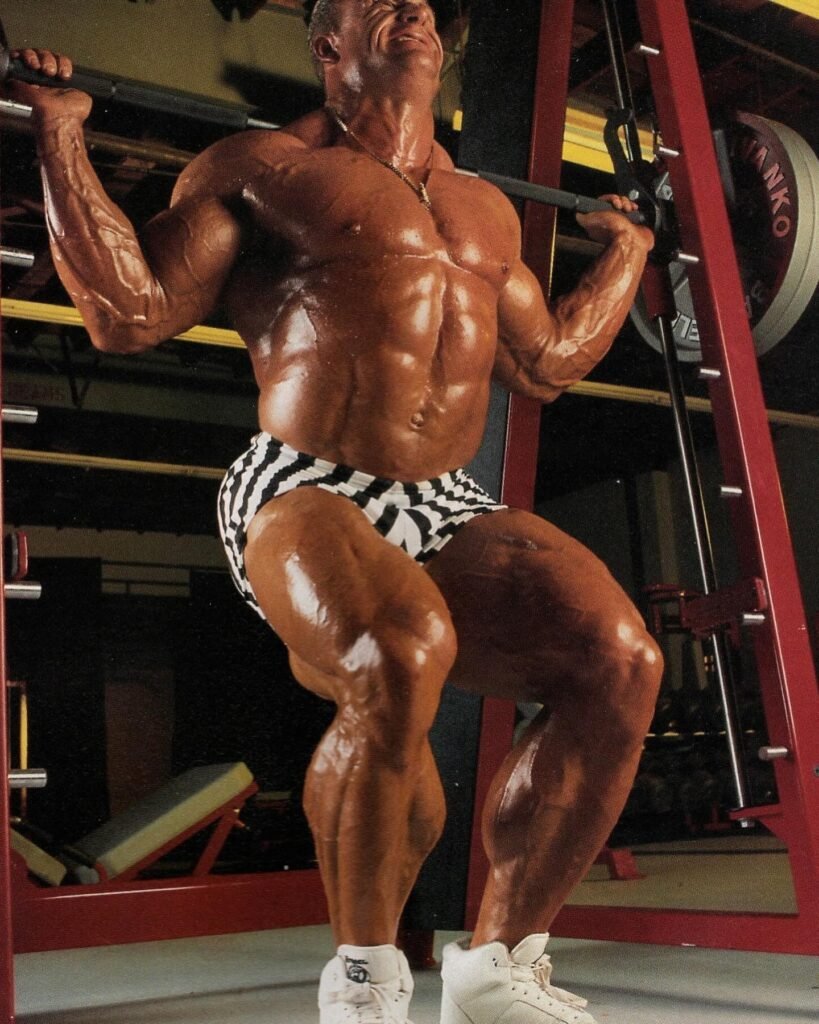
Arnold’s mindset was outward-looking. See the goal, love the process, outwork everyone, and let confidence do the rest. Visualisation was his way of staying hungry through months of grinding sessions.
Yates’s mindset was inward-looking. Shut out the noise, empty the tank on a handful of sets, and trust recovery to do its work. His discipline showed itself less in hours logged and more in refusing to leave anything in reserve.
Both men were famously stubborn about their own way. That stubbornness is part of why the comparison still fascinates fans: neither man hedged, and neither man’s method looked anything like the other’s.
Neither approach, it should be said, was gentle. Arnold’s volume demanded enormous time and appetite for work, while Yates’s intensity demanded a tolerance for discomfort that few training partners could match. Both careers also ended with the body paying a price — Yates retired after the 1997 Olympia carrying serious injuries, including a torn triceps suffered weeks before that final win.
🏛️ Legacies That Never Met on Stage
Arnold’s legacy runs far beyond the stage. His charisma carried bodybuilding into cinemas and living rooms, and the Arnold Classic, the event he co-founded, remains the sport’s second-biggest stage after the Olympia itself.
Yates’s legacy runs through the gym floor. His success made brief, brutally intense training a serious alternative to high volume, and his back remains the benchmark generations of bodybuilders measure themselves against.
Here is the honest ending to this comparison: there is no verdict to deliver. Arnold’s peak belonged to 1970–1975, Yates’s to 1992–1997, and the two peaks never shared a stage.
Judging them against each other would mean judging two different sports — the aesthetic Golden Era and the mass era that followed it — by one set of rules. Neither man competed under the other’s rules, and neither should be declared the winner of a contest that never happened.
What can be said is this: bodybuilding needed both of them. Arnold showed the world what the sport could look like. Yates showed it how far intensity could take it. Between them, they drew the map of modern bodybuilding. 🗺️
For where Yates’s story went after competition, see Dorian Yates now, and for Arnold’s training-era diet and protein story, see Arnold Schwarzenegger’s bodybuilding career and protein paradigm.
❓ Frequently Asked Questions
How many Mr. Olympia titles did Arnold Schwarzenegger win?
Seven: six in a row from 1970 to 1975, plus the contested comeback win in 1980.
How many Mr. Olympia titles did Dorian Yates win?
Six in a row, from 1992 to 1997. He finished second to Lee Haney in 1991 before taking the title.
What is “Blood and Guts” training?
Dorian Yates’s low-volume, high-intensity method: short sessions built around a small number of working sets taken to failure, often extended with forced repetitions, followed by generous recovery.
Did Arnold and Dorian ever compete against each other?
No. Their competitive peaks were nearly twenty years apart, so a head-to-head meeting at their best never happened.
Why is Arnold’s 1980 win described as contested?
Because many competitors and fans at the time believed his physique was below his earlier standard and below several rivals on the night, and several leading competitors boycotted the following year’s contest in protest. The title itself stands in the record books; the debate about it has never gone away.