

Why Air Bikes Belong in a Home Gym
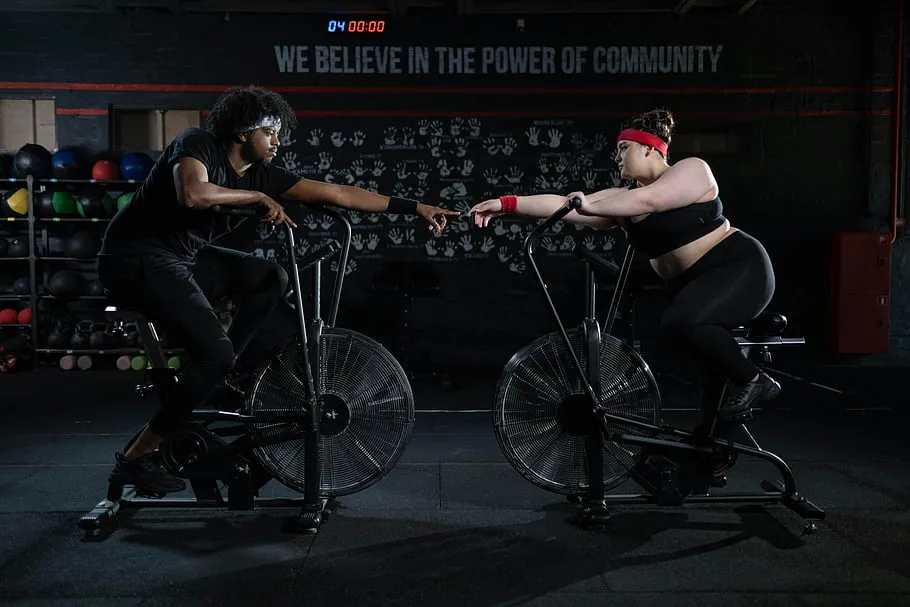
An air bike, also called a fan bike, is a stationary bike with a big fan wheel at the front and moving arms linked to the pedals. Push and pull the arms while you pedal, and the fan spins faster — the harder you work, the more air resistance pushes back, with no resistance knob to turn mid-interval.
For a home gym, the appeal is simple. One machine covers legs, arms and lungs in the same interval, it needs no rack and no spotter, and it fits a corner rather than a whole room. It will not replace a barbell or a walking pad, but it trains a kind of conditioning those tools miss — full-body effort that scales itself to whoever is riding.
If full-body intervals are the gap in your home gym, an air bike sits well alongside our Bulgarian bags and kettlebells guides — bags for rotational, shifting-load work, kettlebells for ballistic hips, and an air bike for the lung-burning middle ground between the two.
How We Picked

We scored each bike on the details that decide whether it actually gets ridden, not on fan size alone. A bike that is too long for your room, too heavy to move or too loud for your household is a bad buy at any size of fan.
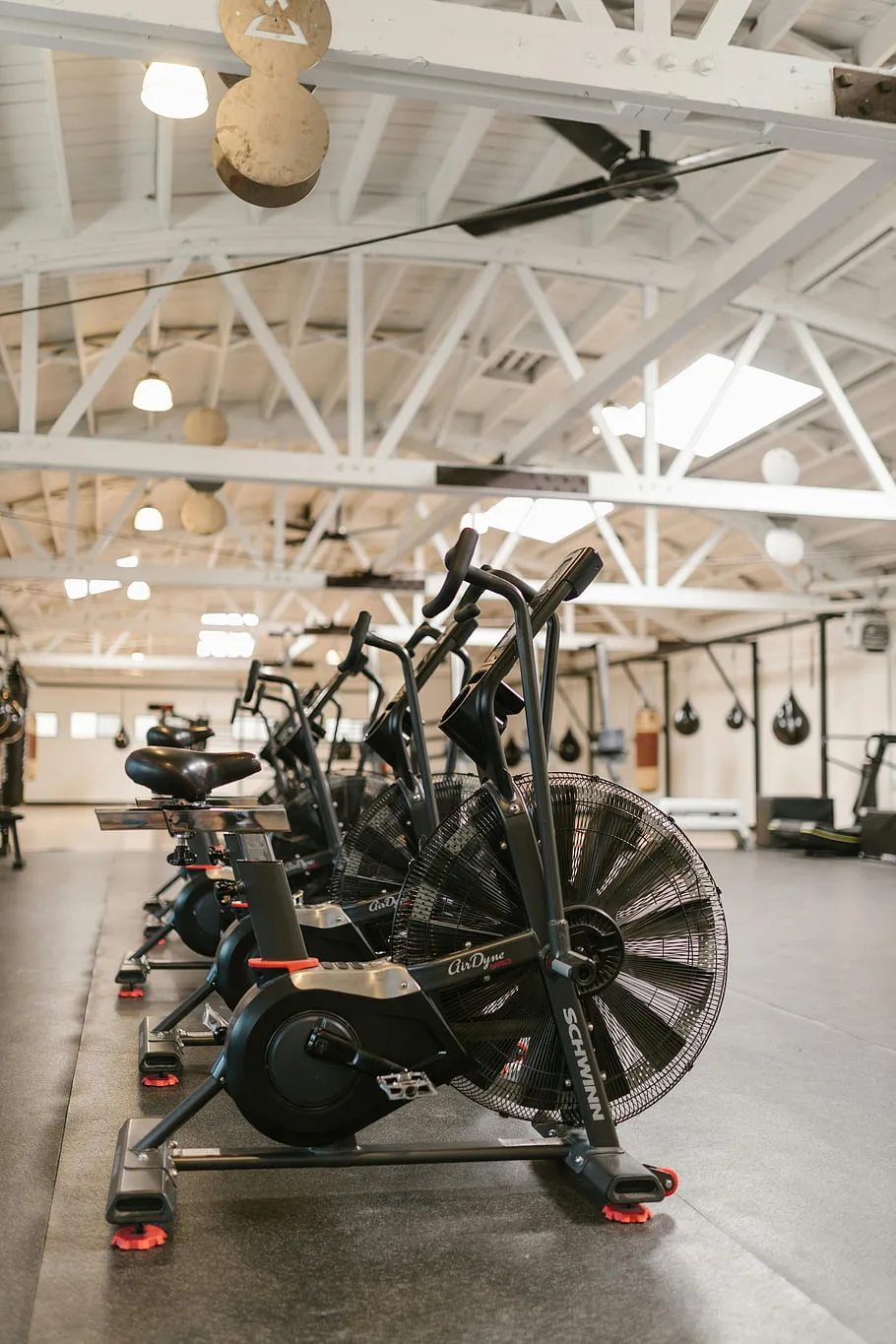
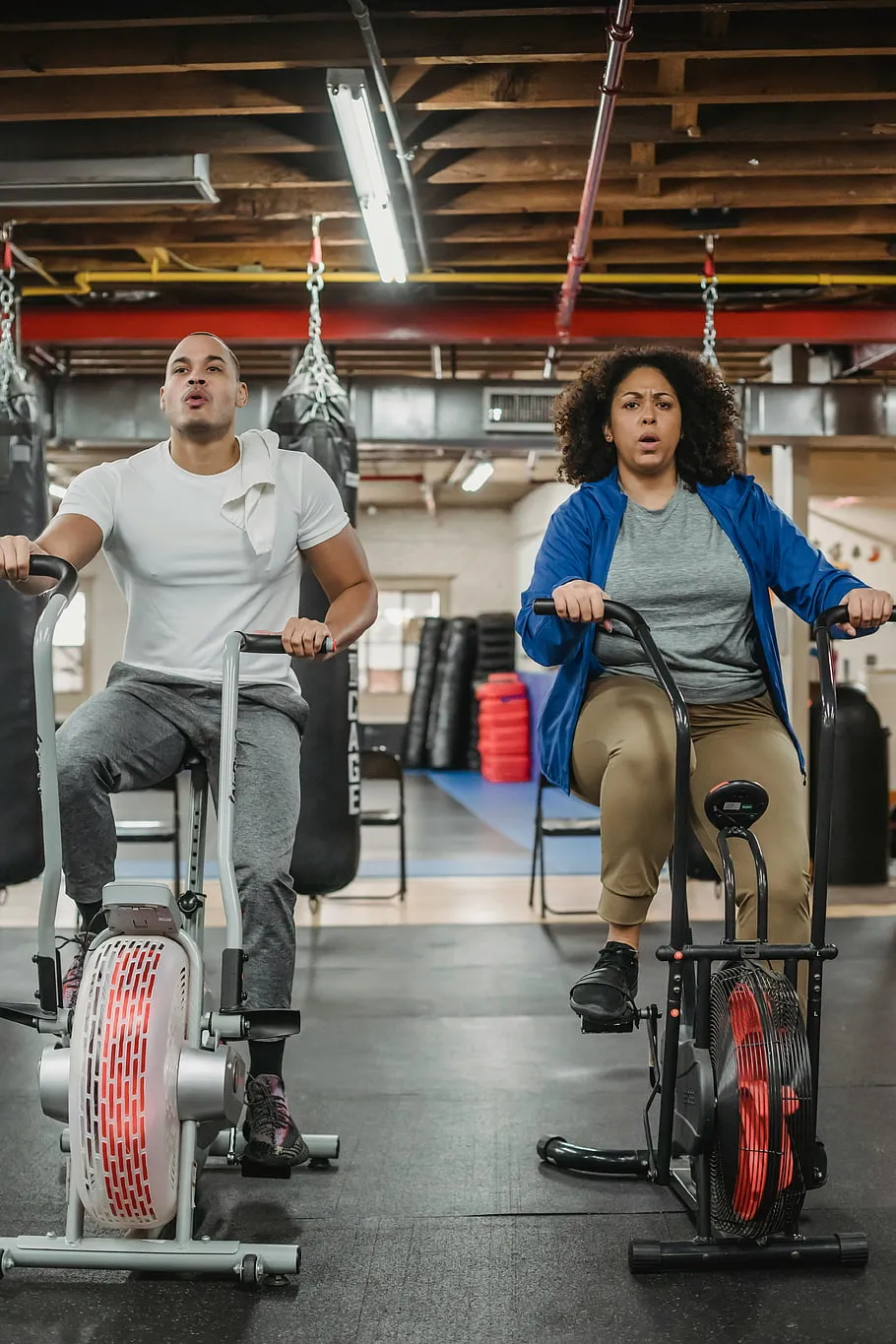
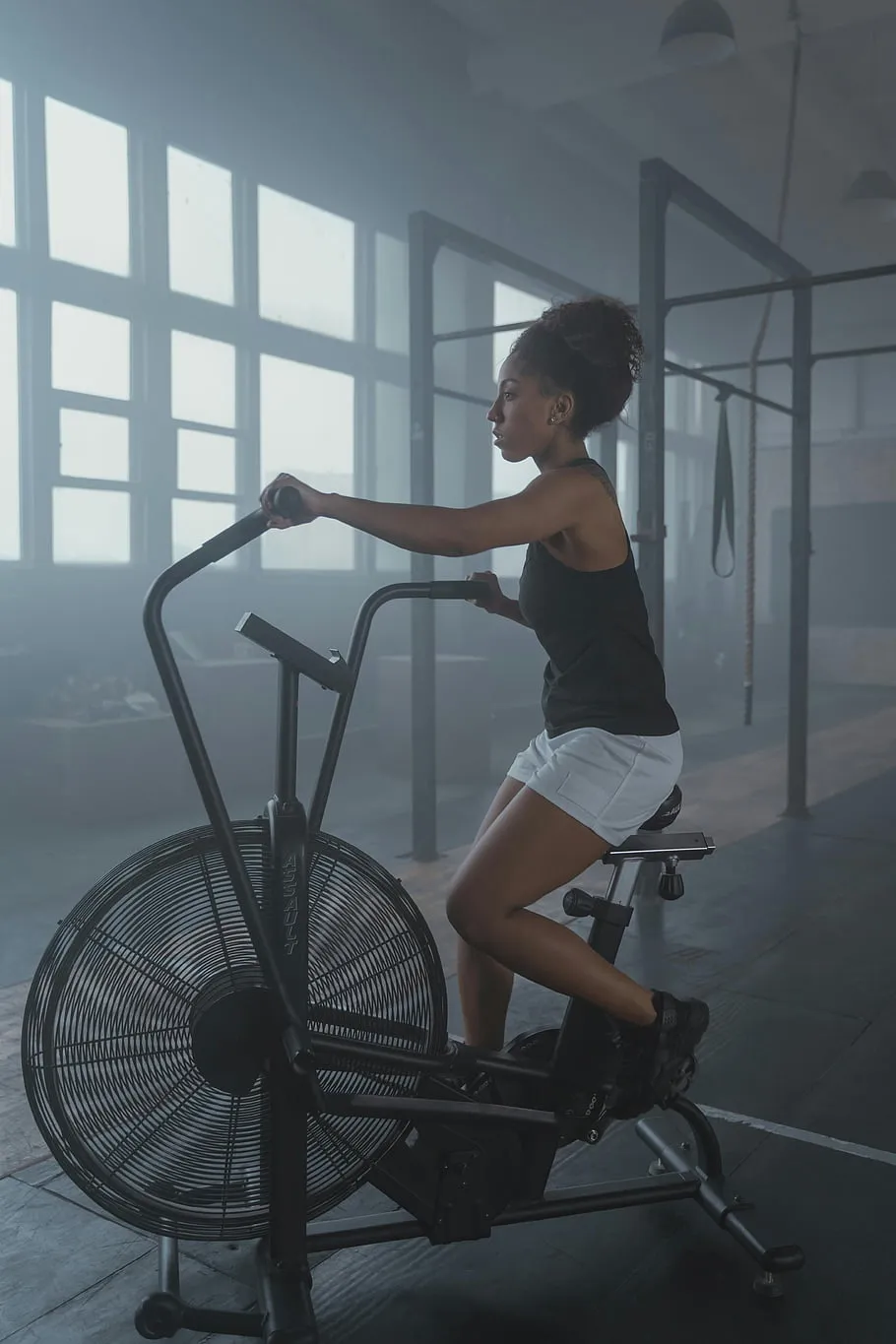
One limit applies to every photo in this guide: no free-license photo of any of the six named air bikes exists, so every figure is an honest generic gym scene, captioned as what it actually shows — never presented as a product shot.
- Fan size and drive type, and whether the records agree on either
- Footprint and unit weight, and whether the bike can be moved by one person
- Console, programs and wireless connectivity, where the maker states them
- Seat adjustment, and whether tall and short riders both fit
- Max user weight, and whether it is a settled figure or a disputed one
- Honest availability, with conflicting figures stated as conflicts, not resolved by guesswork
AssaultBike Classic, AssaultBike Elite, Schwinn AD2, Schwinn AD6, Xebex AirPlus Performance, Bells of Steel Blitz Max and Concept2 BikeErg were also considered and set aside for the six below, which give the clearest spread of belt drives, fan sizes, footprints and consoles. Our gym flooring and medicine balls guides cover the floor under your bike and the closest conditioning cousin to a fan bike.
Comparison
| Bike | Best for | Type | Top weight | Standout |
|---|---|---|---|---|
| Rogue Echo Bike V3.0 | Belt-drive benchmark | Belt drive | 330 lb | 11 height + 5 fore/aft seat settings |
| AssaultBike ProX | Heaviest settled unit | Two-stage belt drive | 330 lb | 27 in steel fan |
| Schwinn Airdyne Pro (AD7) | Longest frame warranty | Belt drive | 350 lb | 10-year frame warranty |
| Titan Fitness Fan Bike | Narrowest footprint | Drive disputed | 330 lb | 20.375 in wide |
| Xebex Air Bike | Lightest unit | Belt drive | 350 lb | 109 lb, 4-way seat |
| Bells of Steel Blitz Air Bike 2.0 | Wind guard included | Belt drive | 350 lb | 25 in fan, no Bluetooth/ANT+ |
Read the top-weight column with care, because it is max user weight, not the weight of the bike itself — and the six bikes do not agree on anything else either. The AssaultBike ProX 125 lb is the heaviest settled unit here, while the Xebex 109 lb is the lightest, and the Rogue 55 in length is the longest against the Xebex 48 in shortest. There is no single heaviest winner in the user-weight column, because three bikes tie at 350 lb and three at 330 lb.
On the extremes, the Schwinn 10-year frame warranty is the longest stated warranty here, and it holds even under the ProX warranty dispute, because the ProX figures on both sides of that dispute sit below 10 years. No largest-fan winner is declared here, because the Schwinn 30 in fan figure is disputed against an older 27 in figure — so the fan ranking stops at the settled figures, and the disputed one is stated as disputed.
Rogue Echo Bike V3.0
The Rogue Echo Bike V3.0 is the benchmark. Belt drive, 123 lb, 55 × 29.5 × 52.25 in overall with a 44.5 × 23.75 in footprint, an LCD console with Bluetooth and ANT+ connectivity, a seat with 11 height settings and 5 fore/aft settings, 1.5 in grips, a 330 lb max user weight and a 2-year warranty.
That seat is the practical point. Eleven height settings plus five fore/aft settings fit more riders than any other bike here, and the belt drive keeps the ride quieter and lower-maintenance than a chain. The Bluetooth and ANT+ console links to heart-rate straps and apps, so intervals can be tracked rather than guessed.
One flag must be stated plainly. Older records give 127 lb and a 350 lb max user weight, while the V3.0 maker spec sheet gives 123 lb and 330 lb — this guide states the V3.0 figures and flags the older ones, because a buyer checking an older listing will meet both. The Rogue is also the longest bike here at 55 in and the widest at 29.5 in, so measure the room before ordering.
✅ Pros
- Belt drive, quieter and lower-maintenance than chain
- LCD console with Bluetooth and ANT+
- Most seat settings here: 11 height + 5 fore/aft
- 1.5 in grips suit larger hands
⚠️ Cons
- Longest here at 55 in, widest at 29.5 in
- Older records conflict: 127 lb and 350 lb
- 330 lb max user weight, below the 350 lb tie
Listing check: no confident listing code was found for this bike, so the link above is a tagged search — confirm the version, the dimensions and the max user weight on the listing before ordering.
Best for: riders who want the belt-drive benchmark with the widest seat adjustment and app-connected tracking.
May not fit: small rooms, or riders who need the 350 lb user-weight tier.
AssaultBike ProX
The AssaultBike ProX is the heavyweight. Two-stage belt drive, 125 lb, 51.73 × 24.52 × 52.51 in, a 27 in steel fan and a 330 lb max user weight. At 125 lb it is the heaviest settled unit here, which suits a dedicated spot it rarely leaves.
That two-stage belt drive is the practical detail. Two belts share the load instead of one, which spreads wear and keeps the ride smooth under hard intervals. The steel fan resists the flex a lighter fan shows at full effort, and at 27 in it is the largest of the settled fan figures here, the Schwinn figure being disputed.
One flag must be stated plainly. The warranty is disputed: a dealer warranty text reads 5-year frame and 2-year parts, while reviews report 7-year frame and 3-year non-wear parts — both figures are stated here, and this guide does not rank on warranty alone because of it. The ProX is also explicitly not the AssaultBike Classic or the Elite, which are different bikes in the same brand line.
✅ Pros
- Two-stage belt drive spreads wear across two belts
- 27 in steel fan resists flex at full effort
- Heaviest settled unit here at 125 lb, planted feel
⚠️ Cons
- Warranty disputed: 5-year or 7-year frame
- Heaviest settled unit, hard to move alone
- 330 lb max user weight, below the 350 lb tie
Listing check: no confident listing code was found for this bike, so the link above is a tagged search — confirm the warranty, the fan size and the max user weight on the listing before ordering.
Best for: riders who want a planted, heavy belt-drive bike for a dedicated spot.
May not fit: riders who move the bike often, or who want a settled warranty figure before buying.
Schwinn Airdyne Pro (AD7)
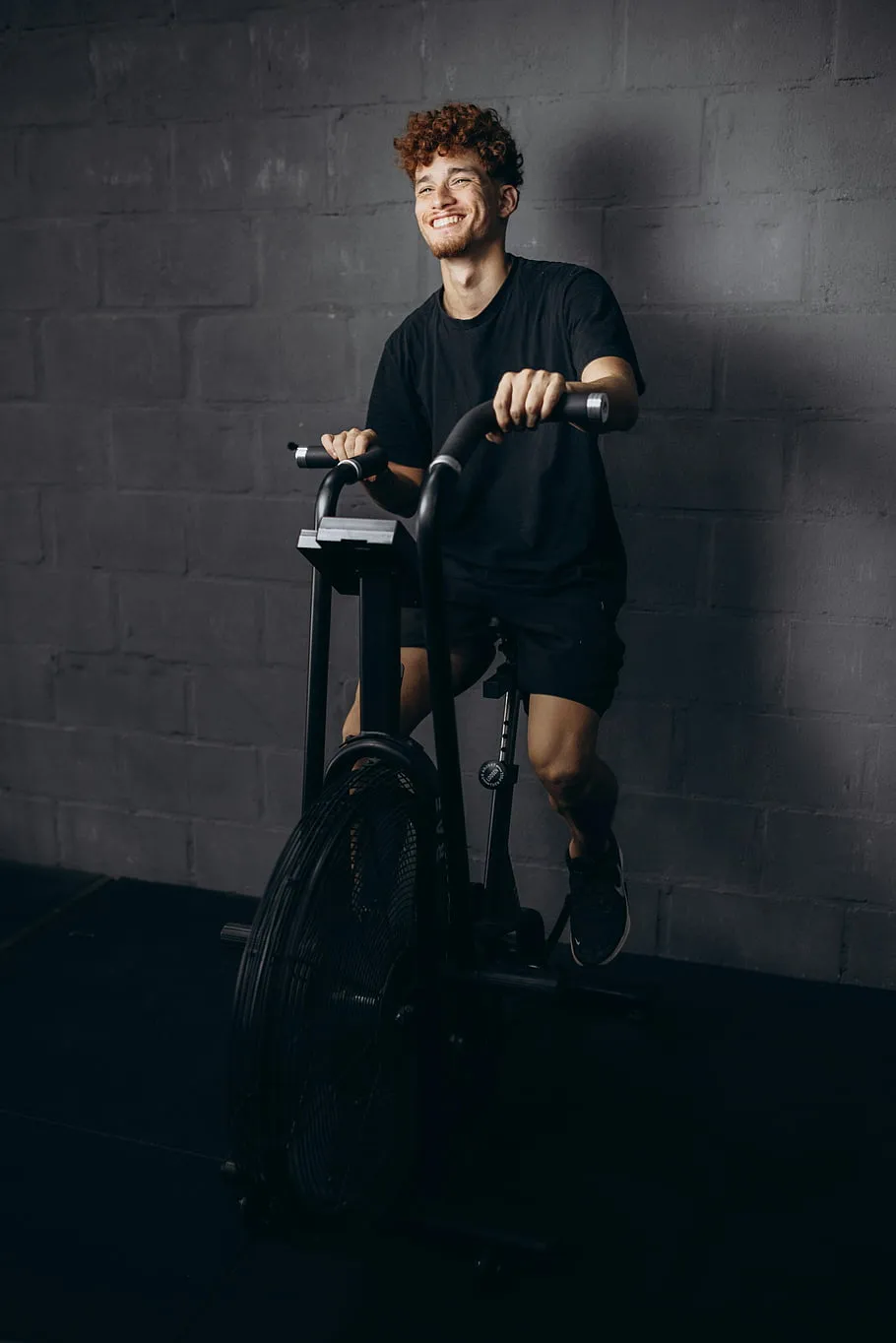
The Schwinn Airdyne Pro, model AD7, is the long-warranty pick. Belt drive, 113 lb, 53 × 26.5 × 53 in, a 350 lb max user weight, and a 10-year frame, 2-year mechanical, 1-year electronics and 6-month labor warranty. Airdyne Pro is the series name and AD7 the model number for the same bike.
That 10-year frame warranty is the practical point. It is the longest stated frame warranty here, and it holds even under the ProX warranty dispute, because both ProX figures sit below it. The 350 lb max user weight also puts the Schwinn in the higher user-weight tier, alongside the Xebex and the Blitz.
Two flags must be stated plainly. Older records give 42 × 20 × 52 in and a 27 in fan, while newer records give 53 × 26.5 × 53 in and a 30 in perimeter-weighted fan — both sets are stated here and neither is silently resolved, so measure against the newer set and confirm on the listing. Some records also give 2-year electronics instead of 1-year, so confirm that term too. And this bike is explicitly not the AD2 or the AD6, which are different, smaller Airdyne models.
✅ Pros
- Longest frame warranty here at 10 years
- 350 lb max user weight, higher tier
- Belt drive, no chain maintenance
⚠️ Cons
- Dimensions disputed: two full sets on record
- Fan size disputed: 27 in or 30 in
- Electronics term disputed: 1-year or 2-year
Listing check: no confident listing code was found for this bike, so the link above is a tagged search — confirm the model is AD7, the dimensions and the warranty terms on the listing before ordering.
Best for: riders who want the longest frame warranty and the higher user-weight tier.
May not fit: riders who need settled dimensions before buying, or a smaller Airdyne like the AD2 or AD6.
Titan Fitness Fan Bike
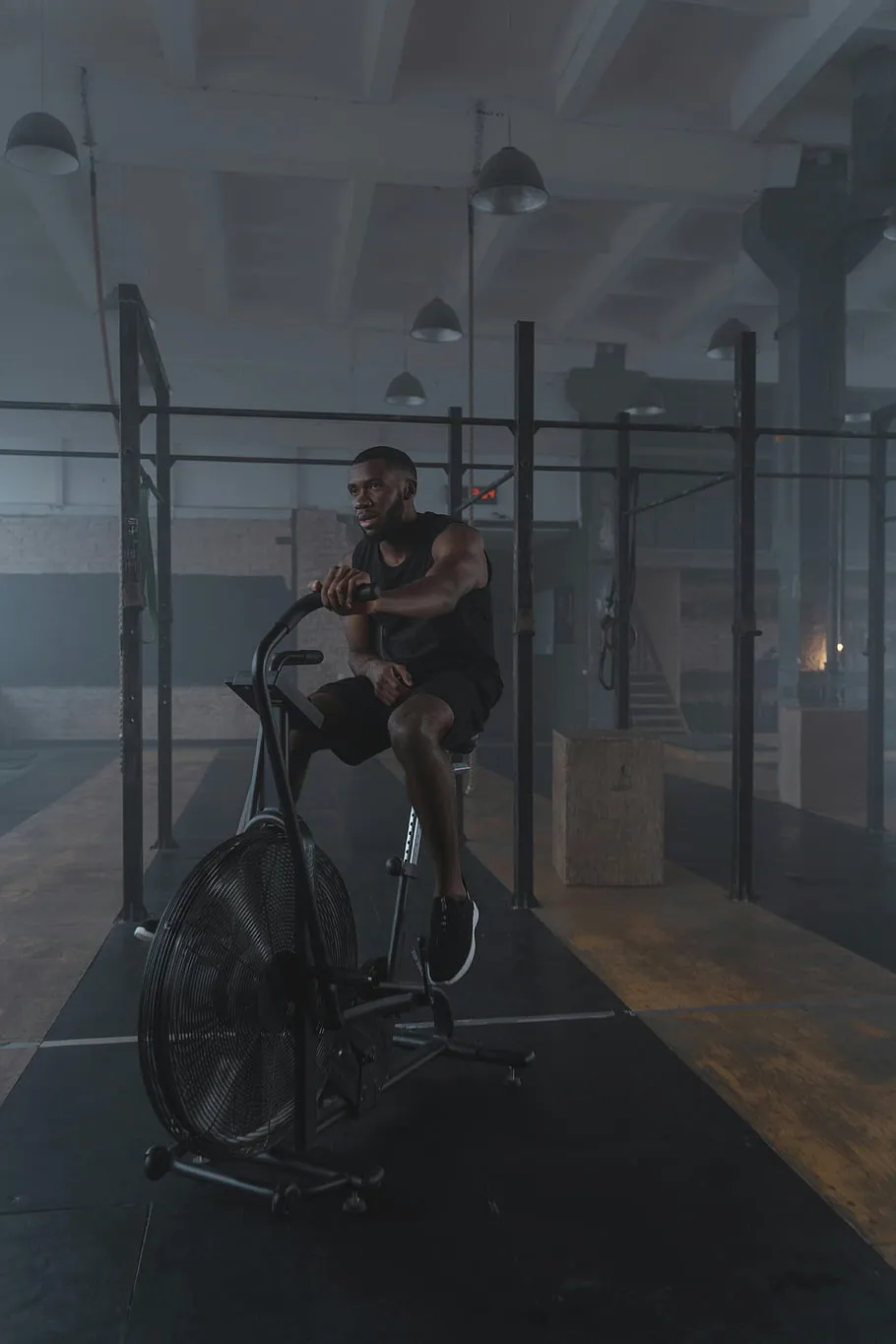
The Titan Fitness Fan Bike is the narrow pick. 111 lb, a 50.25 × 20.375 × 50 in footprint, a 330 lb max user weight and 10 in turf tires for moving it. At 20.375 in wide it is the narrowest bike here, which suits a tight corner or a narrow gap between racks.
Those turf tires are the practical detail. They let one person roll the bike out for a session and back against the wall after, which matters in a shared garage or a small room. The footprint is genuinely compact for a fan bike, and the 111 lb unit weight sits below the Rogue and the ProX.
Two flags must be stated plainly. The drive is disputed: one review says chain, another says belt, so no drive type is stated here as settled — confirm it on the listing before ordering, because it decides maintenance. The 1-year frame warranty is also single-source, so treat it as unconfirmed until the listing states it. The Titan is the narrowest here, but narrowness alone does not settle the drive question.
✅ Pros
- Narrowest here at 20.375 in wide
- 10 in turf tires for rolling it out and back
- Compact 50.25 × 20.375 × 50 in footprint
⚠️ Cons
- Drive disputed: chain or belt, unconfirmed
- 1-year frame warranty is single-source
- 330 lb max user weight, below the 350 lb tie
Listing check: no confident listing code was found for this bike, so the link above is a tagged search — confirm the drive type, the width and the warranty on the listing before ordering.
Best for: tight corners and narrow gaps, where the 20.375 in width matters most.
May not fit: riders who move the bike often, or who need a confirmed drive type before buying.
Xebex Air Bike
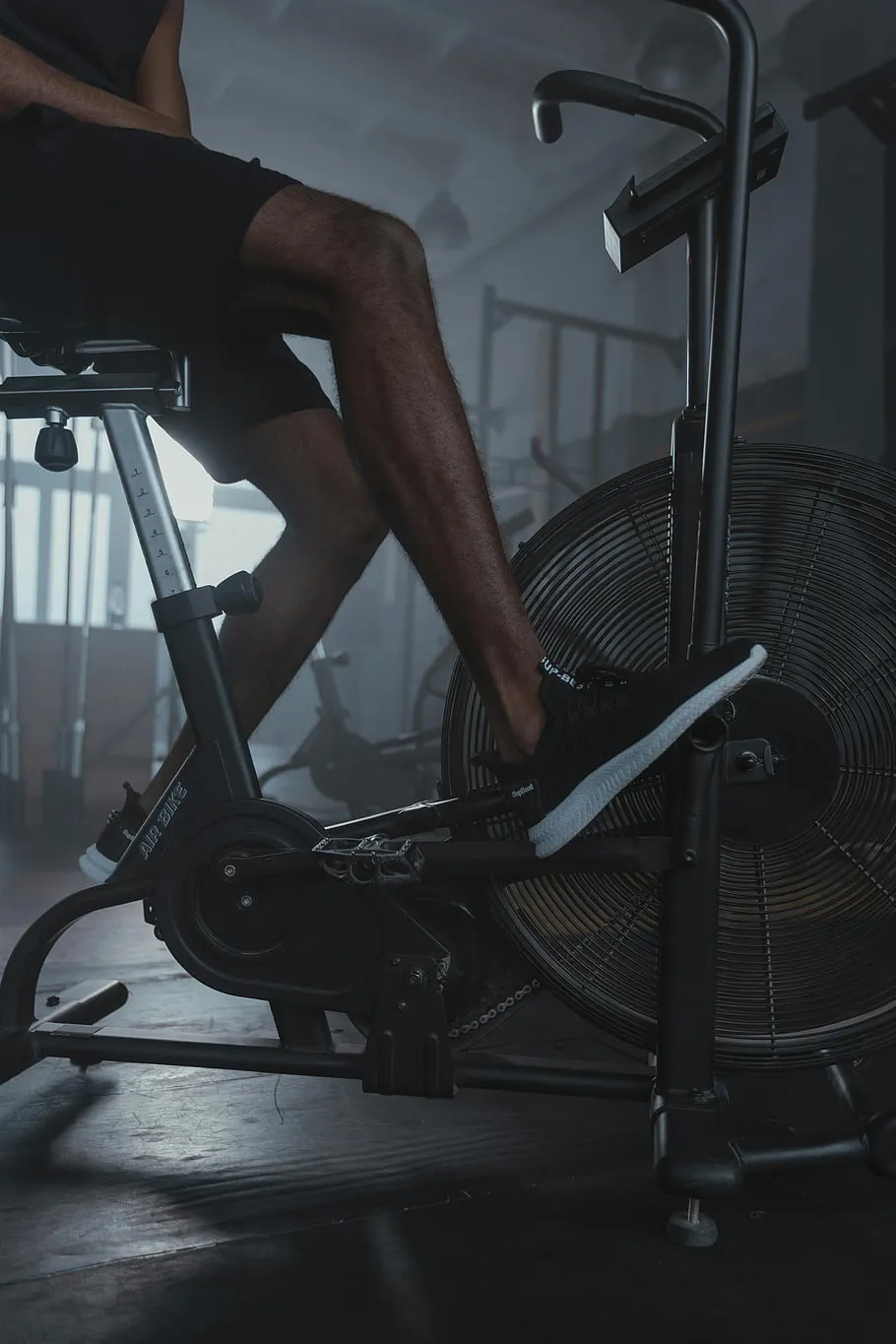
The Xebex Air Bike, base and Smart Connect versions, is the light pick. Belt drive, 109 lb, 48 × 26 × 52 in, a 24 in fan, a 350 lb max user weight, a 4-way adjustable seat, a 5-year frame and 2-year non-wear parts warranty, and a console tracking distance, time, speed, calories, watts and heart rate.
That 109 lb unit weight is the practical point. It is the lightest bike here, so one person can move it without a second pair of hands, and at 48 in long it is also the shortest length here. The 4-way seat adjusts up, down, forward and back, which fits more riders than a height-only post.
One flag must be stated plainly. This pick is explicitly not the Xebex AirPlus Performance, which adds 8 magnetic resistance levels, and not the AirPlus Expert, which weighs 190 lb — both are different, heavier Xebex bikes, and a listing that says AirPlus is not this bike. The 24 in fan is also the smallest settled fan here, which suits steady work more than maximal sprint resistance.
✅ Pros
- Lightest here at 109 lb, easiest to move
- Shortest length here at 48 in
- 4-way seat fits more riders
- Console tracks watts and heart rate
⚠️ Cons
- Smallest settled fan here at 24 in
- Not the AirPlus models — check the listing name
- 5-year frame warranty, below the Schwinn 10-year
Listing check: no confident listing code was found for this bike, so the link above is a tagged search — confirm the model is the base or Smart Connect Air Bike, not an AirPlus, on the listing before ordering.
Best for: riders who move the bike often and want the lightest unit with a full console.
May not fit: riders chasing the biggest fan, or anyone shopping the AirPlus line by mistake.
Bells of Steel Blitz Air Bike 2.0

The Bells of Steel Blitz Air Bike 2.0 is the guarded pick. Belt drive, 118 lb, 53 × 23 × 51 in, a 25 in fan, a 350 lb max user weight, a 2-year warranty, and a wind guard plus a bottle and phone holder included. The console is not Bluetooth or ANT+ compatible, which is stated here plainly rather than hidden.
That wind guard is the practical detail. A fan bike blows air at the rider by design, and the guard deflects the worst of it on longer sessions, while the bottle and phone holder keep water and a timer in reach. The 25 in fan sits between the Xebex 24 in and the ProX 27 in settled figures, and the 350 lb user weight puts the Blitz in the higher tier.
One flag must be stated plainly. The console has no Bluetooth or ANT+ compatibility, so riders who track intervals through an app or a strap will need a separate watch or bike computer. This bike is also explicitly not the Blitz Max, which is an air-plus-magnetic hybrid — a different bike that changes how resistance works.
✅ Pros
- Wind guard deflects fan air on long sessions
- Bottle and phone holder included
- 350 lb max user weight, higher tier
- Belt drive, no chain maintenance
⚠️ Cons
- Console has no Bluetooth or ANT+
- Not the Blitz Max hybrid — check the listing name
- 2-year warranty, below the Schwinn 10-year
Listing check: no confident listing code was found for this bike, so the link above is a tagged search — confirm the model is the 2.0, the fan size and the console limits on the listing before ordering.
Best for: riders who want a wind guard and holders included, with the higher user-weight tier.
May not fit: riders who track through Bluetooth or ANT+, or anyone shopping the Blitz Max hybrid.
How to Choose
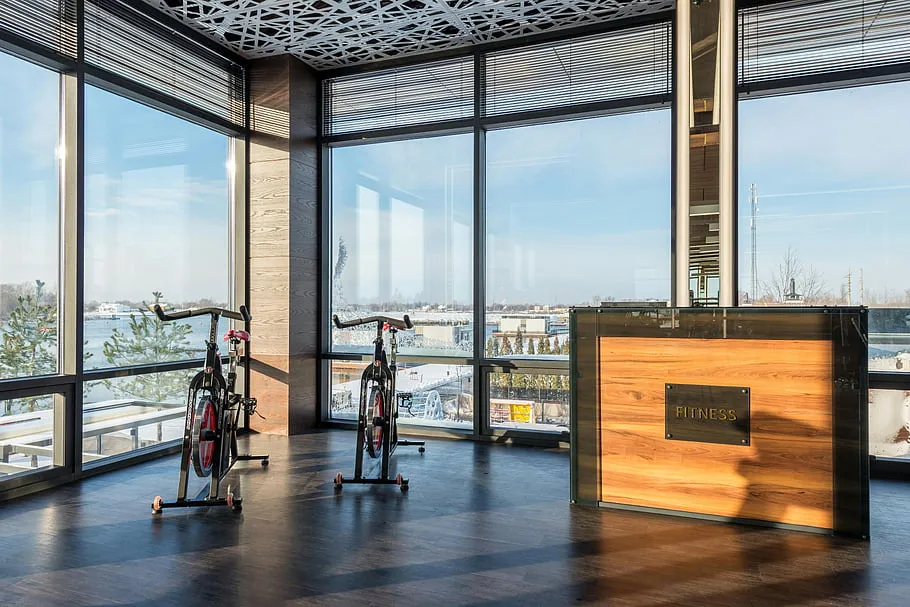
Fan size comes first, because it decides how the resistance feels — but only on settled figures, since the Schwinn fan is disputed and the Titan drive is unconfirmed. Drive comes second, because a belt needs less upkeep than a chain, and the ProX two-stage belt spreads wear further still.
Footprint comes third, because the longest bike here is 55 in and the widest is 29.5 in, and a bike that blocks a door is a bike that stops getting ridden. Console comes fourth, because the gap here runs from Bluetooth and ANT+ tracking to no wireless at all, and that gap decides whether intervals live in an app or on a watch.
For the rest of the home gym around a bike, our battle ropes guide covers another full-body conditioning tool, and our hand grippers guide covers the grip strength that keeps moving arms under control.
Fan Size and Drive
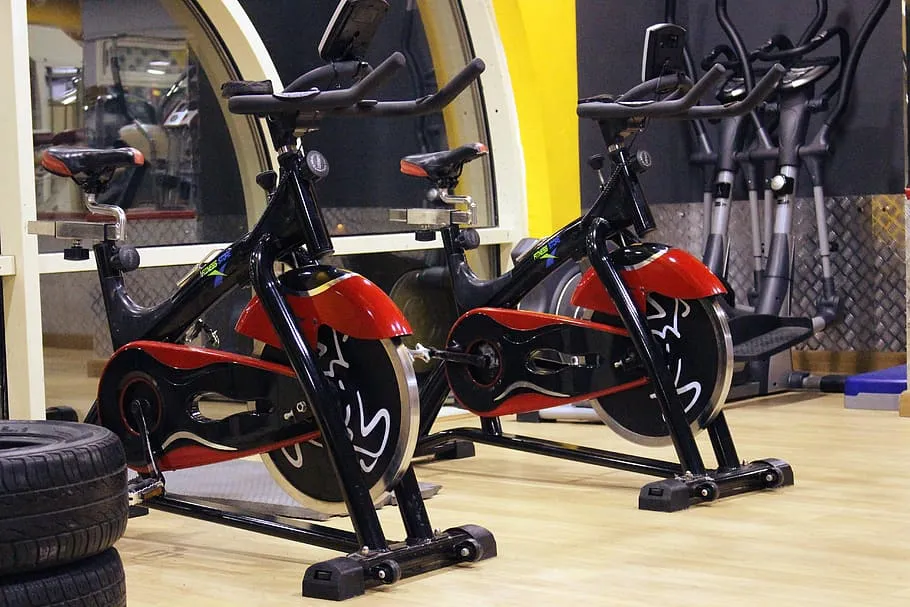
A bigger fan moves more air per pedal stroke, so resistance builds faster — but only compare settled fan figures. The ProX 27 in steel fan, the Blitz 25 in fan and the Xebex 24 in fan are settled, while the Schwinn 30 in figure is disputed against an older 27 in figure, so no largest-fan winner is declared here.
Drive decides upkeep. A belt runs quieter and needs less attention than a chain, which is why five of the six picks state belt drive in some form — and why the Titan drive dispute matters, because a buyer who expects a belt and gets a chain faces different maintenance. Two-stage belts, as on the ProX, split the load across two belts instead of one.
Watch for fan claims that ignore the dispute. A listing that shouts the biggest fan without saying which record it comes from is selling the disputed figure as settled, and a listing that never names the drive at all is hiding the Titan question rather than answering it. Confirm both on the listing before ordering.
Size and Footprint
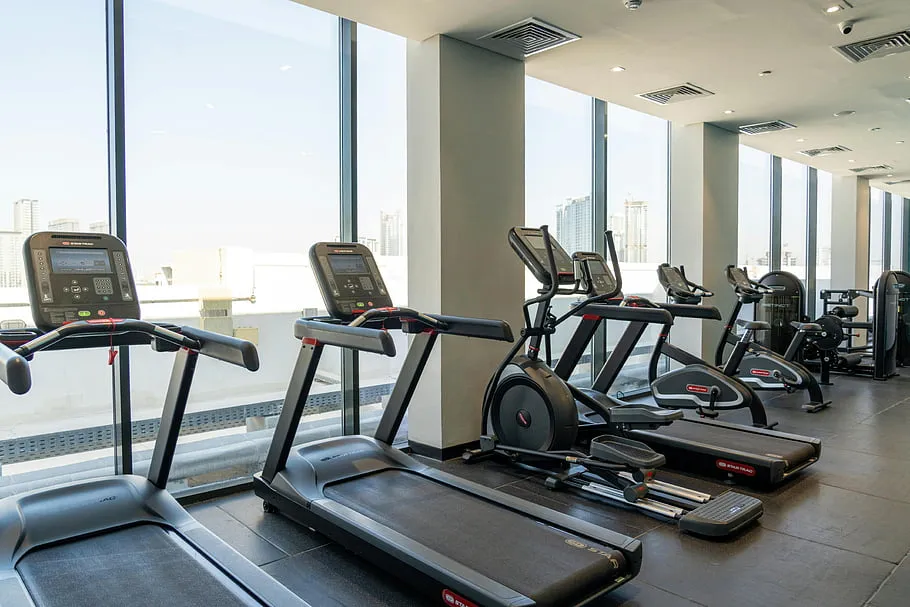
An air bike needs two kinds of room: the footprint itself, and the space to mount, ride and dismount without clipping a wall. The Rogue footprint is 44.5 × 23.75 in inside a 55 × 29.5 × 52.25 in overall size, while the Titan footprint is 50.25 × 20.375 × 50 in — so compare overall size, not footprint alone, because handlebars and fans overhang the base.
Unit weight decides whether the bike moves. The Xebex 109 lb moves with one person, the Titan 111 lb rolls on turf tires, and the ProX 125 lb suits a spot it rarely leaves. A bike that must be dragged across a floor will scratch it, so rubber mats under the riding zone protect both the floor and the bike feet.
Storage is the easy part. An air bike stands in a corner, leans against a wall or rolls to its spot, and even the 55 in Rogue fits a garage corner that a treadmill never would. Keep it dry, keep it off damp concrete, and wipe sweat off the frame and fan cage after sessions.
Console and Programs
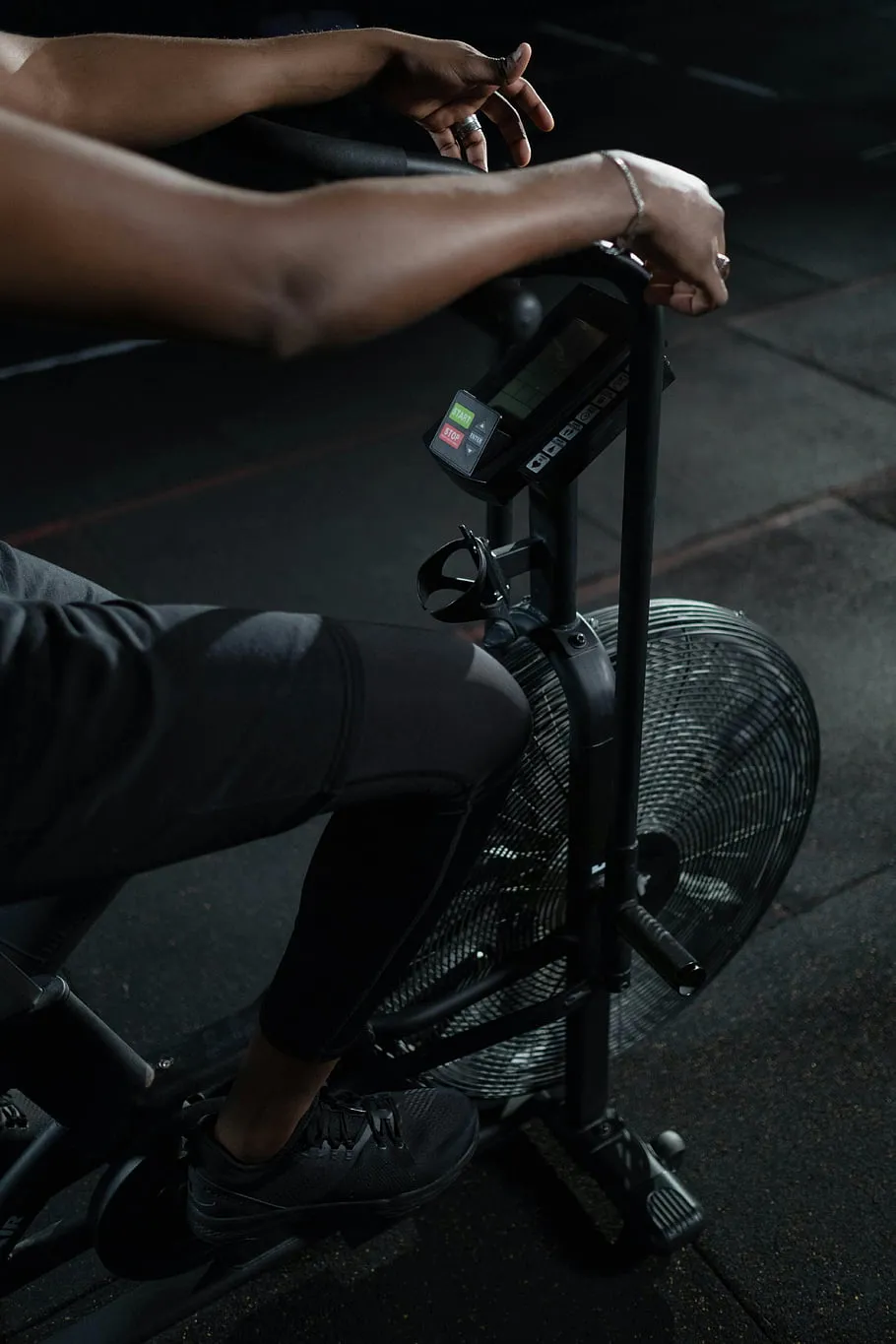
Consoles here fall into three bands. The Rogue LCD links by Bluetooth and ANT+ to straps and apps, the Xebex console tracks distance, time, speed, calories, watts and heart rate, and the Blitz console has no Bluetooth or ANT+ at all — so decide before buying whether intervals live in an app, on the console itself, or on a separate watch.
Programs matter less than tracking on a fan bike, because resistance follows effort rather than a preset. A console that shows watts and heart rate tells you whether an interval was actually harder than the last one, while a console that shows only time and distance leaves that question to feel alone.
Watch for console claims that promise app links the bike does not have. The Blitz limit is stated plainly in its section, and a listing that implies wireless tracking for a bike without it is selling a feature that is not there. Confirm the console spec on the listing, not in a review headline.
Noise and Neighbours

An air bike makes one unavoidable sound: fan whoosh, which grows with effort. A gentle pedal is a murmur, a full sprint is a roar, and no belt drive removes the air noise — so a household that sleeps lightly, or neighbours below a thin floor, will hear hard intervals.
Three habits keep the peace. Ride hard intervals in daytime hours, keep the bike on rubber mats to cut vibration through the floor, and save the gentlest pedalling for early or late sessions. A wind guard, as on the Blitz, deflects air from the rider but does not silence the fan.
Room choice matters as much as the bike. A garage or a ground-floor corner carries fan noise better than a bedroom above sleeping children, and a closed door cuts more sound than any mat. If the only available room shares a wall with a bedroom, test a gentle session first before committing to sprint intervals there.
Safety

Air bike training is safe when the weight limit, the space and the effort are all respected, and unforgiving when any one of them is not. Our wrist wraps guide covers the wrist support some riders pair with hard arm efforts, and the seven steps below cover the bike itself.
1. Check the user weight first. Three bikes here top out at 330 lb and three at 350 lb — ride the tier you actually fit, not the one you hope to fit.
2. Clear the circle. Nothing breakable, nobody walking through, and room to mount and dismount without clipping a wall, because moving arms sweep wider than fixed handlebars.
3. Check the tool. Confirm the fan cage is secure, the seat post is locked and nothing rattles before the first interval.
4. Warm up gently. Five easy minutes of pedalling with light arms teaches the rhythm; a cold sprint on a fan bike punishes unprepared knees and shoulders.
5. Grip, don’t grab. Hold the moving arms firmly but without white knuckles, and keep thumbs around the grips — a loose hand on a fast arm slips further than on a fixed bar.
6. Stop for knee, shoulder or back pain. Fan resistance grows with effort, so pushing through early pain turns a short break into a long one.
7. Never ride hard with people standing close, glass nearby or a low ceiling overhead. A fan bike stays put, but a rider who loses rhythm at full effort can still come off the seat — keep the space clear in every direction.
Air bike training is general fitness information, not medical advice. If you have a knee, shoulder or back injury, or a condition that affects balance or heart rate, check with a clinician before starting intervals.
FAQ

Is an air bike harder than a spin bike?
It is different, not simply harder. A spin bike holds the resistance you set, while an air bike answers every push with more resistance — so a gentle pedal stays gentle and a sprint becomes a sprint without touching a knob. The moving arms add upper-body work a spin bike never asks for.
How much room does an air bike need?
Plan on the overall size, not the footprint alone. The Rogue measures 55 × 29.5 in overall, the Titan footprint is 50.25 × 20.375 in, and the Xebex is 48 × 26 in — plus room to mount and dismount and for the arms to sweep. Tape the outline on the floor before ordering, not after delivery.
Are air bikes loud?
The fan whoosh grows with effort: gentle pedalling murmurs, full sprints roar. Belt drive quiets the mechanism but never the air, so hard intervals belong in daytime hours, on rubber mats, away from sleeping rooms.
Do I need a Bluetooth console?
Only if you track intervals through an app or a strap. The Rogue links by Bluetooth and ANT+, the Xebex console shows watts and heart rate on its own screen, and the Blitz has no wireless at all — so match the console to how you actually train, not to the longest spec list.
What weight limit should I check?
Two numbers, not one. Max user weight is 330 lb on the Rogue, ProX and Titan, and 350 lb on the Schwinn, Xebex and Blitz — check the tier you fit. Unit weight is separate: 109 lb for the Xebex up to 125 lb for the ProX, which decides whether one person moves it.
Can I use an air bike for steady cardio, not just intervals?
Yes — pedal gently with light arms and the fan stays quiet and easy, which suits steady sessions, warm-ups and cool-downs as well as sprints. After hard days, easy pedalling plus stretching helps more than another sprint — our foam rollers guide covers the tools for that.
Our Pick: Start Here

Start with the Rogue Echo Bike V3.0 if the room fits it — 55 in long and 29.5 in wide — because the belt drive, the Bluetooth and ANT+ console and the 11 height plus 5 fore/aft seat settings make it the easiest bike here to live with across riders. Choose the Xebex Air Bike if the bike must move often, since it is the lightest here at 109 lb and the shortest at 48 in, and step up to the Schwinn Airdyne Pro (AD7) only when the 10-year frame warranty matters more than settled dimensions.
As an Amazon Associate, this site earns from qualifying purchases made through links in this article, at no extra cost to you.
Product details are based on manufacturer and retailer research at the time of writing, and specifications may change — confirm weights, dimensions and warranties with the seller before ordering.