

A knee wrap is the most misunderstood piece of squat gear in a home gym. It is not a warmer, not a brace, and not something you wear all session — it is a long elastic strip you wind tightly around each knee for a heavy set, then take off again. Used that way, it supports the joint and stores elastic energy you feel as rebound out of the bottom of the squat. 🏋️
This guide compares six wraps that are genuinely sold for home and garage lifters, from the forgiving first wrap to the stiffest competition option. If you are still deciding between wraps and sleeves, read our knee sleeves guide first — sleeves slip on and stay on, wraps wind on per set — and our previous guide, plyo boxes, covers the other end of leg day: jumping power rather than heavy support.
Why a Knee Wrap Belongs in a Home Gym
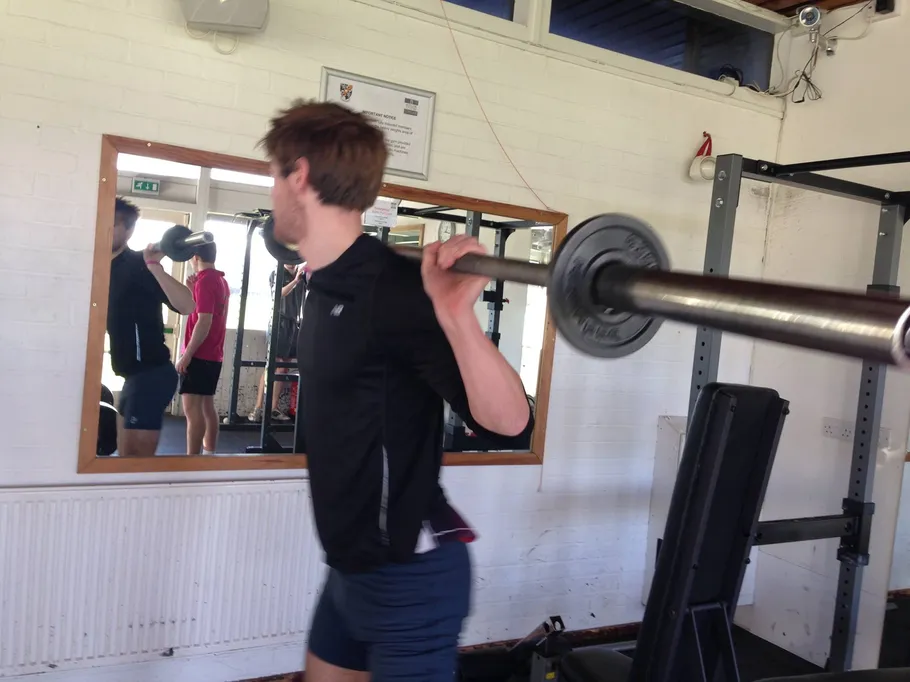
Heavy squats are where home gyms get serious, and they are also where knees ask the most questions. A wrap answers with adjustable compression: wind it tighter for a max attempt, looser for a heavy triple, and take it off the moment the set ends. No other knee product gives you that dial.
The honest limit matters as much as the benefit. A wrap does not fix knee pain, prevent injury, or make a bad squat good — it supports a heavy set you can already perform with decent form. Lifters with ongoing knee pain, swelling, or an injury should talk to a clinician before wrapping anything, and everyone else should treat wraps as heavy-set equipment, not daily armour.
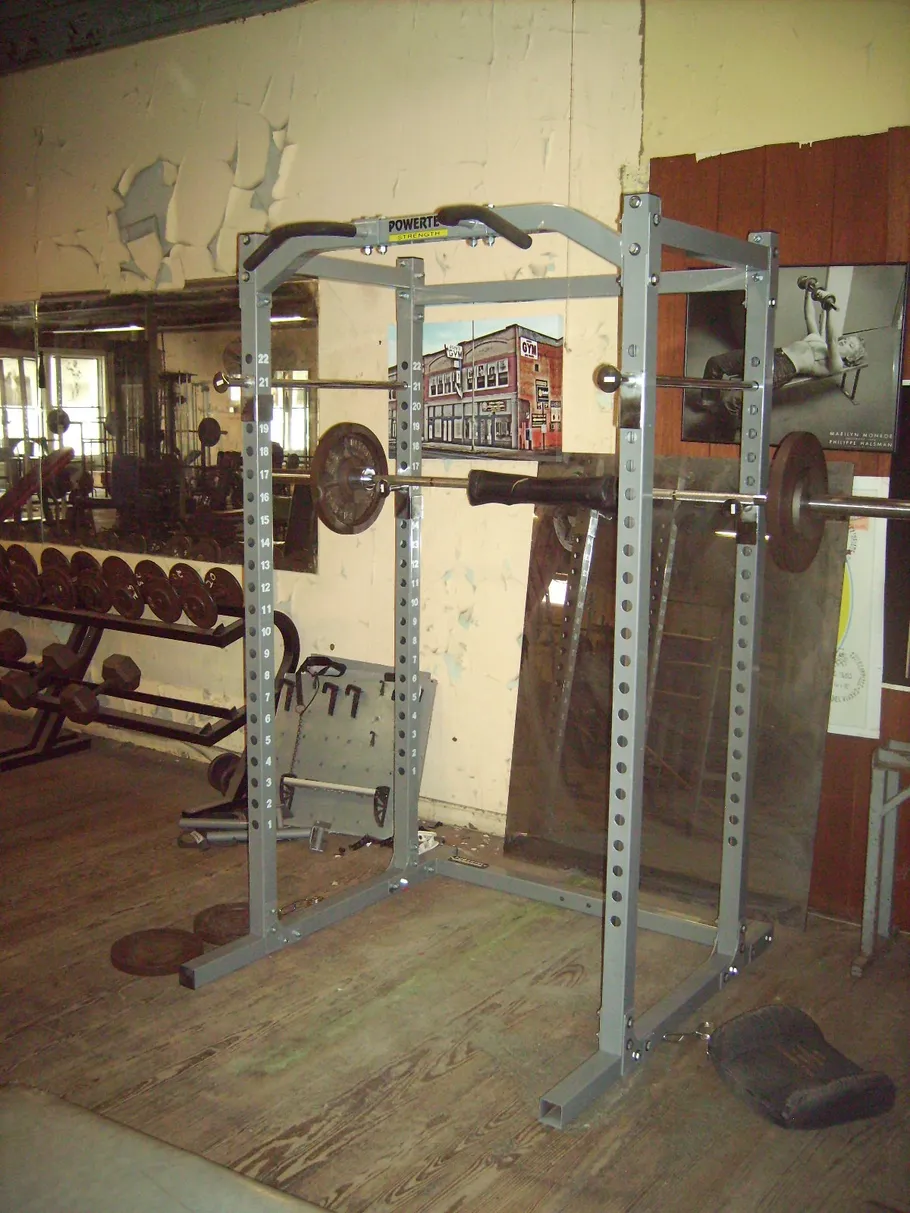
Wraps also pair naturally with the rest of a squat setup: a rack with safeties, a bar that stays put, and a floor that stays still. If any of those three is missing, fix that before spending on wraps — the wrap is the finishing touch, not the foundation.
How We Picked
We compared wraps the way a home lifter actually buys them: by the numbers the maker states, by what independent roundups agree on, and by whether the listing you land on is the wrap you think it is. This is a research-based guide — no hands-on testing is claimed, and no wrap here was tested by us.
- Length options — 2 m is the standard, 2.5 m and 3 m suit bigger legs and bigger attempts
- Stiffness honesty — soft, medium and maximum wraps suit very different lifters
- Closure type — hook-and-loop for speed, tuck-end for a Velcro-free finish
- Competition legality — federation approval where the maker or listing states it
- Listing clarity — the exact model and variant must be identifiable before buying
- Review consensus — where Strong Home Gym, FitnessVolt, Legion Athletics and Garage Gym Reviews agree or disagree
Three of the six links below are tagged search links rather than product pages, because Rogue and Titan sell direct — the search link is the honest route to their stores, and each section says so plainly. Our other squat-day guides pair with this one: weightlifting belts for bracing and squat stands for the rack side of the setup.
Comparison
| Wrap | Best for | Length | Closure | Standout |
|---|---|---|---|---|
| Rogue Knee Wraps | Everyday heavy squats | 2 / 2.5 m | Hook & loop | Strong Home Gym’s overall pick |
| Titan Signature Gold Knee Wraps | Heavy competition squats | 2 / 2.5 / 3 m* | Tuck end* | Stiff casting effect |
| Titan THP Knee Wraps | Maximum stiffness | 2 / 2.5 / 3 m* | Velcro | Titan’s stiffest material |
| Gymreapers Knee Wraps | Heavy squat feel, easy strap | 72 in (1.8 m) | Hook & loop | FitnessVolt’s heavy squat pick |
| DMoose Knee Wraps | Budget approved wrap | 78 in (2 m) | Hook & loop | USPA & IPL approved |
| Mava Sports Knee Wraps | Easy first wrap | 72 in (1.8 m) | Hook & loop | Most forgiving feel here |
The asterisks mark genuine source disagreements, stated plainly rather than smoothed over. Titan lists both the Signature Gold and the THP in 2, 2.5 and 3 m, while one comparison table lists the Signature Gold in 2 and 2.5 m only and the THP in 2.5 m only — and on the Signature Gold’s closure, one dedicated guide lists no Velcro while that same comparison table lists Velcro. Confirm both the length and the closure on the listing before ordering.
Two superlatives are safe across every source checked. The two Titan wraps are the only ones here offered in a 3 m length, and Gymreapers and Mava, both 72 in, are the joint-shortest here — fine for most legs, but bigger lifters who want many revolutions should look at the 2.5 m options instead.
Rogue Knee Wraps
The Rogue Knee Wraps are the all-rounder of this guide and Strong Home Gym’s overall pick: a medium-stiffness wrap in 2 or 2.5 m with a hook-and-loop closure, sold direct by Rogue. Medium stiffness is the sweet spot most home lifters actually need — firm enough to feel on a heavy set, forgiving enough to wrap without a fight.
Two lengths cover most lifters: 2 m for standard legs and lighter wrap jobs, 2.5 m if you have bigger legs or want more revolutions around the knee. The hook-and-loop closure is the fastest on/off of any type here, which matters when you are wrapping between sets with chalk on your hands.
The honest gaps: no federation approval is stated for this wrap in the records checked, so competitors should not assume it is meet-legal, and a medium wrap will not satisfy a lifter chasing maximum rebound. Rogue’s direct-sale model also means the link below is a search link, not a product page.
✅ Pros
- Best all-rounder — medium stiffness suits most lifters
- Two lengths, 2 and 2.5 m
- Fast hook-and-loop closure between sets
- Strong Home Gym’s overall pick
⚠️ Cons
- No federation approval stated in records checked
- Medium stiffness won’t satisfy max-rebound lifters
- No 3 m option for very large legs
- Search link only — Rogue sells direct
⚠️ Listing check: this is a tagged search link, not a product page — Rogue sells direct, and no confident US product listing was pinned for this wrap. Confirm the 2 or 2.5 m length on the listing before buying.
Best for: home lifters who want one medium wrap for heavy squats without a competition brief.
May not fit: competitors who need a stated federation approval, or lifters chasing maximum stiffness.
Titan Signature Gold Knee Wraps
The Titan Signature Gold is the heavy-squat specialist here and Legion Athletics’ pick for heavy squats: a stiff, medium-stiff rated wrap whose rigid yet elastic material creates what reviewers call a casting effect — the knee feels locked in a cast at the bottom of the squat, then rebounds hard out of it. Titan lists it in 2, 2.5 and 3 m, though one comparison table lists 2 and 2.5 m only.
That stiffness is the whole point and the whole warning. Lifters report that the Signature Gold gives a bigger rebound than softer wraps and, because it stretches less, is easier to wrap on yourself than stretchier options — but it is uncomfortable by design, needs a few sessions to break in, and suits heavy singles and doubles far better than high-rep training.
The closure needs a plain warning: one dedicated guide lists this wrap as no-Velcro, while a comparison table lists Velcro, and we could not settle it from the sources checked. Treat the closure as unconfirmed until you see the listing, and do not buy it for a Velcro-free setup on our word alone.
✅ Pros
- Stiff casting effect for heavy squats
- Three lengths listed by Titan: 2, 2.5 and 3 m
- Less stretch makes self-wrapping easier
- Legion Athletics’ heavy squat pick
⚠️ Cons
- Uncomfortable by design, needs break-in sessions
- Poor fit for beginners or high-rep training
- Closure disputed across sources — confirm on listing
- Search link only — Titan sells direct
⚠️ Listing check: this is a tagged search link, not a product page — Titan sells direct, and no confident US product listing was pinned for this wrap. Confirm the length and the closure on the listing before buying.
Best for: experienced lifters chasing heavy squat singles and doubles with maximum support.
May not fit: beginners, high-rep lifters, or anyone who wants a comfortable all-session wrap.
Titan THP Knee Wraps
The Titan THP is the stiffest wrap in this guide — Titan calls it its stiffest material, and Strong Home Gym rates it maximum stiffness. Its signature is a self-adhering finish that helps the wrap grip itself and resist slipping, and Titan lists it in 2, 2.5 and 3 m, with the 2 m length the IPF-approved one, though one comparison table lists 2.5 m only.
Maximum stiffness cuts both ways. The THP creates a cast-like wrap for bigger, more powerful squats, and Titan claims the improved material stores and returns more power — a maker claim, not a measured result, so treat it as marketing rather than a number. Experienced lifters also note that very stiff wraps like this one lean toward stopping power rather than rebound unless you squat wide or equipped, so the feel is different from a stretchier wrap, not simply better.
Comfort is the price: maximum-stiffness wraps are a fight to put on, can bruise the skin, and are the last wrap a beginner should buy. If your squat is still developing, start softer and come back to the THP when heavy singles are actually on the programme.
✅ Pros
- Maximum stiffness — the stiffest wrap here
- Self-adhering finish resists slipping
- 2 m length is the IPF-approved option
- Three lengths listed by Titan
⚠️ Cons
- Hardest to put on, can bruise skin
- Stopping-power feel suits wide or equipped squats best
- Not a beginner wrap in any sense
- Search link only — Titan sells direct
⚠️ Listing check: this is a tagged search link, not a product page — Titan sells direct, and no confident US product listing was pinned for this wrap. Confirm the length on the listing, since one comparison table lists 2.5 m only while Titan lists 2, 2.5 and 3 m.
Best for: advanced lifters who want maximum stiffness and a competition-legal 2 m option.
May not fit: beginners, narrow-stance rebound seekers, or anyone who wants comfort.
Gymreapers Knee Wraps
The Gymreapers Knee Wraps are FitnessVolt’s heavy squat pick: a heavy-duty elastic wrap with an adjustable hook-and-loop strap, sold as a pair with a 1-year warranty. At 72 in (about 1.8 m) they sit at the joint-shortest length here, which keeps wrapping quick but gives fewer revolutions on bigger legs.
The strap is the practical advantage. Where tuck-end wraps need a practiced finish, the Gymreapers strap lets you set tension, lock it, and lift — reviewers note the wraps keep their stretch over months of use and washes, which is exactly what a daily heavy-squat wrap needs to do.
Two honest limits: the 72 in length is the shortest here alongside Mava, so very large legs should check the wrap count before buying, and our last crawl of this listing was about 315 days ago without a recorded offer status — availability must be confirmed on the listing.
✅ Pros
- Heavy-duty feel for serious squat days
- Adjustable strap for quick, repeatable tension
- 1-year warranty stated on the listing
- FitnessVolt’s heavy squat pick
⚠️ Cons
- 72 in is joint-shortest here — fewer wraps on big legs
- No federation approval stated in records checked
- Last crawl about 315 days ago, offer status not recorded
- More wrap than casual lifters need
⚠️ Listing check: our last crawl of this listing was about 315 days ago and did not record an offer status — confirm the current offer and the 72 in length before ordering.
Best for: lifters who want a heavy squat feel with a fast, adjustable strap.
May not fit: very large legs that need many revolutions, or competitors needing a stated approval.
DMoose Knee Wraps
The DMoose Knee Wraps are the approval story of this guide: a 78 in (about 2 m) polyester, cotton and elastic wrap with a hook-and-loop closure, listed as USPA and IPL approved. That approval matters if you compete in either federation — it means the wrap is designed to pass their equipment checks, not just to feel strong in training.
At 78 in, the DMoose sits in the useful middle: longer than the 72 in wraps, so most legs get a full wrap job, without jumping to the 2.5 m lengths that smaller lifters find fiddly. The hook-and-loop closure keeps handling simple, and the listing’s reinforced stitching is the durability detail to look for.
The warning is about availability, not quality: one of our crawls, about 218 days ago, showed no featured offers for this listing, so the current offer must be confirmed before ordering. Colour variants also sell side by side — confirm you are buying the wrap pair, not a sleeve or a single.
✅ Pros
- USPA & IPL approved per the listing
- 78 in covers most legs without going to 2.5 m
- Easy hook-and-loop handling
- Reinforced stitching stated on the listing
⚠️ Cons
- One crawl showed no featured offers — confirm availability
- Medium feel won’t match maximum-stiffness wraps
- Variants sell side by side — confirm the wrap pair
- Not an IPF-approved claim — check your federation
⚠️ Listing check: one of our crawls (about 218 days ago) showed no featured offers for this listing — confirm the current offer before ordering.
Best for: USPA or IPL lifters who want an approved wrap with easy handling.
May not fit: IPF competitors, or lifters chasing maximum stiffness.
Mava Sports Knee Wraps
The Mava Sports Knee Wraps are the easiest way into wrapping: a 72 in stretchy elastic wrap with a hook-and-loop closure, picked by FitnessVolt as the hook-and-loop option and by Steel Supplements as the budget-friendly wrap. If you have never wrapped a knee before, this is the wrap that teaches you without a fight.
Stretch is the character here. The elastic fabric adjusts to whatever compression you want, the hook-and-loop closure ends the loose-end problem, and the wrap will not slip, unroll or fall off mid-set according to the maker. That forgiveness is exactly what a first wrap should offer — and exactly what it trades away at the top end.
The trade is stated plainly by the same sources that recommend it: the highly elastic material builds rebound but does not offer the knee protection of a stiffer wrap, and 72 in is joint-shortest here. One of our crawls, about 215 days ago, also showed no featured offers, so confirm availability before ordering.
✅ Pros
- Easiest handling — ideal first wrap
- Most forgiving, stretchy feel here
- Hook-and-loop closure, no loose ends
- FitnessVolt’s hook-and-loop pick
⚠️ Cons
- Least knee protection of the six per roundup sources
- 72 in is joint-shortest here
- One crawl showed no featured offers — confirm availability
- No federation approval stated in records checked
⚠️ Listing check: one of our crawls (about 215 days ago) showed no featured offers for this listing — confirm the current offer before ordering.
Best for: first-time wrappers and lifters who want easy handling over maximum stiffness.
May not fit: heavy singles lifters, very large legs, or competitors needing approval.
How to Choose a Knee Wrap
Choosing a wrap is simpler than choosing a barbell, because only four decisions matter: length, stiffness, closure, and whether your federation allows it. Get those four right and the brand almost picks itself — get one wrong and even the best wrap feels wrong.
Start from your squat, not from a review score. A lifter squatting twice a week for general strength needs a different wrap from a competitor eight weeks out from a meet, and both need something different from a lifter rehabbing a knee — who should not be buying a wrap at all without clinical guidance. The rest of your heavy gear follows the same logic; our lifting straps guide covers the grip side of heavy pulling the same way.
Length: 2 m, 2.5 m or 3 m?
Two metres is the standard knee wrap length and the cap in the IPF rulebook — wraps there must not exceed 2 m, must not extend beyond 15 cm above or below the centre of the knee, and must not cover more than 30 cm in total. If you compete under IPF rules, 2 m is not a preference, it is the rule.
Longer wraps exist for a reason: more material means more revolutions around the knee, which means more compression and more rebound. Lifters with bigger legs, or lifters chasing a true max, get more from 2.5 m — and only the two Titan wraps here offer 3 m at all. Smaller lifters should resist the longer option: excess wrap bunches behind the knee and makes the whole job fiddlier for no benefit.
Inches and metres mix freely in listings, so convert before comparing: 72 in is about 1.8 m, 78 in is about 2 m, and 2.5 m is about 98 in. A wrap sold as 72 in is shorter than a wrap sold as 2 m, even though both sound standard.
Stiffness: Soft, Medium or Maximum?
Stiffness is the real choice in this guide, and it maps cleanly onto experience. Soft, stretchy wraps like the Mava suit learning and daily heavy training; medium wraps like the Rogue suit most home lifters most of the time; maximum wraps like the THP suit competition and max attempts — and almost nothing else.
The trade is fixed: stiffer wraps store more elastic energy and give more rebound, but they are harder to wrap, less comfortable, and less forgiving of imperfect technique. A wrap that fights you onto the knee will also fight you out of the hole if your position is off, which is why beginners in maximum wraps usually squat worse, not better.
Heavy leg work beyond squats follows the same rule. Our leg press machines guide covers the machine side of leg day, and the same stiffness logic applies there: match the wrap to the set, not to the strongest wrap you can buy.
Closure: Hook-and-Loop or Tuck-End?
Five of the six wraps here close with hook-and-loop or Velcro, and for home lifters that is usually the right answer: set the tension, press the strap down, lift, peel it off between sets. It is fast, repeatable, and easy to adjust one-handed with chalk on your fingers.
Tuck-end wraps have no Velcro at all — the end tucks under the last revolution and friction holds it. Nothing wears out, nothing peels mid-set, and competition lifters often prefer the cleaner finish — but tucking takes practice, and a badly tucked wrap loosens exactly when you do not want it to.
One warning carries over from the comparison table: sources disagree on whether the Titan Signature Gold is a tuck-end or a Velcro wrap, so if the closure type decides your purchase, confirm it on the listing rather than trusting either this guide or any single roundup.
Fit, Care and Competition Rules
Fit starts with the wrap job itself. Wrap firmly in a spiral or X pattern above, over and below the kneecap, snug enough that the knee feels supported but not so tight that you cannot walk to the rack — and never wrap over an open wound, a swollen joint, or a knee you have not had checked.
Care is simple and mostly about the closure: air-dry wraps after sweaty sessions, keep hook-and-loop straps free of chalk clumps and lint, and retire a wrap when its elastic dies or its Velcro stops gripping. A wrap that has lost its stretch is not a softer wrap — it is a dead one.
Competition rules are federation-specific and worth checking before you buy, not after. The IPF caps wraps at 2 m with the 15 cm above and below limit; the THP’s 2 m length is its IPF-approved option; DMoose lists USPA and IPL approval instead. No wrap here carries every federation’s approval, and a 3 m wrap is illegal in federations that cap at 2 m — check your rulebook, not the marketing.
Safety
Wraps are tight by design, which is why the safety rules are non-negotiable — and why recovery work after leg day, like our foam rollers guide covers, matters as much as the wrap itself.
- Wrap only for heavy sets — warm-ups and accessories do not need wraps.
- Remove wraps between sets, every time, without exception.
- Stop immediately on numbness, tingling, colour change, or pins and needles below the knee.
- Never train through knee pain, swelling, or a knee that locks or gives way.
- Learn to wrap on light weights before using wraps for a heavy attempt.
- Check wraps before every session for fraying, dead elastic, or worn Velcro.
- Talk to a clinician first for any knee injury, ongoing pain, or post-surgery training.
This guide is general information only, not medical advice. Wraps do not treat, prevent, or rehabilitate knee injuries — if your knee hurts, swells, or feels unstable, stop and get it assessed before wrapping it.
Frequently Asked Questions

Are knee wraps the same as knee sleeves? No. Sleeves are neoprene tubes you slip on and wear all session for warmth and compression. Wraps are elastic strips you wind tightly around each knee for a heavy set and remove between sets. Sleeves suit everyday training; wraps suit heavy squats and competition.
Do knee wraps add weight to my squat? They add rebound, not strength. The elastic stores energy at the bottom of the squat and returns it on the way up — one experienced powerlifter measured about 10 percent from 2.5 m wraps in his own training, but that is one lifter’s report, not a promise, and it depends on wrap stiffness, length, and how you wrap.
What length should a beginner buy? Start at 2 m, or 72 to 78 in. That covers most legs with a full wrap job. Move to 2.5 m only when your legs are big enough that 2 m runs out of revolutions, or when you are chasing a true max and want the extra compression.
Can I wear wraps for a whole workout? No. Wraps are heavy-set equipment: wind them on, do the set, take them off. Wearing tight wraps through an entire session cuts circulation, numbs the lower leg, and teaches you to rely on the wrap instead of your own strength.
Can I run or do cardio in knee wraps? No, and there is no reason to try. Wraps restrict the knee by design, which is the opposite of what running needs. Keep wraps for squats and leg press, and keep running shoes for running.
Do I need a rack to use knee wraps? You need a safe squat setup, and for home lifters that means a rack with safeties set correctly — wraps add weight to the bar, and added weight without safeties is a risk, not a programme. Our power racks guide covers the rack side of that setup.
Our Pick: Start Here
If you want one answer: start with the Rogue Knee Wraps if you want the best all-rounder for heavy home squats, the Gymreapers Knee Wraps if you want a heavy squat feel with a fast adjustable strap, and the Mava Sports Knee Wraps if you have never wrapped a knee before and want the easiest start.
Competition changes the answer: the Titan Signature Gold Knee Wraps for heavy competition squats and the Titan THP Knee Wraps for maximum stiffness with an IPF-approved 2 m option, while the DMoose Knee Wraps cover USPA and IPL lifters who want an approved wrap with easy handling.
Whatever you choose, confirm the exact model, length, closure and current offer on the listing before buying, learn to wrap on light weights first, and take the wraps off between sets. That discipline matters more than any stiffness rating.
As an Amazon Associate, we earn from qualifying purchases made through links on this page, at no extra cost to you.
Some links on this page are affiliate links. If you buy through them, we may earn a commission at no extra cost to you. Availability and specifications change over time, so please confirm the model, length, closure and current offer on the listing before buying.