

A plyo box is a sturdy box you jump onto, land on and step off — the simplest tool for building explosive leg power at home. One box covers box jumps, step-ups, box squats, depth drops and single-leg work, and it tucks against a wall when the session is done. 🦘
Jump training is the whole point here, and that is what separates this guide from our step-platform guide. A step platform is built for low, rhythmic aerobic stepping; a plyo box is built for full jumps and hard landings, in wood, foam, steel or resin, as a fixed box, a 3-in-1 you rotate, or an adjustable frame whose legs change height. If your sessions are aerobic stepping, our step platforms guide is the right read — if you want to jump, stay here.
The six boxes below cover every material and every budget shape: an adjustable steel frame, a premium foam 3-in-1, two plywood 3-in-1s, a soft wood-core box and a compact foam starter set. None of them is a hands-on test — this is a research-based comparison, and every listing warning and source conflict is stated plainly, as it should be.
If you are building the room around leg power, our belt squat machines guide covers the heavy station that pairs with jump work, and the rest of this guide keeps the focus on the box itself.
Why a Plyo Box Belongs in a Home Gym
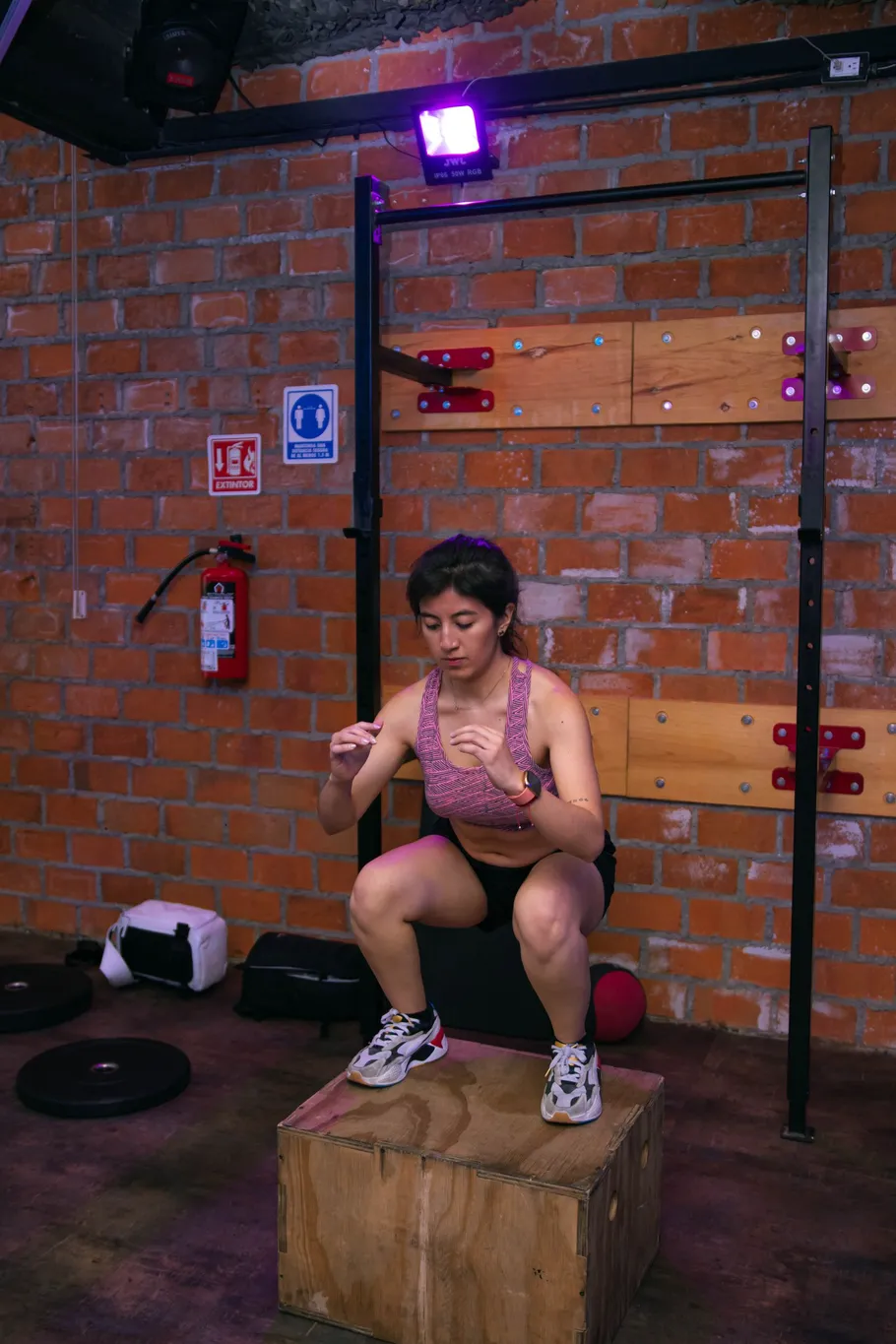
Jumping is the fastest way to train power in a small room. A barbell builds strength, a box teaches your legs to use it quickly — and that speed carries over to sprinting, sport and getting up stairs without thinking about it. 🦵
A box also scales with you in a way most home kit does not. Start with low step-ups, move to full jumps, then raise the height or add depth drops as your landings stay clean. One purchase covers years of progression, which is rare at this size and price.
The trade-off is honest: jumping is high impact, and a bad landing on a hard box punishes shins fast. That is exactly why material and height choice matter more here than with almost any other home-gym purchase — pick the box for your current jump, not the jump you wish you had.
How We Picked
We compared plyo boxes that are genuinely sold for home use, with published materials, heights and capacities — not commercial club units or one-off garage builds. 🏠
Our scoring weighed five things:
- Material and landing feel — wood, foam, steel or resin, because the landing surface decides how a miss feels.
- Height options and progression — fixed, 3-in-1 or adjustable, and whether the range suits beginners as well as strong jumpers.
- Footprint and floor fit — the real floor space a box claims, plus the landing room it needs around it.
- Stability, grip and honest capacity — non-slip tops, feet, handles, and stated ratings only, with conflicts stated plainly.
- Honest limits — every pick below states its listing warnings plainly, including smooth-floor warnings.
One honest limit up front: most plyo boxes are sold direct or through specialty dealers, not through Amazon storefronts, so only three picks here carry dated Amazon records — the rest use tagged search links, and no whole-guide record range is given. Research sources named in this guide include Garage Gym Reviews, FitnessVolt, BOXROX, garagegympower.com, garagegymlab.com and theplywood.com, plus maker records and manuals.plus records. Where sources disagree, both figures are stated — never silently resolved.
For the wider setup a box slots into, our home gym systems guide covers the full room, and our weight vests guide covers the load you add once bodyweight jumps feel easy.
Comparison

| Box | Best for | Type | Heights | Capacity |
|---|---|---|---|---|
| REP Fitness Adjustable Steel Plyo Box (PB-3000) | Adjustable steel, fixed landing size | Steel, twist-lock adjustable | 16 / 20 / 24 in | 400 lb |
| Rogue Foam Games Box | Premium foam 3-in-1 | Foam, vinyl-covered 3-in-1 | 20 / 24 / 30 in | Not disclosed in records checked |
| Synergee 3-in-1 Wooden Plyo Box | Budget wood | Plywood 3-in-1 | 30 / 24 / 20 in | 450 lb |
| Titan Fitness 3-in-1 Plyo Box | Wood with storage | Plywood 3-in-1, rotate style | 30 / 24 / 20 in | 550 lb |
| Yes4All Soft-Padded Wooden-Core Plyo Box | Soft wood-core | Wood core, foam and vinyl 3-in-1 | 20 / 18 / 16 in | 450 lb |
| BalanceFrom 3-in-1 Foam Plyo Box | Beginner compact foam | Foam 3-in-1 | 16 / 20 / 24 in | 220 lb (see conflict note) |
Two patterns jump out. The wood boxes carry the highest stated capacities, while the foam and soft boxes trade some firmness for much kinder misses — and only the REP changes height without flipping the whole box over.
Capacity figures need care here: the Titan’s 550 lb is the highest stated capacity of the six, but the Rogue’s rating was not disclosed in the records checked, so that comparison covers stated figures only. The BalanceFrom’s 220 lb is the lowest stated rating here — and a related-model record lists 330 lb, a conflict stated plainly in its section below.
REP Fitness Adjustable Steel Plyo Box (PB-3000)

The REP Fitness Adjustable Steel Plyo Box is the only steel box here, and the only one whose height changes without flipping anything. Twist-lock legs move it between 16, 20 and 24 in, while the landing surface stays a constant 16 × 16 in at every height. 🎯
That constant landing size is the real selling point. On a 3-in-1 box the top shrinks as the height grows; on the REP, your target never changes, so your foot placement stays identical from your first low jump to your tallest one. A rubber non-slip top, handles on all four sides and a 400 lb capacity complete a spec sheet that reads like it was written by someone who has actually missed a jump.
Garage Gym Reviews lists it shipping assembled with free shipping and a 1-year limited warranty, and one secondary roundup lists it at 40 lb with a 19.8 in square base. Steel costs more than plywood and it will never be the softest landing here — but for a lifter who wants one box, one landing target and no assembly, it is the most considered design of the six.
✅ Pros
- True height adjustment — no flipping the box
- Landing surface stays 16 × 16 in at every height
- Rubber non-slip top and handles on all four sides
- Ships assembled, 400 lb capacity
⚠️ Cons
- No 30 in option — tops out at 24 in
- Hard steel landing is the least forgiving here
- Only a 1-year limited warranty
- No confident US Amazon listing
⚠️ Listing check: this is a tagged search link, not a product page — no confident US ASIN was found for this box, and REP sells direct. Confirm the exact PB-3000 model on the listing before buying.
Best for: lifters who want adjustable height with one consistent landing target and no assembly.
May not fit: jumpers chasing a 30 in height, or anyone who wants a soft landing surface.
Rogue Foam Games Box

The Rogue Foam Games Box is the premium foam pick: a dense foam core with softer foam on all six sides, wrapped in an 18 oz vinyl cover with height markings, sold individually. At 20, 24 and 30 in it covers the full standard range in one box. 🧱
Foam changes the psychology of jumping. A missed landing on bare plywood ends the session; a missed landing on this box mostly ends the rep. That forgiveness is why foam boxes are the standard pick for beginners, for high-rep conditioning work and for anyone whose shins have already met a wooden edge.
Do not confuse it with Rogue’s separate stackable foam boxes, which come in 6, 12, 20 and 24 in sizes with hook-and-loop straps — a different product with a different job. The Games Box is one solid 58 lb unit, and no capacity figure was disclosed in the records checked, so buyers who need a stated rating should weigh that gap honestly.
✅ Pros
- Soft on all six sides — kindest misses here
- Full 20 / 24 / 30 in range in one box
- Height markings on a tough 18 oz vinyl cover
- Sold individually, no assembly
⚠️ Cons
- No capacity figure disclosed in records checked
- Heavy for a foam box at 58 lb
- Soft landing feels less firm for max-effort jumps
- No confident US Amazon listing
⚠️ Listing check: this is a tagged search link, not a product page — no confident US ASIN was found for this box, and Rogue sells direct. Confirm you are looking at the Foam Games Box, not Rogue’s separate stackable foam boxes, before buying.
Best for: beginners, high-rep conditioning work, and anyone whose shins have met a wooden edge.
May not fit: lifters who need a stated capacity figure, or anyone who wants the firmest possible landing.
Synergee 3-in-1 Wooden Plyo Box
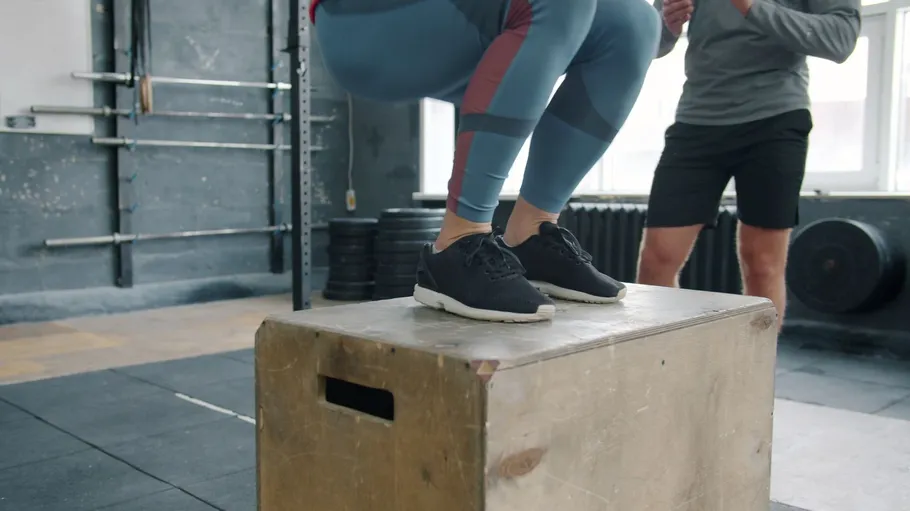
The Synergee 3-in-1 Wooden Plyo Box is the budget wood pick: 3/4 in plywood, lasered handles and a 450 lb capacity, with four size options — 30/24/20, 24/20/16, 20/18/16 and 16/14/12 in — so smaller jumpers are not forced onto a tall box. 🪵
It ships flat and needs self-assembly, which is where the budget price comes from. The largest 30/24/20 unit weighs 47.3 lb, the edges are square rather than rounded, and there is no non-slip cover — so grippy shoes and a sensible floor matter more with this box than with the laminate-topped Titan below.
One figure to keep straight: the 550 lb rating sometimes quoted alongside this box belongs to the Titan, not the Synergee. The Synergee’s own rating, agreed by the maker and by Garage Gym Reviews, is 450 lb — still comfortably above the foam picks here.
✅ Pros
- Four size options, including genuinely low ones
- 450 lb capacity at a budget price
- Lasered handles for carrying and flipping
- Sturdy 3/4 in plywood build
⚠️ Cons
- Ships flat — self-assembly required
- Square edges, no non-slip cover
- Hard plywood landing punishes misses
- Confirm availability on the listing
⚠️ Listing check: the Amazon record checked for this listing was crawled about 263 days ago and did not state an offer status — confirm the exact size option and current availability on the listing before buying.
Best for: budget buyers who want real plywood and a size option that matches their current jump.
May not fit: anyone who wants rounded edges, a non-slip top, or no assembly at all.
Titan Fitness 3-in-1 Plyo Box

The Titan Fitness 3-in-1 Plyo Box is the wood pick with a trick up its sleeve: a hatch storage panel for small gear, built into a 30/24/20 in plywood box rated at 550 lb — the highest stated capacity of the six. 📦
Garage Gym Reviews calls it “adjustable”, but read that word carefully: this box changes height the 3-in-1 way, by rotating it onto a different face — it is not pin-adjustable like the REP’s twist-lock legs. What it does add over the Synergee is rounded edges, an anti-slip laminate top, four non-skid rubber feet and built-in handles.
The laminate top and rubber feet answer the two most common wood-box complaints — slippery landings and a box that walks across the floor. The trade-off is a single size option and a hard landing, so this is the pick for a confident jumper who wants wood done properly, not for a beginner learning to land.
✅ Pros
- Highest stated capacity here at 550 lb
- Storage hatch for small gear
- Rounded edges and anti-slip laminate top
- Non-skid rubber feet and built-in handles
⚠️ Cons
- Rotate-style height change, not pin-adjustable
- Only one size option (30/24/20 in)
- Hard landing punishes misses
- No confident US Amazon listing
⚠️ Listing check: this is a tagged search link, not a product page — no confident US ASIN was found for this box, and Titan sells direct. Confirm the exact 3-in-1 model on the listing before buying.
Best for: confident jumpers who want the highest stated capacity and wood done properly.
May not fit: beginners, anyone who wants true pin adjustment, or anyone needing a lower size option.
Yes4All Soft-Padded Wooden-Core Plyo Box
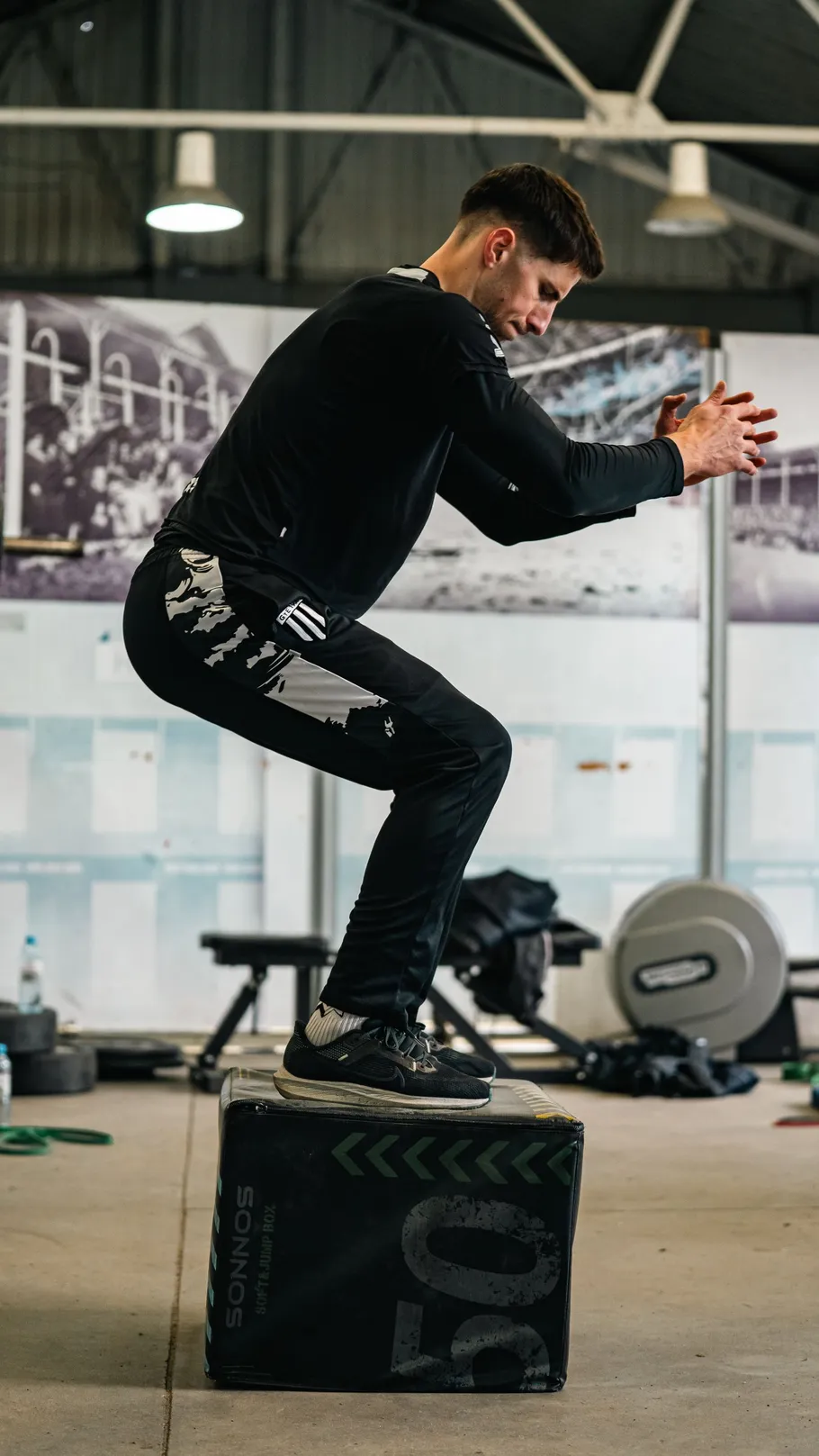
The Yes4All Soft-Padded Wooden-Core Plyo Box tries to have it both ways: a wooden core for structure, wrapped in EVA foam and a vinyl cover so all six sides stay soft. The version covered here is the 20/18/16 in set, rated at a 450 lb weight limit. 🛡️
That hybrid build is the honest middle ground of this guide. It lands far kinder than bare plywood and holds its shape better than a pure foam box, which makes it a strong pick for shared households where beginners and experienced jumpers use the same box. Other sizes exist — 12/14/16, 24/20/16 and 30/24/20 in — with different ratings, so match the figures to your size, not to the range as a whole.
One listing warning carries real weight: this box should not be used on smooth flooring. Pair it with rubber matting or a textured floor, or the soft sides will not save a box that slides on landing.
✅ Pros
- Soft on all six sides with a solid wood core
- 450 lb limit on the 20/18/16 version
- Good shared-household compromise
- Four size options across the range
⚠️ Cons
- Should not be used on smooth flooring
- Other sizes carry different ratings — check yours
- Soft top feels less firm for max-effort jumps
- Confirm availability on the listing
⚠️ Listing check: the Amazon record checked for this listing was crawled about 262 days ago and did not state an offer status — confirm the exact 20/18/16 version and current availability on the listing before buying.
Best for: shared households and jumpers who want wood structure with a forgiving landing.
May not fit: smooth floors without matting, or anyone who wants the firmest possible landing.
BalanceFrom 3-in-1 Foam Plyo Box
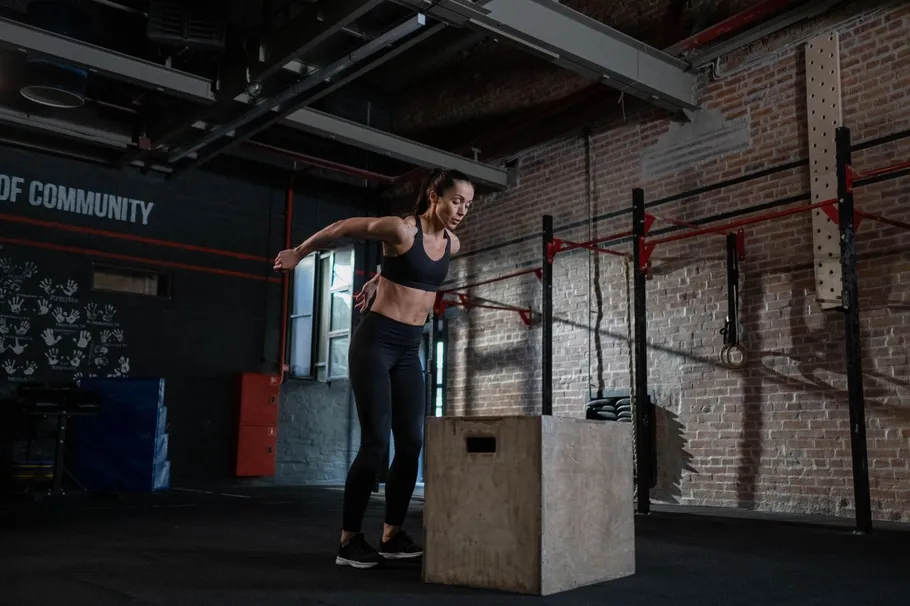
The BalanceFrom 3-in-1 Foam Plyo Box, in the compact 16/20/24 in version covered here, is the beginner pick: a foam 3-in-1 with no 30 in side, so the tallest jump it asks of you is a manageable 24 in. 🌱
A FitnessVolt review that checked this exact listing in August 2026 ties it to a 220 lb rating — the lowest stated rating here, and an honest match for a beginner box that will mostly see bodyweight jumps. Do not mix in figures from the larger 20/24/30 variant, which carries different ratings entirely.
One conflict must be stated plainly: a manuals.plus record for a related BalanceFrom model lists 330 lb, against the 220 lb figure tied to this exact listing. Until the maker clears that up, treat 220 lb as the figure for this version and buy with that ceiling in mind.
✅ Pros
- Friendly 16 / 20 / 24 in range — no 30 in side
- Foam landing is kind to beginners’ shins
- Compact footprint for small rooms
- Traceable listing checked in August 2026
⚠️ Cons
- Lowest stated rating here at 220 lb
- Rating conflict: a related-model record lists 330 lb
- No 30 in option for progressing jumpers
- Confirm availability on the listing
⚠️ Listing check: the listing for this compact 16/20/24 version was checked by FitnessVolt in August 2026 — confirm the exact compact version and current availability on the listing before buying, and do not rely on the larger variant’s figures.
Best for: beginners and small rooms that want a soft, low-ceiling first box.
May not fit: heavier jumpers, anyone chasing a 30 in height, or anyone who needs one settled capacity figure.
How to Choose a Plyo Box
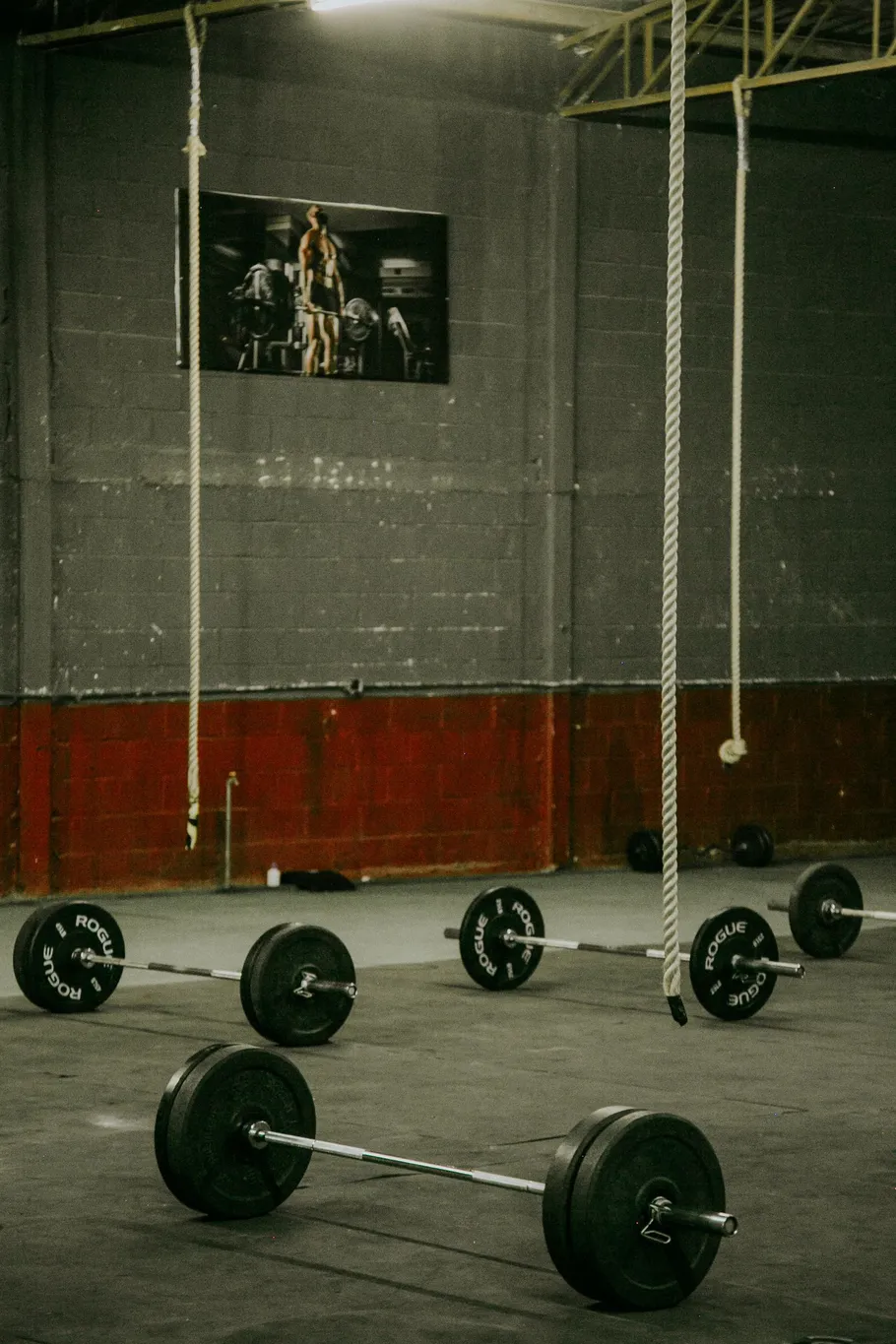
Choosing a plyo box comes down to four questions, answered in order: what material suits your landings, what heights match your jump today, how much room you actually have, and whether the box stays put when you land on it. Answer those honestly and the right pick mostly picks itself. 🎯
Start with your current jump, not your goal jump. A box you can land cleanly ten times in a row beats a taller box you survive twice — and every section below keeps that rule in view.
Wood, Foam, Steel or Resin?

Wood is the classic: firm, stable and cheap, but it punishes a missed landing and its edges demand respect. Foam is the forgiving opposite — kind to shins, heavier to move than it looks, and slightly less firm under max-effort jumps. 🪵
Steel, here only the REP, trades softness for precision: one landing size at every height, a grippy top and no assembly. Resin boxes exist in this market too, but none made this six — the material field is already well covered by the wood, foam and steel picks above, and a seventh pick would have repeated a job already done.
Rule of thumb: first box, pick foam or soft-core; confident jumper, pick wood or steel. Your shins will vote for foam long before your ego votes for wood.
Height Range and Progression
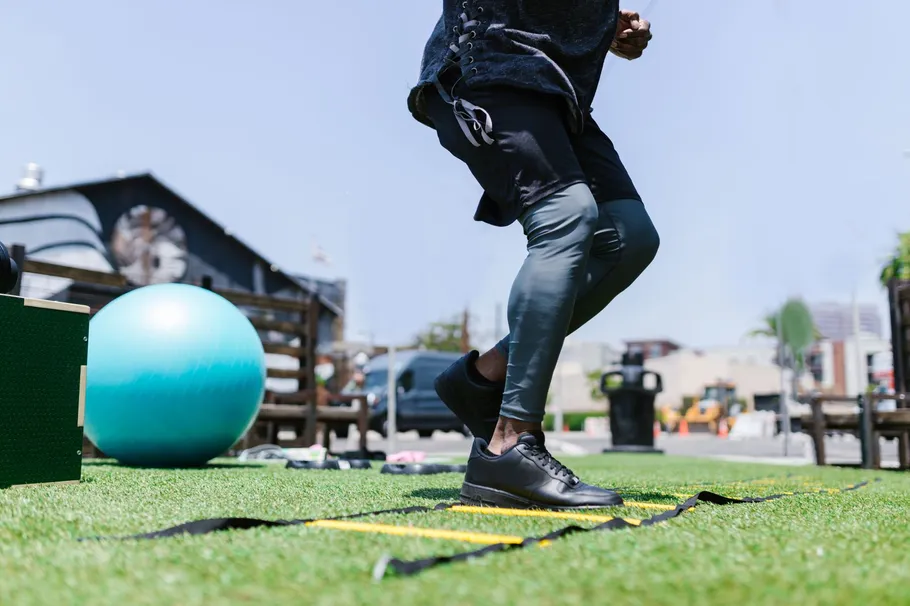
Progression is the whole reason to buy a multi-height box. A 3-in-1 gives you three heights by rotation, an adjustable frame gives you three by a twist — either way, you move up only when your landings stay quiet, balanced and repeatable at the current height. 📈
Beginners should start at 16–20 in with step-ups before full jumps, and treat 30 in as a later milestone, not a starting point. The BalanceFrom’s 24 in ceiling is a feature for a first box, not a flaw — it removes the temptation to jump higher than your landings can handle.
For the load you add once bodyweight jumps feel easy, our ankle weights guide covers a safer first step than holding dumbbells through a jump.
Footprint and Flooring
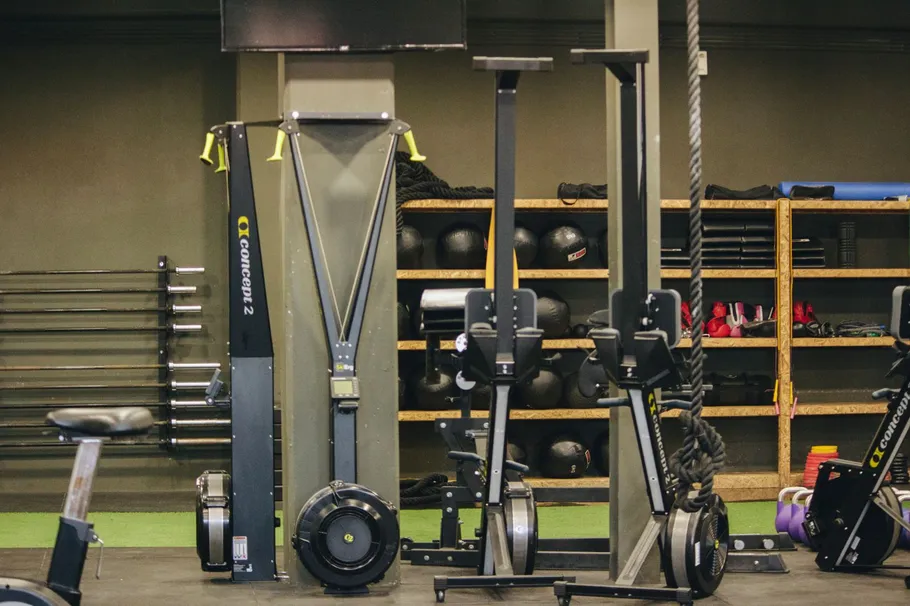
A plyo box claims more room than its footprint suggests. You need clear space to approach, land and step off — plus a ceiling high enough that your head at the top of a jump stays well clear of lights and beams. Measure the jump, not just the box. 📏
Flooring decides grip. Rubber matting or a textured floor keeps a box planted; smooth wood or tile lets some boxes slide, and the Yes4All carries an explicit warning against smooth floors. If your room is smooth-floored, budget for a mat with the box, not after the first slide.
For the small-space training tools that share this corner of the room, our mini trampolines guide covers the low-impact rebounder alternative for days when jumping onto a box is too much.
Stability, Grip and Weight Limit

Stability is non-negotiable: a box that rocks, walks or tips turns a training tool into a hazard. Check the feet, the top surface and the joints before every session, and retire a box whose cover tears or whose legs loosen. ⚖️
Grip comes from three places — the top surface, your shoes and the floor — and all three have to agree. A laminate top on a smooth floor with worn shoes is a slide in three parts, so fix the weakest of the three before you jump higher.
Weight limits here are stated ratings, not guarantees, and one pick (the Rogue) discloses none at all. Treat the limit as a ceiling for the jumper plus any added load, and remember the BalanceFrom conflict: 220 lb on this exact listing, 330 lb on a related-model record.
Safety
Jump training is safe when it is progressive and boring — and risky the moment it becomes a contest with the box. The steps below keep it boring in the best way. For joint support on heavy landing days, our knee sleeves guide covers what actually helps and what is just compression theatre.
- Warm up first — light cardio, leg swings and a few low step-ups before any full jump.
- Start low — begin at 16–20 in and earn taller heights with clean, repeatable landings.
- Clear the space — flat, non-slip floor, room to approach and land, nothing to trip on behind you.
- Wear grippy shoes — worn soles on a smooth box top are the most common avoidable slip.
- Land with both feet, soft knees, and step down — never jump backwards off a tall box.
- Check the box before every session — wobble, torn covers, loose legs or a sliding base means no jumps today.
- Stop when tired — missed landings cluster at the end of a session, so end on a clean rep, not a failed one.
This section is general training information, not medical advice. If you have knee, ankle, back or heart concerns, check with a qualified professional before starting jump training.
Frequently Asked Questions

What height plyo box should a beginner start with? Start at 16–20 in with step-ups, then low jumps, and only move up when you can land quietly and balanced ten times in a row. A box you land cleanly beats a taller box you survive.
Are foam plyo boxes better than wooden ones? For beginners, yes — foam forgives misses that plywood punishes. For confident jumpers chasing max height, wood or steel gives a firmer, more predictable landing. The Yes4All hybrid splits the difference.
Can I use a plyo box on a smooth floor? Some boxes cope, some do not — and the Yes4All carries an explicit warning against smooth floors. Rubber matting under any box is cheap insurance against the slide that ends a session.
What is the difference between a plyo box and a step platform? A plyo box is built for full jumps and hard landings in wood, foam or steel; a step platform is built for low, rhythmic aerobic stepping. Different jobs, different construction, different guides.
Do I need more than one box? No — a 3-in-1 or an adjustable box covers progression in one purchase. A second box only makes sense if two people train at different heights at the same time.
What should I buy alongside a plyo box? A rubber mat for grip, grippy training shoes, and recovery tools like our foam rollers for the soreness that follows your first real jump session.
Our Pick: Start Here

If you want one answer: start with the REP Fitness Adjustable Steel Plyo Box (PB-3000) if you want adjustable height with one consistent landing target, the Rogue Foam Games Box if you want the kindest premium foam landing, and the Synergee 3-in-1 Wooden Plyo Box if you want plywood value in a size that matches your jump.
Value with storage points to the Titan Fitness 3-in-1 Plyo Box, the soft hybrid points to the Yes4All Soft-Padded Wooden-Core Plyo Box, and the beginner-friendly first box points to the BalanceFrom 3-in-1 Foam Plyo Box.
Whatever you choose, measure your room and ceiling, confirm the exact model and availability on the listing, and test your first jumps low before you chase height. That one habit matters more than any feature list.
As an Amazon Associate, we earn from qualifying purchases made through links on this page, at no extra cost to you.
Some links on this page are affiliate links. If you buy through them, we may earn a commission at no extra cost to you. Availability and specifications change over time, so please confirm the model, capacity and current offer on the listing before buying.