

A full power rack is the safest way to squat at home. It is also the biggest, heaviest, and hardest to fit through a door. 🏋️
A squat stand is the compromise: two uprights (or one connected frame) that hold the bar for squats, bench, and presses, in roughly half the floor space of a rack — and most of them move or store away when the session is over.
But let us be plain from the start: a stand is not a rack. It has no four-post cage around you, most independent pairs have no real safety catch for a failed squat, and a stand that tips, walks, or is loaded past its rating is not a bargain — it is a hazard.
Used the right way — on a flat floor, loaded within its rating, safeties set where they exist, and never tested with a maximal lift — a squat stand is the cheapest way to barbell-train in a small room.
How We Picked These Squat Stands
Photo: Wikimedia Commons
This guide is research-based. We did not buy or hands-on test these stands, and we do not claim otherwise.
We compared verified buyer reviews and manufacturer specifications, and we checked each product’s Amazon listing status through search results and listing trackers.
We picked 6 stands that are genuinely sold and cover different needs: a multi-function rack, a full-featured stand, two independent pairs at different prices, an adjustable-width rack, and a heavy independent pair.
Prices are not quoted in this guide because they change often. The check-price links take you to the current listing, where you can see the latest price and availability.
Availability and colour options vary, so if your option shows as unavailable, check the listing’s other options before switching products.
One note before we start: capacity figures are makers’ figures, not tested ratings — and on stands they are messier than on racks, because several makers quote different figures for the same product. Where sources disagreed, this guide says so and advises the lower figure.
Quick Comparison
Photo: US Air Force / Wikimedia Commons
| Stand | Type | Capacity | Best for |
|---|---|---|---|
| HulkFit Multi-Function Adjustable Power Rack | Connected rack | 800 lb (variant) | Best overall |
| Sunny Health & Fitness Essential Power Rack SF-XF920063 | Connected stand | 800 lb | Best full-featured stand |
| Yaheetech Adjustable Squat Rack Pair 44–70 in | Independent pair | 441–551 lb (conflicts) | Best budget pair |
| F2C Max Load 550 lb Pair 40–66 in | Independent pair | 550 lb low / 440 lb high | Best value pair |
| K KiNGKANG Adjustable Multi-Function Barbell Rack | Adjustable-width rack | 600–690 lb (conflicts) | Best adjustable width |
| CFF FIT Independent Squat Stands Gen 2 | Independent pair | 750 lb | Best heavy-duty pair |
1. HulkFit Multi-Function Adjustable Power Rack — Best Overall
Photo: Nenad Stojkovic / Wikimedia Commons
Who it suits: lifters who want one frame that does squats, bench, pull-ups, and dips, with spotter arms included, in a garage or spare room.
HulkFit’s multi-function rack is a connected steel frame with two pull-up bars, J-hooks, spotter arms, dip bars, plate holders, and resistance-band pegs. The 800-pound version weighs about 110 pounds and measures roughly 46 by 50 by 81 inches.
This is the closest thing in the guide to a full rack: the connected frame cannot walk apart the way two independent stands can, and the spotter arms give you a real catch for squats and bench. It is also the heaviest pick here — this is a set-it-and-leave-it frame, not one you fold away nightly.
Pros: connected frame with spotter arms, J-hooks, dip bars, and pull-up bars included; 800-pound maker rating on this variant; long-running budget brand with a large buyer base; plate holders steady the frame.
Cons: HulkFit sells this rack family in 500, 800, and 1,000-pound variants, and one independent review cites a 700-pound static figure — confirm the variant before ordering; the heaviest and least portable pick here; assembly is a real job, not a five-minute setup.
👉 Check price on Amazon (confirm the 800-pound variant — HulkFit sells several capacities under similar names).
2. Sunny Health & Fitness Essential Power Rack SF-XF920063 — Best Full-Featured Stand
Photo: Aditya Oberai / Wikimedia Commons
Who it suits: lifters who want a walk-in stand with a pull-up bar, plate storage, and band posts, without paying for a full cage.
Sunny’s Essential Power Rack is a connected squat stand with J-hooks, an adjustable pull-up bar with 18 height settings, weight-plate holders, and resistance-band posts. The maker rates the frame at 800 pounds, and the assembled stand measures roughly 37 by 53 by 87 inches.
The walk-in design is the practical detail: you step into the stand to unrack, the way you would in a cage, instead of walking a bar out between two separate posts. The plate holders double as ballast — loaded plates steady the frame for everything else.
Pros: walk-in connected frame; adjustable pull-up bar; plate holders and band posts included; 800-pound maker frame rating; well-known home-gym brand.
Cons: one review source describes the J-hooks as rated to 300 pounds, against the 800-pound frame rating — treat the hooks as the working limit until the listing confirms otherwise; the tallest pick here at 87 inches, so check ceiling height; a lat pulldown attachment is sold separately, not included.
3. Yaheetech Adjustable Squat Rack Pair 44–70 in — Best Budget Pair
Photo: Nenad Stojkovic / Wikimedia Commons
Who it suits: lifters on a tight budget who want a simple, portable pair for squats and bench, and who train well within moderate weights.
Yaheetech’s pair is two independent steel stands with 14 height levels from 44 to 70 inches, adjustable J-hooks and safety arms, and a footprint of about 20 by 22 inches per stand. The pair weighs roughly 50 pounds together, so it stores against a wall between sessions.
Independent pairs are the cheapest way into barbell training and the easiest to store — and also the least forgiving. The two stands are not connected, so they must be set square and level every session, and a bar racked unevenly loads one stand more than the other.
Pros: cheapest approach here; 14 height levels cover squats, bench, and presses; safety arms included; light enough to store away; fits standard and Olympic bars.
Cons: capacity figures conflict across sources — one roundup says 441 pounds, the maker’s manual says 551 pounds — so treat 441 pounds as the working limit until the listing confirms otherwise; no connected frame, so setup care matters more; the lightest build here, so it suits moderate weights, not maximal lifts.
4. F2C Max Load 550 lb Pair 40–66 in — Best Value Pair
Photo: stu_spivack / Wikimedia Commons
Who it suits: lifters who want a proven independent pair with real safety spotters, at a price near the budget pick but with a clearer spec sheet.
F2C’s pair is two freestanding steel stands with 14 spotter positions on each post, adjustable from 40 to 66 inches, built from 50 by 50 by 1.5-millimetre square tube. The pair weighs about 40 pounds and fits standard and Olympic bars.
F2C is unusually honest about one thing most makers hide: the rating depends on height. The listing states 550 pounds at the lowest height and 440 pounds at the highest. That is the number to train by — the height you actually rack at, not the headline.
Pros: height-dependent rating stated plainly (550 lb low, 440 lb high); 14 spotter positions per post; 50-millimetre square tube; Amazon’s Choice pick with a long sales history; light and storable.
Cons: at full height the working limit is 440 pounds, not 550 — tall lifters should plan around that; independent stands, so setup must be square every session; no pull-up bar, dip bars, or plate storage.
5. K KiNGKANG Adjustable Multi-Function Barbell Rack — Best Adjustable Width
Photo: Nenad Stojkovic / Wikimedia Commons
Who it suits: lifters who share a rack, or who want one frame whose width adjusts for squats, bench, and dips without buying separate equipment.
K KiNGKANG’s rack is a connected frame built from 50 by 50-millimetre square steel tube, with 13 height levels from about 34 to 65 inches and width adjustable from about 28 to 47 inches. The same frame serves squats, bench, and dips, with a triangle-braced structure and lock nuts at the joints.
Adjustable width is genuinely useful and genuinely rare at this price: a narrow setting suits bench work, a wide setting suits squats, and the frame still packs down smaller than a fixed rack. But the spec sheet is the messiest in this guide, so read the warning below before ordering.
Pros: width adjusts from about 28 to 47 inches — rare at this price; 13 height levels; dip-capable as well as squat- and bench-capable; 50-millimetre square tube with triangle bracing.
Cons: capacity figures conflict badly across sources — 600, 660, and 690 pounds all appear — so treat 600 pounds as the working ceiling until the listing confirms otherwise; a lesser-known brand than the others here; check the listing’s exact dimensions, since the frame’s size varies by setting.
6. CFF FIT Independent Squat Stands Gen 2 — Best Heavy-Duty Pair
Photo: US Air Force / Wikimedia Commons
Who it suits: stronger lifters who want independent stands — for storage and portability — without giving up a serious weight rating.
CFF’s Gen 2 stands are a pair of freestanding independent squat stands rated by the maker at 750 pounds, with a shipped weight of about 80 pounds — roughly double the budget pairs — and a limited lifetime warranty. They are sold by CFF direct and through Amazon.
Weight is the honest signal here: at 80 pounds shipped, these stands are built from heavier steel than the 40-pound pairs, and that mass is what keeps a loaded bar steady when you rack it hard. The trade-off is portability — these are not stands you casually lean against a wall every night.
Pros: 750-pound maker rating, the highest independent-pair rating here; heavy 80-pound shipped weight for stability; limited lifetime warranty; long-running specialist brand.
Cons: no confident US product-page link was found, so this is a search link — check the listing before ordering; the heaviest independent pair here, so less portable; no pull-up bar, dip bars, or plate storage.
👉 Search for CFF independent squat stands on Amazon
How to Choose the Right Squat Stand
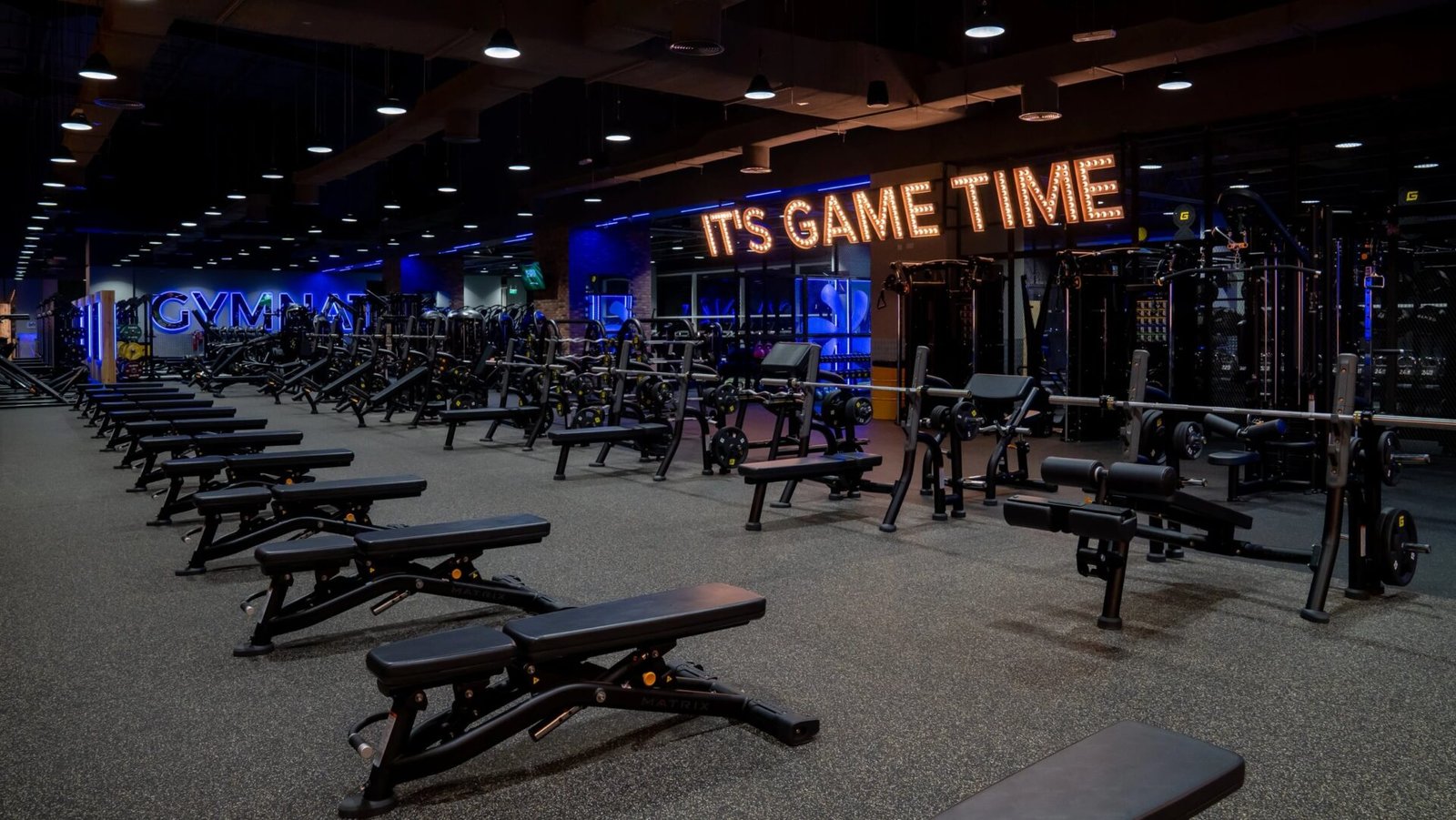
Photo: GymNation / Wikimedia Commons
Start with your room, not the stand. Measure the floor space, the ceiling height, and the door the stand has to fit through — in that order, every time.
Then buy in this order: a connected frame if you have the space and lift heavy, an independent pair if you need to store the stands away, and a heavy-duty pair if your weights are already serious.
Stand type: independent pair vs connected frame vs half rack
Photo: IrishMalcolm / Wikimedia Commons
Independent pairs (Yaheetech, F2C, CFF) are two separate stands. Best for storage and small rooms, worst for stability — they must be set square and level every session, and they have no frame tying them together.
Connected frames (HulkFit, Sunny, K KiNGKANG) join the uprights with crossmembers. Best for stability and for extras like pull-up bars and spotter arms, worst for storage — they stay assembled and they stay put.
Half racks sit between stands and full cages, with a deeper base and often a pull-up bar. They are worth considering if a connected stand feels too light but a full cage will not fit — but they are a different purchase from anything in this guide, so compare them separately.
Capacity and height: maker ratings are ceilings, and height changes them
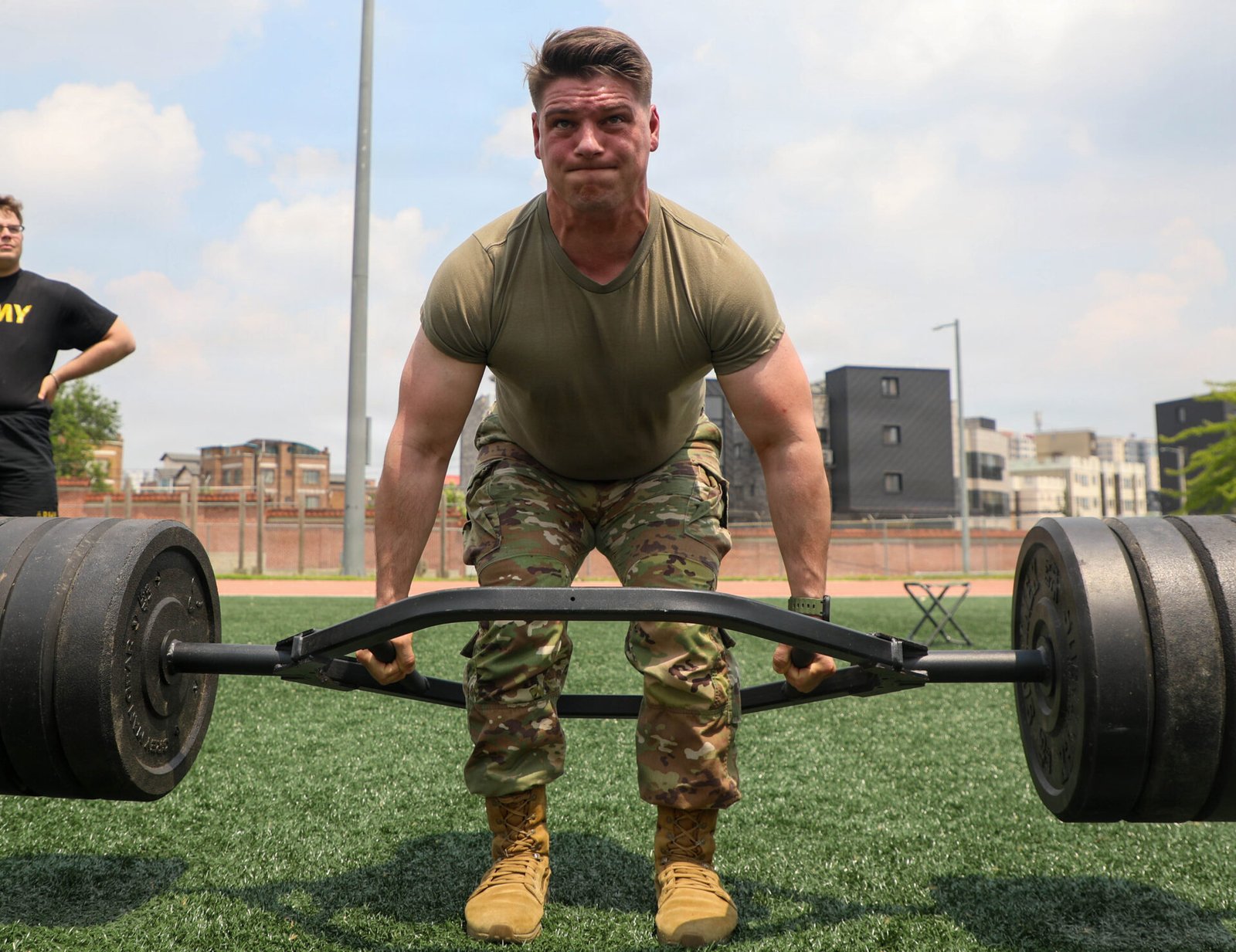
Photo: US Army / Wikimedia Commons
Capacity figures are makers’ figures, not tested ratings. Treat them as a ceiling, not a target: load well under the stated limit, and never test a rating with a maximal lift.
Height changes the rating. F2C states this plainly — 550 pounds low, 440 pounds high — and the same physics applies to every stand here, whether the maker admits it or not. Train by the rating at the height you rack at.
Three honest flags from this guide: Yaheetech’s capacity is 441 pounds in one source and 551 in another, K KiNGKANG’s is 600, 660, or 690 depending on the source, and Sunny’s J-hooks are described at 300 pounds against an 800-pound frame. In each case this guide advises the lower figure.
Footprint and floor: what the stand needs from the room
Photo: Wikimedia Commons
A stand’s footprint is the floor it covers — but you also need walk-out room behind it, plate-loading room beside it, and ceiling height above it. The Sunny stand is 87 inches tall; the HulkFit frame is about 50 inches wide. Measure all three before ordering.
Floor protection matters on every stand: rubber feet or a mat under the feet protect the floor and stop the stand walking. Independent pairs benefit most, since nothing ties them down.
Weight on the stand steadies it. Plate holders loaded with plates — on the HulkFit and Sunny frames — lower the centre of gravity and make the whole frame harder to tip. An empty light stand is a tippier stand.
Safety: what a stand can and cannot catch
Photo: US Air Force / Wikimedia Commons
Set safety arms before every heavy set, at the right height for that lift — just below your lowest squat depth, just above your chest on the bench. Safeties left at yesterday’s height are not safeties.
Independent pairs without spotter arms cannot catch a failed squat. If you train alone on such a pair, keep the weights moderate, know how to bail safely, and never attempt a maximal lift you cannot walk out of.
No stand makes a workout safe by itself. A stand on an uneven floor, loaded past its rating, or assembled without its pins locked is not fixed by buying a heavier stand — fix the setup first.
Check pins and J-hooks before every set, and inspect welds and feet regularly. If you have an injury, or a condition that affects how safely you can lift, talk to a clinician or qualified coach before training alone with heavy weights. This guide is general information only, not medical advice.
One last note on stands not linked here: Rogue’s squat stands, Titan’s T-3 independent stand (1,000-pound maker rating), and FringeSport’s commercial independent stand (1,000-pound maker rating) are all sold direct from their own stores, not through Amazon, so they are named here, not linked. Valor’s BD-9 independent stands are also sold direct — and their current maker rating is 350 pounds total including the bar, against 500 pounds in older reviews, so the lower figure is the one to trust. CAP’s FM-905Q is a full power rack, not a stand, so it belongs in a different comparison entirely.
Frequently Asked Questions
Photo: Staff Sgt. Andrew Porch / Wikimedia Commons
Is a squat stand safe for heavy squats?
A connected frame with spotter arms, loaded within its rating on a flat floor, is safe for serious weights. An independent pair without spotters is safe for moderate weights and risky for maximal attempts alone — know which one you own.
Do I need a full rack instead?
If you have the space, the budget, and you squat heavy alone, a full cage is safer — four posts and full safeties beat any stand. A stand is the answer when space, budget, or portability rules a cage out.
Can I bench press on a squat stand?
Yes, if the stand adjusts low enough for bench height and you use a bench that fits between the uprights. Independent pairs suit bench work well, since you set the spacing yourself — just set the safeties for bench height, not squat height.
Will a stand fit my Olympic bar?
Every stand in this guide fits standard 7-foot Olympic bars, and most fit 6-foot bars too. Check the J-hook spacing: a bar shorter than the stand’s minimum width will not rack at all.
Do stands work on carpet?
They work, but less stably — a stand can sink unevenly into thick carpet. A plywood board or a lifting platform under the feet gives a level base and is worth the effort.
When should I replace a squat stand?
When a pin bends or will not lock, a weld cracks, a J-hook lining wears through to bare metal, or a stand wobbles even when level and pinned. Worn stands fail without warning — replace them before they do.
Our Pick in One Line
Photo: US Air Force / Wikimedia Commons
If you want one answer: the HulkFit multi-function rack is the best all-round buy because its connected frame, spotter arms, and included extras cover squats, bench, pull-ups, and dips in one purchase — but if you need to store your stands away after every session, buy the F2C pair instead, and train by its 440-pound high-height rating.
For the rest of your home-gym setup, see our resistance band anchors guide and our gym timers guide, and for the accessories that fit a rack you already own, see our squat rack accessories guide.
As an Amazon Associate, we earn from qualifying purchases made through links on this page, at no extra cost to you.
This guide is research-based: we compared verified buyer reviews and manufacturer specifications, and we did not buy or hands-on test these products. Prices and availability change, so check the listing before ordering. The training information here is general information only, not medical advice — if you have an injury or a condition that affects how safely you can lift, talk to a clinician first.