

Your rack holds a bar for squats and bench. That is the job it came with — but it is only half the job it can do. 🏋️
The right accessories turn one rack into a full station: J-hooks that centre the bar, spotter arms that catch a failed rep, dip bars for upper-body work, a landmine for rows and presses, and plate pegs that keep plates on the rack instead of the floor.
But let us be plain from the start: an accessory expands what a rack does, but it does not make a rack safe by itself, it does not replace proper rack assembly and anchoring, and it does not fix an accessory that does not fit your rack’s uprights.
Used the right way — the right fit for your uprights, loaded within its rating, safeties set before every heavy set — rack accessories are the cheapest upgrade a home gym ever buys.
How We Picked These Accessories
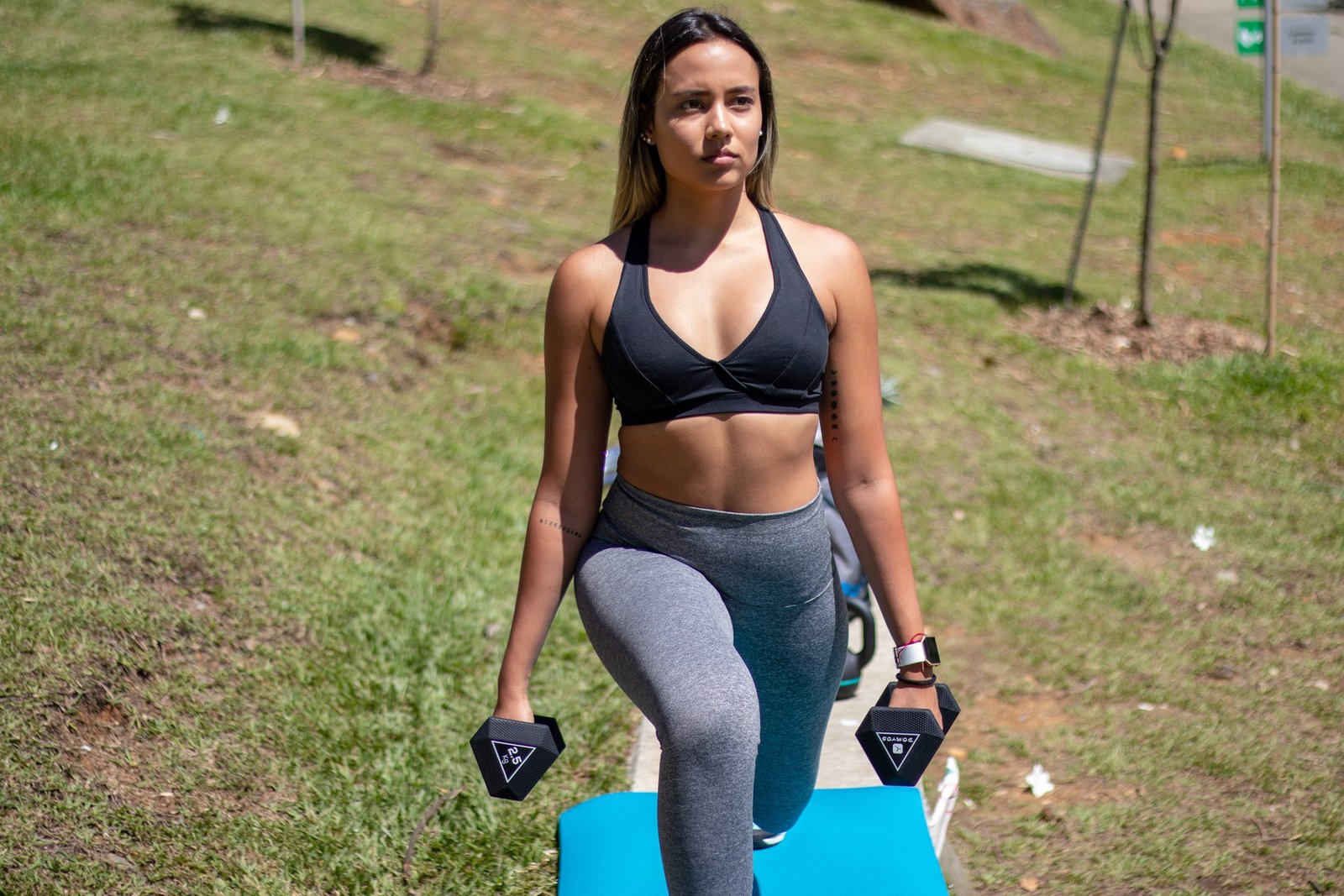
Photo: Tyler Read / Wikimedia Commons
This guide is research-based. We did not buy or hands-on test these accessories, and we do not claim otherwise.
We compared verified buyer reviews and manufacturer specifications, and we checked each product’s Amazon listing status through search results and listing trackers.
We picked 6 accessories that are genuinely sold and cover different jobs: roller J-hooks, heavy spotter arms, dip bars, a landmine, on-rack plate pegs, and a second J-hook set for a different upright size.
Prices are not quoted in this guide because they change often. The check-price links take you to the current listing, where you can see the latest price and availability.
Availability and size options vary, so if your option shows as unavailable, check the listing’s other options before switching products.
One note before we start: fit is everything here. Measure your rack’s uprights — width, depth, and hole diameter — before ordering anything. An accessory for the wrong upright size is not a bargain, it is a return.
Quick Comparison
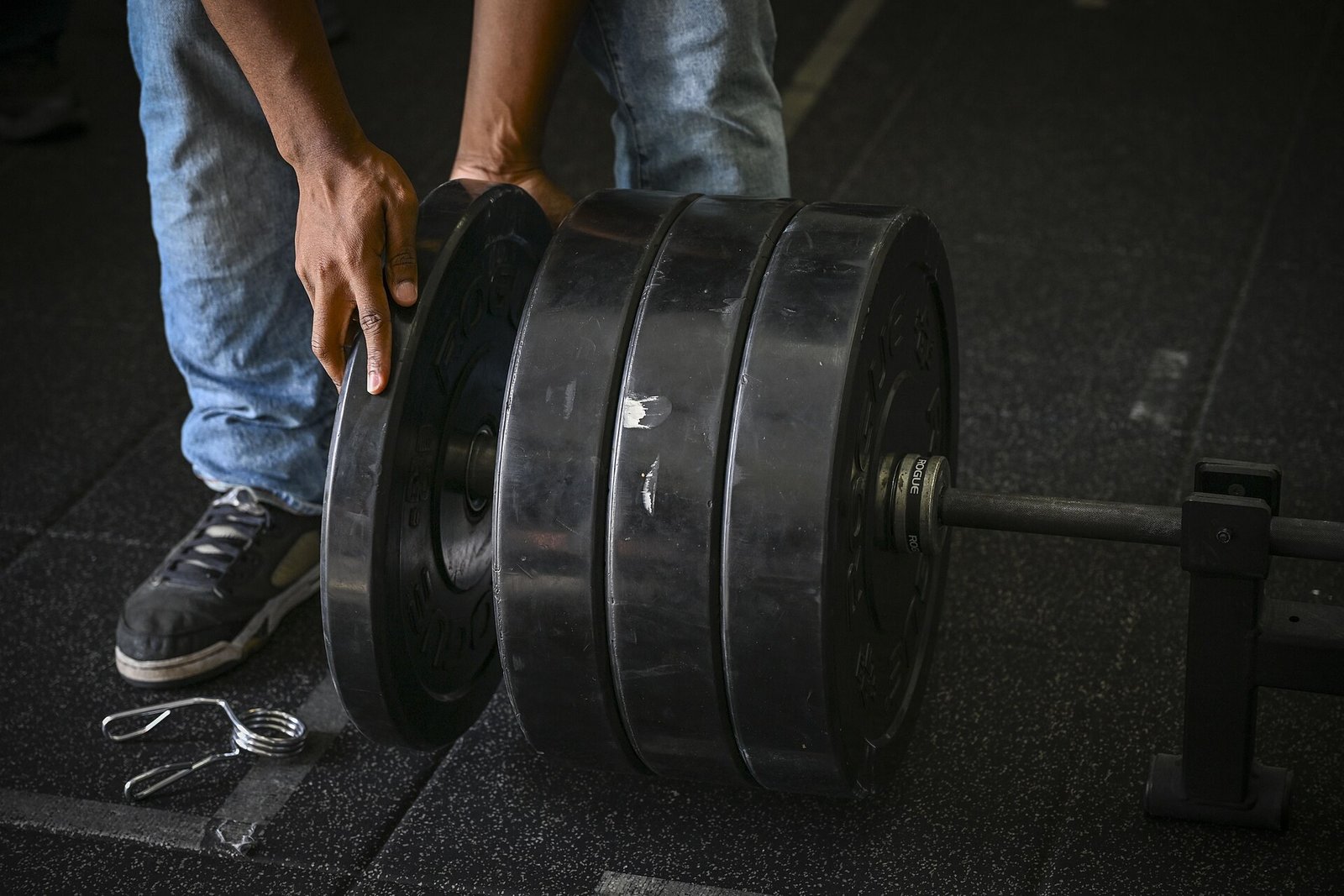
Photo: Wikimedia Commons
| Accessory | Type | Fits | Best for |
|---|---|---|---|
| Yes4All Roller J-Hooks | J-hooks | 2×2, 1 in hole | Best overall |
| EVERYMATE Safety Spotter Arms | Spotter arms | 3×3, 1 in hole | Best spotter arms |
| Yes4All Dip Bars | Dip bars | 2×2, 1 in hole | Best dip bars |
| Yes4All Landmine Attachment | Landmine | 1 in & 2 in bars | Best landmine |
| Yes4All Plate Holder Attachment (set of 4) | Plate pegs | 2×2 racks | Best plate pegs |
| Synergee J-Hooks | J-hooks | 2×3, 1 in or 5/8 in hole | Best 2×3 J-hooks |
1. Yes4All Roller J-Hooks for 2×2 Power Racks — Best Overall
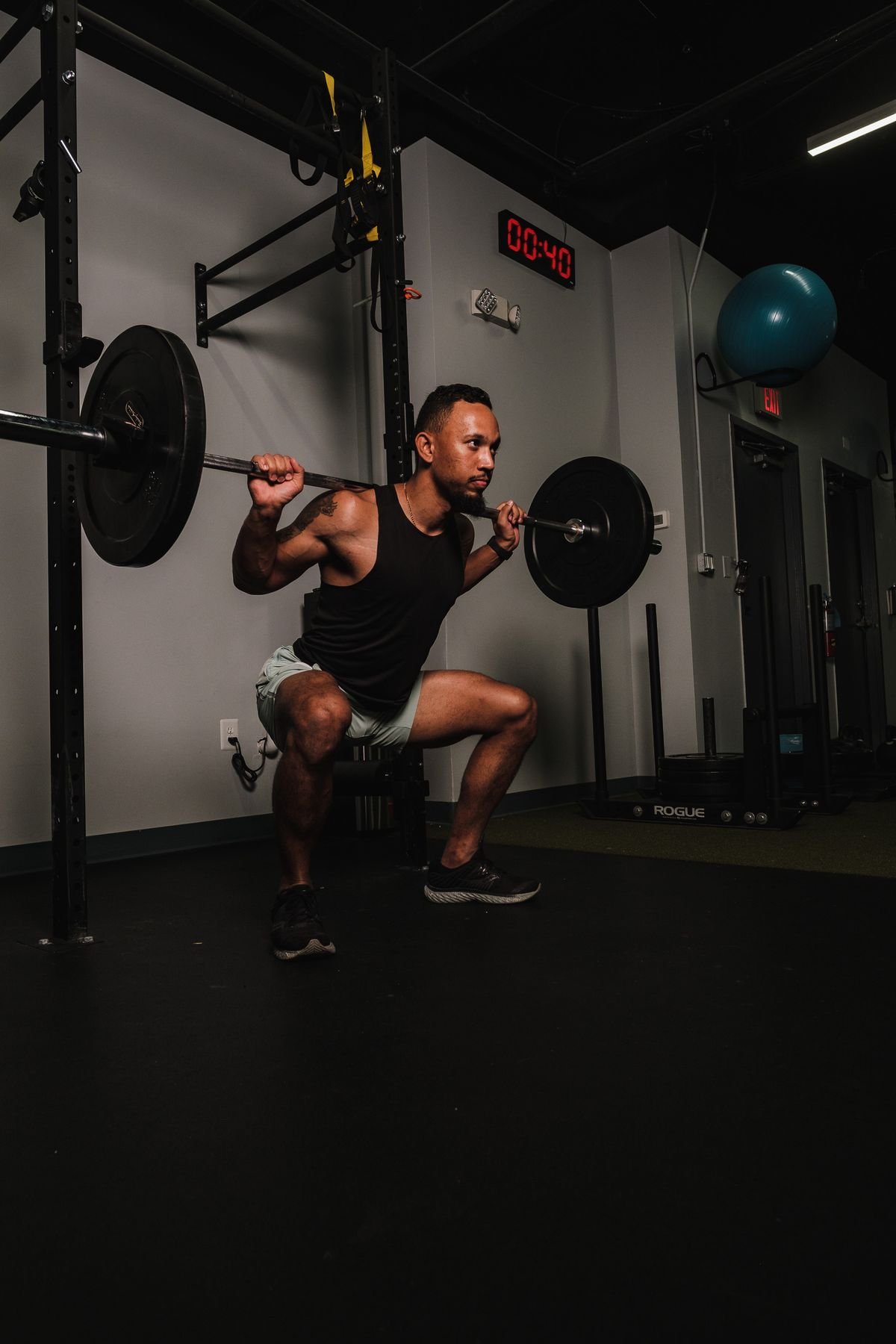
Photo: Pexels
Who it suits: lifters with a 2×2 rack who want their bar to centre itself on the hooks instead of rolling to one side.
Yes4All’s roller J-hooks are a pair of barbell holders for 2-inch by 2-inch power racks with a 1-inch hole. Rollers in the hook cradle let the bar roll to centre as you rack it, instead of catching on a flat shelf.
The maker rates the pair at 450 kilograms in total, about 227 kilograms per hook. That covers any bar a home lifter racks, and the roller design is the practical detail: re-racking a heavy squat is smoother and quieter than on plain steel hooks.
Pros: rollers centre the bar on re-racking; fits the common 2×2 with 1-inch-hole rack; strong pair rating; long-running budget brand.
Cons: made for 2×2 racks only — not for 2×3 or 3×3 uprights; Yes4All sells several similar J-hook variants, so confirm the listing matches the roller 2×2 pair before ordering; check the listing’s pad and pin details, since variants differ.
2. EVERYMATE Safety Spotter Arms for 3×3 Power Racks — Best Spotter Arms
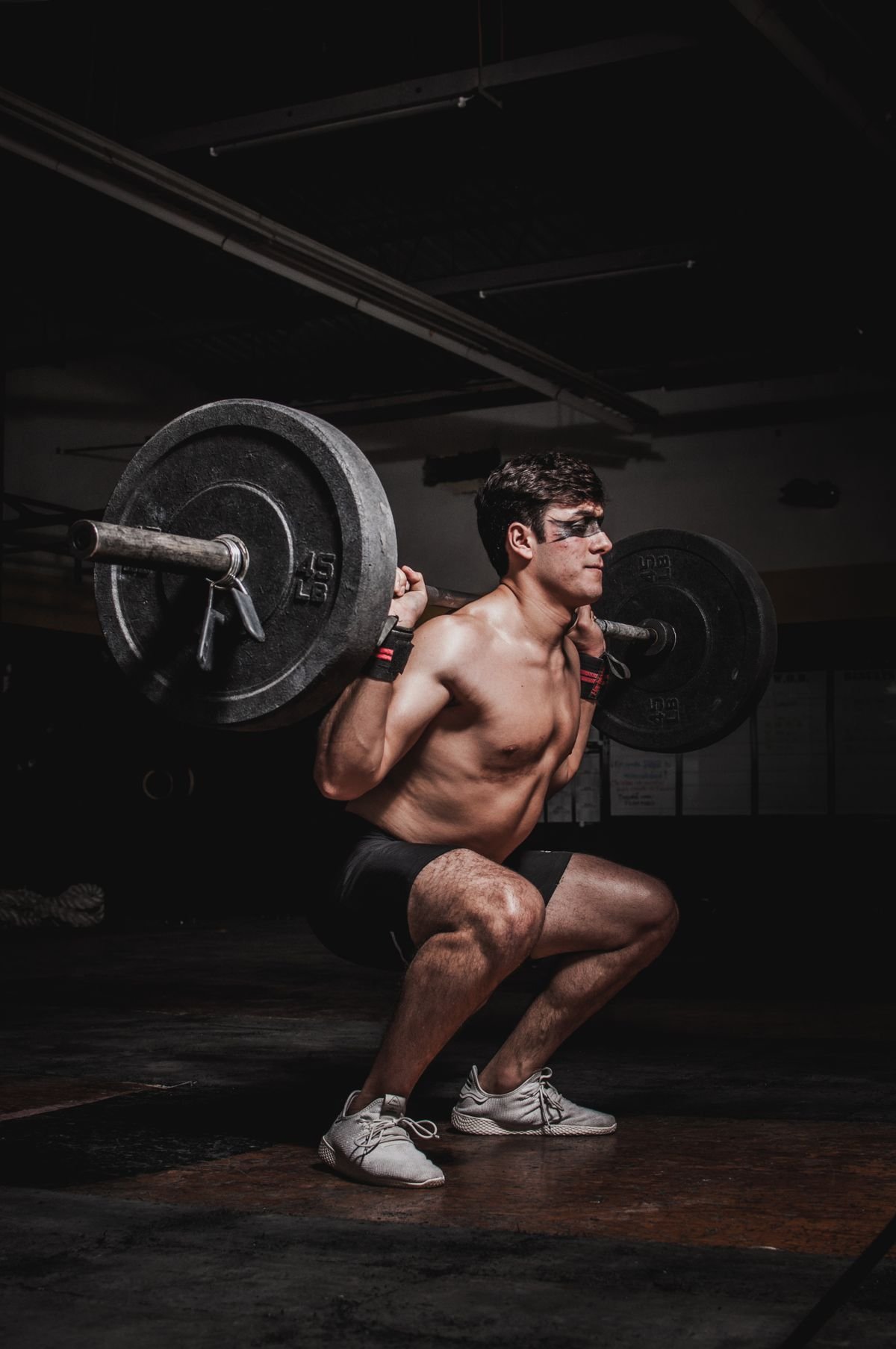
Photo: Pexels
Who it suits: lifters with a 3×3 rack who train alone and want to squat and bench outside the rack with a real catch.
EVERYMATE’s spotter arms are a pair of safety bars for 3-inch by 3-inch power racks with 1-inch holes, built from 11-gauge alloy steel with UHMW pads on the contact surface. The maker rates them at 1,000 pounds, and the pair weighs about 37 pounds — heavy enough to stay put when a bar lands on them.
Spotter arms are the single most important accessory in this guide. They are what lets you train to failure alone: set them just below your lowest squat depth or just above your chest on the bench, and a failed rep ends on steel, not on you.
Pros: 1,000-pound maker rating; 11-gauge steel with UHMW pads to protect the bar; long arms for a generous catch surface; substantial 37-pound pair.
Cons: made for 3×3 racks with 1-inch holes only — check your rack before ordering; one recent listing crawl showed no featured offers available, so check availability before ordering; arms add length outside the rack, so check your floor space.
👉 Check price on Amazon (check availability — one recent crawl showed no featured offers).
3. Yes4All Dip Bars for 2×2 Power Racks — Best Dip Bars
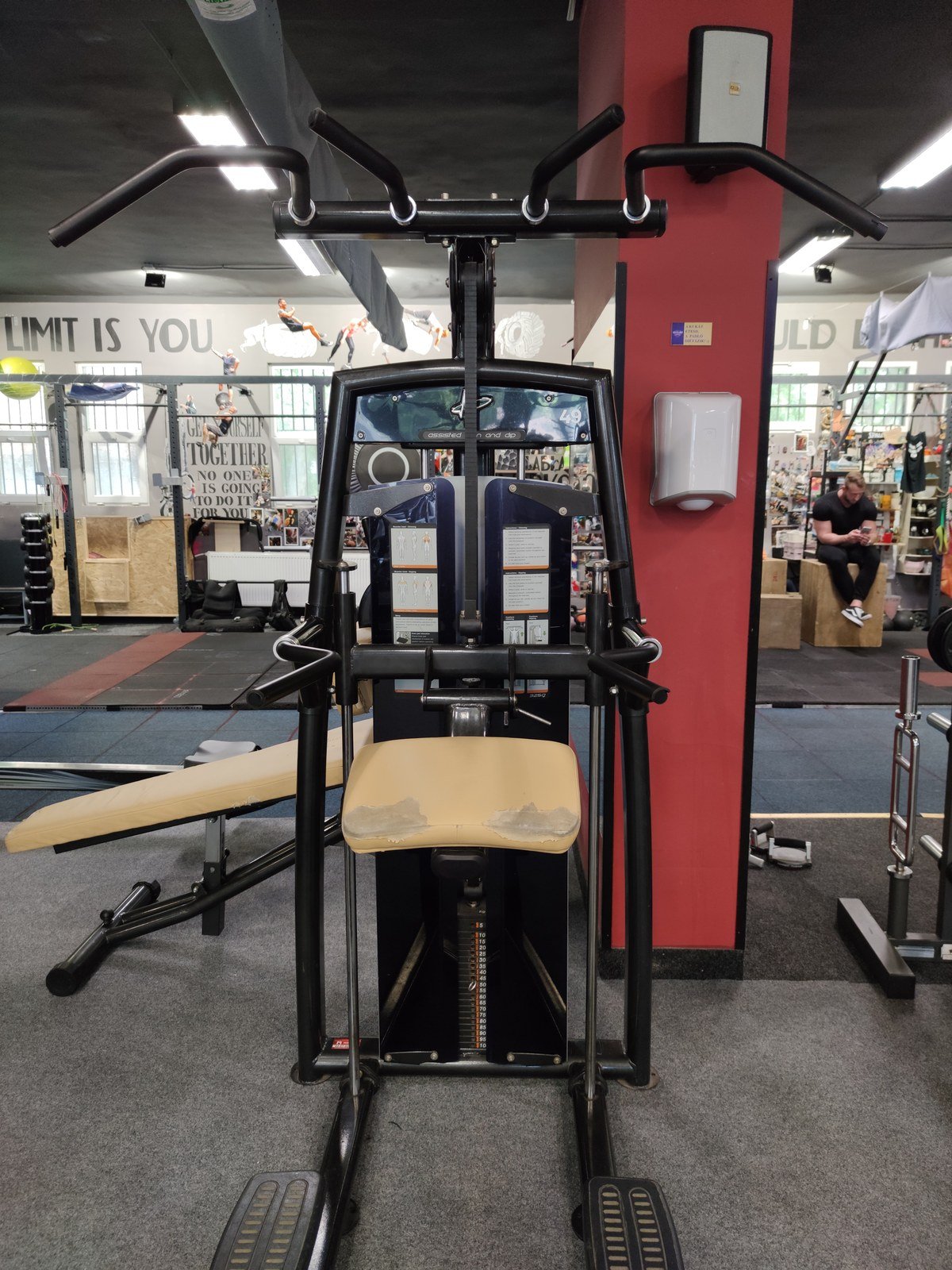
Photo: Teemeah / Wikimedia Commons
Who it suits: lifters with a 2×2 rack who want dips without buying a separate dip station.
Yes4All’s dip bars are a pair of rack-mounted dip handles for 2-inch by 2-inch power racks with a 1-inch hole, offered with narrow and wide grip handles. The maker rates them at 350 pounds, and they are built from alloy steel.
Dips are the upper-body movement most home gyms miss: chest, shoulders, and triceps in one bodyweight exercise, with a dip belt for added weight later. Rack-mounted bars put them on equipment you already own.
Pros: narrow and wide grip options in one set; 350-pound maker rating; alloy-steel build; no floor footprint beyond the rack itself.
Cons: made for 2×2 racks with a 1-inch hole only; one recent listing crawl showed no featured offers available, so check availability before ordering; dip bars need the rack stable — bolt or weigh the rack down if it rocks.
👉 Check price on Amazon (check availability — one recent crawl showed no featured offers).
4. Yes4All Landmine Attachment for 1-inch and 2-inch Barbells — Best Landmine
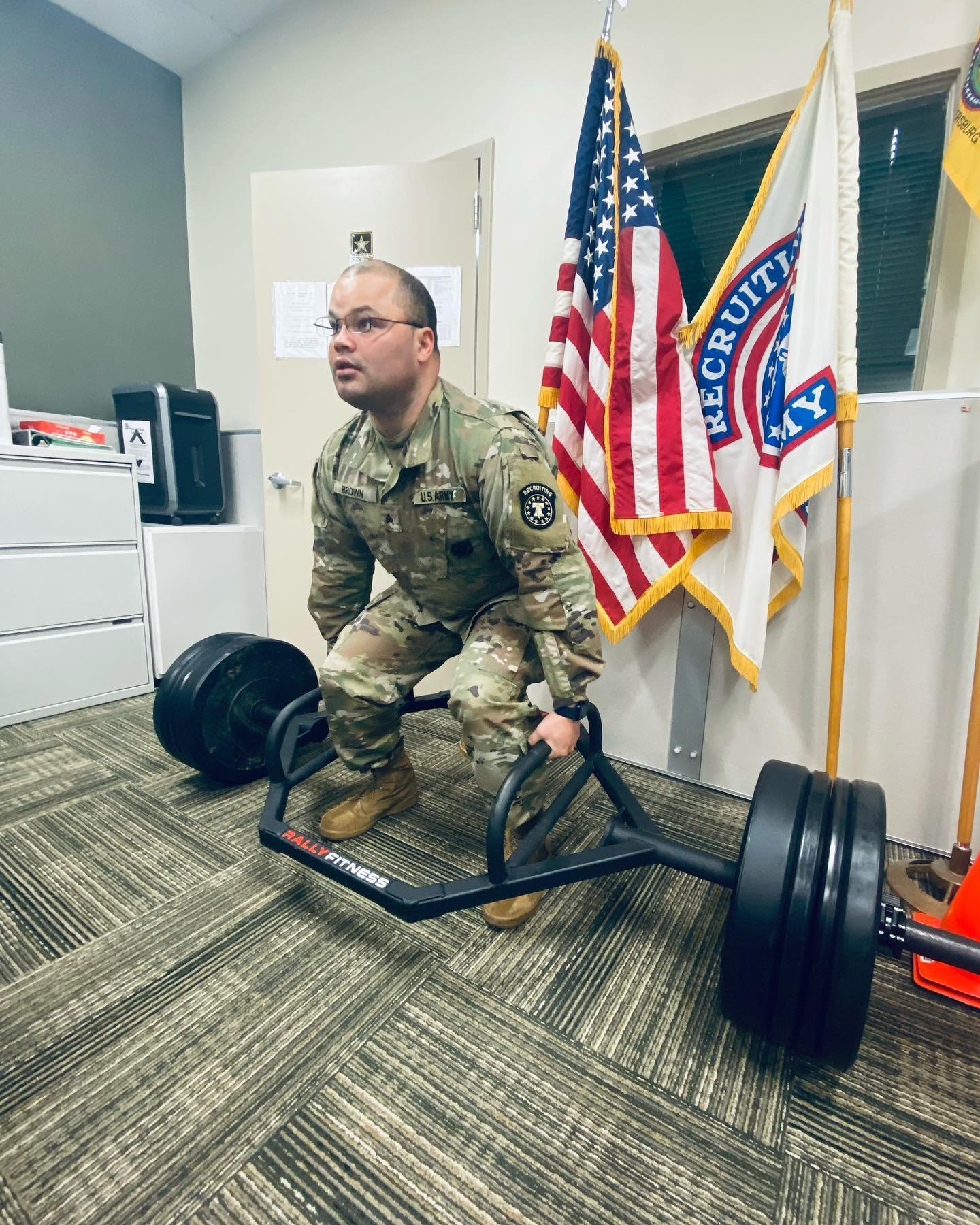
Photo: US Army / Wikimedia Commons
Who it suits: lifters who want rows, presses, squats, and rotations from one anchored barbell end, without a cable machine.
Yes4All’s landmine attachment is a T-bar row pivot that fits both 1-inch standard bars and 2-inch Olympic bars, with a full 360-degree swivel and an 8-inch by 4-inch pivot sleeve. A built-in lock knob holds the bar in the sleeve during training.
The landmine is the most versatile accessory here: one anchored end gives you landmine presses, T-bar rows, split squats, and rotational work that a straight bar alone cannot. It needs no rack at all — the pivot sits on the floor — which makes it the pick for lifters whose rack is already full.
Pros: fits both 1-inch and 2-inch bars; 360-degree swivel for presses, rows, and rotations; lock knob keeps the bar seated; needs no rack; combo versions with a handle exist on the same listing family.
Cons: one recent listing crawl showed no featured offers available, so check availability before ordering; confirm whether the listing is the base pivot alone or a combo with a handle, since Yes4All sells both; a landmine bar swings — keep the area around it clear.
👉 Check price on Amazon (check availability — one recent crawl showed no featured offers).
5. Yes4All Olympic Weight Plate Holder Attachment, Set of 4 — Best Plate Pegs
Photo: stu_spivack / Wikimedia Commons
Who it suits: lifters with a 2×2 rack who want plates stored on the rack itself, within arm’s reach of the bar.
Yes4All’s plate holder attachment is a set of four on-rack storage pegs for 2-inch Olympic plates, made to bolt onto a 2×2 power rack. Four pegs — two per side is the usual layout — keep your working plates on the rack instead of leaning against a wall or stacked on the floor.
On-rack storage does two jobs at once: plates are where you load them, and the weight on the rack’s sides steadies the rack itself. That second point matters for dip bars and spotter arms too — a rack loaded with plates tips less.
Pros: set of four pegs for a full plate layout; fits 2-inch Olympic plates on 2×2 racks; ships from Amazon; keeps plates off the floor and on the rack.
Cons: one field on the listing shows an implausible capacity figure that is clearly a data error — it is not used in this guide, and the pegs’ real capacity should be treated as unverified, so load sensibly; made for 2×2 racks, so check your upright size; pegs add width to the rack, so check your walkways.
6. Synergee J-Hooks for 2×3 Power and Squat Racks — Best 2×3 J-Hooks
Photo: stu_spivack / Wikimedia Commons
Who it suits: lifters with a 2×3 rack — the size the first pick does not fit — who want a plain, solid J-hook pair.
Synergee’s J-hooks are a pair of J-cups for 2-inch by 3-inch power and squat racks, offered for 1-inch or 5/8-inch holes. They are sold in pairs, shipped from Amazon, and sold by Synergee USA, and they are made to work with Synergee’s own 2200 rack as well as other 2×3 racks.
There is nothing fancy here, and that is the point: a J-hook’s job is to hold the bar, protect the bar’s knurling where it rests, and stay put. Synergee’s pair does that for the rack size most other budget hooks ignore.
Pros: covers 2×3 racks, the size most budget hooks skip; 1-inch or 5/8-inch hole options; sold in pairs; shipped from Amazon by the brand itself.
Cons: made for 2×3 racks only — not for 2×2 or 3×3 uprights; check your hole diameter before ordering, since the wrong pin size will not lock; no roller, so the bar does not self-centre the way the Yes4All rollers do.
How to Choose the Right Rack Accessories
Photo: Pexels
Start with your rack, not the accessory. Measure the uprights, check the hole size, and only then shop — in that order, every time.
Then buy in this order: spotter arms first if you train alone, J-hooks if yours are worn, and everything else after those two are sorted.
Accessory type: J-hooks vs safety arms vs dip bars vs landmine vs plate pegs
Photo: PTPioneer / Wikimedia Commons
J-hooks hold the bar before and after the set. They are the most-used accessory on any rack, and the first to wear out — worn hooks mark bars and rattle.
Safety spotter arms catch a failed rep outside the rack. They are the only accessory in this guide that is really about safety, and the only one to buy before you need it.
Dip bars add an upper-body pressing movement the rack otherwise lacks. They are cheap, simple, and the best value per exercise added.
Landmines turn one barbell end into a whole training station: rows, presses, squats, rotations. They need no rack, which makes them the most flexible pick here.
Plate pegs are storage, not training — but plates on the rack are plates within reach, and weight on the rack steadies it for everything else.
Upright size and hole fit: 2×2 vs 2×3 vs 3×3, and pin diameter
Photo: Buidhe / Wikimedia Commons
Rack uprights come in three common sizes: 2×2 inches, 2×3 inches, and 3×3 inches. Every accessory in this guide names its size plainly — buy only the size that matches your rack.
Hole diameter matters just as much: 1-inch holes and 5/8-inch holes take different pins, and a pin that does not lock is an accessory that can walk out mid-set. The Synergee hooks offer both sizes; the rest here are 1-inch.
Measure twice: upright width and depth with a tape, hole diameter with a ruler or a known pin. If your rack is an odd size — 2 3/8-inch Powertec uprights, for example — buy the rack maker’s own accessories, not a generic fit.
Capacity: maker ratings are ceilings, not targets
Photo: Pexels
Capacity figures are makers’ figures, not tested ratings. Treat them as a ceiling, not a target: load well under the stated limit, and never test a rating with a maximal lift.
Two honest flags from this guide: the Yes4All roller hooks are rated per pair, not per hook, and the Yes4All plate pegs listing carries a capacity field that is plainly a data error — both are stated in the picks above rather than smoothed over.
Capacity also depends on the rack, not just the accessory. A 1,000-pound spotter arm on a light rack that is not bolted down is not a 1,000-pound safety system — the whole setup is only as strong as its weakest link.
Safety: safeties set before every heavy set, and what no accessory makes safe

Photo: Anna Shvets / Pexels
Set your safety arms before every heavy set, at the right height for that lift — just below your lowest squat depth, just above your chest on the bench. Safeties left at yesterday’s height are not safeties.
Check pins before every set: J-hooks locked, spotter arms pinned, dip bars seated. A pin that has worked loose is the commonest accessory failure, and it is preventable in five seconds.
No accessory makes a rack safe by itself. A rack that is not assembled to the maker’s instructions, not bolted or weighted down, or loaded beyond its own rating is not fixed by adding spotter arms — fix the rack first.
Never drop a bar onto spotter arms on purpose to test them, and never use an accessory for a lift it was not made for. If you have an injury, or a condition that affects how safely you can lift, talk to a clinician or qualified coach before training alone with heavy weights. This guide is general information only, not medical advice.
A note on the accessories not linked here
Photo: US Air Force / Wikimedia Commons
Titan’s X-3 and T-2 spotter arms top most roundups, but they are rack-specific — built for Titan’s own X-3 and T-2 racks — so they are named here, not linked as generic fits.
Rogue’s gun racks and vertical bar hangers are the gentlest way to store bars on a rack, but Rogue sells them direct from its own store, not through Amazon, so they are not linked in this guide either.
REP’s dual barbell hanger is rack-specific, and Powertec’s spotter arms fit only Powertec’s own 2 3/8-inch uprights — both are named here, not linked, because a generic link would mislead more than it helps.
Frequently Asked Questions
Photo: Pexels
Will these accessories fit my rack?
Only if your rack’s upright size and hole diameter match the accessory’s fit. Measure both before ordering — 2×2, 2×3, and 3×3 uprights, and 1-inch or 5/8-inch holes, are not interchangeable.
Do I need spotter arms if I train with a partner?
Less urgently, but they still help: a partner cannot always catch a failed squat, and arms let you train heavy on days your partner cannot make it. They are cheap insurance either way.
Can I use J-hooks from one brand on another brand’s rack?
Yes, if the upright size and hole diameter match exactly. Brand matters far less than dimensions — a 2×2 hook with a 1-inch pin fits any 2×2 rack with 1-inch holes.
Are dip bars safe on a light rack?
Only if the rack is stable: bolt it down, weigh it with plates on the pegs, or both. A rack that rocks during dips is a rack that needs anchoring before anything else.
Do I need a rack for a landmine?
No — the landmine pivot in this guide sits on the floor and works with any barbell. That is what makes it the most flexible accessory here, and the best first buy for lifters without a rack.
When should I replace J-hooks or spotter arms?
When a hook’s lining wears through to bare metal, a pin bends or will not lock, a weld cracks, or an arm wobbles even when pinned. Worn accessories mark bars and fail without warning — replace them before they do.
Our Pick in One Line
Photo: Nenad Stojkovic / Wikimedia Commons
If you want one answer: the Yes4All roller J-hooks are the best all-round buy because they improve the thing you do on every single set — racking and unracking the bar — but if you train alone, buy the EVERYMATE spotter arms first, because no other accessory here keeps you safe.
For the rest of your rack setup, see our dumbbell racks guide and our barbell storage racks guide, and for the plates those bars carry, see our bumper plates guide.
As an Amazon Associate, we earn from qualifying purchases made through links on this page, at no extra cost to you.
This guide is research-based: we compared verified buyer reviews and manufacturer specifications, and we did not buy or hands-on test these products. Prices and availability change, so check the listing before ordering. The training information here is general information only, not medical advice — if you have an injury or a condition that affects how safely you can lift, talk to a clinician first.