

Why Tricep Machines Belong in a Home Gym
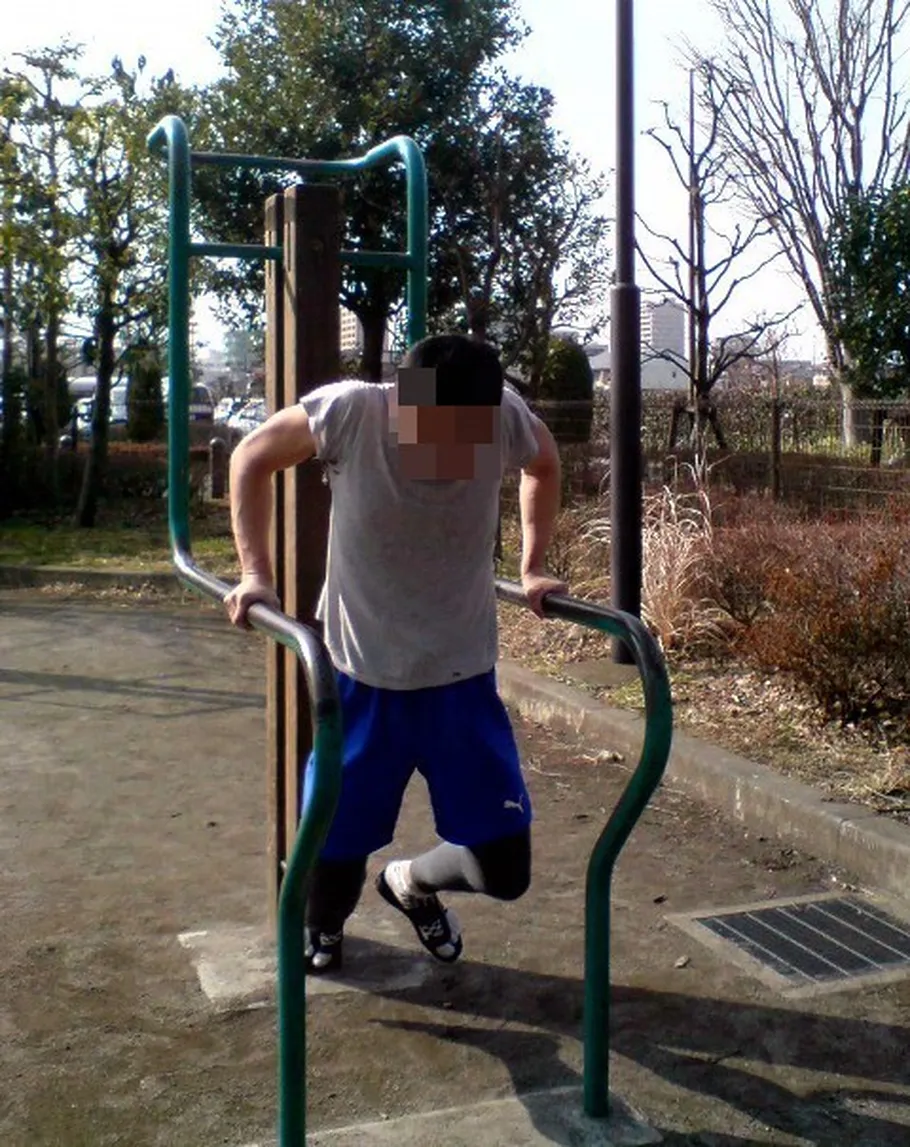
A tricep machine is a seated or lever station with a guided path and adjustable resistance. You sit down, set the handles and the seat, and press down along a fixed arc — the machine holds the path steady while your triceps do the work. That guided path is the whole point: a bodyweight dip is a great movement, but it asks your shoulders and balance to do a lot of the managing, and adding weight means a belt, plates and a careful setup every time. 💪
The dip itself is the motion here, not a press. A seated dip machine moves your arms down and back along a dip arc while your body stays seated; a chest press pushes weight forward away from your chest on a horizontal path. The two overlap — dips hit the chest too — but they are not the same exercise, and a dip machine does not replace a press machine.
Know what a tricep machine is not. It is not a dip station — our best dip stations for home gyms covers the bodyweight parallel-bar frames you move your whole body on, which is a different class of equipment. And it is not a curl machine either, though one pick below shares its station with curls. If you came from our best saunas for home gyms, the previous guide in this series, this is the same home gym with an arm station added — different job, same building.
How We Picked
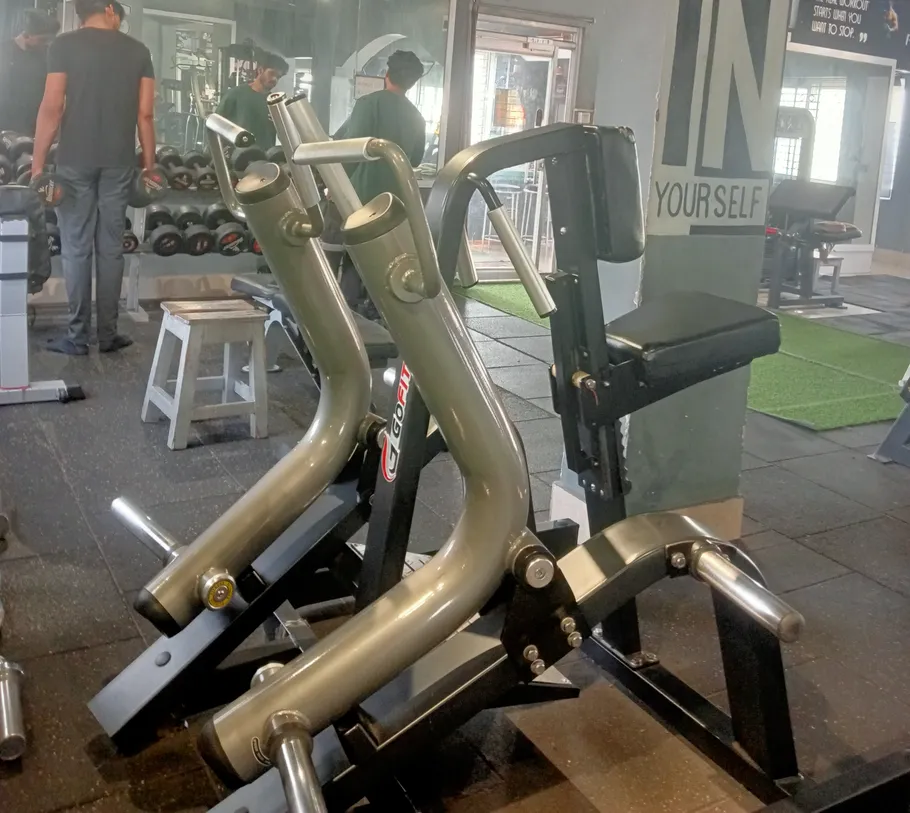
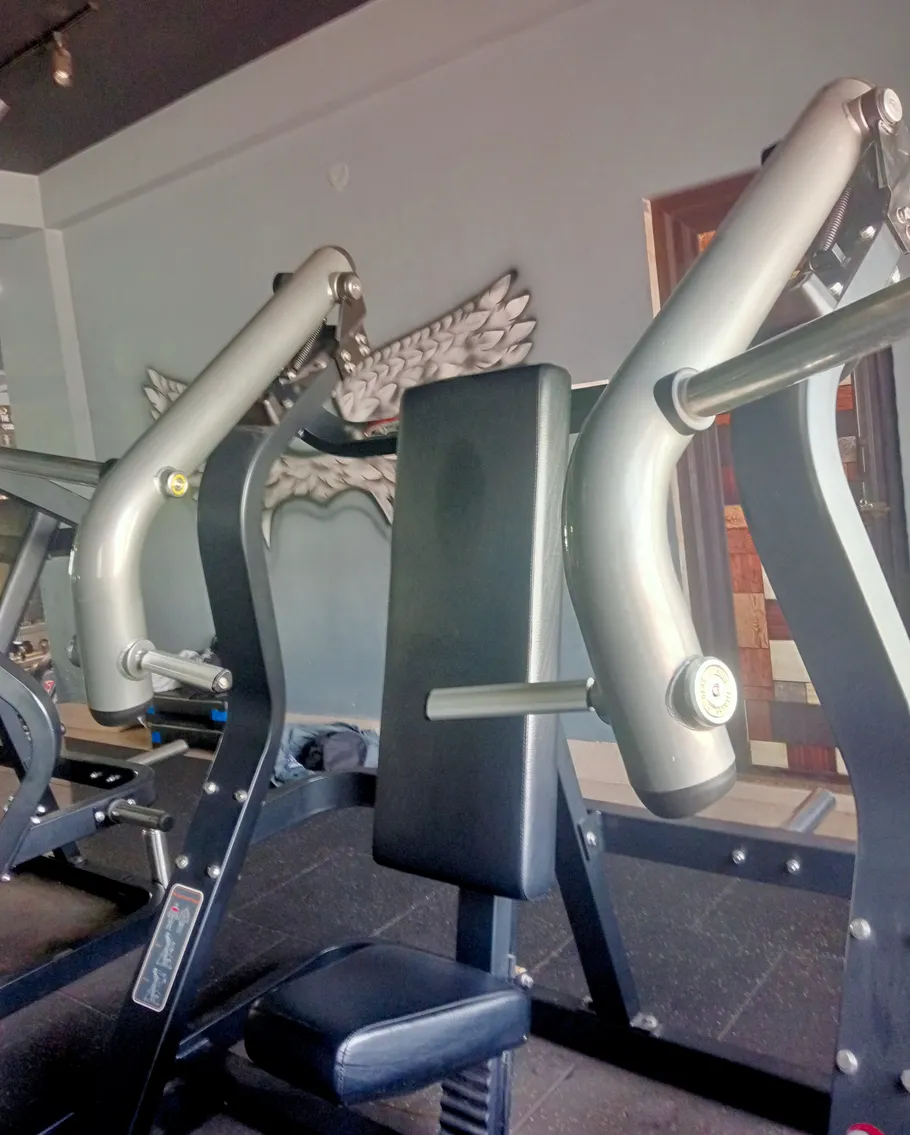
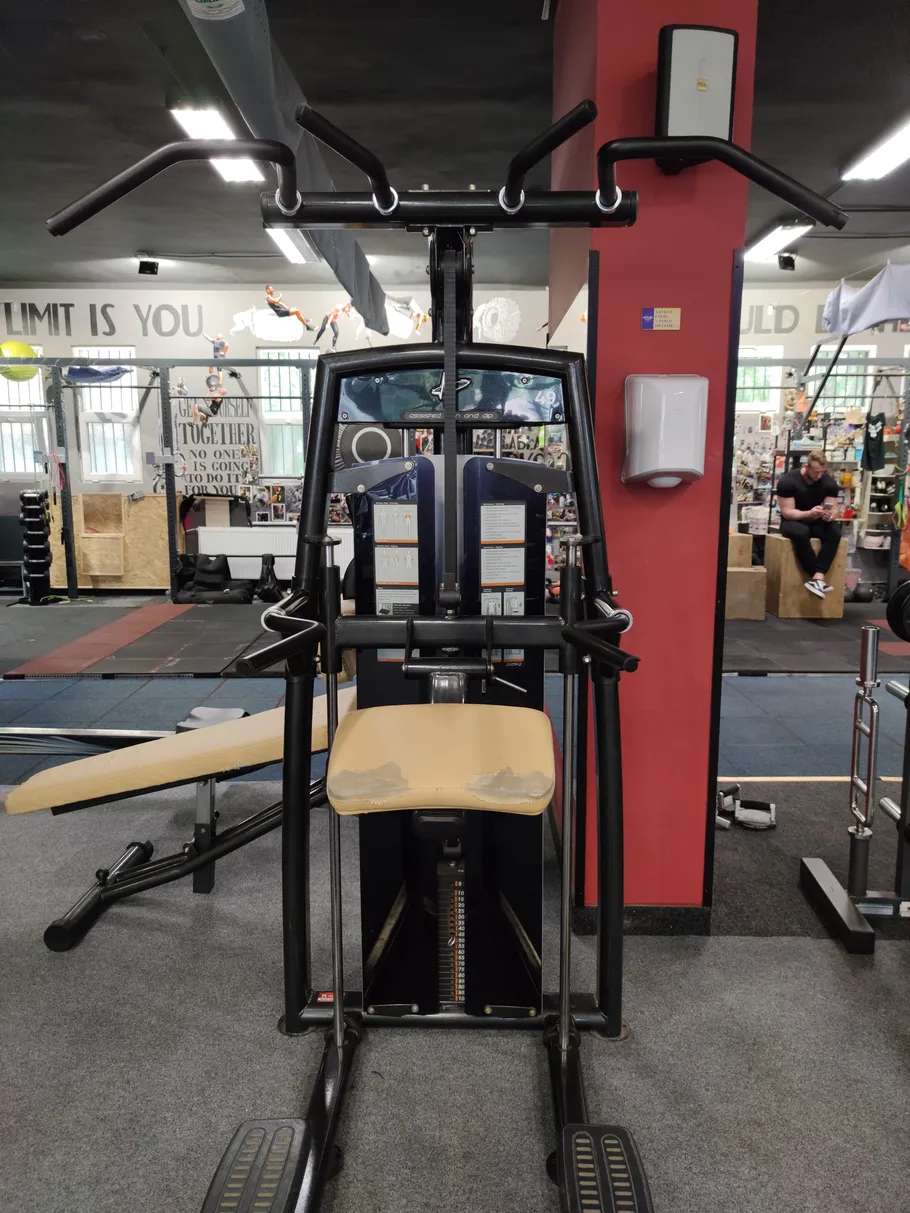
We compared six tricep machines that are genuinely sold for home gyms right now, using maker pages and listing records — not hands-on testing, and not roundup scores copied from other sites. Every photo in this guide is an honest gym or outdoor scene, not a product shot of the named machine, because free-license photos of the exact named products do not exist for this category. Where records disagree, the article says so instead of picking the flattering number.
- Type: seated dip, leverage dip, or selectorized pressdown — and what each path feels like.
- Resistance: plate-loaded sleeves, a leverage arm, or a pin-selected stack — and what you already need to own to load it.
- Size: the floor space the assembled machine takes, and the ceiling height it needs.
- Adjustability: seat positions, handle positions and starting positions, and whether they move without tools.
- Build: frame steel, pads, handles and weight horns, read against the machine’s stated weight.
- Honest limits: what each machine cannot do, stated in its own section.
Also considered: the GMWD seated dip machine (named, not picked — its 180° rotating handles appear in one review only, and the settled specs were too thin); the GYHPD seated dip machine with a 15° backrest (named, not picked — a thin record from one marketplace listing); the Beckwell PL-8060 seated dip (named, not picked — a commercial supplier machine, not a home-gym retail pick); and the Titanium Strength Elite Series seated dip (named, not picked — commercial and EU-oriented, at 67.3 × 62.6 × 43.3 in, 354.95 lb and a 661.4 lb maximum load on 50 mm plates). None of the six picks below hides a conflict like those — where a pick’s own records disagree, the disagreement is printed in its section.
Comparison
| Machine | Type | Resistance | Size | Standout |
|---|---|---|---|---|
| Titan Plate Loadable Seated Dip | Seated dip | Plate-loaded | 27 × 30 × 51 in | Smallest stated footprint |
| HVO Seated Dip JS2003 | Seated dip | Plate-loaded | ~48 × 26.5 × 48 in | Three handle positions |
| VEVOR Seated Dip BN1910B | Seated dip | Plate-loaded | ~55 × 27 × 51 in | Budget pick |
| Hammer Strength PL-DIP | Seated dip | Plate-loaded | 66 × 49 × 43 in | Commercial build |
| Muscle D Elite Leverage Dip | Leverage dip | Plate-loaded leverage | 69 × 41 × 37 in | Leverage path |
| Body-Solid GCBT-STK | Biceps & triceps | Selectorized stack | 52 × 36 × 71 in | Pin-selected stack |
Read the table honestly. It carries no capacity column on purpose: the six capacity figures are different measures, not one ranking — a user-weight limit, a plate load, a selectorized stack weight and a per-arm load cannot be lined up against each other, so a capacity column would mislead. The table also carries no unit-weight column: machine weights run across incomparable types, from a light plate-loaded frame to a 395 lb selectorized station, and a weight range would say nothing about how much you can actually lift on each machine. The one whole-guide claim the table does make is footprint: the Titan has the smallest stated footprint, because every pick here states its dimensions.
Titan Plate Loadable Seated Dip Machine
The Titan is the compact plate-loadable seated dip: about 27 in wide, 30 in deep and 51 in tall, which is the smallest stated footprint in this guide. It loads with plates on two 11 in loadable sleeves, and its capacity is stated at 300 lb across manual and roundup records. The handles adjust — loosen the side knobs, slide the handles to your height, and tighten them again — so lifters of different heights can set the same machine without tools beyond the knobs themselves.
Pros
- Smallest stated footprint here — 27 × 30 in of floor for a seated dip machine.
- Plate-loaded on two 11 in sleeves — load it with plates you already own.
- Handles slide to height with side knobs — no tools needed to adjust.
Cons
- Titan’s own listing details are thin — confirm the current model on the listing (see listing check).
- Needs plates to load — the machine alone gives you no resistance.
- 300 lb capacity is a manual and roundup figure, not a tested rating in this guide.
Listing check: confirm the plate-loadable seated dip model and the 27 × 30 × 51 in dimensions before ordering. Titan’s own listing carries fewer details than the other makers here, so check the sleeve length, the handle adjustment and the stated capacity on the listing itself rather than trusting a roundup summary.
Best for: a small home gym that already owns plates and wants a seated dip in the least floor space here.
May not fit: anyone without plates to load it, or anyone who wants a pin-selected stack instead of loading plates by hand.
HVO Seated Dip Machine
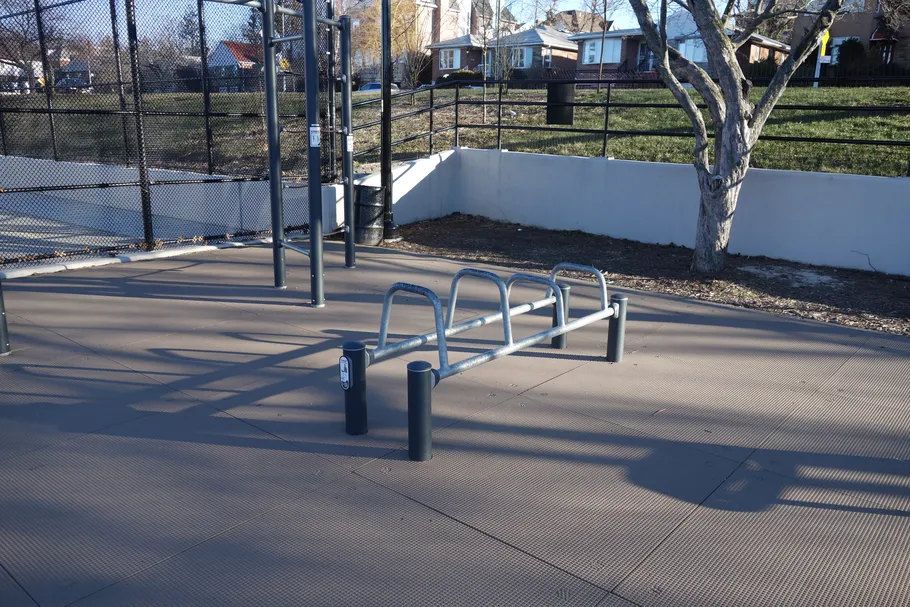
The HVO is the multi-grip seated dip: model JS2003, with three handle positions for different shoulder widths, so a narrow grip and a wider grip both have a home on the same machine. It is rated for 330 lb of plates plus a 300 lb user weight, measures about 48 × 26.5 × 48 in, and takes both 1 in and 2 in plates. A storage pin is included, and a chain and bar for curls come with it — though the curl function is secondary here, per one review, and this pick earns its place on the dip, not the curl.
Pros
- Three handle positions — narrow and wide grips on one machine.
- Takes 1 in and 2 in plates, with a storage pin included.
- 330 lb of plates plus a 300 lb user weight, stated separately.
Cons
- Plate diameter must not exceed 42 cm (16.5 in) — oversized plates will not fit.
- The included curl function is secondary per one review — do not buy it as a curl machine.
- Larger footprint than the Titan — about 48 × 26.5 in of floor.
Listing check: confirm model JS2003 and the three handle positions before ordering. Measure your plates before you buy: the 42 cm (16.5 in) diameter limit rules out oversized plates, and the 1 in and 2 in compatibility covers standard and Olympic plates only within that diameter.
Best for: a lifter who wants grip choice on a seated dip and already owns standard or Olympic plates within the diameter limit.
May not fit: anyone with oversized plates, or anyone who wants the curl function to be a full second machine rather than an extra.
VEVOR Seated Dip Machine
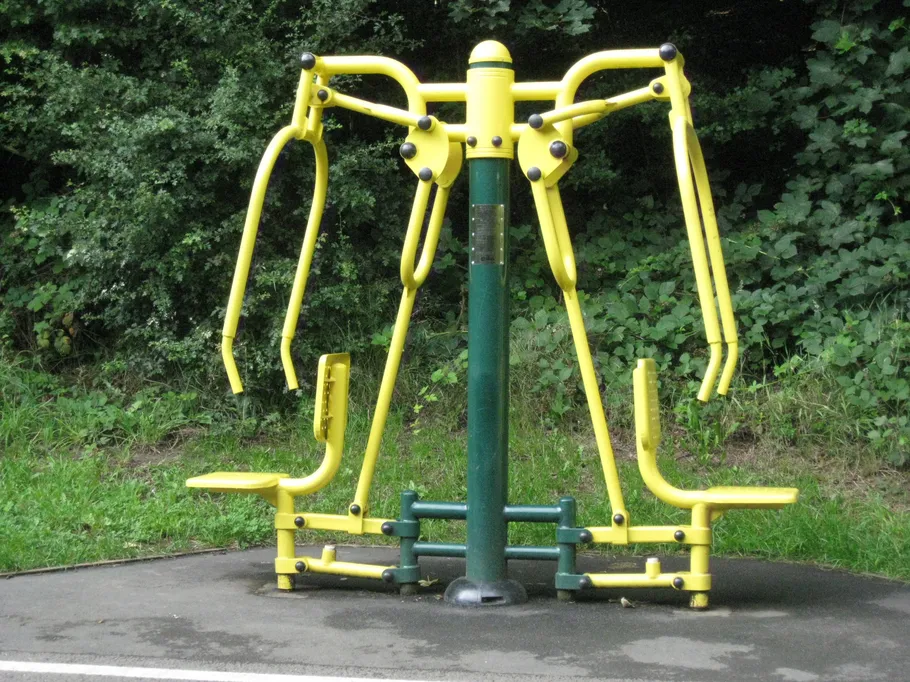
The VEVOR is the budget seated dip: model BN1910B, built from 2 × 2 in carbon steel tubing at 1.5 mm wall thickness, with six seat positions and a unit weight of about 58 lb. It takes 1 in and 2 in plates, and its capacity is claimed at 450 lb. The frame is straightforward — a seat, a backrest and dip handles on a steel frame — which is exactly what a budget pick should be: the dip path, without the extras.
Pros
- Budget pick — the simplest frame in this guide, with six seat positions.
- Takes 1 in and 2 in plates on a 2 × 2 in steel frame.
- About 58 lb unit weight — light for a steel dip machine.
Cons
- Capacity records differ — 450 lb seat capacity against 220 lb per arm (see listing check).
- Dimensions conflict across listings — confirm the footprint on the listing (see listing check).
- Needs plates to load — the machine alone gives you no resistance.
Listing check: confirm model BN1910B before ordering, and settle two conflicts on the listing itself. Capacity is stated both as a 450 lb seat capacity and as 220 lb per arm — 440 lb across both arms — so read both figures and do not treat either as a tested rating. Dimensions are stated as about 55 × 27 × 51 in on one record and 63 × 61 × 30 in on another listing, which reads as shipping dimensions — measure your space against the smaller set and confirm the assembled size on the listing.
Best for: a lifter on a budget who already owns plates and wants a simple seated dip with adjustable seat positions.
May not fit: anyone who wants a settled capacity figure in writing, or anyone whose space cannot take the larger of the two stated dimension sets.
Hammer Strength Plate-Loaded Seated Dip
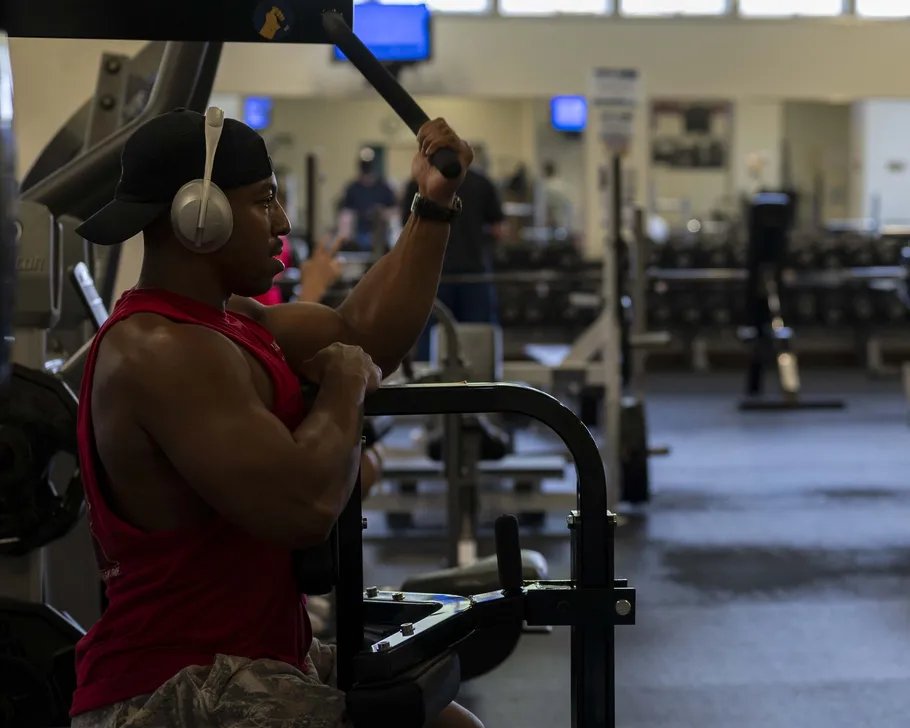
The Hammer Strength is the commercial seated dip: model PL-DIP, built on 11-gauge steel frames, about 66 in wide, 49 in deep and 43 in tall, with a unit weight of 285 lb. It loads five 45 lb plates per arm, starts at just 4 lb of resistance per arm, and carries four integrated storage horns so the plates you are not using stay on the machine. You can face into the machine or face away from it, which changes the feel of the same dip path without changing machines.
Pros
- Commercial build — 11-gauge steel frames and a 285 lb unit weight.
- Five 45 lb plates per arm, from a 4 lb starting resistance per arm.
- Four integrated storage horns, and face-in or face-out positions.
Cons
- Commercial price tier — expect a commercial-machine price, with no price quoted here.
- Dealer and direct availability — check the listing for how it is actually sold (see listing check).
- 66 × 49 in of floor — the largest footprint of the seated dips here.
Listing check: confirm model PL-DIP and whether the listing is a dealer sale or a direct sale before ordering. Commercial machines are often sold through dealers with delivery and installation terms that differ from a standard retail listing, so read the delivery terms as well as the machine specs.
Best for: a lifter who wants commercial build quality at home and has the floor space and the budget for it.
May not fit: small rooms (66 × 49 in plus working space around it), or anyone buying on a budget-machine budget.
Muscle D Fitness Elite Leverage Dip/Tricep Machine
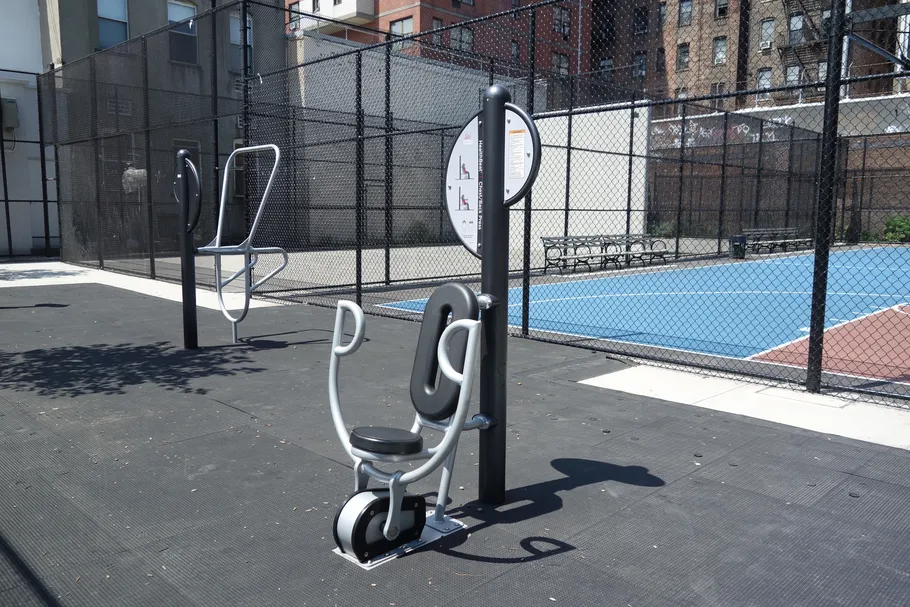
The Muscle D is the leverage dip: a lever-arm machine rather than a seated dip path, about 69 in wide, 41 in deep and 37 in tall, weighing 276 lb. Each stainless steel weight horn takes five 45 lb Olympic plates, and the station has high-density moulded foam thigh pads and seat, an adjustable-height spring-assist seat, and U-shaped rubber-clad handles. You can face into the machine or away from it, like the Hammer, but the leverage arm gives the press a different feel from a straight seated dip — the resistance follows the lever, not a fixed vertical track.
Pros
- Leverage path — a different feel from the seated dip machines here.
- Five 45 lb Olympic plates per stainless steel weight horn.
- Spring-assist seat height, moulded foam pads and rubber-clad U-shaped handles.
Cons
- Commercial footprint — 69 × 41 in of floor, the widest machine in this guide.
- The leverage path is not a seated dip path — try the feel before committing if you can.
- Needs Olympic plates to load — the machine alone gives you no resistance.
Listing check: confirm the Elite Leverage Dip/Tricep model and the Olympic plate horns before ordering. Leverage machines are sometimes listed alongside Muscle D’s other leverage stations, so check the model name rather than the brand alone.
Best for: a lifter who wants a leverage feel rather than a seated dip track, with Olympic plates already in the gym.
May not fit: small rooms (69 in wide plus working space), or anyone who specifically wants a seated dip path rather than a lever arm.
Body-Solid PRO-Select Biceps & Triceps Machine
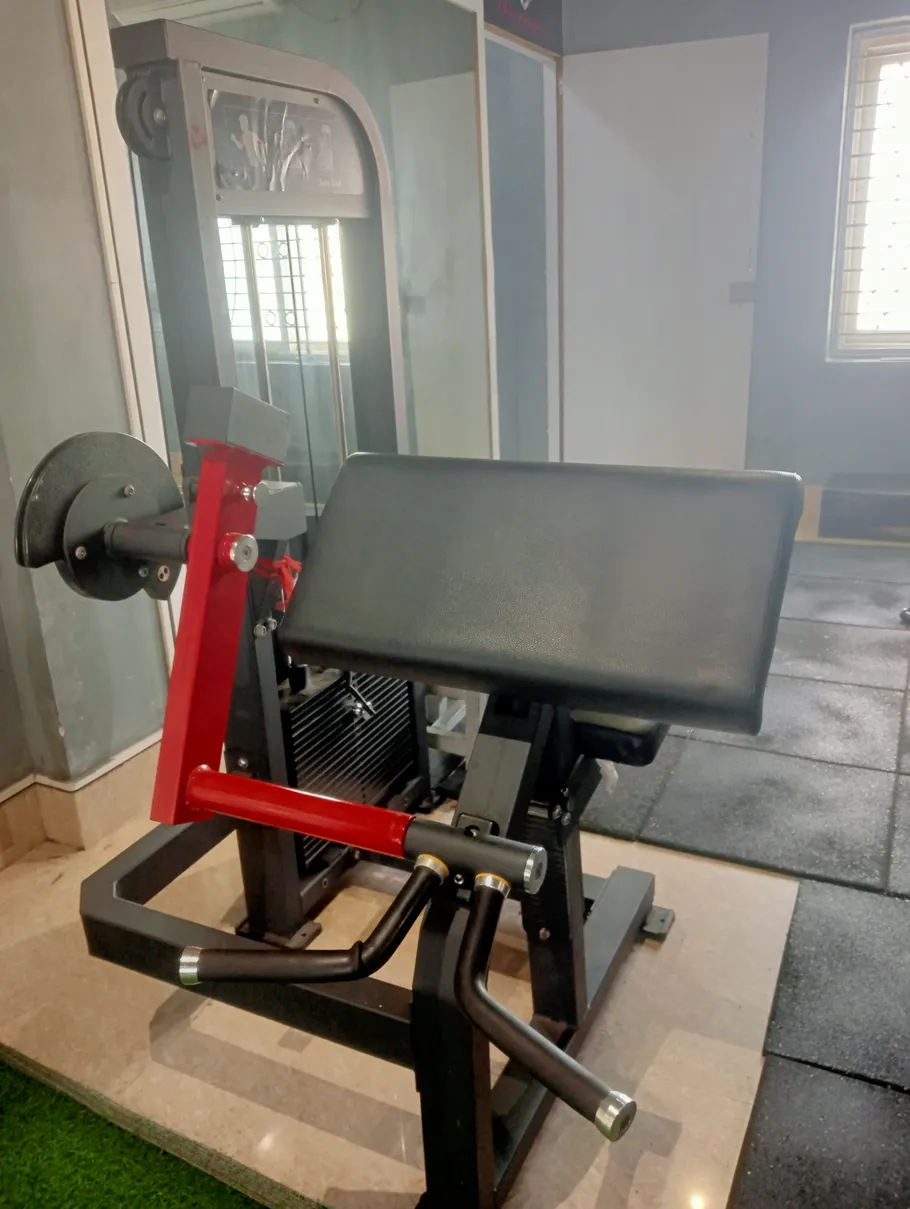
The Body-Solid is the selectorized pick: model GCBT-STK, with a 210 lb selectorized weight stack and an optional 310 lb stack upgrade, about 52 in wide, 36 in deep and 71 in tall, with an assembled weight of 395 lb. It is a dual-function station — bicep curls share the machine — and the tricep pressdown uses the adjustable CAM lifting arm positioned upward, with a multi-grip handle and a 30° arm pad. The seat adjusts across seven positions and the arm offers 28 starting positions, so the pressdown start point can be set precisely rather than taken as fixed.
Pros
- Pin-selected stack — no plates to load, change weight with a pin.
- Dual-function station — curls and pressdowns on one machine.
- Seven seat positions and 28 starting positions, with an adjustable CAM arm.
Cons
- 395 lb assembled weight — plan delivery and placement before ordering.
- 71 in tall — check ceiling height as well as floor space.
- Confirm the stack option on the listing — the 310 lb stack is an upgrade, not the standard (see listing check).
Listing check: confirm model GCBT-STK and whether the listing carries the standard 210 lb stack or the optional 310 lb upgrade before ordering. Also confirm the pressdown setup: the tricep movement uses the CAM arm positioned upward, which is a different setup from the curl — read the listing’s setup notes so the first session is not a guessing game.
Best for: a lifter who wants pin-selected weight and two arm movements — pressdowns and curls — from one station.
May not fit: anyone who wants a dip path specifically (this is a pressdown, not a dip), or anyone without the ceiling height for a 71 in station.
How to Choose
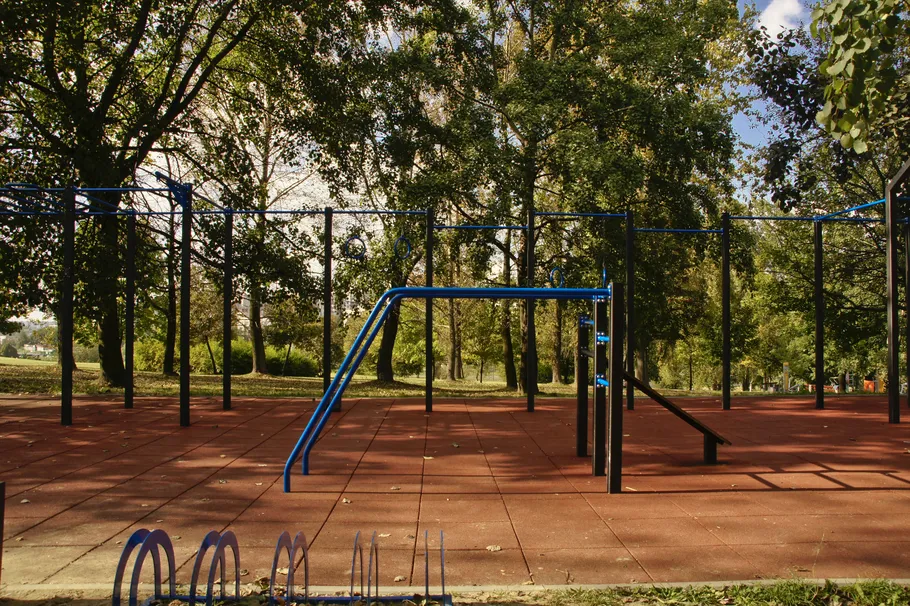
Four decisions, in order: type, size, loading, placement. Get them in that order and the machine you buy is the machine you keep using. 🧭
Choose Your Type
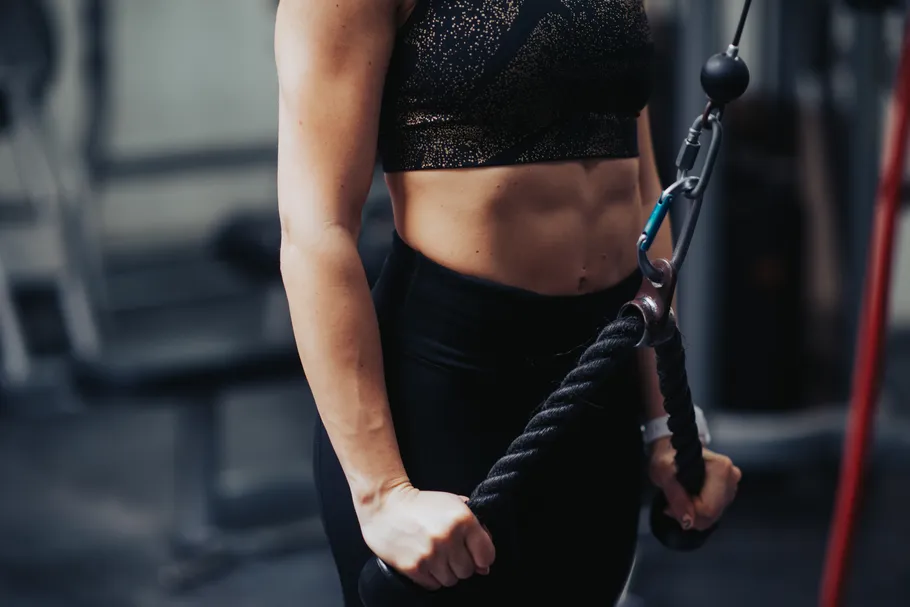
Seated dips move your arms along a dip arc while you stay seated; leverage dips move a lever arm instead of a fixed track; pressdowns push a handle down from above with your elbows tucked. The six picks here cover all three: four seated dips, one leverage dip and one pressdown station. A pressdown is not a dip — it trains the same muscle through a shorter, more isolated movement — so pick the motion you actually want to train, not just the machine that looks most impressive.
Dual-function stations deserve a second look. The GCBT-STK shares its station with bicep curls, which is a genuine bonus if you want one arm station — and our best bicep curl machines for home gyms covers curl-dedicated machines for anyone who wants the curl to be the main event rather than the second movement. If curls matter as much as pressdowns to you, the dual-function station wins; if the dip is the point, a dip machine wins.
Choose Your Size
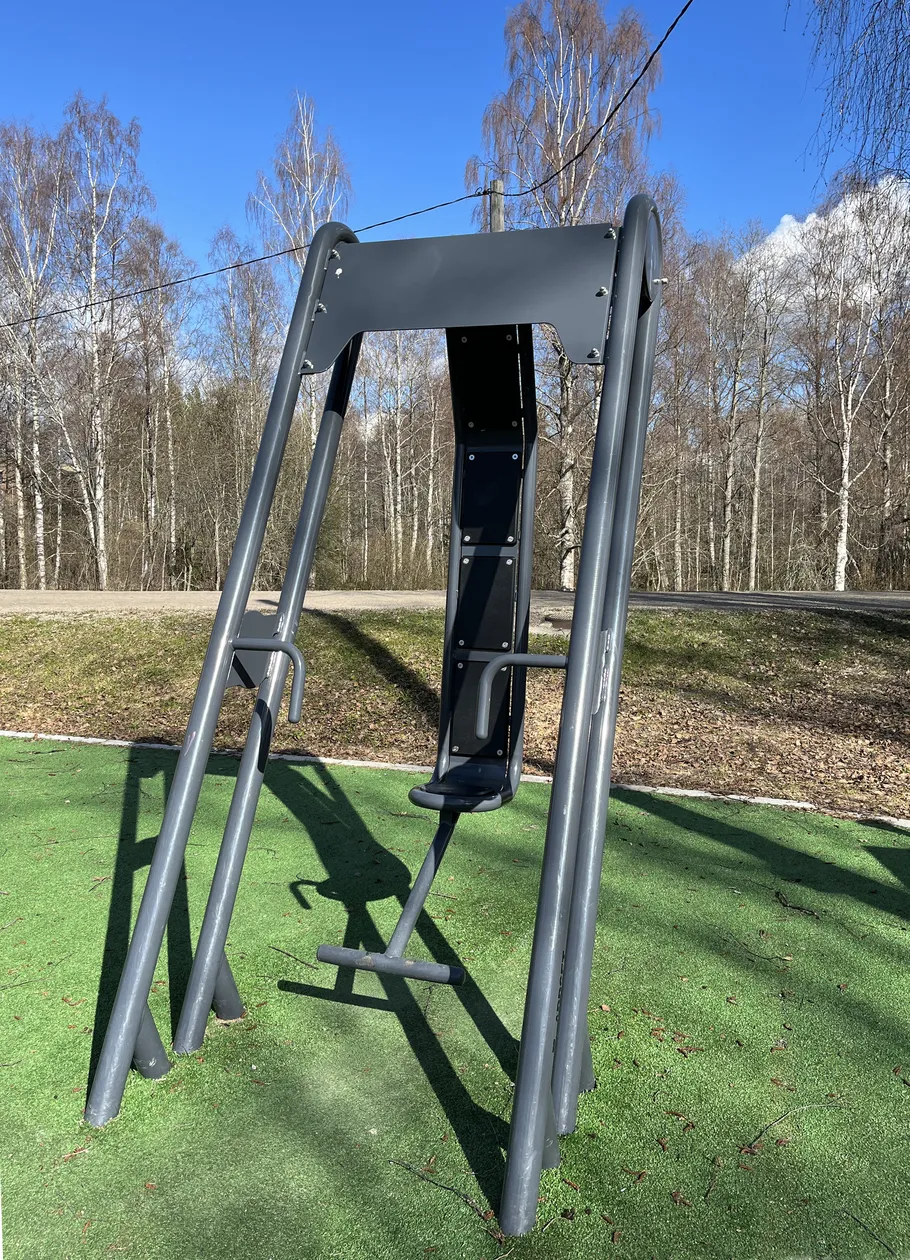
Measure twice: the footprint and the height. The machines here run from the Titan’s 27 × 30 in to the Muscle D’s 69 × 41 in, and the GCBT-STK stands 71 in tall, so a low ceiling rules it out before anything else does. Add working space around the machine — you need room to load plates onto the horns and to step in and out of the station, not just room for the frame itself.
Then read the footprint against your room, not the headline. The Titan fits a tight corner; the Hammer and the Muscle D need a proper bay of floor; the GCBT-STK needs height more than floor. And check the doorway: a 69 in wide machine that cannot get into the room is a return, not a tricep machine.
Choose Your Loading
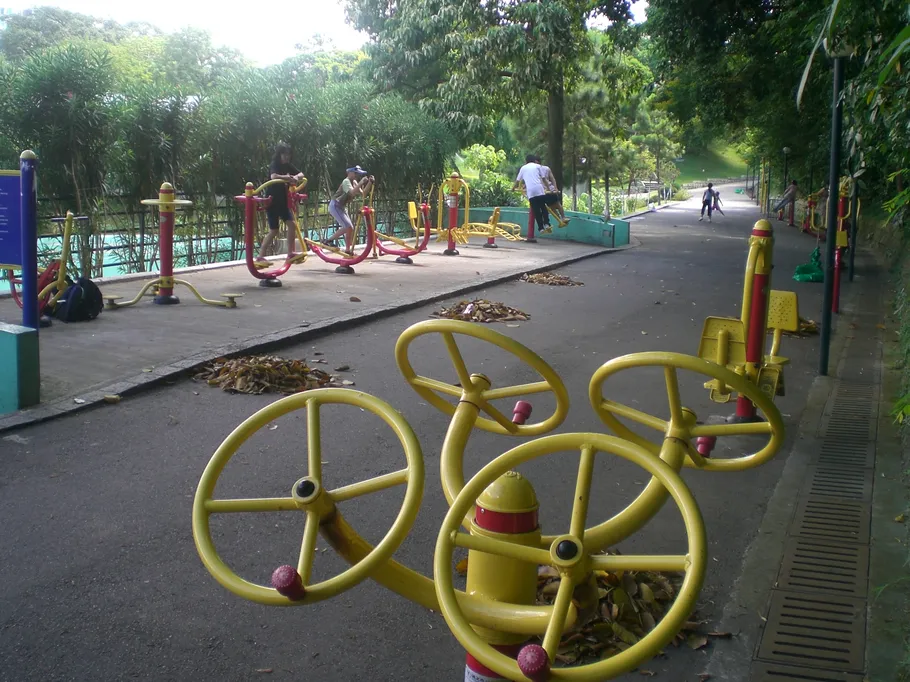
Five of these six machines load with plates, and one loads with a pin. Plate-loaded machines are cheaper to buy and let you use plates you already own — but they need plates, collars and a place to store both, and every weight change means loading and unloading by hand. The selectorized GCBT-STK changes weight with a pin and needs no plates at all, but it weighs 395 lb assembled and its heavier stack is an upgrade.
Check what you already own before choosing. If you own Olympic plates, five of these six machines are ready to load — our best weight plates for home gyms covers the plates themselves if you are starting from nothing. If you own no plates and do not want to buy any, the selectorized station is the only pick here that works on day one without them.
Choose Your Placement
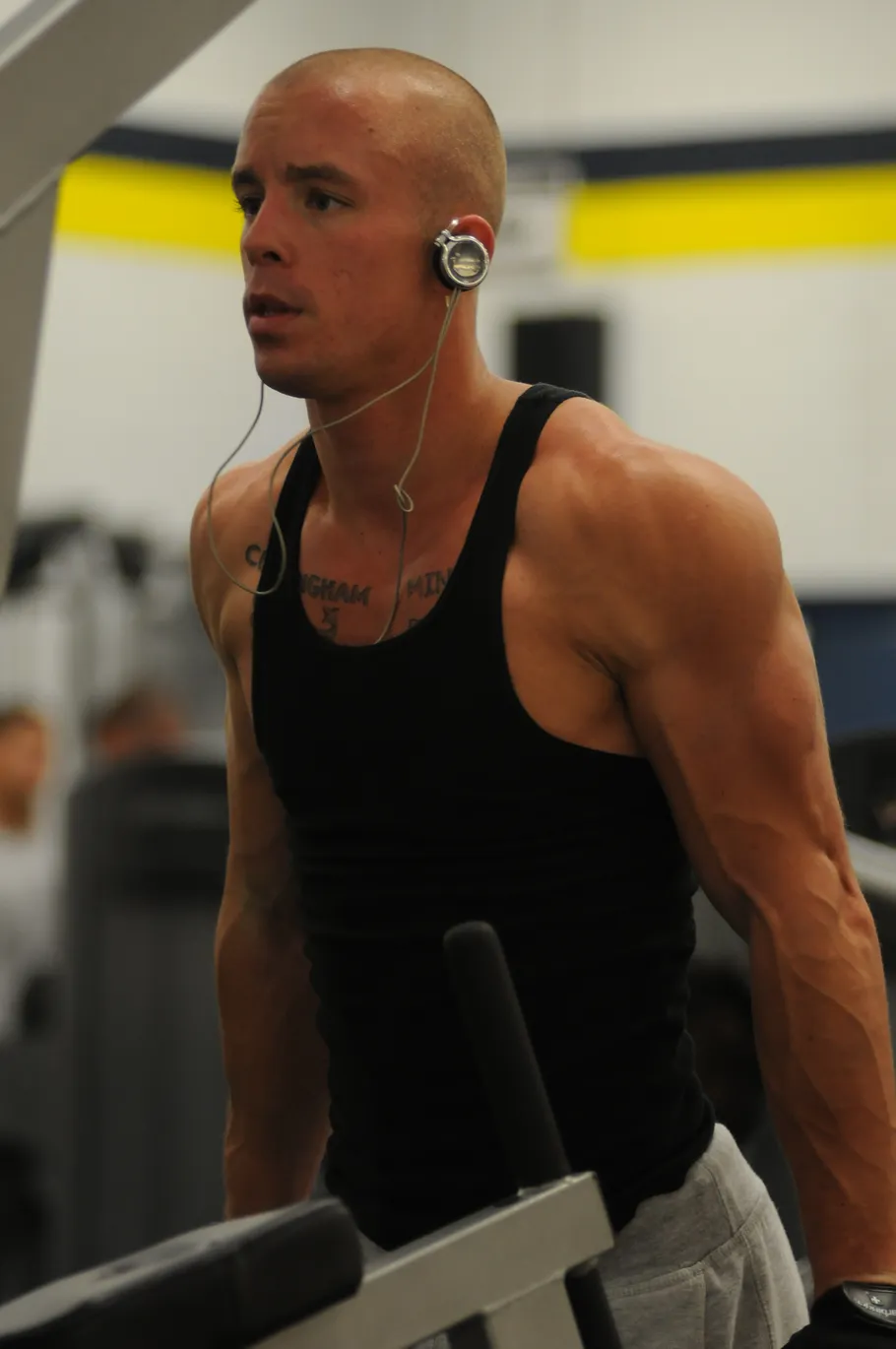
Indoor machines need three things: a level floor that can take the weight, enough ceiling height for the tallest station, and ventilation so a hard session stays bearable. A garage or a spare room works if all three are true; a damp, unventilated corner does not. The plate-loaded machines also need plate storage nearby — plates left on the floor around a dip machine are a trip hazard, not a storage system.
Outdoor placement is a different question. The commercial machines here are indoor machines, and weather, rust and UV will shorten their lives outside. If your only space is outdoors, a bodyweight dip station survives the weather far better than a selectorized stack — buy the machine for the room you actually have, not the room you wish you had.
Safety

1. Check with a clinician first if you have shoulder, elbow or wrist pain, a previous dislocation or surgery, or any condition that makes pressing or dipping risky — a machine guides the path, but it does not diagnose your joints.
2. Warm up before loading: a few minutes of easy movement plus light, unloaded reps on the machine itself, so the first loaded set is never the first movement of the day.
3. Start light and learn the path: set the seat and handles first, do a full set at a weight you could lift ten times over, and only then add plates or move the pin.
4. Keep your shoulders down and back and your elbows tracking with the handles — do not let your shoulders shrug up toward your ears or your elbows flare wide at the bottom of the dip.
5. Control the return: lower the weight under control and never let the stack or the plates drop — a falling stack is how fingers get caught and cables get damaged.
6. Stop at once on sharp pain, clicking that hurts, numbness or a feeling that the joint is slipping — rack the weight, step away, and do not push through it to finish the set.
7. Collar every plate, check the selector pin is fully seated, keep children clear of the machine and the plates, and never climb on a machine or use it as a pull-up bar it was not built to be.
These notes are general information only, not medical advice — if pain, a joint problem or a medical condition worries you, talk to a clinician before using a tricep machine.
Frequently Asked Questions
Seated dip machine or dip station — which one should I buy?
Buy the machine if you want a guided path with adjustable resistance and a seat that sets your position for you. Buy a dip station if you want bodyweight training, a smaller footprint and a lower price, and you are happy managing your own balance and adding weight with a belt. The two are not upgrades of each other — they are different tools that share a motion.
Do I still need dumbbell triceps extensions if I buy a machine?
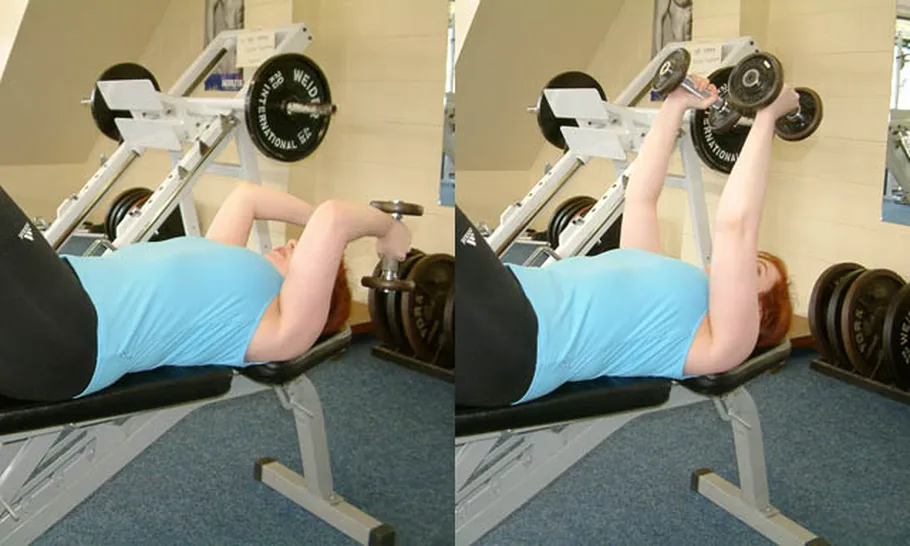
No — but they do different jobs. A machine gives you a fixed path and easy loading; a dumbbell extension is free, unilateral and easy to do anywhere, and it trains the stabilizers a machine holds steady for you. Many lifters keep both: the machine for heavy, controlled sets and the dumbbell for finishers and variety. One does not cancel the other.
Plate-loaded or selectorized — which loads better?
Plate-loaded is better if you already own plates and want the lowest purchase price with no weight ceiling beyond the horns. Selectorized is better if you want fast weight changes, no plate storage and no loading between sets. Neither is stronger in itself — the better loading system is the one that matches the plates, space and patience you already have.
How much floor space does a seated dip machine really need?
More than its footprint. The Titan needs 27 × 30 in for the frame, but you also need room to load plates onto its sleeves and to step in and out; the Hammer and the Muscle D need a full bay of floor at 66 × 49 in and 69 × 41 in before working space. Measure the frame, then add at least a step of clear space on the loading side and the entry side, and check the doorway before ordering.
Can a seated dip machine replace a chest press?
Not fully. Dips hit the chest as a secondary mover, especially leaning forward, but the motion is a dip arc, not a horizontal press — the chest press trains the press pattern through a fuller range with the chest as the primary mover. If chest is the priority, buy a press machine; if triceps are the priority with chest as a bonus, a dip machine earns its place.
What floor protection does a heavy machine need?
A level, solid floor and something under the feet that spreads the load — a 276 lb leverage machine or a 395 lb selectorized station will mark bare floors and slide on smooth ones, and dropped plates chip concrete. Put the machine on a proper gym floor first, and our best gym flooring for home gyms covers the floor and protection thinking that applies here too.
Our Pick: Start Here

Start with the Titan Plate Loadable Seated Dip Machine if space is tight and you already own plates — and keep the HVO Seated Dip Machine as the alternate if grip choice matters to you. If you want commercial build quality, the Hammer Strength PL-DIP is the commercial route, while the Muscle D Elite Leverage Dip is the leverage route. If you want no plates at all, the Body-Solid GCBT-STK puts pressdowns and curls on one pin-selected station, and the VEVOR BN1910B is the budget route if price leads the decision. Whichever you pick, measure the room first, confirm the listing second, and start with light sets.
As an Amazon Associate, we earn from qualifying purchases made through links on this page, at no extra cost to you.
Specifications come from maker pages and listing records at the time of writing and can change without notice — the dimensions, weights, capacities and model numbers above are the settled records we found, with conflicts stated in the text, not smoothed over. Always confirm the current listing before ordering.