

💪 Resistance bands are the cheapest way to add real strength training to a home gym — and the easiest to buy wrong.
Walk into the category and you will find tube sets, mini loops, long pull-up bands, and fabric hip bands, all measured in different ways.
A “medium” band from one brand can be lighter than another brand’s “light.” And a tiny loop band will never do the job of a heavy pull-up band, no matter how good the reviews are.
This guide sorts that out. Every pick below is a real, currently sold product, compared on its type, its stated resistance, and what it is actually for.
🔍 How We Chose These Picks
This is a research-based guide. We did not buy or test these products, and no product here is described as personally tested.
Picks were scored on five things: the band type and its honest use case, the clarity of its resistance levels, build and durability signals, verified buyer-review volume, and what comes in the box.
Prices change constantly, so this guide does not quote them. Use the check-price links to see the current price before you buy.
If a listing did not clearly state its band type and resistance levels, it did not make the list.
⚡ Quick Comparison
| Product | Type | Resistance | Best for |
|---|---|---|---|
| WHATAFIT Resistance Bands Set | Tube with handles | 10–30 lb per band, stackable | Best overall |
| Fit Simplify Loop Bands, Set of 5 | Mini loops | 5 levels, extra light–extra heavy | Best budget |
| Bodylastics 5-Band Set | Tube with handles, anti-snap | 3–80 lb per band, stacks to 190 lb | Best anti-snap set |
| SUNPOW Pull Up Assistance Bands, Set of 5 | Long loops | 5–145 lb across 5 bands | Best pull-up assist |
| Serious Steel 41″ Band Complete Set (#0–5) | Long loops | 6 bands, very light to heavy | Premium loop set |
| Te-Rich Fabric Resistance Bands, Set of 3 | Fabric hip loops | Light, Medium, Heavy | Best fabric hip bands |
One thing to notice immediately: there is no single “best band.” The right pick depends on whether you want a full-body kit, a pull-up helper, or a glute band.
Buy the type that matches your goal first, and worry about the brand second.
🧰 The Four Band Types, Explained
Tube bands with handles are the closest thing to a portable cable machine. You grip the handles, clip bands on and off to change resistance, and use a door anchor for rows, presses, and curls.
Mini loops are short, flat loops about 12 inches long. They go around your thighs, ankles, or wrists for warm-ups, glute work, and mobility drills.
Long loops are continuous 41-inch bands. They assist pull-ups, add resistance to barbell lifts, and work for stretching and full-body moves.
Fabric hip bands are wide cloth loops that sit around your thighs for squats, bridges, and side steps. They grip better than latex loops and do not roll up mid-set.
Flat therapy-style bands (long strips without handles) still exist, but none made this list — the four types above cover home training better.
📏 Resistance Numbers Are Not Standard — Read Them Carefully
Here is the trap in this category: resistance figures are not measured the same way by every brand.
Some brands rate a band at 100% stretch (doubled length); others rate it at a longer stretch, which inflates the number. A “50 lb” band from one maker can feel lighter than a “40 lb” band from another.
So compare levels within a brand’s own range, and treat cross-brand pound figures as rough guides, not exact weights.
What matters more is having several levels. Progress with bands means moving to a thicker band, combining two bands, or using a longer range of motion — not just doing more reps with the same band forever.
🏆 1. WHATAFIT Resistance Bands Set — Best Overall
WHATAFIT’s handled tube set is the best starting point for most home users — and one of the category’s best-selling kits.
You get five stackable tube bands, rated 10 to 30 lb each, with two handles, a door anchor, ankle straps, a carry bag, and a guide.
Clip bands together on the handles to raise the resistance, and use the door anchor for rows and presses you cannot do with loops alone.
Combined, the set stacks to around 100 lb — enough for a genuine full-body session in a living room.
Who it suits: beginners and home users who want one kit for rows, presses, curls, and travel workouts.
Pros: five stackable levels; handles plus door anchor and ankle straps included; compact and portable; huge buyer-review base.
Cons: tube bands are not the tool for pull-up assistance; top-end resistance is limited compared with heavy long loops.
💰 2. Fit Simplify Resistance Loop Exercise Bands, Set of 5 — Best Budget
Fit Simplify’s mini loops are the cheapest serious buy on this list — and one of the most-reviewed band products anywhere.
You get five 12-by-2-inch latex loops in five color-coded levels, from extra light to extra heavy, with a carry bag and an illustrated exercise guide.
They are made for warm-ups, glute activation, hip work, and light lower-body training — not for heavy upper-body pulling.
The extra light and light bands suit beginners; the medium, heavy, and extra heavy bands suit more experienced users.
Who it suits: beginners, warm-ups, glute work, and anyone who wants a pocket-size kit for travel.
Pros: five levels in one cheap set; carry bag and exercise guide included; very large buyer-review base.
Cons: mini loops cannot replace a full-body kit or a pull-up band; latex, so not for latex allergies.
🛡️ 3. Bodylastics 5-Band Set — Best Anti-Snap Tube Set
Bodylastics is the pick if band safety worries you — and the most complete handled tube system on this list.
You get five bands rated 3–10, 5–20, 8–30, 13–50, and 19–80 lb maximum, which stack together to 190 lb, plus handles, ankle straps, a door anchor, and a bag.
The standout feature is the patented anti-snap design: an inner cord inside each tube limits how far the band can stretch, and if a band does fail, the cord stops it whipping back.
That matters because a snapping tube band under tension is the one real injury risk in this category — and this is the only mainstream set built specifically against it.
Who it suits: home users who want the safest handled set, and anyone planning to train hard with tube bands.
Pros: anti-snap inner cord; stacks to 190 lb; handles, ankle straps, and door anchor included; long-established brand.
Cons: costs more than basic tube sets; still a tube set, so not the tool for pull-up assistance.
🧗 4. SUNPOW Pull Up Assistance Bands, Set of 5 — Best Pull-Up Assist
SUNPOW’s five-band loop set is the best value route to your first unassisted pull-up.
You get five 41-inch natural-latex loops: Green 5–30 lb, Blue 15–50 lb, Orange 25–75 lb, Red 35–95 lb, and Purple 50–145 lb, with a carry bag and manual.
Loop one over a pull-up bar, put a knee or foot through the bottom, and the band takes some of your body weight off the movement.
As you get stronger, move to a thinner band for less help — that shrinking assistance is the whole progression path to an unassisted rep.
The same bands double for stretching, mobility work, and banded squats and presses.
Who it suits: anyone working toward their first pull-up, and home users who want one loop set for assistance and mobility.
Pros: five levels covering 5–145 lb; 41-inch loops suit pull-ups and barbell work; bag and manual included.
Cons: natural latex, so not for latex allergies; the heaviest band alone will not suit small-framed beginners.
🏋️ 5. Serious Steel 41″ Assisted Pull-Up Band Complete Set (#0–5) — Premium Loop Set
Serious Steel is the premium loop pick — the brand strength coaches and physical therapists have used since 2009.
The complete set gives you six 41-inch natural-latex bands, from very light to heavy (up to around 150 lb), covering warm-ups, rehab, pull-up assistance, and heavy barbell work in one purchase.
The brand describes a layered latex construction built to hold tension and resist snapping; that is the maker’s claim, and the brand’s long track record in gyms and clinics is what backs it up here.
Note that bands are also sold singly — the complete set is the pick here because pull-up progression needs several levels, not one.
Who it suits: serious lifters, coaches, and anyone who wants one loop set to last for years.
Pros: six levels in one set; 41-inch loops for pull-ups, stretching, and barbell work; long-established specialist brand.
Cons: costs more than budget loop sets; natural latex, so not for latex allergies; no bag or handles (loops only).
🍑 6. Te-Rich Fabric Resistance Bands, Set of 3 — Best Fabric Hip Bands
Te-Rich’s fabric loops are the pick for glute and hip work — and the answer to the most annoying thing about latex mini loops.
Latex loops roll up your thighs mid-set. These wide cotton-fabric bands grip and stay put, so you spend the set training instead of adjusting.
You get three bands in Light, Medium, and Heavy, each 3.15 inches wide, in a single comfortable length across all three levels.
They are made for squats, glute bridges, side steps, donkey kicks, and warm-ups — lower-body work, not heavy upper-body pulling.
Who it suits: glute and hip training, Pilates and barre-style work, and anyone whose latex loops keep rolling.
Pros: fabric grip stops rolling and pinching; three clear levels; comfortable against skin; compact and washable.
Cons: lower-body only; fabric bands stretch less than latex, so they suit shorter ranges of motion.
🏋️ What You Can Actually Train With Bands
Bands are not a toy warm-up tool. Used with progression, they cover a full home session: rows and presses with a tube set, squats and bridges with hip bands, and assisted pull-ups with long loops.
The honest limit is maximal strength. Bands get harder as they stretch and easier as they shorten, so the top of a lift is overloaded and the bottom is underloaded — the opposite of a barbell’s constant load.
That is why bands suit general strength, home training, and accessory work so well, and why a competitive powerlifter still needs a barbell for maximal lifts.
⚠️ Safety: Check, Anchor, and Replace
Bands are safe when they are in good condition and anchored properly. Three rules cover nearly all of it.
Check before every session. Look along the full band for nicks, tears, thinning, or cracks, especially near handles and clips. A damaged band is a band that can snap — retire it, do not keep using it.
Anchor to something that cannot move. Door anchors go on the hinge side of a closed, locked door, never a door someone can open mid-set. Never anchor to furniture that can tip or slide.
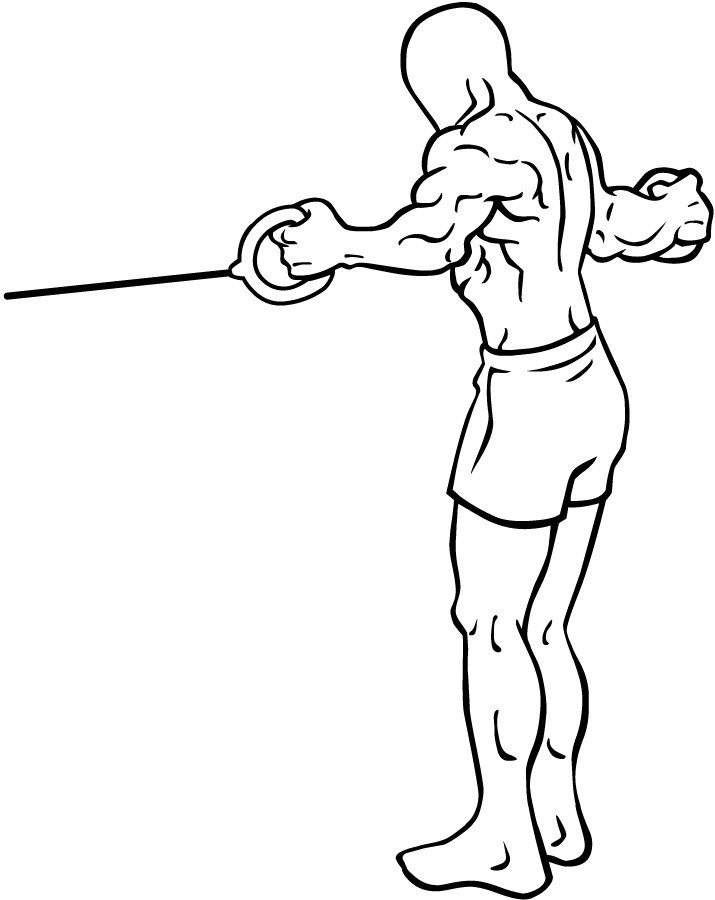
Never stretch a band toward your face. If a band or anchor lets go, it travels back along the line of tension. Keep that line away from your eyes and face, and step back from the anchor point rather than leaning into it.
Keep bands out of direct sun and away from sharp objects, and replace any band that shows wear. A set of bands is cheap; an eye injury is not.
📚 Do Bands Really Build Strength? What the Evidence Says
Yes — with an honest caveat about who was studied.
A 2018 meta-analysis of eight studies (Bergquist and colleagues) found elastic resistance training produced strength gains comparable to conventional resistance training in untrained and moderately trained people.
An 8-week trial (Joy and colleagues, 2016) found similar squat and deadlift strength gains for band training versus free-weight training, and a bench-press study (Lopes and colleagues, 2019) found similar muscle activation between bands and free weights at matched resistance, though free weights produced greater peak force.
The World Health Organization’s 2020 activity guidelines name elastic bands alongside weights and body weight as legitimate ways to load a muscle, with muscle-strengthening activity on two or more days a week.
The caveat: most band trials are short (8–12 weeks) and involve beginners or moderately trained people. There is no long-term band-only evidence for advanced lifters, and no band replaces a heavy barbell for maximal strength.
For general strength, home training, and getting stronger from a standing start, the evidence is solid. For elite powerlifting totals, it is not the tool.
If you are pairing bands with free weights, our dumbbells guide covers that side of the home gym, and our beginners’ equipment guide covers building a first setup around them.
❓ Resistance Bands FAQs
Are resistance bands as good as weights?
For general strength in beginners and intermediate lifters, studies over 8–12 weeks show comparable gains when effort is matched. For maximal strength and precise load progression, free weights are better — bands are a complement, not a complete replacement, for advanced lifting.
What resistance should I start with?
Start lighter than you think. For tube sets, a mid-level band you can move with good form for your target reps; for pull-up assistance, a band that takes enough weight off that you can complete full-range reps; for hip bands, the light or medium level. Buy a set with several levels so you can progress without buying again.
Can resistance bands build muscle?
Yes, when you progress them: thicker bands, combined bands, slower tempos, and fuller ranges of motion all raise the challenge. What does not work is using the same light band for months and expecting change — progression is the requirement, whatever the tool.
Do resistance bands snap?
They can, usually when worn, nicked, overstretched, or old. Inspect before use, retire damaged bands, and never stretch a band toward your face. Anti-snap designs with an inner cord (like Bodylastics) reduce the whipping risk if a tube does fail.
I have a latex allergy — what can I use?
Fabric hip bands (like the Te-Rich set) avoid latex against the skin, and some brands sell latex-free tube and loop lines — check the listing’s material statement before buying, since most loop and tube bands are natural latex.
Can bands help me get my first pull-up?
Yes — that is what long loop bands are for. Loop one over the bar, put a knee or foot through it, and it takes part of your body weight off the rep. As you get stronger, move to a thinner band for less help until you no longer need one.
As an Amazon Associate, we earn from qualifying purchases made through links on this page, at no extra cost to you. This guide is research-based: products were compared from their labels, stated resistance levels, and verified buyer-review records — not from hands-on testing. Prices and availability change, so always check the current listing before buying. This article is general information, not medical advice; if you have an injury or health condition, talk to a clinician before starting a new training programme.