

Why Red Light Therapy Panels Belong in a Home Gym

A red light therapy panel is a board of red and near-infrared LEDs that hangs on a wall or a door, and you stand in front of it after training. No heat, no sweat, no water — just light on the skin for a few minutes. 💡
The panel earns its place in a home gym because recovery is part of training, not an afterthought. The session ends, the panel goes on, and the cool-down has a tool of its own.
Know what a red light therapy panel is not. It is not a red-light face mask, which is a small wearable that treats the face only — a panel covers the torso, the legs or the whole body at once.
It is not a handheld wand either. A wand treats one small spot at a time, and a panel treats a whole area at once — the wand is a spot tool, the panel is a room tool.
It is not an infrared sauna either. A sauna is heat-based, and our best saunas for home gyms covers that type — the panel gives off light, not heat, and the room stays cool.
And it is not a full-body red-light bed. A bed is a clinical, oversize unit that takes a whole room — a panel hangs on a door and fits a home gym.
The previous guide in this series, our best deadlift shoes for home gyms, covers the flat shoe you pull in. The session starts with the feet planted, and the panel waits for the cool-down after the last rep.
In a home gym, the panel earns its place on the wall you face after training. The bar goes back on the rack, the shoes come off, and the light goes on.
How We Picked

We compared six red light therapy panels that are genuinely sold for home gyms right now, using maker records, listing records and independent tests — not hands-on testing, and not roundup scores copied from other sites.
Every photo in this guide is an honest training or recovery scene, not a product shot of the named panel, because free-license photos of the exact named panels do not exist for this category — no maker photo was used, and no photo is presented as a panel.
Where records disagree, the article says so instead of picking the flattering number — and this category disagrees on the basics, because irradiance figures mix solar meters and spectrometers, prices move with every sale, and wavelengths differ between models.
- Wavelengths: the red and near-infrared wavelengths in nanometres, and whether the panel covers two or eight of them.
- LEDs: the number of LED chips, and whether they are single or dual-chip.
- Irradiance: the stated output in mW/cm², the distance it was measured at, and the instrument used.
- Controls: the app, the touchscreen, the remote, and whether each wavelength can be dimmed.
- Size: the panel’s height and width, and whether one panel covers the whole body.
- Price: the stated price as sourced — list, sale and third-party prices kept apart, never blended.
Also considered: the Mito Red MitoPRO 1500+, an older Mito model with four wavelengths — a real panel, but the 1500X is the current flagship with six wavelengths.
Also considered: the BestQool BQ60, a budget panel at about $79 for targeted use — a real panel, but the Pro200 is the flagship full-body model, and the BQ60 is a spot tool.
Also considered: the Rouge G4 base model, which carries two wavelengths only — a real panel, but the Pro G4 is the eight-wavelength model, and the base G4 is a different product.
Also considered: full-body red-light beds and infrared saunas — real recovery tools, but a bed is clinical and oversize, and a sauna is heat-based, so neither is a panel for a home gym.
Comparison

| Pick | Wavelengths | LEDs | Standout |
|---|---|---|---|
| Mito Red MitoPRO 1500X | 6 | 300 | Best Overall, app + touchscreen |
| Joovv Solo 3.0 | 2 | 150 | Best Premium, IEC 60601 certified |
| PlatinumLED BioMax 900 | 7 | 300 | Best Spectrum, FDA Class II registered |
| Hooga PRO1500 | 2 | 300 | Best Full-Body Value, 60-day trial |
| Rouge Pro G4 | 8 | 288 | Best for Tweakers, per-wavelength dimming |
| BestQool Pro200 | 4 | 200 | Best Budget, $589 list |
Read the table honestly. It carries no highest-irradiance crown on purpose: the figures mix solar meters and spectrometers, the BestQool figure is measured at 3 inches while the rest are measured at 6 inches, and the BioMax headline appears in no maker document — so a crown would rank incomparable numbers.
It carries no price column either: prices mix list prices, sale prices and third-party prices, and the Joovv and the Hooga carry conflicting records — so prices sit in the pick sections as sourced, in their own currency.
It carries no whole-guide most-wavelengths crown in the table itself, but the count is plain: the Rouge Pro G4 carries eight wavelengths, the most here, while the Joovv and the Hooga carry two each, the fewest.
The LED count is a three-way tie at the top: the MitoPRO, the BioMax and the Hooga each carry 300 LEDs, while the Joovv carries 150, the fewest here — so no single panel owns the LED count.
Two more honesty notes. The Joovv price is unsettled across records, and the Hooga price carries a conflicting record — so both prices are printed as ranges in their sections, not as settled figures.
Mito Red MitoPRO 1500X

The Mito Red MitoPRO 1500X is the best overall because it is the panel that does the most with the fewest compromises: six wavelengths, 300 LEDs, three modes and an app, at $1,299.
You stand in front of it, pick a mode — red, near-infrared or half and half — and let the light run for a few minutes. The app and the touchscreen are the point: the panel is controlled, not guessed at. 💡
The wavelengths are 590, 630, 660, 810, 830 and 850 nm, six in all, and the LEDs number 300. The price is $1,299, per the maker’s own record.
The record carries one flag, and it is printed here. The maker claims an irradiance above 130 to 160 mW/cm² at 6 inches, measured with a solar meter — but a third-party lab measured 72.5 mW/cm² peak and 53.5 mW/cm² average at the same distance, with a spectroradiometer.
The lab figure is about half the maker’s figure, because a solar meter and a spectroradiometer do not measure the same thing — so this guide prints both, and crowns neither.
And do not confuse it with the MitoPRO 1500+, a different older model with four wavelengths and a lower price — the 1500X is the current flagship, and the 1500+ is the older panel.
Pros
- Best overall — six wavelengths, 300 LEDs, three modes, app + touchscreen.
- The most complete control here — red, near-infrared and half-and-half modes.
- Three-year warranty, and a maker that publishes its own figures.
Cons
- Irradiance is unsettled — the maker figure is about twice the lab figure.
- $1,299 is the joint-highest list price here, with the BioMax.
- No stated weight or power draw in the records checked.
Listing check: confirm the Mito Red MitoPRO 1500X (not the older 1500+, not a smaller Mito panel) before ordering, and check the wavelengths, the modes and the price from that listing itself.
If the listing shows four wavelengths, it is a different model, not this pick, and if it shows no app, check the model name before ordering.
Best for: a buyer who wants the best overall panel — six wavelengths, 300 LEDs, three modes and an app, at a flagship price.
May not fit: anyone who wants a settled irradiance figure, anyone who wants the cheapest panel, or anyone who will not use an app.
Joovv Solo 3.0

The Joovv Solo 3.0 is the best premium pick because it is the panel with the strongest certification and the cleanest app: IEC 60601 certified, with a Recovery+ pulsed mode, in a compact 9 by 18 inch panel.
You mount it on a door or a stand, open the app, and run a session — and the app is the point: the panel is scheduled, timed and pulsed from the phone, not from a dial. 📱
The wavelengths are 660 and 850 nm, two in all, and the LEDs number 150, the fewest here. The panel draws about 60W, and the warranty runs two years.
The record carries two flags, and both are printed here. First, the price: some roundups list $595 to $695, the most recent independent review lists $1,295, and another 2026 comparison lists $1,699 — so the price is unsettled, and this guide prints the range.
Second, one panel covers part of the body only: a full-body setup needs two units, at about $2,600 on the $1,295 figure — so check the coverage before ordering, not after.
And the spectrum is the narrowest here: two wavelengths against the Rouge’s eight, so a buyer who wants the widest spectrum should look at the BioMax or the Rouge instead.
Pros
- Best premium — IEC 60601 certified, with a clean app.
- Recovery+ pulsed near-infrared mode, controlled from the phone.
- The most compact panel here, at about 9 by 18 inches.
Cons
- Price unsettled — $595 to $1,699 across records.
- One panel covers part of the body only — full body needs two.
- Two wavelengths only, and 150 LEDs, the fewest here.
Listing check: confirm the Joovv Solo 3.0 (not an older Solo, not a Joovv Mini) before ordering, and check the price, the size and the app from that listing itself.
If the listing shows a different Joovv model, it is a different product, not this pick, and if it shows no Recovery+ mode, check the model name before ordering.
Best for: a buyer who wants the premium panel — the strongest certification, the cleanest app, and a compact size.
May not fit: anyone who wants full-body coverage from one panel, anyone who wants the widest spectrum, or anyone who wants a settled price.
PlatinumLED BioMax 900

The PlatinumLED BioMax 900 is the best spectrum pick because it carries seven wavelengths, the second-most here, in a panel that is registered as an FDA Class II medical device.
You hang it on a wall or a door, link a second panel if you want more coverage, and run a session from the touchscreen or the remote — and the linking is the point: the panel grows with the room. 🔗
The wavelengths are 480, 630, 660, 810, 830, 850 and 1060 nm, seven in all, and the LEDs number 300. The panel measures 35.83 by 11.81 by 2.76 inches, and the power draw runs 380 to 490W.
The price is $1,299, per the maker’s own record, and the warranty runs three years. The panel is registered as an FDA Class II medical device, per the maker.
The record carries one flag, and it is printed here. A marketing headline claims up to 280 mW/cm², but that figure appears in no maker document — the manual claims 135 mW/cm² at 6 inches, and an independent spectrometer test measured about 90 mW/cm² at the same distance.
So this guide prints all three figures, and crowns none of them — the headline is a headline, the manual is the maker’s figure, and the test is the independent reading.
Pros
- Best spectrum — seven wavelengths, the second-most here.
- FDA Class II registered medical device, per the maker.
- Modular linking — a second panel adds coverage, and the remote works from across the room.
Cons
- Irradiance is unsettled — the headline, the manual and the test disagree.
- $1,299 is the joint-highest list price here, with the MitoPRO.
- The power draw runs 380 to 490W, the highest stated range here.
Listing check: confirm the PlatinumLED BioMax 900 (not the BioMax 300, not the BioMax 600) before ordering, and check the wavelengths, the size and the price from that listing itself.
If the listing shows a smaller BioMax, it is a different panel, not this pick, and if it shows no FDA registration, check the model name before ordering.
Best for: a buyer who wants the widest spectrum in a registered device — seven wavelengths, 300 LEDs and modular linking.
May not fit: anyone who wants a settled irradiance figure, anyone who wants the lowest power draw, or anyone who wants the cheapest panel.
Hooga PRO1500

The Hooga PRO1500 is the best full-body value because it is a full-body panel at a full-body size — 36 by 9 inches, 300 dual-chip LEDs — at $1,199, per Hooga’s own September 2026 comparison.
You hang it on a wall or a door, stand in front of it, and let the light run — and the size is the point: one panel covers the body from head to toe, with no second unit needed. 🧍
The wavelengths are 660 and 850 nm, two in all, and the LEDs number 300 dual-chip. The panel weighs 21.2 lb, the power consumption is 530W, and the warranty runs three years with a 60-day trial.
The record carries two flags, and both are printed here. First, the price: Hooga’s own comparison lists $1,199, but one 2026 roundup lists about $399 — so the price is unsettled, and the lower figure is likely a different model or an older sale.
Second, the irradiance is a maker figure only: above 189 mW/cm² at 6 inches, measured with a solar meter, with no published third-party verification — so this guide prints the figure and names the instrument.
And there is no app: the panel is controlled from its own panel, not from a phone — so a buyer who wants app control should look at the MitoPRO or the Joovv instead.
Pros
- Best full-body value — one panel covers the body, 300 dual-chip LEDs.
- 60-day trial and a three-year warranty, the longest trial here.
- The simplest panel here — no app, no pairing, no setup beyond hanging it.
Cons
- Price unsettled — $1,199 per Hooga, about $399 in one roundup.
- Irradiance is a maker solar-meter figure, with no third-party verification.
- Two wavelengths only, and no app control.
Listing check: confirm the Hooga PRO1500 (not a smaller Hooga panel, not the HG series) before ordering, and check the size, the wavelengths and the price from that listing itself.
If the listing shows a smaller panel, it is a different product, not this pick, and if it shows a $399 price, check the model name before ordering.
Best for: a buyer who wants full-body coverage from one panel — 36 inches tall, 300 LEDs, and the longest trial here.
May not fit: anyone who wants the widest spectrum, anyone who wants app control, or anyone who wants a settled price.
Rouge Pro G4
The Rouge Pro G4 is the best for tweakers because it is the panel that lets you tune everything: eight wavelengths, per-wavelength dimming, and pulsing from 1 to 10,000 Hz.
You set each wavelength’s brightness, pick a pulse rate, and save the setup as a smart mode — and the tuning is the point: the panel is adjusted, not just switched on. 🎛️
The wavelengths are 630, 650, 660, 670, 810, 830, 850 and 1060 nm, eight in all, the most here, and the LEDs number 288 dual-chip. The panel measures 36.22 by 11.81 by 2.56 inches, and the LED life is 50,000 hours.
The list price is $1,499 per one 2026 comparison, with sale records at $1,121 to $1,138 — so the price is a range, and this guide prints it as one.
The record carries two flags, and both are printed here. First, one review lists the price as starting at $1,785, which includes mounting options — so check what the price includes on the listing, not just the number.
Second, the output is the lowest measured here despite the widest spectrum: the maker claims about 150 to 164 mW/cm² at 6 inches with a solar meter, but an independent spectrometer test measured 65 mW/cm² peak and 59.2 mW/cm² average at the same distance.
And confirm the Pro on the listing: Rouge also sells a base G4 with two wavelengths only, and the base model is a different product with a different spectrum.
Pros
- Best for tweakers — eight wavelengths, the most here, with per-wavelength dimming.
- Pulsing from 1 to 10,000 Hz, with smart modes to save setups.
- 50,000-hour LED life, and a three-year warranty.
Cons
- Lowest measured output here — 65 mW/cm² peak per the independent test.
- Price is a range — $1,121 to $1,785 depending on the record and the mounting.
- The base G4 is a different two-wavelength panel — check the listing.
Listing check: confirm the Rouge Pro G4 (not the base G4, not a smaller Rouge panel) before ordering, and check the wavelengths, the dimming and the price from that listing itself.
If the listing shows two wavelengths, it is the base G4, not this pick, and if it shows no per-wavelength dimming, check the model name before ordering.
Best for: a buyer who wants to tune everything — eight wavelengths, per-wavelength dimming, and pulsing to 10,000 Hz.
May not fit: anyone who wants the highest measured output, anyone who wants a settled price, or anyone who wants a simple on-and-off panel.
BestQool Pro200

The BestQool Pro200 is the best budget pick because it is a full-body panel at a budget price: $589 list, $509 on sale per one record, at 36.8 inches tall.
You hang it on a wall or a door, stand in front of it, and let the light run — and the price is the point: a full-body panel for about half the cost of the flagships. 💰
The wavelengths are 630, 660, 850 and 940 nm, four in all, and the LEDs number 200 dual-chip. The power draw is 340W, and the panel stands 36.8 inches tall.
The record carries two flags, and both are printed here. First, the irradiance claim is above 111 mW/cm² at 3 inches, per the maker — and 3 inches is not 6 inches, so the figure cannot be compared directly with the other panels here.
Second, there is no published independent third-party irradiance verification for this panel — so the maker figure is the only figure, and this guide does not crown it.
And check availability before ordering: one Amazon crawl, 294 days ago, showed no featured offers for this panel — so the listing may be out of stock, and the price may have moved.
BestQool is a Chinese consumer-electronics brand, and the Pro200 is its flagship above the budget BQ series — the BQ60, at about $79, is a targeted-use panel, not a full-body one.
Pros
- Best budget — a full-body panel at $589 list, $509 on sale.
- Four wavelengths, 200 dual-chip LEDs, 340W — a real full-body spec.
- The cheapest way into a full-body panel, at about half the flagship price.
Cons
- Irradiance is a maker figure at 3 inches — not comparable with the 6-inch figures.
- No published independent third-party irradiance verification.
- One Amazon crawl showed no featured offers — check availability.
Listing check: confirm the BestQool Pro200 (not the BQ60, not a smaller BestQool panel) before ordering, and check the wavelengths, the height and the price from that listing itself.
If the listing shows a smaller panel, it is a different product, not this pick, and if it shows no featured offers, check the seller before ordering.
Best for: a buyer who wants the cheapest full-body panel — 36.8 inches tall, four wavelengths, and about half the flagship price.
May not fit: anyone who wants a comparable irradiance figure, anyone who wants independent verification, or anyone who wants a spot-treatment panel.
How to Choose

Choosing a red light therapy panel is choosing the spectrum first and the brand second: the best overall, the premium pick, the widest spectrum, the full-body value, the tweaker’s panel and the budget pick all do the same job differently.
Start from the body you want to cover — a knee, a shoulder, or the whole body — and buy the panel that covers that area, not the panel with the longest spec sheet.
The right one is the one whose wavelengths, LEDs, size and controls match your room and your routine. The four sections below walk through type, size, features and placement in that order.
Choose Your Type

Pick the type by the area you want to cover. A full-body panel — the Hooga, the Rouge and the BestQool — covers the body from head to toe in one unit, with no second panel needed.
A compact panel — the Joovv Solo 3.0 — covers part of the body at a time, and a full-body setup needs two units side by side.
And a panel is not a mask, a wand or a bed. A mask treats the face only, a wand treats one spot at a time, and a bed takes a whole room — the panel is the middle lane, and the type is the coverage.
If your main work is the whole body, the full-body panel is the honest lane; if your main work is one area, the compact panel is the honest lane — and neither type is a sauna, which is heat, not light.
Choose Your Size

Pick the size by the body, not the box. A panel’s height sets what it covers: a 36-inch panel covers the torso and the legs at once, while a 9 by 18 inch panel covers one area at a time.
So measure the wall or the door before ordering, not after — the height sets the coverage, and the width sets whether the panel fits the space you have.
The Hooga, the Rouge and the BestQool are the tall ones here, at 36 inches or more. The Joovv is the compact one, at about 9 by 18 inches, and it needs a second unit for full-body coverage.
The MitoPRO and the BioMax sit in the middle: tall enough for the torso, with a second panel linked if you want more coverage — so check the linking on the listing, not the height alone.
And check the weight before ordering, whatever the panel: a panel that hangs on a door needs a hook that holds it, and a panel that hangs on a wall needs a mount that holds it.
A panel that fits is a panel you use — and if you are between sizes, the taller panel is the honest choice for a home gym, because the body it covers is the whole body.
Choose Your Features
Pick the features by what you will touch every session. The wavelengths come first: eight on the Rouge, seven on the BioMax, six on the MitoPRO, four on the BestQool, and two each on the Joovv and the Hooga.
So check the wavelength list on the listing, not from a photo, before ordering — the nanometres in the list, not the marketing word.
The controls come second: the MitoPRO and the Joovv run from an app, the BioMax runs from a touchscreen and a remote, the Rouge runs from per-wavelength dimming, and the Hooga and the BestQool run from their own panels.
And the recovery stack comes third: a panel is one tool in a cool-down, and the other tools matter too. Our best recovery boots for home gyms covers the boots in full.
The timer comes fourth: a session is a few minutes, not an hour, and a panel with a timer keeps the session honest — so check the timer on the listing, not the habit alone.
And check the small print on every feature before ordering: the irradiance where stated (the Rouge’s is the lowest measured), the generation where stated (the MitoPRO 1500X is not the 1500+), and the price where stated (the Joovv’s is unsettled). The feature that disappoints is always the one nobody checked.
Choose Your Placement

Pick the placement by where the cool-down happens. A panel needs a wall or a door in the room you train in, not a shelf: it hangs where the session ends, and the cool-down starts there.
And the test is whether it is on when the session ends. The panel that hangs by the rack gets used every session; the panel that lives in a cupboard gets forgotten.
Put the panel where the recovery happens, not where the room ends: a panel by the platform gets used every session, and a panel stored in the garage gets skipped.
Whatever spot you pick, keep the panel clear of the bar path and the floor clear of the cable — a panel that is blocked by the rack is a panel you will not stand in front of.
A recovery corner shares its floor with the cold plunge, and the plunge is the other half of the cool-down. Our best cold plunge tubs for home gyms covers the tubs in full.
Safety
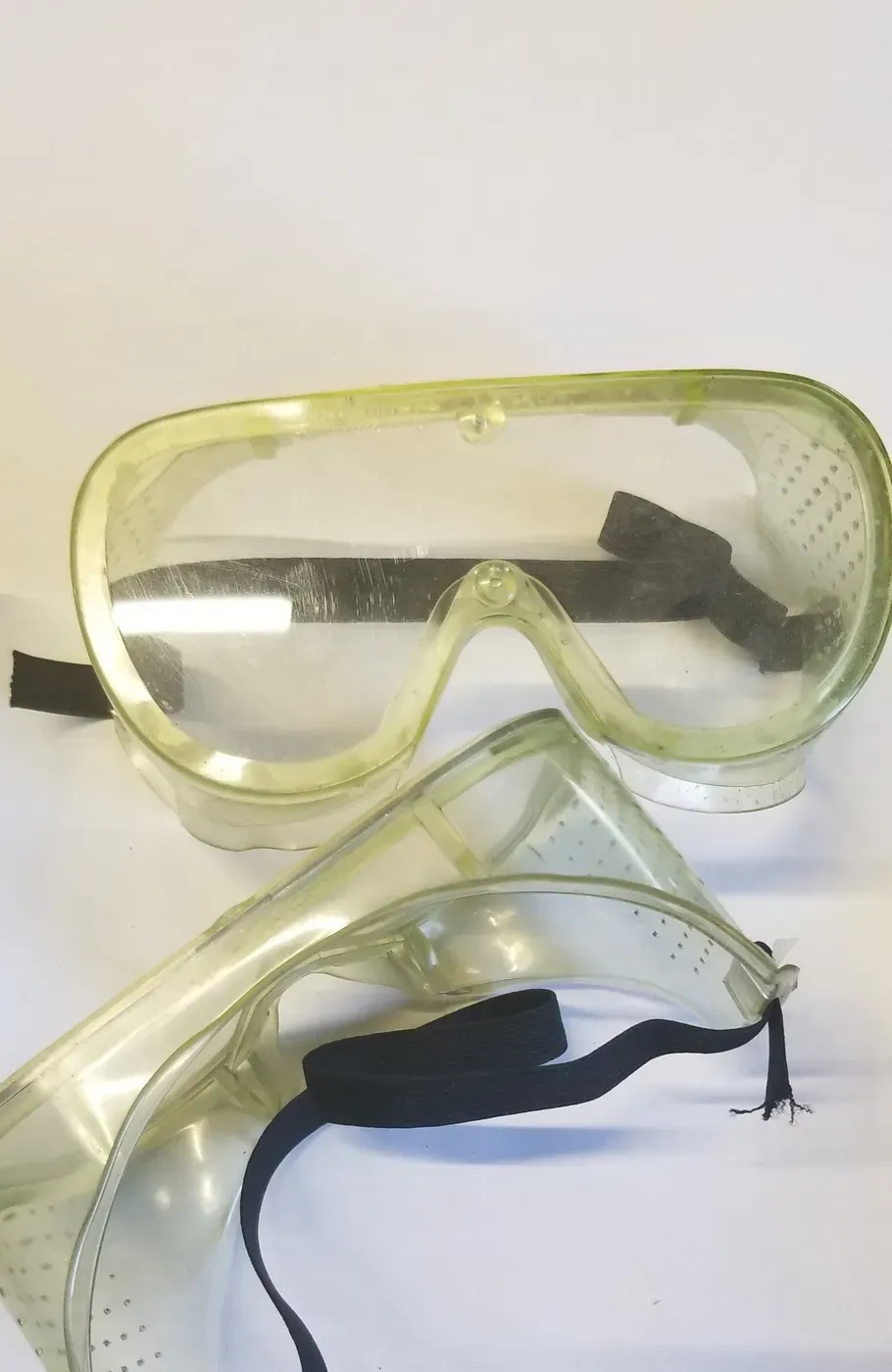
1. Wear the eye protection that comes with the panel: the LEDs are bright, and the eyes are the part to protect — put the goggles on before the panel goes on, not after.
2. Start short: run the shortest session the maker suggests before moving up — a session that is too long to sit through is a session that will be skipped, and the panel is not a race.
3. Keep the distance the maker states: the panel’s output is measured at a stated distance, and standing closer than the maker suggests is not a stronger session — it is a different one.
4. Never look directly into the LEDs: the light is bright enough to dazzle, and a panel aimed at the face is a panel aimed at the eyes — angle it at the body, not the face.
5. Stop on any discomfort: a warmth on the skin is normal, a burning feeling, a headache or a skin reaction is a stop signal — end the session, not the day, and do not push through it.
6. Keep children and pets clear of the panel while it runs: the LEDs are bright, the panel is hot to touch after a session, and no panel is a toy for a child or a pet.
7. A skin condition, an eye condition, or a condition that light could affect is a clinician’s question: see a clinician before buying a panel to help it, and do not use any pick here as treatment for a skin, eye or other health condition.
This guide is general information only, not medical advice. Red light therapy panels are general wellness devices and are not intended to treat or cure any health condition. If you have a skin or eye condition, are recovering from surgery, or are pregnant, talk to a clinician before using a panel.
Frequently Asked Questions

Will a red light therapy panel fix my pain or my skin?
No — this guide makes no treatment claim for any pick here. A red light therapy panel is a general wellness device for healthy users, not a treatment for pain, injury or any skin condition.
Pain that keeps coming back, a skin condition that is getting worse, or an injury that is not healing is a clinician’s question, not a shopping question. See a clinician first, and buy a panel only for general wellness, not for fixing.
How long is a session?
A few minutes, per the maker’s own guidance — and the time depends on the panel, the distance and the mode, so check the maker’s own session guide on the listing, not a roundup’s guess.
The timer on the panel keeps the session honest, and a session that runs longer than the maker suggests is not a stronger session — it is a longer one.
Can I use the panel with other recovery tools?
Yes — and the panel is one tool in a cool-down, not the whole cool-down. A massage gun, a cold plunge and a pair of recovery boots all sit in the same recovery corner.
Our best massage guns covers the guns in full. Whatever tools you stack, space them out: the panel is for the cool-down, and the other tools are for the cool-down too.
Does the panel give off heat?
No — and that is the point. A red light therapy panel gives off light, not heat, and the room stays cool while it runs.
A sauna is the heat-based tool, and our saunas guide covers it in full — the panel is the light-based tool, and the two are different kinds of recovery.
Do I need one panel or two?
It depends on the coverage. A full-body panel — the Hooga, the Rouge and the BestQool — covers the body in one unit, while the Joovv needs two units side by side for full-body coverage.
The MitoPRO and the BioMax link a second panel if you want more coverage, so check the linking on the listing before ordering, not after.
What goes under the panel?
A floor that protects both the panel and the room. Hard floors want a mat or tiles under a training area so a dropped weight does not crack the floor, and a rubber floor still wants a mat so the panel’s stand does not slip.
Our best gym flooring for home gyms covers mats and tiles by room type in full. Whatever you put down, check it after the first week: a mat that has shifted has already told you the base is wrong.
Our Pick: Start Here

Start with the Mito Red MitoPRO 1500X if you want the best overall panel — six wavelengths, 300 LEDs, three modes and an app, at $1,299.
Start with the Joovv Solo 3.0 if you want the premium panel — the strongest certification and the cleanest app — and the PlatinumLED BioMax 900 if you want the widest spectrum in a registered device.
Start with the Hooga PRO1500 if you want full-body coverage from one panel — 36 inches tall, 300 LEDs and the longest trial — and the Rouge Pro G4 if you want to tune everything, wavelength by wavelength.
Start with the BestQool Pro200 if you want the cheapest full-body panel — 36.8 inches tall, four wavelengths, and about half the flagship price.
Whichever you start with, check the listing’s own wavelengths, LEDs, size and price before ordering — the conflicts in this guide are the reason, not the excuse.
Disclosure: As an Amazon Associate, we earn from qualifying purchases made through links in this guide, at no extra cost to you.
Specs in this guide come from maker and listing records checked during research; where records conflict, the conflict is printed in the guide rather than resolved by picking one figure.