

Why an Adjustable Kettlebell Belongs in a Home Gym

A fixed kettlebell set eats floor space one bell at a time. 🏠 An adjustable kettlebell answers that problem directly: one shell, several weights, one parking spot on the floor.
The trade is real, and this guide does not hide it. ⚖️ Most adjustable bells are taller or bulkier than a fixed bell of the same weight, and changing the load takes a few seconds between exercises. What you gain is progression without buying a new bell every time you get stronger.
If you already own fixed bells, start with our kettlebells guide and our kettlebell racks guide to see whether a rack of fixed bells or one adjustable bell fits your room better. If you are starting from zero, the six bells below cover the whole journey from first swing to heavy competition-style training.
How We Picked
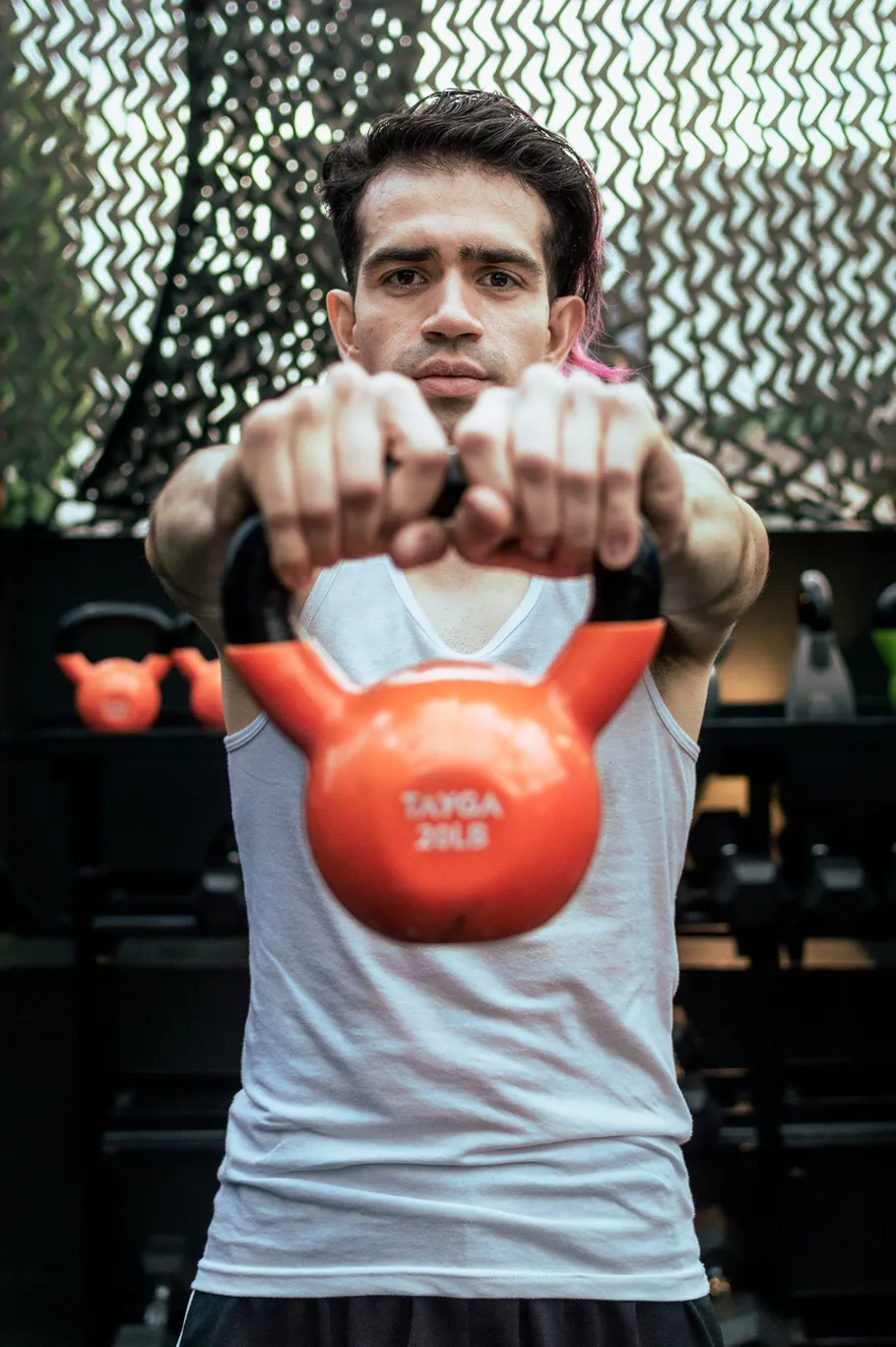
We compared adjustable kettlebells the way a home lifter would: what weights you actually get, how fast the weight changes, how the handle feels, and how much floor the bell takes. 📋 Every spec below comes from the maker’s own listing or a named review roundup, and every conflict we found is stated in the article, not smoothed over.
- Weight range and increments — does the bell start light enough and go heavy enough, in steps you can actually progress through?
- Adjustment mechanism — dial, pin or plate-loaded, and how much faff each change involves.
- Handle and shell — diameter, coating and shape, because a bell you cannot grip well is a bell you will not use.
- Footprint and floor space — the size of the bell itself plus the room a swing needs.
- Honest limits — what the bell cannot do, including drop warnings and parts sold separately.
Five of the six links below are tagged Amazon search links, because REP, Titan, Ironmaster, PowerBlock and Bells of Steel all sell direct or through dealers with no single confident US listing we could pin down. 🔍 One link, the Bowflex, uses a single-source listing code flagged in its own section. Also considered but not picked, without links: the Titan Adjustable Competition Style bell, the Kettle Gryp handle adapter and the BYZOOM Pure Series bell.
For the same space-saving idea in other tools, see our adjustable dumbbells guide and our power racks guide.
Comparison
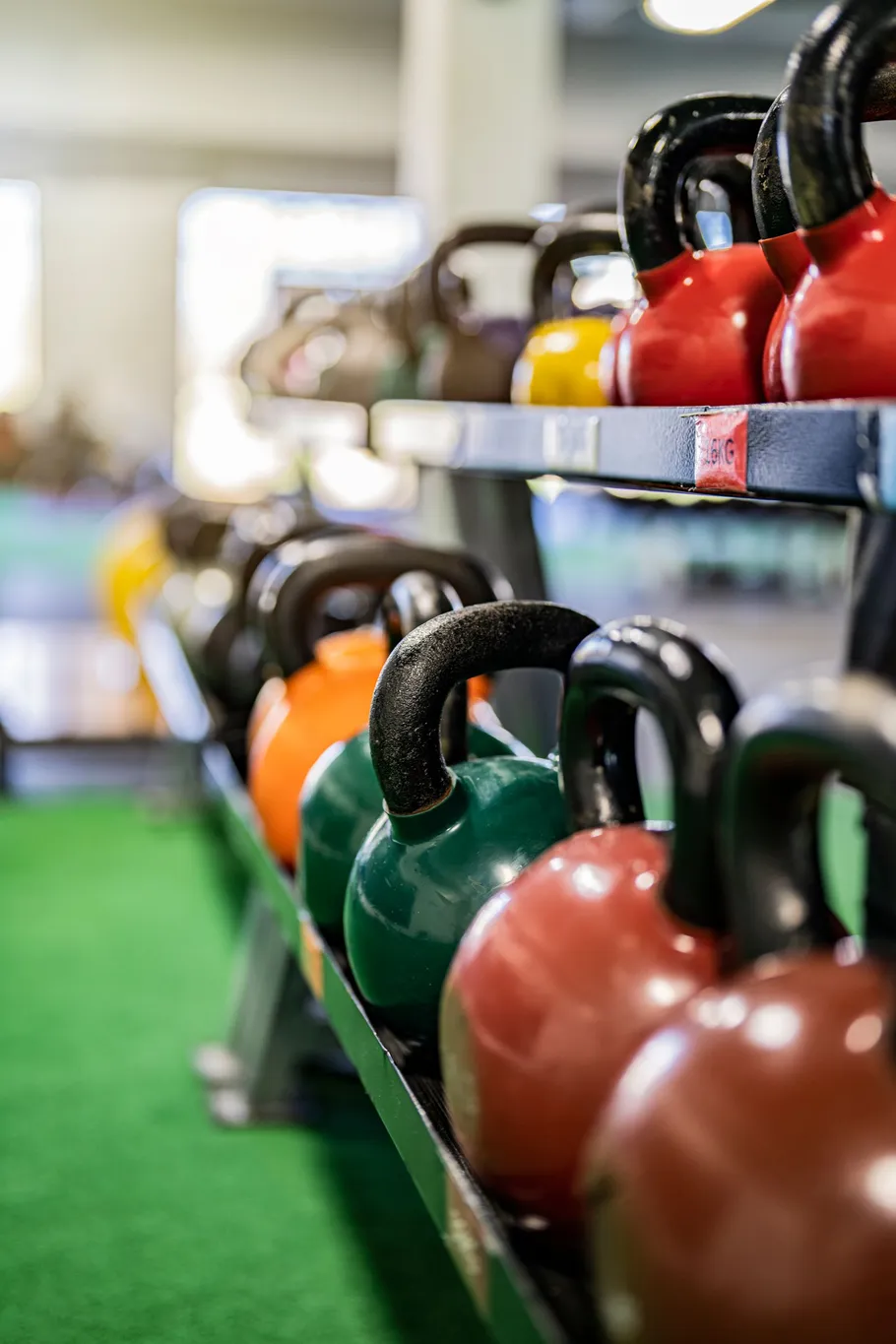
| Kettlebell | Best for | Type | Top weight | Standout |
|---|---|---|---|---|
| REP Fitness Adjustable | Most lifters | Dial | 24 kg (53 lb) | Traditional shape, grippy powder coat |
| Bowflex SelectTech 840 | Beginners | Dial | 40 lb | Fastest change, lightest start |
| Titan Fitness 10–40 lb | Budget plate-loaded | Plate-loaded | 40 lb | 10 lb core, 7 settings |
| Ironmaster Quick-Lock | Heaviest swings | Plate-loaded screw | 80 lb with kit | 2.5 lb steps, shared plates |
| PowerBlock Adjustable | Compact steel | Pin | 62 lb | Smallest stated footprint |
| Bells of Steel Competition | Competition training | Plate-loaded steel | 32 kg (70.5 lb) | 0.5 kg steps, 41 settings |
Conflicts we found and kept visible: Bowflex’s third dial setting is listed as 20 lb in the maker’s own manual but as 18 lb in some roundups — confirm the setting on the dial itself. Ironmaster’s handle diameter appears as both 1.2 in and 1.375 in across sources. PowerBlock’s small-bell dimensions are ordered two ways across sources, though the footprint is the same either way. REP publishes no outer dimensions for its shells, and two different listing codes circulate for the Titan bell, which is why Titan gets a search link rather than a direct listing link.
The superlatives below are safe because each one is scoped to the bells with a stated figure: bells with an unstated footprint, weight or handle size are left out of that ranking rather than guessed into it.
REP Fitness Adjustable Kettlebell
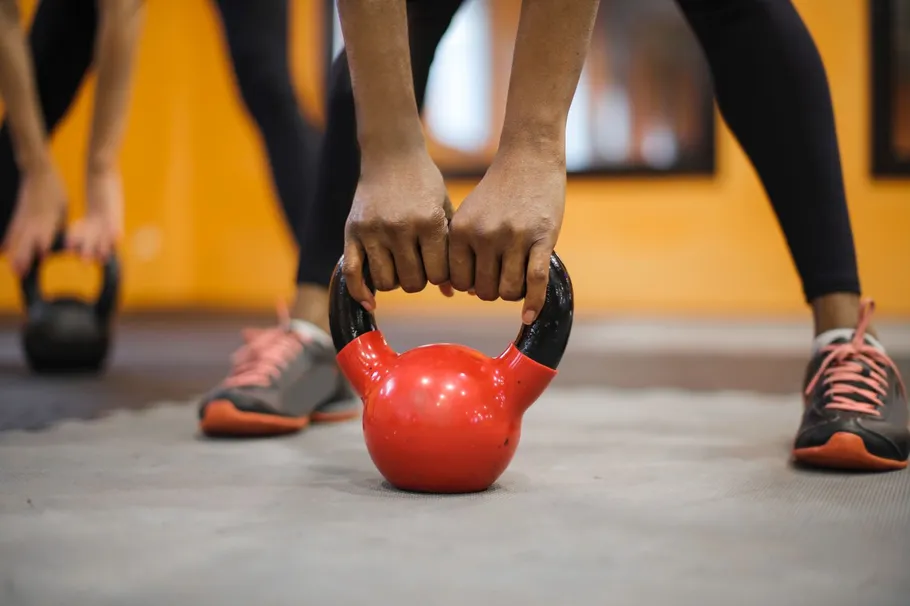
REP’s adjustable bell is the one most reviewers pick first, and the reason is simple: it looks and feels like a normal kettlebell. 🏆 The cast iron shell hides its plates inside, the handle carries a matte powder coat for grip, and a rubber bottom protects your floor.
REP sells three shells rather than one bell that covers everything: 8–16 kg, 16–24 kg, or 20–40 lb. Each shell has five settings in 2 kg or 5 lb steps, changed with a push-and-twist dial under the handle. The handle runs 34.6–35 mm depending on the shell — tied with Bells of Steel for the thickest handle here — and the top shell reaches 24 kg, about 53 lb.
✅ Pros
- Traditional kettlebell shape and balance
- Fast push-and-twist weight changes
- Three shells cover beginners to strong lifters
- Rubber bottom protects flooring
⚠️ Cons
- One shell cannot cover the full 8–24 kg range
- Dial uses plastic parts in a high-wear spot
- Outer dimensions are not published
- Not built to be slammed or dropped
Listing check: REP sells direct, so this is a tagged search link — confirm you are buying the shell size you want (8–16 kg, 16–24 kg or 20–40 lb), not a fixed REP bell.
Best for: lifters who want one bell that feels like a traditional kettlebell and are happy to pick the shell that matches their strength today.
May not fit: lifters who want a single bell covering 8 kg all the way to 24 kg, or anyone who drops bells — this one is not built for that.
Bowflex SelectTech 840
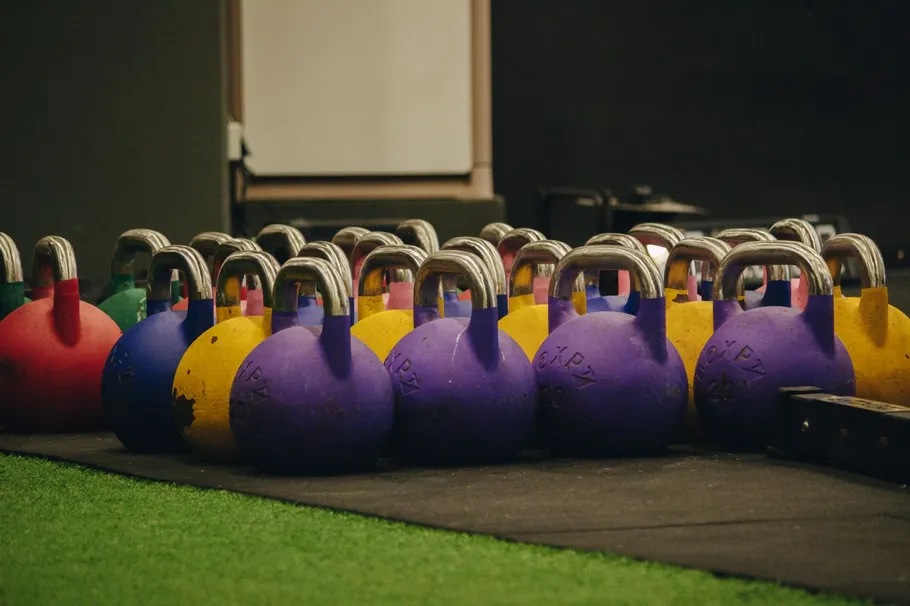
The SelectTech 840 is the fastest bell to adjust here and the easiest to start with. 🎛️ Turn the dial on top, lift, and the plates you did not select stay behind in the cradle tray. Six settings cover 8 to 40 lb, and the 8 lb start is the lightest starting weight in this guide.
The maker’s manual lists the six settings as 8, 12, 20, 25, 35 and 40 lb, though some roundups print the third setting as 18 lb — a conflict worth knowing before you trust the dial markings blindly. The shell is moulded plastic over a metal core, the handle is 28 mm, the unit measures 8.8 × 7 × 12.5 in, and the assembled weight is 40.5 lb. The dial itself carries an embossed “Do Not Drop” warning, and the bell must sit in its cradle to change weights.
✅ Pros
- Fastest weight change in this guide
- Lightest starting weight at 8 lb
- Replaces six fixed bells in one unit
- Two-year parts warranty
⚠️ Cons
- Tops out at 40 lb — strong lifters will outgrow it
- Plastic shell, not a cast iron feel
- Must sit in its cradle to change weights
- Do-not-drop warning embossed on the dial
Listing check: this listing code comes from a single search listing naming the SelectTech 840 — confirm the listing shows the 8–40 lb dial model (part number 100790) before buying, since Bowflex sells several SelectTech products.
Best for: beginners and circuit trainers who want the quickest weight changes and the lightest possible start.
May not fit: lifters already swinging 40 lb or more, or anyone who wants a cast iron bell they can drop.
Titan Fitness 10–40 lb Adjustable Kettlebell
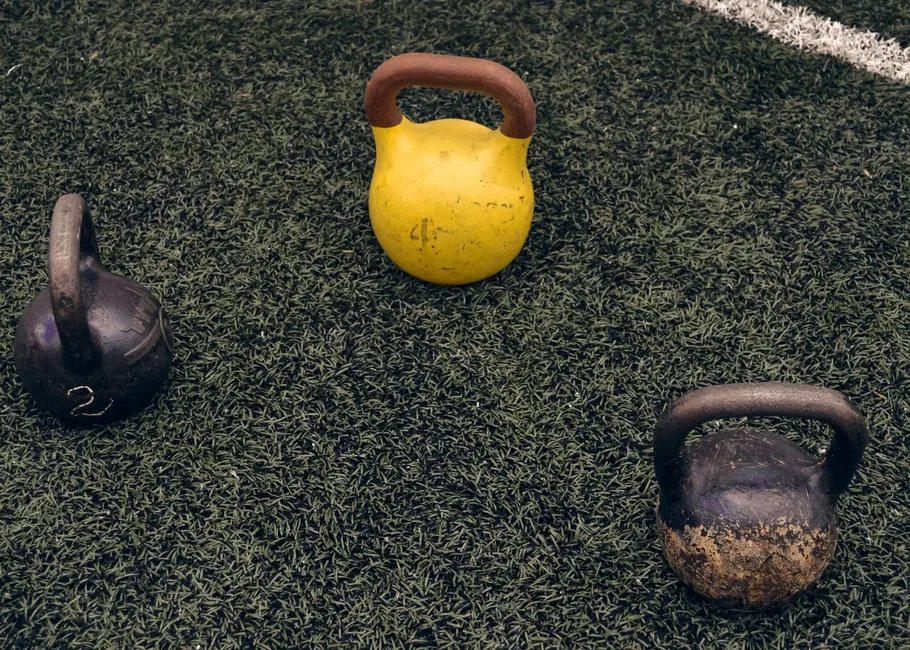
Titan’s bell is the budget plate-loaded pick: a 10 lb core plus six drop cast iron plates that stack inside the shell. 🔩 The plates are numbered 1–6 in the order they should be added, each plate is marked in both kg and lb, and a heavy-duty plastic clamp holds the stack in place.
The range runs 10 to 40 lb across seven working totals, with individual plates weighing between 4.6 and 6 lb — so the steps are uneven, not neat 5 lb jumps. The handle is 28 mm, the unit stands 7 in wide by 11 in tall, and the finish is powder-coated black cast iron. Unlike the dial bells, your own weight plates will not fit this bell: the included plates have unique cutouts that slide into the frame.
✅ Pros
- Lowest-cost route to an adjustable bell
- Seven weights from a 10 lb core
- Cast iron plates, traditional shape
- Plates included in the box
⚠️ Cons
- Uneven plate steps, not clean 5 lb jumps
- Slower to change than any dial or pin bell
- Only Titan’s own plates fit the frame
- Tops out at 40 lb
Listing check: two different listing codes circulate for this bell, so this is a tagged search link — confirm the listing shows the 10 lb core with six numbered plates (part number ADJKBELL40) and not Titan’s competition-style bell.
Best for: budget buyers who want real cast iron and do not mind a slower, plate-by-plate weight change.
May not fit: circuit trainers who change weights every minute, or lifters who already swing past 40 lb.
Ironmaster Quick-Lock Adjustable Kettlebell
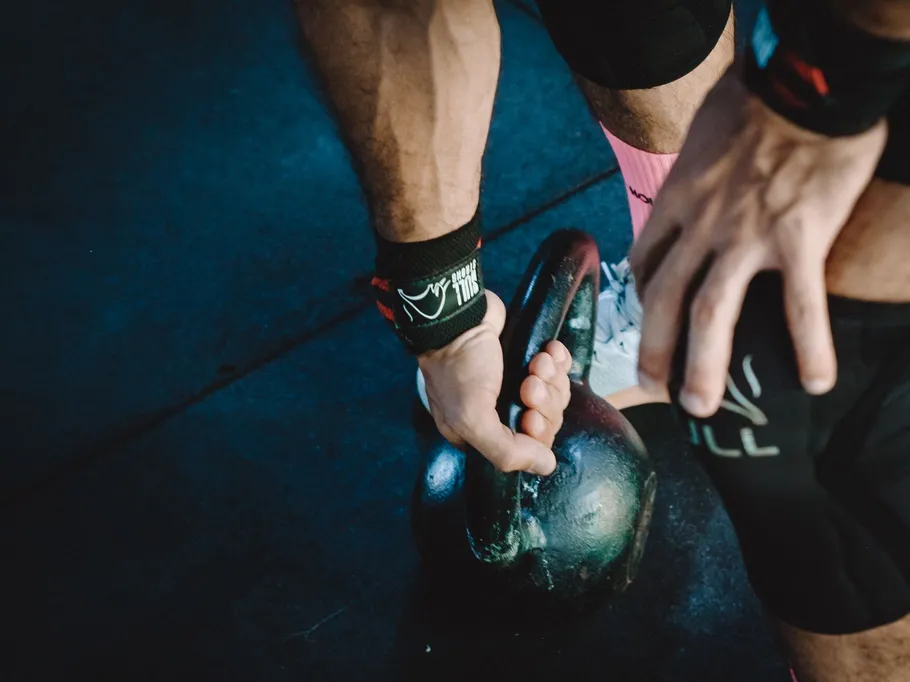
Ironmaster’s bell is the heavyweight of this guide — and the most honest about what costs extra. 🏋️ The handle alone weighs 22.5 lb, the standard kit loads it to 57.5 lb in 2.5 lb steps, and a longer locking screw with more plates takes it to 80 lb, the highest top weight here.
The catch is that the handle and the weights are separate purchases: the handle ships with a standard locking screw but, on its own, no plates. The plates are the same square Quick-Lock plates Ironmaster uses for its adjustable dumbbells, so one set of plates can serve both tools. The handle is powder-coated cast iron, and sources disagree on its diameter — 1.2 in in some listings, 1.375 in in others — so treat the grip as thick rather than trusting either figure exactly.
✅ Pros
- Highest top weight here at 80 lb with the kit
- Fine 2.5 lb steps for steady progression
- Plates shared with Ironmaster dumbbells
- All-steel, bomb-proof construction
⚠️ Cons
- Handle alone is 22.5 lb — too heavy for beginners
- Weights sold separately from the handle
- Reaching 80 lb needs both kits, not one
- Slowest change style here after the competition bell
Listing check: Ironmaster sells direct, so this is a tagged search link — confirm whether you are buying the handle alone, the 57.5 lb kit or the 80 lb kit, since the handle on its own ships with no plates.
Best for: strong lifters who already own Ironmaster dumbbells, or anyone whose swings have outgrown every 40 lb bell.
May not fit: beginners, who will find even the empty handle heavy, or anyone who wants one-box-and-done buying.
PowerBlock Adjustable Kettlebell
PowerBlock’s bell is the compact steel option: a dense alloy-steel block with a magnetic selector pin, sold in two sizes. 🧲 The smaller unit runs 18–35 lb in four settings (18, 22, 26, 35 lb) and the larger runs 35–62 lb in four settings (35, 44, 53, 62 lb).
The pin system is genuinely quick — pull the magnetic pin, slide it to the weight you want, and the unselected blocks stay behind. The handle is 32.77 mm with a smooth but tacky powder-coated grip, and the small unit’s footprint of about 5¾ × 4¼ in is the smallest stated footprint in this guide. The trade is the uneven steps: the small bell jumps 4 lb, 4 lb, then 9 lb, and the big bell jumps 9 lb every time, so progression is chunkier than the dial bells’ steps.
✅ Pros
- Dense all-steel construction
- Fast magnetic pin changes
- Smallest stated footprint here
- Two sizes cover 18 lb to 62 lb
⚠️ Cons
- Uneven steps, including a 9 lb jump
- Only four settings per unit
- No weight below 18 lb on the small unit
- Rectangular block feels different from a round bell
Listing check: PowerBlock sells direct, so this is a tagged search link — confirm whether you are buying the 18–35 lb unit or the 35–62 lb unit, since the two look nearly identical.
Best for: lifters short on floor space who want steel construction and fast pin changes.
May not fit: beginners who need a bell under 18 lb, or lifters who want fine 2–5 lb progression steps.
Bells of Steel Adjustable Competition Kettlebell

Bells of Steel’s bell is the specialist of this guide: a steel shell with iron plates, built to competition dimensions at every weight. 🎯 The base bell covers 12–20.5 kg, the expansion pack stretches it to 32 kg (about 70.5 lb), and the 0.5 kg plates give 41 settings — the finest increments and the most settings here by a wide margin.
The handle is a true 35 mm competition handle, tied with REP for the thickest here, and the footprint is 8.25 × 11 in. The price of all that precision is speed: the shell opens with an Allen wrench and plates stack by hand, so a weight change is a short job between sets, not a dial flick. A plastic bottom add-on drops the base down to 9 kg for lighter accessory work, and the whole unit carries a limited lifetime warranty.
✅ Pros
- Finest steps here at 0.5 kg
- 41 settings from one shell
- True competition shape and 35 mm handle
- All-metal shell and plates, no plastic dial
⚠️ Cons
- Slowest weight change here — Allen wrench job
- Reaching 32 kg needs the expansion pack
- Starts at 12 kg, too heavy for true beginners
- Heaviest-feeling workflow for circuits
Listing check: Bells of Steel sells direct, so this is a tagged search link — confirm whether you are buying the 12–20.5 kg base bell or the 12–32 kg bundle with the expansion pack, since the base alone stops at 20.5 kg.
Best for: competition lifters and patient progressors who value exact 0.5 kg steps over fast changes.
May not fit: circuit trainers who change weights constantly, or beginners who need anything under 12 kg.
How to Choose
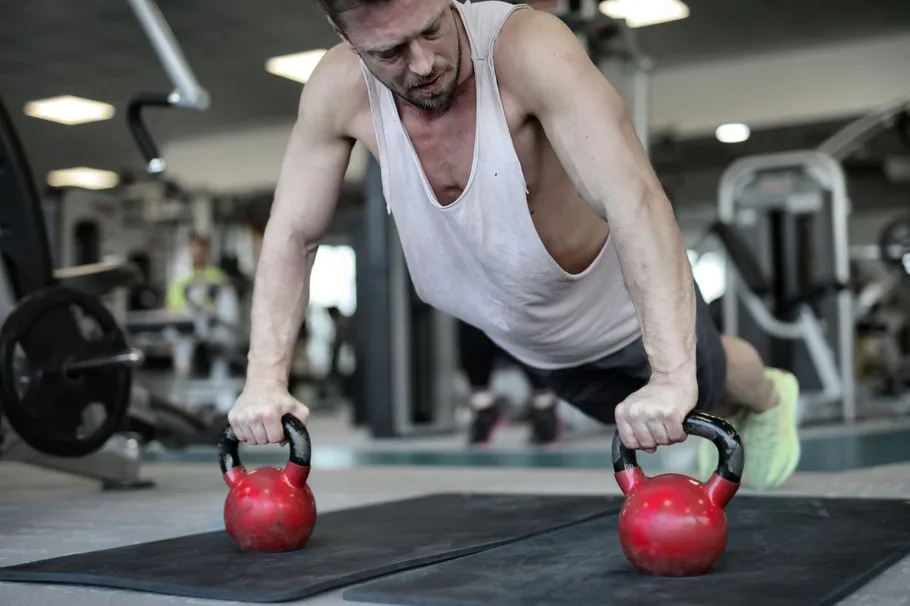
Choosing an adjustable kettlebell comes down to four decisions: how the weight changes, what range you need, how the handle feels, and how much floor you can spare. Get those four right and the brand almost picks itself.
Dial, Pin or Plate-Loaded?
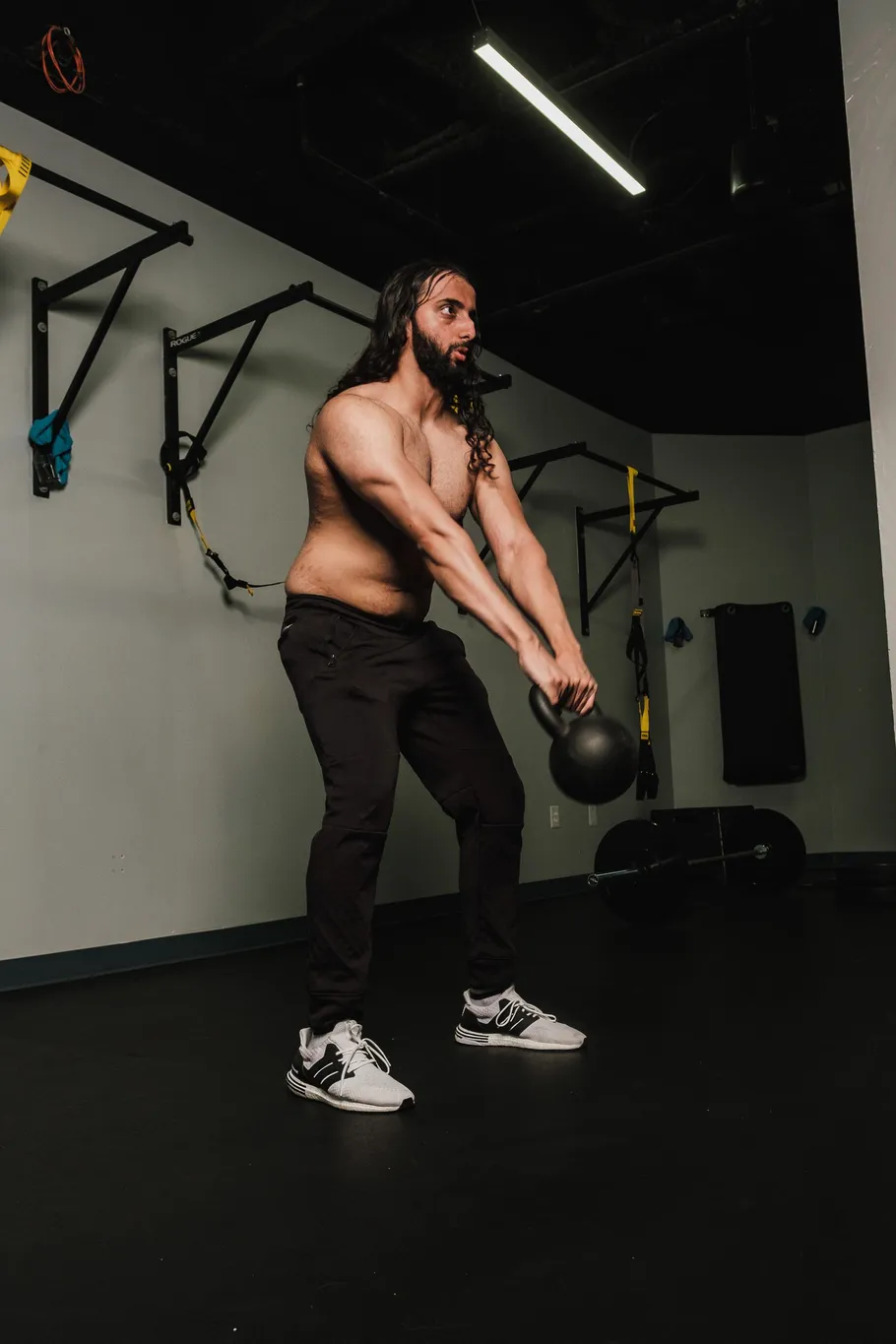
Dial bells (REP, Bowflex) change fastest: twist and lift. 📍 Pin bells (PowerBlock) are nearly as fast: move one magnetic pin. Plate-loaded bells (Titan, Ironmaster, Bells of Steel) are slowest, because you open the shell and stack plates by hand — but they are also the most durable, with no plastic dial to wear out.
If your workouts are circuits with a weight change every minute, buy a dial or pin bell. If you set one weight and train for twenty minutes, a plate-loaded bell’s slower change costs you nothing.
Weight Range and Increments
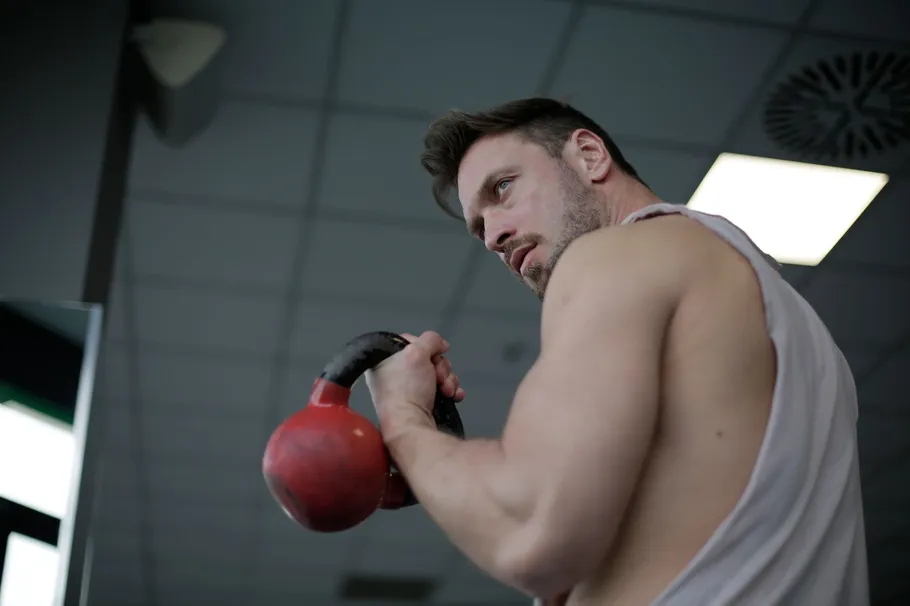
Start by matching the bell’s lightest setting to your weakest lift, not your swing. 🏋️ Presses and get-ups need far less weight than swings, so a bell that starts at 22.5 lb (Ironmaster) or 12 kg (Bells of Steel) is no good as a first bell, however heavy it goes.
Then check the step size: 0.5 kg steps (Bells of Steel) let you progress almost invisibly, 2–5 lb steps (REP, Ironmaster) are the normal sweet spot, and 9 lb jumps (PowerBlock’s big steps) can stall a press for weeks. If you already own plates for other tools, our weight plate storage racks guide helps keep the plate-loaded bells’ spare plates tidy.
Handle and Shell Feel
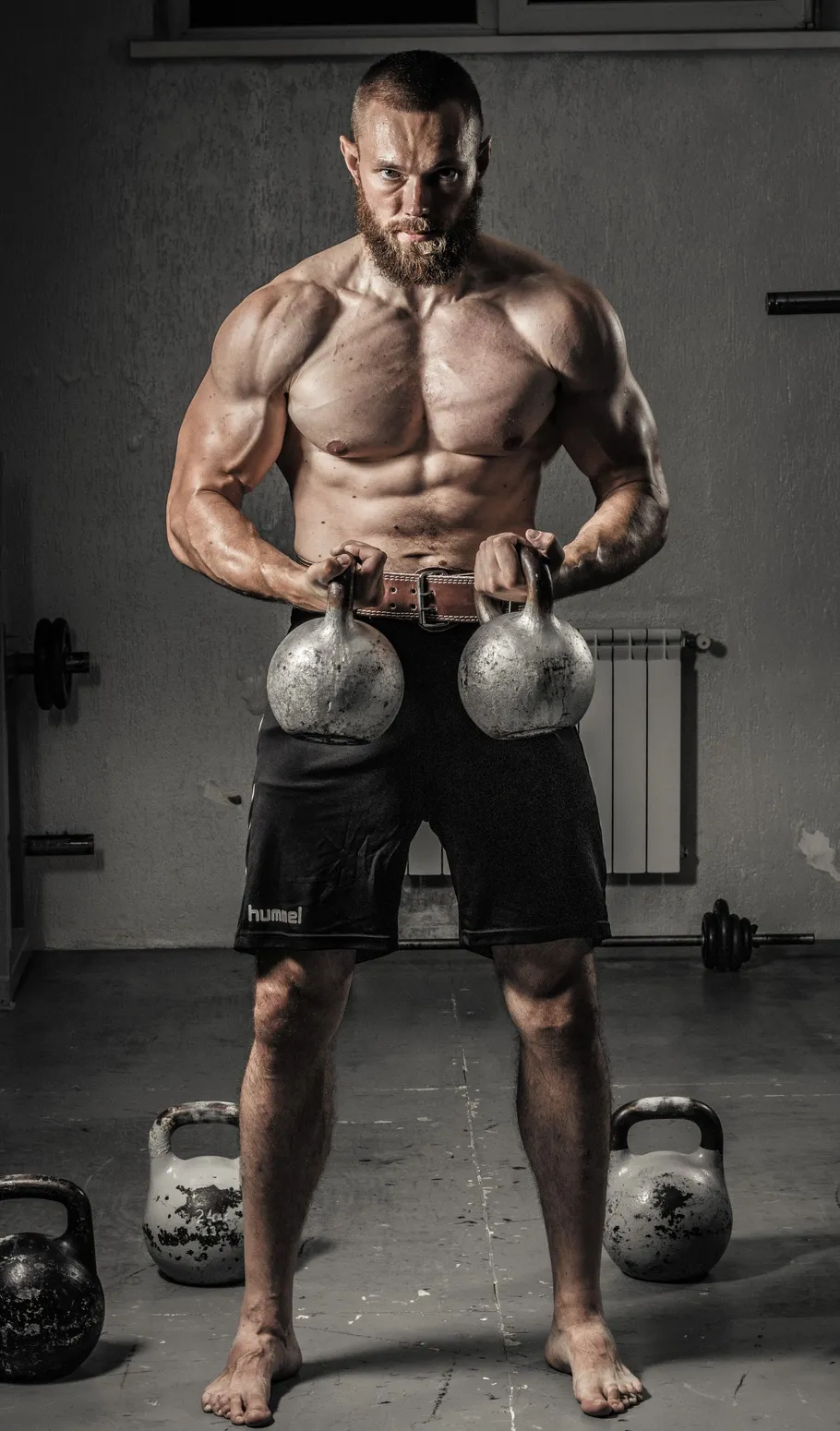
Handle diameter runs from 28 mm (Bowflex, Titan) through 32.77 mm (PowerBlock) to 35 mm (REP, Bells of Steel). 🤲 Thicker handles build grip but tire smaller hands faster, and a powder-coated handle grips far better than smooth plastic or bare steel once chalk and sweat enter the picture.
Shell shape matters too: round bells roll a little on the floor and sit naturally in the rack position, while PowerBlock’s rectangular block stays put but feels different against the forearm. If you can, hold the shape before you commit — the spec sheet cannot tell you how a bell sits on your wrist.
Footprint and Floor Space
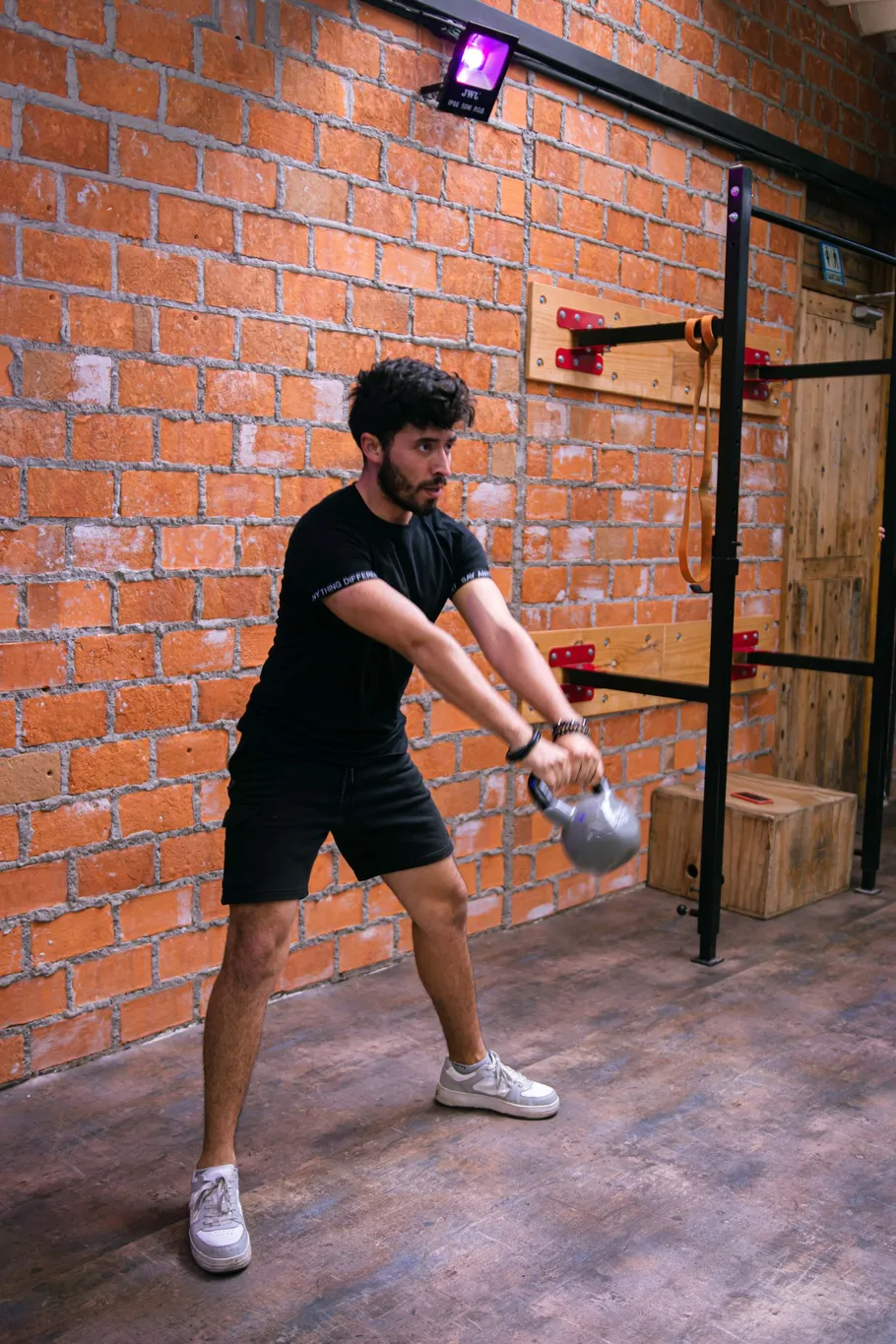
The bell itself is the small part of the footprint. 📏 A swing needs clear floor in front of you and behind you, plus room to park the bell without tripping over it. The smallest stated bell footprint here is PowerBlock’s small unit at about 5¾ × 4¼ in, while Bells of Steel’s shell is 8.25 × 11 in — but both need the same swing clearance around them.
REP publishes no outer dimensions, so we left it out of the footprint ranking rather than guessing. For the floor underneath, see our gym flooring guide — a rubber mat under the bell protects both the floor and the bell’s base.
Safety

An adjustable bell adds one safety job a fixed bell does not have: confirming the weight is locked before you lift it. 🔒 A dial left between settings, a pin not seated, or a screw not fully tightened can all turn a swing into a dropped plate. Check the lock, the floor and the space around you every session — and if you train with knee support, our knee sleeves guide covers that separately.
- Check the lock before every set — dial seated, pin fully in, screw tightened to its stop.
- Clear the swing path in front and behind you, and keep the floor dry and free of clutter.
- Park the bell on a flat mat, never on a slope or a soft surface that lets it roll.
- Start light and learn the hip hinge first; heavy swings with a bad hinge hurt backs, not bells.
- Never drop a dial or plastic-shelled bell — Bowflex embosses “Do Not Drop” on the dial for a reason.
- Stop on grip failure, wrist pain or back pain; a failed grip at the top of a swing is how bells fly.
- Inspect the shell, plates, handle and locking parts regularly, and retire anything cracked, bent or loose.
This guide is general information only, not medical or coaching advice. If you have a back, wrist or shoulder problem, or you are returning from injury, talk to a clinician or qualified coach before starting kettlebell training.
FAQ
Are adjustable kettlebells as good as fixed bells?
For most home training, yes — with one honest gap. A good adjustable bell swings, presses and rows like a fixed bell, but it is usually taller and bulkier, and no adjustable bell survives being dropped the way a solid cast bell does. If you compete or you drop bells, fixed bells still win.
What weight should a beginner start with?
Start with your press, not your swing. Most adult beginners press comfortably with 8–12 kg and swing with 12–16 kg, which is why the Bowflex’s 8 lb start and REP’s 8–16 kg shell are the friendliest first bells here. A bell that starts at 22.5 lb or 12 kg is a second bell, not a first one.
Can I drop an adjustable kettlebell?
Assume no, unless the maker says otherwise. Dial bells and plastic-shelled bells are the most fragile — Bowflex literally embosses “Do Not Drop” on the dial. All-steel plate-loaded bells tolerate more abuse, but dropping any adjustable bell risks the locking mechanism, and that risk is yours, not the warranty’s.
Do I need one bell or two?
One adjustable bell covers most single-bell work: swings, goblet squats, presses, rows and get-ups. Double-bell work — double cleans, double presses, double front squats — needs two bells of the same weight, which means buying the adjustable bell twice or pairing it with a fixed bell. Start with one; add the second only when your program actually calls for doubles.
Dial, pin or plate-loaded — which changes fastest?
Dial first, pin a close second, plate-loaded last. Bowflex’s dial and REP’s push-and-twist change in seconds, PowerBlock’s magnetic pin takes only a little longer, and the plate-loaded bells (Titan, Ironmaster, Bells of Steel) need the shell opened and plates stacked by hand. Speed only matters if your workouts change weights constantly.
What should I pair with an adjustable kettlebell?
A rubber mat underneath, clear floor around you, and something for recovery afterwards. A mat protects the floor and the bell’s base, and our foam rollers guide covers the recovery side — ten minutes with a roller after a swing session beats another ten minutes of swings for most lifters.
Our Pick: Start Here

Start with the REP Fitness Adjustable Kettlebell if you want the most traditional feel and a fast dial change, and pick the shell that matches your strength today. Take the Bowflex SelectTech 840 if you are a true beginner who wants the lightest start and the quickest changes. Choose the Ironmaster Quick-Lock if you already swing heavy and want the road to 80 lb, and the Bells of Steel Adjustable Competition Kettlebell if you train for competition and want exact 0.5 kg steps.
As an Amazon Associate, we earn from qualifying purchases made through links on this page, at no extra cost to you. Prices and availability change, so confirm the exact model, shell size and kit contents on the listing before you buy.
This guide is based on published specifications and named review roundups, not hands-on testing. Capacities, dimensions and settings are the makers’ figures as reported by those sources, and conflicts between sources are stated in the article rather than resolved by guesswork.