

Why Ab Crunch Machines Belong in a Home Gym
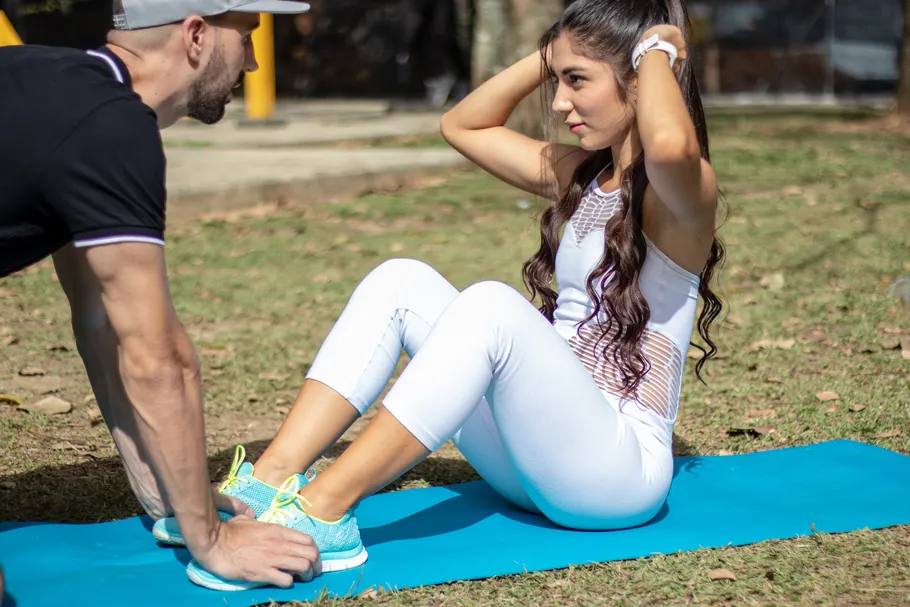
An ab crunch machine is a frame that guides the crunch: you sit, kneel or lie on it, it holds your legs or hips in place, and its pads, arms or track load the curl of the torso — spinal flexion — through a fixed path. That path is the whole point. A floor sit-up lets the hips, the neck and the momentum do half the work; a crunch machine puts the work back on the abs by fixing the body in place and loading the curl itself, rep after rep, with the same range every time. In a home gym, where no coach watches your form, that fixed path is what makes a short core session honest. 💪
Know what an ab crunch machine is not. It is not an ab wheel: a rollout tool that loads the core by extending the body away from the knees, which our best ab wheels covers, while a crunch machine loads the opposite direction — the curl inward. It is not an ab mat: a shaped pad that supports floor sit-ups, which our best ab mats for home gyms covers — a mat cushions the floor crunch, a machine guides and loads it. It is not hanging ab straps, which hang you from a bar for leg raises, and it is not a hyperextension bench, which loads extension — the opposite direction — and which our best hyperextension benches for home gyms covers. And it is not a weight bench: a pressing bench, not a crunch frame, even though a decline bench can host sit-ups. A crunch machine guides the crunch; everything else here guides something else.
Crunch machines are routine in home gyms and garage corners, and one machine brings that guided curl to the room beside your rack. On a core day, the machine is what sets the range, what holds the legs still, and what loads the curl without a partner holding your feet — and on busy weeks it is the piece of kit that turns ten minutes of core work into ten honest minutes, without a class, a coach or a commute. The previous guide in this series, our best elbow wraps for home gyms, covers what your elbows get wound in before a heavy press; a crunch machine is different work — it is what your abs curl against after the bar is racked, not a wrap you wind on.
How We Picked
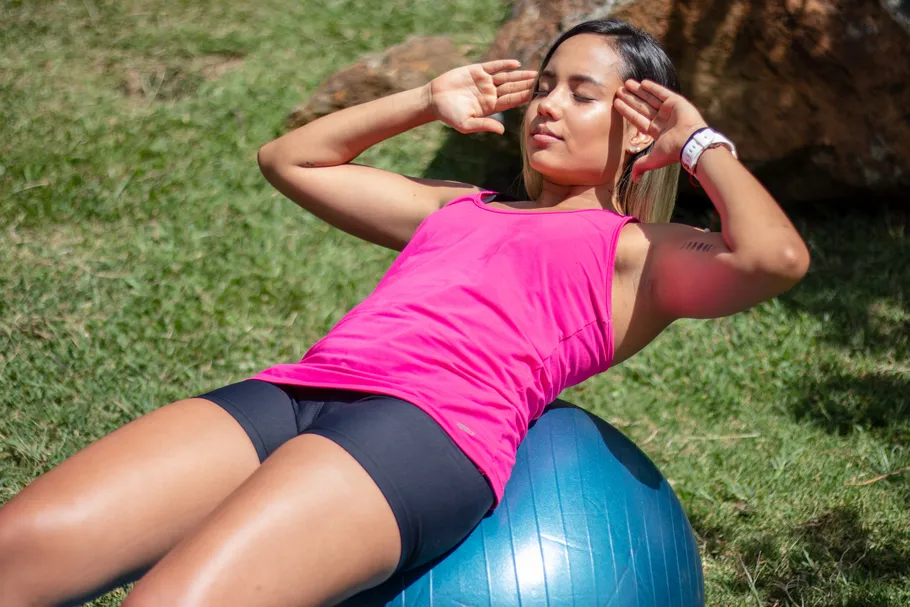
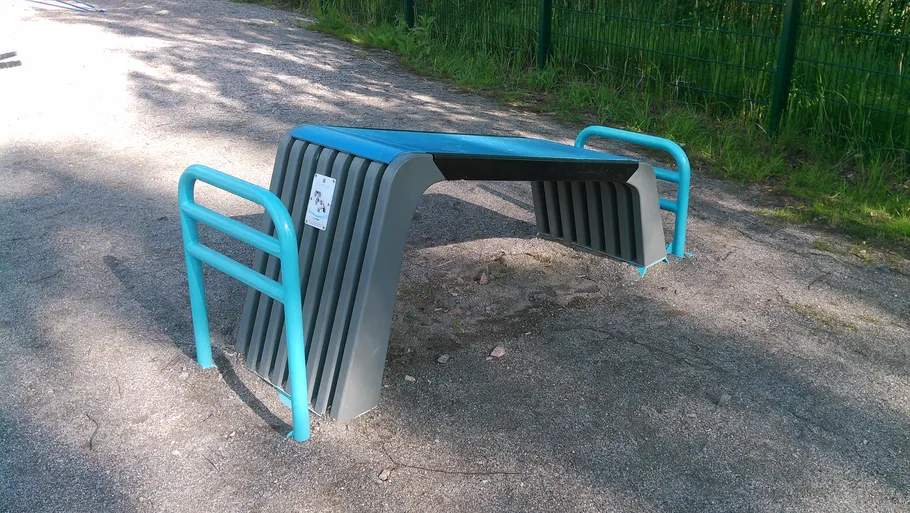
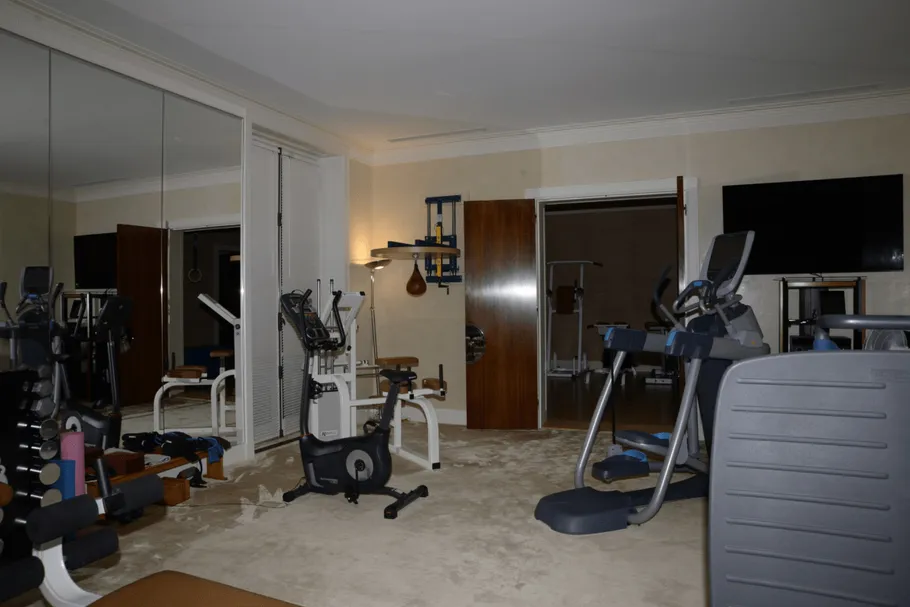
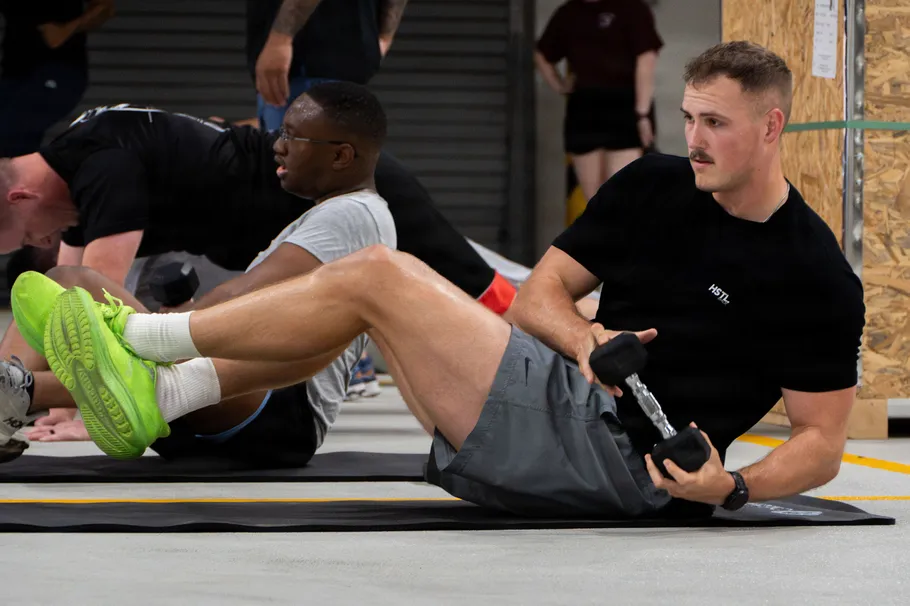
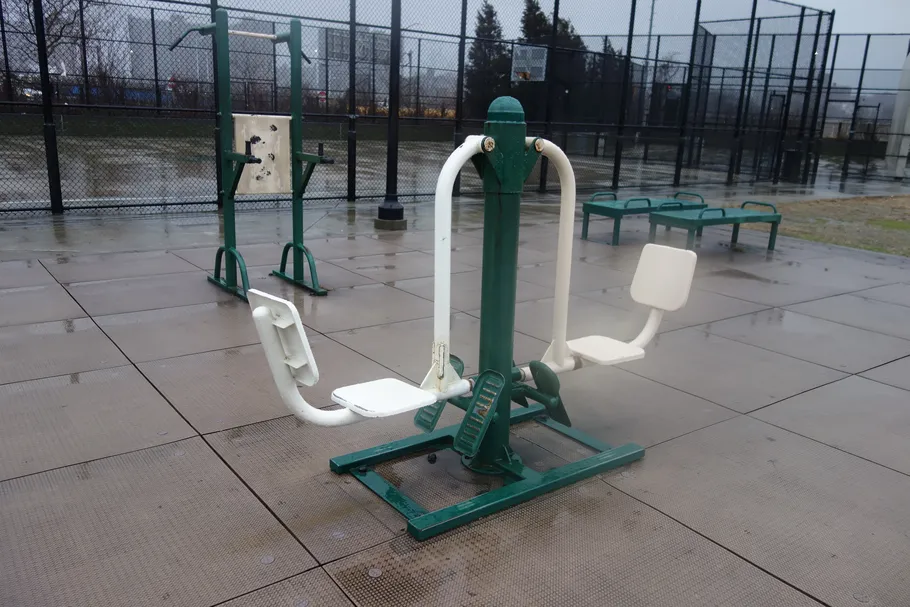
We compared six ab crunch machines that are genuinely sold for home gyms right now, using maker records and listing records — not hands-on testing, and not roundup scores copied from other sites. Every photo in this guide is an honest training scene, not a product shot of the named machine, because free-license photos of the exact named machines do not exist for this category. Where records disagree, the article says so instead of picking the flattering number — and this category disagrees on the basics, because unit weights are stated by makers and repeated differently by retailers, and capacities are stated by makers for some picks and only by roundups or retailers for others.
- Type and movement: bench, kneeling coaster, sliding track, spring-assisted or 2-in-1 — and which direction it loads.
- Adjustability: seat, arm, leg-support and decline positions, and how they lock.
- Resistance: plates, springs, body weight or a flywheel — and what it actually adds.
- Capacity: the stated user or load figure, and who stated it — maker, retailer or roundup.
- Footprint and storage: the floor space it takes, and whether it folds flat.
- Honest limits: what each machine cannot do, stated in its own section.
Also considered: the MERACH MR-2314 single-track model (named, not picked — a different, older MERACH machine with a 400 lb figure, 2 inclines and 5 heights, not a version of the MR-2510 below, so it is not merged into that pick); the separate MERACH multi-functional bench (named, not picked — a 300 lb bench that is again a different product, not a version of the MR-2510); and the Ab Coaster Pro name (named, not picked as a separate product — the commercial predecessor name for the same Personal Series line, whose home-market base model is the PS500 below). None of the six picks below hides a conflict like those — where a pick’s own records disagree, the disagreement is printed in its section.
Comparison
| Pick | Type | Capacity | Standout |
|---|---|---|---|
| Body-Solid GAB300 Semi-Recumbent Ab Bench | Plate-loaded bench | 200 lb (retailer) | Counterbalance + plates |
| The Abs Company Ab Coaster PS500 | Kneeling coaster | 300 lb user | Curved track + swivel seat |
| XMark XM-7608 12-Position Adjustable Ab Bench | Adjustable bench | 400 lb (roundup) | 12 decline positions |
| Wonder Core Smart (WCS-612) | Spring-assisted | 264–265 lb | Folds flat, dials |
| MERACH Ab Machine (MR-2510) | Sliding dual-track | 440 lb | Mountain-climber tracks |
| GMWD AB/Back Machine JF01 | Crunch + extension | 350 lb | Folds flat, 2-in-1 |
Read the table honestly. It carries no whole-guide strongest crown on purpose: the capacity column mixes user capacity (the PS500’s 300 lb user figure) with load and max-weight figures (the MERACH’s 440 lb, the GMWD’s 350 lb, the Wonder Core’s 264–265 lb), and with figures stated by different sources — the GAB300’s 200 lb comes from a retailer record, not the maker, and the XMark’s 400 lb comes from a roundup record, not a maker page — so crowning one machine the strongest would compare unlike with unlike. It carries no weight column either: the XMark’s unit weight is not stated in the records checked, and the PS500’s unit weight is disputed at 50 lb against 70 lb, so a weight column would print a guess for one pick and a dispute for another. The MERACH’s 440 lb is the largest figure printed here, but it is a max-weight figure for a sliding machine, not a user-capacity crown over a plate-loaded bench — and the Wonder Core’s 264–265 lb range is printed as a range because two listings differ by one pound, not smoothed into one number.
Body-Solid GAB300 Semi-Recumbent Ab Bench
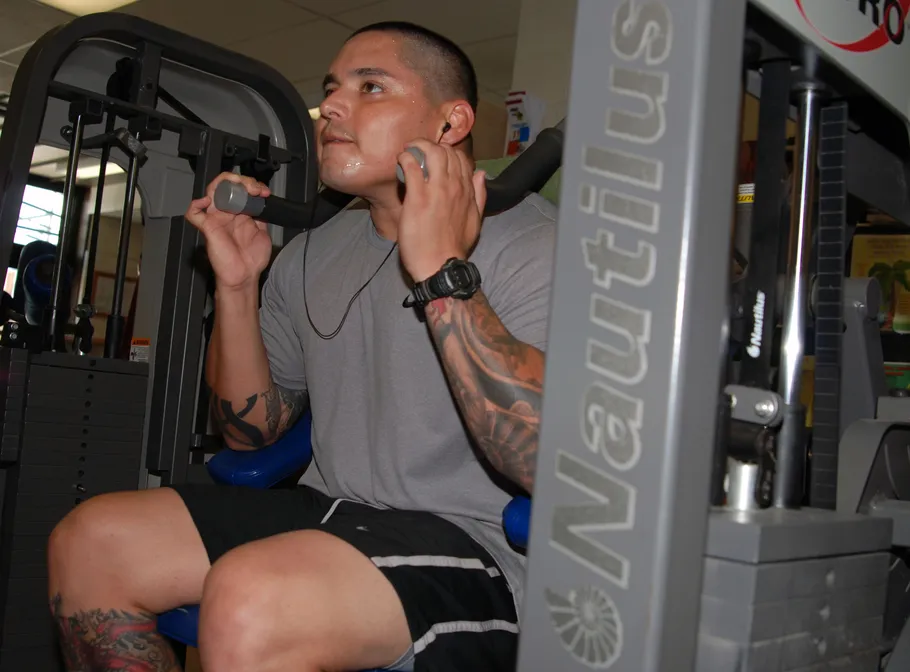
The Body-Solid GAB300 is the plate-loaded pick because it is the bench here that grows with you: a semi-recumbent ab bench with a 5-position seat, a 5-position upper ab arm and a 4-position lower ab leg support, a counterbalance that offsets body weight for beginners, and Olympic-plate resistance for everyone past that stage. You sit back, the counterbalance lightens the first reps, and when the curl gets easy you slide plates on — the same bench, the same path, more load. It is the pick for a buyer who already owns plates and wants a crunch bench that never runs out of resistance, and for a buyer who wants the seat, the arm and the leg support each adjustable rather than fixed. 🏋️
The record carries two flags, and both are printed here. First, the unit weight is disputed: the maker product data sheet states 88 lb, while retailer records state 100 lb and 111 lb — three figures for one bench, none adopted here as settled, so check the shipping weight on the listing you order from if the bench has to go up stairs. Second, the 200 lb capacity figure comes from a retailer record: the maker data sheet states weight only, not capacity, so the table labels it as a retailer figure and this guide does not present it as a maker rating. The footprint reads 34 by 69 by 52 inches, which makes this the longest single dimension here — measure the room before ordering, not after.
Pros
- Counterbalance + Olympic plates — light for beginners, loadable for everyone else.
- Three adjustments: 5-position seat, 5-position arm, 4-position leg support.
- Semi-recumbent position — a guided curl with the back supported.
Cons
- Unit weight disputed: 88 lb maker, 100 lb and 111 lb retailer records.
- Capacity is a retailer figure (200 lb) — the maker sheet states weight only.
- Longest single dimension here at 69 inches — needs a real room, not a corner.
Listing check: confirm the Body-Solid GAB300 Semi-Recumbent Ab Bench (not a Body-Solid flat or decline bench sold under a similar name) before ordering, and check the shipping weight and the capacity note from that listing itself. If the listing shows a different model number, it is a different bench, not this pick, and if it shows no plate posts, it is not the plate-loaded version.
Best for: a buyer who already owns Olympic plates and wants a loadable crunch bench with three separate adjustments.
May not fit: anyone without plates to load it, anyone short on floor space, or anyone who needs a settled shipping weight.
The Abs Company Ab Coaster PS500
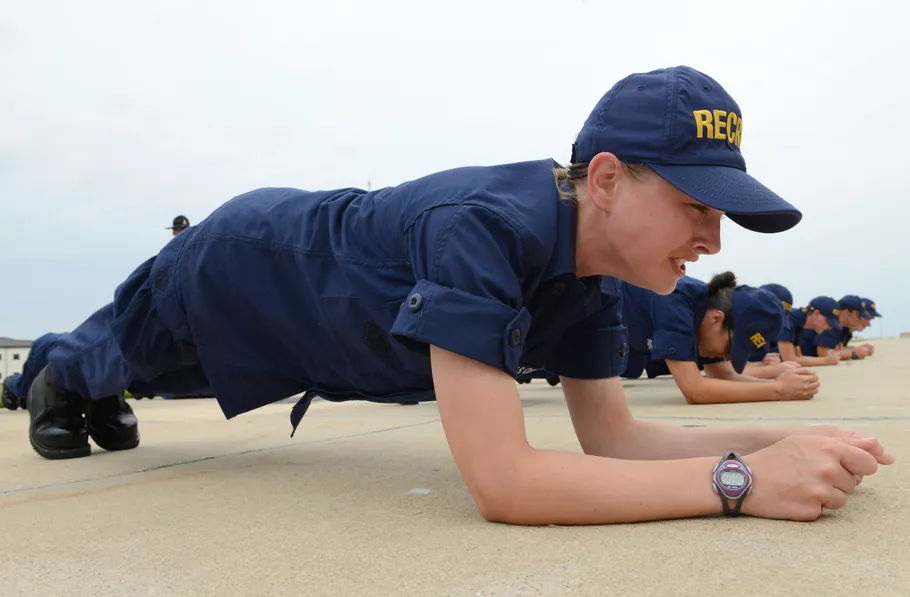
The Abs Company Ab Coaster PS500 is the guided-track pick because it is the machine here that removes the guesswork from the movement: you kneel on the seat, grip the handles, and the seat rides a biometrically-designed curved track that keeps the curl on rails — up the curve, down the curve, same path every rep. A freestyle swivel seat turns the same track into oblique work, and a digital counter counts the reps so the session has a number at the end. It is the pick for a buyer whose floor crunches drift into hip-flexor work and who wants the track to hold the movement honest, and for a buyer who wants obliques in the same machine without a second purchase. 🛤️
The record carries two flags, and both are printed here. First, the plate capacity is small and specific: 20 lb on standard 1-inch plates only — Olympic 2-inch plates do not fit, so if your plate collection is Olympic, the added-load path on this machine is closed before you start. Second, the unit weight is disputed: one retailer table states 50 lb and another states 70 lb — neither figure is adopted here as settled. The footprint reads 51 by 25 by 50 inches and the user capacity reads 300 lb, and the PS500 is the base model of the Personal Series home market, formerly sold under the Ab Coaster Pro name — so a listing that says Pro and a listing that says PS500 may be the same line, but check the model number before assuming it.
Pros
- Curved track — the curl rides rails, same path every rep.
- Freestyle swivel seat — obliques on the same machine.
- Digital counter — the session ends with a number.
Cons
- Plate capacity only 20 lb, standard 1-inch plates only — no Olympic plates.
- Unit weight disputed: 50 lb against 70 lb across retailer tables.
- Kneeling position — not for knees that object to kneeling.
Listing check: confirm The Abs Company Ab Coaster PS500 (not a commercial Ab Coaster, and not an Ab Coaster accessory sold under a similar name) before ordering, and check the plate-post size from that listing itself. If the listing shows Olympic plate posts, it is a different model, not this pick, and if it shows no swivel seat, it is a different version, not this pick.
Best for: a buyer who wants the crunch on rails, with a swivel seat for obliques and a counter for the session.
May not fit: anyone with Olympic plates only, anyone whose knees dislike kneeling, or anyone who wants heavy added load.
XMark XM-7608 12-Position Adjustable Ab Bench
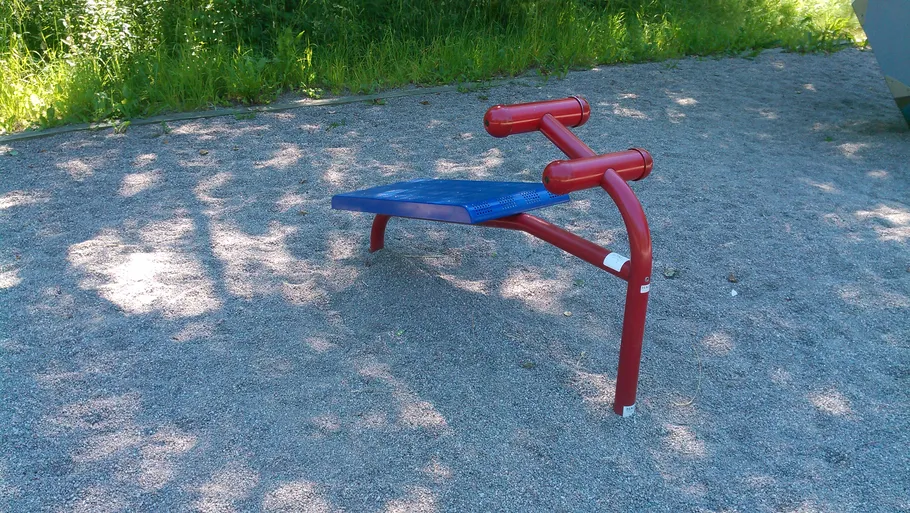
The XMark XM-7608 is the adjustable-bench pick because it is the bench here that changes the angle instead of changing the machine: 12 decline positions, a leg holder to anchor the feet, a pop pin to lock the angle, and a 47-inch bar per roundup records. You set the decline shallow for an easy session and steep for a hard one, and the same bench covers both — which is the whole argument for a bench over a fixed-angle frame. It is the pick for a buyer who wants one bench for the whole household at different strengths, and for a buyer who likes decline sit-ups and wants the angle, not just the bench. 📐
The record carries one flag, and it is printed here. The 400 lb capacity figure comes from a roundup record only: the maker-page specs were not verified in the records checked, so the table labels the figure as a roundup figure and this guide does not present it as a maker rating. The unit weight is not stated in the records checked, so no weight claim is made for this pick at all — and the 47-inch bar figure is likewise a roundup figure, not a maker measurement. If the capacity matters to your buying decision, confirm it from the listing itself before ordering rather than from this guide.
Pros
- 12 decline positions — one bench, easy sessions and hard ones.
- Leg holder plus pop pin — feet anchored, angle locked.
- Simple bench shape — no track, no motor, nothing to learn.
Cons
- Capacity is a roundup figure (400 lb) — maker-page specs not verified.
- Unit weight not stated in the records checked — no weight claim made.
- No added resistance — the angle is the progression, not plates or springs.
Listing check: confirm the XMark XM-7608 12-Position Adjustable Ab Bench (not an XMark flat or adjustable weight bench sold under a similar name) before ordering, and check the capacity note from that listing itself. If the listing shows fewer than 12 positions, it is a different bench, not this pick, and if it shows no leg holder, it is a different version, not this pick.
Best for: a buyer who wants decline angle as the progression, across a household at different strengths.
May not fit: anyone who needs a maker-verified capacity, anyone who wants added resistance, or anyone who needs a stated unit weight.
Wonder Core Smart (WCS-612)
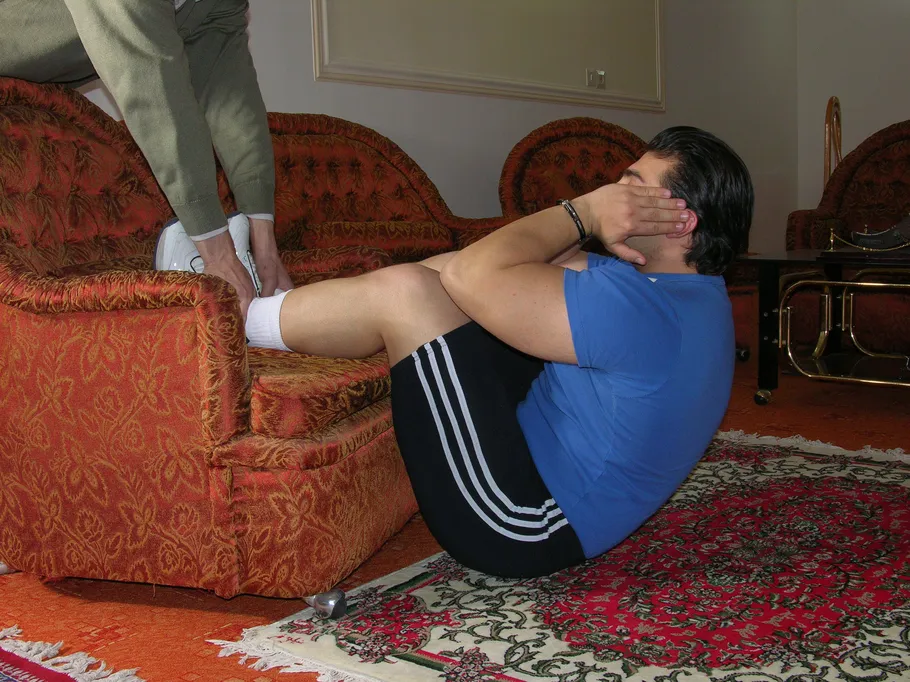
The Wonder Core Smart (WCS-612) is the compact pick because it is the machine here that disappears after the session: a spring-assisted seated crunch, precision dials that set resistance from 24 to 48 lb per side, a frame that folds flat, and a box it arrives in pre-assembled. You unfold it, dial the resistance, sit and crunch with the springs helping the way back up, then fold it flat and slide it away. It is the pick for a buyer in a small room who cannot give a bench a permanent corner, and for a buyer who wants assistance on the return — the springs make the hard part easier, which is the point for a beginner and a limit for an advanced trainer. 🧳
The record carries one flag, and it is printed here. The max weight reads 264 lb in one listing and 265 lb in another — a one-pound difference across listings, printed here as the range 264–265 lb rather than smoothed into one number, because neither listing is adopted as the settled figure. The footprint reads 21.26 by 20.28 by 13.39 inches and the weight reads about 13 lb, which makes this the smallest and lightest machine here — but small and light also means the resistance tops out at the dials, and no plate path exists past 48 lb per side.
Pros
- Folds flat and arrives pre-assembled — no build, no permanent corner.
- Precision dials, 24 to 48 lb per side — resistance you can set, not guess.
- Spring assistance — the return half of the crunch gets help.
Cons
- Max weight conflict: 264 lb against 265 lb across listings.
- Resistance tops out at the dials — no plate path past 48 lb per side.
- Assistance is a limit for advanced trainers — the springs do part of the work.
Listing check: confirm the Wonder Core Smart (WCS-612) (not an earlier Wonder Core model sold under a similar name) before ordering, and check the max-weight note from that listing itself. If the listing shows no dials, it is a different model, not this pick, and if it shows no folding frame, it is a different version, not this pick.
Best for: a buyer in a small room who wants a folding, pre-assembled, spring-assisted crunch with dial-set resistance.
May not fit: anyone who wants heavy plate loading, anyone who wants no assistance, or anyone who needs a single settled max-weight figure.
MERACH Ab Machine (MR-2510)
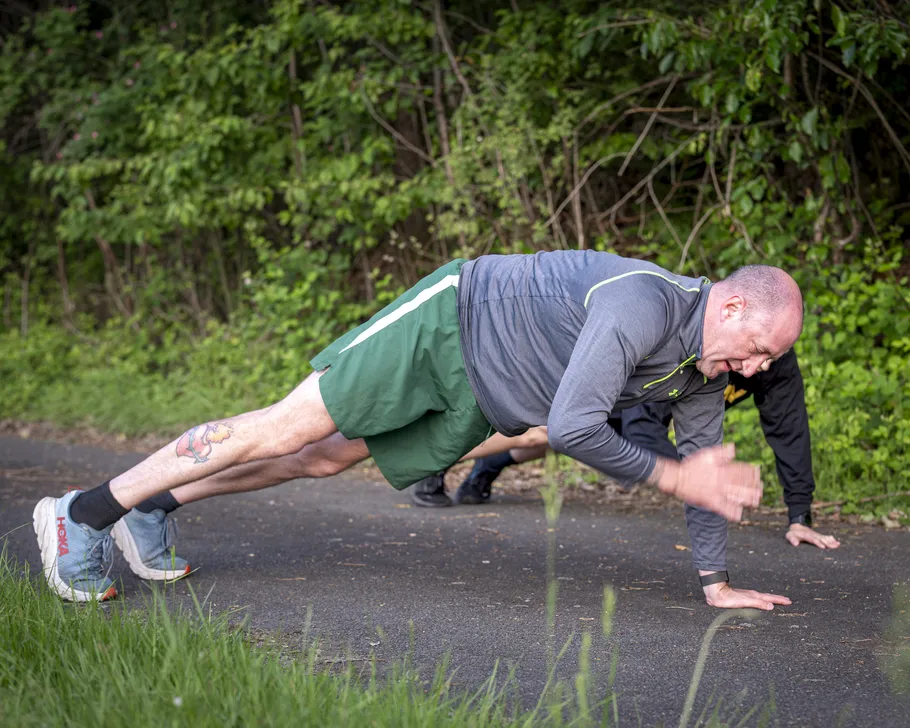
The MERACH Ab Machine (MR-2510) is the sliding pick because it is the machine here that turns the crunch into a moving exercise: two independent tracks, one per side, that let you slide into mountain-climber motion as well as crunches — knees driving, tracks gliding, core working through movement rather than one fixed curl. A 110-degree curved track shapes the path, 4 height adjustments set the angle, an LCD tracker counts the session, and the frame folds for storage. It is the pick for a buyer who gets bored of one fixed curl and wants climbers, slides and crunches in one frame, and for a buyer who wants a tracker on the machine itself. 🏔️
The record carries one flag, and it is printed here. Two other MERACH products share the name and must not be merged into this pick: the older MERACH MR-2314 single-track model, with a 400 lb figure, 2 inclines and 5 heights, and a separate MERACH multi-functional bench at 300 lb — both different products, not versions of the MR-2510, and neither figure belongs to this pick. Confirm the dual-track MR-2510, with its 440 lb figure and 24 lb weight, from the listing itself before ordering, because a single-track MERACH at a lower figure is a different machine wearing a similar name.
Pros
- Dual independent tracks — crunches plus mountain-climber motion.
- 110-degree curved track with 4 height adjustments.
- LCD tracker on the machine, and the frame folds.
Cons
- Lookalike trap: the MR-2314 single-track and a 300 lb MERACH bench are different products.
- Sliding motion needs floor grip and control — not a first-day machine.
- No plate path — the tracks, not added load, are the progression.
Listing check: confirm the MERACH Ab Machine (MR-2510) dual-track model (not the MR-2314 single-track, and not the MERACH multi-functional bench) before ordering, and check the track count from that listing itself. If the listing shows one track, it is a different machine, not this pick, and if it shows no LCD tracker, it is a different version, not this pick.
Best for: a buyer who wants crunches plus mountain-climber motion in one folding frame, with a tracker on board.
May not fit: anyone who wants plate loading, anyone who wants one fixed curl only, or anyone buying on the MERACH name alone.
GMWD AB/Back Machine JF01
The GMWD AB/Back Machine JF01 is the 2-in-1 pick because it is the machine here that does two jobs in one compact frame: an ab crunch on one side and a back extension on the other, switched by moving the body rather than buying a second bench. A rotary flywheel sets the resistance, 8 foot-restraint positions fit different leg lengths, a weight selector pin changes the load without plates, and the frame folds flat. It is the pick for a buyer who wants crunch and extension in one purchase and one footprint, and for a buyer who wants selector-pin loading — no plates to buy, store or slide on. 🔄
The record carries two flags, and both are printed here. First, the extension half is a bonus, not a substitute: a compact 2-in-1 extension does not replace a dedicated hyperextension bench for a buyer whose main work is extension, and this guide does not present it as one. Second, the warranty reads 180 days, which is short against the other picks here — check what it covers on the listing before ordering, because a short warranty on a moving machine matters more than on a fixed bench. The footprint reads 62 by 45 by 44 inches and the max reads 350 lb.
Pros
- Crunch plus extension in one compact frame — two jobs, one footprint.
- Rotary flywheel with a weight selector pin — no plates needed.
- 8 foot-restraint positions, and the frame folds flat.
Cons
- Extension half is a bonus — not a substitute for a dedicated hyperextension bench.
- 180-day warranty — short against the other picks here.
- Largest footprint here at 62 by 45 inches — needs a real room, not a corner.
Listing check: confirm the GMWD AB/Back Machine JF01 (not a GMWD bench or rack sold under a similar name) before ordering, and check the warranty note from that listing itself. If the listing shows no flywheel, it is a different machine, not this pick, and if it shows no folding frame, it is a different version, not this pick.
Best for: a buyer who wants crunch and extension in one folding frame with selector-pin loading and no plates.
May not fit: anyone whose main work is extension, anyone who wants a long warranty, or anyone short on floor space.
How to Choose
Choosing a crunch machine is choosing a movement first and a machine second: the bench, the coaster, the slider, the spring-assisted folder and the 2-in-1 all load the same curl differently, and the right one is the one whose movement you will actually repeat. Start from the crunch you already do — floor sit-ups, decline work, planks, twists — and buy the machine that guides that movement, not the machine with the longest spec sheet. The four sections below walk through type, size, features and placement in that order, and the plates question sits inside them: if you already own Olympic plates, the plate-loaded bench is the only pick here that uses them, which our best weight plates for home gyms covers for the plates themselves.
Choose Your Type
Pick the type by the movement you want. A plate-loaded bench is for progressive overload: the curl stays the same and the plates grow. A kneeling coaster is for a guided path: the track holds the curl honest and the swivel seat adds obliques. An adjustable decline bench is for angle as progression: shallow today, steep next month, same bench. A spring-assisted folder is for assistance and storage: the springs help the return and the frame folds away. A sliding dual-track is for movement variety: crunches plus climbers in one frame. A 2-in-1 is for two jobs in one footprint: crunch and extension, with the extension as a bonus rather than a replacement bench. If your main work is rotation, the coaster’s swivel seat or the slider’s tracks are the honest lanes; if your main work is heavy loading, only the plate bench grows without a ceiling.
Choose Your Size
Pick the size by the working area, not the spec box. The GMWD is the largest here at 62 by 45 inches, the GAB300 is the longest bench at 34 by 69 inches, the PS500 sits at 51 by 25 inches, and the Wonder Core is the smallest at about 21 by 20 inches — but every one of those needs room around it for the body to move: knees driving on the slider, the seat riding the coaster’s track, the decline bench at full angle. Measure the floor with the machine at its longest and widest working position, add a step of clearance on the sides you enter from, and only then compare the spec footprints.
A machine that fits the spec box but not the working area is a machine you will not use. A folder needs less permanent space but the same working space while open, so measure the open position, not the folded one. And leave the entry sides clear — you get on a crunch machine from the side or the front, and a machine boxed in by furniture is a machine you will skip.
Choose Your Features
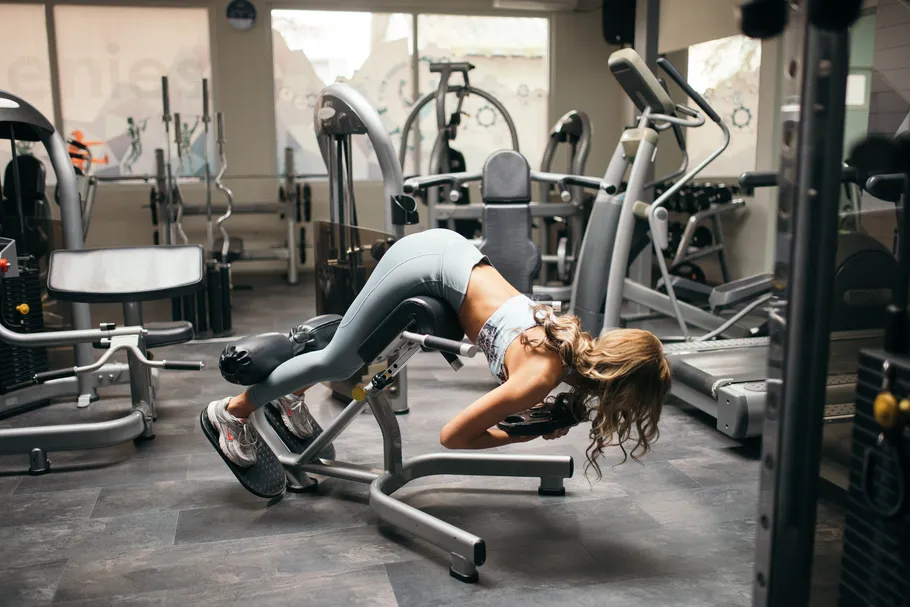
Pick the features by what you will touch every session. Pads and adjustments come first: a seat, an arm and a leg support that each lock where your body needs them, or a pop pin that holds the decline angle without slipping. Resistance comes second: plates for growth, springs for assistance, a flywheel with a selector pin for plate-free loading, or a track with no added load at all. Counters and trackers come third: the PS500’s digital counter and the MERACH’s LCD tracker are conveniences, not training — useful for logging, useless if the movement is wrong.
And check the small print on every feature before ordering: plate-post size on the coaster (1-inch only, no Olympic plates), dial range on the folder (24 to 48 lb per side, no plate path past it), and warranty length on the 2-in-1 (180 days, short against the other picks here). The feature that disappoints is always the one nobody checked.
Choose Your Placement
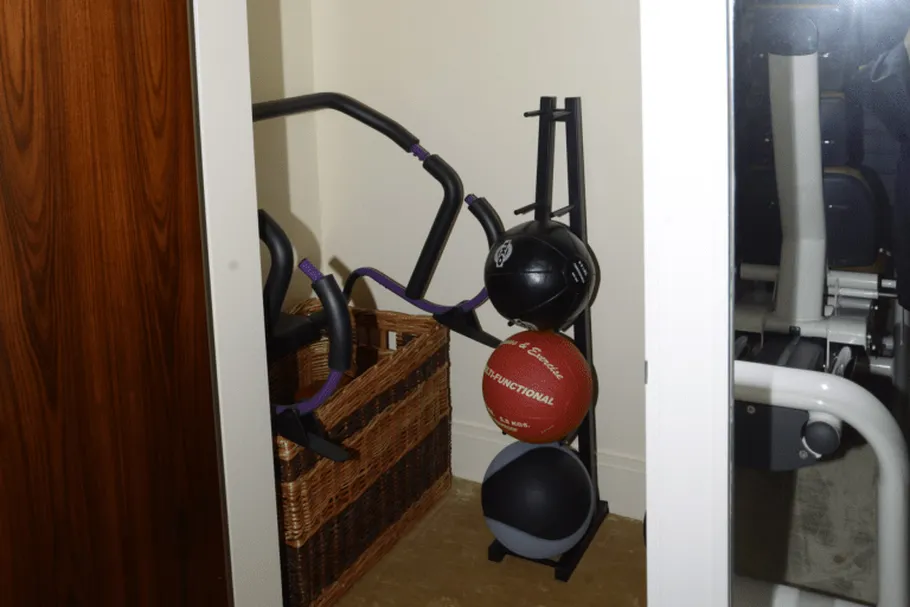
Pick the placement by what happens between workouts. The folding frames — the Wonder Core, the MERACH and the GMWD — live in a closet, against a wall or under a bed, and the test is whether you will unfold them three times a week or leave them folded. The fixed frames — the GAB300, the PS500 and the XMark — need a permanent corner with clearance on the entry sides, and the test is whether that corner survives the rest of the room’s uses.
Put the machine where the session starts, not where the room ends: a folder in a far closet gets used less than a bench in the corner you already train in, and a bench in a walkway gets moved, then left moved. Whatever spot you pick, keep the floor under it firm and level, so sliding tracks and folding feet do not skate mid-rep — and check after the first week whether the machine has crept, because a machine that moves has already told you the base is wrong.
Safety
1. Warm up first: five minutes of easy movement before any loaded crunch, so the abs and the back are warm before the machine loads them.
2. Start at the easiest setting: the shallowest decline, the lightest dial, the counterbalance on — and only raise the load when the easy setting feels controlled for full sets.
3. Keep the neck out of the work: hands support the head without pulling it, eyes on the ceiling on a bench curl, and the chin never tucked hard to the chest to force the rep.
4. Stop on sharp pain: a burn in the abs is training, a sharp or shooting pain in the back or neck is a stop signal — end the set, not the rep, and do not push through it.
5. Check pins and bolts before each session: pop pins seated, selector pins locked, folding joints latched, and plate posts clear — a machine that moves mid-rep is a machine that was not checked.
6. Keep children and pets clear of tracks and folding joints: sliding tracks pinch, folding frames close on fingers, and a loaded bench tips if climbed on.
7. Back pain that keeps coming back is a clinician’s question: see a clinician before buying a machine to fix it, and do not use any pick here as treatment for a back, neck or abdominal condition.
This guide is general information only, not medical advice. If you have a back, neck or abdominal condition, are recovering from surgery, or are pregnant, talk to a clinician before using a crunch machine.
Frequently Asked Questions
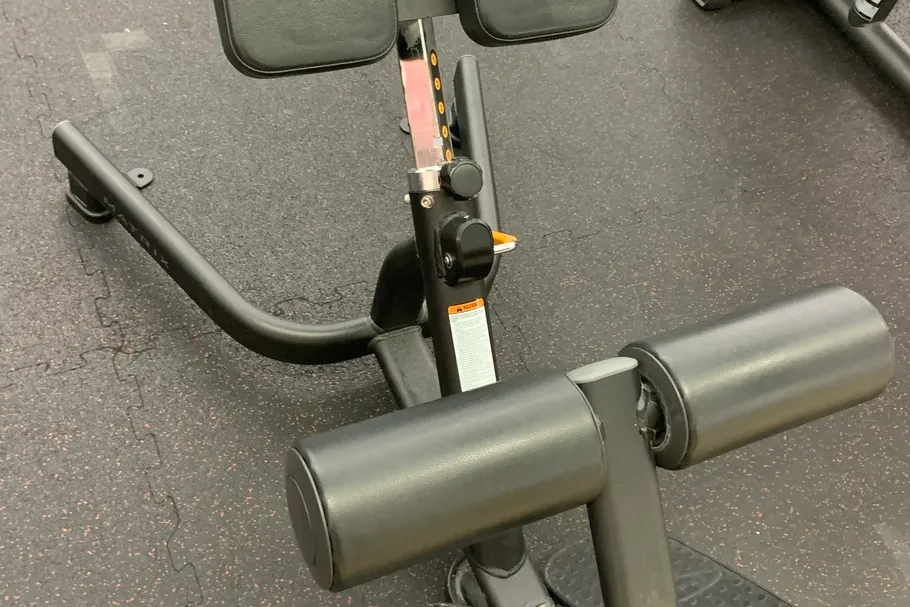
Will a crunch machine fix my back pain?
No — this guide makes no treatment claim for any pick here. A crunch machine is a training tool for healthy abs, not a treatment for back pain, and back pain that keeps coming back, shoots down a leg, or follows an injury is a clinician’s question, not a shopping question. See a clinician first, and buy a machine only for training, not for fixing.
Do I need a crunch machine if I can already do sit-ups?
Not necessarily. If your floor sit-ups are controlled, full-range and pain-free, a machine adds guidance and load, not a new ability — the honest case for buying one is progression (plates, angles, tracks) or consistency (a fixed path on days when form drifts). If sit-ups already feel easy and controlled, the machine is a convenience; if they drift into hip-flexor work or neck pulling, the machine’s fixed path is the argument.
What plates fit the GAB300 and the PS500?
Different plates, and the difference matters. The GAB300 takes Olympic plates on its posts — the standard 2-inch plates most home gyms already own. The PS500 takes standard 1-inch plates only, up to 20 lb total, and Olympic 2-inch plates do not fit its posts. Check the post size on the listing you order from, because a machine whose plates you do not own is a machine whose load path is closed.
Can the GMWD replace my hyperextension bench?
No. The JF01’s extension half is a bonus for a buyer whose main work is crunching and who wants some extension in the same frame — it is not a substitute for a dedicated hyperextension bench, which is built, padded and angled for extension as its only job. If extension is your main work, buy the dedicated bench; if crunching is your main work and extension is a second wish, the 2-in-1 is the honest buy.
How much floor space do I really need?
More than the spec box. Take the machine’s longest and widest working position — the GMWD at 62 by 45 inches, the GAB300 at 34 by 69 inches, the PS500 at 51 by 25 inches — then add clearance on the sides you enter from and room for the body to move through the full range. A folder needs less permanent space but the same working space while open, so measure the open position, not the folded one.
What goes under the machine?
A floor that protects both the machine and the room. Hard floors want a mat or tiles under sliding tracks and folding feet so the frame does not skate mid-rep, and carpet wants a firm base so pop pins and folding joints sit level — which our best gym flooring for home gyms covers in full, including mats and tiles by room type. Whatever you put down, check it after the first week: a machine that has crept across the floor has already told you the base is wrong.
Our Pick: Start Here
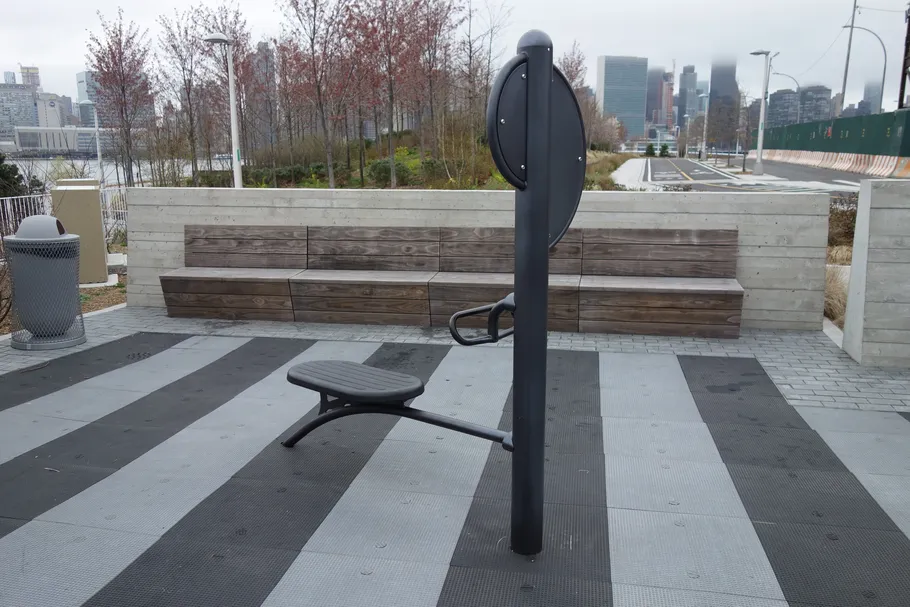
Start with the Body-Solid GAB300 Semi-Recumbent Ab Bench if you own Olympic plates and want a bench that grows — counterbalance first, plates after, three adjustments throughout. Start with the Wonder Core Smart (WCS-612) if your room is small and your sessions are short — it folds flat, arrives built, and the dials set the work. Start with the Ab Coaster PS500 if your crunches drift and you want the track to hold them honest, with a swivel seat for obliques. Whichever you start with, check the listing’s own model number, plate size and capacity note before ordering — the conflicts in this guide are the reason, not the excuse.
Disclosure: As an Amazon Associate, we earn from qualifying purchases made through links in this guide, at no extra cost to you.
Specs in this guide come from maker and listing records checked during research; where records conflict, the conflict is printed in the guide rather than resolved by picking one figure.