

Pavol Jablonicky is one of the most respected names to come out of Eastern European bodybuilding. 🏋️
His career ran from the amateur stage in the 1980s to the professional stage in the 2010s, and it was built on balance, shape and symmetry rather than size alone.
This 2026 refresh brings his story up to date, corrects several errors in the old article, and sets out his full verified contest record, training approach and diet.
Quick Facts
| Full name | Pavol Jablonicky (also written Pavol Jablonický) |
| Born | 24 January 1963 |
| Birthplace | Senica, Slovakia; grew up in nearby Borský Mikuláš |
| Nationality | Slovak |
| Nickname | Džablo |
| Height | 5 ft 8 in (173 cm) |
| Competition weight | About 237 lb (108 kg) |
| Pro card | Earned with his 1988 World Amateur Championships win |
| Pro wins | 3 |
| Mr. Olympia appearances | 6 (best finish: 11th, 2004) |
| Last contest | 2011 Masters Pro World, 9th |
| Status in 2026 | Retired from competition; still known for his gym work in Olomouc |
| Net worth | Not publicly disclosed |
Early Life in Slovakia 🌱
Pavol Jablonicky was born on 24 January 1963 in Senica, and he grew up in the nearby village of Borský Mikuláš.
Country life made him strong early. He chopped wood, worked the land with a spade, and played javelin, ball games and strongman-style sports.
That mix of hard work and sport gave him a natural base of strength long before he ever entered a gym with serious intent.
The Military Years ✈️
As a young man, Jablonicky dreamed of flying. He joined military school with hopes of becoming a soldier, and later a test pilot.
The reality was tougher than he expected, and he has since described the choice as a mistake — but the strict, spartan routine taught him discipline.
Instead of flying, he ended up working as a mechanic. He trained in secret in his free time, and when his superiors found out about his bodybuilding, he was dismissed from the army.
That setback turned into a turning point. Free to train properly, and guided by coach Pavel Zobac, he threw himself into competition.
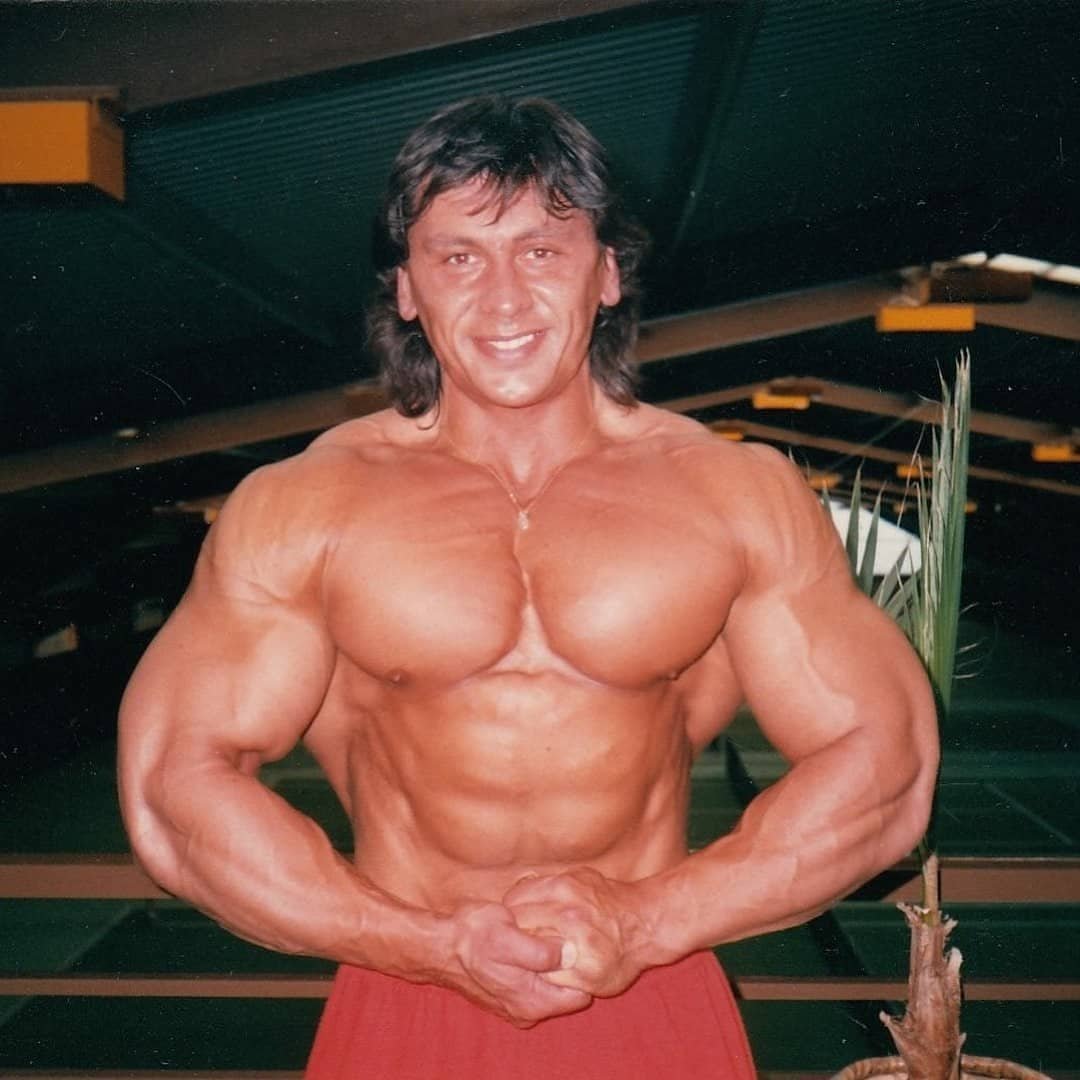
Photo: Tikkay Khan media library
Amateur Breakthrough: 1987–1988 🏆
Jablonicky’s breakthrough came fast. In 1987 he won the European Amateur Championships and the World Amateur Championships in the light-heavyweight class.
A year later he stepped up a class and won the 1988 World Amateur Championships as a heavyweight — the victory that earned him his IFBB pro card.
Within two seasons he had gone from a village athlete to a world amateur champion. The professional stage was next.
Turning Professional in 1989 💪
His pro debut came at the 1989 Grand Prix Holland, where he finished 12th. That same year he made his first Mr. Olympia appearance, placing 16th.
The early 1990s brought steady progress. He took 3rd at the 1990 Grand Prix Holland and 5th at the Grand Prix Germany, and he kept collecting top-ten finishes against the best in the world.
He was never the biggest man on stage. His calling card was proportion, shape and a clean, balanced look — the classic aesthetic style he still champions today.
The 1999 Peak: Night of Champions and Toronto 🥈
Jablonicky’s finest season of the 1990s came in 1999. He finished 2nd at the Night of Champions in New York, behind Paul Dillett.
That same year he won the Toronto Pro Invitational — his first professional victory — and then placed 14th at the Mr. Olympia.
It was a run that proved he could win at pro level, not just place respectably, and it set up the strongest stretch of his whole career.
2003–2004: His Best Years 🌟
The peak of his pro career arrived in 2003 and 2004. He won the Grand Prix Hungary in 2003 and the Hungarian Pro Invitational in 2004.
He also finished 2nd at the 2003 Night of Champions and 5th at the 2004 Night of Champions, showing remarkable consistency at age 40 and 41.
Then came his best Olympia result. At the 2004 Mr. Olympia he placed 11th, in a field won by Ronnie Coleman, who claimed his seventh title that night.
Jablonicky later recalled standing on that same stage as Arnold Schwarzenegger, who had come to announce the winner. For a man who grew up admiring Arnold, it was a full-circle moment.
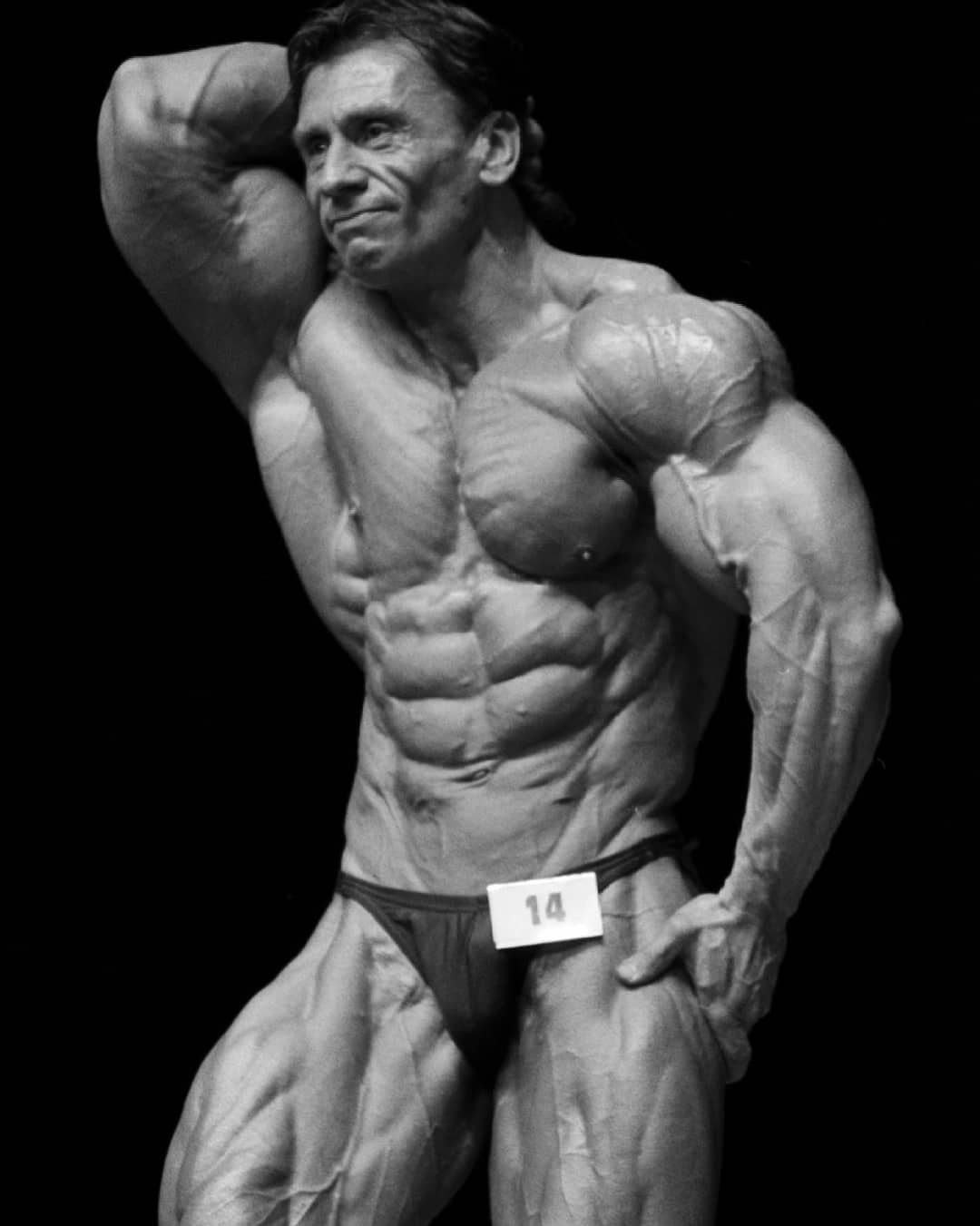
Photo: Tikkay Khan media library
Arnold Classic: Ohio and UK — Checked Separately ✅
Arnold Classic Ohio: Jablonicky competed once, finishing 12th at the 1994 Arnold Classic in Columbus, Ohio.
Arnold Classic UK: He has no Arnold Classic UK result. His contest record ends in 2011, and no UK appearance appears in his verified history.
He never won an Arnold Classic title, and he never placed at the Olympia — but his longevity across three decades is rare in itself.
Later Career and Retirement 🎬
Jablonicky kept competing well past most of his rivals. He placed 7th at the 2005 Europa Supershow and 3rd at the 2006 Masters Pro World.
He added a 4th place at the 2008 Atlantic City Pro, then a 15th at the 2009 Sacramento Pro, before closing his contest career with 9th at the 2011 Masters Pro World.
That final contest came 24 years after his first amateur titles. Few pros stay competitive for that long.
From 2001 he ran his own gym, Relax Sports Profi Studio Jablonicky, in Olomouc in the Czech Republic. Its current operating status in 2026 is not confirmed, so this article does not claim it is still open.
Verified Contest Record 📋
| Year | Contest | Place |
|---|---|---|
| 1987 | European Amateur Championships, Light-Heavyweight | 1st |
| 1987 | World Amateur Championships, Light-Heavyweight | 1st |
| 1988 | World Amateur Championships, Heavyweight | 1st |
| 1989 | Grand Prix Holland | 12th |
| 1989 | Mr. Olympia | 16th |
| 1990 | Grand Prix Germany | 5th |
| 1990 | Grand Prix Holland | 3rd |
| 1990 | Ironman Pro Invitational | 9th |
| 1991 | Mr. Olympia | Did not place |
| 1992 | Night of Champions | 9th |
| 1993 | Grand Prix Germany | 5th |
| 1993 | Grand Prix Germany (2) | 7th |
| 1993 | Night of Champions | 9th |
| 1994 | Arnold Classic (Ohio) | 12th |
| 1994 | Grand Prix Germany (2) | 11th |
| 1995 | Grand Prix Ukraine | 9th |
| 1995 | Niagara Falls Pro Invitational | 2nd |
| 1995 | Mr. Olympia | 16th |
| 1996 | Night of Champions | 8th |
| 1997 | Night of Champions | 5th |
| 1998 | Night of Champions | 14th |
| 1999 | Night of Champions | 2nd |
| 1999 | Mr. Olympia | 14th |
| 1999 | Toronto Pro Invitational | 1st |
| 2000 | Night of Champions | 6th |
| 2001 | Night of Champions | 4th |
| 2001 | Mr. Olympia | 19th |
| 2003 | Grand Prix Hungary | 1st |
| 2003 | Night of Champions | 2nd |
| 2004 | Hungarian Pro Invitational | 1st |
| 2004 | Night of Champions | 5th |
| 2004 | Mr. Olympia | 11th |
| 2004 | Toronto Pro Invitational | 4th |
| 2005 | Europa Supershow | 7th |
| 2006 | Masters Pro World | 3rd |
| 2006 | New York Pro Championships | 10th |
| 2008 | Atlantic City Pro | 4th |
| 2008 | Houston Pro Championships | 9th |
| 2009 | Sacramento Pro | 15th |
| 2011 | Masters Pro World | 9th |
In total: 3 professional wins, 6 Mr. Olympia appearances, and 1 Arnold Classic Ohio appearance.
Training Philosophy and Workout 🏋️
Jablonicky believed bodybuilding was about more than muscle size. For him, the goal was a physique that looked good, moved well and showed harmony between body and mind.
He has said the champions of his era “looked like race horses” — lean, athletic and balanced — and he felt the later shift toward sheer mass changed the sport for the worse.
When he was younger he trained twice a day and rarely took a full day off. Later, his routine settled into a six-day split, one main muscle group per session.
Weekly Training Split
| Day | Focus | Example work |
|---|---|---|
| Day 1 | Chest | Incline Smith press, decline dumbbell press, flyes, pec deck, machine press, cable crossovers |
| Day 2 | Back | One-arm dumbbell rows, lat pulldowns, seated cable rows, T-bar rows |
| Day 3 | Shoulders | Seated barbell press, dumbbell lateral raises, bent-over raises, cable upright rows |
| Day 4 | Arms | Cable triceps extensions and pushdowns, lying triceps extensions, dumbbell and barbell curls, concentration curls |
| Day 5 | Legs | Barbell squats, leg press, leg extensions, lying leg curls, standing calf raises |
| Day 6 | Abs | Hanging leg raises, sit-ups, decline crunches |
Most working sets were 4 to 5 sets of 6 to 15 reps for the big lifts, with slightly higher reps for arms and abs.
The lesson for everyday lifters is simple: train each muscle group hard, keep your form strict, and stay consistent for years — not weeks.
Like Dorian Yates, another great of the same era, Jablonicky built his reputation on intensity and discipline rather than shortcuts.
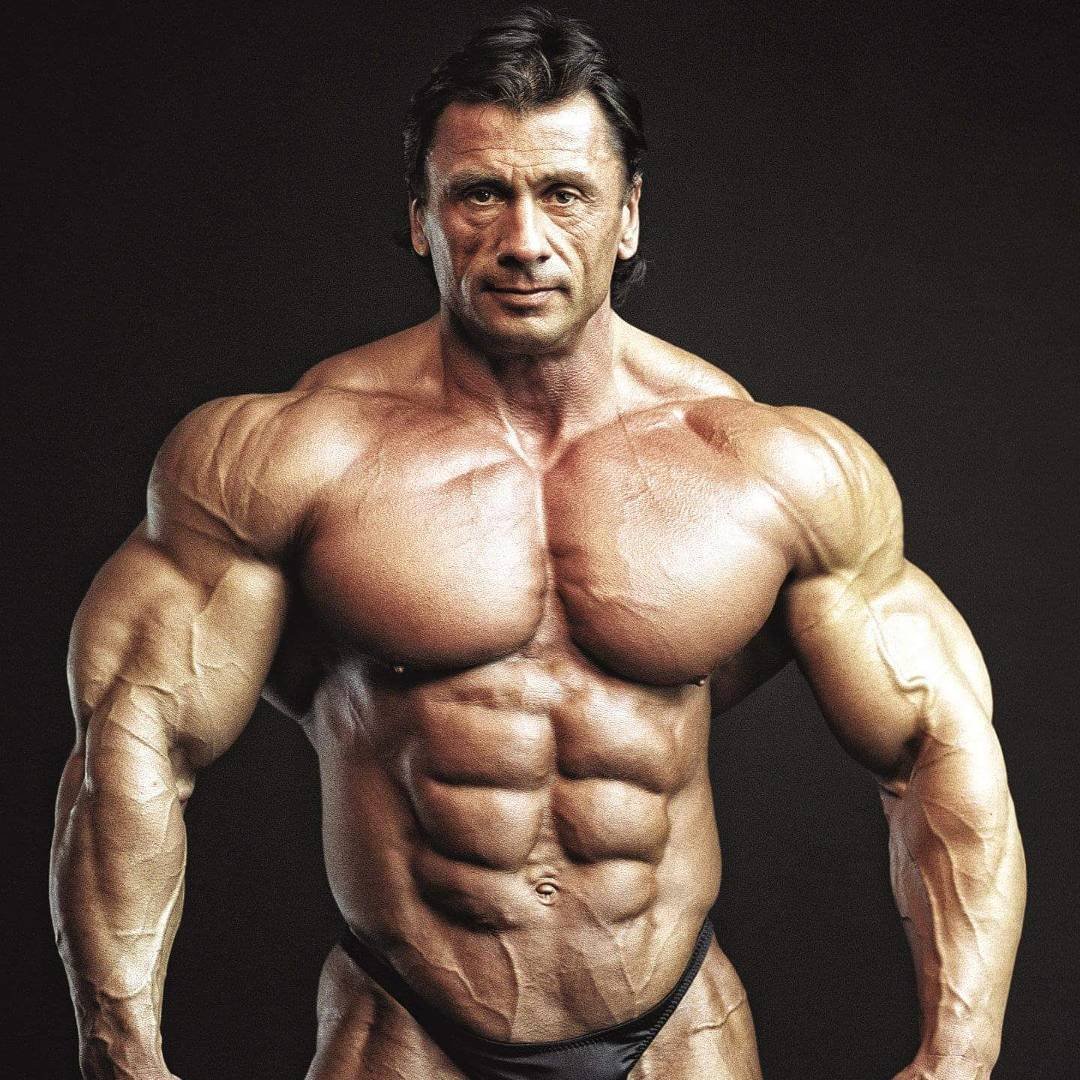
Photo: Tikkay Khan media library
Diet Plan 🥗
Jablonicky’s diet followed a classic bodybuilder’s pattern: high protein, moderate carbs and low fat during his competitive years.
He has described eating around half a kilo of meat a day in his early training years — fish, chicken and beef — alongside the staples of rice, potatoes and vegetables.
A typical day was built around six to eight smaller meals, so protein and energy stayed steady through long training days.
Sample Day of Eating
- Breakfast: Egg whites with spinach, oatmeal with protein powder, and fruit.
- Mid-morning: Protein shake with almond milk, plus nuts or seeds.
- Lunch: Grilled chicken or lean beef, brown rice or quinoa, and steamed vegetables.
- Afternoon: Greek yogurt with honey and almonds, plus a piece of fruit.
- Pre-workout: Whole-grain toast with avocado and turkey.
- Post-workout: Whey protein shake with a banana, and rice cakes with almond butter.
- Dinner: Baked salmon or grilled chicken, sweet potatoes or brown rice, and salad with olive oil.
- Evening (optional): Cottage cheese with flaxseeds and herbal tea.
His supplement basics were whey protein, BCAAs, creatine, a multivitamin and omega-3 fats. For a modern, research-based look at protein choices, see our best protein powders for strength athletes guide.
Note: this is a summary of his reported competitive-era eating, not a personal prescription. Adjust portions and calories to your own body, goals and health needs.
Legacy: Why He Still Matters ✨
Jablonicky never won the Olympia, and he never won the Arnold Classic. What he did was arguably harder: he stayed near the top for over two decades.
He carried Eastern European bodybuilding onto the world stage at a time when athletes from behind the Iron Curtain had far fewer chances, sponsors and resources.
He also stood for an idea that never goes out of style — that a great physique should look athletic, balanced and healthy, not just big.
For younger lifters, his career is a reminder that patience beats panic. Titles came late for him, in his late 30s and early 40s, after years of steady work.
Frequently Asked Questions ❓
How old is Pavol Jablonicky in 2026?
He was born on 24 January 1963, so he turned 63 in January 2026. Note: a minority of secondary sources give 1961 — see research.md for the conflict note.
How many times did Pavol Jablonicky compete at Mr. Olympia?
Six times: 1989, 1991, 1995, 1999, 2001 and 2004. His best finish was 11th in 2004, and he did not place in 1991.
Did Pavol Jablonicky win a professional show?
Yes, three: the 1999 Toronto Pro Invitational, the 2003 Grand Prix Hungary and the 2004 Hungarian Pro Invitational.
Did Pavol Jablonicky compete at the Arnold Classic UK?
No. His only Arnold Classic appearance was in Ohio in 1994, where he placed 12th. No UK appearance appears in his verified record.
Is Pavol Jablonicky still competing?
No. His last recorded contest was the 2011 Masters Pro World, where he placed 9th. He is retired from competition.
What was Pavol Jablonicky’s height and weight?
He is listed at 5 ft 8 in (173 cm), with a competition weight of about 237 lb (108 kg).
Conclusion
From a small Slovak village to six Olympia stages, Pavol Jablonicky’s career is a story of patience, discipline and belief in aesthetics.
He did not chase size at any cost. He built a balanced, powerful physique, kept it for decades, and left a standard younger athletes can still learn from.
That is why, in 2026, his name still belongs in any serious conversation about the great European bodybuilders of his era. 💪