

A heavy barbell across your upper back is not comfortable. That is the whole reason squat pads exist. 🏋️
A squat pad — also called a barbell pad — is a foam cushion that wraps around the bar and sits between the steel and your body, spreading the load across your neck, shoulders, or hips.
But let us be plain from the start: a pad does not fix poor squat form, it does not make a bad bar position safe, and it does not replace learning proper bar placement.
It cushions the bar. If the bar sits on your neck bones instead of your upper back, or your squat leans you forward, a pad hides the discomfort without fixing the cause — and a pad that slips or rolls mid-set is a hazard, not a help.
Used the right way — on a well-placed bar, checked before heavy sets — a pad is a genuinely useful tool for squats, lunges, and hip thrusts.
How We Picked These Pads
This guide is research-based. We did not buy or hands-on test these pads, and we do not claim otherwise.
We compared verified buyer reviews and manufacturer specifications, and we checked each product’s Amazon listing status through search results and listing trackers.
We picked 6 pads that are genuinely sold and cover different needs: a budget classic, an all-round bridge pad, a dense-foam pick, a thick premium pad, a hip-thrust specialist, and a value upgrade.
Prices are not quoted in this guide because they change often. The check-price links take you to the current listing, where you can see the latest price and availability.
Availability can vary by colour, so if your colour shows as unavailable, check the listing’s other options before switching products.
Quick Comparison
| Pad | Foam / Build | Length | Best for |
|---|---|---|---|
| POWER GUIDANCE Barbell Squat Pad | Foam sponge | 17 in | Best budget classic |
| Gymreapers Barbell Squat Pad | Neoprene bridge pad | 17.5 in | Best overall |
| Iron Bull Strength Advanced Squat Pad | High-density foam rubber | Standard bar length | Best dense foam |
| Dark Iron Fitness Extra Thick Neck Pad | 3/4-in dense foam, synthetic leather | Check listing (see note) | Best thick premium pad |
| DMoose Barbell Pad | 1.2-in EVA foam, safety straps | Standard bar length | Best for hip thrusts |
| LAVVON Squat Pad | Foam + nylon padding, anti-slip | About 17.3 in | Best value upgrade |
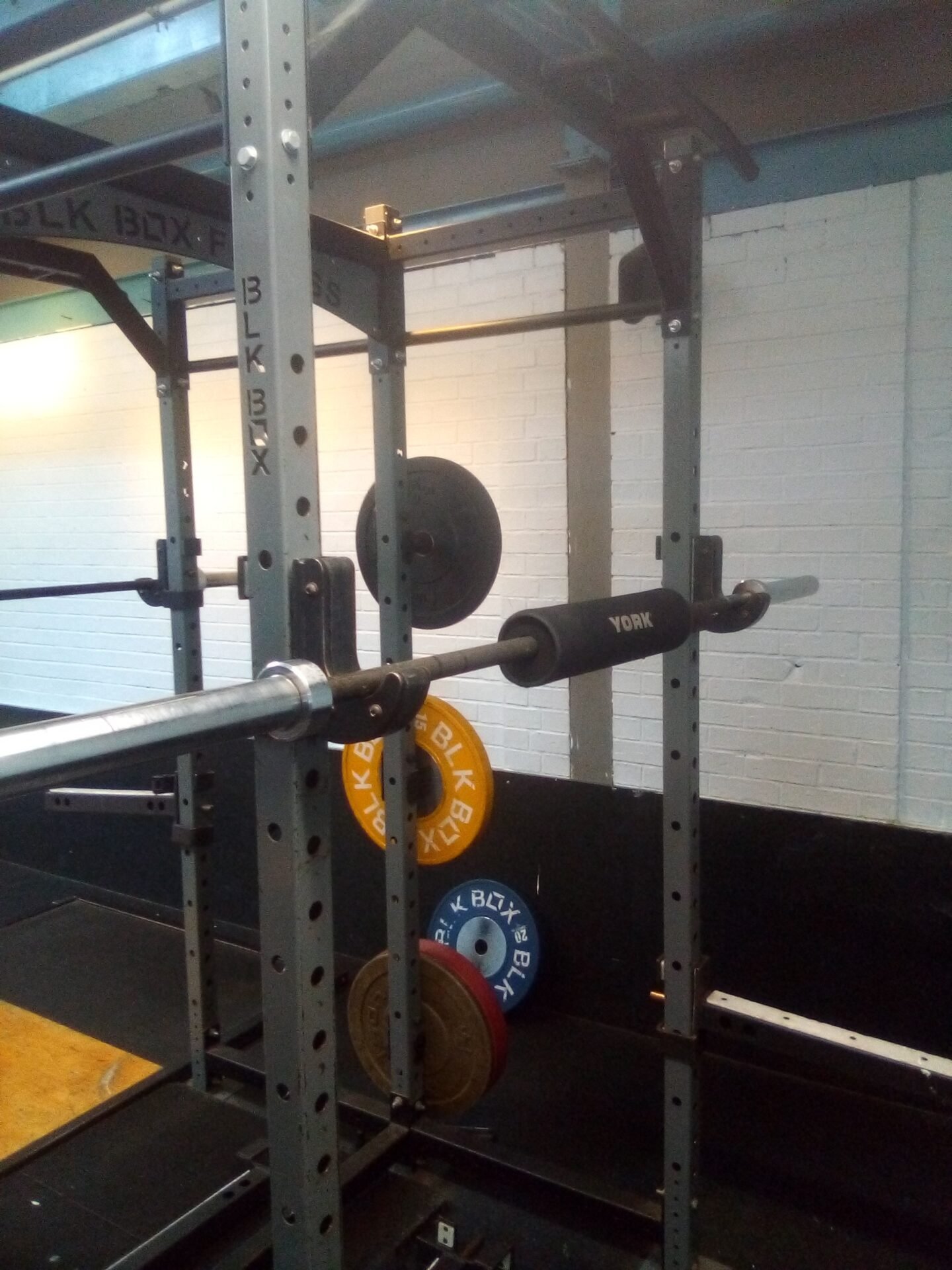
Photo: RickyBennison / Wikimedia Commons
1. POWER GUIDANCE Barbell Squat Pad — Best Budget Classic
Who it suits: lifters who want the simplest, cheapest way to cushion a barbell, for squats, lunges, and hip thrusts.
POWER GUIDANCE’s pad is the long-running foam classic of this category: a 17-inch by 3.5-inch foam sponge sleeve that slides onto standard and Olympic bars, weighing just 5.6 ounces.
It is light, simple, and easy to carry in a gym bag — the pad most lifters start with, and the one most roundups still recommend for beginners.
Pros: cheapest way into a proper barbell pad; light and portable; fits standard and Olympic bars; long sales history with many buyer reviews.
Cons: thin foam compresses more under very heavy bars than the dense picks below; one recent listing crawl showed no featured offers, so check availability before ordering; POWER GUIDANCE also sells a newer square hip-thrust pad on a separate listing — do not confuse the two.
2. Gymreapers Barbell Squat Pad — Best Overall
Who it suits: lifters who want one pad for squats, hip thrusts, and lunges, with a secure fit and a warranty behind it.
Gymreapers’ pad is a neoprene bridge pad, 17.5 inches by 3.5 inches, with two straps and an anti-slip rubber design that keeps it from rotating on the bar.
The bridge shape matters: it spreads the bar’s weight across the shoulders rather than concentrating it on one line, which is why it suits both squats and hip thrusts.
Gymreapers backs it with a 1-year manufacturer’s warranty, and it is one of the most consistently recommended pads in buyer roundups.
Pros: bridge shape spreads the load; anti-slip design with two straps; neoprene build; 1-year warranty; suits squats and hip thrusts alike.
Cons: check the colour on the listing — colours sit on separate pages; neoprene can feel warmer against the neck than plain foam in a hot gym.
3. Iron Bull Strength Advanced Squat Pad — Best Dense Foam
Who it suits: lifters who squat heavy and want a pad that holds its shape instead of flattening out.
Iron Bull’s Advanced Squat Pad uses thick, high-density foam rubber with a non-slip design, made to distribute weight evenly across the shoulders and relieve neck pressure during squats.
Dense foam is the point here: softer pads compress under a heavy bar until you feel the steel again, while a dense pad keeps cushioning between bar and body rep after rep.
Pros: dense foam holds its shape under load; non-slip design; even weight distribution across the shoulders; long-established lifting brand.
Cons: denser foam means a firmer feel — some lifters prefer a softer pad for hip thrusts; no standardised weight rating is quoted for pads, so do not trust any single weight-limit figure you see in a review.
4. Dark Iron Fitness Extra Thick Barbell Neck Pad — Best Thick Premium Pad
Who it suits: lifters who want the thickest cushion here, especially for heavy squats where a thin pad stops helping.
Dark Iron’s pad uses 3/4-inch dense foam encased in synthetic leather, with a Velcro closure that keeps it locked on the bar. The synthetic leather surface wipes clean and does not absorb sweat, so it stays fresher than plain foam in a shared gym bag.
Reviewers consistently call it the best overall pad for squats, and Dark Iron is a well-known lifting accessories brand — the same brand behind the leather dip belt in our dip belts guide.
Pros: thickest foam in this guide; synthetic leather wipes clean and resists sweat smell; Velcro closure keeps it secure under heavy weight; well-reviewed for squats.
Cons: no confident US product-page link was found, so this is a search link — check the listing before ordering; review sources disagree on length (15 vs 17 inches), so confirm the size on the listing rather than trusting either figure; a thick pad suits squats better than hip thrusts, where a wider pad is usually more comfortable.
👉 Search for Dark Iron Fitness Extra Thick barbell pad on Amazon
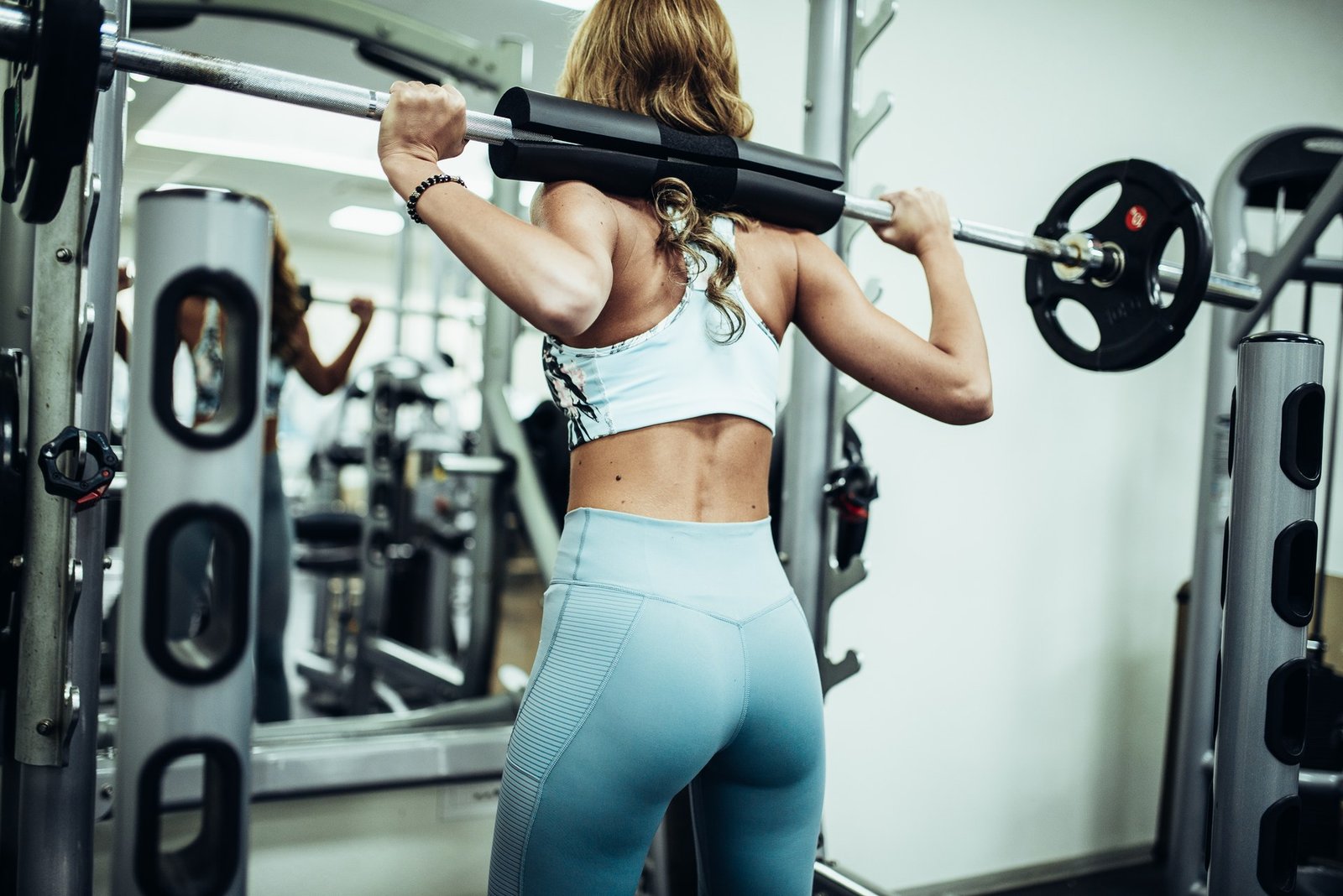
Photo: Nenad Stojkovic / Wikimedia Commons
5. DMoose Barbell Pad — Best for Hip Thrusts
Who it suits: lifters who mainly want a pad for hip thrusts, plus squats and lunges on the side.
DMoose’s pad uses a 1.2-inch thick high-density EVA foam core with a non-slip surface and two safety straps, fitting both Olympic and standard barbells.
For hip thrusts, thickness matters more than length: the bar sits across the hip crease, where a thin pad digs in fast. The DMoose pad’s thick EVA core and straps keep it in place through the set instead of sliding as you thrust.
DMoose is a familiar brand across our guides — the same brand behind the dip belt and ankle strap picks — and its barbell pad is sold as a hip-thrust-first pad that also supports squats and lunges.
Pros: thick 1.2-inch EVA foam core; two safety straps keep it secure; non-slip surface; fits Olympic and standard bars.
Cons: the Amazon product link below rests on a single source, so confirm the listing before ordering; one recent listing crawl showed no featured offers, so check availability.
👉 Check price on Amazon (please confirm the listing matches the DMoose barbell pad — its link is single-source, see the note in our research).
6. LAVVON Squat Pad — Best Value Upgrade
Who it suits: lifters who want a step up from the budget foam classic without paying premium prices.
LAVVON’s pad combines foam with nylon padding and an anti-slip design, at about 17.3 inches long, fitting standard and Olympic bars for squats, lunges, and hip thrusts.
The nylon outer is the upgrade over plain foam: it resists wear, wipes clean, and grips the bar better, so the pad stays put through a set instead of rotating.
Pros: nylon outer for durability and grip; anti-slip design; generous length for broad shoulders; well-reviewed foam pad.
Cons: recent listing crawls showed no featured offers, so check availability before ordering; LAVVON also sells a set version with wrist straps on a separate listing — confirm you are ordering the pad on its own.
How to Choose the Right Squat Pad
Start with what bothers you most. If the bar digs into your neck on squats, thickness matters most. If the pad slides mid-set, straps and anti-slip matter more.
If you mainly hip thrust, pick a thick, wide pad that stays put across the hips — a thin squat pad will not do that job well.
Thickness and density
Thicker is not always better. A very thick pad raises the bar slightly and can change how the bar balances, especially on heavy squats.
Dense foam (Iron Bull, Dark Iron) compresses less under load, so it keeps cushioning when the bar gets heavy. Soft foam (POWER GUIDANCE) feels gentler at light weights but flattens sooner.
For hip thrusts, thickness wins: the bar presses into soft tissue, not bone, so a thick pad (DMoose) is worth more there than on squats.
Bar fit and anti-slip
A pad should grip the bar, not spin on it. Look for straps, Velcro closures, or an anti-slip inner surface — every pick here has at least one of these except the plain foam classic, which relies on a snug fit alone.
Check the fit before your first heavy set: slide the pad on, set the bar in the rack, and push it side to side. If it rolls or slides freely, it is either too loose for your bar or the wrong pad for the job.
Most pads fit both standard (1-inch) and Olympic (2-inch) bars, but a pad made for one size can feel loose on the other — confirm the fit on the listing if your bar is unusual.
Hip-thrust vs squat use
Squats and hip thrusts ask different things of a pad. On squats, the pad spreads load across the upper back and shoulders, and length matters — a short pad concentrates pressure.
On hip thrusts, the pad sits across the hip crease, where width and thickness matter more than length, and straps matter most because the bar moves with every rep.
If you do both, a bridge-style pad (Gymreapers) or a thick strapped pad (DMoose) covers both jobs better than a thin foam sleeve.
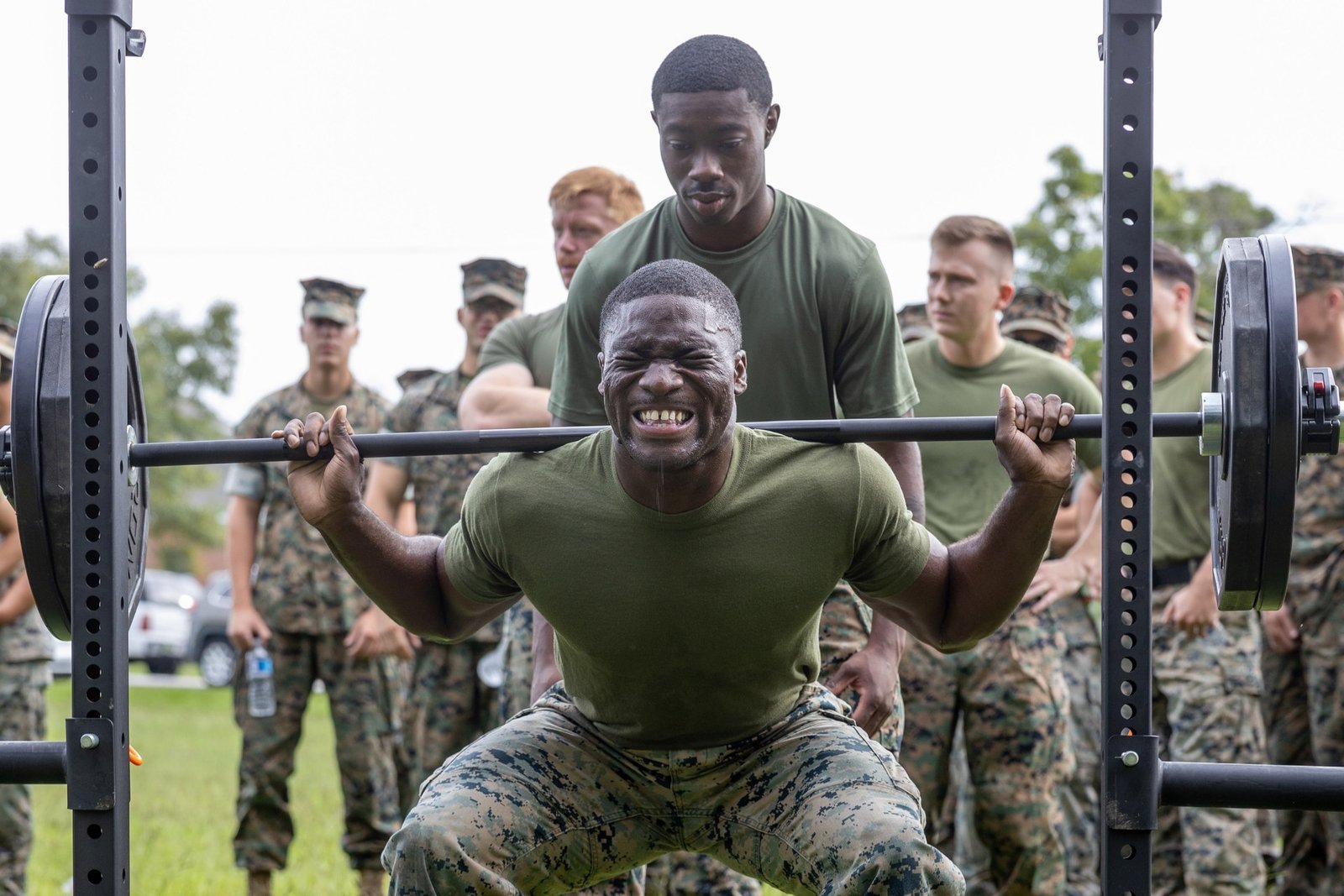
Photo: Wikimedia Commons
Durability and washability
Plain foam absorbs sweat and wears out faster, especially if it lives in a gym bag. Synthetic leather (Dark Iron) and nylon outers (LAVVON) wipe clean and last longer.
Neoprene (Gymreapers) sits in the middle: durable and easy to wipe, but it can hold warmth against the neck in a hot gym.
Whatever you buy, air it out after training and wipe it down regularly — a pad that smells is a pad that is breaking down.
Bar placement still matters most
A pad cushions the bar; it does not place it. On a back squat, the bar should sit across your upper back and rear shoulders, not up on your neck bones.
High-bar squats rest the bar higher on the traps; low-bar squats rest it lower across the rear deltoids. Both are legitimate — but a pad cannot rescue a bar that is sitting on your neck.
If squats hurt your neck even with a pad, or the bar keeps rolling, stop and check your placement — or ask an experienced lifter or coach to check it — before adding more weight. A pad is comfort, not a safety device.
Using a pad safely
Check the pad before every heavy set: centred on the bar, straps fastened, no slipping when you push it. A pad that rolls mid-rep can throw your balance under load.
Do not use a torn or flattened pad that no longer cushions — replace it. A dead pad gives false confidence without the protection.
If you have neck or back problems, or pain that keeps coming back, talk to a clinician or physiotherapist before loading squats with or without a pad. This guide is general information only, not medical advice.
Frequently Asked Questions
Do I need a squat pad?
Not necessarily. Many experienced lifters squat bare-bar without trouble once their placement is right. A pad helps most when the bar digs into bony shoulders, when you are new to squatting, or for hip thrusts, where the bar presses into soft tissue.
Will a pad hurt my squat form?
A pad does not fix form, and a very thick pad can slightly change how the bar balances. Keep the pad centred, the bar placed properly on your upper back, and your technique the same as without a pad — the pad should only change comfort, not the lift.
Can I use a squat pad for hip thrusts?
Yes — hip thrusts are the second main use of a barbell pad, and for many lifters the main one. Pick a thick, strapped pad (like the DMoose pick here) that stays put across the hips through the set.
Do squat pads fit all barbells?
Almost all of them. Most pads fit both standard and Olympic bars. If your bar is unusually thick or thin, check the fit on the listing — a loose pad that rolls is worse than no pad at all.
How do I stop my pad sliding?
Use the straps or Velcro closure if your pad has them, centre the pad before unracking, and check it has not shifted between sets. If a pad keeps sliding even strapped, it is the wrong size or shape for your bar.
How long does a squat pad last?
It depends on the foam and how often you train. Dense foam and synthetic leather outlast plain foam, but any pad that has gone flat, torn, or permanently compressed should be replaced — it is no longer cushioning anything.
Our Pick in One Line
If you want one answer: the Gymreapers bridge pad is the best all-round buy because it covers squats and hip thrusts with a secure, anti-slip fit — but if budget matters most, the POWER GUIDANCE foam classic does the basic job for less.
For the rest of your squat setup, see our weightlifting belts guide and our beginners equipment guide, and for grip support on heavy pulls, see our lifting straps guide.
As an Amazon Associate, we earn from qualifying purchases made through links on this page, at no extra cost to you.
This guide is research-based: we compared verified buyer reviews and manufacturer specifications, and we did not buy or hands-on test these products. Prices and availability change, so check the listing before ordering. The training information here is general information only, not medical advice — if you have neck or back problems, talk to a clinician first.