

💪 The pull-up is one of the best upper-body exercises you can do — and a bar at home means you can practise it every day, not just on gym days.
But not every bar suits every home. A doorway bar needs the right frame, a wall bar needs solid studs, and a tower needs floor space.
This guide compares six real, currently sold pull-up bars across all three mounting styles, with the weight-capacity claims checked honestly — including one case where the manual and the marketing disagree.
🔍 How We Chose These Picks
This is a research-based guide. We did not buy or test these bars, and no product here is described as personally tested.
Picks were scored on five things: mounting style and what your home allows, stated weight capacity, grip options, verified buyer-review volume, and value.
Prices change constantly, so this guide does not quote them. Use the check-price links to see the current price before you buy.
Every product below is currently sold on Amazon with a verified listing. If a listing could not be verified, the product did not make the list.

⚡ Quick Comparison
| Product | Type | Stated capacity | Best for |
|---|---|---|---|
| Iron Gym Total Upper Body | Doorway leverage | 300 lb | Best budget doorway classic |
| Sportneer No-Screw Telescopic | Doorway telescopic | 297 lb per manual (see note) | Best no-drill adjustable |
| Ally Peaks Multi-Grip Doorway | Doorway leverage | 440 lb claimed | Best multi-grip doorway |
| Titan Adjustable Depth Wall-Mounted | Wall-mounted | 400 lb | Best wall-mounted |
| Flybird Power Tower | Freestanding tower | 800 lb listing claim | Best freestanding |
| Pure Fitness Multi-Purpose Doorway | Doorway leverage | 250 lb | Best compact multi-use |
One warning before the details: stated capacities are marketing claims, not laboratory facts. Read the Sportneer note below to see why the manual matters more than the headline number.
1. 🏆 Iron Gym Total Upper Body Workout Bar — Best Budget Doorway Classic
Who it suits: first-time buyers who want the cheapest proven route to pull-ups at home.
The Iron Gym is the classic doorway leverage bar. It hooks over the door frame with no screws, and its three grip positions cover wide, narrow, and neutral grips.
It also converts for floor work — push-ups, dips, and sit-ups — which makes it more than a one-trick bar.
Pros: very low cost; no drilling; three grips; huge verified review volume (over 25,000 ratings); lifts off the frame in seconds.
Cons: 300 lb stated capacity is the lowest here; leverage bars depend on your trim, so they suit solid frames best; wide-grip range is limited by your doorway width.
Check the current price of the Iron Gym Total Upper Body Workout Bar on Amazon
2. 🔧 Sportneer No-Screw Telescopic Bar — Best No-Drill Adjustable
Who it suits: renters and anyone whose doorways are not a standard width.
The Sportneer is a telescopic bar that twists to fit frames from 29.5 to 37 inches, with a rotating dual-gear lock on both ends and a long anti-slip cotton grip.
It needs no screws and no trim to hook over, so it works in hallways and on frames where a leverage bar would not sit properly.
Pros: fits a wide range of frame widths; no drilling; gear locks resist loosening; long padded grip; strong review volume (over 6,000 ratings).
Cons: read this carefully — the listing advertises up to 440 lb, but the product manual specifies a maximum load of 297 lb (135 kg). Follow the manual, not the headline. Also, wide-grip pull-ups fall partly on the thinner extension tubes, which some buyers find less comfortable.
Check the current price of the Sportneer No-Screw Telescopic Bar on Amazon
3. ✋ Ally Peaks Multi-Grip Doorway Bar — Best Multi-Grip Doorway
Who it suits: lifters who want several grip angles from a doorway bar without drilling.
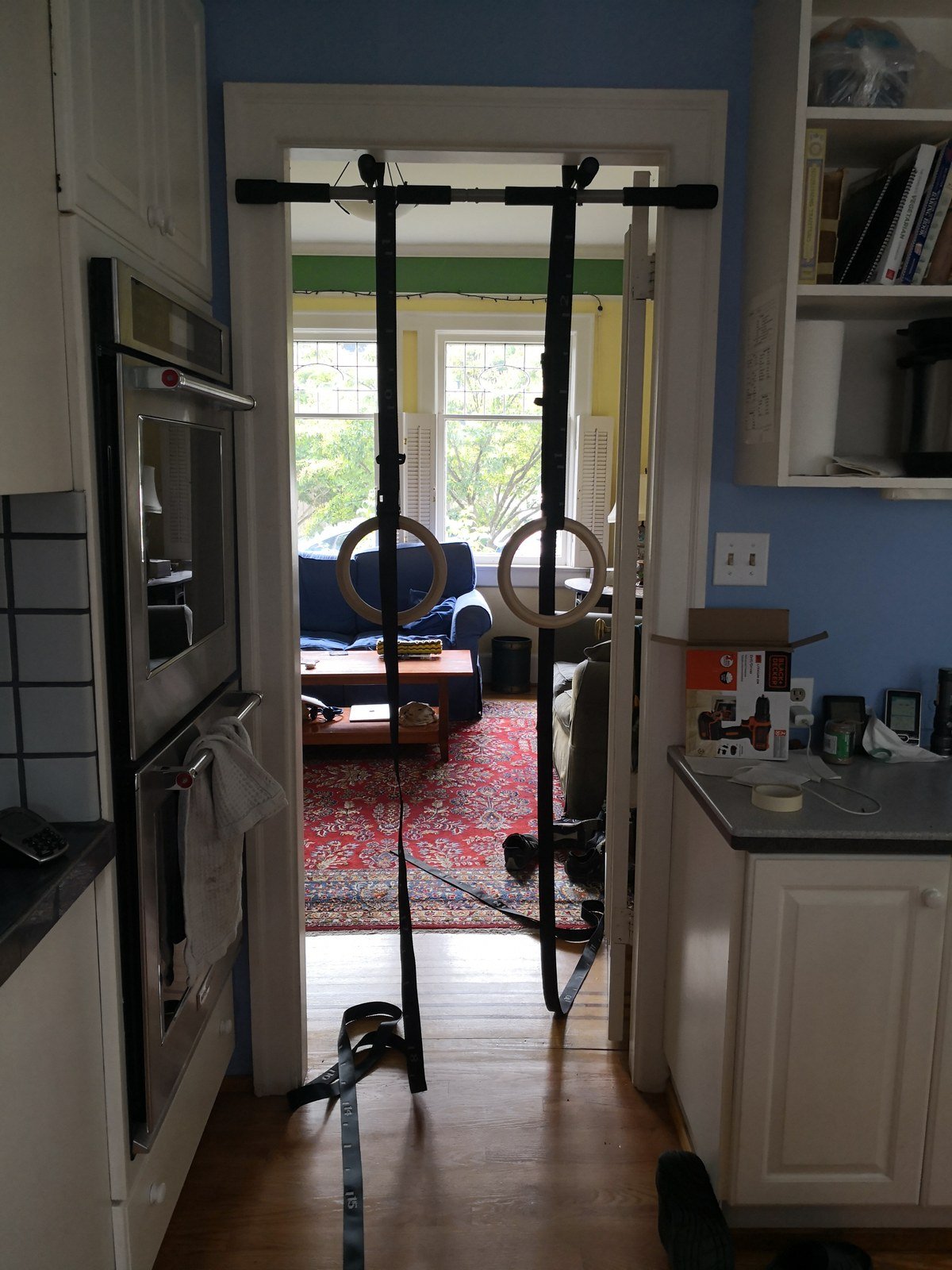
The Ally Peaks bar uses thickened 1.7 mm steel and a multi-grip frame that hooks over the doorway, with a stated capacity of 440 lb.
Its review volume is solid — over 12,000 ratings — which is reassuring for a doorway bar at this price tier.
Pros: multiple grip positions; thickened steel frame; strong review volume; no drilling; lifts off when not in use.
Cons: Ally Peaks sells several near-identical doorway bars under similar names, so check the listing carefully before ordering. Like all leverage bars, it depends on solid door trim.
Check the current price of the Ally Peaks Multi-Grip Doorway Bar on Amazon
4. 🧱 Titan Fitness Adjustable Depth Wall-Mounted Bar — Best Wall-Mounted
Who it suits: home-gym owners who want a permanent, rigid bar and have solid studs or a concrete wall.
The Titan is a wall-mounted bar built from 11-gauge steel, rated at 400 lb, with two depth options — 14 or 22 inches from the wall — so you can match it to your space.
Its 52-inch bar and 32 mm grip diameter feel close to a commercial gym bar, and it leaves your floor and doorway completely free.
Pros: the most rigid option here; 400 lb rating from heavy-gauge steel; adjustable depth; no doorway needed; commercial feel.
Cons: requires drilling into studs or concrete — never drywall alone; permanent, so it is not renter-friendly; its review count (under 300) is far smaller than the doorway bars, so treat the rating as less proven by volume.
Check the current price of the Titan Fitness Adjustable Depth Wall-Mounted Bar on Amazon
5. 🏋️ Flybird Power Tower — Best Freestanding
Who it suits: anyone who cannot drill anything but still wants pull-ups, dips, and knee raises in one station.
The Flybird tower stands on the floor with an adjustable-height pull-up bar, plus dip bars and a knee-raise station — no wall, door, or ceiling needed.
That makes it the best choice for garages, spare rooms, and renters with floor space to spare.
Pros: no drilling and no doorway needed; pull-ups, dips, and knee raises in one unit; adjustable height suits different users.
Cons: the listing claims an 800 lb capacity, which is far above what most towers in this class claim — treat that figure with caution and check the current listing. Towers also take up the most floor space here and can feel less rigid than a wall-mounted bar.
Check the current price of the Flybird Power Tower on Amazon
6. 🎒 Pure Fitness Multi-Purpose Doorway Bar — Best Compact Multi-Use
Who it suits: small spaces where one bar needs to do several jobs.
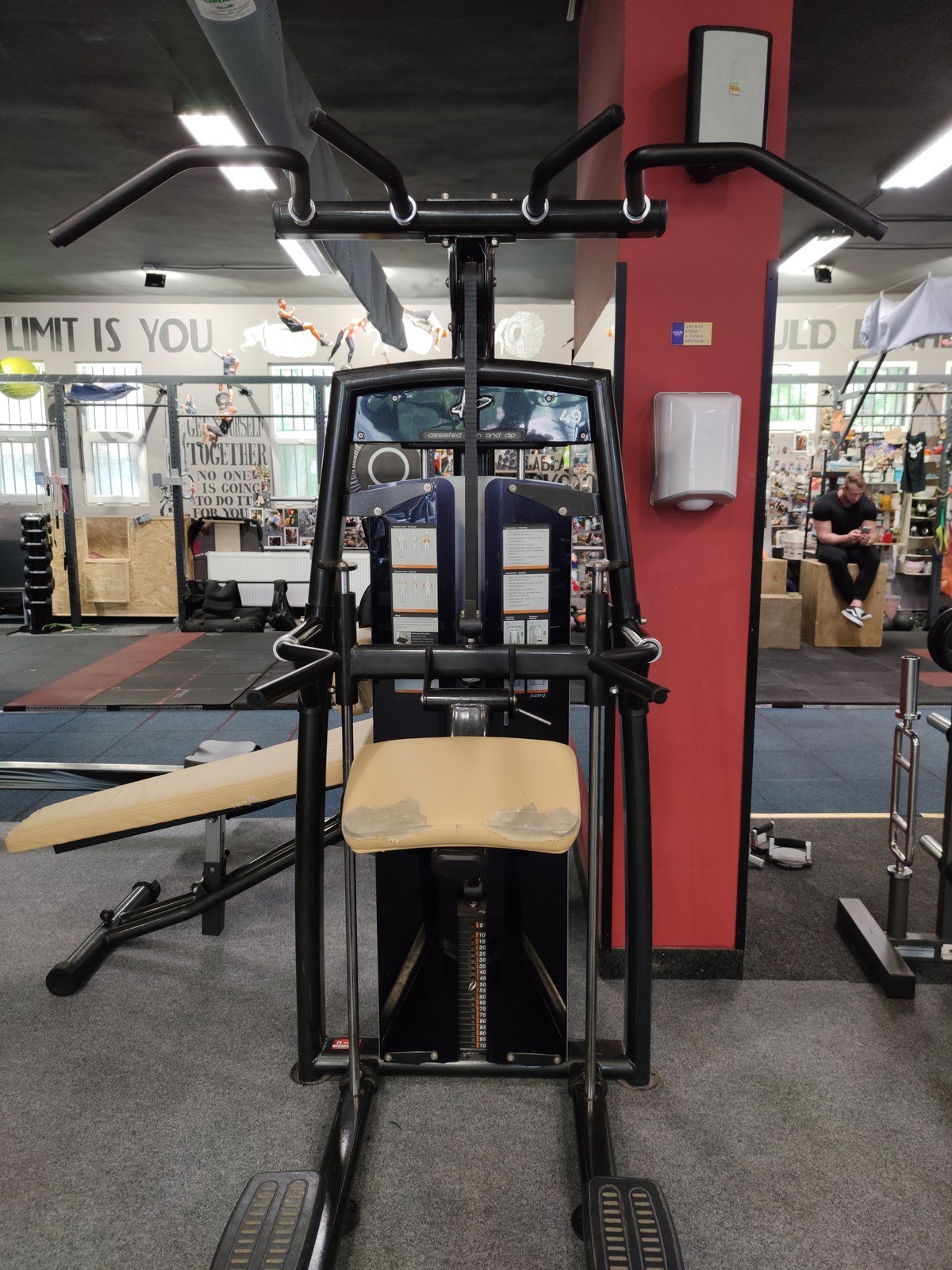
The Pure Fitness bar is a compact doorway leverage bar that also works on the floor for push-ups and dips, much like the Iron Gym — but in a slightly smaller, lighter package.
It fits frames from 27 to 32 inches and carries a 250 lb stated capacity.
Pros: compact and light; multi-use on door and floor; no drilling; simple to store.
Cons: 250 lb is the lowest stated capacity here, and the narrower 27–32 inch fit range excludes wider doorways — measure before ordering.
Check the current price of the Pure Fitness Multi-Purpose Doorway Bar on Amazon
🧭 How to Choose the Right Pull-Up Bar
Doorway leverage vs telescopic vs wall-mounted vs freestanding
Doorway leverage bars hook over the frame and use your body weight to hold themselves in place. They are cheap, removable, and renter-friendly — but they depend entirely on solid trim.
Telescopic screwless bars twist to grip the inside of the frame instead. They fit more widths and need no trim lip, but their grip range is narrower and their true load limit is the manual’s figure, not the headline.
Wall-mounted bars are the most rigid option and free up your doorway, but they demand drilling into studs or concrete and a landlord’s permission if you rent.
Freestanding towers need no drilling at all and add dips and knee raises, but they eat floor space and wobble more than a mounted bar.
Ceiling or joist mounting is a fifth option for some wall bars — it suits garages with exposed joists, but check the specific listing, since not every wall bar is rated for ceiling use.
Door-frame requirements and damage risk
Measure your frame before ordering: width, trim depth, and trim strength all matter. A bar that fits the width but not the trim will not sit safely.
Pads and foam guards reduce marks, but they do not eliminate them — heavy use can still dent soft trim. If your trim is decorative or hollow, a telescopic bar or a tower is safer than a leverage bar.
Weight capacity — the honest version
Brands measure capacity differently, and some headline figures are optimistic. The Sportneer gap in this guide — 440 lb advertised, 297 lb in the manual — is the clearest example.
Trust the manual over the headline, and remember the mounting surface matters as much as the bar: a 400 lb bar on weak trim is not a 400 lb setup.
Grip types
Wide overhand grips emphasise the lats, close neutral grips are kinder on the shoulders and elbows, and underhand chin-up grips bring the biceps in more.
Foam grips are comfortable but wear out; bare or knurled steel lasts longer but can be harsh on bare hands. Chalk closes much of the gap either way.
Rental-friendly options
If you cannot drill, your honest options are doorway bars and freestanding towers. Both leave no holes — but check your lease and your trim before a leverage bar, since trim damage can still cost you a deposit.
⚠️ Safety: Check Before Every Use
A pull-up bar holds your full body weight, so a quick check is not optional. Before every session, confirm the bar is seated properly, the locks are engaged, and nothing has shifted since last time.
Test it first with a dead hang — full weight, feet off the floor, no swinging — before attempting full reps. If it moves, creaks, or flexes unexpectedly, stop and re-seat it.
Respect the stated limits, and remember the limit applies to the whole setup: bar plus frame plus fixings. Never hang from a bar you have not secured, and never mount a wall bar into drywall alone — it must anchor into studs or concrete.
Keep the landing area clear, and do not kip (swing for momentum) on a doorway bar — doorway bars are built for strict reps, and kipping needs the clearance and rigidity of a mounted bar or tower.
This section is general information only, not medical or professional advice. If you have a shoulder, elbow, or back condition, talk to a clinician before starting pull-up training.
🏋️ Getting Your First Pull-Up
No bar builds strength on its own — but a bar at home makes the practice easy. If you cannot do a full pull-up yet, start with dead hangs to build grip, then slow negatives: jump or step to the top and lower yourself as slowly as you can.
Band assistance is the other proven stepping stone. Loop a resistance band over the bar for help at the bottom of the rep — our resistance bands guide covers which bands suit this.
For the full movement breakdown, see our pull-ups guide. And if you are building the wider home gym, our beginners equipment guide covers the rest of the setup.
❓ Frequently Asked Questions
I cannot do a single pull-up yet. Is a bar still worth buying?
Yes — dead hangs and negatives need a bar, and they are exactly how most people build their first pull-up. Add a band for assistance if the jump from hang to rep feels too big.
Will a doorway bar damage my door frame?
It can mark soft or decorative trim, especially with heavy use. Pads help, but they do not guarantee zero damage. If your trim is fragile or rented, a telescopic bar or a freestanding tower is the safer choice.
Can I do kipping pull-ups on a doorway bar?
No — doorway bars are built for strict, controlled reps. Kipping needs the clearance and rigidity of a wall-mounted bar, a tower, or a gym rig.
Should I trust the stated weight capacity?
Treat it as a claim, not a guarantee. Check the manual where possible — the Sportneer in this guide advertises 440 lb but specifies 297 lb in its manual — and remember the frame and fixings matter as much as the bar.
Doorway bar or wall-mounted bar — which is better?
Neither is better in the abstract. Doorway bars win on cost, removability, and renters; wall bars win on rigidity, grip range, and clearance. Your home decides.
Do I need anything else with a pull-up bar?
Chalk helps grip, and a resistance band helps beginners bridge the gap to a first full rep. Neither is required — the bar alone is enough to start.
As an Amazon Associate, we earn from qualifying purchases made through links on this page, at no extra cost to you.
This is a research-based guide: products were compared from verified buyer reviews and published specifications, not from personal testing. Prices change frequently, so always check the current price before buying. The health and safety information here is general information only and is not medical advice — talk to a qualified clinician about your own situation.