

Why Neck Massagers Belong in a Home Gym
A neck massager is a kneading device that works on your neck and upper shoulders while you sit, stand or lie still: nodes rotate, press and knead the muscles beside the neck, sometimes with heat, while you do nothing but wear it or lean on it. The device’s job is simple — bring the kneading to the neck, in the chair you already own, without booking a session or asking a second person for help. After a heavy session, the neck and traps carry tension that a barbell, a desk or a long drive all add to, and a neck massager is the home-gym answer to that one area, used in short sessions between training days. 💆
Know what a neck massager is not. It is not a neck machine — a guided, loaded device that trains the neck muscles against resistance along a set path, which our best neck machines for home gyms covers, and which builds strength rather than kneading anything. A massager adds no load and trains nothing; it kneads, and the two belong in different corners of the gym. It is not a massage chair either: a full-body recliner that works the whole body on a track while you sit in it, which our best massage chairs for home gyms covers, while a neck massager works one area only and travels to any chair. And it is not a massage table — a flat padded platform you lie on while someone else works on you, which our best massage tables for home gyms, the previous guide in this series, covers, and which does nothing on its own at all. A neck massager is the powered, solo, one-area middle of that family: smaller than a chair, more active than a table, and nothing like a loaded machine.
Neck massagers are routine in homes, offices and cars, and one brings that setup to the chair beside your gym. After a heavy session, the neck massager is what you reach for while you sit and recover — nodes working the traps while you rest — and on rest days it is a short, seated ritual that needs no appointment, no second person and no floor space beyond the chair you already sit in.
How We Picked

We compared six neck massagers that are genuinely sold for home use right now, using maker manuals and listing records — not hands-on testing, and not roundup scores copied from other sites. Every photo in this guide is an honest home, gym or clinic scene, not a product shot of the named massager, because free-license photos of the exact named products do not exist for this category. Where records disagree, the article says so instead of picking the flattering number — and this category disagrees a lot, because node counts, heat figures and weights are stated differently across manuals, listings and roundups for the same model.
- Form: pillow, wrap-around or wearable — and whether it needs your hands, a chair back or nothing at all.
- Nodes: how many kneading nodes, and whether the manual and the listings agree on the count.
- Heat: whether heat is fitted, how many levels it has, and whether a numeric maximum is stated at all.
- Power: corded or cordless, battery size where stated, and charge time against run time.
- Shut-off: the auto shut-off or recommended session length, which is the real session limit.
- Honest limits: what each massager cannot do, stated in its own section.
Also considered: the Zyllion ZMA-13RB (named, not picked — the rechargeable variant of the ZMA-13 with a different power record, not merged into the corded ZMA-13 below); the Nekteck NK-FM06 (named, not picked — a separate Nekteck neck model with its own node record, not merged into the LMS-801); the Comfier CF-6811-EU (named, not picked — the 8-node European variant of the cordless line, not merged into the 6-node CF-6812-US); the Comfier CF-6505 and CF-6419N (named, not picked — separate Comfier neck models with their own records, not merged into the CF-6812-US); the Snailax SL-681, SL-681-5 and SL-681-6 (named, not picked — 6-node 4D Snailax variants, not merged into the 8-node SL-632NC); the Snailax SL-128C-2 (named, not picked — a separate Snailax neck model, not merged into the SL-632NC); and the RENPHO U-Neck 1 and U-Neck 2 (named, not picked — the 8-node corded U-Neck 1 and the later U-Neck 2, not merged into the U-Neck Mini). None of the six picks below hides a conflict like those — where a pick’s own records disagree, the disagreement is printed in its section.
Comparison

| Pick | Form | Nodes | Heat | Standout |
|---|---|---|---|---|
| Zyllion ZMA-13 | Pillow | 4 deep-kneading | Yes (no maximum stated) | Classic |
| Nekteck LMS-801 | Pillow | 8 deep-shiatsu (16 claimed) | Infrared to 113°F / 45°C | Value |
| Comfier CF-6812-US | Pillow, cordless | 6 (4D) | 3 levels, 110–130°F | Cordless |
| RESTECK BD1041 | Wrap-around | Not stated in records checked | Yes (levels disputed) | Wrap-Around |
| Snailax SL-632NC | Pillow, cordless, arm loops | 8 deep-kneading | Infrared (no maximum stated) | Hands-Free |
| RENPHO U-Neck Mini R-L001 | Worn U-shape, wireless | 4 rotating | 2 settings (no maximum stated) | Wearable |
Read the table honestly. It carries no weight column on purpose: carry weights are disputed across records — the Zyllion reads 3.9 lb on its own record, the Nekteck reads 3.09 lb in its manual against 3.64 lb in listings, the RESTECK reads 4.6 lb in its manual against 400 g in one listing, and the RENPHO Mini reads about 970 g — so a weight column would imply a comparison the records do not support. It carries no hottest crown either: only two picks state a numeric heat maximum at all — the Nekteck at 113°F / 45°C and the Comfier at 110–130°F across three levels — while the Zyllion, the RESTECK, the Snailax and the RENPHO Mini state heat with no numeric maximum, so crowning a hottest pick would compare stated maxima against unstated ones. Node counts are likewise not crowned: the Nekteck’s manual says 8 while listings claim 16, and the RESTECK states no node count in the records checked, so the highest settled count here is a tie at 8 between the Nekteck’s manual figure and the Snailax’s 8, and it is not crowned against a field this unsettled.
Zyllion ZMA-13

The Zyllion ZMA-13 is the classic pick because it is the pillow form most buyers picture first: a U-shaped cushion that sits around the neck, with 4 deep-kneading nodes, heat, a 20-minute auto shut-off, corded electric power, and a 3.9 lb weight. It is the pick for a buyer who wants the standard neck-massager shape with nothing unusual attached — no app, no loops, no wearable frame — just a pillow, a cord and a shut-off.
The node record carries one conflict, and it is printed here. One listing table shows 4 nodes against 8 for the same model — the 4-node figure is adopted here because it matches the deep-kneading description across the main records, but a listing that shows 8 nodes for the ZMA-13 has not been reconciled, and the buyer should check the listing’s own node figure before ordering.
Pros
- Classic pillow form — the shape most buyers already understand.
- 4 deep-kneading nodes with heat and a 20-minute auto shut-off.
Cons
- Node count disputed: 4 vs 8 across listing records.
- Corded only — no cordless use, no battery at all.
- Heat maximum not stated in the records checked.
Listing check: confirm the ZMA-13 (not the ZMA-13RB, the rechargeable variant with a different power record) before ordering, and check the node count from that listing itself. If the listing shows a battery, a USB charge or an 8-node table as the headline, it is the RB variant or a different listing record, not this pick.
Best for: a buyer who wants the classic pillow shape, corded and simple, with the longest auto shut-off here.
May not fit: anyone who wants cordless use, a stated heat maximum, or a settled node count before buying.
Nekteck LMS-801
The Nekteck LMS-801 is the value pick because its manual record is full for the money: 8 deep-shiatsu nodes, infrared heat to 113°F / 45°C, 3 speed levels, bi-directional kneading, a 15-minute auto shut-off, and corded power. It is the pick for a buyer who wants speed, direction and heat controls — without paying for cordless or wearable form.
The record carries two conflicts, and both are printed here. Listings claim 16 nodes for the LMS-801 while the manual says 8 — the manual’s 8 is adopted here, and the 16 is a listing claim, not a manual figure. And the weight reads 3.09 lb in the manual against 3.64 lb in listings — neither settled to a single figure, so treat the Nekteck as a roughly 3 lb pillow, not a weighed one.
Pros
- Manual record: 8 nodes, 3 speeds, bi-directional kneading.
- Infrared heat with a stated maximum: 113°F / 45°C.
- 15-minute auto shut-off with corded, always-ready power.
Cons
- Node count disputed: manual 8 vs listings claiming 16.
- Weight disputed: 3.09 lb manual vs 3.64 lb listings.
- Corded only — no cordless use, no battery at all.
Listing check: confirm the LMS-801 (not the NK-FM06, the separate Nekteck neck model with its own node record) before ordering, and check the node count from that listing itself. If the listing shows 16 nodes as the headline, it is the listing claim, not the manual figure, and if it shows a battery, it is a different Nekteck model, not this pick.
Best for: a buyer who wants speed, direction and stated-maximum heat controls at the value end.
May not fit: anyone who wants cordless use, or anyone who needs the node count settled before buying.
Comfier CF-6812-US

The Comfier CF-6812-US is the cordless pick because it cuts the cord without changing the pillow shape: 4D kneading with 6 nodes, 3 heat levels from 110 to 130°F, 3 intensity levels, a 2500mAh battery giving 90 minutes or more on a 3-hour Type-C charge, and a 10-minute auto shut-off on the cordless line. It is the pick for a buyer who wants a pillow at a desk, in a car or in another room — anywhere the wall socket is not.
The variant record needs its most careful reading in this guide. The CF-6811-EU is an 8-node variant of the same cordless line, and the CF-6505 and CF-6419N are separate Comfier neck models with their own records — none of them is this pick, and a listing that shows 8 nodes, a European plug or a different model number is not the CF-6812-US. Check the model number on the listing itself, not just the brand and the shape.
Pros
- Cordless pillow: 90 minutes or more per 3-hour Type-C charge.
- 3 heat levels with a stated range: 110–130°F.
- 4D kneading with 6 nodes and 3 intensity levels.
Cons
- 10-minute auto shut-off on the cordless line.
- Variant trap: the 8-node CF-6811-EU is a different model.
- Needs recharging — no corded, always-ready use.
Listing check: confirm the CF-6812-US (not the CF-6811-EU, the 8-node European variant, and not the CF-6505 or CF-6419N) before ordering, and check the node count and the battery from that listing itself. If the listing shows 8 nodes, a European plug, or no battery at all, it is a different Comfier model, not this pick.
Best for: a buyer who wants a cordless pillow — desk, car or another room — with stated heat levels.
May not fit: anyone who wants long uninterrupted sessions, or anyone who wants corded, always-ready power.
RESTECK BD1041

The RESTECK BD1041 is the wrap-around pick because it is the only form here that wraps and holds: a wrap-around body that sits on the shoulders, corded power, a 4-button control for direction, speed and heat, a 15-minute auto shut-off, and a 70-inch cord. It is the pick for a buyer who wants the device to stay put on its own — no chair back to lean on, no hands to hold it — while the controls sit within reach.
The record carries two conflicts, and both are printed here. Heat reads 2 levels in listings against low heat only in the manual — the manual’s low-heat-only figure is the conservative one, and the 2-level claim is a listing claim, not a manual figure. And the weight reads 4.6 lb in the manual against 400 g in one listing — a fivefold split that cannot both be right, so treat the RESTECK’s weight as unsettled and check the listing’s own figure before ordering.
Pros
- Only wrap-around form here — stays put with no chair back needed.
- 4-button control for direction, speed and heat, in reach.
- Long 70-inch cord with a 15-minute auto shut-off.
Cons
- Heat levels disputed: 2 levels in listings vs low heat only in the manual.
- Weight disputed fivefold: 4.6 lb manual vs 400 g in one listing.
- Node count not stated in the records checked.
Listing check: confirm the BD1041 wrap-around (not a pillow-form RESTECK, if the listing shows one) before ordering, and check the heat levels and the weight from that listing itself. If the listing shows 400 g, treat it as an outlier record, not the manual figure, and if it shows no wrap-around body, it is a different RESTECK model, not this pick.
Best for: a buyer who wants a wrap-around that stays put on its own, with the controls in reach.
May not fit: anyone who needs heat levels, weight or node count settled before buying, or anyone who wants cordless use.
Snailax SL-632NC

The Snailax SL-632NC is the hands-free pick because it is the only pillow here with arm loops: a cordless pillow with 8 deep-kneading nodes, infrared heat, 2 intensity levels, arm loops that hold it in place, 70–80 minutes per charge, and a 15-minute auto shut-off. It is the pick for a buyer who wants the pillow to stay put with no hands at all — loops on, hands free, session running — while standing, walking around the house or sitting without a chair back.
The variant record needs the same care as the Comfier’s. The SL-681, SL-681-5 and SL-681-6 are 6-node 4D Snailax variants, and the SL-128C-2 is a separate Snailax neck model — none of them is this pick, and a listing that shows 6 nodes, 4D in the headline or a different model number is not the SL-632NC. Check the model number on the listing itself, not just the brand and the loops.
Pros
- Only pick here with arm loops — genuinely hands-free, no chair back needed.
- 8 deep-kneading nodes with infrared heat, cordless.
- 70–80 minutes per charge with a 15-minute auto shut-off.
Cons
- Heat maximum not stated in the records checked.
- Variant trap: the 6-node SL-681 line is a different model.
- Needs recharging — no corded, always-ready use.
Listing check: confirm the SL-632NC (not the SL-681, SL-681-5 or SL-681-6, the 6-node 4D variants, and not the SL-128C-2) before ordering, and check the node count and the arm loops from that listing itself. If the listing shows 6 nodes, 4D as the headline, or no arm loops, it is a different Snailax model, not this pick.
Best for: a buyer who wants a cordless pillow that stays put with no hands — loops on, hands free.
May not fit: anyone who wants a stated heat maximum, or anyone who wants corded, always-ready power.
RENPHO U-Neck Mini R-L001

The RENPHO U-Neck Mini R-L001 is the wearable pick because it is the only device here worn on the neck itself: a U-shape that sits around the neck, fully wireless with USB-C charging, 4 rotating nodes, 2 intensity levels, 2 heat settings, a 2000mAh battery at 10W, about 970 g, and 10-minute recommended sessions per its manual. It is the pick for a buyer who wants the massager to travel on the body — worn while moving around the house, not parked in a chair — with nothing to lean on and no cord to manage.
The variant record needs the same care as the Comfier’s and the Snailax’s. The U-Neck 1 is an 8-node corded model and the U-Neck 2 is a later model — neither is this pick, and a listing that shows 8 nodes, a cord or a different model number is not the U-Neck Mini. Check the model number (R-L001) and the wireless record on the listing itself, and treat the 10-minute recommended session as the manual’s session limit, not a suggestion to ignore.
Pros
- Only wearable here — worn on the neck, fully wireless, USB-C.
- 4 rotating nodes with 2 intensity levels and 2 heat settings.
- About 970 g on a fully wireless frame.
Cons
- 10-minute recommended sessions per the manual.
- Heat maximum not stated in the records checked.
- Variant trap: the 8-node corded U-Neck 1 is a different model.
Listing check: confirm the U-Neck Mini R-L001 (not the U-Neck 1, the 8-node corded model, and not the U-Neck 2) before ordering, and check the wireless record and the node count from that listing itself. If the listing shows 8 nodes, a cord, or no R-L001 model number, it is a different RENPHO model, not this pick.
Best for: a buyer who wants a wearable that travels on the body — worn, wireless, moving around the house.
May not fit: anyone who wants long sessions, a stated heat maximum, or a chair-leaning pillow form.
How to Choose
Four decisions, in order: type, size, features, placement. Get them in that order and the massager you buy is the massager you keep using. 🧭
Choose Your Type

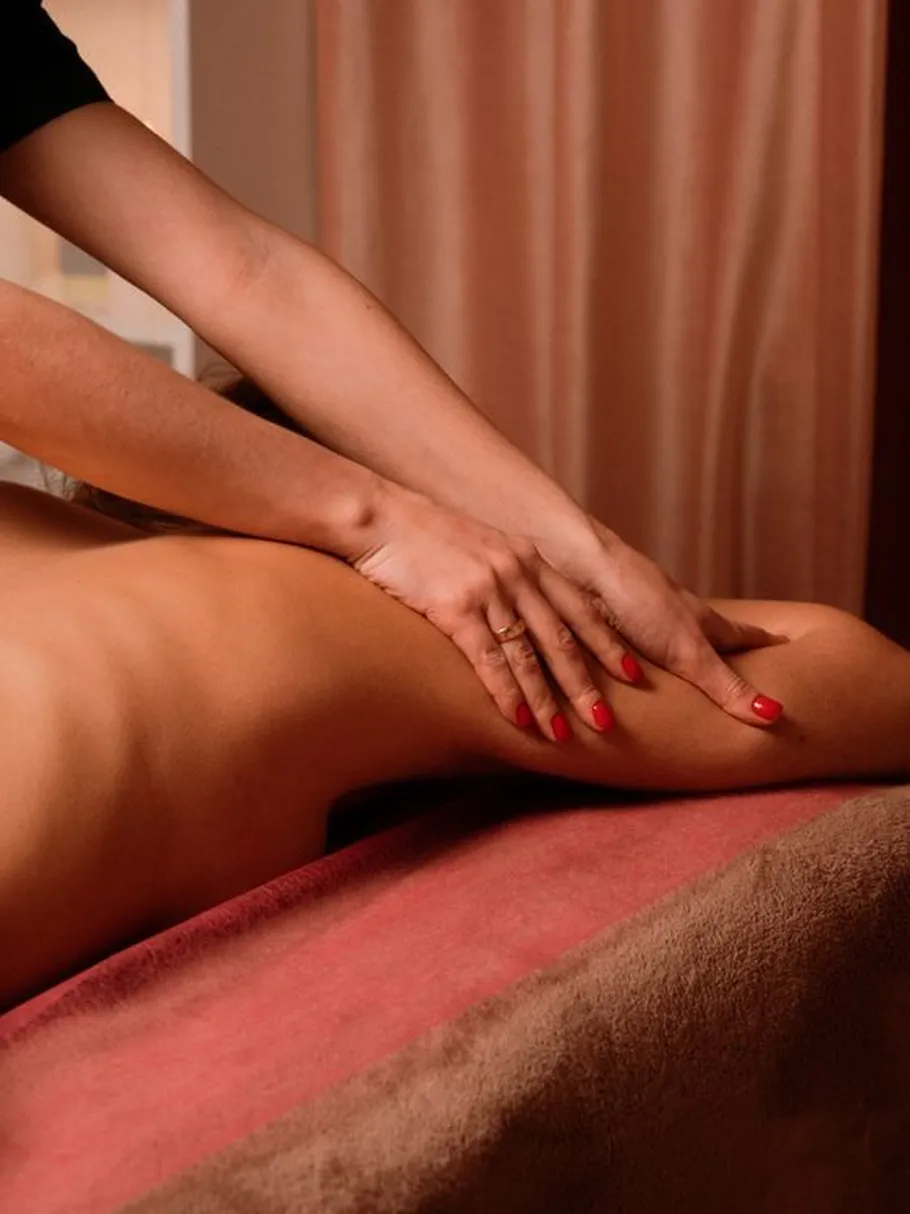
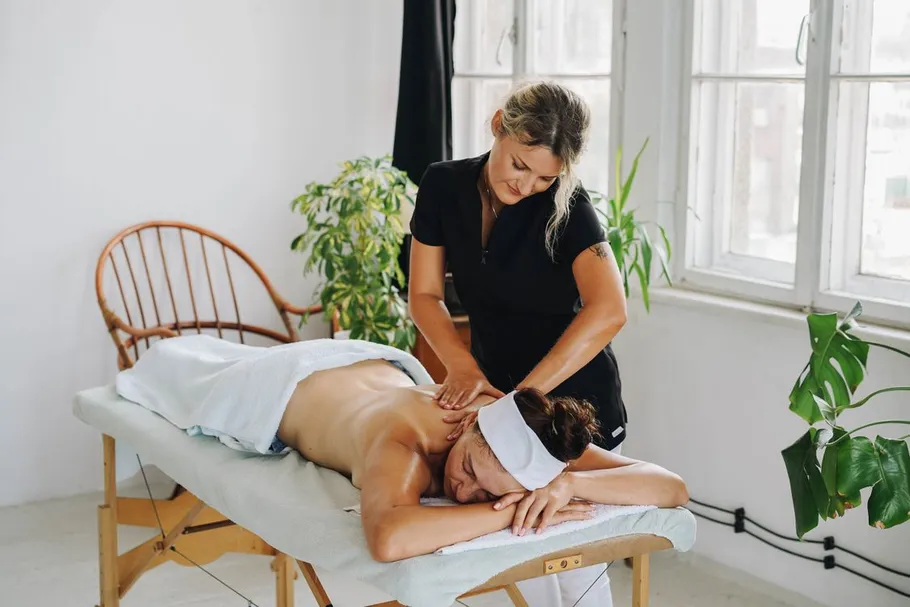
Start with the type, because it decides everything else. All six picks here are powered kneading devices: nodes rotate and press while you sit still. The other class is the hand itself — a partner’s hands, or your own, working the neck with no device at all — and the figure above shows that class, which costs nothing and needs a second person. If a second person is always available, hands may be all you need; if not, a device is the honest buy, and these six picks cover its three forms: pillow, wrap-around and wearable.
One more type check matters for the solo buyer who wants a wider area. If the neck is only part of what hurts — the whole back, the legs, the feet — a one-area device may be the wrong buy entirely, and a handheld tool that reaches anywhere fits that buyer better, and our best massage guns covers the handheld percussion route instead of a neck-only device. Buy the neck massager when the neck and upper shoulders are the job, and buy the gun when the whole body is the job.
Choose Your Size

Measure three things: the neck, the shoulders, and the chair. The neck first: a pillow form needs a chair back or a headrest to press against, because the nodes work by pressure between the pillow and something solid — a pillow used in mid-air, with nothing behind it, kneads nothing. The shoulders second: a wrap-around or wearable form needs shoulders it can sit on, and a very narrow or very broad frame changes how the nodes land — check the form against your own frame, not just the product photo. The chair third: the pillow picks are chair picks, and the chair you own decides which form works — a high-backed chair suits a pillow, a low chair or no chair suits a wrap-around or a wearable.
Then read the weight against how you will hold it, not just the spec sheet. A 3–4 lb pillow is light in the hand and heavy on the neck after twenty minutes if nothing supports it — the chair back carries a pillow, the loops carry a Snailax, and the body carries a RENPHO Mini, so the form decides who holds the weight, not just how much it weighs.
Choose Your Features

Nodes first: 4 on the Zyllion and the RENPHO Mini, 6 on the Comfier, 8 on the Nekteck’s manual figure and the Snailax, and unstated on the RESTECK — more nodes is not automatically better, because node placement and pressure matter more than the count, and a disputed count (Nekteck 8 vs 16) is a listing claim, not a feature. Heat second: the Comfier’s 3 levels at 110–130°F and the Nekteck’s 113°F / 45°C maximum are the only stated heat figures here, while the other four picks state heat with no maximum — so compare heat levels, not heat headlines. Power third: corded picks (Zyllion, Nekteck, RESTECK) are always ready and never run out, while cordless picks (Comfier, Snailax, RENPHO Mini) need charging — the Comfier gives 90 minutes or more per 3-hour Type-C charge and the Snailax 70–80 minutes per charge, while the RENPHO Mini’s run time was not stated in the records checked. Shut-off fourth: 20 minutes on the Zyllion, 15 on the Nekteck, RESTECK and Snailax, 10 on the Comfier, and 10-minute recommended sessions on the RENPHO Mini — the shut-off is the real session limit, and a pick with a short shut-off needs restarting, not overriding.
Buy the features you will use every session, not the longest list. Nodes matter if the kneading feels right; heat matters if warmth helps you sit still; cordless matters if the socket is far; and a shut-off matters every single session, because it is the limit you will meet first. Heat pairs naturally with a warm room, and our best saunas for home gyms covers the heat room that pairs with a recovery session, not a replacement for a neck device — while a hot bath or a heated room is no substitute for checking the device’s own heat setting first.
Choose Your Placement
A neck massager needs a chair, a socket or a charge, and a storage spot — in that order. The chair must hold you still with your neck supported, because a pillow pick kneads against the chair back and a wearable pick needs you seated or standing steady — a neck massager used while walking fast, driving without attention or lying twisted is a massager misused. The socket or charge comes second: corded picks need a socket within cord reach (the RESTECK states a 70-inch cord; no other pick states a cord length), and cordless picks need a charging habit, or they are dead when wanted. The storage spot must hold the device where it will not be sat on, dropped or tangled — a shelf, a hook or its own bag, never loose in a gym bag under plates.
Buy the placement before the massager. If the chair is low or missing, the wrap-around or wearable forms win over a pillow; if the socket is far, cordless wins over corded; and if the device will travel — desk, car, another room — the cordless picks and the wearable are the only ones that travel well. A massager that cannot sit right in its chair is not a bargain at any tier.
Safety
1. Check with a clinician first if you have a recent neck injury or surgery, if you have osteoporosis or fragile bones, if you have a blood-clotting condition or take blood thinners, if you have skin wounds, infections or rashes on the neck, if you have numbness, tingling or weakness in the arms or hands, if you have a pacemaker or another implanted device, or if you have any condition that makes pressure or heat on the neck risky — a massager kneads and warms, and it does not diagnose anything.
2. Never use a neck massager on the front of the neck or throat, and never press nodes directly onto the spine bones — keep the nodes on the muscles beside the neck and across the upper shoulders, where the device is designed to work, and stop at once if the pressure lands on bone, throat or a tender spot that was not tender before.
3. Respect the shut-off and the recommended session length — 20 minutes on the Zyllion, 15 on the Nekteck, RESTECK and Snailax, 10 on the Comfier, and 10-minute recommended sessions on the RENPHO Mini — and never override a shut-off, restart session after session without a break, or fall asleep with a neck massager running, especially with heat on.
4. Treat heat with care: check the skin during and after a heated session, never use heat on skin that is numb or cannot feel warmth properly, never trap a heated device tightly against the neck under bedding or clothing, and stop at once if the skin reddens, burns or stays hot after the session ends.
5. Keep corded massagers dry and away from water — never use one in a bath, a shower or a pool, never handle a corded device with wet hands, and keep cords away from walkways, weights and moving gym equipment where they can trip or snag.
6. Charge cordless massagers only as their own manuals say — the right cable, the right charger, never while damaged or swollen, and never use a cordless device while it charges unless its own manual explicitly allows it.
7. Stop at once and talk to a clinician if pain sharpens, spreads, or changes character during use, if numbness, tingling, weakness or dizziness appears, if a headache follows a session, or if anything about the neck worries you afterwards — and keep neck massagers away from children and pets, who should never run one unsupervised.
These notes are general information only, not medical advice — if pain, an injury or a medical condition worries you, talk to a clinician before using a neck massager.
Frequently Asked Questions

Will a neck massager fix my neck pain?
This guide makes no claim of that kind. A neck massager kneads and warms the neck and upper shoulders, and many buyers find short sessions pleasant after training or desk work — but it does not diagnose, treat or cure any condition, and pain that is new, sharp, spreading, or joined by numbness, tingling, weakness or dizziness needs a clinician, not a device. If pain worries you, talk to a clinician before using one at all.
Pillow, wrap-around or wearable — which form should I buy?
Buy a pillow if you have a good chair back to press against — the chair carries the pressure, and the pillow is the simplest form. Buy a wrap-around if you want the device to stay put with no chair back — the RESTECK’s form holds itself on the shoulders. Buy a wearable if you want the device to travel on your body while you move around the house — the RENPHO Mini is the only worn form here. The form decides where you can use it, so pick the form for the chair and the room you actually have.
How hot do neck massagers get, and is the heat safe?
Only two picks state a numeric heat figure: the Nekteck to 113°F / 45°C, and the Comfier across 3 levels at 110–130°F. The other four picks state heat with no maximum, so their heat cannot be ranked against those two. Heat is safe only with the usual care: check the skin during and after, never use heat on numb skin, never trap a heated device under bedding, and stop if the skin reddens or stays hot — and never fall asleep with heat running.
Can I use a neck massager every day, and for how long?
Use the shut-off as the session limit: 20 minutes on the Zyllion, 15 on the Nekteck, RESTECK and Snailax, 10 on the Comfier, and 10-minute recommended sessions on the RENPHO Mini. Daily short sessions within those limits are the normal pattern in the manuals, but back-to-back sessions without a break, overridden shut-offs and sleeping with a device running are not — and any pain that follows a session is a stop-and-ask-a-clinician signal, not a sign to run another session.
Corded or cordless — which one should I buy?
Buy corded if the device will live in one chair near a socket — corded picks are always ready and never run out, and the RESTECK states a 70-inch cord. Buy cordless if the device must travel — desk, car, another room — and accept the charging habit: the Comfier gives 90 minutes or more per 3-hour Type-C charge, the Snailax 70–80 minutes per charge, and the RENPHO Mini runs wireless on USB-C. Cordless buys freedom, corded buys readiness, and neither is better in every room.
Where should I use a neck massager, and what floor does it need?
Use it seated in a steady chair, in a room where you can sit still for the session — not while driving without full attention, not while walking fast, and not twisted on a soft bed where the neck has no support. The device itself needs no special floor, but the chair it pairs with does: a steady chair on a proper gym floor, and our best gym flooring for home gyms covers the floor and protection thinking that applies to the whole home-gym corner, chair included.
Our Pick: Start Here

Start with the Zyllion ZMA-13 if you want the classic pillow shape, corded and simple, with a 20-minute auto shut-off — and keep the Nekteck LMS-801 as the alternate if speed, direction and stated-maximum heat controls matter more than the classic shape. If cordless leads, the Comfier CF-6812-US is the cordless pillow route, while the Snailax SL-632NC is the hands-free route if arm loops matter more than a chair back. If the form must stay put on its own, the RESTECK BD1041 is the wrap-around route, and the RENPHO U-Neck Mini R-L001 is the wearable route if the device must travel on your body. Whichever you pick, check with a clinician first if anything about your neck worries you, respect the shut-off second, confirm the listing version third, and keep the nodes off the throat and the spine bones.
As an Amazon Associate, we earn from qualifying purchases made through links on this page, at no extra cost to you.
Specifications come from maker manuals and listing records at the time of writing and can change without notice — the dimensions, weights, capacities and model numbers above are the settled records we found, with conflicts stated in the text, not smoothed over. Always confirm the current listing before ordering.