

An ankle strap is one of the cheapest ways to make a cable machine more useful. 🏋️
Clip one around your ankle, attach it to the low pulley, and suddenly you can train kickbacks, hip abductions, adductions, and standing leg curls with constant cable tension.
But let us be plain from the start: a strap does not build glutes by itself, it does not spot-reduce fat from any area, and it does not replace a training programme.
It is a connector between your ankle and the cable. Results still depend on the training you do with it, and on the food and sleep around that training.
Used that way — with light weight, controlled reps, and good form — a strap is a genuinely useful tool for glute and hip work.
How We Picked These Straps
This guide is research-based. We did not buy or hands-on test these straps, and we do not claim otherwise.
We compared verified buyer reviews and manufacturer specifications, and we checked each product’s Amazon listing status through search results and listing trackers.
We picked 6 straps that are genuinely sold and cover different needs: an everyday overall pick, a heavy-duty pair, a comfort-first pair, a durability pick, a budget pair, and a premium padded pair.
Prices are not quoted in this guide because they change often. The check-price links take you to the current listing, where you can see the latest price and availability.
Availability can vary by colour and by single-versus-pair listings, so check the listing carefully before ordering — several brands sell singles and pairs on separate pages.
Quick Comparison
| Strap | Padding | Hardware | Sold as | Best for |
|---|---|---|---|---|
| DMoose Fitness | 8 mm neoprene | Double D-ring | Single (pairs separate) | Best overall |
| Gymreapers | Neoprene | Thicker steel D-ring | Pair | Best heavy-duty pair |
| FITGIRL | Super-thick neoprene | Hook-and-loop + D-ring | Pair | Best for comfort |
| Iron Bull Strength | Padded neoprene interior | Double stainless D-rings | Pair | Best for durability |
| FIGHTECH PRO | Padded cuffs | Double D-rings | Pair | Best budget pair |
| UPPPER | Neoprene padding | Heavy-duty double D-rings | Pair | Best premium padded pair |
Photo: Wikimedia Commons
1. DMoose Fitness Ankle Straps — Best Overall
Who it suits: most cable-machine users who want a comfortable padded cuff for glute kickbacks, hip abductions, leg curls, and band work.
DMoose’s straps use 8 mm neoprene padding with a high-grade nylon exterior and a double D-ring, closed with a hook-and-loop strap. The padding is the selling point: it spreads the cable’s pull across the ankle instead of letting a narrow strap dig in.
The cuffs are one-size-fits-most and adjustable, and they work with cable machines and resistance bands alike.
Pros: thick 8 mm padding for comfort; double D-ring for a secure clip; adjustable one-size fit; widely sold with many buyer reviews.
Cons: the link below is the black single cuff — pairs sit on separate listings, so check before ordering; one recent listing crawl showed no featured offers, so check availability.
👉 Check price on Amazon (please confirm the listing matches the single cuff — pairs are listed separately).
2. Gymreapers Ankle Straps (Pair) — Best Heavy-Duty Pair
Who it suits: lifters who train cable glutes often and want a pair that is built to last, with no switching a single cuff between ankles.
Gymreapers’ straps come as a pair with a durable nylon exterior, soft neoprene padding, and a thicker steel D-ring. The pair format matters more than it sounds: most cable leg work trains one leg at a time, and a pair means both cuffs are ready without re-clipping.
The cuffs are adjustable with hook-and-loop closure, and they clip onto cable machines and resistance trainers.
Pros: sold as a pair; thicker steel D-ring; durable nylon exterior with neoprene padding; adjustable fit.
Cons: one recent listing crawl showed no featured offers, so check availability before ordering; other colours sit on separate listings.
3. FITGIRL Ankle Strap (Pair) — Best for Comfort
Who it suits: lifters who want the softest cuff here, especially for higher-rep kickback and abduction work where a thin strap starts to bite.
FITGIRL’s straps use super-thick neoprene padding with a 2-inch support strap secured by a heavy-duty hook-and-loop fastener. The brand describes them as the most comfortable ankle cuff on the market — that is the brand’s claim, not a tested fact, but the padding thickness is genuinely above average.
The straps adjust to fit any ankle size, and they work with cable machines and resistance bands.
One honest limit, from the brand itself: these are designed for beginners to intermediate lifters, for light to medium weight support. If you pull heavy cable stacks, a heavier-duty cuff is the better choice.
Pros: super-thick neoprene padding; easy hook-and-loop adjustment; sold as a pair; many colour options on separate listings.
Cons: light-to-medium weight support by the brand’s own description — not the pick for heavy stacks; marketed mainly for women, though the cuff itself is unisex in fit.
4. Iron Bull Strength Ankle Straps — Best for Durability
Who it suits: lifters who are hard on accessories — frequent cable sessions, a strap that lives in a gym bag, and no patience for fraying stitching.
Iron Bull’s straps use a padded neoprene interior with double stainless steel D-rings, double-stitched construction, and a quick-grip hook-and-loop fastener. The brand says they fit any ankle size, and the double D-ring gives two clip points instead of one.
They are sold as a pair and work with cable machines and resistance bands for legs, glutes, abs, and hip work.
Pros: double stainless D-rings; double-stitched seams; padded, breathable interior; sold as a pair.
Cons: no confident US product-page link was found, so this is a search link — check the listing before ordering; do not confuse these with Iron Bull’s ankle weights, which are a different product.
👉 Search for Iron Bull Strength ankle straps on Amazon
Photo: Wikimedia Commons
5. FIGHTECH PRO Ankle Straps (Pair) — Best Budget Pair
Who it suits: lifters who want a straightforward pair for kickbacks and leg work without paying a premium price.
FIGHTECH’s PRO straps are a nylon pair with padded cuffs and heavy-duty double D-rings, adjustable to fit any ankle size. The double D-ring design is the same hardware idea as the pricier picks: two rings spread the load and give a secure clip point.
They are compatible with cable systems and resistance trainers, for kickbacks, leg extensions, curls, and hip work.
Pros: sold as a pair at a budget price; double D-rings; padded cuffs; adjustable fit.
Cons: the Amazon product link below rests on a single source, so confirm the listing before ordering; one recent listing crawl showed no featured offers, so check availability.
👉 Check price on Amazon (please confirm the listing matches the PRO pair — its link is single-source, see the note in our research).
6. UPPPER Ankle Straps (Pair) — Best Premium Padded Pair
Who it suits: lifters who want a premium-feeling pair with reinforced stitching and a secure double D-ring setup for regular cable work.
UPPPER’s straps are a padded pair with soft neoprene padding, a strong hook-and-loop closure, heavy-duty double D-rings, and reinforced double stitching. The brand pitches them for kickbacks, leg raises, leg extensions, and curls on any cable machine.
They are sold as a pair, one size, and attach to cable machines for glute, hamstring, quad, and calf work.
Pros: reinforced double stitching; heavy-duty double D-rings; soft neoprene padding; sold as a pair.
Cons: one recent listing crawl showed no featured offers, so check availability before ordering; one-size fit only — very small or very large ankles should check the fit guidance.
How to Choose the Right Ankle Straps
Start with padding, because that is what you feel on every rep. Thin, unpadded straps dig into the ankle bone as the cable pulls, especially on kickbacks where the load pulls straight back.
Thick neoprene padding — 8 mm on the DMoose pick, super-thick on the FITGIRL pick — spreads the pressure. If you have bony ankles or train high reps, padding matters more than brand.
Padding and comfort
Look for a wide cuff with padding that covers the ankle bones, not a narrow strap that sits on them. A hook-and-loop closure should close firmly without slipping mid-set.
If a cuff slides or rotates during kickbacks, it is either too loose or too narrow for your ankle — tighten it, or try a wider cuff.
D-ring and clip quality
The D-ring is the part under load, so it should be metal, not plastic. Double D-rings, found on four of the six picks here, spread the pull and give a more stable clip point than a single ring.
Check the stitching where the ring meets the cuff: reinforced double stitching is what keeps a ring from tearing out under a heavy stack.
Most cable machines use a standard carabiner-style clip, so a D-ring cuff clips straight on. If your gym’s clips are unusual, check the fit before you buy.
Single vs pair
Most cable leg work trains one leg at a time, so a single cuff can work — but you will re-clip it for every set on the other side. A pair keeps both cuffs ready and is the better buy for regular training.
Watch the listing carefully: several brands sell singles and pairs on separate pages, sometimes at similar prices. Order the pair explicitly if that is what you want.
Compatibility: cable machines and resistance bands
Every pick here works with a standard cable machine’s low pulley, and all six also clip onto resistance bands with a carabiner-style connector.
Bands are the honest home-gym answer if you have no cable machine: the same cuff, the same kickbacks and abductions, with a band anchored low instead of a weight stack.
One limit: bands give less load than a cable stack, so if you outgrow band resistance, a cable machine is the next step, not a different strap.
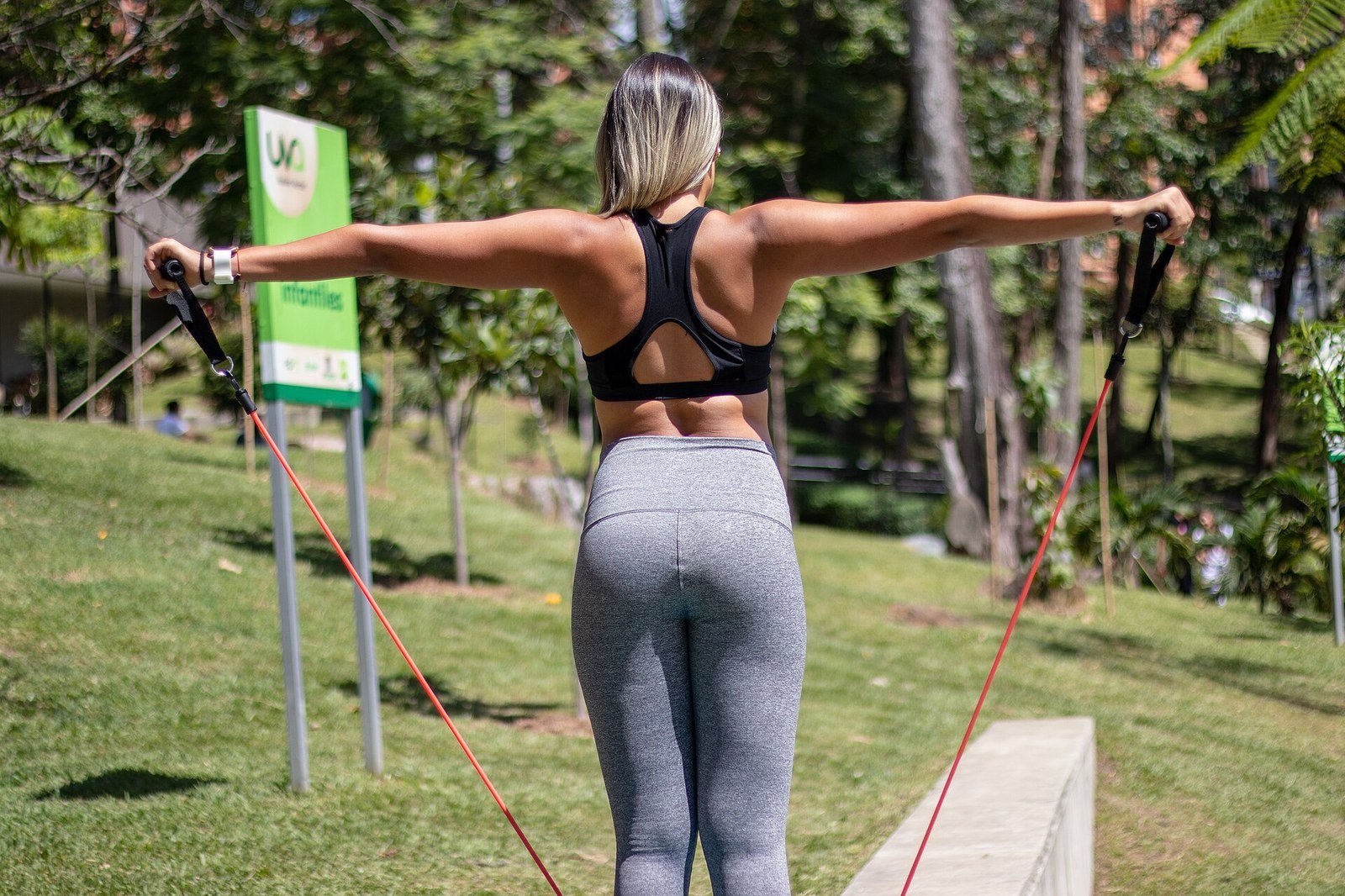
Photo: Wikimedia Commons
Training safely with ankle straps
Start with light weight and controlled reps. The cable pulls from your ankle, so a heavy, jerky kickback stresses the ankle and knee more than the glute.
Keep your hips level and your core braced, and stop the rep before your lower back takes over. If your ankle or knee hurts during a movement, stop — pain is not part of the exercise.
If you have an ankle or knee injury, or pain that keeps coming back, talk to a clinician or physiotherapist before training with straps. This guide is general information only, not medical advice.
Frequently Asked Questions
Do ankle straps build glutes by themselves?
No. A strap connects your ankle to resistance. Glute growth comes from the training you do with that resistance, over time, alongside food and recovery — the strap alone builds nothing.
Should I buy a single cuff or a pair?
A pair, for most lifters. Cable leg work trains one leg at a time, and a pair means both cuffs are ready without re-clipping between sets. Buy a single only if you truly train one side, or you already own one cuff.
Do ankle straps fit any cable machine?
Almost all of them. Standard cable machines use a carabiner-style clip that fits a metal D-ring. If your gym uses an unusual clip, check the fit before buying.
Can I use ankle straps with resistance bands?
Yes. All six picks here clip onto bands with a carabiner-style connector, which makes them a good home-gym option without a cable machine. Bands give less load than a stack, though.
How tight should an ankle strap be?
Snug enough that it does not slide or rotate during a rep, but not so tight that it cuts off circulation or numbs your foot. If your foot tingles or changes colour, loosen it immediately.
Can I do leg curls with an ankle strap?
Yes — standing leg curls are a standard ankle-strap exercise on a low pulley. Keep the weight light, the movement controlled, and your hips still; do not swing the weight up.
Our Pick in One Line
If you want one answer: the DMoose cuff is the best all-round buy because its 8 mm padding suits most lifters — but if you train cable glutes several times a week, the Gymreapers pair is the better buy, since you get two cuffs and a thicker steel D-ring.
For the cable move that pairs best with straps, see our cable pull-through guide, and for the rest of your home setup, see our beginners equipment guide and our resistance bands guide.
As an Amazon Associate, we earn from qualifying purchases made through links on this page, at no extra cost to you.
This guide is research-based: we compared verified buyer reviews and manufacturer specifications, and we did not buy or hands-on test these products. Prices and availability change, so check the listing before ordering. The training information here is general information only, not medical advice — if you have ankle or knee pain or an injury, talk to a clinician first.