

Why a Ski Machine Belongs in a Home Gym

A ski machine copies the cross-country skiing motion: arms drive down on two handles while the legs push and glide, so the work spreads across the arms, core and legs instead of sitting in one muscle group. It is a cardio machine that trains the upper body properly, which is rare — most home cardio machines are legs-only.
The motion is also low impact. There is no foot strike like running and no seated hunch like a bike, and the resistance rises with effort on a fan machine, so a gentle session stays gentle and a hard interval gets hard fast. That makes a ski machine a good second cardio machine next to a rower or a bike, not just a first one.
For a home gym, the appeal is the small footprint. Most ski machines hang on a wall or stand on a narrow base, so they claim a strip of wall rather than a room — our reverse hyper machines guide covers the opposite end of the scale, a heavy machine that owns its corner permanently. A ski machine will not replace strength work, but for full-body cardio in a tight room, nothing else in the guide series does quite what it does.
How We Picked

We scored each ski machine on the details that decide whether it actually gets used, not on brand name alone. A machine that needs a wall you do not have, a stand sold separately that adds real cost, or a monitor that shows nothing useful is a bad buy at any finish, and a spec figure that no record agrees on is not a figure at all.
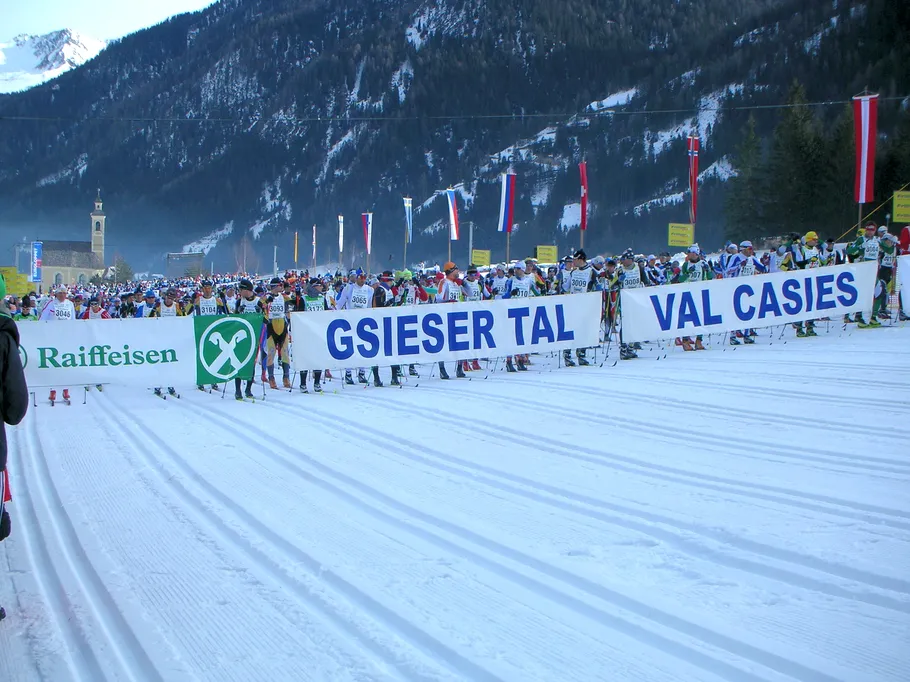
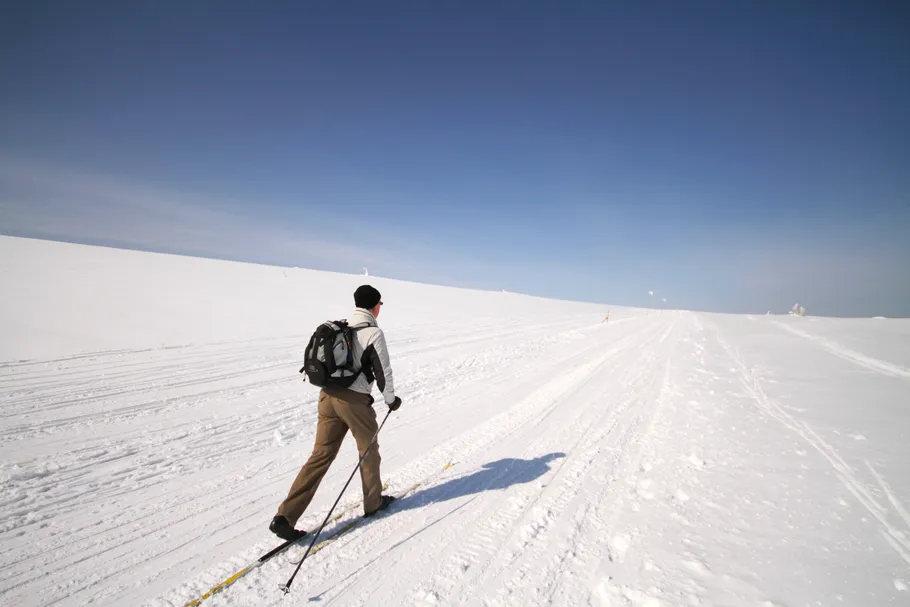
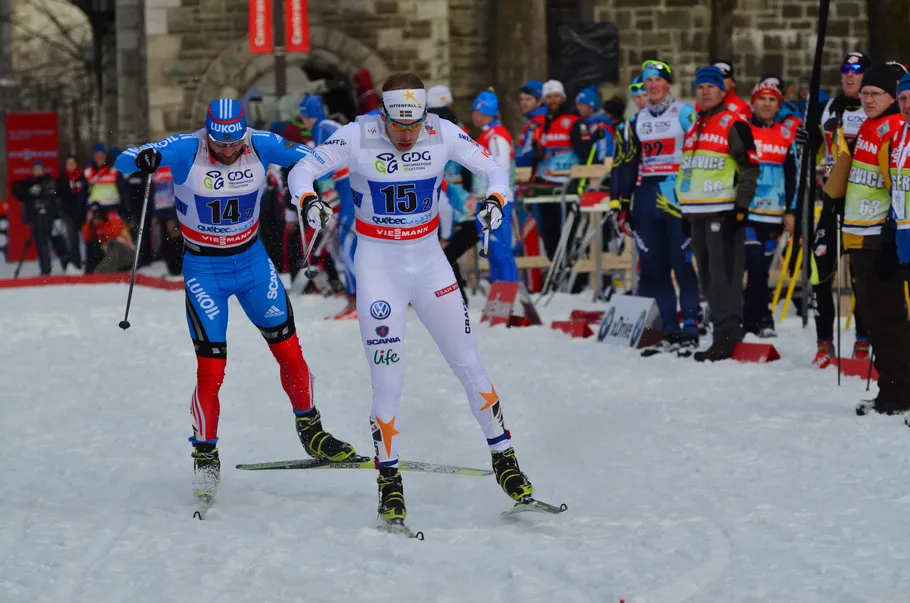
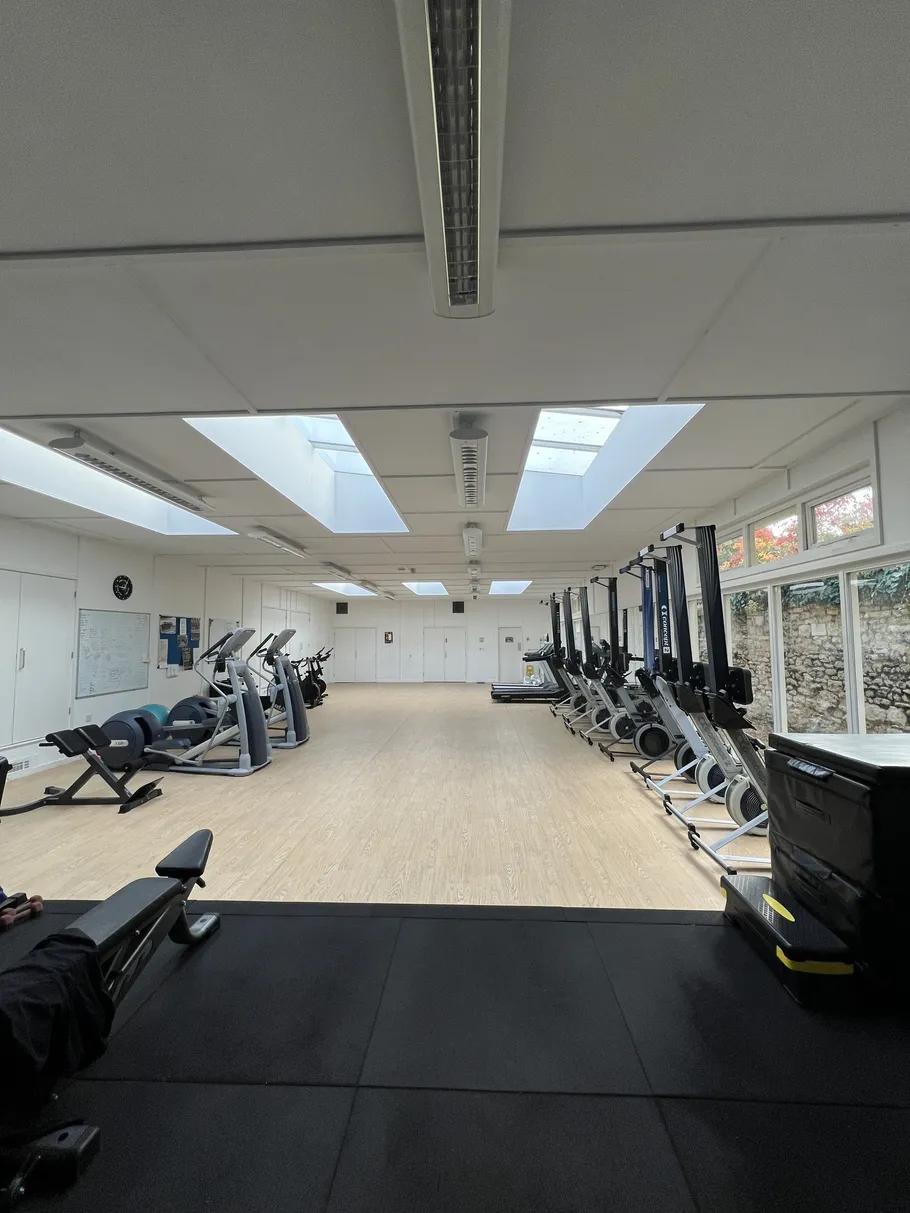
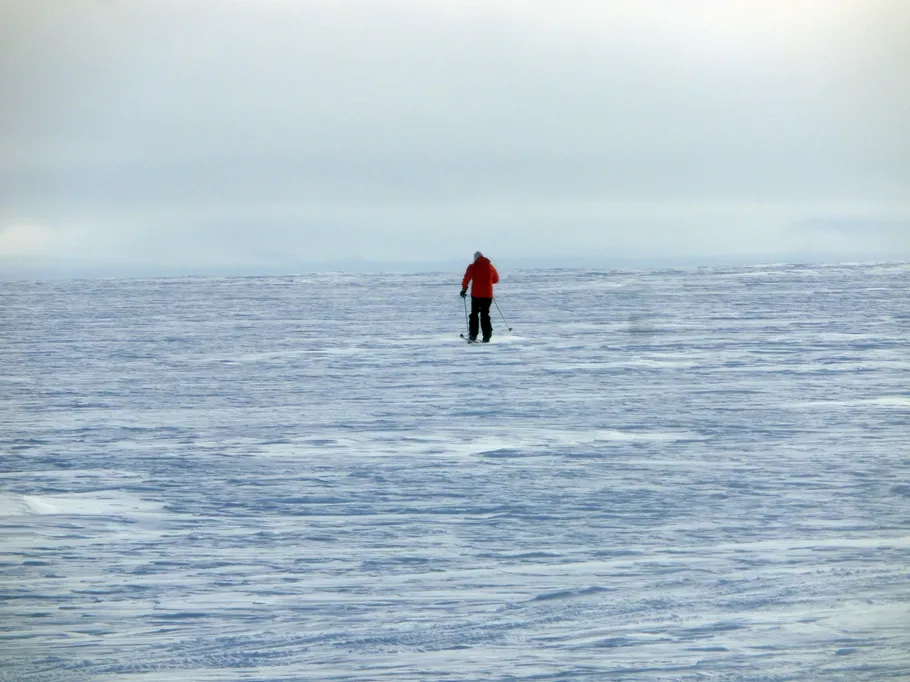
One limit applies to every photo in this guide: no free-license photo of any of the six named ski machines exists, so every figure is an honest generic scene — skiers on snow, groomed trails and gym interiors — captioned as what it actually shows, never presented as a product shot.
- Resistance type — air, magnetic, both or isokinetic fan — and whether the levels are numbered or just a damper
- Mounting and footprint, wall and freestanding figures stated separately, never blended
- Monitor data — pace, watts, strokes and heart-rate compatibility — and whether the figures are maker-stated or thin
- Unit weight and max user weight, with disputed figures flagged rather than averaged
- Included extras — stand, wall kit, strap or wheels — and whether they are in the box or extra
- Honest availability, with conflicting figures stated as conflicts, not resolved by guesswork
EnergyFit Ski-Row was also considered and set aside — it is a ski-plus-row combo machine, a different category from a dedicated ski machine. Marcy Cross Country Ski Trainer was considered and set aside on thin records — a wall-mounted unit with 10 resistance levels and an LCD, but little else grounded. NordicTrack PRO Legacy Skier and ACHIEVER Ski Machine were considered and set aside as classic compact manual machines with thin current availability. BalanceFrom Ski Machine was excluded outright — one review notes it is no longer available and carries no warranty. Our gym flooring and rowing machines guides cover the floor under the machine and the closest cardio cousin to a ski erg.
Comparison
| Machine | Best for | Resistance | Footprint | Standout |
|---|---|---|---|---|
| Concept2 SkiErg | Benchmark pick, PM5 data, lightest settled machine | Air flywheel + spiral damper | 20.5×16 in wall (stand 23.5×50 in) | PM5 monitor, stand sold separately |
| Xebex Air Ski Trainer Eco | Simple air-only trainer, wheels option | Air resistance | 21×16 in wall (stand 30×50 in) | 94 lb, freestanding option with wheels |
| Xebex AirPlus Ski Trainer Smart Connect | Air + magnetic combo, richest monitor | Air + magnetic, 10 + 8 levels | 21×16 in wall (stand 30×50 in) | 500 m pace, watts, strokes on one screen |
| French Fitness FF-SKI | Stand included, strongest settled warranty | Air, 10 damper levels | 23.6×51.9 in | 119 lb, lifetime frame warranty |
| Throwdown HIIT Ski | HIIT intervals, narrowest wall width | Isokinetic fan | 20×16 in wall (platform 23×50 in) | Programmable HIIT console, 52 lb |
| GMWD Ski Exercise Machine | Dual resistance, specs disputed — verify before ordering | Fan + magnetic, 10 levels | 50×23 in (one record) | Wall kit included, weight disputed |
Read the Footprint column with care, because it mixes two different figures, not one like-for-like size. The wall figures are the machine hung on a wall, while the figures in brackets are the freestanding or stand footprints — a machine that looks narrow on the wall can still claim 50 in of floor depth on its stand, so read the pick sections for the full pair before measuring your room. The GMWD footprint rests on a single record, and the Concept2 wall width uses the settled 20.5 in top width, while its height is disputed and stated as such in its section.
On unit weight, the lightest settled machine is the Concept2 at 46 lb for the machine alone, with the floor stand adding 35 lb, and the heaviest settled machine is the French Fitness FF-SKI at 119 lb — the GMWD is excluded from the weight ranking because its records read 46 lb, 114 lb and 122 lb with no agreement. On height, the tallest stated wall figure is the Xebex pair at 86 in, and the narrowest wall width is the Throwdown at 20 in. On user limits, the highest settled figure is 350 lb, shared by the FF-SKI and the Throwdown — the Concept2’s 500 lb figure rests on a single dealer record and is not declared settled. On damper steps, the most on one system is 10, shared by the FF-SKI, the GMWD and the AirPlus air side. No feel winner is declared: no record measures poling feel as a number, so feel is described, not ranked.
Concept2 SkiErg

The Concept2 SkiErg is the benchmark ski machine, and the PM5 monitor is why. It shows time, distance, pace, calories and watts, connects to heart-rate belts over ANT+ and Bluetooth, runs on 2 D-cell batteries, powers itself while you ski, self-calibrates, and feeds the Concept2 Online Logbook rankings — so a home session compares directly with gym and club sessions worldwide.
The machine itself is an air flywheel with a spiral damper on an aluminum frame, 46 lb for the machine alone, with a smartphone cradle and handle hooks included. Wall-mounted it measures 20.5 in wide at the top and 19 in at the bottom, 16 in deep and 85 in tall; the floor stand measures 23.5×50×85 in, and a wide floor stand at 32×52×85 in is also sold.
Three flags must be stated plainly. The height reads 85 in in most records but 83.5 in in one, so the table uses 85 in and the conflict is stated here. The machine weight reads 46 lb in most records but 41 lb in one Australian record, so 46 lb is the table figure and the conflict is stated here. And the floor stand is sold separately, so the machine-only figure is not the full cost or the full footprint — plus the 500 lb max user weight rests on a single dealer record, not a second corroborating record, so confirm it on the listing.
✅ Pros
- PM5 monitor with pace, watts and Online Logbook rankings
- Lightest settled machine here at 46 lb, machine only
- Self-powered during use, no mains socket needed
⚠️ Cons
- Floor stand sold separately — extra cost and floor space
- Height disputed: 85 in vs 83.5 in across records
- 500 lb user limit rests on a single dealer record
Listing check: no confident listing code was found for this machine, so the link above is a tagged search — confirm the 46 lb weight, the 85 in height, the 500 lb user limit and whether the floor stand is included before ordering.
Best for: skiers and CrossFit-style trainees who want the benchmark monitor and comparable workout data.
May not fit: buyers who want the stand in the box, or anyone without 85 in of clear wall height.
Xebex Air Ski Trainer Eco
The Xebex Air Ski Trainer Eco is the straightforward air-only ski trainer in this guide. Wall-mounted it measures 21×16×86 in, and the freestanding option measures 30×50×85 in with wheels available, so it can be moved for a session and parked after — the wheels are the practical point here, since the other stands in this guide do not roll.
At 94 lb net and 109 lb shipping, the Eco is a middle-weight machine: heavier than the Concept2 and Throwdown, lighter than the French Fitness unit. That weight sits on a freestanding frame with wheels, so moving it is a roll, not a lift — but 94 lb still needs a clear path and a firm floor.
One flag must be stated plainly. The monitor details for the Eco are thin in the records checked — the console metrics are not fully specified the way the AirPlus screen is — so no monitor claim is made here beyond air resistance and the stated footprints. Confirm the console readouts on the listing before ordering if monitor data matters to you.
✅ Pros
- Simple air-only resistance, nothing extra to learn
- Freestanding option with wheels for moving and parking
- Settled 94 lb net weight across records
⚠️ Cons
- Monitor metrics thin in the records checked
- Heavier than the Concept2 and Throwdown machines
- Tallest wall figure here at 86 in — check ceiling height
Listing check: no confident listing code was found for this machine, so the link above is a tagged search — confirm the 94 lb weight, the 21×16×86 in wall footprint and the console readouts before ordering.
Best for: buyers who want a simple air-only ski trainer with a wheeled freestanding option.
May not fit: data-focused trainers who want a fully specified monitor, or rooms with low ceilings.
Xebex AirPlus Ski Trainer Smart Connect

The Xebex AirPlus Ski Trainer Smart Connect is the only machine here that combines two resistance systems: 10 levels of air damper resistance plus 8 levels of magnetic resistance, described by Xebex as the first ski trainer to combine both. That pairing matters because air resistance rises with effort while magnetic resistance stays fixed at the chosen level — so intervals can be set precisely instead of only felt.
The monitor is the richest here. A single view shows 500 m pace, time, pulse, watts, calories, distance, strokes and both resistance levels, and it works with 5 kHz chest belts. Wall-mounted it measures 21×16×86 in, freestanding 30×50×85 in with an anti-skid mat and two transport wheels, and most parts arrive pre-assembled.
One flag must be stated plainly. The weight figure needs care: a distributor flyer lists the same 42.6 kg (94 lb) net weight for the AirPlus as for the Eco, which reads like a copied figure rather than a separately measured one — so no settled AirPlus weight is claimed here, and no weight figure for this pick appears anywhere in this guide. Confirm the unit weight on the listing before ordering.
✅ Pros
- Air + magnetic resistance — the only combo here
- Richest monitor: pace, watts, strokes and levels on one screen
- Mostly pre-assembled, with mat and transport wheels
⚠️ Cons
- Unit weight not settled — flyer figure mirrors the Eco
- Tallest wall figure here at 86 in — check ceiling height
- Two resistance systems mean more to learn at first
Listing check: no confident listing code was found for this machine, so the link above is a tagged search — confirm the unit weight, the 21×16×86 in wall footprint and the 5 kHz belt compatibility before ordering.
Best for: data-focused trainers who want magnetic precision plus air feel on one machine.
May not fit: buyers who want the simplest possible machine, or rooms with low ceilings.
French Fitness FF-SKI

The French Fitness FF-SKI is the stand-included air machine here. It measures 84.2×23.6×51.9 in, weighs 119 lb, carries a 350 lb max user weight, and runs on air resistance with 10 adjustable damper levels — a settled, fully specified sheet with no figure left to guess.
The monitor is an LED display showing speed, time, distance and calories — simpler than the PM5 or the AirPlus screen, but complete for steady sessions and intervals. The floor stand is included, so the footprint and the cost in this guide are the whole machine, not the machine plus an extra.
The warranty is the strongest settled figure here: lifetime on the frame, 10 years on parts and 1 year on labor, confirmed on the French Fitness warranty page for cardio equipment. At 119 lb this is also the heaviest settled machine here, so place it where it will live — it is not a machine to shift between sessions.
✅ Pros
- Floor stand included — no separate stand to buy
- Strongest settled warranty: lifetime frame, 10-year parts
- Fully settled spec sheet, 350 lb user weight
⚠️ Cons
- Heaviest settled machine here at 119 lb
- Simpler LED monitor — no watts or stroke data stated
- 51.9 in deep, so it claims real floor space
Listing check: no confident listing code was found for this machine, so the link above is a tagged search — confirm the 119 lb weight, the 84.2×23.6×51.9 in size and the warranty terms before ordering.
Best for: buyers who want a stand included, a settled spec sheet and the strongest warranty here.
May not fit: small rooms, buyers who want watts and stroke data, or anyone who moves equipment often.
Throwdown HIIT Ski
The Throwdown HIIT Ski is the interval machine here. It uses isokinetic fan resistance with fan dampening and an HMPE cord drive, measures 16 in deep × 20 in wide × 85 in high on the wall, and 50 in deep × 23 in wide × 85 in high with its platform, at 95 lb in the platform form and 52 lb for the machine alone.
The console is the point. A HIIT console with Bluetooth and ANT+ offers programmable time, distance, calorie, time-interval and calorie-interval programs, and it is self-powered, so no socket is needed. The frame is heavy-gauge welded steel and aluminum with a matte black powder coat, and the max user weight is 350 lb.
Two flags must be stated plainly. The model code differs across records — the current listing reads 9-4890 while the manuals read 9-4710 — so confirm the exact model on the listing before ordering, since the two codes describe the same machine family but the listing must match. And the comparison chart states floor stands are included for easy circuit repositioning, so confirm whether the base unit or the platform variant is meant on the listing you buy.
✅ Pros
- Programmable HIIT console with Bluetooth and ANT+
- Narrowest wall width here at 20 in
- Self-powered, no socket needed, 350 lb user weight
⚠️ Cons
- Model code conflict: 9-4890 listing vs 9-4710 manuals
- Confirm whether floor stands are included on your listing
- Platform form is 95 lb — heavier than the machine alone
Listing check: no confident listing code was found for this machine, so the link above is a tagged search — confirm the 52 lb machine weight, the 20×16 in wall size, the model code and the stand inclusion before ordering.
Best for: interval trainers who want programmed HIIT sessions on the narrowest wall footprint here.
May not fit: buyers who want a simple steady-state machine, or anyone unsure which model code their listing carries.
GMWD Ski Exercise Machine

The GMWD Ski Exercise Machine is the dual-resistance pick with the most to verify. It pairs fan and magnetic resistance with 10 adjustable levels and a spiral damper, and its LED monitor shows time, distance, watts, calories, strokes and total strokes — a fuller readout than the FF-SKI screen at this end of the guide.
The wall kit and vertical bracket are included, and one record claims a 79-inch maximum stride length. One record also lists dimensions of 50×23×86 in with a 350 lb max user weight — the table uses that footprint with the one-record flag, because no second record confirms the same three figures together.
The weight conflict must be stated plainly, because it is the largest in this guide. One roundup states 46 lb, another record states 114 lb, and a third roundup states 122 lb — three figures that cannot all describe the same machine the same way, so no settled GMWD weight is claimed anywhere in this guide, and no weight figure for this pick appears in the table or the superlatives. If the listing cannot settle the weight, treat this pick as unverified and choose a settled machine instead.
✅ Pros
- Fan + magnetic dual resistance with 10 levels
- Full monitor: watts, strokes and total strokes
- Wall kit and vertical bracket included
⚠️ Cons
- Weight disputed three ways: 46 vs 114 vs 122 lb
- Footprint and user weight rest on single records
- 79-inch stride claim rests on one record only
Listing check: no confident listing code was found for this machine, so the link above is a tagged search — confirm the unit weight first, then the 50×23×86 in size and the 350 lb user limit, before ordering.
Best for: buyers who want dual resistance and a full monitor and are willing to verify the listing figures first.
May not fit: anyone who wants a settled spec sheet, or buyers who order without checking the weight.
How to Choose

Four decisions separate a good ski-machine buy from a disappointing one, and they matter in this order: how the resistance feels, where the machine will live, what the monitor tells you, and how loud the fan is. Get the first two right and the rest is preference.
Resistance and Feel

Air resistance is the classic ski-machine feel: the harder you pole, the harder it pushes back, because the flywheel spins faster. The Concept2, the Eco and the FF-SKI all work this way, and the damper only changes the feel — it does not cap the effort, so a strong pull is always available.
Magnetic resistance is the controlled feel: the AirPlus magnetic side and the GMWD magnetic side hold a fixed level no matter how hard you pull, which suits steady sessions and precise intervals. If you train mostly by feel and effort, air alone is enough; if you train by numbers and repeatable levels, the AirPlus combo is the pick that gives both.
Wall Mount or Floor Stand
Wall mounting is the smallest footprint here: 20 to 21 in wide and 16 in deep, with heights from 84 to 86 in, so the machine claims a strip of wall and almost no floor. It needs a solid wall, though — a stud wall with proper fixings, not plasterboard alone — and the height must clear your ceiling with room for the handles at the top of the pull.
A floor stand costs floor space and, on the Concept2, extra money, but it moves the machine anywhere and suits renters or rooms without a suitable wall. Measure both figures before ordering: the wall strip plus the pull-back space in front, or the stand footprint plus the same pull-back space — the machine is useless if the handles hit the wall behind you.
Monitor and Tracking

Monitors split this guide into three tiers. The PM5 and the AirPlus screens show pace, watts and strokes, so sessions compare directly; the FF-SKI and GMWD screens show the basics plus calories and, on the GMWD, stroke totals; and the Eco console is thinly specified in the records checked, so it is not ranked on monitor data at all.
Heart-rate compatibility is the second monitor question. The PM5 takes ANT+ and Bluetooth belts and the AirPlus takes 5 kHz belts; the Eco, FF-SKI and GMWD state no belt compatibility in the records checked, and the Throwdown console lists Bluetooth and ANT+ without stating heart-rate belt support — so if you train by heart rate, confirm belt support on the listing rather than assuming it.
Noise and Neighbours

Fan machines make noise, and the harder the interval, the louder the fan. Air-only machines and the fan side of the dual machines all move air, so a ski machine suits a garage, a spare room or a gym corner better than a bedroom shared wall — and early-morning intervals will be heard through a thin wall.
Magnetic resistance is the quieter option, because the magnetic side adds load without moving more air — one more reason the AirPlus combo suits flats and shared houses. For fan machines, a mat underneath cuts vibration into the floor, and our air bikes guide covers the same fan-noise question on the closest comparable machine.
Safety

Ski machines look gentle and load the shoulders hard by design, so treat the setup with care. Joint support matters here too — our knee sleeves guide covers sleeves that keep the knees warm and supported through the leg drive that sits inside every poling session.
1. Check the wall fixings or the stand feet before every session — a ski machine pulls toward you on every stroke.
2. Inspect the cords and handles for fraying or cracks, and replace worn parts before they fail mid-pull.
3. Keep the pull path clear in front of and behind the machine — the handles travel a long arc.
4. Start with light, short sessions — the poling motion tires the shoulders faster than most new users expect.
5. Keep the back straight and the core braced — do not hunch over the handles as fatigue sets in.
6. Use a mat under a freestanding machine — a heavy unit plus hard poling marks bare floors.
7. Park the handles after training and keep walkways clear, so loose cords do not trip anyone.
Ski-machine training is general fitness information, not medical advice. Stop and seek professional advice if you feel sharp joint pain, dizziness or shortness of breath, or if you have a knee, hip, back or shoulder condition.
Frequently Asked Questions
What is a ski machine?
A cardio machine that copies the cross-country skiing motion: two handles driven down by the arms while the legs push, so the arms, core and legs all work. It is sometimes called a ski erg, after the Concept2 SkiErg that set the standard.
Do I need a wall or a stand?
Either works, but the choice changes the cost and the footprint. Wall mounting needs a solid wall and 84 to 86 in of height; a floor stand needs about 50 in of floor depth and, on the Concept2, a separate purchase. The FF-SKI includes its stand, so its figure is the whole machine.
Air, magnetic or both?
Air for feel — resistance rises with effort — magnetic for control, with fixed levels that repeat exactly. The AirPlus and the GMWD offer both; the other four picks are air or fan only, so choose the combo only if repeatable levels matter to your training.
How loud is a fan ski machine?
Audible, and louder on hard intervals, because the fan moves more air as effort rises. Magnetic resistance is quieter. A mat underneath cuts floor vibration, and a garage or spare room suits a fan machine better than a shared bedroom wall.
How much space do I really need?
A wall strip 20 to 21 in wide and 16 in deep, plus pull-back space in front — or a stand footprint around 23 to 30 in wide and about 50 in deep, plus the same pull-back space. Tape the full area, including the handle arc, on the floor before ordering.
What should I pair with a ski machine?
Recovery tools, because hard poling tightens the shoulders and hips. After a ski session, easy stretching plus a roller session helps more than another set — our foam rollers guide covers the tools for that.
Our Pick: Start Here

Start with the Concept2 SkiErg if you want the benchmark machine with the PM5 monitor and comparable workout data, and accept that the floor stand is a separate purchase. Choose the Xebex AirPlus Ski Trainer Smart Connect if you want air plus magnetic resistance with the richest monitor here, and step to the French Fitness FF-SKI only when a stand in the box and the strongest settled warranty matter most. Pick the Throwdown HIIT Ski only when programmed HIIT sessions matter most, the Xebex Air Ski Trainer Eco only when a simple air-only machine with wheels suits you, and the GMWD Ski Exercise Machine only when you have verified its disputed weight on the listing first.
As an Amazon Associate, this site earns from qualifying purchases made through links in this article, at no extra cost to you.
Product details are based on manufacturer and retailer research at the time of writing, and specifications may change — confirm weights, dimensions, capacities and warranties with the seller before ordering.