

Why a Reverse Hyper Machine Belongs in a Home Gym
A reverse hyper machine works the back of the body in a way no other home-gym machine copies. You lie face down on a pad with your hips at the edge, strap your feet to a swinging arm, and let your legs swing down and back up behind you. The torso stays still and the legs move — the opposite of a back-extension bench, where the legs stay put and the torso moves.
That leg-swing pattern is the whole point. It loads the glutes and hamstrings through a long arc, and at the bottom of the swing the spine gets a gentle traction pull as the legs hang — lifters call this decompression, and it is the reason the machine has a loyal following among people with tired backs. It is a single-purpose machine, though: it does one movement, it is heavy, and it claims a permanent corner of floor.
For a home gym, the appeal is simple. A reverse hyper pairs with the barbell work you already do — our deadlift bars guide covers the barbell pull that sits next to this machine in a posterior-chain session — and it needs no power, no wall mounting and no spotter. It will not replace squats, deadlifts or back extensions, but for a lifter whose back work has stalled, it trains a gap nothing else in the room trains.
How We Picked
We scored each reverse hyper machine on the details that decide whether it actually gets used, not on brand name alone. A machine that is too big for the room, too lightly built for a swinging load, or fitted with a pad that does not suit your body is a bad buy at any finish, and a spec figure that no record agrees on is not a figure at all.
One limit applies to every photo in this guide: no free-license photo of any of the six named reverse hyper machines exists, so every figure is an honest generic scene — people training, loading plates and stretching, plus gym interiors — captioned as what it actually shows, never presented as a product shot.
- Footprint and folded size, and whether the machine fits a home gym without a dedicated room
- Swing load and loadable sleeve length, and whether the figures are maker-stated, disputed or unstated
- Frame steel and unit weight, and whether the machine stays put under a swinging load
- Pad size and handle adjustability, and whether the fit suits different body sizes
- Included extras — strap, collars, band pegs — and whether they are in the box or extra
- Honest availability, with conflicting figures stated as conflicts, not resolved by guesswork
Rogue rack-mounted RH-2M was also considered and set aside — it needs a rack to mount to, so it is not a standalone machine. EliteFTS reverse hyper was considered and set aside on a single thin record, too thin to rank fairly. Body-Solid GHYP345 was considered and set aside on thin records — 2×3 in 12-gauge steel with a hip rest adjustable from 38 to 47.5 in in 5 increments, but little else grounded. Dynasty Fitness DPB407 was considered and set aside as a single-source commercial unit. Our gym flooring and glute ham developer guides cover the floor under the machine and the GHD movement this guide’s combo pick overlaps.
Comparison
| Machine | Best for | Swing load | Footprint | Standout |
|---|---|---|---|---|
| Rogue Z Hyper | Heaviest settled build, full-size dedicated hyper | 700+ lb | 51.5×43 in | Bolt-together frame, 10.5 in loadable per side |
| Rogue RH-2 Reverse Hyper | Made-in-USA dedicated hyper, strap + collars in the box | 700+ lb | 52.5×40 in | Welded step, OSO collars included |
| Titan Fitness H-PND | Heavy 3×3 in frame, band-ready | Not stated | 52.25×41 in | 8-position handles, band cross brace |
| Titan Fitness Economy H-PND | Budget Titan hyper, lighter frame | Disputed | 55×39 in | 8-position handles, rubber feet |
| Westside Scout Hyper | Folding hyper, smallest footprint | 176 lb swing-arm (300 lb user) | 60×27.5 in | Folds to 8 in deep at feet |
| Bells of Steel Reverse Hammer 2.0 | GHD + reverse hyper combo | 600 lb (scope unstated) | 74×47 in | Largest footprint here, storage + band pegs |
Read the Swing load column with care, because it mixes different scopes, not one like-for-like figure. The two Rogue cells are maker-stated swing-arm capacities of 700+ lb of steel plates. The Titan H-PND cell reads Not stated because the maker does not disclose a loadable capacity, and the 700 lb figure in one roundup belongs to the Economy model, not this one. The Economy cell reads Disputed because one roundup states a 700 lb load weight capacity while another states 550 lb loadable plus 300 lb user weight. The Scout cell states the current maker spec of 176 lb swing-arm weight next to a 300 lb max user weight, not a combined total. And the Reverse Hammer cell reads 600 lb with its scope unstated in the records checked, so it is not ranked against the swing-arm figures.
On footprint, the largest machine here is the Reverse Hammer at 74×47 in, and the smallest in-use footprint is the Scout at 60×27.5 in, which also folds smallest. On unit weight, the heaviest settled unit is the Z Hyper at 323 lb, and the lightest settled unit is the Scout at 94.5 lb on the current maker spec. On loadable sleeve length, the longest is a tie at 10.5 in per side for the Z Hyper and RH-2, against 10 in for both Titan models and 5.25 in for the Scout, with the Reverse Hammer excluded from that ranking because its loadable length is not stated in the records checked. No settled heaviest-swing-load winner is declared: the two Rogue machines both read 700+ lb, but they are different makers’ figures for different machines, not a ranked contest.
Rogue Z Hyper
The Rogue Z Hyper is the heaviest settled build here. A 3×3 in 11-gauge steel frame, 51.5×43 in footprint, 323 lb unit weight, 10.5 in loadable per side, 700+ lb swing-arm capacity, a 35×24×3 in pad, handles adjustable from 2 to 14 in from the pad edge, a bolt-together design, an optional base crossmember for bands, and a strap plus collars included.
That settled spec sheet is the practical point. Every figure here is stated consistently across the maker’s records, so there is nothing disputed to work around except one weight figure — the machine is exactly the full-size dedicated hyper, heavy enough to stay put under a swinging load, with the longest loadable sleeves tied with the RH-2.
One flag must be stated plainly. The unit weight reads 323 lb in the maker spec but 320 lb in one review text, so the table uses the maker figure and the conflict is stated here, not hidden. The bolt-together design also means assembly takes longer than a welded frame, and at 323 lb this is a machine you place once, not one you shift around the room.
✅ Pros
- Heaviest settled build here at 323 lb, stays put under load
- 10.5 in loadable per side, tied longest here
- Strap and collars included, band crossmember available
⚠️ Cons
- Unit weight conflict: 323 lb maker spec vs 320 lb in one review
- Bolt-together assembly takes longer than a welded frame
- 323 lb is a place-once machine, not one you move often
Listing check: no confident listing code was found for this machine, so the link above is a tagged search — confirm the 323 lb weight, the 51.5×43 in footprint and the 700+ lb swing-arm capacity on the listing before ordering.
Best for: lifters who want the heaviest settled dedicated hyper and have a permanent corner for it.
May not fit: small rooms, buyers who move equipment often, or anyone who wants a folding machine.
Rogue RH-2 Reverse Hyper
The Rogue RH-2 Reverse Hyper is the made-in-USA dedicated pick. A 2×3 in steel legs and swing arm with a 2×2 in base, 52.5×40 in footprint, 206 lb unit weight, 10.5 in loadable per side, 700+ lb of steel plates on the swing arm, a 3 in thick cornered-edge pad, a welded-on step, and a Spud Inc. Hyper Strap plus OSO Mighty Axle Collars included.
That included kit is the practical point. The strap and the collars are the two extras a reverse hyper needs on day one, and both come in the box here — so the machine is ready to swing as delivered, with no extra order. The welded step is a small detail that matters every session, because climbing onto a pad at hip height without one is awkward.
One flag must be stated plainly. The maker does not state a user weight capacity for this machine in the records checked, so none is claimed here — do not assume a figure from the 700+ lb swing-arm capacity, which is a plate figure, not a body-weight figure.
✅ Pros
- Strap and OSO collars included, ready to swing as delivered
- Welded-on step for easy mounting
- Made in USA, 10.5 in loadable per side
⚠️ Cons
- No user weight capacity stated by the maker
- 206 lb still needs a permanent spot
- 52.5×40 in footprint is a full corner of floor
Listing check: no confident listing code was found for this machine, so the link above is a tagged search — confirm the 52.5×40 in footprint, the 10.5 in loadable sleeves and the included strap and collars on the listing before ordering.
Best for: lifters who want a dedicated hyper with the strap and collars already in the box.
May not fit: buyers who need a stated user weight capacity, or a folding machine.
Titan Fitness H-PND
The Titan Fitness H-PND is the heavy Titan pick. A 3×3 in 11-gauge steel frame, 52.25×41 in footprint, 44.5 in tall, 250 lb unit weight, 10 in loadable sleeves, 6 in handles adjusting to 8 positions in 2 in increments, and a strap, 2 spring collars and a cross brace for resistance bands included.
That handle adjustment is the practical point. Eight handle positions in 2 in steps mean lifters of different sizes can set the grip where it suits them, instead of adapting to one fixed bar — and the band cross brace adds a second way to load the swing without more plates, which matters when sleeve room runs out.
One flag must be stated plainly. The maker does not disclose a loadable weight capacity for this machine in the records checked, so the table reads Not stated — and the 700 lb figure in one roundup belongs to the Economy model below, not this one, so it must not be transferred across.
✅ Pros
- 3×3 in 11-gauge steel frame, 250 lb unit weight
- 8-position handles in 2 in increments
- Band cross brace, strap and spring collars included
⚠️ Cons
- Loadable capacity not stated by the maker
- 250 lb to move and place
- 44.5 in tall — check ceiling and sight lines
Listing check: no confident listing code was found for this machine, so the link above is a tagged search — confirm the 52.25×41 in footprint, the 10 in loadable sleeves and the 8-position handles on the listing before ordering.
Best for: lifters who want a heavy Titan frame with adjustable handles and band loading.
May not fit: buyers who need a stated loadable capacity, or a lighter machine.
Titan Fitness Economy H-PND
The Titan Fitness Economy H-PND is the budget Titan pick. A 2×2 in steel tube frame, 55×39 in footprint and 44.5 in tall, 147 lb unit weight, 10 in loadable sleeve, 6 in handles with 8 position options, rubber feet, and a 2 in step.
That lighter frame is the practical point. At 147 lb this is far easier to place than its 250 lb Titan sibling, while keeping the same 10 in sleeves and the same 8-position handle idea — so a lifter on a budget still gets the adjustable fit, just in a lighter-duty tube frame.
One flag must be stated plainly. The capacity is disputed: one roundup states a 700 lb load weight capacity, while another states 550 lb loadable plus 300 lb user weight — so the table reads Disputed, and no settled capacity winner is declared for this machine.
✅ Pros
- 147 lb — far easier to place than the bigger Titan
- 8-position handles, same idea as the H-PND
- Rubber feet and a 2 in step included
⚠️ Cons
- Capacity disputed: 700 lb vs 550 lb loadable + 300 lb user
- 2×2 in tubing is lighter-duty than the H-PND’s 3×3 in frame
- 55 in long — the longest Titan footprint here
Listing check: no confident listing code was found for this machine, so the link above is a tagged search — confirm the 55×39 in footprint, the 10 in loadable sleeve and the handle positions on the listing before ordering.
Best for: lifters who want a Titan hyper at a lighter weight and a lower tier.
May not fit: buyers who need a settled capacity figure, or the heaviest frame.
Westside Scout Hyper
The Westside Scout Hyper is the folding pick. A Louie Simmons and Westside Barbell design, 60×27.5 in footprint unfolded, folding to 8 in deep at the feet, a 27.5×21.5×2 in pad, 5.25 in loadable posts, 300 lb max user weight, 176 lb max swing-arm weight, a hyper strap and spring collars included, 6 in handles, and rubber feet plus a rubber-covered step.
That folding frame is the practical point. Every other machine here claims its corner permanently, while the Scout folds down after training — so a lifter in a shared room, a garage that still parks a car, or a small home gym gets a real reverse hyper without giving up the floor all week.
Two flags must be stated plainly. First, the unit weight reads 94.5 lb in the current maker spec against 86 lb in older records, so the table uses the current figure. Second, the folded depth reads two ways — 8 in deep at the feet against 13 in total folded depth — so measure both before planning storage. An older 600 lb total max figure also conflicts with the current 300 lb user plus 176 lb swing-arm spec, so the current spec figures are the ones used here.
✅ Pros
- Folds away — the only folding machine here
- Smallest in-use footprint at 60×27.5 in
- Hyper strap and spring collars included
⚠️ Cons
- Shortest loadable posts here at 5.25 in
- 176 lb swing-arm limit is the lowest settled figure here
- Unit weight and folded depth both conflict across records
Listing check: no confident listing code was found for this machine, so the link above is a tagged search — confirm the folded depth, the 5.25 in loadable posts and the 300 lb user weight on the listing before ordering.
Best for: lifters who need a reverse hyper that folds away after training.
May not fit: heavy swing loads, long plate stacks, or buyers who want a permanent heavy frame.
Bells of Steel Reverse Hammer 2.0
The Bells of Steel Reverse Hammer 2.0 is the combo pick. A 2-in-1 glute ham developer plus reverse back extension machine, 74×47×42 in, 280 lb unit weight, 2×3 in steel, diamond-plate footplates and step-ups, weight storage pegs, band pegs, a vertically adjustable footplate, and a limited lifetime frame warranty.
That two-in-one design is the practical point. One machine covers both the reverse-hyper swing and GHD work — glute-ham raises, back extensions and sit-ups — so a lifter who wants both movements buys one footprint instead of two, with storage pegs and band pegs already on the frame.
Two flags must be stated plainly. First, this is a combo machine, not a dedicated reverse hyper — buyers who want a dedicated unit should pick one of the five machines above instead. Second, the 600 lb max weight figure comes from a review, and its scope — swing load versus total — is unstated in the records checked, so the table flags it as scope-unstated and it is not ranked against the swing-arm figures. The loadable length is also not stated in the records checked, so it is excluded from the loadable ranking.
✅ Pros
- Two machines in one — reverse hyper plus GHD
- Storage pegs and band pegs on the frame
- Limited lifetime frame warranty
⚠️ Cons
- Not a dedicated reverse hyper — a combo machine
- 600 lb figure’s scope unstated in the records checked
- Largest footprint here at 74×47 in
Listing check: no confident listing code was found for this machine, so the link above is a tagged search — confirm the 74×47 in footprint, the combo functions and the warranty terms on the listing before ordering.
Best for: lifters who want reverse-hyper work plus GHD work from one machine.
May not fit: buyers who want a dedicated hyper, or a small footprint.
How to Choose
Choosing a reverse hyper comes down to four questions: what footprint fits your room, what swing load matches your plates, what pad and handles fit your body, and whether the machine folds away or claims its corner. Answer those four and the six above sort themselves quickly.
Footprint and Space

Footprint decides whether the machine fits at all. The six here run from the Scout at 60×27.5 in to the Reverse Hammer at 74×47 in — and every one of them also needs swing clearance behind the pad, because the legs travel past the machine’s back edge. Tape the footprint on the floor, then add room for the swing, before ordering.
Height matters too. The Titan models stand 44.5 in tall and the Reverse Hammer 42 in, so check ceiling height and sight lines, especially under a low garage ceiling or a basement beam. A machine that fits the floor but blocks a door swing or a light is still a bad fit.
Swing Load and Plates
Swing load decides how far the machine grows with you. The two Rogue machines state 700+ lb of plates on the swing arm, the Scout states 176 lb, and the Titan H-PND states nothing — so compare the column’s notes, not just its numbers, and do not transfer a figure from one model to another.
Check your plates against the sleeves before ordering. Loadable length runs from 10.5 in per side on the Rogue machines to 5.25 in on the Scout, and the Reverse Hammer’s loadable length is not stated — so count your widest plate stack against the sleeve, and remember that band loading through a cross brace or band pegs adds resistance without more plates.
Pad and Handles
Pad size decides comfort on every set. The Z Hyper’s 35×24×3 in pad is the biggest stated here, the Scout’s 27.5×21.5×2 in pad is smaller and thinner, and the RH-2’s 3 in thick cornered-edge pad sits between — a bigger, thicker pad suits a bigger lifter, while a smaller pad suits a smaller frame.
Handles decide fit. The Titan models adjust to 8 positions in 2 in steps, the Z Hyper’s handles adjust from 2 to 14 in from the pad edge, and the Scout’s 6 in handles are fixed — so if two lifters of different sizes share the machine, adjustable handles are worth more than any other single feature.
Foldable vs Stationary
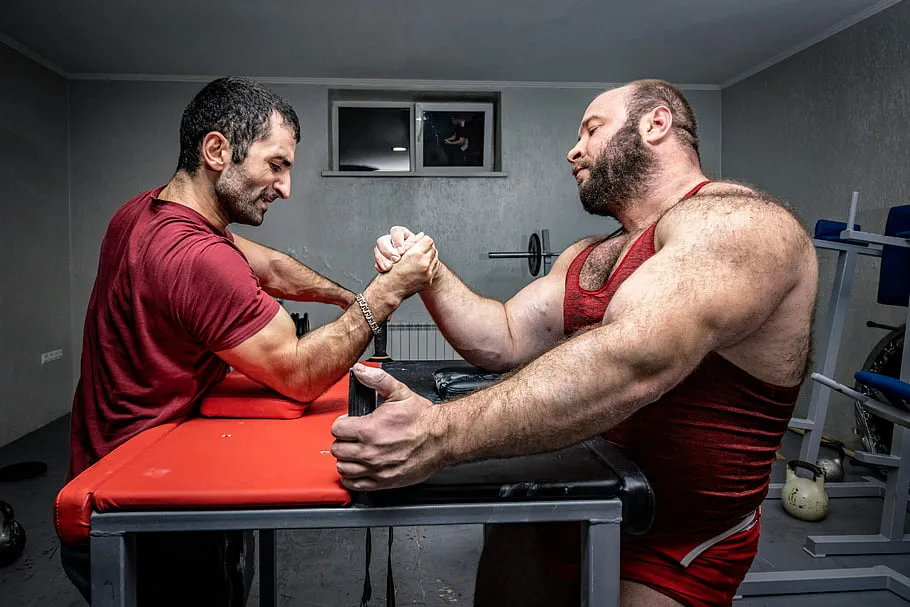
Folding decides whether the machine earns its floor all week or only during training. The Scout is the only folder here, collapsing to 8 in deep at the feet — so a shared room, a garage that still parks a car, or a small home gym all point to it, while a dedicated room points to a heavier stationary frame.
Do not buy a folder expecting a heavy frame’s feel. Folding joints trade some rigidity for storage, and the Scout’s 176 lb swing-arm limit reflects that trade — so if your swing loads are already heavy, a stationary machine like the Z Hyper or RH-2 is the honest choice, even if it claims its corner permanently.
A reverse hyper swings the legs behind a prone torso, while a hyperextension bench moves the torso over fixed legs — the two machines train the back of the body differently, so they complement rather than replace each other. Our hyperextension benches guide covers the bench side of that pair, if your room fits both.
Safety
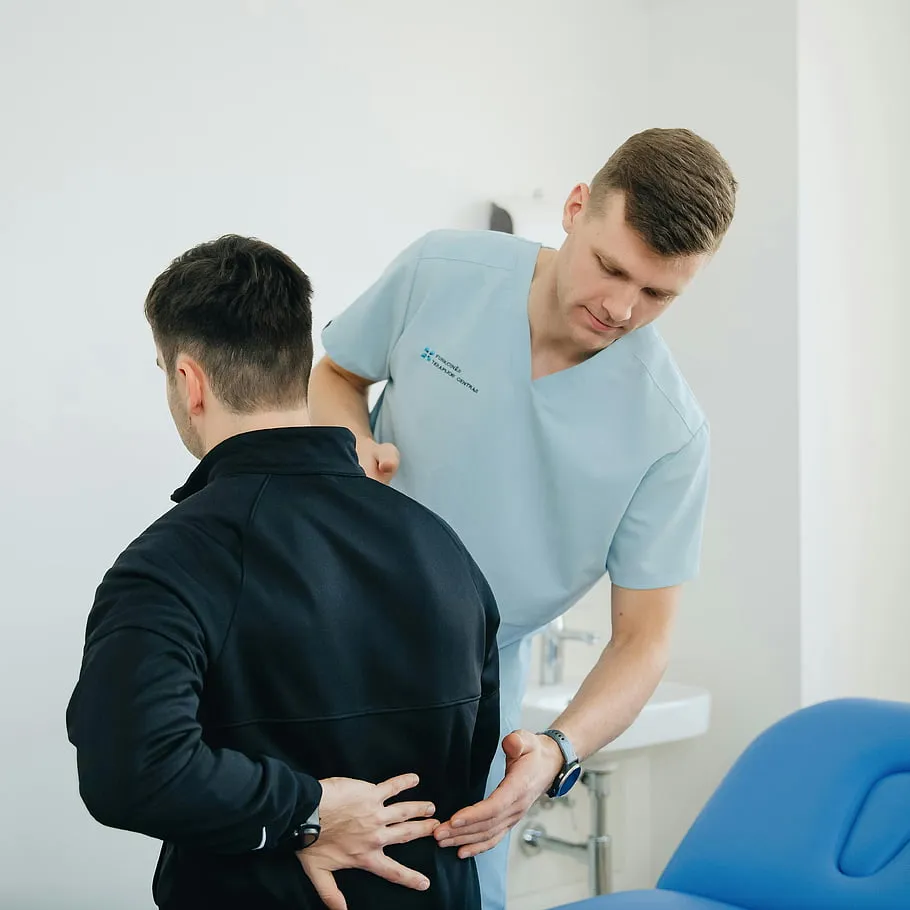
Reverse hyper work looks gentle and loads the back by design, so treat the setup with care. Joint support matters here too — our knee sleeves guide covers sleeves that keep the knees warm and supported through the heavy leg work that usually sits next to reverse-hyper sessions.
1. Learn the swing with no added weight first — a pendulum changes balance, and plates make a bad swing worse.
2. Check the strap, every collar and every pin before each set, and re-check after any slip.
3. Keep the floor around the swing path clear — the legs travel past the machine’s back edge.
4. Use a platform or mats under the machine — a 300 lb machine plus a swinging load dents bare floors.
5. Never jerk at the top of the swing or round the back under load — control the pendulum, do not chase height.
6. Keep both hands on the handles and both feet secured in the strap — a slipped foot mid-swing twists the hips.
7. Park the swing arm after training, fold the Scout if you own it, and keep walkways clear, so the machine does not trip anyone.
Reverse hyper training is general fitness information, not medical advice. Stop and seek professional advice if you feel sharp back pain, dizziness or shortness of breath, or if you have a back, hip or knee condition.
Frequently Asked Questions
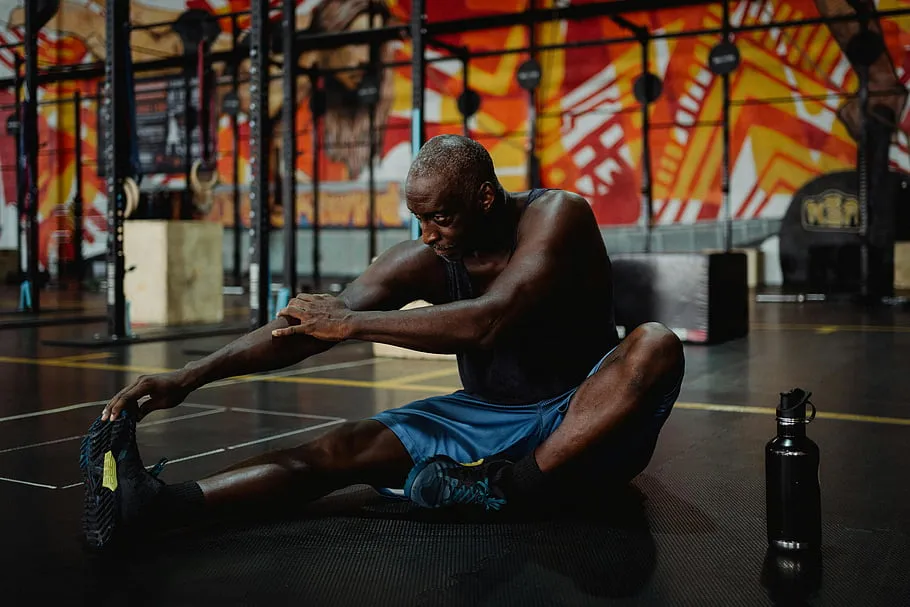
What is a reverse hyper machine?
A machine where you lie face down on a pad and swing your legs up and down behind you against a loaded arm. The torso stays still and the legs move — the opposite of a back-extension bench, where the legs stay put and the torso moves.
Does a reverse hyper replace back extensions?
No. The two movements load the back of the body differently — one swings the legs, the other moves the torso — so they complement each other rather than replacing each other. Many lifters use both in the same session.
How much weight should I start with?
No added weight at all. Learn the swing with body weight first, then add small plates — the pendulum feel changes fast once weight is on the arm, and a controlled light swing teaches more than a heavy wild one.
Do I need Olympic plates?
Yes for the machines here — the sleeves are 2 in Olympic-style posts, with loadable lengths from 5.25 in on the Scout to 10.5 in per side on the Rogue machines. Count your widest plate stack against the sleeve before ordering, and confirm the sleeve size on the listing.
Will a reverse hyper fit a small home gym?
Only the Scout folds away — the other five claim their corners permanently, from about 52×40 in up to 74×47 in, plus swing clearance behind the pad. Tape the footprint plus the swing path on the floor before ordering.
What should I pair with a reverse hyper?
Recovery tools, because swinging work tightens the back and hips. After a reverse-hyper session, easy stretching plus a roller session helps more than another set — our foam rollers guide covers the tools for that.
Our Pick: Start Here

Start with the Rogue RH-2 Reverse Hyper if you want a dedicated machine with settled specs and the strap and collars already in the box. Choose the Titan Fitness Economy H-PND if the budget matters most and the disputed capacity does not bother you, and step to the Rogue Z Hyper only when the heaviest settled build matters more than floor space and moving a 323 lb machine. Pick the Westside Scout Hyper only when folding away matters most, and the Bells of Steel Reverse Hammer 2.0 only when you want the GHD combo rather than a dedicated hyper.
As an Amazon Associate, this site earns from qualifying purchases made through links in this article, at no extra cost to you.
Product details are based on manufacturer and retailer research at the time of writing, and specifications may change — confirm weights, dimensions, capacities and warranties with the seller before ordering.