

Your shoes are the only gear that touches both you and the floor on every rep. 👟 A pair that rolls, slips, or pinches will distract you through every set — while a stable, well-fitting pair just disappears and lets you train.
This guide covers six workout shoes that suit home gym training: lifting, circuits, classes and short treadmill bursts. Every pick is a cross-training shoe sold on Amazon US, and every link below is tagged so you can check the current offer.
If you are building out the rest of your kit, our cable machines guide is the previous guide in this series, and our workout socks guide, sports bras guide, workout leggings guide, workout shorts guide and workout shirts guide cover the rest of the outfit, while our power racks guide covers the big kit. For raised-heel lifting shoes, see our weightlifting shoes guide — a different category from the cross trainers picked here.
How We Picked These Workout Shoes
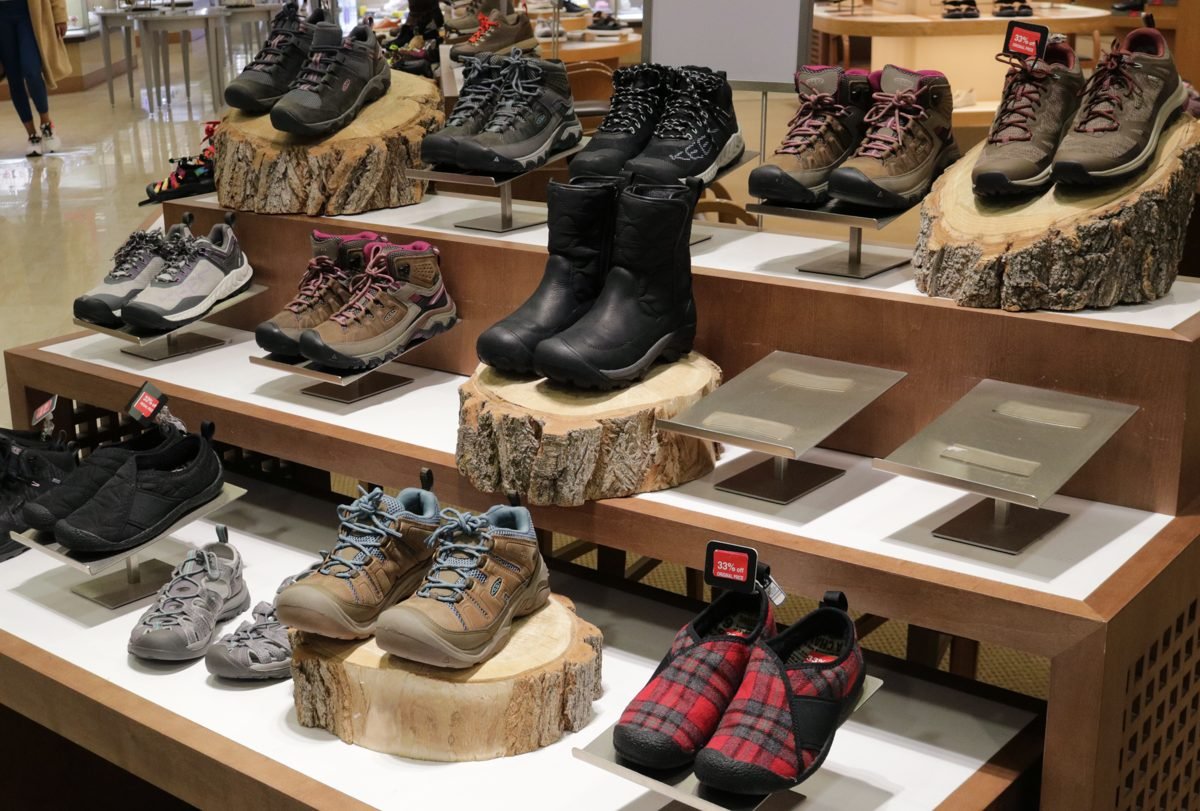
We researched workout shoes that are genuinely sold on Amazon US, with listing records we could verify — not roundups copied from other sites. Each pick below names its model or style code so you can match the exact shoe.
This is a research-based guide. We did not wear-test these shoes, and we claim no hands-on results. What we did do is check each listing’s build, drop, outsole, fit notes and size range, and flag where variant sprawl, a single-source record, or an old crawl needs a second look before you order.
One warning that applies to the whole guide: the listing crawls behind these picks range from 1 day old to about 315 days old, so confirm the current offer, exact variant and availability on the listing before ordering. The Nike pick carries the oldest record in the guide — about 315 days — so treat its details as the ones most in need of a fresh check.
A few names did not make the cut, and we name them honestly:
- Nike Free Metcon — its listing record showed no featured offers, so it was left out rather than listed on hope.
- PUMA Fuse 3.0 — the newer Fuse model, but no confident US listing record was found for it, so it was left out rather than guessed at.
- Reebok Nano X (original) — superseded by the Nano X4 picked below, so it was left out rather than listed twice.
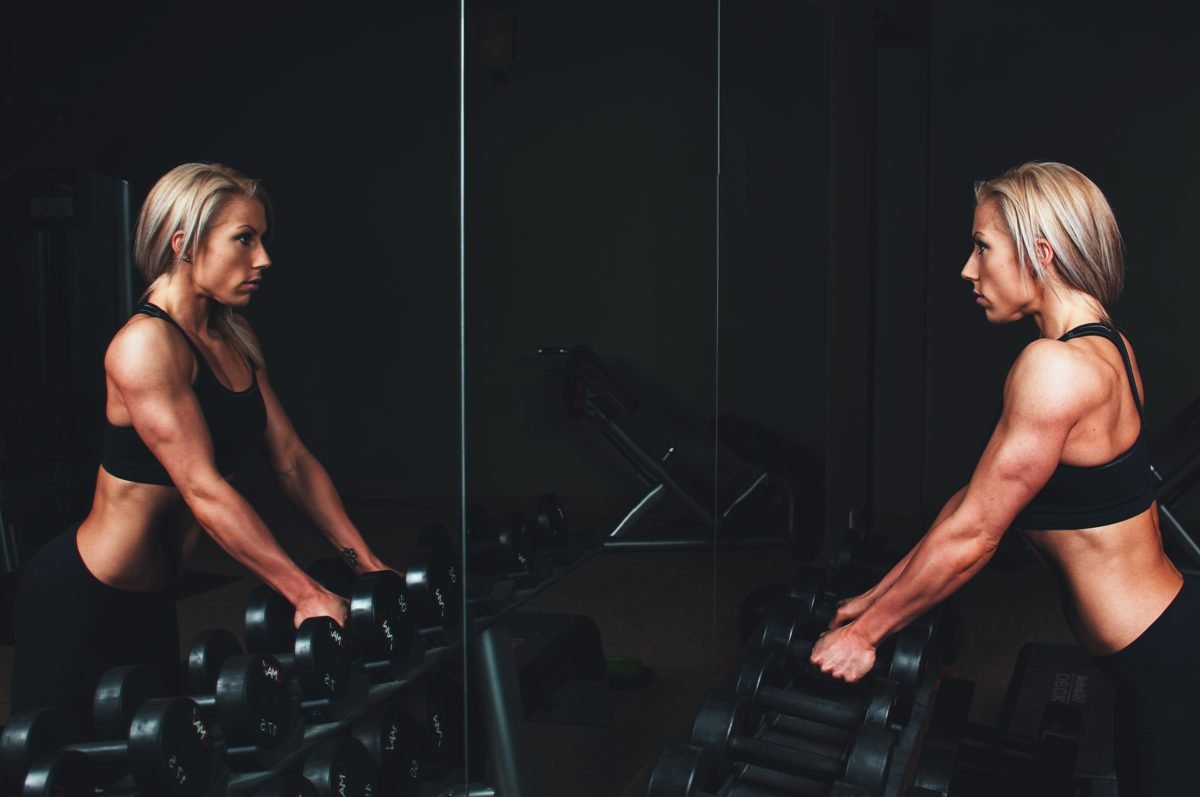
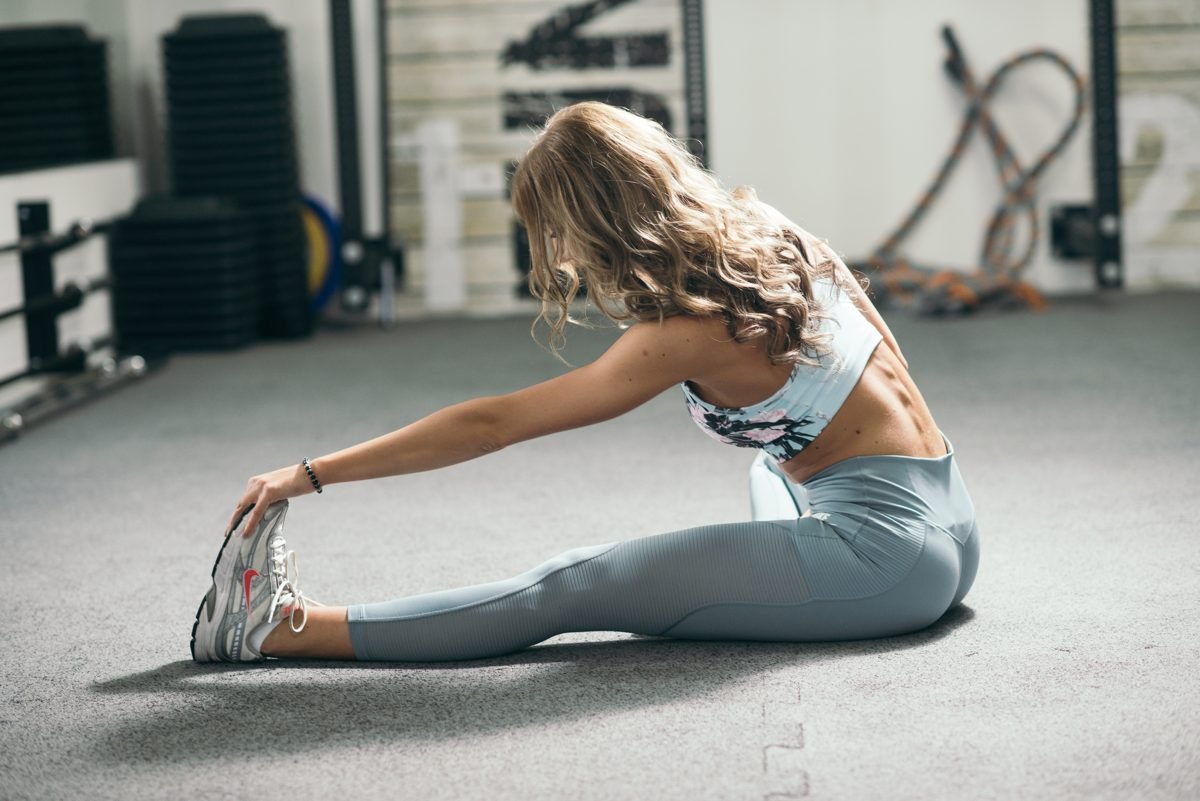
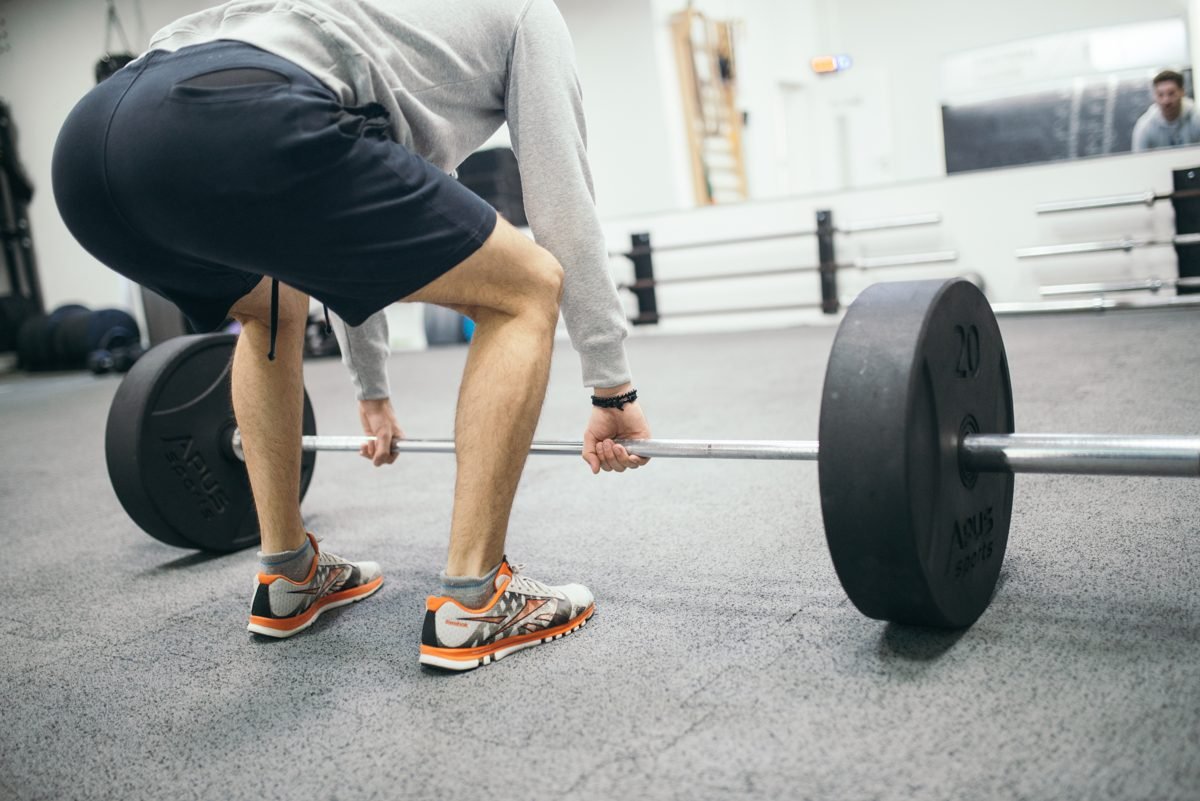
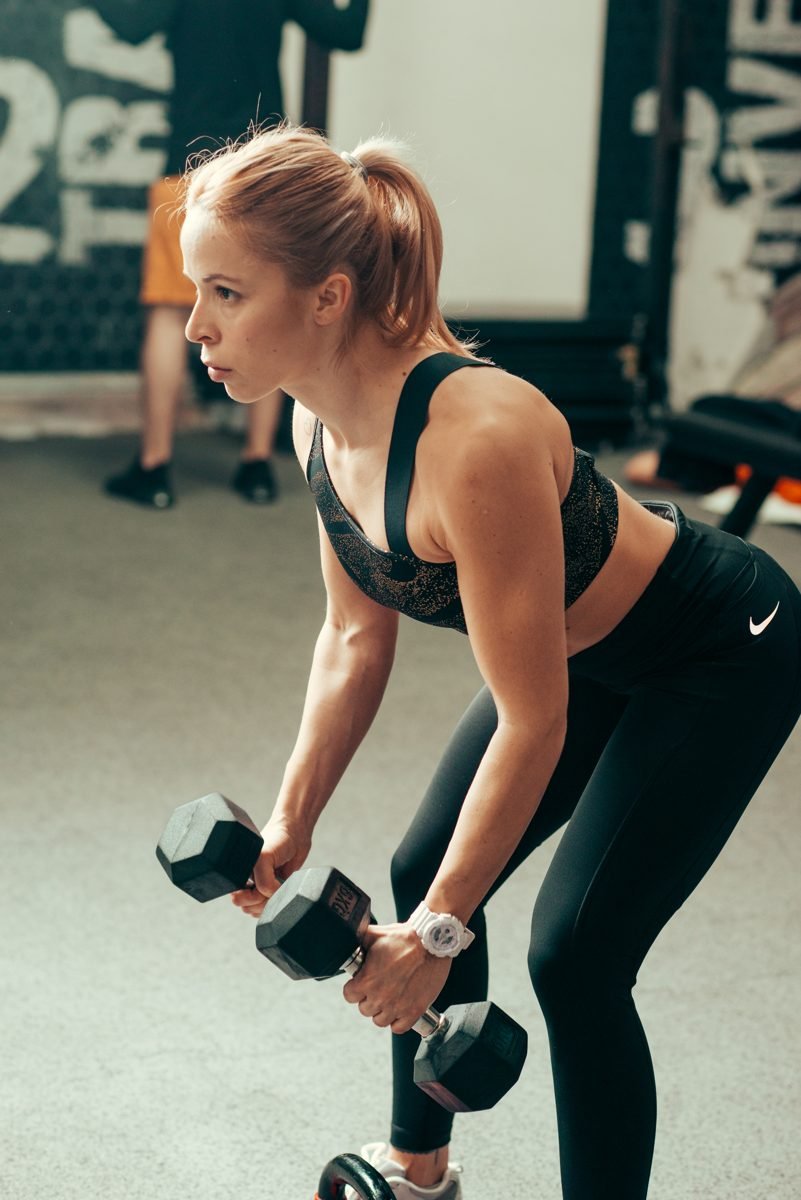
One honest limit up front: no shoe builds fitness, prevents injury, or fixes bad form. A good shoe gives you a stable base and removes distraction from training — it does not do the training for you. The photos in this guide are generic training and shoe scenes, not photos of the named shoes.
Quick Comparison
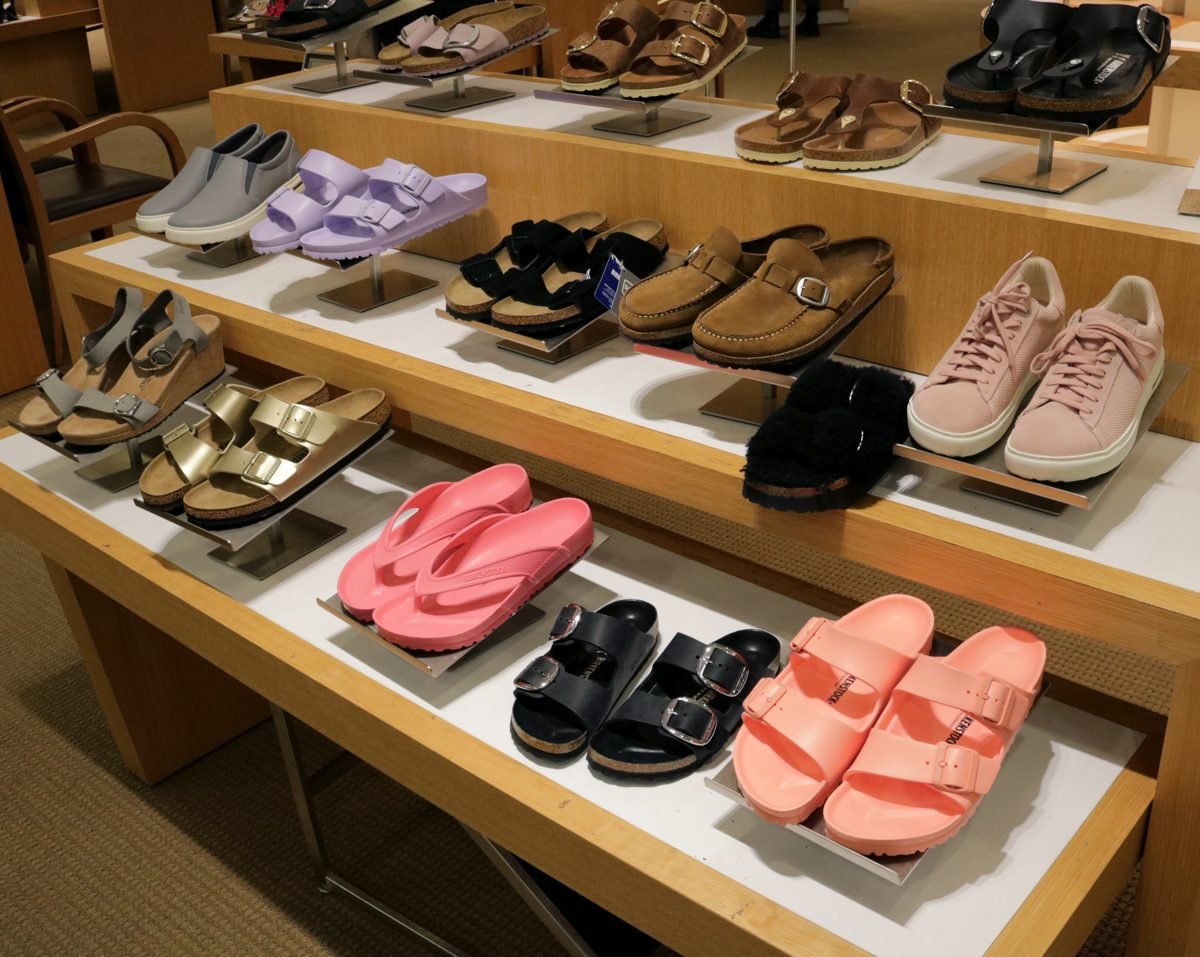
| Shoe | Best for | Build | Note |
|---|---|---|---|
| Nike Metcon 9 | Stability lifting | Mesh upper, rope-climb grip wrap | Oldest record — check the listing fresh |
| Reebok Nano X4 | All-round classes and lifting | Flexweave upper, Lift and Run Chassis | Freshest record in the guide |
| NOBULL Outwork | Flat, roomy strength shoe | SuperFabric upper, 4 mm drop | Single-source listing record |
| New Balance Minimus TR v2 | Low, close-to-ground feel | Lace-up cross trainer | Not the BOA-closure version |
| Under Armour TriBase Reign 5 | HIIT and circuit lockdown | UA WARP upper, TriBase ground contact | Fits slightly large, per user reports |
| PUMA Fuse | Technical strength training | Original Fuse, style 194424-01 | Single-source listing record |
Two things matter more than brand here: what you mainly train, and how the shoe fits your foot. A lifting-first trainer and a class-first trainer should not buy the same shoe just because both are called “training shoes”.
1. Nike Metcon 9 Training Shoes
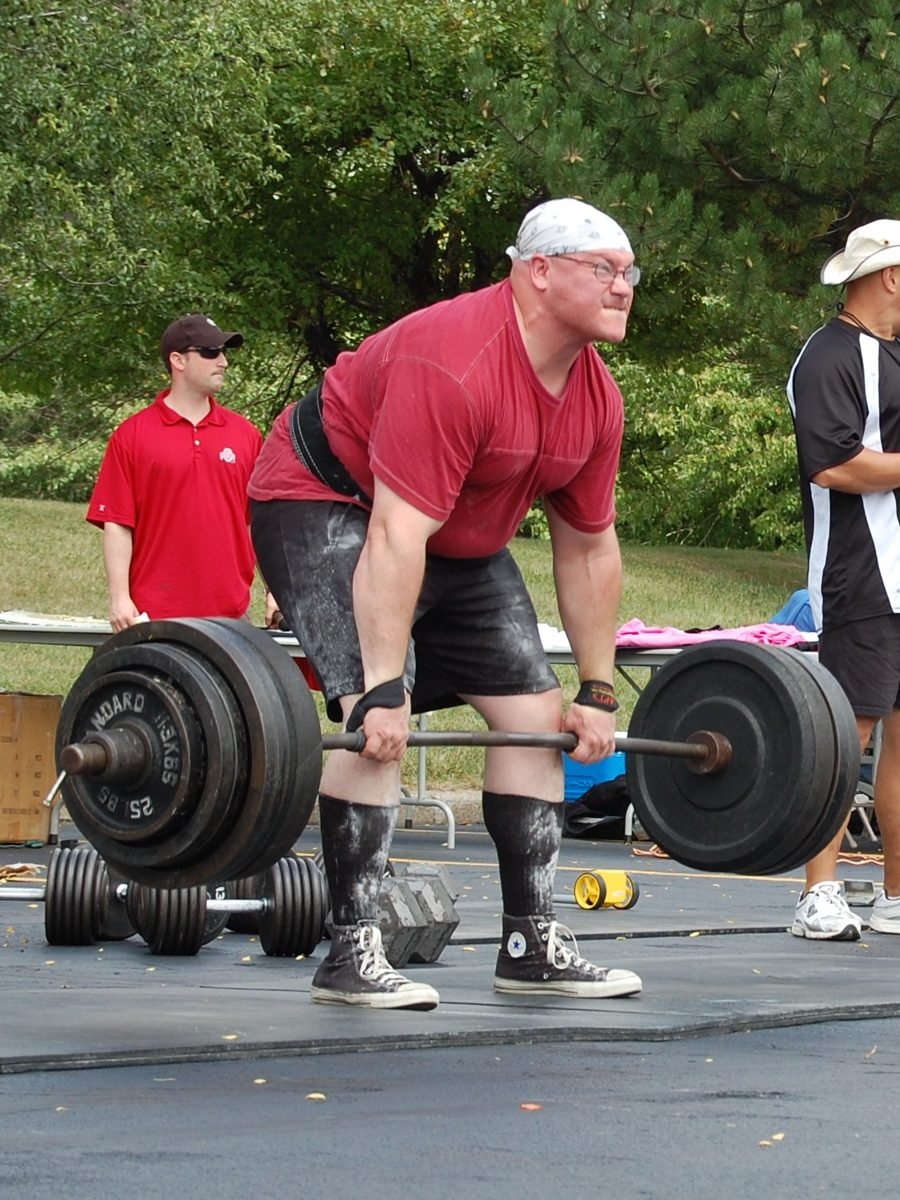
The Nike Metcon 9 is the stability-first pick in this guide. The verified listing is the men’s shoe, style DZ2617 — the Black/White-Anthracite-Smoke Grey colourway in size 9. Nike sells the Metcon 9 in many colour and size combinations, each with its own listing, so match the style code before you order.
The build is made for stability work: a lightweight mesh upper with textured outer layers in wear-prone areas, grippy rubber wrapping around the arch for rope climbs, and a rubber tread for traction. The listing record describes it as a shoe for lunges, deadlifts and similar stability work — not for running or long walks.
✅ Pros
- Stable base for lunges, deadlifts and strength work
- Grippy rubber wrap around the arch for rope climbs
- Textured outer layers in wear-prone areas
- Lightweight mesh upper for airflow
⚠️ Cons
- Not made for running or long walks
- Many colour and size listings to sort through
- Oldest listing record in this guide
Check the Nike Metcon 9 on Amazon
⚠️ Confirm the current offer before ordering: this pick’s listing record is about 315 days old, the oldest in this guide, and Nike lists the Metcon 9 under many colour and size variants. A women’s variant also exists, so confirm you are on the men’s DZ2617 listing in the colour and size you want.
Best for: lifters who want a stable, flat trainer for home gym strength work.
May not fit: runners, or anyone wanting one shoe for long walks.
2. Reebok Nano X4 Training Shoes
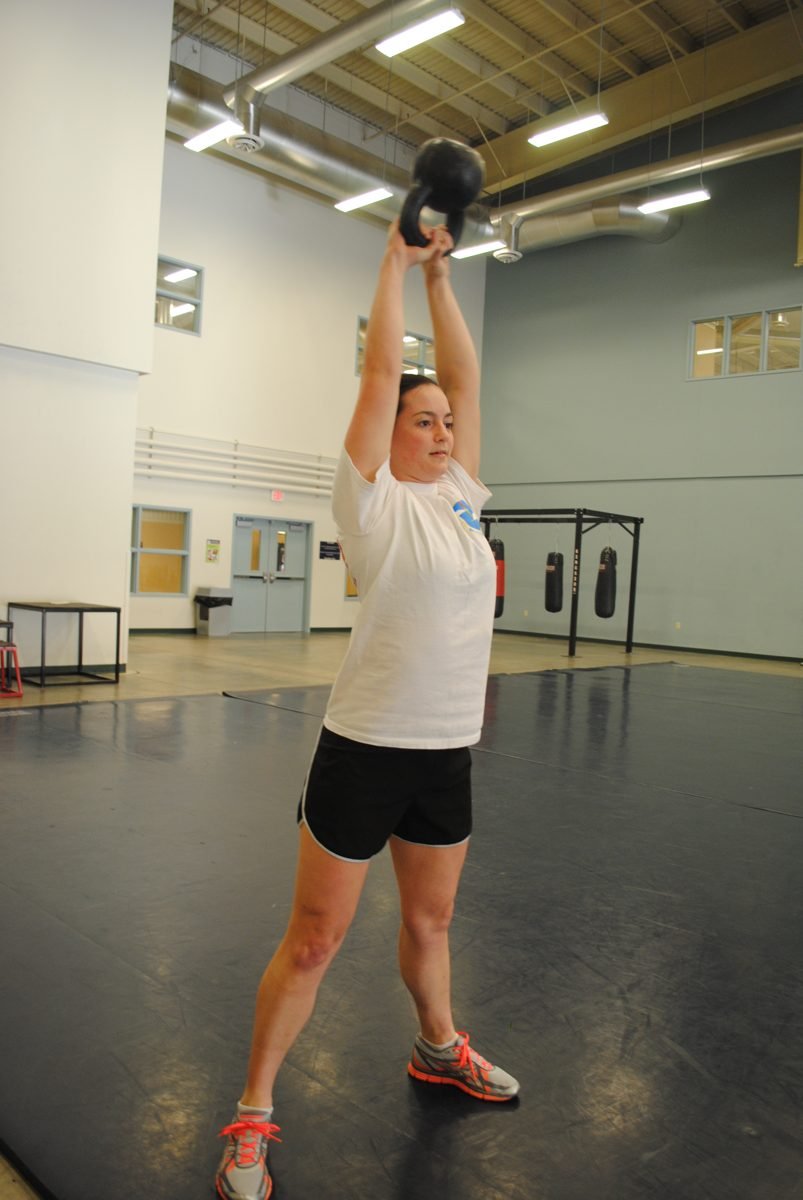
The Reebok Nano X4 is the all-rounder of this guide. The verified listing is the men’s shoe, model MCP47 — the Black/Pure Grey/Reebok Lee 3 colourway. It carries the freshest listing record in the guide, crawled 1 day ago at research time.
The build mixes a Flexweave woven textile upper with a midfoot ventilation panel, Reebok’s Lift and Run Chassis system, and a TPU heel clip — a setup aimed at stability through multidirectional movement, which is exactly what circuits and classes demand. Two honest notes from user reports: some wearers found the fit tight at first, and this is not primarily a long-distance running shoe.
✅ Pros
- Versatile across lifting, circuits and classes
- Flexweave upper with a midfoot ventilation panel
- Lift and Run Chassis plus TPU heel clip for stability
- Freshest listing record in this guide
⚠️ Cons
- Some wearers report a tight fit at first
- Not primarily designed for long-distance running
- Many colour variants to sort through
Check the Reebok Nano X4 on Amazon
⚠️ Confirm the current offer before ordering: check the colour and size on the listing, and note that a sibling variant in Black/Footwear White/Orange Flare is listed separately.
Best for: home gym trainers who mix lifting, circuits and classes in one shoe.
May not fit: long-distance runners, or anyone who dislikes a snug first fit.
3. NOBULL Outwork Training Shoes
The NOBULL Outwork is the flat-and-roomy pick in this guide. The verified listing is the men’s shoe in Black White Gum, size 9. Listing records also name it as a 2025 Men’s Health Best Trainer — a named award, not a claim we tested ourselves.
The build is deliberately low and flat: a one-piece SuperFabric upper, a wider toe box, a carbon rubber outsole with a circular tread pattern, a 4 mm heel-to-toe drop, an EVA midsole and a molded anatomical insole. At 11 oz it sits in the middle of this guide on weight, and the flat profile is the point — this is a shoe for feeling the floor, not floating above it.
✅ Pros
- Flat, low-to-the-ground profile for strength work
- Wider toe box for toe splay during lifts
- One-piece SuperFabric upper for durability
- Carbon rubber outsole with circular tread pattern
⚠️ Cons
- Low 4 mm drop will not suit runners wanting cushion
- Single-source listing record — verify before ordering
- Flat build gives less underfoot padding than cushioned trainers
Check the NOBULL Outwork on Amazon
⚠️ Confirm the current offer before ordering: this pick’s listing record comes from a single source, so double-check the colour, size and availability on the live listing.
Best for: lifters who want a flat, roomy shoe for strength sessions.
May not fit: runners wanting cushion, or anyone who prefers a higher-drop shoe.
4. New Balance Minimus TR v2 Cross Trainers
The New Balance Minimus TR v2 is the low-profile pick in this guide. The verified listing is the men’s lace-up shoe in Black/Magnet/White, size 7 M. Read that carefully: this pick is the lace-up version, not the BOA-closure version, which is listed separately.
The idea behind the Minimus line is a cross trainer that keeps the foot closer to the ground than a typical running shoe — for lifting, classes and general training rather than road miles. If you like feeling the floor under your feet but want more structure than a barefoot-style shoe, this is the middle ground in this guide.
✅ Pros
- Low-profile build keeps the foot close to the ground
- Suits lifting, classes and general training
- Lace-up fit you can adjust across the foot
- Less bulk than a typical running shoe
⚠️ Cons
- Easy to confuse with the BOA-closure version
- Less cushion than a road running shoe
- Low profile will not suit runners wanting a soft ride
Check the New Balance Minimus TR v2 on Amazon
⚠️ Confirm the current offer before ordering: make sure the listing you open is the lace-up version, not the BOA-closure version, and check the size on the listing.
Best for: trainers who like a low, close-to-the-ground feel for mixed home gym work.
May not fit: anyone wanting heavy cushion, or shoppers who specifically want a BOA closure.
5. Under Armour TriBase Reign 5 Training Shoes
The Under Armour TriBase Reign 5 is the lockdown pick in this guide. The verified listing is the men’s shoe in Black/Black/Jet Gray, size 8.5 D (M). One flag from the listing record itself: the seller on that crawl was a third-party seller, so confirm the seller on the live listing before ordering.
The build centres on ground contact: a UA WARP upper for lockdown, a full-length Micro G foam midsole, and the TriBase triangular base that maximises ground contact, plus an external heel clip and an internal heel counter, a flat heel and a low-to-the-ground stance. Two honest findings from RunRepeat’s research: the shoe fits slightly large (20 votes), and it sits on the stiff side — it does not bend easily for planks and lunges.
✅ Pros
- UA WARP upper locks the midfoot down
- TriBase base maximises ground contact
- Flat heel and low build for stable lifting
- Heel clip and counter add rearfoot support
⚠️ Cons
- Fits slightly large, per user reports — check the size chart
- Stiff build that does not bend easily for planks and lunges
- Listing record showed a third-party seller — confirm the seller
Check the Under Armour TriBase Reign 5 on Amazon
⚠️ Confirm the current offer before ordering: check the seller on the live listing, and note that the newer TriBase Reign 6 is a separate model — do not mix its details into this pick.
Best for: HIIT and circuit trainers who want lockdown and maximum ground contact.
May not fit: anyone needing a flexible shoe for planks and lunges, or shoppers who skip the size chart.
6. PUMA Fuse Training Shoes
The PUMA Fuse is the technical strength pick in this guide — the original Fuse, style 194424-01, in Black. Listing records describe it as the most technical strength trainer in its line, built for the toughest workouts. That is the maker’s positioning, not a result we measured.
Two flags matter here. First, this pick’s listing record comes from a single source, so verify the listing live. Second, the seller on that crawl was a third-party seller, so confirm the seller before ordering. And do not confuse this shoe with the newer PUMA Fuse 3.0, style 37810718 — a separate model whose features must not be read into this pick.
✅ Pros
- Built as a technical strength trainer
- Positioned for the toughest workouts
- Original Fuse design, distinct from the 3.0
⚠️ Cons
- Single-source listing record — verify before ordering
- Listing record showed a third-party seller — confirm the seller
- Easy to confuse with the newer Fuse 3.0
⚠️ Confirm the current offer before ordering: verify the style number 194424-01 on the listing, confirm the seller, and do not buy the Fuse 3.0 by mistake if you want this original model.
Best for: strength-focused trainers who want a technical lifting shoe.
May not fit: runners, or anyone who actually wants the newer Fuse 3.0.
How to Choose Workout Shoes
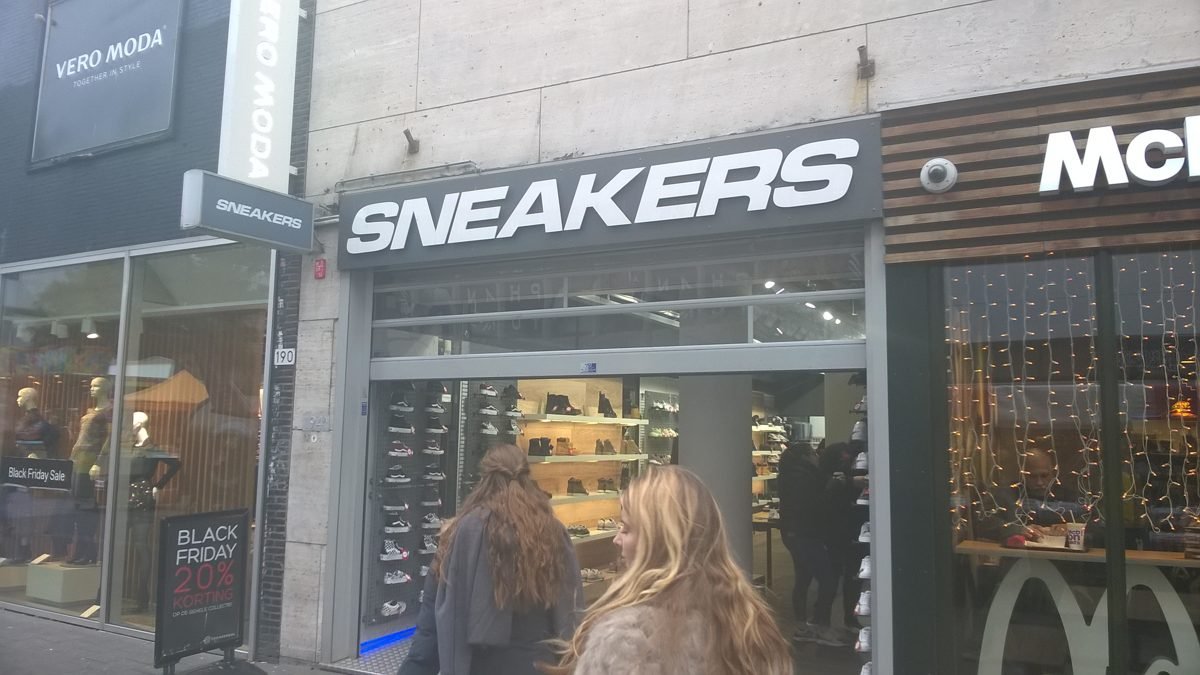
Start with what you mainly do. 🏋️ If most sessions are lifting, buy for a flat, stable base first and treat cushion as a bonus. If most sessions are classes or circuits, buy for multidirectional stability and a fit that stays put when you move sideways.
Then check the size chart for that exact brand. Brands disagree on sizing — the Under Armour pick in this guide fits slightly large, while some Reebok Nano X4 wearers found the first fit tight. Your size in one brand is not a promise in another.
Give new shoes a break-in window. Wear them for a few short sessions before judging them, and keep the box until you are sure — a shoe that pinches on day one sometimes settles, and a shoe that feels perfect in the shop sometimes does not survive a full circuit.
Stability vs Cushion: What Matters More?
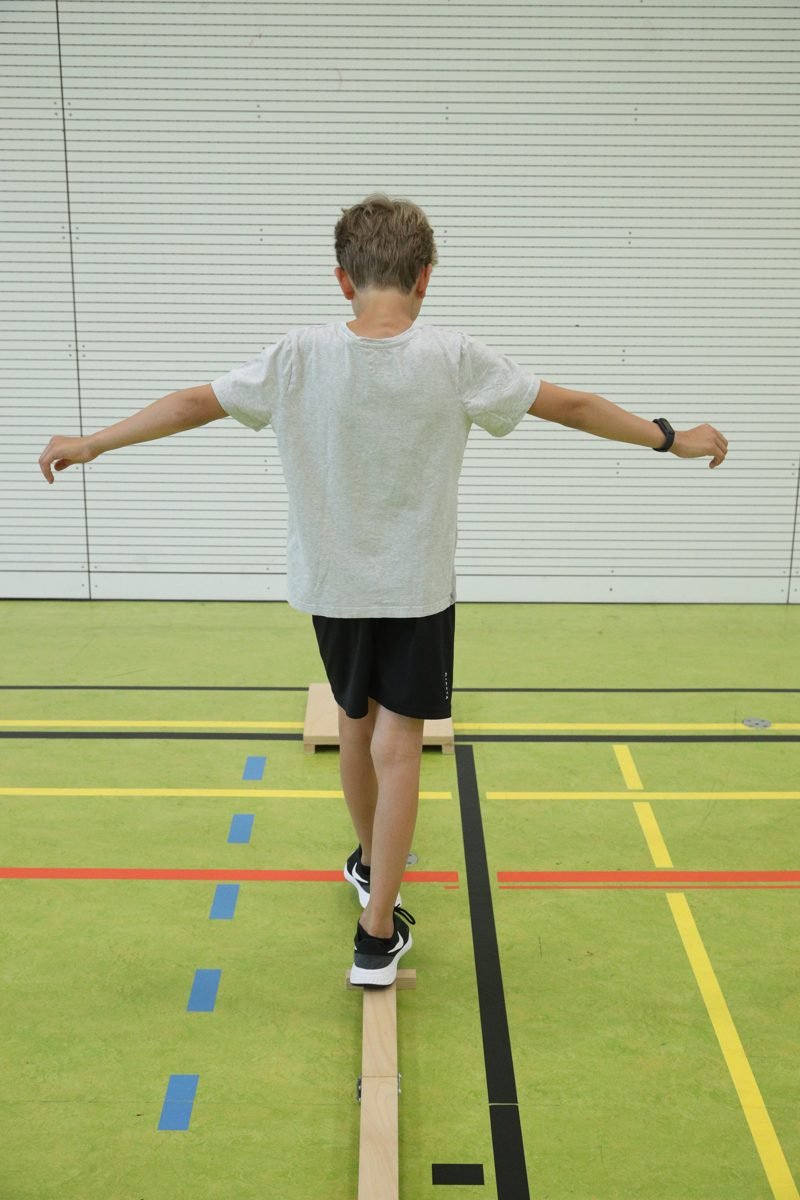
Stability means the shoe resists rolling and keeps your foot planted: a flat base, a wide platform, a heel clip or counter, and a firm midsole. Cushion means foam that softens impact and feels comfortable over longer sessions.
For home gym lifting, stability wins — a soft, tall shoe lets your foot wobble under a barbell. For longer cardio-style sessions, some cushion helps. Most home gym trainers do both, which is why cross trainers sit in the middle: firmer than a running shoe, more forgiving than a raised-heel lifting shoe.
One caution: “stability” and “moisture-wicking” in product descriptions are makers’ design claims, not measured standards. Treat them as descriptions of intent, and judge the shoe by its build — base width, heel shape, and fit — not by the label.
Heel-to-Toe Drop: Low, Mid, or High?
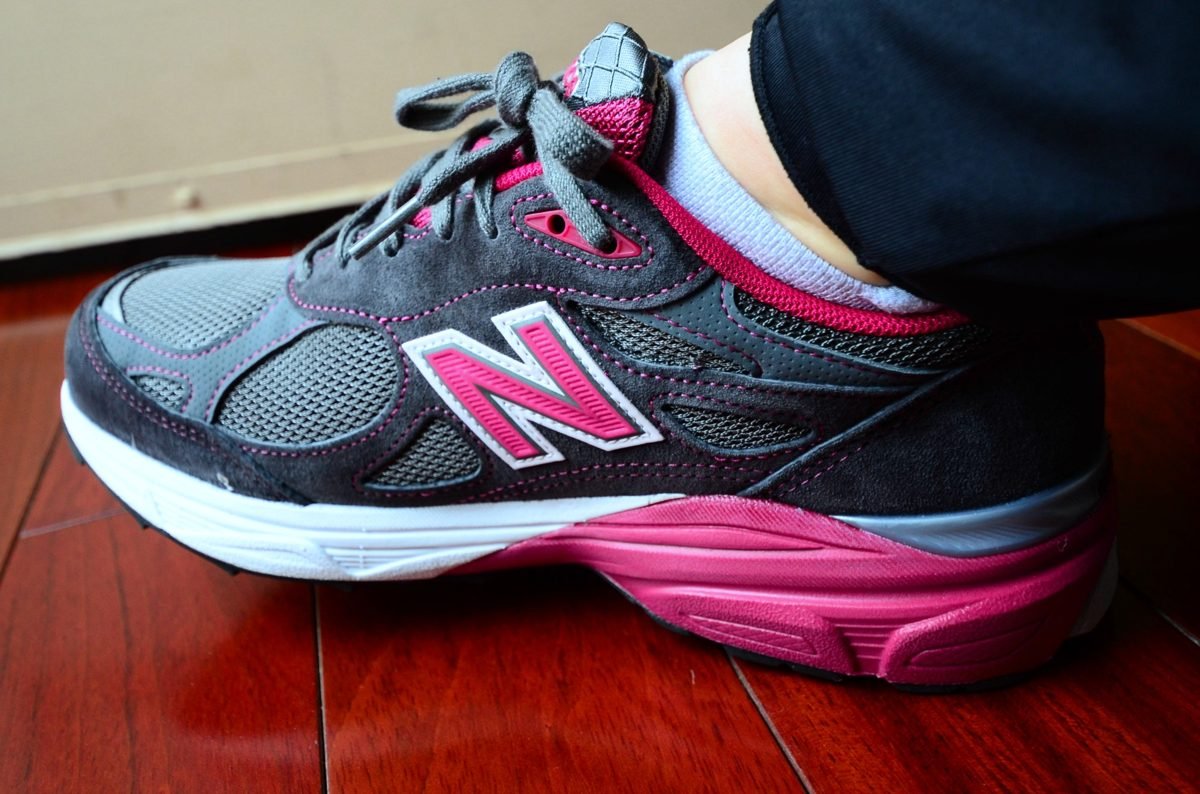
Drop is the height difference between the heel and the forefoot of the shoe. A low drop — like the NOBULL Outwork’s 4 mm — keeps your foot close to level with the floor. A higher drop tilts you slightly forward and usually comes with more heel cushion.
Low drops suit lifters who want to feel the floor and keep a flat base. Higher drops suit trainers who want heel cushion for longer sessions. There is no correct drop — only the one your ankles and knees feel comfortable with after a few sessions.
If you currently train in raised-heel weightlifting shoes, note that every shoe in this guide is flatter than those. Our weightlifting shoes guide covers the raised-heel category separately.
Fit and Sizing: Try Before You Commit
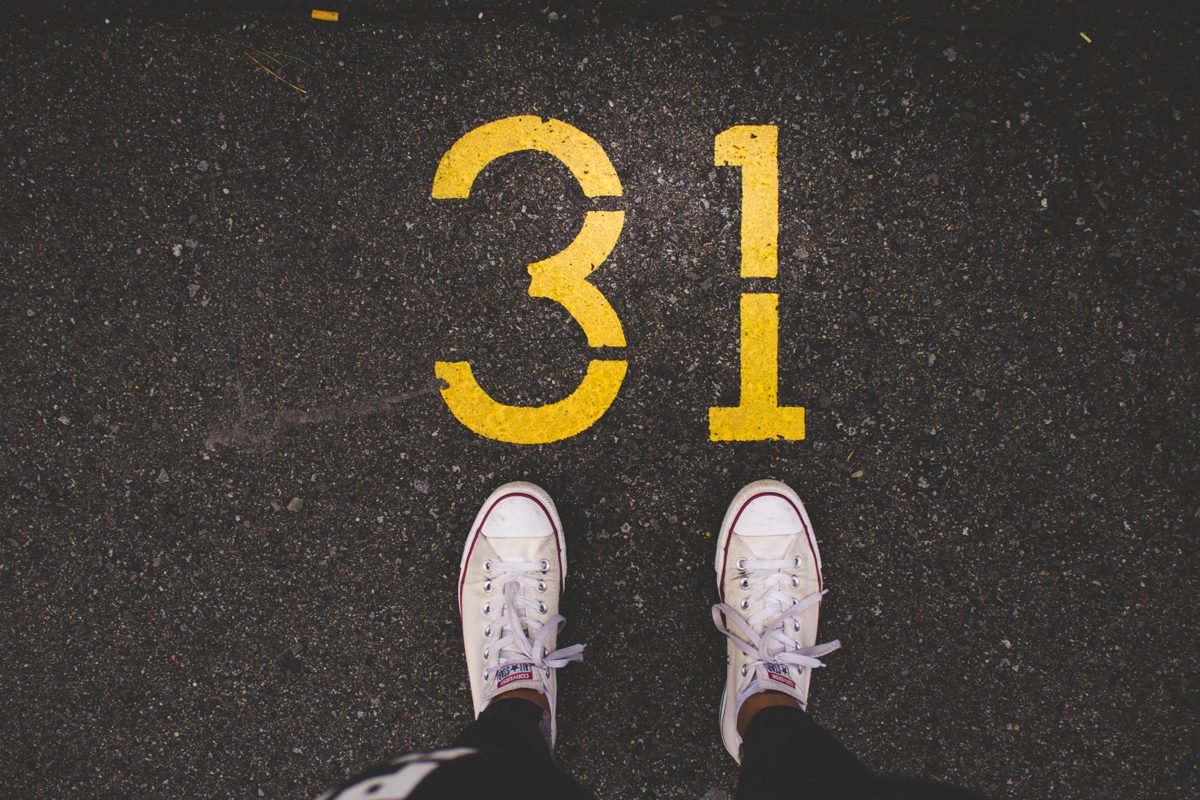
The best fitting advice in this guide is boring and true: try them on. 👟 If you buy online, order from a listing with a clear return option and test the shoes on your own gym floor, not just on carpet.
Check three things in the first wear: toes have room to spread (the NOBULL’s wider toe box is built for this), the heel does not slip when you step, and the laces adjust evenly across the foot — the lace-up New Balance pick lets you tune this, while a BOA dial tightens differently.
If you sit between sizes, read the brand’s own size chart rather than guessing. The Under Armour pick fits slightly large, so some buyers size down; the Reebok pick runs tight at first, so some buyers size up. Both notes come from user reports, not from the makers.
Soles and Grip: Flat vs Lugged
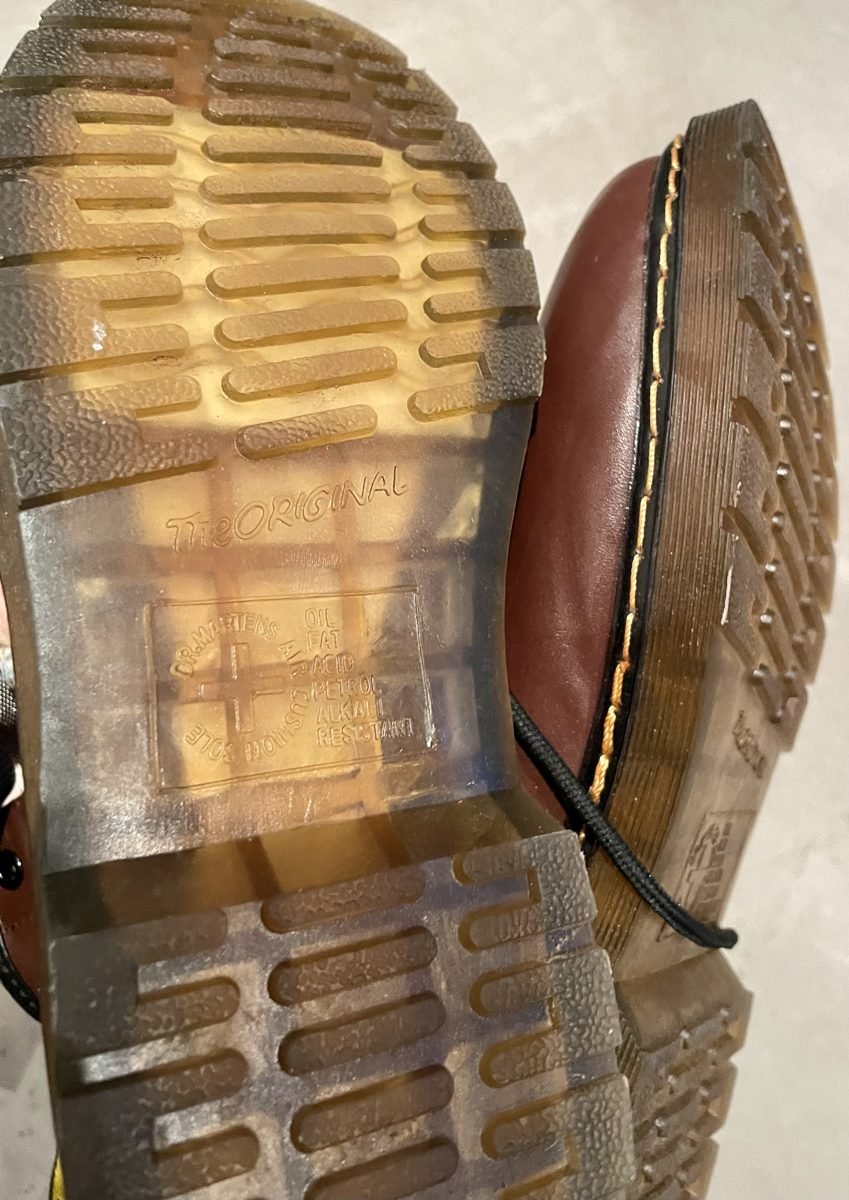
Flat soles are for lifting: maximum contact with the floor, minimum wobble. Lugged soles are for outdoor grip: deep tread that bites into dirt and mud. For a home gym, you want the flat end of that range — grip on a smooth floor or mat, without lugs that catch or rock.
Check the outsole material too. Rubber grips gym floors and mats well; the Nike pick’s rubber tread and arch wrap and the NOBULL’s carbon rubber outsole are both built around that idea. Worn smooth patches are the signal to replace a shoe — grip goes before the upper falls apart.
The photo above shows a different brand’s sole up close, as a generic example of tread pattern — it is not one of the six picks, and no pick’s sole is shown here.
How to Care for Workout Shoes
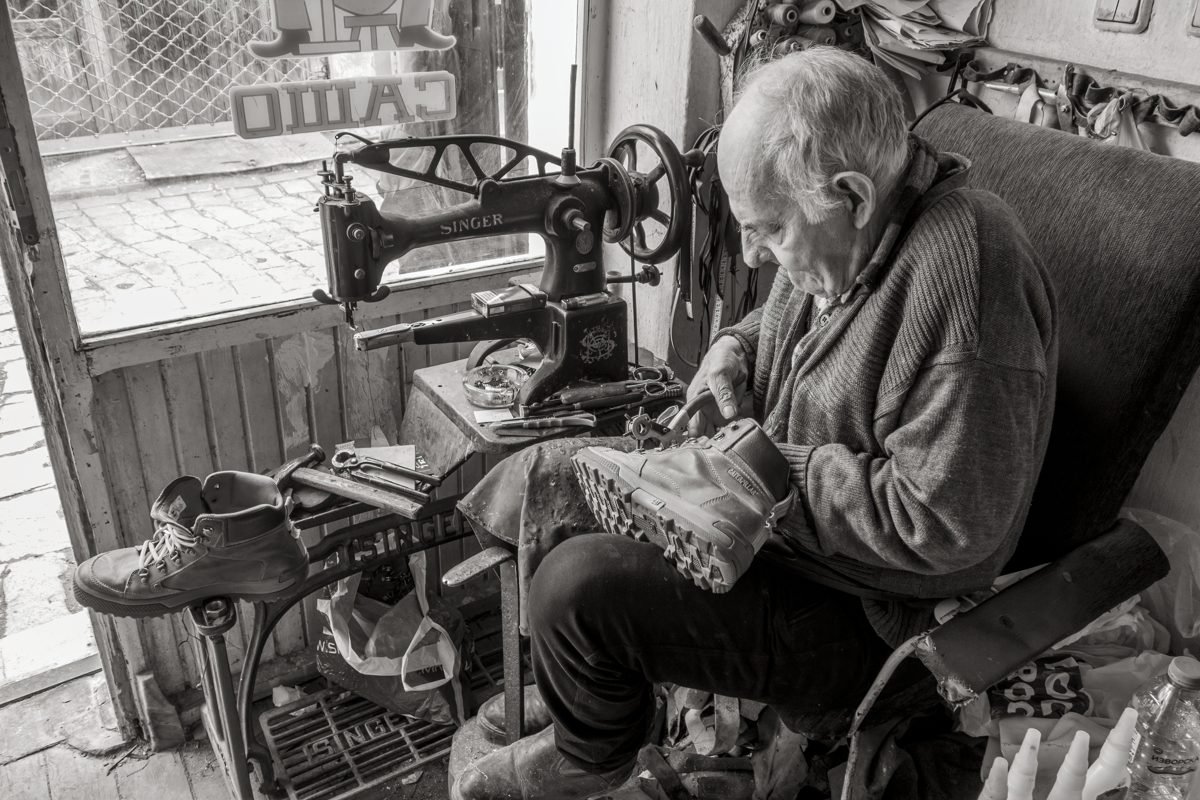
Good care is simple and it doubles a shoe’s useful life. 🧹 Brush dirt out of the tread after outdoor sessions, and wipe the upper with a damp cloth rather than soaking the whole shoe.
Air-dry after sweaty sessions — stuff them with newspaper to hold the shape — and never put them in a hot dryer, which breaks down foam and glue. Wash laces and insoles separately when they need it, and let everything dry fully before the next session.
Rotate two pairs if you train daily: foam recovers between sessions, and each pair lasts longer. And when a good pair’s sole comes loose, a cobbler can often repair it — the photo above shows that trade at work — which beats throwing away an otherwise sound shoe.
Safety: What No Shoe Makes Safe
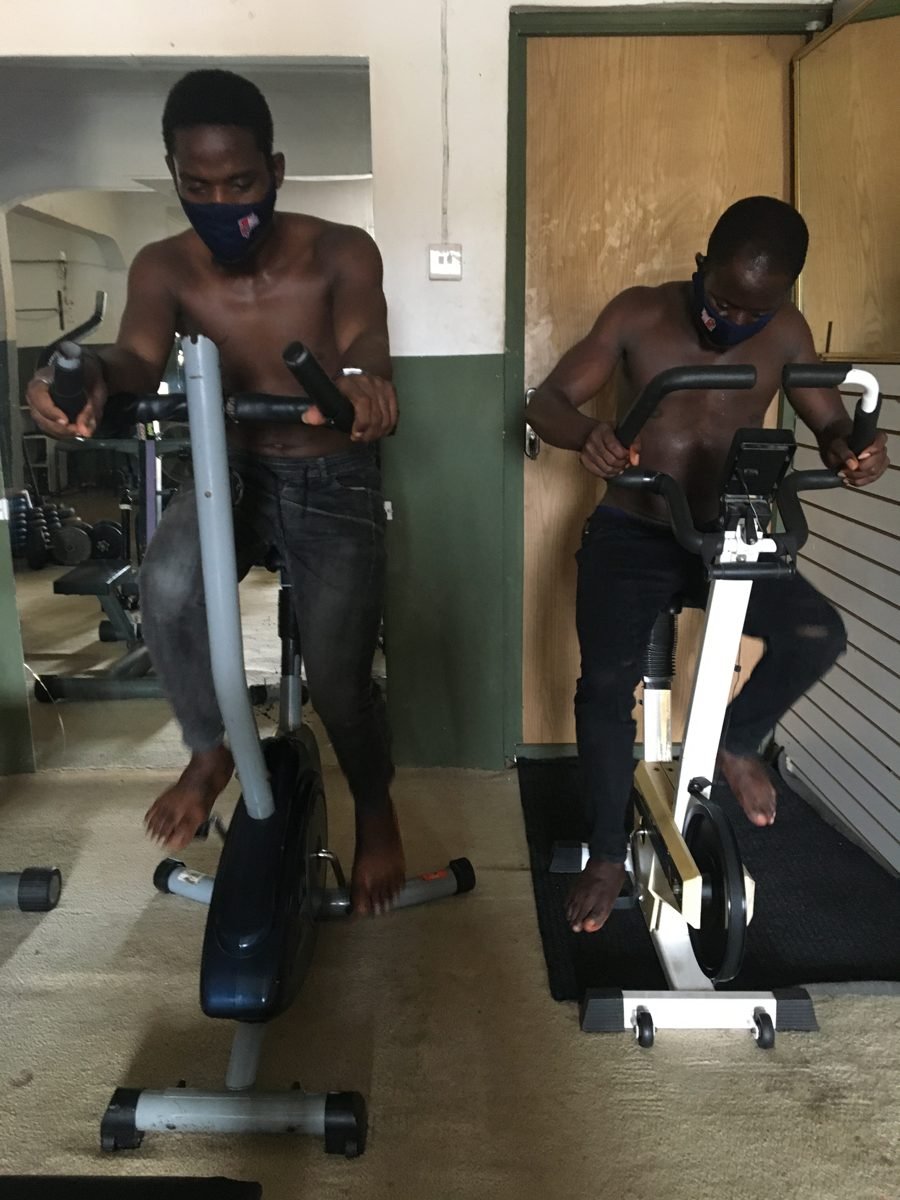
No shoe prevents injury or fixes bad form — including every shoe in this guide. Shoes support safe training; they do not replace it. Keep these basics in mind:
- Warm up before heavy sets — cold muscles and a heavy barbell are a bad combination in any shoe.
- Keep your training floor clear of plates, bands and loose items that can catch a foot.
- Wear shoes for gym work. The photo above shows barefoot training on a bike — bare feet on hard equipment and around weights risk stubbed toes, dropped plates and slipping.
- Check your shoes before sessions: worn-smooth tread, a collapsed heel counter, or a torn upper are all reasons to retire a pair.
- Lace up fully and evenly — a half-laced shoe is a tripping shoe.
- Stop if something hurts. Pain is information, not weakness, and no shoe makes pushing through it safe.
Frequently Asked Questions
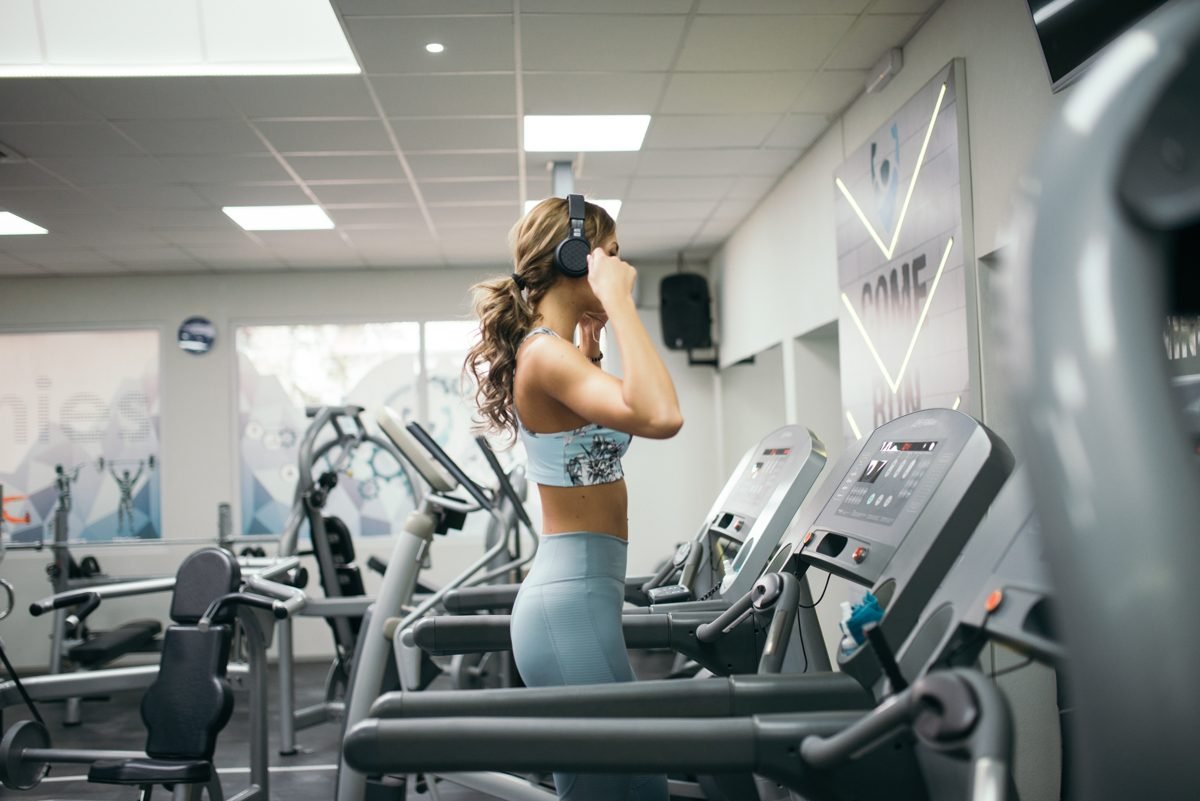
Can I run in workout shoes?
Short treadmill bursts and warm-up jogs are fine in any pick here. For long-distance running, buy a running shoe instead — training shoes are built for stability and sideways movement, not for mile after mile of forward impact.
Are workout shoes the same as weightlifting shoes?
No. Weightlifting shoes have a raised, hard heel for squats and Olympic lifts; the cross trainers in this guide are flat and versatile. Our weightlifting shoes guide covers the raised-heel category.
How often should I replace workout shoes?
When the cushion feels dead or the outsole tread wears smooth — not on a calendar. Daily trainers wear faster than twice-a-week pairs, and rotating two pairs stretches both.
Do I need different shoes for lifting and classes?
Most home gym trainers do not. One good cross trainer — the Reebok Nano X4 is the versatile pick here — covers both. Only dedicated lifters chasing heavy squats usually add a second, raised-heel pair.
What if I am between sizes?
Check the brand’s own size chart first. As a rough guide from user reports, the Under Armour pick fits slightly large and the Reebok pick runs tight at first — but your foot is the final judge, so buy where returns are easy.
Our Pick: Start Here
If you train a bit of everything at home, start with the Reebok Nano X4 — the most versatile shoe in this guide, with the freshest listing record and a build that covers lifting, circuits and classes, so you do not need a second pair on day one.
If your sessions are mostly lifting, start with the Nike Metcon 9 instead — the stability-first pick, built for lunges and deadlifts — but check its listing fresh, since its record is the oldest in the guide.
Whichever you choose, confirm the exact variant, size and seller on the live listing before ordering, and pair the shoes with the rest of your kit: our cable machines guide, workout socks guide and power racks guide cover the sessions these shoes are made for.
As an Amazon Associate, we earn from qualifying purchases made through links on this page, at no extra cost to you.
This guide is research-based and for general information only. We did not hands-on test these products, and the photos are generic training and shoe scenes, not photos of the named products. Always check the current listing for the exact variant, seller and availability before ordering.