

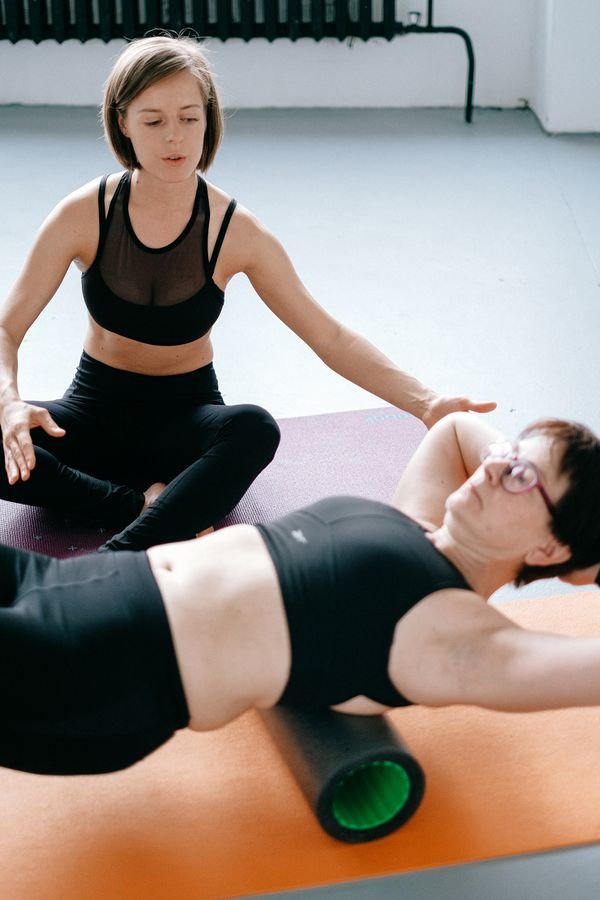
🧘 A foam roller is the cheapest recovery tool in most home gyms — a cylinder of foam you roll your muscles over, using your own body weight for pressure.
It feels good, and it is popular. But what does it actually do, and which one is worth buying?
This guide answers both questions honestly. Six real, currently sold foam rollers, compared on density, length, and texture — with the evidence stated plainly, including where it falls short.
🔍 What the Evidence Actually Says
Foam rolling is well studied, but the results are more modest than the marketing suggests — and this guide will not oversell them.
A 2015 systematic review of 22 studies found that foam rolling increases short-term range of motion, appears useful for recovery from exercise-induced muscle damage, and has no detrimental effect on athletic performance.
The same review was careful about the limits: except for range of motion, it could not conclude that foam rolling directly benefits athletic performance.
A 2019 meta-analysis of foam rolling on performance and recovery reached a similar place — flexibility and perceived soreness improved, while strength and performance effects were inconsistent.
A more recent synthesis of the evidence (published 2025) agreed: acute range-of-motion gains, short-term pain reduction, and transient improvements in muscle stiffness and blood flow are consistently supported.
The same synthesis found the evidence limited or inconclusive for performance enhancement, injury prevention, and “fascial adhesion release” — and noted that data on safety are scarce.
Put together, the honest summary is this: short-term flexibility and perceived soreness relief are the best-supported benefits.
Breaking up scar tissue, structurally releasing fascia, speeding long-term recovery, and treating injuries are NOT proven. Anyone promising those four things is selling, not informing.
📋 How We Chose These Picks
This is a research-based guide. We did not buy or test these rollers, and no product here is described as personally tested.
Picks were scored on five things: density and firmness, length and diameter, surface texture, verified buyer-review volume, and value.
Prices change constantly, so this guide does not quote them. Use the check-price links to see the current price before you buy.
Every product below is currently sold on Amazon with a verified listing. If a listing could not be verified, the product did not make the list.
⚡ Quick Comparison
| Product | Density / surface | Size | Best for |
|---|---|---|---|
| TriggerPoint GRID 1.0 | Multi-density grid, rigid core | 13″ x 5.5″ | Best overall |
| OPTP PRO-ROLLER Soft | Soft, smooth, closed-cell EVA | 36″ x 6″ | Best gentle / beginner |
| Amazon Basics High-Density | High-density, smooth EPP | 24″ x 6″ | Best budget |
| LuxFit Premium High Density | Extra firm, smooth polypropylene | 18″ x 6″ | Best extra-firm simple roller |
| RumbleRoller Original Textured | Firm bumps, EVA/polyolefin | 22″ | Best deep-tissue textured |
| Hyperice Vyper 3 | Vibrating, contoured EPP | 13″ x 5.4″ | Best vibrating premium |
One pattern jumps out immediately: the serious deep-tissue rollers all use firm or textured surfaces, while the gentle pick trades intensity for comfort at the same full length.
1. 🏆 TriggerPoint GRID 1.0 (13″) — Best Overall
Who it suits: most home-gym owners who want one roller that does nearly everything well.
The GRID is the best-known roller in this guide for a reason. Its multi-density grid surface mixes firm, medium, and soft zones over a rigid core, so it feels more varied than a plain smooth roller.
At 13 inches long and 5.5 inches across, it suits legs, back, and arms — and the maker states it supports up to 500 lb and keeps its shape after repeated use.
Pros: the most versatile surface here; rigid core resists flattening; huge verified review volume (over 23,000 ratings); compact enough to store easily.
Cons: 13 inches is short for full back work lying lengthwise — a 36-inch roller suits that better; the grid feel is firmer than a soft roller, so beginners may find it intense at first.
Check the current price of the TriggerPoint GRID 1.0 on Amazon
2. 🌸 OPTP PRO-ROLLER Soft (36″ x 6″) — Best Gentle / Beginner
Who it suits: beginners, people with sensitive tissues, and anyone who uses a roller for Pilates, yoga, or positioning work as much as for massage.
The PRO-ROLLER Soft is the gentle option in this guide. Its soft-density, closed-cell EVA foam gives a forgiving roll, and the full 36-inch length supports lying lengthwise along the spine for balance and positioning exercises.
OPTP has made rollers since the 1990s, and the closed-cell surface wipes clean — a practical detail for daily use.
Pros: the gentlest roll here; full 36-inch length for back and positioning work; durable EVA that resists moisture; long-established therapy brand.
Cons: too soft for lifters who want deep pressure — it will not dig in like the firm picks; the 36-inch size takes more storage space.
Check the current price of the OPTP PRO-ROLLER Soft on Amazon
3. 💰 Amazon Basics High-Density (24″) — Best Budget
Who it suits: first-time buyers who want a solid roller for the least money.
The Amazon Basics roller is a plain high-density EPP cylinder — no texture, no core, no extras. That simplicity is exactly its appeal: firm, light, and cheap.
The 24-inch length is a useful middle ground, long enough for most leg and back work without the bulk of a 36-inch roller.
Pros: the cheapest route in; firm high-density foam that holds its shape; simple and light; a proven budget pick across many roundups.
Cons: check the listing before ordering — the 36-inch and 18-inch variants of this roller showed “currently unavailable” in some listing crawls, which is why the 24-inch version is linked here; the smooth surface offers no grip variation.
Check the current price of the Amazon Basics High-Density Foam Roller on Amazon
4. 🧱 LuxFit Premium High Density (18″) — Best Extra-Firm Simple Roller
Who it suits: lifters who want maximum firmness from a plain roller, without texture or electronics.
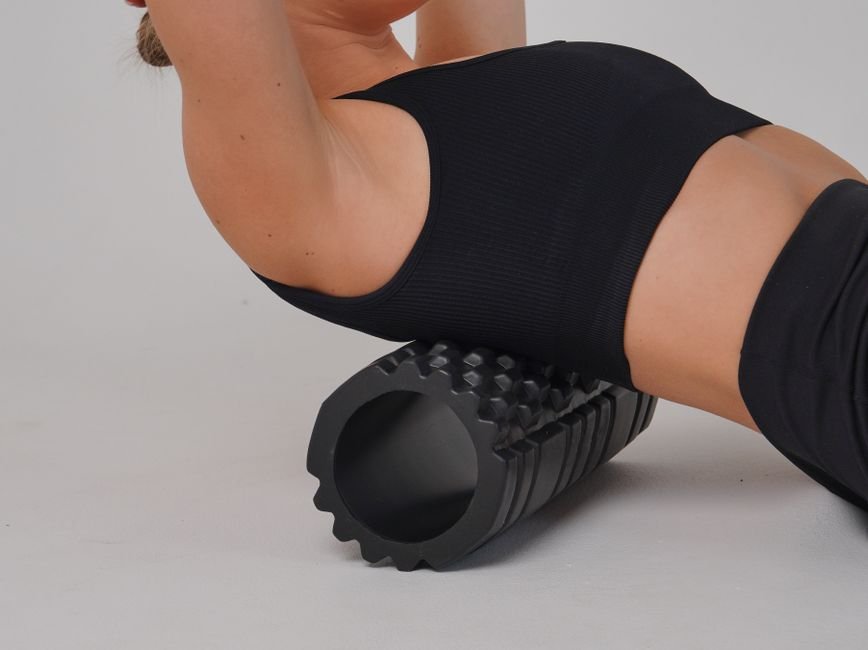
The LuxFit is a molded polypropylene roller rated at 2 lb per cubic foot density — extra firm, smooth-surfaced, and built not to lose its shape under heavy use.
It comes in several lengths; the 18-inch version linked here balances portability with enough length for most rolling, and the listing includes a 1-year warranty.
Pros: genuinely extra-firm feel; durable molded foam that resists flattening; liquid-resistant surface; simple and long-lasting.
Cons: extra firm means genuinely uncomfortable for beginners — start gentle; the smooth surface gives no texture variation; 18 inches is short for full-length back work.
Check the current price of the LuxFit Premium High Density Foam Roller on Amazon
5. 🔶 RumbleRoller Original Textured (22″) — Best Deep-Tissue Textured
Who it suits: experienced rollers who find smooth rollers too mild and want the most intense surface here.
The RumbleRoller is the original bumped roller, introduced in 2009. Its firm, flexible nubs are designed to feel more like a therapist’s thumbs than a flat surface, and the mid-size 22-inch version linked here suits most home use.
It is made from an EVA/polyolefin blend, and the original (blue) firmness is the standard version — a black extra-firm version exists for denser muscle, but it is not the one linked here.
Pros: the most intense surface in this guide; the bumped design targets smaller areas; long-established deep-tissue specialist brand; strong recent sales volume.
Cons: the bumps can be genuinely painful for beginners — this is not a first roller; the textured surface is harder to wipe clean than a smooth roller.
Check the current price of the RumbleRoller Original Textured Foam Roller on Amazon
6. ⚡ Hyperice Vyper 3 — Best Vibrating Premium
Who it suits: lifters who already foam roll and want vibration added, and who are happy to pay a premium for it.
The Vyper 3 is a full-length vibrating roller with a high-torque 34W motor, three vibration speeds, and a contoured EPP body that cradles the spine area. It pairs with the Hyperice app for guided sessions.
At 13 inches it matches the GRID’s length, and it is rechargeable and cordless — though battery-life figures vary across retailer listings, from around 60 minutes to 2 hours, so check the current listing rather than trusting one number.
Pros: vibration adds a different sensation that many users prefer; three speeds; contoured shape; app guidance included; premium build.
Cons: the priciest pick here by a wide margin; needs charging and has an auto shut-off after about 10 minutes per session; vibration is a preference, not a proven extra benefit — the evidence above applies to rolling itself.
Check the current price of the Hyperice Vyper 3 on Amazon
🧭 How to Choose the Right Foam Roller
Density and firmness
Density is the single most important choice. Soft rollers (like the OPTP Soft) forgive sensitive tissues and suit beginners; firm and extra-firm rollers (LuxFit, Amazon Basics high-density) press deeper but can be uncomfortable at first.
One honest caveat: brands describe density differently — one brand’s “firm” may match another’s “medium” — so treat density labels as rough guides, not laboratory facts, and start softer if you are unsure.
Length
Rollers run from about 12 inches to 36 inches. Short rollers (12–18 inches) travel well and suit legs and arms; long rollers (36 inches) let you lie lengthwise for back work and balance exercises.
If you can only buy one, 18–24 inches is the most versatile middle ground for most people.
Texture
Smooth rollers give even pressure and are the easiest to learn on. Grid and bumped surfaces (GRID, RumbleRoller) concentrate pressure on smaller areas and feel more intense.
Texture does not make a roller “medical” — it changes how the pressure feels, nothing more. No texture has been proven to release fascia or break up scar tissue.
Vibrating vs standard
Vibrating rollers add a motor and a battery to a standard roller. Some users find vibration more comfortable and easier to tolerate; others prefer the simplicity of a plain roller that never needs charging.
Vibration is a comfort preference, not a proven recovery upgrade — buy it because you like the feel, not because it promises faster healing.
Travel vs full-size
Short, light rollers (13–18 inches) fit in a gym bag or suitcase. Full-length 36-inch rollers stay at home but do the most jobs.
If you roll daily at home, buy full-size; if you roll at the gym or while travelling, buy short and light.

⚠️ Safety: Where Not to Roll, and Who Should Ask First
Foam rolling is safe for most healthy adults on fleshy muscle — but there are clear no-go zones.
Do not roll directly over joints (knees, elbows, ankles), directly over the spine itself, or over bony areas like ribs and collarbones.
Use the lower back with care — rolling the muscles either side of the spine is the usual approach, not pressing the spine itself onto the roller.
Never roll over injured or inflamed areas, bruises, open wounds, or varicose veins.
Talk to a clinician first if you have a clotting disorder, take blood thinners, have neuropathy or numbness, have osteoporosis, or are pregnant.
As general guidance, reviews suggest around 90–120 seconds per muscle group for flexibility benefits — that is guidance from the research, not a rule, and less is fine if you are new.
If pain is sharp, persists, or you are unsure about your condition, stop and see a professional. This section is general information only, not medical advice.
❓ Frequently Asked Questions
Does foam rolling break up scar tissue or release fascia?
No — not in any structural sense the evidence supports. Foam rolling improves short-term flexibility and perceived soreness, but claims about breaking adhesions or releasing fascia are not backed by robust evidence.
Think of it as a comfort and mobility tool, not a tissue treatment.
How long should I roll each muscle?
Research reviews suggest around 90–120 seconds per muscle group for flexibility benefits. Roll slowly, breathe normally, and pause briefly on tender spots rather than rushing through.
Less is fine when you are starting out — comfort beats duration.
Can foam rolling replace stretching?
Not exactly. Reviews find foam rolling increases short-term flexibility about as well as static stretching in the short term, but the two are complements, not substitutes — stretching, strength work, and movement all matter.
Our stretching exercises guide pairs naturally with a roller routine.
Is a firmer roller always better?
No. Firmer means more pressure, not more benefit — and too much pressure makes people tense up, which defeats the purpose. Beginners and sensitive tissues do better on soft or standard rollers.
Start softer than you think you need, and move firmer only if the soft roller stops feeling useful.
Can I use a foam roller every day?
Many people do, on healthy muscle, with short sessions. Avoid sore, bruised, or injured spots, and give any tender area a rest day.
Daily rolling is no substitute for rest, sleep, and proper training load.
Do I need a vibrating roller?
No. Vibration is a preference, not a requirement — a plain roller delivers the same evidence-backed benefits. Buy vibrating only if you have tried one and prefer the feel, or if the app guidance appeals to you.
🔗 Keep Reading
For the wider recovery picture, see our guide to best massage guns — the other main home recovery tool — and our stretching exercises guide, which pairs naturally with a roller routine.
And if you are building the home gym around your recovery work, our beginners equipment guide covers the rest of the setup.
As an Amazon Associate, we earn from qualifying purchases made through links on this page, at no extra cost to you.
This is a research-based guide: products were compared from verified buyer reviews and published specifications, not from personal testing. Prices change frequently, so always check the current price before buying. The health and safety information here is general information only and is not medical advice — talk to a qualified clinician about your own situation.